
Himachal Congress to conduct training programmes for all office-bearers to strengthen organisation

The Himachal Pradesh Congress Committee (HPCC) President, Vinay Kumar, announced on May 1 that the party will organise training programmes for office-bearers at all levels across the state to enhance organisational capacity and deepen workers’ understanding of its ideology and policies. He explained that the initiative will focus on equipping party workers with modern communication strategies, including effective use of social media and public outreach methods to better connect with people. Vinay Kumar stated that the state unit will fully implement the directions and ideas shared by Leader of Opposition Rahul Gandhi during a recent training programme for district presidents. Describing the effort as a “historic step,” he emphasised that the programme is more than a formal exercise; it is a substantial move to strengthen the party at the grassroots level, injecting fresh energy, enthusiasm, and renewed commitment among workers. He noted that the appointment of district presidents as part of the organisational restructuring has provided new direction to the Congress in Himachal Pradesh, reinforcing the organisational framework and boosting workers’ confidence in the leadership. Vinay Kumar also thanked party office-bearers, organisers, and workers for successfully conducting the extensive training programme involving district presidents from Himachal Pradesh, Punjab, and Jammu and Kashmir, citing it as a reflection of the party’s discipline and commitment. Highlighting the significance of direct engagement, he said Rahul Gandhi’s interaction with district presidents conveyed a clear message that grassroots workers are valued and have growth opportunities within the party based on merit and dedication. He added that the training emphasised strengthening direct communication with the public, understanding their issues, and effectively mobilising them to build stronger mass movements. According to him, the guidance provided by the central leadership will form the basis of the organisation’s work in the coming years. Calling the initiative a “milestone,” Vinay Kumar said it will play a crucial role in making the Congress more organised, resilient, and responsive to public concerns. He also pointed out that such a comprehensive training programme is the first of its kind organised in Himachal Pradesh. Expressing confidence, he stated that under Rahul Gandhi’s guidance, the Congress will progress with renewed energy and continue to assert its presence on issues affecting the public. Courtesy : The News Mill Note: This news is originally published on https:/thenewsmill.com/bha and is used purely for non-profit/non-commercial purposes, especially human rights
Former Air Chief says Greater Nicobar project important for ‘military footprint’
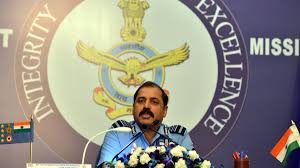
In pushback against Rahul Gandhi’s opposition to the project, retired Air Chief Marshal says ecological concerns will be mitigated; notes that proposed port is 150 km from Malacca Strait, the route for 75% of China’s energy trade The Greater Nicobar project is “important for India’s military footprint” in the area, a former chief of the Indian Air Force said on Thursday (April 30, 2026), as part of the BJP’s pushback against Congress leader Rahul Gandhi’s comments against the project and its harmful ecological footprint. Air Chief Marshal (Retd) R.K.S. Bhadauria, who is now a member of the BJP, pointed to the strategic importance of having a port near the route of China’s energy shipments, with the conflict in West Asia demonstrating the impact of such maritime leverage. Nicobar project largest theft of Indian property to fulfil fantasies of one businessman: Rahul Gandhi He added that environmental concerns are taken on board as a matter of course whenever such projects are mooted. “There are statutory clearances and committees are made. They look at all the factors and all these are mitigated,” he said in a statement. The project, being built at a cost of around ₹81,000 crore, includes a transhipment terminal, a power plant, and a township. The Union government expects it to boost maritime trade, connectivity, and security, and play a key role in promoting India’s geo-strategic and economic interests. The Great Nicobar project | Between the sea and the state Strategic location The retired Air Chief Marshal said that was “surprised” by Mr. Gandhi’s views on the project, noting that it was “important that such a project be understood.” “[The project] is important for India to set a militarily strategic footprint in that region. From a defence and strategic perspective, this development is very crucial. After Strait of Hormuz closure, we have realised the importance of straits and sea route blockades, and such a statement after all this is surprising. If the port is made, it will be only 150 km away from the Malacca Strait, which serves as the route for 75% of China’s energy trade. It will boost India’s maritime and air front dominance to a great extent,” he said. His response on behalf of the BJP came after Mr. Gandhi characterised the project as “one of the biggest scams and gravest crimes against the natural and tribal heritage of the country”. After visiting the area, the Leader of Opposition in the Lok Sabha had said that the project would entail the axing of millions of trees in 160 sq. km of rainforest. Terming it as “destruction dressed in development’s language”, Mr. Gandhi vowed to raise the issue in Parliament. The Hindu Bureau Courtesy : The Hindu Note: This news is originally published on https:/thehindu.com/bha and is used purely for non-profit/non-commercial purposes, especially human rights
Rahul Gandhi Flags Great Nicobar Connectivity Project As ‘Destruction Dressed As Development’ During Island Visit

Rahul Gandhi also mentioned that this project aims at the destruction of enormous ecological properties, and that he would raise this matter in the Parliament Leader of Opposition in the Lok Sabha and Senior Congress leader Rahul Gandhi strongly condemned the Union Government’s proposed infrastructure project on the Great Nicobar islands. He is currently visiting Andaman and Nicobar, where he is assessing the environmental impact the project could have, and talking to indigenous communities about the same. On Wednesday, April 29, 2026, he said: “What is being done in Great Nicobar is one of the biggest scams and gravest crimes against this country’s natural and tribal heritage in our lifetimes.” See Also: Hardoi School Principal Booked Under BNS and SC/ST Act After Viral Video of Her Shouting at Parents Rahul Gandhi: Destruction Dressed In Development’s Language The Rae Bareli MP described the Nicobar islands as one of the most beautiful forests he has seen in his lifetime, hosting a rich flora and fauna. In a post on X (April 29, 2026), Gandhi talked about his visit to the region. He said: “These are the most extraordinary forests I have ever seen in my life. Trees older than memory. Forests that took generations to grow. The people on this island are equally beautiful – both the adivasi communities and the settlers – but they are being robbed of what is rightfully theirs.” Flagging the ecological loss, he mentioned that this project ignores the livelihoods and aspirations of the local tribal communities living in the area. He also visited Campbell Bay on Tuesday, April 28, 2026, to talk to the tribal leaders opposing the project. “This is not development. This is destruction dressed in development’s language,” he added. Targeting Crony Capitalism Highlighting the scale of the deforestation as a major ecological loss for the region’s indigenous communities, the Lok Sabha MP said: “It’s amazing that 160 square kilometres of these forests is being chopped up, so that one businessman, Mr. Adani, can fulfill his fantasies.” The Adani Group has expressed interest in developing a trans-shipment project in the region. Rahul Gandhi has previously, on multiple occasions, targeted Gautam Adani for building projects that would pose harmful disadvantages to local communities. The Opposition recently targeted the BJP government in Assam for handing over a thermal power contract to Adani for procuring 3,200 MW power in the region, a move that could potentially deprive the state exchequer of thousands of crores of rupees. The ₹81,000-Crore Great Nicobar Connectivity Project The Great Nicobar Connectivity Project, officially known as the “Holistic Development of Great Nicobar Island” project, is a massive strategic and commercial initiative piloted by NITI Aayog. Now estimated at over ₹92,000 crores, the ambitious plan aims to transform the southernmost island into a global maritime and defense hub. The development includes the construction of a deep-water International Container Transshipment Terminal (ICTT) at Galathea Bay, a greenfield dual-use international airport, a gas-and-solar power plant, and a new coastal township projected to house over 3,00,000 people. Recent data indicate that the present population of the Great Nicobar Islands is around 8,000. To accommodate this sprawling infrastructure, the project could result in the mass felling of nearly 8.5 lakh trees, clearing approximately 160 square kilometres of pristine rainforests. See Also: Governments Come and Go, But Burari’s Fate Remains Same: Dust All Around, Long Pending Sewer Work and Collapsed Administration, It’s What US President Trump Would Call a HellHole Will Raise The Issue In Parliament, Says Rahul Gandhi Gandhi mentioned that this project aims at the destruction of enormous ecological properties, and also said that he would raise this matter in the Parliament. The project has already seen immense backlash from local tribal communities and environmentalists, who have raised concerns over the lack of transparency of the project, severe environmental risks, and the alleged neglect of tribal rights by the central government. Ultimately, the push for the Great Nicobar project highlights a growing conflict between the government’s aggressive infrastructure ambitions and the urgent need to protect India’s most vulnerable indigenous populations and irreplaceable natural heritage.India travel guides ParliamentAuthor:Gaurav Pandey, Edited by :Dhruv Sharma Courtesy : News Gram Note: This news is originally published on https:/newsgram.com/bha and is used purely for non-profit/non-commercial purposes, especially human rights
Rahul Gandhi: “Youth’s homes have been turned into a police state”; Rahul Gandhi said on Ladakh, “Democratic rights have also been crushed.”
Congress MP Rahul Gandhi has targeted PM Modi and the central government on the issue related to the Union Territory of Ladakh. In a post on Instagram, he wrote, “The youth of Ladakh told me how their beautiful home has been turned into a police state. Their voices have been suppressed, democratic rights have been crushed, and their land and fragile environment are being handed over to Modiji’s billionaire friends.” The people of Ladakh want employment and industry. Rahul wrote, “The people of Ladakh are not against development. They want employment and industry, but development that benefits the local people. I hope the Home Minister understands this truth during his visit.” Published by: Jyoti Bhaskar Courtesy: Hindi News
‘Great Nicobar Project is destruction disguised as development,’ Rahul Gandhi blasts the Centre
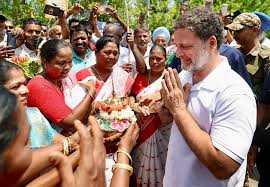
Rahul Gandhi has slammed the central government, calling the Andaman and Nicobar Project “destruction disguised as development.” New Delhi. Although the National Green Tribunal has approved the Andaman and Nicobar Project, Rahul Gandhi, Leader of the Opposition in the Lok Sabha, has alleged that the project is one of the biggest scams and most serious crimes against the country’s natural and tribal heritage. Rahul said that millions of trees will be cut down in the 160 square kilometer rainforest of the islands. Calling it “destruction disguised as development,” he announced that he would raise the issue in Parliament and appealed to the public to view the project in the same light. In a post on Instagram on Wednesday, after concluding his three-day visit to the Andaman and Nicobar Islands, Rahul Gandhi said that during his visit to Great Nicobar, he had seen the most extraordinary forest of his life, with trees that are older than we can remember. Forests that took generations to grow. The people of the island are equally beautiful, whether they are tribal communities or settlers. In a video shared on social media, Rahul Gandhi claimed that everyone on the island is against the project and that people have not forgotten what compensation they will receive for their land. The Leader of the Opposition said that after visiting the island, he finally understood why the government had been preventing him from visiting, and after much effort, he was finally able to travel. Edited by Sanjay Mishra: Deepak Gupta Courtesy: Hindi News
Manipur peace can be restored in five minutes if government decides, says Rahul Gandhi
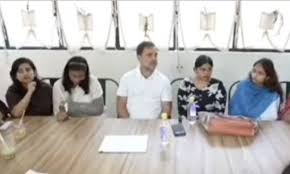
Imphal: Congress leader Rahul Gandhi has said that much-needed peace in Manipur could be restored through dialogue between the two communities, which he described as the ultimate solution to the current crisis. Interacting with young women from Gargi College and Delhi University on Tuesday, he stated that if the Government of India decided to restore peace in Manipur, it could be achieved within five minutes. “If the United Progressive Alliance (UPA) were in power, it could be settled within hours,” he said, adding that both communities need to build bridges for the restoration of peace. The UPA was a coalition of centre-left political parties in India, primarily led by the Indian National Congress (INC), which governed the country from 2004 to 2014. He added that the Indian Army is supposed to stop people from fighting each other. Reiterating his point, Gandhi said both communities need to build bridges for lasting peace in the state. He accused the ruling government of lacking the intention to end the violence, noting that the Prime Minister has not visited conflict-hit Manipur in recent months. He further expressed hope that if the UPA were in power, the situation would be resolved within hours. Gandhi emphasised that Manipur deserves peace and said that families who have lost loved ones must be taken care of. He advocated a bottom-up approach to peacebuilding, suggesting that educated youth and civil society can help bridge divides. Gandhi said Manipur is going through a “very difficult time” and encouraged young people to stand against injustice and empathise with the suffering of the people. He argued that peacebuilding must emerge from the middle and grassroots levels, suggesting that educated groups from both sides should organise workshops and peace initiatives. Notably, Rahul Gandhi made multiple visits to Manipur, including relief camps in Churachandpur, Moirang, and Jiribam in 2024, where he met victims of ethnic violence. He focused on listening to the grievances of displaced people, including women and children, and called for peace and central intervention. By Bit Irom Courtesy : North East Now Note: This news is originally published on https:/northeastnow.com/bha and is used purely for non-profit/non-commercial purposes, especially human rights
From ‘reluctant prince’ to assertive challenger
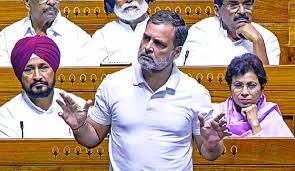
Has Rahul Gandhi become a credible Leader of the Opposition in the Lok Sabha since his appointment in June 2024? With nearly two years having passed, how effective has he been? Has he held the government accountable and changed his party’s approach to budget reviews? Has he demonstrated leadership qualities such as strategic communication and coalition-building during this time? These questions are essential for evaluating his influence and effectiveness. Rahul began his political career in 2004 and has faced both successes, challenges, and failures. He has worked behind the scenes, guiding the party through victories and defeats, while choosing not to take a ministerial role in the Manmohan Singh government from 2004 to 2014. Gandhi’s rise to a prominent position within the Congress Party was largely expected, reflecting his positioning within the party. He has the final say in party appointments. While many party members viewed his leadership as a positive development, others expressed concern that it highlighted the party’s lack of alternatives and its dependence on the Nehru-Gandhi family. Ultimately, he resigned, and senior leader Mallikarjun Kharge became the party president. Rahul’s role as LOP has included pointing out the government’s mistakes in Parliament and outside on behalf of the Opposition and his own party. However, there have been important occasions when he was not present. Rahul has taken on a more assertive, visible role, focusing on defending the Constitution, addressing income inequality, and challenging the BJP-led government on various issues. He has rebranded his image to align with the formal role, focusing on job creation, safety for marginalised groups, and the rights of farmers. This is the first time in a decade that a cabinet-level position has been filled. Since 2014, no opposition party has achieved the 10% of 543 seats needed to be recognised as the Leader of the Opposition. This presents a significant opportunity for the Opposition to challenge the Narendra Modi government. On his first day in the Lok Sabha as LOP, Rahul Gandhi stressed the need for the ruling coalition to uphold the rule of law and for the Opposition to address issues such as the economic downturn, unemployment, a caste census, and the farmers’ crisis. As the Leader of the Opposition, he participates in selecting key officials, such as the Chief Election Commissioner and the CBI Chief, to ensure that the Opposition has a say in these appointments. Rahul’s presence in Parliament has become more confrontational and assertive, reflecting his strategic shift to challenge the government directly. With the ruling party loudly defending the Modi government, noisy scenes have ensued in Parliament. Still, it has also enabled the Opposition to oppose key bills, such as the Women’s Reservation Bill and the farmers’ bills. His active participation in legislative debates and initiatives demonstrates his growing influence and impact as Leader of the Opposition, consistently challenging the Modi government on multiple issues. One successful step was his Bharat Jodo Yatra, which boosted his image by allowing him to mingle with the public and learn about their problems firsthand. Educated at some of India’s most prestigious schools, he went on to study economics in the United States and gain international experience working in London before returning to Mumbai in 2002. Gandhi is often referred to as the “reluctant prince” by his critics, who believe he is hesitant to fully embrace the responsibilities that accompany his significant influence. However, many consider him to have been the unofficial number two in the party for a long time. However, some were worried about the party’s continued reliance on the Nehru-Gandhi family for leadership. Rahul decided to enter politics and won a seat in 2004 from Amethi. In September 2007, he became the party’s secretary-general while his mother, Sonia Gandhi, remained president. By January 2013, he had risen to Vice-President of Congress, highlighting his growing influence. Critics say that even though he is more visible now, the party lost key state assembly elections in late 2024 and 2025. This raises doubts about his ability to turn popularity into votes. Rahul became the Leader of the Opposition in the Lok Sabha in June 2024. As time passes, he could lose support if he fails to secure the backing of regional allies and continues to struggle in local politics. The Opposition created the INDIA bloc and worked together in the 2024 General Election. As a result, the Opposition won more seats. The Congress Party doubled its number of seats. Additionally, there has been feedback regarding his attendance at key events and his focus on topics that some critics view as less significant. He is trying to be more approachable by engaging in activities that demonstrate his commitment to ordinary people’s concerns. Different groups view his performance differently. During Rahul Gandhi’s tenure as Leader of the Opposition, he has become a more focused and articulate leader. However, whether he has gained “credibility” is subjective. Supporters see improvement, while opponents argue his style remains unchanged. By Kalyani Shankar Courtesy : The Pioneer Note: This news is originally published on https:/thepioneer.com/bha and is used purely for non-profit/non-commercial purposes, especially human rights
Rahul Gandhi talks to tribal leaders in Campbell Bay over Great Nicobar Project concerns
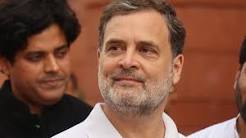
Congress leader Rahul Gandhi, who is on a visit to Andaman and Nicobar Islands, on Tuesday met tribal leaders who are raising concerns over the mega infrastructure project in the Great Nicobar region. He, along with local Congress leaders, went to Campbell Bay on Tuesday to understand the concerns of the tribal people related to the Great Nicobar projects. A section of tribal communities in Campbell Bay in Nicobar district has been alleging lack of transparency, environmental risks, and neglect of tribal rights in the project. The project includes building a transhipment port, an integrated township, a dual-use civil and military airport, and a power plant. On April 26, Rahul Gandhi arrived here in Andaman and Nicobar Islands and had a meeting with the party leaders. Congress leader Rahul Gandhi, who is on a visit to Andaman and Nicobar Islands, on Tuesday met tribal leaders who are raising concerns over the mega infrastructure project in the Great Nicobar region. A section of tribal communities in Campbell Bay in Nicobar district has been alleging lack of transparency, environmental risks, and neglect of tribal rights in the project. The project includes building a transhipment port, an integrated township, a dual-use civil and military airport, and a power plant. On April 26, Rahul Gandhi arrived here in Andaman and Nicobar Islands and had a meeting with the party leaders. He, along with local Congress leaders, went to Campbell Bay on Tuesday to understand the concerns of the tribal people related to the Great Nicobar projects. Gandhi criticised the alleged corporate influence in the archipelago and stressed that development should prioritise local needs rather than corporate interests. During his visit, he interacted with members of the Nicobarese tribal community and others in Campbell Bay. The Congress leader also visited Indira Point, the southernmost tip of India, and paid floral tribute to former Prime Minister Indira Gandhi, after which the spot was named. Tribal communities alleged that they are facing considerable hardship due to the proposed Great Nicobar projects and demanded that the central government take their concerns into account. Titus Peter, First Captain (village head) of Pulobhabi village, said that people of Campbell Bay expressed apprehension about the impact on the Shompen tribe, a Particularly Vulnerable Tribal Group (PVTG), claiming that increased outside contact could expose them to diseases and threaten their survival. Peter also warned of ecological damage, saying the Great Nicobar project could adversely affect endemic species unique to the island. While thanking Rahul Gandhi for understanding their concern, Peter alleged that the administration has not maintained transparency over the project, leaving tribal communities unaware of the full scale and implications of the project. Andaman’s senior Congress leader G Bhasker, who is accompanying Gandhi, alleged that the government had ”cheated” the tribal communities by obtaining their No Objection Certificate (NOC) without disclosing the full facts about the project. ”In its present form, the project raises significant environmental and social concerns, and we want urgent attention in this matter,” Bhasker said. (This story has not been edited by Devdiscourse staff and is auto-generated from a syndicated feed.) Courtesy : Devdiscourse Note: This news is originally published on https:/devdiscourse.com/bha and is used purely for non-profit/non-commercial purposes, especially human rights
Fuel prices may rise after April 29, says Rahul Gandhi; govt denies any hike plan amid polls
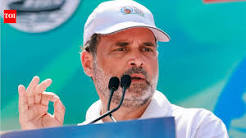
Gandhi further alleged that the government had benefited when crude prices were low but would now shift the impact of rising costs onto the public. Petrol and diesel prices could rise after April 29, Congress leader Rahul Gandhi warned on Tuesday, accusing the government of passing on the burden of higher global crude oil prices to consumers once elections conclude. In a post on X in Hindi, Gandhi said, “Election relief over, inflation’s heat is on its way! After April 29th, watch out – petrol, diesel, everything will get expensive.” He further alleged that the government had benefited when crude prices were low but would now shift the impact of rising costs onto the public. “When (crude) oil was cheap, the Modi government pocketed the profits. Now that it’s expensive, it’ll dump the burden on you,” Gandhi said. “A government that loots when it’s cheap – leaving the public to bear the brunt of inflation,” he added. His remarks come ahead of the second phase of polling in West Bengal scheduled for April 29. Assembly elections in Tamil Nadu, Kerala, Assam and Puducherry have already concluded, with results due on May 4. Meanwhile, global crude oil prices have surged amid tensions in West Asia. Israel and the United States attacked Iran on February 28 and since then the global oil supply chain has been disrupted due to the closure of Strait of Hormuz. The government has no plans to raise petrol and diesel prices, a senior official said on Tuesday, dismissing speculation of a hike after polling in West Bengal ends on April 29. Retail petrol and diesel prices have remained unchanged for a record fourth year, even as conflict in West Asia has pushed crude oil costs up more than 50 per cent over the past two months. The widening gap between input costs and pump prices has left state-run fuel retailers incurring heavy losses – with some estimates pegging daily loss at about Rs 2,400 crore – fuelling speculation of an imminent price hike after politically charged assembly elections in Tamil Nadu, West Bengal, Assam, Kerala and Puducherry conclude on Wednesday. “There is no proposal to increase petrol and diesel prices,” Sujata Sharma, Joint Secretary in the Ministry of Petroleum and Natural Gas, said at a news briefing on the fallout of developments in West Asia. Courtesy : TNIE Note: This news is originally published on https:/thenewindianexpress.com/bha and is used purely for non-profit/non-commercial purposes, especially human rights
TMC-BJP clash as Mamata Banerjee and Suvendu Adhikari rallies run parallel in Bhabanipur
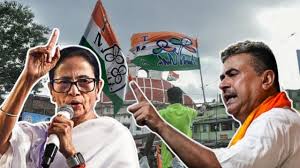
KOLKATA: Clashes broke out between supporters of the Trinamool Congress (TMC) and the Bharatiya Janata Party (BJP) in Kolkata’s Bhabanipur area on Saturday. Police and Rapid Action Force (RAF) personnel to intervene and separate the two groups. The incident occurred days before polling on 29 April, as campaigning for the second phase of the West Bengal assembly elections intensified. Chief minister Mamata Banerjee and leader of the opposition Suvendu Adhikari held election meetings in close proximity, adding to the political tension in the constituency. According to officials and eyewitness accounts, the situation escalated on Chakraberia Road after Banerjee abruptly ended her speech and left the stage. She later alleged that high-decibel loudspeakers from a nearby BJP rally disrupted her address, calling it “intentional disturbance”. Expressing frustration, Banerjee apologised to her supporters before leaving the venue. Shortly after, groups of TMC workers moved towards the BJP rally site, where they confronted BJP supporters. The exchange quickly turned heated, with both sides raising slogans of “Jai Bangla” and “Jai Shri Ram”, according to news agency ANI. Security forces, including RAF personnel, formed a human chain to prevent the confrontation from turning violent. Police said the situation was brought under control without any serious injuries reported. Suvendu Adhikari, who is contesting from Bhabanipur as well as Nandigram, reached his rally site after the incident. He criticised the TMC’s reaction, describing it as politically motivated. “This is goonda raj, jungle raj. We are trying to end it. Whatever TMC does will backfire. This time it will not be one-sided. Drive away the goons, save Bengal,” Adhikari said. He also referred to the TMC’s protest as a sign of “jungle raj”. The confrontation highlights the increasingly sharp rivalry between Banerjee and Adhikari, who was once a senior leader in the TMC before joining the BJP. Bhabanipur, which Banerjee has represented since 2011, is seen as a politically significant constituency for both parties. The BJP has described the seat as a key target in the 2026 state elections, while for Banerjee it remains central to her political standing in Kolkata, often referred to by her supporters as her “Kolkata throne”. A victory for Adhikari here would be seen as a major political breakthrough, following his 2021 win against Banerjee in Nandigram. The constituency is considered demographically diverse, with significant Bengali, Gujarati, Marwari and Sikh populations, making it a closely watched battleground. With polling due on 29 April, security has been tightened across Bhabanipur and adjoining areas. Officials said drone surveillance and paramilitary deployment have been increased to maintain order during the final phase of campaigning. According to the Election Commission of India, Phase I polling concluded earlier this week with a turnout of 91.78%. The remaining phases are scheduled to continue under heightened security arrangements, with counting set for 4 May. Courtesy : TOI Note: This news is originally published on https:/timesofindia.com/bha and is used purely for non-profit/non-commercial purposes, especially human rights