
Ganesh Kumar faces shock defeat in Pathanapuram after 25-year winning streak
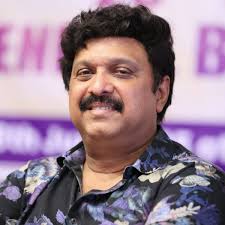
The Kerala Congress (B) chief is trailing Congress candidate Jyothikumar Chamakkala by more than 5,000 votes. Keralam’s Transport Minister and actor K B Ganesh Kumar, who has remained unbeaten in electoral politics for over two-and-a-half decades, is on the brink of defeat in the Pathanapuram constituency as vote counting in the Kerala Assembly elections enters its final stages, according to Election Commission figures. The Kerala Congress (B) chief is trailing Congress candidate Jyothikumar Chamakkala by more than 5,000 votes. In the 2021 Assembly polls, Kumar had defeated Chamakkala by nearly 15,000 votes. However, Chamakkala has continued his constituency-level work in Pathanapuram over the past five years, which appears to have translated into significant gains in the 2026 election. Kerala Congress (B), traditionally aligned with the UDF, joined the LDF ahead of the 2021 election following the death of party founder R Balakrishna Pillai, with the shift led by his son, Ganesh Kumar. During the campaign, controversy erupted after Congress leaders targeted Kumar over allegations related to his purported role in defaming former Chief Minister Oommen Chandy in a sexual assault case that was later closed by the CBI. Kumar had expressed confidence during the campaign that he would retain the seat with a record margin. The election is being closely watched as a high-stakes contest between the ruling LDF, which is seeking a rare third consecutive term, and the UDF, which is aiming to return to power after nearly a decade. The NDA, though not considered a frontrunner for power, is hoping to improve its presence and vote share in the state. Courtesy : TNIE Note: This news is originally published on https:/thenewindianexpress.com/bha and is used purely for non-profit/non-commercial purposes, especially human rights
Dr G Parameshwara meets Hariprasad, says no leadership issue discussed
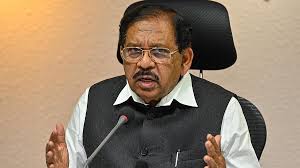
Minister BZ Zameer Ahmed Khan, another close confidant of Siddaramaiah, was also present in the meeting that lasted over 90 minutes. BENGALURU: Even as All-India Congress Committee (AICC) president Mallikarjun Kharge has clarified that the party high command has not taken any decision on change in leadership in Karnataka, the Siddaramaiah camp is continuing its efforts to project the state’s Home Minister Dr G Parameshwara as the next CM. Senior Congress MLC BK Hariprasad, a permanent invitee of the Congress Working Committee and who is said to be close to Congress Parliamentary Party chief Sonia Gandhi, seems to have entered the scene. After meeting Chief Minister Siddaramaiah on Friday evening, Hariprasad held separate confabulations with Parameshwara and asked the latter to be ready to throw his hat into the ring for the CM’s post if the party top brass decides to change the leadership, sources told The New Sunday Express. Minister BZ Zameer Ahmed Khan, another close confidant of Siddaramaiah, was also present in the meeting that lasted over 90 minutes. They chalked out a plan to pitch Parameshwara for the top post under the Dalit quota if the option of making Kharge CM and Deputy CM DK Shivakumar staking claim is ruled out. Hariprasad has information that Kharge is hesitating to take up the Chief Minister post for various reasons, sources said. Parameshwara, however, on Saturday said that the discussion among the trio revolved around the outcome of the West Bengal, Kerala and Tamil Nadu Assembly polls with a little bit of Karnataka politics. “We had a good meal together. Naturally, since we are politicians, we had to discuss politics. There is nothing to hide. Since election results will be declared on Monday, we analysed the situation. We discussed what is happening in West Bengal, Kerala, Tamil Nadu, and the status of our party there. We did not discuss state politics much,” he told reporters. On internal quota for SCs, he said the entire political dynamics has changed in Karnataka and Congress is assessing how things pan out. “For the past 25 years, we have adhered to a specific ideology. Initially, the Congress included all major, minor, and backward communities. But when the Ahinda movement began, the entire dynamics changed. We are seeing developments regarding internal reservations for SC communities and adjustments in ST percentages. Many things are currently unfolding in Karnataka, and we will see what happens next,” he added. Dr G Parameshwara Courtesy : TNIE Note: This news is originally published on https:/thenewindianexpress.com/bha and is used purely for non-profit/non-commercial purposes, especially human rights
Her Last Stand

Mamata Banerjee is conducting, in her own phrase, ajibaner lorai—a fight for life, against her most formidable foe, the BJP. A Mamata loss will end her career, and a saffron victory will decide the shape of a Hindu Bengal The woman in white buying vegetables does not look like a chief minister. That, of course, is precisely the point. It is past nine on a warm April evening in Bhabanipur, the south Kolkata neighbourhood where Mamata Banerjee was born, and lives in a two-room house, and has now come to fight, for the third consecutive time, for her political birthright. The crowd surrounding her is not the choreographed kind. You can tell. The faces are too excited, too lit from within. The vegetable seller, a local woman of indeterminate middle age, grins at Mamata Banerjee like a teenager. In the allegorical theatre of Indian electoral politics, symbolism is the only currency that never inflates. A fruit seller presses a box of mangoes into Didi’s hands. She refuses, then relents and accepts one. One mango. The detail is so perfectly calibrated, so exquisitely Bengali in its domestic frugality that you have to remind yourself it is happening on a campaign trail, not in a kitchen. “This is the difference between her and Modi,” says Hiran Majumdar, who manages the constituency, with the serene confidence of a man who believes Bengal has already endorsed his argument. “Narendra Modi eats jhalmuri in a fully stuffed shop for a pre-arranged photo op. Didi buys vegetables from a roadside stall.” Mamata Banerjee is not merely campaigning here. She is claiming ground. Bhabanipur is also where Suvendu Adhikari—her former protégé, now her most implacable tormentor—held a rally the previous evening. He is the man who bested her in Nandigram in 2021, the wound she has never publicly acknowledged and cannot stop picking at. This time, he has come for her on her own street, in her own constituency, with the easy confidence of a man who believes he has both God and Amit Shah on his side. Nandigram is where Mamata’s political career was reborn, and Bhabanipur is where she was born and lives, even after becoming the CM. Suvendu looks every inch a man at war. Going by the warmth of the greeting he receives on stage—“Swagatha, swagatham, Suvenduda swagatham”—and the composition of the men on stage, there is a certain resonant quality about him. Bhabanipur is a small constituency with a big chunk of different faiths: Bengali Hindus, Muslims, Sikhs, Marwaris, and also migrants from Odisha, Jharkhand, and Bihar; the stage is representative of the place except for the absence of Muslims. Suvendu’s speech emphasises on one of the BJP’s main planks—protect women, end TMC rule, and bring Sanatan Dharma to Bengal. It is a no-holds-barred war in which Suvendu could maybe come close to winning. The crowd at Suvendu’s rally that night was worked up by a speaker named Mohan Patel, a tall, athletic, conspicuously bearded figure, who rolled up his sleeves and delivered his warning—“Hindus would become a persecuted minority at the mercy of Muslims.” The speech was entirely in Hindi, in a city that has composed its most important thoughts in Bengali for three centuries. The assembly roared, “Bharat Mata ki jai,” and “Jai Shri Ram” in response. Nobody seemed to notice his language. That same evening a Mamata rally was going on in a parallel street; it was disrupted by BJP volunteers turning the blaring loudspeakers in her direction. The CM left, calling her walk-out an act of resistance. Those two nights at Bhabanipur brought in the essential difference between TMC’s Bengal-ism and BJP’s idea of Bharat. This is the essential grammar of the 2026 Bengal Assembly elections: the BJP’s Shri Ram taking on the TMC’s Joi Bangla—pan-Indian Hindu nationalism versus exclusive Bengali cultural identity. Delhi’s idea of what India should be versus a three-term chief minister’s insistence that Bengal is not a province of India so much as a civilisation that has graciously agreed to share a border with it. Modi speaks at Bengal. Mamata speaks from it. The distinction is not rhetorical. It is everything. This is the difference between Mamata Banerjee and Modi. Narendra Modi eats jhalmuri in a fully stuffed shop for a pre-arranged photo op. Didi buys vegetables from a roadside stall. Hiran Majumdar, who manages the Bhabanipur constituency To understand Bengali politics, you must first understand the bohiragato—the outsider. Bengal’s relationship with the rest of India has always been marked by a proud, sometimes ferociously prickly sense of cultural distinction. This is, after all, the land of Tagore and Nazrul Islam, of Satyajit Ray and Subhas Chandra Bose, of a Renaissance that preceded Indian independence and in many ways made it imaginable. Bengalis believe, not without evidence, that they invented modern Indian intellectual life and a cuisine so precisely regional that the distinction between ilish and chital is not a food preference, but a declaration of who you are and where you come from. The consequence of this pride is a deep, instinctive suspicion of the outsider who arrives, however well-intentioned, to tell Bengal what Bengal should be. The Left understood this and draped its ideology in Bengali cultural attire for 34 years. Mamata Banerjee understood it even better and weaponised it into something more raw and personal. The BJP, relatively new to the state’s complicated emotional weather, has repeatedly underestimated it and paid the price. The TMC masterstroke in 2021 was not any single policy or personality. It was a slogan ‘Bangla Nijer Meyekei Chai’—Bengal Wants Its Own Daughter. The BJP campaign that year was led largely by leaders parachuted in from Delhi and Uttar Pradesh, whose sloganeering about Ram and borders landed in Bengal like a foreigner’s mispronunciation—technically legible, tonally catastrophic. The result was 213 seats for the TMC, 77 for the BJP: a rout so complete it prompted, by all accounts, a brutally honest internal post-mortem. The BJP is not an organisation that repeats its mistakes without attempting, at minimum,
Great Nicobar project faces fresh questions on ecology, tribal consent and feasibility: Jairam Ramesh
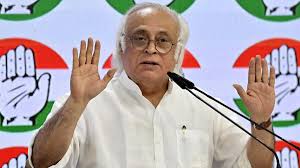
Congress party general secretary (communications) Jairam Ramesh says the press note, issued three days after Rahul Gandhi’s April 28 visit to Great Nicobar, is part of ‘damage control’ The Congress on Sunday questioned the Centre’s response on the Great Nicobar Island Development Project, saying the Government’s clarification, issued after the recent visit of Leader of the Opposition Rahul Gandhi, does not address the serious concerns raised over ecology, tribal rights, environmental clearances and financial viability. Senior Congress leader and party general secretary (communications) Jairam Ramesh said the press note, issued three days after Rahul Gandhi’s April 28 visit to Great Nicobar, was part of “damage control” and ignored detailed objections already submitted to the Environment Ministry in 2024. He said the issues raised related to the ecological sensitivity of the island, legality of approvals and the economic assumptions behind the project. “The Government’s press note does not address any of the serious concerns that have been raised,” Ramesh said. The Great Nicobar Island Development Project includes a transshipment port, airport, township and tourism infrastructure in the Andaman and Nicobar Islands. Ramesh said the claim that only 1.82 per cent of island land is being used was misleading as it ignored the ecological value of Great Nicobar as a distinct and fragile ecosystem. He said nearly 50 new species of birds, reptiles, crabs and other fauna had been recorded from the island in recent years, underlining its biodiversity. On Galathea Bay, the proposed site of the port, Ramesh said it fell under Coastal Regulation Zone-1A where such construction is not permitted. He said the area had over 20,000 coral colonies and was a major nesting site of the endangered Giant Leatherback turtle. He also questioned the environmental clearance process, alleging conflict of interest involving institutions such as the Wildlife Institute of India and the Zoological Survey of India, which were part of the clearance process and later involved in monitoring roles. Ramesh said compensatory afforestation proposed in Haryana could not replace forest loss in Nicobar. “A forest ecosystem cannot be substituted by plantation in a completely different ecological zone,” he said. He pointed to inconsistent official figures on tree felling, saying estimates had ranged from 8.52 lakh to 9.64 lakh and now 7.11 lakh trees. He said this raised questions over the accuracy of baseline assessments, adding that ANIIDCO had also invited tenders for enumeration and felling, indicating the absence of a final verified count. On tribal rights, Ramesh said the Nicobarese community withdrew consent in 2022, alleging they were pressured during the clearance process. He also raised concerns over the Shompen tribe, a Particularly Vulnerable Tribal Group, saying there is no clarity on how informed consent was obtained. He said Forest Rights Act procedures were completed in less than 20 days and without mandatory tribal representation, raising concerns over legality. On financial viability, Ramesh said projections of 10 million passengers annually at the proposed airport appeared unrealistic compared to Port Blair’s current traffic of around 1.8 million. He also referred to internal Government discussions that have flagged concerns over the viability of the transshipment port, which would need to compete with established regional hubs without a strong industrial base. Ramesh said key documents related to the project, including environmental management plans and committee reports, had not been made public. He also cited concerns raised by former Navy Chief Admiral Arun Prakash, who said security requirements should not be linked to the development project. Ramesh said security considerations should not be used to restrict scrutiny of a project with major ecological and social implications in one of India’s most sensitive island regions. Article_Author Shekhar Singh Courtesy : The Tribune Note: This news is originally published on https:/thetribune.com/bha and is used purely for non-profit/non-commercial purposes, especially human rights
No immediate CM change in Karnataka as Congress may stay focused on Kerala

The Siddaramaiah camp had been trying to pitch Home Minister Dr G Parameshwara as the future CM under the Dalit quota. BENGALURU: The Congress high command is likely to remain cautious with regard to a change in leadership in Karnataka, keeping in mind the 2028 assembly polls, winning which will mean first overcoming anti-incumbency. The party leadership is unlikely to accede to pressure from either of the camps headed by Chief Minister Siddaramaiah and DCM DK Shivakumar, and is likely to work out a formula based on caste combination and winnability, according to sources. The top brass, including Congress Parliamentary Party chief Sonia Gandhi and LoP in Lok Sabha Rahul Gandhi, will weigh the options, including that of maintaining status quo by keeping Siddaramaiah as the AHINDA face of the party and DK Shivakumar as KPCC president, besides sending AICC President Mallikarjuna Kharge as consensus CM candidate, sources added. The outcome of the May 4 results of five state assemblies will also have a bearing on the decision. The party high command is likely to get busy if it wins Keralam, where it appears to have an edge, and forms the UDF government. “They have to resolve the issue of the Keralam chief minister if UDF gets a majority, so dealing with Karnataka’s leadership issue will not be a priority,” a Congress leader remarked. The Siddaramaiah camp had been trying to pitch Home Minister Dr G Parameshwara as the future CM under the Dalit quota. A couple of days ago, the latter had welcomed the idea of Kharge becoming the CM, saying party leaders would accept him, given his seniority. Kharge had also clarified that the high command has not taken any decision on the Karnataka issue. “He (Kharge) has said that for now, there is a chief minister, and the question of changing him does not arise at the moment. In our party, the AICC president is the supreme authority, along with Rahul Gandhi, Sonia Gandhi and others. When word comes from the high command, we not only give respect but also accept the order,” Parameshwara told reporters on Friday, adding, “When he (Kharge) says there is no change, it is a full stop (for change in leadership).” He said that since the statement came from Kharge, it is assumed that the top brass must have held deliberations over the issue. “The decision of Kharge, Sonia and Rahul is like ‘prasada’ (sacred offering) to us which we accept,” said DCM DK Shivakumar, reiterating his unwavering loyalty to the Congress leadership. “As a Congressman, I have been very loyal to the party. Our party leaders’ words are very important. We will go by the party’s directions,” he told reporters. Devaraj B Hirehalli Courtesy : TNIE Note: This news is originally published on https:/thenewindianexpress.com/bha and is used purely for non-profit/non-commercial purposes, especially human rights
Sultanpur court denies forensic voice test request against Rahul Gandhi
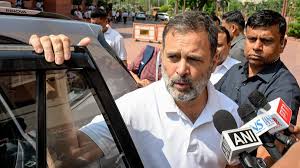
A Sultanpur court rejected a plea seeking a voice sample of Rahul Gandhi in a defamation case filed by a BJP leader, posting the matter for May 11, with the complainant planning to challenge the order Sultanpur (UP): A local MP/MLA court on Saturday rejected a plea seeking a voice sample of Rae Bareli MP Rahul Gandhi in a defamation case filed by a BJP functionary against the Congress leader, and posted the matter for the next hearing on May 11. The plea, filed by BJP leader Vijay Mishra through his counsel Santosh Kumar Pandey, had sought Gandhi’s voice sample for a forensic test to compare it with an audio clip. After the petition was dismissed, Pandey said they would file a revision plea before the sessions court against the order. The court rejected the plea after hearing the arguments of both sides, including Gandhi’s counsel Kashi Prasad Shukla. The matter dates back to 2018 when Mishra, a local BJP leader, filed a defamation suit over Gandhi’s alleged objectionable remarks targeting Amit Shah while campaigning for the Karnataka Assembly elections. After five years of legal proceedings, the court issued a warrant against Gandhi in December 2023. The Rae Bareli MP surrendered before the court in February 2024, and was granted bail on two sureties of Rs 25,000 each by a special magistrate. On July 26 last year, the Congress leader recorded his statement before the court, claiming innocence and calling the case a political conspiracy. Earlier this year, multiple hearings were postponed due to a strike by lawyers and the ill-health of Gandhi’s counsel. Courtesy : Telangana Today Note: This news is originally published on https:/telanganatoday.com/bha and is used purely for non-profit/non-commercial purposes, especially human rights
Savarkar Filed 5 Mercy Pleas, Saw Cow As Useful Animal & Not God: Grandnephew In Court

During cross-examination in his defamation case against Rahul Gandhi, Satyaki also admitted that Savarkar had appealed for Indian recruitment into the British Army for World War II Satyaki Savarkar, the grandnephew of Vinayak Damodar Savarkar, has testified before a special MP/MLA court in Pune that the Hindutva ideologue had filed five mercy petitions with the British government while imprisoned. During a cross-examination, Satyaki also clarified that Savarkar viewed the cow as a “useful animal” rather than a deity. These admissions, as per LiveLaw occurred during the proceedings of a criminal defamation case lodged by Satyaki against Congress leader Rahul Gandhi, whom he accuses of defaming his granduncle during a 2023 speech in London. Satyaki Savarkar confirmed to the court that his granduncle submitted clemency petitions five times during his incarceration in the Cellular Jail. However, he contextualised this by noting that such petitions were a common practice among many political prisoners of that era. Furthermore, Satyaki admitted that Savarkar had appealed for Indian recruitment into the British Army during World War II. He defended this action not as a sign of loyalty to the British, but as a strategic move to ensure young Indians received formal military and firearms training, which would be essential for the nation once it achieved independence. Rationalist views on the cow In a notable departure from traditional religious narratives often associated with Hindutva, Satyaki stated it was factual to say Savarkar did not consider the cow to be a god. He reiterated that Savarkar’s perspective was rationalist, treating the animal primarily for its utility to society. Satyaki argued that contemporary objections to Savarkar’s views on cows or his military advocacy often stem from a lack of deep engagement with his complete works. Courtesy : News18 Note: This news is originally published on https:/news18.com/bha and is used purely for non-profit/non-commercial purposes, especially human rights
Rahul Gandhi Criticizes BJP’s ‘Anti-Women’ Stance
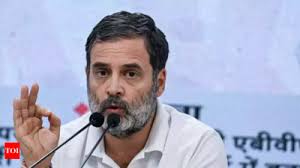
Rahul Gandhi has accused the BJP of exposing its ‘anti-women’ mindset after an alleged derogatory remark by a Gujarat BJP chief against a woman Congress MP. Gandhi criticizes the party’s commitment to women’s empowerment, highlighting a broader ideological conflict. Rahul Gandhi criticized the BJP for its alleged ‘anti-women and Manuwadi’ mindset during a recent speech. His comments were triggered by an indecent remark made by Gujarat BJP President about Congress MP Geniben Thakor. Gandhi questioned the BJP’s commitment to women’s rights, claiming their actions reveal a regressive ideology. He warned that women across India would respond strongly to any insults directed at them. In a recent verbal onslaught, Congress leader Rahul Gandhi lambasted the BJP, accusing it of harboring an ‘anti-women and Manuwadi’ mindset. Gandhi’s remarks were in response to an alleged indecent comment made by Gujarat BJP President on woman Congress MP Geniben Thakor. Gandhi questioned whether the BJP genuinely championed women’s rights, suggesting their actions betrayed a regressive ideology. He emphasized that the BJP’s mask of ‘Nari Vandans’—a claim to honor women—is slipping, revealing what he calls true intentions beneath. Further castigating the party, Gandhi accused Prime Minister Narendra Modi of evading Parliament, allegedly ‘frightened’ by Congress women MPs’ questions. The Congress leader warned that women across India will respond to any insult with equal measure. Courtesy : Devdiscourse Note: This news is originally published on https:/devdiscourse.com/bha and is used purely for non-profit/non-commercial purposes, especially human rights
Allahabad HC Dismisses Plea For FIR Against Congress Leader Rahul Gandhi Over ‘Indian State’ Remark, Upholds Lower Court Order
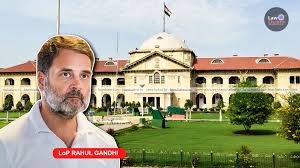
The Allahabad High Court dismissed a petition seeking an FIR against Congress leader Rahul Gandhi over his remarks on the “Indian state”. The court upheld a Sambhal trial court’s earlier order rejecting the complaint as weak. The plea was filed challenging the lower court’s decision, which has now been reaffirmed. Allahabad HC Dismisses Plea For FIR Against Congress Leader Rahul Gandhi Over ‘Indian State’ Remark | File Photo Prayagraj: The Allahabad High Court has granted major relief to Congress leader and Leader of Opposition in Lok Sabha Rahul Gandhi by dismissing a petition seeking registration of an FIR against him. Petitioner and Challenge The petition was filed by Simran Gupta, who had challenged a Sambhal trial court order that rejected her plea for criminal proceedings against Gandhi. She had sought directions for lodging an FIR based on Gandhi’s remarks concerning the Indian state. The High Court dismissed the plea and upheld the lower court’s decision, bringing the matter to a close at this stage. Origin of Complaint The case stems from a complaint filed in a Chandausi court in Sambhal, where the petitioner alleged that Gandhi’s statement made on January 15, 2025, during the inauguration of the Congress headquarters Indira Bhawan warranted legal action. In his speech, Gandhi had said that the Congress was fighting not only the BJP and RSS but also what he described as the “Indian state”. The trial court had earlier rejected the complaint, terming it weak. The petitioner then moved the High Court challenging that order, which has now been dismissed. Meanwhile, Gandhi continues to face legal scrutiny in another matter before the High Court concerning allegations linked to his alleged British citizenship. The case is being heard separately, with the next hearing scheduled later this month. The matter pertains to a plea seeking investigation into claims regarding his citizenship status. Courtesy : TFPJ Note: This news is originally published on https:/thefreepressjournal.com/bha and is used purely for non-profit/non-commercial purposes, especially human rights
Why Rahul Gandhi chose Great Nicobar as his next battlefield

As exit polls bring the Congress grim news except in Kerala, Rahul bets on the Great Nicobar narrative. But sustaining campaigns remains his enduring weakness If exit polls are right, May 4 will hand Rahul Gandhi a rarity: unambiguously good news. The Congress-led United Democratic Front (UDF) seems on course to dislodge Pinarayi Vijayan’s Left Democratic Front (LDF) government in Kerala, with Axis My India giving it 78-90 out of the legislative assembly’s total 140 seats and Manorama News-CVoter pushing the band to 82-94. The headache is what tends to follow a Congress win: a stampede for the chief minister’s chair. There are four men in the frame. K.C. Venugopal, AICC general secretary and Alappuzha MP, is Rahul’s most trusted aide. V.D. Satheesan, leader of the Opposition in the outgoing assembly and a sitting MLA, has the strongest claim from the floor. Ramesh Chennithala, a former home minister of Kerala, has waited two decades for his turn. K. Sudhakaran, the Kannur MP, has not entered his name, but his Facebook endorsement of Venugopal has already lit fires in the rival camps. Rahul has handled this kind of three-way contest before, not without some unwanted consequences though. Madhya Pradesh and Rajasthan in 2018 produced festering wars between Kamal Nath and Jyotiraditya Scindia, and Ashok Gehlot and Sachin Pilot, respectively. In both, it is the party that lost. Karnataka in 2023 ended in an awkward truce between Siddaramaiah and D.K. Shivakumar that already shows signs of fraying. Given all that, the Kerala squabble may be the easiest of Rahul’s problems. Beyond Kerala, the cupboard is bare. Assam looks set to elude the Congress again. In West Bengal, where some exit polls now predict a BJP majority, the party faces what every survey calls extinction. Tamil Nadu accommodates the Congress only at the DMK’s pleasure. With the Kerala victory, the Congress completes its transformation into a southern outfit, with Himachal Pradesh as a high-altitude footnote. This is why the BJP’s parliamentary upset of April 17 matters to Rahul in a way political punditry has under-priced. The defeat of the Constitution (131st Amendment) Bill—the Narendra Modi government’s attempt to bundle women’s reservation with delimitation—was the first time in nearly 12 years that a Modi-sponsored constitutional amendment failed the two-thirds test. Rahul’s circle now believes the Opposition has the floor strength in Parliament to dictate, not just react. The aim, they say, is to set the agenda rather than chase it. Rahul’s aides point to the caste census as proof of concept. From the day in 2023 that he reversed the Congress’s historical squeamishness on the question, Rahul pounded one slogan—“jitni abadi, utna haq” (rights in proportion to population)—until the BJP, which had once dismissed the idea as an “urban Naxal” plot, agreed in April 2025 to fold caste enumeration into the next census. The electoral pay-off in 2024 was modest, but the pressure was real. In Uttar Pradesh, where caste arithmetic decides everything, the BJP fell from 62 Lok Sabha seats to 33. Post-poll data from the Centre for the Study of Developing Societies (CSDS) showed the National Democratic Alliance (NDA) losing 19 percentage points among Koeri-Kurmi OBCs (Other Backward Classes) and 13 percentage points among other OBCs. This was on the back of an Opposition campaign that warned that a “400 paar” majority for the NDA would dismantle reservation. Rahul’s next slogan was “vote chori”—his charge was that the Election Commission (EC) and the BJP had colluded to inflate, prune and redirect electoral rolls. Rahul turned it into a series of high-decibel press conferences, complete with what he called “Hydrogen-bomb” evidence. In Bihar, where he timed his second presentation a day before the November 6 vote last year, the pitch sank: the Congress won only six of the 62 seats it contested, its second-worst showing in the state’s history, and forfeited deposits in most of the rest. The argument resurfaced only in West Bengal, where the EC’s invented category, “logical discrepancy”, was used to red-flag some 2.7 million voters during the Special Intensive Revision of rolls—a disproportionate share of them allegedly Muslim. The EC has dismissed every accusation. The Congress’s own fortunes in Bengal will be unaffected either way. Rahul’s pattern is now clear. He picks issues that may not win the next election but will deny Prime Minister Modi the comfort of an unchallenged narrative. After May 4, and especially if Bengal goes the BJP way, the saffron camp will want a chorus about the Opposition’s decimation. Rahul wants a counter-tune cued up for the rest of 2026, ideally one with a moral charge. Standing with the locally aggrieved is, by now, his most dependable register. The list runs from Yavatmal in 2008, when he sat in Kalawati Bandurkar’s hut in Vidarbha, through Niyamgiri (2008-10), where he marched with the Dongria Kondh against Vedanta’s bauxite plan, to Mirchpur (2010), Bhatta Parsaul (2011), Gopalgarh (2011), Satara (2012), Shakur Basti (2015), Una (2016), Saharanpur (2017), Mandsaur (2017) and Hathras (2020). The template never varies: travel to the wronged, embrace the cause, exit. In the era of the UPA (United Progressive Alliance), the pay-offs could be substantial—Jairam Ramesh’s 2010 rejection of Vedanta’s environmental clearance was a Niyamgiri trophy. In the NDA era, the land acquisition ordinance lapsed on August 31, 2015, with Modi citing farmer “fear” in his Mann Ki Baat radio message as the trigger. Since then, the splash has rarely converted: the Yavatmal-Washim seat in Maharashtra has voted the Shiv Sena (in its various avatars) in every Lok Sabha poll since 2009; in 2022, the Sikandra Rao assembly seat in Uttar Pradesh’s Hathras gave the Congress 1,159 votes against the BJP’s 98,094. Now, in the summer of 2026, Rahul has chosen Great Nicobar. On April 26, he flew to Sri Vijaya Puram (the renamed Port Blair). Two days later, despite a curiously timed suspension of helicopter services to the Nicobars from April 28 to May 1, he reached Campbell Bay. He met Nicobarese elders at Rajiv Nagar, settlers at Gandhi Nagar and