
INDIA bloc continues SIR protest: Telangana Congress demands urea for farmers; ruckus adjourns parliament
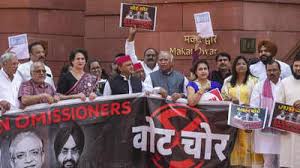
INDIA bloc on Tuesday continued their protests against Bihar SIR, outside Parliament, accusing the election commission of “vote theft”. Among those present were Congress president Mallikarjun Kharge, MP Priyanka Gandhi Vadra and Samajwadi party leader Akhilesh Yadav. The protests have continued since the start of the monsoon session on 21 July, with ruling party MPs accusing the opposition of disrupting proceedings. Tuesday’s protests saw banners that read “Stop vote chori,” and described the ongoing revision of electoral rolls as “Silent invisible rigging.” — ANI (@ANI) Telangana Congress MPs also protested, demanding the release of urea for farmers in the state, urging the central government to act swiftly. The ruckus inside the parliament also led to the adjournment of both houses until after afternoon. Meanwhile, Congress leader Rahul Gandhi pressed ahead with his 16-day ‘Voter adhikar rally’ in Bihar, highlighting “irregularities” in the voter list. On Tuesday, he travelled to Aurangabad to mark the second day of the campaign, which will cover more than 20 districts and 1,300 km. Responding to the allegations, the election commission held a press conference on Sunday. It dismissed claims of rigging and asked Rahul Gandhi to submit a signed affidavit with supporting evidence. NDA parliamentary party meeting NDA leaders gathered at the parliament library building on Tuesday for a parliamentary meeting. Prime minister Narendra Modi, home minister Amit Shah, and senior ministers attended the session, which also felicitated vice presidential candidate CP Radhakrishnan. After the meeting, union minister Kiren Rijiju said Modi had appealed to all MPs, including those in the opposition, to support Radhakrishnan in the upcoming election. Courtesy : TOI Note: This news is originally published on https:/timesofindia.com/bha and is used purely for non-profit/non-commercial purposes, especially human rights.
Angry at Rahul, Modi blocking BC quota bills: CM
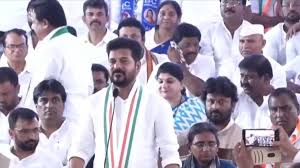
Hyderabad: Chief minister A Revanth Reddy Monday alleged that Prime Minister Narendra Modi was blocking approval of the two BC reservation bills and an ordinance to remove the 50% cap on reservations because of his anger at Rahul Gandhi’s fight for education, employment, and political empowerment of Backward Classes. “If PM Modi and Union minister G Kishan Reddy have anything against Rahul Gandhi’s stand for justice to the BCs, let them book more cases against him individually. Already, there are several cases pending. But they should stop blocking the BC quota bills. Modi and Kishan Reddy should take up the issue with the President and ensure assent for the two bills passed by the Telangana assembly and the ordinance. The BJP has the power to do it,” Revanth said. He was speaking at the 375th birth anniversary celebrations of Sardar Sarvai Papanna Goud Maharaj at Ravindra Bharati here. Revanth hit out at both the BJP and BRS for ‘undermining’ BC rights. While the BJP, he said, was using Muslim reservations as a pretext to block higher BC quota, the previous BRS govt led by K Chandrasekhar Rao restricted reservations to 50% in the Panchayat Raj Act of 2018. Revanth said his govt had conducted a caste survey and passed two bills providing 42% BC reservations, along with an ordinance to remove the 50% ceiling. These were forwarded by the governor to the President. “When we realised assent was being delayed, we held a massive dharna at Jantar Mantar. Leaders and MPs from Maharashtra, Uttar Pradesh and other states joined us. But neither BJP nor BRS leaders participated. That dharna was not for Congress’ political gain but for the empowerment of bahujans. Their absence exposed both parties as ‘anti-BC’,” he said. Rejecting BJP’s argument on Muslim quota, Revanth said: “The Constitution does not allow religion-based reservations. If there were any, the Supreme Court would strike them down within minutes. Show us where religion-based reservations exist in our 42% BC quota bills. This is a BJP conspiracy to deny BCs their rights under the guise of opposing Muslim quota.” He pointed out that Muslim reservations under the BC category have existed for over 56 years. “If the BJP really opposes them, let them remove them in Gujarat and Uttar Pradesh first,” he said, urging BC communities to see through “these conspiracies.” He said BC empowerment can happen only through education, employment, and political representation and guaranteed reservations. The CM laid the foundation for the installation of a statue of Sardar Sarvai Papanna near the secretariat. CM Revanth Reddy and deputy CM Bhatti Vikramarka will join Rahul Gandhi’s Bihar padayatra. The CM alleged that BJP was deleting names of lakhs of voters across states. “Vote chori is being done to win elections. In Bihar, 65 lakh names were deleted. It happened in Maharashtra, and it will happen in Telangana. People who are alive are shown as dead, while outsiders are enrolled as voters. Rahul Gandhi exposed this conspiracy, but instead of answers, the ECI asked him for affidavits. Is this justice?” he asked. Courtesy : TOI Note: This news is originally published on https:/timesofindia.com/bha and is used purely for non-profit/non-commercial purposes, especially human rights.
Give affidavit within 7 days or apologise: CEC to Rahul
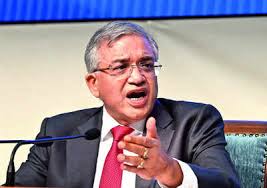
NEW DELHI: Chief Election Commissioner Gyanesh Kumar on Sunday set a seven-day deadline for leader of opposition in LS Rahul Gandhi to either submit a declaration under oath along with proof of electoral roll irregularities alleged by him, or apologise to the nation as his ‘vote theft’ claims are rendered baseless and invalid. “There is no third option,” said a combative Kumar while addressing his first press conference as CEC. He was flanked by election commissioners S S Sandhu and Vivek Joshi. “If one does not point out errors within these timelines and also fails to file an election petition within 45 days to challenge the result, but still tries to mislead the voters with false allegations of ‘vote chori’, is this not a subversion of the Constitution?” asked Kumar. “A lie, if repeated several times, does not become a truth.” “The voter knows the motive behind such baseless allegations,” the CEC said while accusing parties of firing from the Election Commission’s shoulder. Explaining the procedure for pointing out errors in electoral rolls, Chief election commissioner (CEC) Gyanesh Kumar said an elector of an assembly constituency (AC) or booth level agents (BLAs) appointed by parties can file claims and objections on the draft voter list with the sub-divisional magistrate (SDM), a state govt employee who is also the electoral registration officer (ERO), or use the two-point appellate process to get corrections made after the final electoral roll is published. ‘We don’t discriminate between parties’: CEC “EC does not discriminate between parties. It simply discharges its duties as enshrined in the Constitution,” he added. Kumar reiterated that EC, as required by Article 326 of the Constitution, is committed to enrolling every Indian citizen who is 18 years and above, as voters. “The commission stands fearlessly like a rock with every voter, be he/she poor or rich, elderly or young, or from any caste or religion,” said Kumar. Elaborating on the poll body’s insistence on a signed declaration from Rahul, but not using the same yardstick with BJP MP Anurag Thakur after he made similar allegations, the CEC said EC believes in graded response. He further explained that any elector from an AC has the right to complain about exclusion; similarly, BLA can also complain under oath. “But if the complainant is not a voter in that AC, and is making serious allegations about exclusion of 1.5 lakh voters while calling EC a ‘chor’, it warrants an escalated response as per Rule 20(3) (b), which requires ERO to administer an oath to the complainant as a witness,” he said. “EC cannot act based on a PPT presentation with wrong facts,” added Kumar. Though Thakur had alleged fake voters in constituencies, including Rae Bareli and Wayanad, during 2024 LS polls, he did not cast any aspersions on EC. Drawing a distinction between voter list errors and actual voting, Kumar said while there may be electors in the voters’ list who are dead, permanently shifted or enrolled at multiple places, the commission chose not to delete them by simply using technology and instead required statutory forms to be filled. With SIR, starting with Bihar, such entries can be identified and weeded out after due house-to-house verification. “But when it comes to voting, one person can only cast one vote,” he stressed. On demand for machinereadable rolls, the CEC said a machine-readable voter list is different from a searchable voter list. The latter, he said, can be searched with EPIC number. As regards machinereadable roll, Supreme Court had in 2019 prohibited it from being shared, citing voters’ privacy concerns. Courtesy : TOI Note: This news is originally published on https:/timesofindia.com/bha and is used purely for non-profit/non-commercial purposes, especially human rights.
Oppn show of strength in Bihar as allies join Rahul yatra
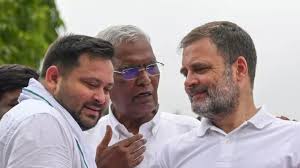
SASARAM: INDIA bloc members on Sunday joined Rahul Gandhi at the launch of ‘Voter Adhikar Yatra’ here against SIR of electoral rolls and “vote theft” in Bihar, with the occasion also becoming a show of strength for the “mahagathbandhan” in the state that is set to go to polls later this year, reports Ambika Pandit. RJD, CPM, CPI(M-L) Liberation, CPI and Vikassheel Insaan Party chiefs along with those from Congress came together setting off the 16-day yatra from Sasaram. The ground, brimming with a large crowd of euphoric supporters and party workers, was dotted by RJD and Congress flags. CPI(ML) Liberation general secretary Dipankar Bhattacharya, CPM’s Subashini Ali, CPI’s P Sandosh Kumar, and VIP’s Mukesh Sahani spoke vociferously against SIR and its impact on marginalised voters. Lalu Prasad stole the show with his trademark style. Despite his frail health, he launched blistering attacks on his rivals, leaving the audience in fits of laughter. “Lagal, lagal jhulaniya ke dhakka, balam Kalkata chala (We will push the opponent so hard that they will go far away),” he said. Tejashwi issued a warning to PM Modi and home minister Amit Shah, saying, “We will not let anyone snatch democracy from Bihar.” Courtesy : TOI Note: This news is originally published on https:/timesofindia.com/bha and is used purely for non-profit/non-commercial purposes, especially human rights.
Rahul’s yatra launch becomes INDIA bloc’s show of strength in Bihar
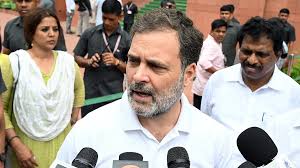
Sasaram: INDIA bloc leaders on Sunday joined Rahul Gandhi at the launch of the ‘Voter Adhikar Yatra’ here against the special intensive revision (SIR) of electoral rolls and “vote theft” in Bihar, with the occasion also becoming a show of strength for the “mahagathbandhan” in the state that is set to go to polls later this year. RJD, CPM, CPI(M-L) Liberation, CPI and Vikassheel Insaan Party (VIP) leaders along with those from Congress came together setting off the 16-day yatra from the BIADA ground in Sasaram. The horizon of the ground, brimming with a large crowd of euphoric supporters and party workers, was dotted by RJD and Congress flags. Amid loud sloganeering against “vote chori” and in the presence of RJD chief Lalu Prasad Yadav and leader of opposition in the Bihar assembly Tejashwi Yadav, Rahul asked the crowd “apka mood kaisa hai” and after the audience settled to listen, he launched a scathing attack on BJP and RSS, accusing them of trying to “wipe-out” the Constitution by stealing elections. He said the campaign against vote theft and SIR was “a fight to save the Constitution”. CPI(ML) Liberation general secretary Dipankar Bhattacharya, CPI(M)’s Subashini Ali and CPI’s P Sandosh Kumar and VIP’s Mukesh Sahani spoke vociferously against SIR and its impact on marignalised voters. Referring to SIR, Rahul alleged it was the latest conspiracy to “steal” the Bihar elections by deleting and adding voters but people and INDIA bloc will not let the Modi govt do that. He said the country now knows what EC is doing and Congress showed how it is carrying out this “theft”, as he highlighted alleged irregularities the Maharashtra polls and referred to Congress’s study of the Mahadevapura assembly segment in Karnataka’s Bengaluru Central LS constituency. Lalu Prasad stole the show with his earthy humour and trademark style during the launch of the yatra. The 77-year-old, despite frail health, launched blistering attacks on his rivals, leaving the audience in fits of laughter. “Lagal, lagal jhulaniya ke dhakka, balam Kalkata chala (We will push the opponent so hard that they will go far away),” he said, drawing loud cheers from the crowd. The line, a regular feature of his campaign speeches, once again brought his supporters to life. Accusing the BJP of being involved in “vote thefts,” Lalu urged the masses not to let BJP to power. “Throw out the vote thieves from power and help us win elections in the state,” he said, calling upon people to remain united. He added that uprooting the NDA govt was essential to “strengthen democracy.” Tejashwi issued a warning to PM Narendra Modi and home minister Amit Shah, saying, “We will not let anyone snatch democracy from Bihar — referred to as land that is seen to be the mother of democracy”. He described SIR as not “vote chori” but “vote dacoity”. Courtesy : TOI Note: This news is originally published on https:/timesofindia.com/bha and is used purely for non-profit/non-commercial purposes, especially human rights.
‘Chori chori, chupke chupke’: Rahul Gandhi shares new video as part of ‘vote theft’ campaign; watch
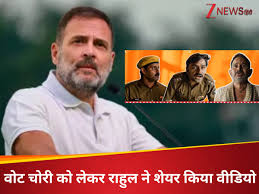
NEW DELHI: A fresh jibe added to Rahul Gandhi’s string of attacks on the Election Commission, as the Congress MP and Lok Sabha LoP on Saturday used a parody clip from the Hindi film “Laapataa Ladies” to target the poll body.Sharing a one-minute video inspired by Kiran Rao’s Laapataa Ladies, Rahul posted on X: “Chori chori, chupke chupke… Ab aur nahi, jantaa jaag gayi hai” (Now, no more, the public has woken up). — RahulGandhi (@RahulGandhi) In the video, a man walks into a police station to report a theft. While the policeman lists usual stolen items, the man responds that he has fallen victim to “vote theft.” Meanwhile, the Congress party has urged people to join its “Vote Chori se Azaadi” campaign in support of Rahul’s allegations against the Election Commission and BJP. Rahul also announced the launch of “VoterAdhikarYatra” from August 17 in Bihar, calling it a direct fight against vote theft. “From August 17, with #VoterAdhikarYatra, we are launching a direct fight against vote theft from the soil of Bihar,” he said on X. This comes amid INDIA bloc protests and Rahul’s repeated charge that elections are being manipulated. On August 7, he alleged: “Elections are choreographed. Our internal polling told us we would win 16 seats in Karnataka; we won nine. We then focused on seven unexpected losses. We chose one Lok Sabha, and our team decided we could only focus on one Vidhan Sabha (seat). So we focused on Mahadevapur. Here is the broad math. All data is 2024 data from the Election Commission. Total votes polled in the Lok Sabha were 6.26 lakh. The BJP won with 6,58,915, securing a margin of 32,707. But then we look at Mahadevapura, where Congress polls 1,15,586 and BJP polls 2,29,632. Congress wins all Vidhan Sabhas but this one. This seat wins them the election.” He also said on August 7 that “Elections are choreographed and EC colluding with the BJP.” Courtesy : TOI Note: This news is originally published on https:/timesofindia.com/bha and is used purely for non-profit/non-commercial purposes, especially human rights.
Independence Day: Rahul, Kharge absent from Red Fort event; BJP questions no-show
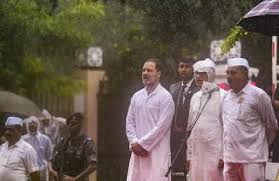
NEW DELHI: The Bharatiya Janata Party (BJP) criticised Rahul Gandhi and Mallikarjun Kharge over their absence from the official Independence Day celebration at the Red Fort on Friday. Rahul Gandhi is the leader of the opposition in the Lok Sabha, and Mallikarjun Kharge holds the same post in the Rajya Sabha — both official positions whose holders mostly attend the event. “Rahul Gandhi, leader of opposition, was missing from the Independence Day celebrations at the Red Fort. At the Congress HQ event, he appeared visibly disoriented. The nation deserves to know — is he well?” wrote BJP I-T cell chief Amit Malviya on X. He further said, “And why did he choose to skip the official ceremony? For someone in his position, such absence sends a poor message about his commitment to national occasions.” — amitmalviya (@amitmalviya) There has been no official statement from the Congress party over the two leaders not attending the Red Fort ceremony. Earlier, Rahul Gandhi greeted the nation on X and wrote: “Happy Independence Day to all countrymen. This freedom, achieved by the sacrifice of great freedom fighters, is a pledge to build such an India — where justice is based on truth and equality, and there is respect and brotherhood in every heart. It is our duty to protect the pride and honour of this precious heritage. Jai Hind, Jai Bharat.” Congress President Mallikarjun Kharge also posted on social media and said, “Heartiest greetings and congratulations to all countrymen on Independence Day. We pay our humble tribute to the countless great freedom fighters who made invaluable contributions to the national movement. “Today is an important day because we, the people of India, are now fighting for our rights, protection of constitutional institutions, social justice, economic empowerment, and brotherhood. Let us take this struggle forward together and pledge to protect the interests of every Indian. Jai Hind,” he further wrote. Courtesy : TOI Note: This news is originally published on https:/timesofindia.com/bha and is used purely for non-profit/non-commercial purposes, especially human rights.
Rahul, Kharge skip Red Fort event, draw BJP fire
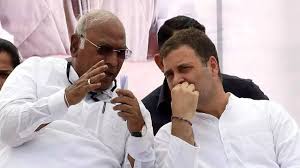
NEW DELHI: Absence of Rahul Gandhi and Mallikarjun Kharge, leaders of opposition in Lok Sabha and Rajya Sabha, respectively, from the Independence Day event at Red Fort on Friday drew a sharp reaction from BJP which alleged that the main opposition party, Congress, has hit a “new low” with its top functionaries “insulting” the country by “boycotting” the event. Rahul had attended the programme last year but was absent this time. Kharge was absent last year as well. The Congress leadership steered clear of making a statement on the issue but sources said party heads have chosen to distance themselves from such events as they feel the governing dispensation discriminates against opposition members in terms of seating arrangements and protocol. “Even those holding constitutional positions are not shown due respect – instead of being seated in the front row, they are placed in the third row,” a source said. BJP sources refuted the charge as a “lame alibi”. “We are following the same protocol that they had put in place,” a source said. “From opposing a party to insulting the nation – every time you think Congress can’t fall further, they hit a new low,” BJP said. “Only a handful of chairs were empty at Red Fort, and no points for guessing who missed the event again,” BJP said, posting a media report on X about Rahul and Kharge skipping the official event. The stalemate over seats and protocol is not new and has seen BJP and Congress engage in a war of words with BJP members alleging in the past that during UPA era, its members were not given seats i VIP areas. Courtesy : TOI Note: This news is originally published on https:/timesofindia.com/bha and is used purely for non-profit/non-commercial purposes, especially human rights.
The Dalit Leader Who Chose Pakistan, Became Law Minister, Then Returned To India: Jogendra Nath Mandal’s Story

Know the untold story of Jogendra Nath Mandal, a prominent Dalit leader who became Pakistan’s first Law Minister, only to return to India after Jinnah’s death amid rising religious extremism. With India marking its 79th Independence Day, the tale of Jogendra Nath Mandal, the eminent Dalit leader who opted for Pakistan over India during Partition, presents a heart-wrenching and lesser-known page from the history of the subcontinent. Disillusioned with India’s social order and initially attracted by the promises of Muhammad Ali Jinnah, Mandal became the first Law Minister of Pakistan. But his expectations were thwarted as religiosity did a rapid turnaround, eventually forcing him back to India. Born into a farmer’s family belonging to the Namasudra community (a Dalit group) from Barisal, British India, Jogendra Nath Mandal overcame odds to seek education, eventually graduating with a law degree in 1934. Far from practicing law, he spent his life fighting against injustice and striving for the betterment of Dalits. Mandal’s political life started with Barisal municipal elections, where he worked relentlessly to enhance the lives of marginalized people. During the 1937 provincial election, he defeated the Congress district committee president and secured the Bakarganj North-East assembly seat as an independent candidate. Under the initial influence of Subhas Chandra Bose, Mandal was eventually drawn towards the Muslim League when Bose quit Congress. Mandal was also highly impressed by Dr. B.R. Ambedkar. Mandal was pivotal in making Ambedkar win the 1946 Constituent Assembly polls from Bengal when Ambedkar lost from Bombay. Mandal was a member of the Constituent Assembly himself and played a significant role in formulating the Indian Constitution through his deliberations and suggestions to Ambedkar. Influenced By Jinnah, Warned By Ambedkar In the 1946 riots, Jogendra Nath Mandal went through East Bengal, advising Dalits not to retaliate against Muslims but to consider both groups as victims of oppression by Hindu upper castes. It was then that he sided with the Muslim League and became a close associate of Muhammad Ali Jinnah. Although he was not the first to favor India’s partition, he eventually became convinced that the condition of Dalits would never change in an upper-caste dominated Hindu-majority country and Pakistan could provide a better alternative. In October 1946, Jinnah selected Mandal as one of the five representatives of the Muslim League in the interim Indian government. When Mandal opted to immigrate to Pakistan after Jinnah’s assurances, he was cautioned by his peer and India’s leading Dalit leader, Dr. B.R. Ambedkar. However, influenced by Jinnah, Mandal opted for Pakistan. Pakistan’s First Law Minister And Later Disillusionment On Partition, Jogendra Nath Mandal shifted to Pakistan and became its Constituent Assembly member and temporary chairman. Jinnah assigned him the responsibility of chairing the first session of the Constituent Assembly of Pakistan. By a stroke of fate, while Dr. Ambedkar was made India’s first Law Minister, Jogendra Nath Mandal was made Pakistan’s first Law Minister and Labour Minister. Yet, Mandal’s dreams started to fall apart soon after Jinnah’s demise in September 1948. He saw firsthand the worst kind of discrimination inflicted upon Dalits and was shook to the core by the growing violence against Hindus in Pakistan. His political stock declined sharply after Jinnah’s death. Even though he made sincere appeals to Pakistan’s first Prime Minister, Liaquat Ali Khan, regarding the issues faced by Hindus and Dalits, his appeals came to naught. Mandal had dreamed about Pakistan being a country where Dalit emancipation could bloom, but the open discrimination against Hindu minorities crushed all his dreams. Religious extremists started oppressing Hindus, and Mandal felt more and more alone in Pakistani politics. The Painful Return To India A chain of events following the death of Jinnah disillusioned Mandal, who felt that there was no one remaining in the government that would ensure promises to minorities were kept. He witnessed the emergence of people who were bent on putting religion into the state. Things became so tough for Mandal in Pakistan that he was forced to escape. In 1950, Pakistan enacted the controversial ‘Objectives Resolution,’ which was favored by nearly all Muslim members of the Constituent Assembly (with the exception of Mian Iftikharuddin) but opposed by nearly all minority members. Even one of the minority members had the following to say: If Jinnah were alive, this resolution would never have been passed.” Mandal stayed in Prime Minister Liaquat Ali Khan’s cabinet until 1950, even grumbling all along about atrocities committed on Dalits in East Pakistan. Jogendra Nath Mandal eventually put in his resignation on October 8, 1950. In his letter of resignation, he showed deep despair regarding the future of the minorities and listed the reasons why he had lost faith. He mentioned hundreds of Dalit killings in Bengal by the army, police, and Muslim League activists, which hurt him deeply and totally severed his attachment to Pakistan. Upon resigning from the Pakistani government, Mandal’s re-entry into India, or more precisely West Bengal, caused a political commotion. He migrated to India in 1950. Ironically, in India too he was suspicious of his own kind because of his Pakistani background. Though he had been a close confidant of Dr. Ambedkar, India’s leading Dalit leader prior to Partition, Mandal now had no political backing. He spent his later years in a highly backward section of Calcutta until his death in 1968. Mandal tried to revive his political life by repairing his Congress connections, running elections in North Calcutta in 1952 and 1957, a Dalit reserved constituency, but lost both times. He died in 1968 from a heart attack while he was crossing a river by a boat. The reason for his death is still uncertain since no post-mortem was carried out. Stay informed on all the latest news, real-time breaking news updates, and follow all the important headlines in india news andworld News on Zee News. Written By Nitin Kumar Courtesy : Zee News Note: This news is originally published on https:/zeenews.com/bha and is used purely for non-profit/non-commercial purposes, especially human rights.
Independence Deferred: Caste And The Struggle For True Freedom In India
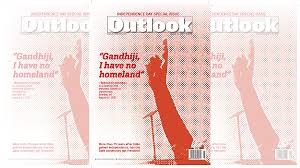
Seven decades after 1947, constitutional guarantees of equality remain unmet for Dalits. Outlook’s August 2023 issue urges reflection and action against persistent caste oppression. On August 15, 1947, India won independence from British rule. Freedom from colonial control was followed by the framing of a new Constitution, which came into force on January 26, 1950. Drafted under the chairmanship of Dr. B.R. Ambedkar, a Dalit leader, jurist, and social reformer who had himself faced lifelong caste discrimination, the Constitution guaranteed liberty, equality, and fraternity to all citizens. The Indian Constitution abolished untouchability through Article 17 and prohibited caste-based exclusion, aiming to dismantle structures that had oppressed Dalits and other marginalised communities for centuries. Ambedkar warned in his final speech to the Constituent Assembly on November 25, 1949, “We are entering a life of contradictions. In politics we will have equality, and in social and economic life we will have inequality. How long shall we continue to live this life of contradictions?” He stressed that political democracy would not survive without social democracy, a condition still not met nearly 80 years on. Across rural and urban India, caste remains a marker of privilege and deprivation. Dalit communities continue to face barriers to land ownership, access to education, and dignified employment. Cases of caste-based violence, including murders over inter-caste marriages or access to common resources, are recorded annually in National Crime Records Bureau data. The persistence of manual scavenging, banned under law, and the segregation of Dalit settlements in many states underline the gap between constitutional ideals and lived reality. Independence Day celebrations often speak of unity and progress, but for millions, the freedom promised in 1947 and codified in 1950 is incomplete. India may be sovereign, but it is not yet free from the deep-rooted social hierarchies that deny full equality. The struggle for true independence, one that dismantles caste oppression, remains ongoing. The issue included Baluta: A Cry From The Heart. The first Dalit autobiography to be published, Baluta created a stir when it appeared in Marathi in 1978. Set in Mumbai and rural Maharashtra of the 1940s and 50s, its author, the poet, Daya Pawar depicts the stark reality of caste violence and untouchability in this classic. It also celebrates the resilience, dignity and courage of the Dalit community and their fight for equality in an unequal society. In How About A Museum Of Untouchability To Display Caste Oppression?, Y.S. Alone writes that the practice of untouchability and how heinous crimes that are committed in the name of caste such as brute killings, rapes, and public beatings are still in practice. He asks: How about a space that depicts all of this? Snigdhendu Bhattacharya’s Ambedkar And Gandhi: Conflicting Ideas On Dalit Liberation recalls how Ambedkar saw no hope for Dalit liberation without “political separation from the Hindus.” Gandhi, while agreeing that the honour of Hinduism could not be saved “without eradicating untouchability root and branch,” considered the idea of Dalit political separation from Hinduism “suicidal” for the national movement. Outlook in collaboration with The Banyan hope to spark conversations in drawing rooms across India that reflect on mental health experiences in all their diversity. – The ‘Infinite Elephant’ is by Usha, who lives with a mental illness. She found her freedom in love. The elephant, she says, represents hope and freedom. In It’s Not Impossible To Smash The Caste System, Bhattacharya speaks to Anand Teltumbde, a scholar and civil rights activist known for his extensive work on B.R. Ambedkar’s life and work as well as the eradication of caste. Teltumbde was arrested in connection with the Elgar Parishad case in 2020 and released on bail in November 2022 after spending 31 months in jail. The 72-year-old spoke to Bhattacharya about the caste system and the possibility of dismantling it. Independence gave India political freedom, but for many, life is still shaped by caste, exclusion, and discrimination. As Outlook’s August 2023 issue shows: the fight for dignity, equality, and real freedom is far from over, and it is a struggle that each of us must keep alive. Courtesy : Outlook India Note: This news is originally published on https:/outlookindia.com/bha and is used purely for non-profit/non-commercial purposes, especially human rights.