
Rahul Gandhi’s comments on India’s freedom struggle is nothing but a distortion of our history
“The Indian political ethos, our entire freedom struggle was in fact the only freedom struggle where these two principles were central. The British could kill our freedom fighters, but our freedom fighters would not act violently against them. And so, this is a very, very powerful and deep value” – Rahul Gandhi stated during an interaction at EIA in Columbia last week. Rahul Gandhi’s efforts on establishing Mahatma Gandhi’s non-violence policy as the only value or axis or principle of India’s freedom struggle vouches for his poor literacy level on freedom struggle. Even a person with semi-functional brain can understand the time difference between East India company’s win in the battle of Plassey in 1757 and Mahatma Gandhi’s return to India from South Africa in 1915. So, equating Gandhi’s non-violence policy as the only principle of India’s freedom struggle is nothing but demeaning our freedom heroes and an act of distorting the history. Polygar War, Maratha War, Mysore War, Sikh War and the first war of independence at 1857 are only a few prominent examples of early wars of resistance against British rule in the country. Around the same time, Kol rebelation, Santhal rebelation, Munda rebelation, Tamar rebelation, Paika rebelation are examples of few war against British fought by our tribal brothers and sisters. The iconic creation of Bankimchandra Chattoadhya’s “Anandamath” was based on Sanyasi rebelion in Bengal around the same time. In 1902, Pramathnath Mitra and Satish Chandra Bose established “Anushilon Samiti”. Later in 1906 Rishi Aurobindi and his brother Barendra Ghosh established “Jugantar Dol”. Together these two organizations mobilized our arms movement against British. From one of youngest martyrs Khudiram Bose, Bagha Jatin, Surja Sen, Prafulla Chaki, Binay Badol Dinesh and almost all freedom fighters from Bengal were associated with either Anushilon or Jugantor. Around the same time, Bal Gangadhar Tilak used his newspapers Kesari and Maratha to defend revolutionary acts. He was sentenced to jail for 6 years for supporting Khuidram Bose and Prafulla Chaki’s act of ambush bombing of the infamous British magistrate Douglas Kingsford. While Bengal became the hub of nationalist force against British led by Shri Aurobindo, Vianayk Savarkar established an underground revolutionary organization “Abhinav Bharat Society” in 1906 and continued his anti-British activities. He was also an advocate for arms revolutionaries against British. In 1912, one of the most prominent heroes of Indian freedom struggle, Rasbehari Bose entered the scenario by orchestrating a bomb attack on Viceroy Lord Hardinge in Delhi, an act that forced him into hiding and exile in Japan. He became a prominent figure in Japan to establish “Azad Hind Fauz” which was later handed over to the Netaji Subhas Chandra Bose. One can easily understand the path of freedom journey from the book “The Indian Struggle” by Netaji. Subhas Chandra Bose’s heroic resignation from the National Congress after winning the general election of the party for having difference in opinion with Mahatma Gandhi’s non-violence is just an example that Gandhi’s views were not unanimously accepted within the party. Another example, Punjab Keshari, Lala Lajpat Rai who was often labelled as extremist within the congress. The saga of Bhagat Singh, RajGuru, Sukhdeb was also an example of how spontaneously our patriots sacrificed their lives in the war of independence against British. Stupidity needs to go beyond a reasonable limit of acceptance when someone from Indian parliament came to USA to state India’s freedom struggle was relying on Gandhi’s principle of non-violence. Last but not the least, it became more evident after 75 years or Independence that British left because of armed resistance of Indian National Army (INA) led by Netaji Subhas Bose at the early 1940s. That courage of INA eventually triggered the Navy movement in 1946. I am deeply sympathetic to Rahul Gandhi’s mental disability that has been reflecting consistently for last few years through his statements on various platforms. He can certainly enjoy his liberty within his own party for being the son and grandson of former Prime Ministers; however, he should not have any Right to demean our freedom struggle. Without any hesitation, I request members of our houses to demand an apology from Rahul Gandhi for his disgraceful comments on India’s freedom struggle at EIA in Columbia. On this context, I would also like to urge our Government to declare Netaji’s birthday as the national Holiday and officially declare Netaji as the first Prime Minister of undivided India; later one might be difficult but at least celebrating his birthday as the national holiday would certainly mute the descendants of a “Dictator” from demeaning our freedom struggle in future. Dr Rudra Prasanna Banerjee Dr Rudra Prasanna Banerjee is a Research Scientist at Texas Medical Center, specialising in molecular biology and genetics. Courtesy : TOI Note: This news is originally published on https:/timesofindia.com/bha and is used purely for non-profit/non-commercial purposes, especially human rights
Bihar polls: CM face confusion in Mahagathbandhan, seat chaos in NDA – decoding political drama

NEW DELHI: As Bihar gears up for another high-stakes assembly election, the political landscape is once again abuzz – not with Nitish Kumar’s next move – but with poetry, posturing, and power plays. From poetic pleas for justice to sharp rebukes over “dignity” in seat offers, alliance partners across the spectrum are flexing muscles and testing loyalties. In the NDA camp, Union minister Jitan Ram Manjhi has invoked Dinkar’s Rashmirathi to press for a fair share, while in the Mahagathbandhan, Left allies are growing restless over what they deem “insulting” proposals. Amid the flurry of negotiations, one thing is clear — in Bihar’s shifting sands of coalition politics, every seat counts, and every word carries weight. Yet, beneath the poetic appeals and fiery rejections lies a deeper churn: the absence of a clear chief ministerial face, the confusion over leadership within alliances, and the persistent tug-of-war between old guards and rising heirs. ‘Ho Nyay Aagar To Aadha Do … ‘ Union minister and former Bihar chief minister Jitan Ram Manjhi struck a poetic yet pointed note as he expressed his seat-sharing expectations. Hinting that his party, the Hindustani Awam Morcha (HAM), had once aspired to contest half of the state’s 243 constituencies, Manjhi said he was ready to settle for 15 seats in the spirit of coalition unity. Taking inspiration from Ramdhari Singh Dinkar’s Rashmirathi, he invoked Lord Krishna’s appeal for justice before the Mahabharata war, writing on X, “Ho Nyay Aagar To Aadha Do” — a plea for fairness seemingly directed at the BJP. Continuing in the same poetic vein, Manjhi added that if full justice was not possible, HAM would be content with “15 villages” — a metaphor for 15 constituencies — and would not “raise arms against kin,” underscoring his commitment to the NDA alliance. The statement came shortly after BJP leaders Dharmendra Pradhan and Vinod Tawde visited his residence to deliberate on seat-sharing. — jitanrmanjhi (@jitanrmanjhi) The Mahagathbandhan’s not so ‘dignified’ proposal After putting up quite a show in the last assembly elections, the CPI (Marxist-Leninist) Liberation did not find the proposal to contest on 19 seats “dignified” enough. In 2020, CPI (ML) won 12 seats of the 19 contested. This time, it demanded 40 seats initially, later bringing it down to 30, PTI reported citing a party source. The party has kept “all its options open” in case its demands are rejected. “CPI(ML) rejected the offer as it was not a dignified proposal, and we are going to make a fresh proposal to fight around 30 seats. We are reducing the number of seats by almost 25 per cent,” the source said. In 2020, RJD contested 144 seats and won 75, while the Congress contested 70 seats and won 19. Meanwhile, Congress’ central election committee is set to meet today to finalize its candidates. What does Chirag want from NDA? Lok Janshakti Party (Ram Vilas) president Chirag Paswan has made headlines for calling out Bihar administration, ruled by ally Nitish Kumar’s JDU, on rising crime levels and his recent war cry of “Abki baari, yuva Bihari,” as unemployment remains major poll attack agenda of the opposition this time. It had left the NDA in 2020 over disagreements with chief minister Nitish Kumar, dealing a significant blow to the JD(U), despite managing to win only one of the more than 135 seats it contested. This time, while he has explicitly ruled out any CM ambitions, his party is eyeing specific constituencies considered favorable and has requested a few assembly seats in each of the five Lok Sabha constituencies it won in 2024, PTI reported citing a party source. — LJP4India (@LJP4India) Tejashwi for CM, Tejashwi for CM not Whether RJD patriarch is in “dilemma between his sons and daughters” or not, Congress has clearly stated its stance. Tejashwi Yadav could be RJD’s CM face, but not INDIA bloc’s, at least not for now. “Tejashwi Yadav may be CM face for RJD but INDIA bloc’s CM face will be decided collectively,” Congress leader Udit Raj said. This came after Tejashwi posted on X, a poster which implied him as the CM face: “When Tejashwi becomes the CM, none of our brothers and sisters in Bihar household would be unemployed.” — yadavtejashwi (@yadavtejashwi) BJP was quick to catch on to this mocking Tejashwi saying that while “he called Rahul Gandhi PM several times but Rahul Gandhi did not call him (CM candidate).” “He is presenting himself but people of his alliance are not saying the same. He called Rahul Gandhi PM several times but Rahul Gandhi did not call him (CM candidate). Let alone the alliance, now the situation is different even within the family. Lalu Yadav is in dilemma between his sons and daughters. There is a crisis in the family,” BJP MP Sudhanshu Trivedi said. A throwback to Nitish’s flips but no flops In the 2020 Bihar elections, Nitish Kumar led the NDA to a 125-seat majority. In August 2022, he broke with the BJP to form a government with the RJD-Congress-led Mahagathbandhan and became a key figure in the INDIA bloc. However, in January 2024, ahead of the Parliamentary polls, Kumar returned to the NDA, which now includes JD(U), BJP, Chirag Paswan’s LJP (Ram Vilas), Jitin Manjhi’s Hindustan Awami Morcha, and Upendra Khushwaha’s RLSP. This time, the NDA faces the INDIA bloc, led by Tejashwi Yadav, along with Congress, Left parties, Mukesh Sahani’s VIP, and newcomer Prashant Kishor’s Jan Suraaj. Well, there’s a saying in Bihar. No matter the poll outcome, the winner is always Nitish Kumar. Let’s see if it holds true this time. Courtesy : TOI Note: This news is originally published on https:/timesofindia.com/bha and is used purely for non-profit/non-commercial purposes, especially human rights
Bihar elections 2025: The key players and what’s at stake for them

NEW DELHI: The countdown to the Bihar assembly elections has officially begun. The Election Commission on Monday announced that the polls will be held in two phases on November 6 and 11. The result will be declared on November 14. With this announcement, Bihar has entered full-fledged election mode, and political parties are already ramping up their campaigns. A lot is at stake for the state’s key players. Here’s a look at it: Nitish Kumar The 2025 Bihar assembly election is an obvious make-or-break moment for incumbent chief minister Nitish Kumar, with both his personal legacy and his party relevance on the line. This will be Nitish’s tenth bid for the chief minister’s post after two decades of rule marked by governance reforms, social welfare programs, and, of course, the dramatic alliance shifts that earned him the nickname ‘Paltu Ram’. Switches of Nitish This time, voters will judge whether his image of the ‘Vikas Purush’ (development man), known for stability and law-and-order credibility, still holds – or whether political fatigue, policy stagnation, and repeated flip-flops have eroded his mandate. The biggest challenge Nitish will face is to fight the anti-incumbancy wave. The biggest challenge for Nitish is indeed to combat the strong anti-incumbency wave against his government. After almost 20 years in office, he will now have to fight the fatigue among the voters. At 74, questions about his age and mental fitness have also entered the political debate, with opposition leaders openly raising doubts about his ability to govern effectively. Bihar assembly elections 2025. The 2025 election will therefore determine not just whether Nitish secures another term, but whether it’s time for him to finally hang up his boots. It is equally significant for the Janata Dal (United)’s survival as a major force in Bihar. The results will decide whether Nitish’s party maintains its independent clout or is relegated to a secondary role behind its ally, the BJP. Tejashwi Yadav For Lalu Yadav’s son and former deputy CM, Tejashwi Yadav, the 2025 Bihar assembly elections are a pivotal test of both his personal leadership and the prospects of the Rashtriya Janata Dal (RJD). This appears to be Tejashwi’s best chance yet to become chief minister for the first time as the anti-incumbency fatigue against Nitish creates a significant gain. Many voters tired of Nitish Kumar’s long tenure of almost 20 years are looking for a fresh alternative, which Tejashwi, as a young, dynamic leader, offers. This attracts both traditional RJD supporters and undecided or anti-establishment voters. In the 2020 elections, under his leadership, the RJD won 75 seats, making it the single-largest party in the state and positioning him as the primary face of the opposition in Bihar. Notably, the Mahagathbandhan’s vote share lagged narrowly behind that of the NDA by just 0.03%, approximately 12,768 votes out of around 3.14 crore. Given this near-miss, the stakes and expectations for Tejashwi are even higher in 2025 and his performance will also determine the viability of the opposition in the state. Managing coalition friction and addressing the aspirations of a broad base, especially youth and non-Yadav OBCs, remains a critical challenge. This election will test his ability to withstand the NDA’s political machinery, carry forward his father’s legacy, and present himself as a pro-development alternative to Nitish Kumar in the state. Rahul Gandhi For Rahul Gandhi, this election is a crucial test of his national leadership and the revival prospects of the Congress party, with far-reaching implications for the INDIA bloc and Congress’s place in opposition politics. Given the recent repeated losses in Maharashtra, Haryana and Delhi, Rahul faces immense pressure to secure substantive gains in Bihar. His direct involvement this time, rallying (Voter Adhikar Yatra), crafting manifestos like the ‘Atipichhda Nyay Sankalp’ for EBCs, and public campaigns, puts his leadership credibility on the line, especially after past performances. The results will reveal whether Rahul can translate high-profile campaigning into votes, or whether the JD(U)-BJP, and his ally RJD continue to dominate state politics. The Bihar elections will also be the test of Congress’s groundlevel organisational skills, showing if Rahul could actually appeal to the Hindi heartland and mobilise backward and marginalised groups. Chirag Paswan Chirag Paswan’s victories in Bihar have dazzled on paper but left his influence on the ground wanting. Sweeping six Lok Sabha seats in 2014, repeating the feat in 2019, and clinching all five in 2024, he has made headlines in New Delhi. Yet in the Hindi heartland, these wins have often felt more like hollow victories than a true mandate. This time, his biggest test is to prove if he can translate national-level clout and Dalit support into a substantial assembly presence, moving beyond being a “spoiler” or a junior partner to becoming a genuine regional force in the state’s power structure. Success would elevate the LJP from relying on bargaining chips in Delhi to wielding real legislative strength in Patna, giving the party leverage in coalition negotiations, government formation, and policy direction. The outcome will reveal whether his strategy of public bargaining and “kingmaker” posturing can convert into actual MLAs, or if it risks repeating the 2020 pattern of undermining allies without building his own base. Bihar Key Players & What’s At Stake Prashant Kishor What’s at stake for Prashant Kishor? Everything and nothing! The strategist-turned-politician is making his electoral debut in Bihar, attempting to disrupt an already established caste-based politics and carve a meaningful role for his Jan Suraaj Party (JSP). Kishor has announced that his party will contest all 243 assembly seats independently, refusing alliances and positioning JSP as a radical alternative aiming to break the longstanding political duopoly of JD(U)-BJP and RJD-Congress. For him, it’s a low-risk, high-reward gamble. He has declared that his party will either finish first or last, leaving no room for compromise. So this time, he will either create a new force in Bihar or fade into political irrelevance. The key challenge lies in converting Kishor’s personal brand and strategic expertise into actual legislative seats. The outcome
Bihar election: How Rahul Gandhi tuned Congress’ Bihar pitch

PATNA: Until June this year, Congress looked desperate. It first replaced the party’s 74year-old Bihar in-charge Mohan Prakash by a rather young Krishna Allavaru and then appointed Rajesh Kumar, a Dalit face, as state president, removing Akhilesh Prasad Singh, who came from the upper caste Bhumihars. But nothing seemed to make a difference. Then came EC’s decision to conduct a Special Intensive Revision (SIR) of electoral rolls. Congress found a cause, dubbing the exercise as a conspiracy to strike opposition voters off electoral rolls. Congress fused it with its broader claim that all BJP victories since 2014 were facilitated by “vote fraud”. Rahul Gandhi started Voter Adhikar Yatra, invited INDIA bloc big names like M K Stalin and Akhilesh Yadav. But will it influence voters? One clue comes from the subdued response of Congress and other opposition parties to the final electoral roll published on Sept 30. That reaction was anticlimactic. And this, when SIR did result in the deletion of 0.4 million “ineligible” names from the draft voters’ list. Significantly, even during the Voter Adhikar Yatra, grumbles could be heard about how it pushed “bread-and-butter” issues off centre stage, giving Nitish Kumar crucial time to repair a potential point of vulnerability. But the Yatra helped Congress acquire a profile it lacked. It upstaged RJD, its senior partner, which had planned to launch its own protest against SIR. Congress’s enhanced confidence is indicated by its refusal to defer to RJD’s insistence that Tejashwi should immediately be projected Mahagathbandhan’s CM candidate. Courtesy : TOI Note: This news is originally published on https:/timesofindia.com/bha and is used purely for non-profit/non-commercial purposes, especially human rights
Bihar elections: BJP takes dig at Lalu Prasad Yadav over PM face; mocks ‘family problems’

NEW DELHI: A day after the Election Commission announced the Bihar Assembly election schedule on Monday, the BJP targeted RJD leader Tejashwi Yadav over his claim of being the Mahagathbandhan’s chief ministerial face, alleging that neither his party nor the alliance partners have officially endorsed him for the top post. BJP MP Sudhanshu Trivedi said Tejashwi was projecting himself as the CM candidate without support from his alliance partners and accused Congress leader Rahul Gandhi of avoiding a clear endorsement. “He is representing them, but neither his party members nor his alliance partners are speaking up. Just think, they travelled together for so many days during the yatra, and repeatedly called Rahul Gandhi ‘PM, PM’. But you must remember that press conference when Rahul Gandhi was asked who would be the chief ministerial face of the alliance. Tejashwi ji was sitting right next to him, looking at him with hopeful eyes, but Rahul ji did not respond, and his face fell,” Trivedi said. — ANI (@ANI) He also took a swipe at RJD Supremo Lalu Prasad Yadav, describing the situation as a leadership crisis within the family. “Lalu Prasad Yadav ji once used to say he was the leader of the poor and the marginalised. But today, he faces the dilemma of whether to be the leader of this son or that son, this daughter or that particular daughter. In other words, even within the family, problems have emerged,” he added. Trivedi expressed confidence that the BJP-led NDA would secure a strong mandate. “People of Bihar and the entire country are watching how there has been a positive change under PM Modi and CM Nitish Kumar. We are confident that a strong and effective mandate will be given in favour of the BJP-NDA,” he said. The Election Commission announced that voting for Bihar’s 243 Assembly seats will be held in two phases on November 6 and November 11, with counting on November 14. A Special Intensive Revision (SIR) of voter lists will be carried out nationwide. In the 2020 Assembly elections, Nitish Kumar led the NDA to victory. He broke ties with the BJP in 2022 to join the RJD-Congress alliance but returned to the NDA ahead of the 2024 Lok Sabha polls. This time, the NDA will face the INDIA bloc led by Tejashwi Yadav’s RJD, Congress, Left parties, and Mukesh Sahani’s VIP. Prashant Kishor’s Jan Suraaj is also entering the fray. The total number of electors stands at 7.42 crore. Patna recorded an addition of over 1.63 lakh voters across 14 constituencies, while Madhubani and Nalanda districts also saw major increases. Courtesy : TOI Note: This news is originally published on https:/timesofindia.com/bha and is used purely for non-profit/non-commercial purposes, especially human rights
‘Show me one LoP who … ‘: Kiren Rijiju slams Rahul Gandhi’s remarks in Colombia; rebuts Congress
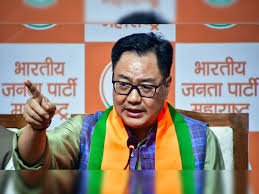
NEW DELHI: Union minister Kiren Rijiju on Monday accused Congress leader Rahul Gandhi of resorting to the constant “India-shaming & India-bashing” statements, saying “we are worried” about his remarks abroad. Rijiju said he didn’t want to comment on the Congress scion’s personal visits, but his remarks abroad “against India’s interest” as the Lok Sabha leader of opposition are “worrying”. “Tell me one Leader of Opposition who spoke against India’s interest in a foreign country. I don’t want to comment about Rahul Gandhi Ji’s regular personal trip abroad. But as leader of opposition, we are worried due to his constant India-shaming & India-bashing!” he told news agency ANI. The remarks come after Rahul, while speaking at an event at EIA University in Colombia on Thursday, said, “India has strong capabilities in areas like engineering and healthcare, so I am very optimistic about the country. But at the same time, there are also flaws in the structure that India has to correct. The biggest challenge is the attack on democracy taking place in India.” Speaking on the Gen-Z (Generation-Z: born between 1997-2012), which has come to the spotlight after violent protests in the neighbouring Nepal that overthrew the Oil-led communist government, Rijiju said: “India’s Gen-Z are sensible, sincere, sharp, smart and steadfast in their mission to make India a great nation.” Rijiju, in a piercing attack at the Congress party, said “the Gen Zs would not tolerate the party and the family who kept India poor for 6 decades”. “They will reject corrupt and inefficient politicians who only care for one family!” he said. After his presser claiming deletion of voters from Karnataka’s Aland constituency last month, Rahul Gandhi had written in a post on X, “The youth of the nation The students of the nation The Gen Z of the nation Will protect the Constitution, defend democracy, and prevent vote theft. I will always stand with them. Hail India!” His shoutout to Gen Z to “stop vote theft” sparked a sharp retort from the BJP, with Nishikant Dubey quipping: “They are against corruption, why wouldn’t they drive you out?” Dubey claimed that Gen Z wants “an Islamic state in Bangladesh and a Hindu state in Nepal, why wouldn’t they make India a Hindu state?” “Gen Z is against family rule. Why would they tolerate Rahul Ji after Nehru Ji, Indira Ji, Rajiv Ji, Sonia Ji? They are against corruption, why wouldn’t they drive you out? They want an Islamic state in Bangladesh and a Hindu state in Nepal, why wouldn’t they make India a Hindu state? Get ready to leave the country, they are coming,” he said. Courtesy : TOI Note: This news is originally published on https:/timesofindia.com/bha and is used purely for non-profit/non-commercial purposes, especially human rights
‘Indira never spoke outside’: Kiren Rijiju slams Rahul Gandhi over Colombia comments; questions Congress’s free speech usage
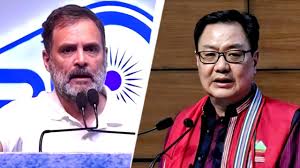
NEW DELHI: Union minister Kiren Rijiju on Sunday criticised Congress leader Rahul Gandhi for his recent remarks made during a visit to Colombia, claiming that he is the first leader of opposition (LoP) to speak against India on foreign soil. In an interview to ANI, the parliamentary affairs minister said, “Even Indira Gandhi ji was LoP after losing elections, but she never spoke about the country outside. All other LoPs after her – whether it is Lal Krishna Advani, Atal Bihari Vajpayee, Sushma Swaraj, Sharad Pawar – never did that.” “Show me one LoP who has ever gone outside India and made statements against the country or the Government. Rahul Gandhi is the first LoP who goes abroad and speaks against the country, our system and our democracy,” Rijiju added. The remarks come after Rahul, while speaking at an event at EIA University in Colombia on Thursday, said, “India has strong capabilities in areas like engineering and healthcare, so I am very optimistic about the country. But at the same time, there are also flaws in the structure that India has to correct. The biggest challenge is the attack on democracy taking place in India.” Rijiju alleged that Rahul’s comments misrepresent India and could harm its global image. “Our LoP went abroad and said that India cannot be a global leader. The problem is that if people abroad get the impression that everyone in India is like Rahul Gandhi, it would tarnish the country’s reputation,” he said. “There are intelligent people in our country, we have good leaders and people with good ideology. But if Rahul Gandhi speaks like this, people would think that such people are higher in number in India. This is not right,” Rijiju added. The Union minister also rejected Congress’s allegations of curbs on free speech, saying that the party was misusing the idea of freedom of expression for political purposes. “From morning to evening, they keep on abusing PM Modi and say there is no freedom to speak. They want to misuse this freedom of expression to such an extent that they want to split the nation,” he said. Rijiju further claimed that some leaders advocating for free speech are those who, according to him, have supported divisive causes. “Those who talk about freedom of speech are the people who want to separate Jammu and Kashmir and the North East from the nation,” he said. He emphasised that the BJP’s response to Rahul’s remarks is not personal. “We have nothing to do with him personally. He is LoP… If he speaks irresponsibly, we will not like it,” Rijiju said. Courtesy : TOI Note: This news is originally published on https:/timesofindia.com/bha and is used purely for non-profit/non-commercial purposes, especially human rights
Telangana Congress sets Oct 15 deadline for ‘vote theft’ signature campaign
Hyderabad: Telangana Pradesh Congress Committee president B Mahesh Kumar Goud and AICC Telangana in-charge Meenakshi Natarajan on Saturday set Oct 15 deadline for ministers, district Congress presidents, and party cadres to ensure the collection of at least 100 signatures from every village as part of the nationwide campaign against the BJP’s alleged “vote chori” (vote theft). In an online meeting with DCC presidents and district in-charge ministers, the leaders said the signature collection drive in Telangana had slowed due to heavy rains and the festival season but stressed that it must be expedited and completed within 10 days. The Telangana unit aims to send 12 lakh signatures to the AICC, which will compile submissions from all states and present them to the Election Commission of India (ECI), supporting Rahul Gandhi’s claim that the BJP was manipulating elections through “vote theft.” Mahesh Goud alleged that in some states, including Maharashtra and Bihar, there were instances of 40 votes being registered in a single bedroom house, names of deceased persons continuing on electoral rolls, and living voters being deleted. “The BJP came to power at the Centre for three terms with ‘vote chori’. Take up this campaign as a prestigious issue and complete it on time,” he told the party functionaries. Meenakshi Natarajan said Rahul Gandhi had elaborated on how the BJP had indulged in vote manipulation, yet the Election Commission failed to act. AICC president Mallikarjun Kharge and general secretary (organisation) KC Venugopal have launched a nationwide movement on the issue, she said. “Everyone must work sincerely and collect signatures in large numbers. Rahul Gandhi is fighting for two key causes—social justice and an end to vote theft,” she added. Highlighting the Congress govt’s commitment to social justice, Meenakshi said the state’s move to provide 42% BC reservations made it a role model in the country. “The party should work hard and win both the Jubilee Hills by-election and the upcoming local body polls,” she said. Courtesy : TOI Note: This news is originally published on https:/timesofindia.com/bha and is used purely for non-profit/non-commercial purposes, especially human rights
‘Remote control in foreign hands’: BJP guns for Sonia Gandhi; claims UPA govt was a puppet, made decisions under pressure
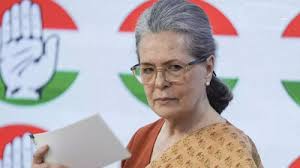
NEW DELHI: Bharatiya Janata Party on Saturday upped the ante against Rahul and Sonia Gandhi, accusing them of letting the Manmohan Singh-led UPA government become a “puppet in the hands of foreign powers.” While addressing a press conference, BJP spokesperson Gaurav Bhatia latched on to former Union minister P Chidambaram and Manish Tewari “revelations” and claimed the Manmohan Singh’s government – influenced by Sonia Gandhi – chose not to take strong retaliatory action after the 26/11 attacks in Mumbai. “The people of India are asking questions — questions to the Congress Party and to the fake Gandhi, Rahul Gandhi. We have also seen that the leader of the opposition, who has been abroad for the past four days, has only one mission — to defame India, a nation that is moving forward on the path of rapid development. From foreign soil, Rahul Gandhi levels baseless allegations and tries to malign our great nation. Therefore, from the soil of India, we want to ask questions — to the Congress Party, to Mallikarjun Kharge ji, to Rahul Gandhi ji, and to Sonia Gandhi ji — and demand answers before the people of India,” Bhatia said. “It is a matter of grave concern that senior Congress leaders like P Chidambaram, who served as Home minister under the UPA government, and Manish Tewari, a former UPA minister, have recently made revelations that are shocking and alarming. It shows that a government which was constitutionally responsible for protecting India’s sovereignty had, in fact, become a puppet in the hands of foreign powers,” he added. Bhatia also alleged that Sonia had Monmohan Singh’s remote control while “foreign powers” had the remote control for Sonia Gandhi. Additionally, BJP MP Sambit Patra also attacked Sonia Gandhi and alleged that UPA government used to decide cabinet ministers after consulting with America, quoting Natwar Singh’s autobiography. “It was Sonia Gandhi’s dictation that don’t act against Pakistan. She made India bow down and gave shelter to Pakistan,” Patra said. Natwar Singh wrote in his autobiography that the Sonia Gandhi government used to decide the Indian Cabinet Ministers after consulting America… She believes ‘saugandh mujhe us videsh ki, main desh nahi uthne dungi’…,” he added. He also questioned Chidambaram’s recent statement about foreign pressure behind India’s lack of retaliation against Pakistan after 26/11 attacks, suggesting that Chidambaram himself was part of the decision-making process under Sonia Gandhi’s leadership. “Only because the ‘whole world descended on Delhi’, the Congress party decided not to take any action against Pakistan. This was the India of that time, under the reign of the Gandhi family… This decision must have been taken by Sonia Gandhi unlawfully and unconstitutionally, and she must have dictated to Manmohan Singh and then Home Minister Chidambaram…,” Patra told ANI This comes days after Chidambaram after the former Union home minister recounted that he was inclined towards retaliatory action against Pakistan after the 26/11 Mumbai terror attacks but was ultimately persuaded against it. Chidambaram had said that the decision making process of Manmohan Singh-led government’s stance was shaped by international diplomatic pressure , particularly from the United States. “It did cross my mind that we should do some act of retribution. I did discuss it with the Prime Minister and other people who mattered. The PM had discussed this matter when the attack was going on, I can surmise. And the conclusion was largely influenced by the MEA and the IFS that we should not physically react to the situation, but we should employ diplomatic means,” he said. “The conclusion was reached amid pressure from the world that was descending upon Delhi to tell us that don’t start a war,” he said. He specifically mentioned that then US Secretary of State Condoleezza Rice had travelled to New Delhi to meet him and Prime Minister Manmohan Singh, urging India not to retaliate militarily. The 26/11 terror attacks in Mumbai, carried out by Pakistani-based terror outfit Lashkar-e-Taiba, claimed over 170 lives and left the nation in shock. Later, P Chidambaram expressed frustration over being misquoted by the media regarding his comments and said “In no part of the interview to Megha Prasad’s podcast did I say that ‘US stopped us from retaliating after the 26/11 attack. Yet, channel after channel and the media and the Twitterati are merrily attributing words to me. These are the perils of talking to the media!” Courtesy : TOI Note: This news is originally published on https:/timesofindia.com/bha and is used purely for non-profit/non-commercial purposes, especially human rights
‘Stealing Karpoori Thakur’s Jan Nayak title’: PM Modi’s veiled jibe at Rahul Gandhi; blames RJD rule for Bihar’s education woes
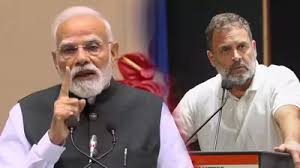
NEW DELHI: Prime Minister Narendra Modi on Saturday took a veiled swipe at Leader of Opposition Rahul Gandhi while inaugurating several education and skilling projects in Bihar, urging people to be vigilant against those attempting to claim the ‘Jan Nayak’ title associated with former Bihar chief minister Karpoori Thakur. Speaking at the inauguration of Jan Nayak Karpoori Thakur Skill University in Bihar, PM Modi said, “…Karpoori Thakur wasn’t made ‘Jan Nayak’ by social media trolls. He was made ‘Jan Nayak’ by the people of Bihar, and they did so after observing his life. I would urge the people of Bihar to be vigilant. Nowadays, people are trying to steal even this title of ‘Jan Nayak’. Therefore, I urge the people of Bihar to be vigilant so that this honour bestowed upon Karpoori Thakur by the people is not stolen… the double engine government of NDA is continuously engaged in modernising the educational institutions of Bihar.” — ANI (@ANI) PM Modi blamed the “poor state” of education during the RJD rule for triggering large-scale migration from Bihar and lauded chief minister Nitish Kumar’s government for improving the situation. He said the state government has resolved to double employment generation in the next five years compared to the last two decades, aiming to ensure that young people find work within Bihar. He targeted the previous RJD regime, recalling how “schools would not open and few recruitments were made”, forcing students to migrate to other cities. “It is rather difficult to restore a tree whose roots are rotting, and this was the state of Bihar during the RJD rule,” he said. PM Modi unveiled youth-centric initiatives worth over Rs 62,000 crore, with a special focus on Bihar. He launched PM-SETU (Pradhan Mantri Skilling and Employability Transformation through Upgraded ITIs), a centrally sponsored scheme worth Rs 60,000 crore, which aims to upgrade 1,000 government ITIs in a hub-and-spoke model. He also announced the revamped ‘Mukhyamantri Nishchay Svyam Sahayata Bhatta Yojana’, under which nearly five lakh graduates will receive a monthly allowance of Rs 1,000 for two years, along with free skill training. Additionally, the redesigned Bihar Student Credit Card Scheme will provide interest-free education loans of up to Rs 4 lakh to ease the financial burden on students. The prime minister highlighted that India’s ITIs are not only crucial for industrial education but also function as workshops for ‘aatmanirbhar Bharat’. He noted that his government has opened 5,000 ITIs in the last decade, compared to 10,000 before 2014. The inauguration of the Karpoori Thakur Skill University is part of the broader effort to create industry-ready, globally competitive youth in the state, he added. Courtesy : TOI Note: This news is originally published on https:/timesofindia.com/bha and is used purely for non-profit/non-commercial purposes, especially human rights