
In Sambhal, the Turki community prevented a Dalit Muslim family from praying in the mosque, angering SP Krishna Kumar Vishnoi and filing an FIR.

A case has been filed against five named accused, including the Mutawalli. The SP stated, “Violations of fundamental rights will not be tolerated; strict action will be taken.” Sambhal. A sensational case of social discrimination and religious persecution has emerged from the village of Mandli Samaspur, under the police station jurisdiction of Sambhal district in Uttar Pradesh. A Muslim youth has alleged that members of the dominant Turki community within his own community forcibly prevented him and his family from praying in the village mosque. Following the victim’s complaint, Sambhal Superintendent of Police (SP) Krishna Kumar Vishnoi has taken strong cognizance of the matter and ordered the immediate registration of an FIR against the accused and strict legal action. Allegations of discrimination and social boycott due to belonging to the Dhunia community According to reports, the victim, Mohammad Wasim, a resident of Mandli Samaspur, reached the district headquarters on Friday and met with District Magistrate (DM) Ankit Khandelwal and Superintendent of Police Krishna Kumar Vishnoi to narrate his ordeal. The victim, Mohammad Wasim, alleges that he belongs to the Dhunia (Bunna) community. Some influential members of the Turk community in the village are preventing him and his community from offering prayers in the mosque as per their tradition. The victim says that the mosque’s Mutawalli, Atiq Ahmed, his son Shane Alam, and several others have been socially boycotting his family for the past year and a half. Zakat, donations, and the Imam’s meals have also been banned. The victim told officials that the accused are neither accepting donations or Zakat from him for the mosque nor allowing him to participate in religious events. The situation reached its peak when the accused even prevented the mosque’s Imam from eating food at the victim’s home. According to Wasim, around 5-6 families from his community live in the village and are facing such caste and social oppression. SP said, “Violation of fundamental rights will not be tolerated; legal action initiated.” Considering the matter as extremely serious, SP Krishna Kumar Vishnoi expressed deep displeasure. He said that the Constitution of India guarantees every citizen the freedom to practice their religious rights. If a person’s fundamental rights are being violated in this manner, it will not be tolerated at all. The SP stated that preliminary investigations revealed that this dispute had been ongoing for a long time. Previous attempts were made at the police level to reach a compromise between the two parties, but these were unsuccessful. Now, a strict legal stance is being taken. FIR registered against 5 named accused Following the SP’s strict instructions, the police have registered a case against Atiq Ahmed (Mutawalli), Shane Alam, Amir, Bholu, and Hafiz Maruf under relevant sections based on the victim’s complaint. The police administration has assured that the victim’s family will be given full security and they will be able to exercise their religious rights without any fear or hindrance. Courtesy: Hindi News
Minorities, Dalits and deprived sections must unite to fight for their constitutional rights, say intellectuals

Meeting presided over by Justice Ranjit Singh (Retd.), former Judge of the Punjab and Haryana High Court The representatives of the Sikh, Muslim and Dalit communities, along with intellectuals and social activists, on Saturday resolved to establish a common front to raise concerns over the constitutional rights and equal opportunities of deprived minorities and marginalised sections. The resolution was adopted at a joint meeting of Sikh, Muslim and Dalit thinkers held at Kendri Sri Guru Singh Sabha, here, to mark the 350th martyrdom anniversary of Sri Guru Tegh Bahadur. The meeting was presided over by Justice Ranjit Singh (Retd.), former Judge of the Punjab and Haryana High Court. GeographicReference Former Rajya Sabha MP Mohammad Adeeb said that the Muslims who remained in India after Partition and Sikhs who supported the Indian Union on the assurances of Jawaharlal Nehru and Sardar Vallabhbhai Patel now feel those promises have not been fulfilled. He said that if the BJP seeks to establish a ‘Hindu Rashtra’, it should obtain the people’s mandate through a national referendum. The gathering observed that although India adopted democracy, secularism and constitutional governance after Independence, the successive governments have increasingly pursued policies favouring the majority community and upper-caste interests. Former Chief Justice Iqbal Ansari alleged that the ruling establishment promotes religious polarisation by setting one community against another for electoral gains. Noted Sikh scholar Gurtej Singh, IAS (Retd.), endorsed the proposal for a united platform of minorities and deprived communities and recalled that Sant Harchand Singh Longowal had entrusted him with initiating dialogue with Muslim leaders as early as 1983. The participants further stated that many minorities and deprived communities have been reduced to second-class citizens and are being used as scapegoats for advancing Hindutva politics. They stressed the need for minorities, Dalits and other marginalised sections to unite on a common platform to safeguard their rights and dignity. Among those who addressed the gathering included Prof Sham Singh (President), Dr Pyara Lal Garg, Gurpreet Singh (Global Sikh Council), Daya Singh Delhi, Anzarul Bari, Rajwinder Singh Rahi, Senior Journalist Jaspal Singh Sidhu, Surinder Singh Kishanpura and several other distinguished speakers. Courtesy : The Tribune Note: This news is originally published on https:/thetribune.com/bha and is used purely for non-profit/non-commercial purposes, especially human rights
Owaisi’s show of strength in Bijnor, attempts to balance the Muslim-Dalit equation; will SP’s tension increase?
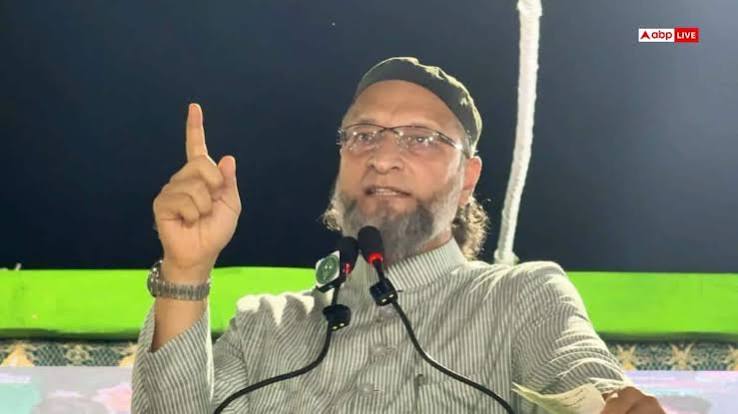
UP Politics: All India Majlis-e-Ittehadul Muslimeen (AIMIM) chief Asaduddin Owaisi will address a public meeting today in Najibabad, Bijnor, as part of the “Paigam-e-Ittehad” program. All India Majlis-e-Ittehadul Muslimeen (AIMIM) chief Asaduddin Owaisi, who is seeking political ground in Uttar Pradesh, will address a public meeting today in Najibabad, Bijnor, as part of the “Paigam-e-Ittehad” program. He will not only seek to establish his own political standing in Muslim-majority constituencies in western Uttar Pradesh, but his political activism has also raised concerns for the opposition Samajwadi Party (SP). Regarding the program, party spokesperson Shadab Chauhan stated that the current government and the main opposition party have perpetrated atrocities and discrimination against Muslims, victims, and marginalized groups. Together, they have made them political pariahs. Asaduddin Owaisi will hold a public meeting on these issues, along with other issues, primarily the problems of sugarcane farmers in this belt. Furthermore, Shadab Chauhan stated that Asaduddin Owaisi has appealed to all parties to unite to defeat the Bharatiya Janata Party and is ready to join forces with them. Why did he choose the Najibabad seat? The Najibabad seat in Bijnor district is a Muslim-majority constituency, and the Dalit-Muslim equation here could be the key to anyone’s victory. Consequently, Asaduddin Owaisi chose this location for his public meeting. Furthermore, the plight of farmers and laborers here is also concerning, and he appears to be trying to capitalize on this. Haji Tasleem is a Samajwadi Party MLA from the Najibabad seat, so Asaduddin Owaisi’s presence is a source of tension for the Samajwadi Party. To ensure this public meeting was a success, party workers have been conducting a public relations campaign for the past several days. Asaduddin Owaisi is active in Uttar Pradesh Party mobilization for the UP assembly elections has intensified. Asaduddin Owaisi previously attended a program in Bahraich. Although he did not achieve much success in previous assembly elections, the surprising performance of Owaisi’s party in the recent Bihar assembly elections has raised eyebrows among opposition parties. Written By: ABP UP Desk Courtesy : Hindi News
Pala signals another political change as Congress and KC(M) get closer
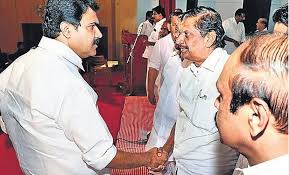
Previously, the council had maintained that a KC(M) representative could not be part of the HMC due to the party’s lack of representation in the State Legislative Assembly. KOTTAYAM: Amid looming uncertainty in the UDF in Pala over the transfer of vice-chairperson post from an independent member to the Congress, another significant political shift is taking shape in the municipality. According to sources, a tacit understanding is developing between the Congress and the Kerala Congress(M), a constituent of the LDF, to counter the political pressure from the independent collective led by Pulikkakandam family in the municipal council. Dropping clear signals of such a political move, the UDF-led municipal council has decided to induct a KC(M) member in the newly reconstituted Hospital Management Committee (HMC) of the K M Mani Memorial General Hospital in Pala. Previously, the council had maintained that a KC(M) representative could not be part of the HMC due to the party’s lack of representation in the State Legislative Assembly. Although KC(M) district president Lopez Mathew had twice submitted requests to include their nominee in the HMC nearly four months ago, the council delayed the decision until now. With an apparent understanding reached between the UDF and KC(M) regarding this matter, the council is expected to endorse the induction of Baiju Kollamparambil as KC(M) representative after the next council meeting. Baiju will be included in the category of non-statutory or nominated members of recognised political parties. Although both Congress and KC(M) sources said it is mandatory to include a representative of a regional party in the HMC, the UDF has yet to provide a clear rationale for the four-month delay in addressing this issue. Apart from Baiju, as ward councillor, KC(M) member Biji Jojo is already in the committee. In addition to these two members, the KC(M) also sought one more membership in the HMC in the category of three nominated social workers. These three positions must be filled through a unanimous decision by the council, meaning that the UDF will require the support of the KC (M) members to proceed effectively. The UDF leadership as well as independent collective members are most likely to accept KC (M)’s demand since independent councillor Binu desperately aims to join the HMC under this category. Hospital link UDF-led municipal council has decided to induct a KC (M) member in the newly reconstituted Hospital Management Committee of the K M Mani Memorial General Hospital in Pala Courtesy : TNIE Note: This news is originally published on https:/thenewindianexpress.com/bha and is used purely for non-profit/non-commercial purposes, especially human rights
lawyer Surendra Gadling completed eight years in prison : Bhima Koregaon
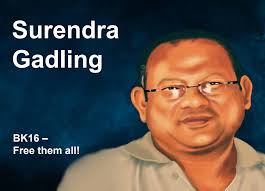
On June 6, lawyer Surendra Gadling completed eight years in prison. Arrested on this day in 2018, he was sent to the Yerawada prison in Pune, and then, in February 2020, he and other prisoners, accused in what has come to be known as the Bhima Koregaon case, were transferred to Taloja jail following the handing over of the case to the NIA. Out of the 16 accused in this case, he is the sole one still to be released. Whilst he was given bail in the Bhima Koregaon case by the Bombay High Court, he is awaiting the outcome of the plea in the Supreme Court for what has come to be known as the Surajgarh arson case. इरोनिकाल्ली, he has been held under the draconian Unlawful Activities Prevention Act (UAPA for almost a decade, considering that he is a foremost lawyer in it and other anti terror laws. He is someone whose expertise in this very field has helped secure the release of thousands of Dalits and Adivasis unfairly imprisoned as alleged Maoists. During his three decade long career before his arrest, he came to be viewed as a formidable figure in court with his ability to argue cases in TADA, POTA, UAPA, the Scheduled Caste and Scheduled Tribes (Prevention of Atrocities) Act. His legal acumen helped in the acquittal of those held under these laws. He also took up cases of fake encounters, dowry deaths and was involved in securing justice for those who protested against the barbaric Khairlanji caste murders in 2006. Among the high profile cases he had taken up, before his own arrest, were those of Dr G N Saibaba, the wheelchair bound professor, who spent about seven years in jail before acquittal. Tragically and cruelly Saibaba died just a few months after his release. Hem Mishra , the student activist, who was also arrested along with Saibaba, recalled in a social media post how Gadling is not just his lawyer but a true People’s Lawyer. He has been a tireless champion for political prisoners taking up the cases that very few dare to do so. Growing up in the humble Dalit neighbourhood of Indora in Nagpur, Gadling became influenced by the radical politics of the seventies during his college years, recalls Sudhir Dhawale, his fellow student and also co accused in the case. Both of them played an important role in the Namantar or movement to rename the Marathwada University after Bababasaheb Ambedkar and were also witness to the huge atrocities inflicted on Dalits. They drew heavily on the cultural activism fostered by the folk forms of Maharashtra where street plays and ballads have been intertwined with resistance and revolution. It is perhaps this element of performative tactics in the courtroom that made Gadling a much admired and popular lawyer. People and juniors flock to the court whenever he argues a case. I was witness to some of his passionate and humorous arguments whilst pleading for various issues related to his own case during the proceedings. But whether it was for the right to a chair, or access to medical care, Gadling’s purpose has been clear. It is to shine a light on the conditions in jail and urgent need for reform. In Pune, in the early days of the arrests, a bunch of lawyers from Punjab turned up in court to show solidarity with him. Similar shows of solidarity have come from lawyers from Delhi, Telangana, Kerala and Kolkata. When the court in Bombay did not allow visitors because of the pandemic, it was a moving sight to see a group of lawyers standing outside the building in support of their mentor. His feisty spirit and ability to deploy the cultural forms of protest that has been an intrinsic part of his journey of resistance, was demonstrated when he was released on temporary bail in 2021. The court allowed him to conduct rituals for the first anniversary of his mother’s death. He had been denied permission by the NIA Special court to attend the funeral in 2020. Donning his lawyers’s suit he headed for the Nagpur sessions court and outside he sang a song written by co accused Ramesh Gaichor, an activist of the Kabir Kala Manch. The song ingeniously weaves in the privation in prisons and denial of basic amenities. Ek duree chhe by doh seh … the area allotted to each prisoner becomes the space for satire with the comment that this is the “aish” or comforts that prisoners enjoy in popular imagination. One of the significant features of life in Taloja jail, as narrated by the Bhima Koregaon prisoners is the way they collectively demonstrated cultural activism through poetry and special song sessions at night. The various members housed in various floors of the building would take up songs and sing in unison. A poignant illustration of how though caged the spirit sings. …. A brilliant lawyer and human rights defender has spent almost a decade in jail. The trial has not even begun. The Supreme Court must act speedily to release him as urged by hundreds of civilians, legal bodies and international human rights defenders.
Muslim & Dalit netas say rebel MPs ‘betrayed’ UBT voters

Mumbai: A section of Muslim and Dalit politicians has accused the six Shiv Sena (UBT) rebel MPs of “betrayal” after they defected to the Shiv Sena. The politicians have said that these MPs, including Sanjay Dina Patil representing Mumbai North East, won largely because of en bloc voting by Muslims and Dalits as they fought the 2024 LS polls on the plank of “saving secularism and the Constitution.” “The voters in my area (Shivajinagar-Mankhurd) and other constituencies which these MPs represent feel cheated. The people voted for them because they fought on the plank of secularism and saving the Constitution. Now they have joined a party which is part of NDA and is working against secularism and the Constitution,” alleged SP MLA Abu Asim Azmi from Mankhurd-Shivajinagar. Shyam Dada Gaikwad, president of Republican Party of India (Secular), slammed the six MPs, accusing them of breaching the people’s trust. “I toured Dalit pockets in Mumbai and other parts of the state extensively seeking votes for the INDI alliance candidates. These six MPs have capitulated to inducements and pressure from above. The Dalits who voted for them are very worried and anguished,” Gaikwad said. City Congress general secretary Asif Farooqui said the community is pained and jolted by the defection of the six MPs. “The people voted for an ideology, an alliance, and a commitment — not for elected representatives to switch sides for political convenience after securing their votes. Such actions amount to a betrayal of the people’s trust and weaken faith in democracy itself,” said Farooqui who is also associated with Aligarh Muslim University and Jamia Millia Islamia. Courtesy : TOI Note: This news is originally published on https:/timesofindia.com/bha and is used purely for non-profit/non-commercial purposes, especially human rights
AIMPLB to launch nationwide movement against social, political marginalisation of Muslims
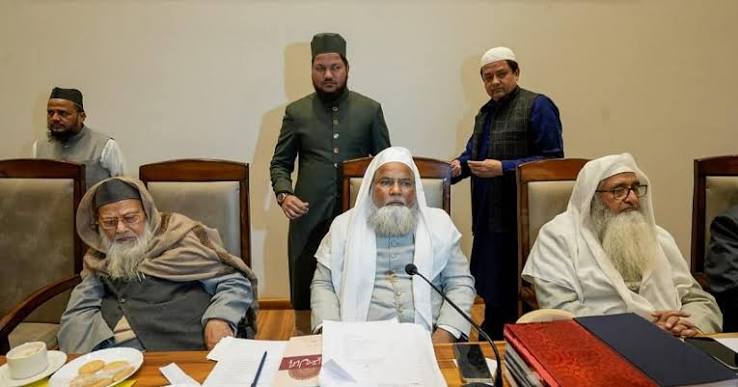
The Executive Committee expressed grave concern over the “rapidly deteriorating situation in BJP-administered states, the country and the Muslim community.” The All India Muslim Personal Law Board on Monday said it would soon come out with a comprehensive document on the “deteriorating condition” of Muslims in the country and launch a nationwide movement against the social and political marginalisation of the community. The Board made the announcement a day after a meeting of its executive committee. Briefing reporters on the decisions and deliberations at the meeting, AIMPLB spokesperson SQR Ilyas said the Board reviewed in detail the current situation facing the country and the Muslim community, and took a number of important decisions. “These decisions relate in particular to the growing incidents of mob violence or lynching against Muslims in BJP-ruled states; demolition drives targeting Muslim homes and localities, against mosques and madrasas; bulldozer terrorism; attempts to make Vande Mataram compulsory in government functions and schools; implementation of uniform government-aided madrasas; developments concerning the Madhya Pradesh High Court Civil Code in various states; and the recent judgment regarding the Kamal Maula Mosque,” he said. The Executive Committee expressed grave concern over the “rapidly deteriorating situation in BJP-administered states, the country and the Muslim community”, he said. The committee stated that Muslims’ lives, property, honour and dignity, mosques, madrasas, graveyards, personal law, fundamental rights, and even their faith and beliefs are under continuous attack. “We are unhappy with all parties, including the Congress. None of them raises issues of Muslims strongly,” Ilyas said, when asked about Rahul Gandhi’s reported remarks that if the issue pertains to Muslims, the community be specifically mentioned and not a generalised reference to minorities be made. The Executive Committee decided that a comprehensive document would be prepared and published on the “deteriorating condition of the Muslim community, communal tensions and violations of fundamental rights, so as to awaken the conscience of the people,” he said. “With regard to the Kamal Maula Mosque case, the Executive Committee expressed deep concern over the Madhya Pradesh High Court’s judgment, stating that there were historical evidence, revenue records, and colonial-era official documents. The judgment is contrary to centuries-old Muslim tradition of worship at the site. Furthermore, it is also inconsistent with the spirit of the Places of Worship Act, 1991,” Ilyas said. The Executive Committee welcomed the Kamal Maula Mosque Committee’s challenge of the judgment in the Supreme Court, and resolved that the AIMPLB would extend every possible assistance to the Mosque Committee in their legal struggle, he said. The Executive Committee declared that attempts to make Vande Mataram compulsory are contrary to Article 25 of the Constitution of India, Ilyas said. The Board welcomed the Calcutta High Court’s interim order staying the government directive requiring the singing of Vande Mataram in madrasas, he said. The Executive Committee also expressed serious concern over the ongoing legislative efforts in BJP-ruled states in the name of the Uniform Civil Code (UCC), Ilyas said. The meeting noted that after Uttarakhand and Gujarat, preparations are now underway to implement the UCC in Assam, Madhya Pradesh and Maharashtra as well. The Board clarified that the Uniform Civil Code is not a mandatory constitutional command that courts are bound to enforce; rather, it is a non-binding guiding principle included among the Directive Principles of State Policy. The Executive Committee further resolved that, against the social and political marginalisation of Muslims, violation of constitutional norms, the promotion of hatred and hostility, the damage to communal harmony, attacks on life, property, honour and dignity of Muslims and the demolition of mosques and madrasas, the Board will launch a nationwide movement in partnership with justice-loving, democracy-loving, and peace-loving sections of society, Ilyas said. For this purpose, an Action Committee is being constituted, he said, adding that the movement may begin by July end. The Executive Committee meeting on Sunday was presided over by AIMPLB president Maulana Khalid Saifullah Rahmani, and the proceedings were conducted by general secretary Maulana Fazlur Rahim Muiaddidi. Executive Committee members from across the country attended the meeting. Courtesy : TNIE Note: This news is originally published on https:/thenewindianexpress.com/bha and is used purely for non-profit/non-commercial purposes, especially human rights
Unity among BCs, Dalits, minorities need of the hour: Markfed Director
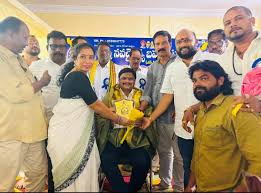
Nava Chaitanya Bahujana Sangham organisation members felicitating Markfed Director Anepu Ramakrishna Naidu in Srikakulam on Sunday. Nava Chaitanya Bahujana Sangham organisation members felicitating Markfed Director Anepu Ramakrishna Naidu in Srikakulam on Sunday. | Photo Credit: Special arrangement Andhra Pradesh Markfed Director and Turpu Kapu Samkshema Sangham’s State honorary president Anepu Ramakrishna Naidu said unity among the Backward Classes, Scheduled Castes, Scheduled Tribes and Minorities was need of the hour, asserting that these communities were not getting legitimate political opportunities as they face troubles from influential persons. The State Nava Chaitanya Bahujana Sangham invited Mr. Naidu as a chief guest to a meeting, in which the issues of Backward Classes, Scheduled Castes, Scheduled Tribes, were discussed. The Markfed Director was also felicitated at the event. He said administration had to be done in accordance to the Indian Constitution which ensured several welfare measures and opportunities for neglected sections of the society. Mr. Naidu said political power needed to be shared with BCs, SCs and STs. Courtesy : The Hindu Note: This news is originally published on https:/thehindu.com/bha and is used purely for non-profit/non-commercial purposes, especially human rights
Anti-Conversion Laws in India: Not Only Anti-Minority but Also Anti-Dalit in Annihilate Caste

Anti-conversion laws, formally known as Freedom of Religion Acts, have been enacted in approximately twelve Indian states. These laws seek to regulate religious conversions by prohibiting those induced through force, fraud, or allurement. They typically mandate prior intimation to district authorities and prescribe penalties, often with enhanced punishments when the convert belongs to vulnerable groups such as women, minors, Dalits (Scheduled Castes), or Adivasis (Scheduled Tribes). While proponents present these statutes as protective measures safeguarding cultural identity and vulnerable populations from coercive missionary activities, critics contend that they curtail individual freedom, enable selective enforcement, and disproportionately harm Dalits seeking dignity and escape from caste oppression. The stated rationale behind these laws is rooted in concerns over demographic shifts and exploitation of the socio-economically disadvantaged. Advocates, often aligned with Hindu nationalist perspectives, argue that conversions—particularly to Christianity or Islam—frequently involve material inducements, social services, or “love jihad,” targeting lower castes and tribals who are portrayed as especially susceptible. By imposing stricter penalties for conversions involving Dalits, the laws ostensibly shield them from manipulation. However, this framing reveals a paternalistic undertone: it assumes Dalits lack the agency to make informed religious choices, thereby infantilizing a community that has long fought for equality. The impact on Dalits is particularly profound and multifaceted. Historically, conversion has served as a powerful tool for social mobility and resistance against caste discrimination. Dr. B.R. Ambedkar’s landmark 1956 mass conversion to Buddhism exemplified this quest for dignity free from the hierarchies of Hinduism. Similar patterns exist among those embracing Christianity or Islam in pursuit of equality. Anti-conversion laws erect administrative barriers, invite police scrutiny, and foster fear of prosecution, effectively deterring voluntary exits from the Hindu fold. This restricts a vital avenue for asserting personal autonomy in the face of persistent untouchability and social exclusion. A more glaring inequity arises from the linkage between religious identity and affirmative action benefits. Under the 1950 Presidential Order (and subsequent amendments), Scheduled Caste reservations, protections under the SC/ST (Prevention of Atrocities) Act, and related safeguards are largely confined to Hindu, Sikh, and Buddhist Dalits. Conversion to Christianity or Islam typically results in the loss of these benefits, despite evidence that caste-based discrimination often continues irrespective of faith. Dalit Christians and Muslims have long argued that this framework is discriminatory, as it ties constitutional protections to religious affiliation rather than lived social reality. Supreme Court rulings have largely upheld this distinction, treating caste as intrinsic to Hinduism for reservation purposes while adopting a more ethno-cultural approach for Scheduled Tribes. Consequently, anti-conversion laws compound this disadvantage by raising the cost of leaving Hinduism, sometimes compelling individuals to re-convert or conceal their faith to retain reservations. Enforcement patterns further underscore the laws’ adverse effects on Dalit communities. Reports frequently document arrests of pastors, missionaries, and community workers engaged in charitable activities—schools, health services, or prayer meetings—in Dalit-majority areas, often triggered by third-party complaints from Hindutva groups rather than the alleged victims themselves. Vague provisions such as “allurement” (which may encompass education or humanitarian aid) lend themselves to misuse, chilling social service initiatives and heightening vulnerability. While the laws claim to protect Dalits, they simultaneously limit access to services that could empower them and penalize those facilitating spiritual choices. This is not to suggest the laws are exclusively anti-Dalit. They are primarily deployed against conversions to minority faiths, notably Christianity and Islam, and have featured prominently in cases involving interfaith marriages or alleged demographic engineering. Claims of widespread forced conversions remain contested, with empirical data often showing limited scale relative to natural population growth. Mass Buddhist conversions by Dalits, notably, frequently preserve eligibility for benefits, highlighting inconsistencies in application. Moreover, general criminal laws under the Indian Penal Code already address coercion, cheating, and fraud, raising questions about the necessity of religion-specific statutes that risk majoritarian overreach. From a broader perspective, these laws intersect uneasily with Article 25 of the Indian Constitution, which guarantees freedom of conscience and the right to profess, practice, and propagate religion, subject to reasonable restrictions. The tension between protecting vulnerable groups and upholding individual liberty remains unresolved. Caste, as a deeply entrenched social reality, does not vanish upon conversion, yet Indian law treats it inconsistently across religions. This creates a contradictory framework: one that claims to safeguard Dalits while constraining their religious choices and material opportunities. In conclusion, anti-conversion laws are not merely instruments targeting religious minorities; they also function as barriers to Dalit emancipation. By restricting exit options from caste-laden Hinduism, paternalistically curtailing agency, and linking affirmative action to religious fidelity, they undermine the very dignity and equality Dalits have historically sought through conversion. Genuine protection against coercion can and should be achieved through neutral criminal laws applicable equally to all, without selective burdens on propagation rights. Reforming these statutes—through clearer definitions, uniform application, and decoupling reservations from religion—would better align with constitutional values of liberty, equality, and fraternity. Ultimately, a society committed to truth and human flourishing must prioritize individual agency over majoritarian control, empowering every citizen, including Dalits, to choose their beliefs free from both coercion and state-imposed obstacles. By SR Darapuri, I.P.S.(Retd), National President, All India Peoples Front Courtesy : Counter Currents Note: This news is originally published on https:/countercurrents.org/bha and is used purely for non-profit/non-commercial purposes, especially human rights
Scheduled Caste, minority wings of Congress plan joint stir against atrocities

MPs, MLAs, and community representatives from across the country would participate in the July 20 rally, Rajendra Pal Gautam, head of the SC department, and Rajya Sabha member Imran Pratapgarhi, who heads the minority department, said at a press conference following a joint convention of the two departments. The Scheduled Castes (SC) and minority departments of the Congress on Saturday (June 6, 2026) announced a joint nationwide campaign against alleged atrocities on Dalits, minorities, and other marginalised communities, The campaign will culminate in a major protest at Jantar Mantar on July 20, coinciding with the Monsoon Session of Parliament. MPs, MLAs, and community representatives from across the country would participate in the July 20 rally, Rajendra Pal Gautam, head of the SC department, and Rajya Sabha member Imran Pratapgarhi, who heads the minority department, said at a press conference following a joint convention of the two departments. Mr. Gautam alleged that Dalits, Adivasis, minorities, and backward communities continued to face systemic discrimination, claiming that institutions like police and bureaucracy often functioned with prejudice against them. He pointed to disparities in scholarship eligibility norms, noting that the annual income ceiling for SC, ST, OBC, and minority students was ₹2.5 lakh, compared with ₹8 lakh for beneficiaries in the Economically Weaker Sections category. He also criticised inadequate budgetary support for finance and development corporations meant for the SCs and the STs. Mr. Pratapgarhi accused the Centre of being indifferent to atrocities against marginalised communities. He said the two departments would coordinate activities down to the district and block levels and stand with victims wherever incidents of oppression were reported. A joint advisory council meeting will be held in Lucknow later this month, he added. The Hindu Bureau Courtesy : The Hindu Note: This news is originally published on https:/thehindu.com/bha and is used purely for non-profit/non-commercial purposes, especially human rights