
MP: Dalit Youth Assaulted, Abused With Caste Slurs in Mandsaur Village Over Old Dispute, Two Arrested
A Dalit youth was allegedly assaulted and humiliated with casteist slurs in Madhya Pradesh’s Mandsaur district. The incident took place in Dethli Khurd village under the Garoth police station limits, where police have arrested two accused. According to officials, the victim, Ramgopal Mehar, filed a complaint at Garoth police station, saying he was attacked over an old dispute related to “moram” (gravel). Year-Old Dispute Led to Assault Ramgopal told police that about a year ago, gravel was dumped near his plot. Since then, the accused — Bajrang Dhakad and Dilip Dhakad — were allegedly angry because he had not used their dumper for the work. Police said the same issue became the reason for the latest confrontation. According to the complaint, the accused surrounded Ramgopal, started arguing with him, and then allegedly abused him using casteist words before physically attacking him. Victim Suffered Serious Injuries The victim said he suffered injuries to his head, stomach, hands and legs during the assault. A woman present at the spot was also allegedly beaten during the incident. Locals who heard Ramgopal’s cries rushed to the scene and intervened, helping rescue him from the attackers. Case Registered Under SC/ST Act Balveer Singh Yadav, the station in-charge of Garoth police station, said that based on Ramgopal’s complaint, a case has been registered against both accused under various sections of the Bharatiya Nyaya Sanhita (BNS) and the Scheduled Castes and Scheduled Tribes (Prevention of Atrocities) Act. He said both accused have been taken into custody and further investigation is underway. Social Tensions Also Being Probed Local reports suggest that the victim’s family follows preacher Rampal, and there had been some social opposition in the village over this. It is also being reported that followers of Rampal were distributing books in the area, which may have contributed to tensions. Police are now investigating all angles behind the assault. Courtesy : TOP Note: This news is originally published on https:/theobserverpost.com/bha and is used purely for non-profit/non-commercial purposes, especially human rights
Rahul Gandhi files application in MP HC, expresses regret over remark against Shivraj Singh Chouhan’s son
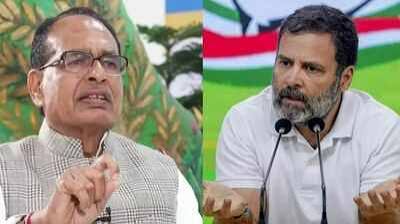
Shivraj Singh Chouhan’s son Kartikeya Singh filed a defamation case against Rahul Gandhi, alleging that Gandhi mentioned his name while referring to Panama Papers leak case, damaging his reputation. Congress leader Rahul Gandhi has approached the Madhya Pradesh High Court with an application expressing regret for his allegedly defamatory statement about Union Minister Shivraj Singh Chouhan’s son Kartikeya Singh. Kartikeya Singh had filed a defamation complaint in a Bhopal court against the Leader of the Opposition in the Lok Sabha. Gandhi’s application, filed by his lawyer on Wednesday, said his statement was not related to Singh. In the defamation complaint lodged in the Bhopal court for cases against MPs-MLAs, Kartikeya Singh alleged that during an election rally in Jhabua in 2018, Gandhi mentioned his name while referring to the Panama Papers leak scandal, thus damaging his reputation. The court issued a summons to Gandhi for personal appearance, following which the Congress leader moved the HC seeking to quash the summons as well as the defamation case. Justice Pramod Kumar Agarwal will hear Gandhi’s petition on Thursday. The petitioner on Wednesday produced the records of the lower court, as directed by the HC. Advocate Sankalp Kochhar represented the complainant before the high court. Responding to Gandhi’s regret application, Kartikey through his counsel on Thursday said that he didn’t intend to escalate the issue any further, so the proceedings before the MP HC as well as the trial court in Bhopal be closed. Courtesy : TNIE Note: This news is originally published on https:/thenewindianexpress.com/bha and is used purely for non-profit/non-commercial purposes, especially human rights
Madhya Pradesh: What Does It Mean To Live In Localities With Caste Indicative Names?
Chhatarpur: The scourge of casteism continues to be rampant in certain parts of Bundelkhand, despite the Constitution guaranteeing equality to every citizen of the country. Chhatarpur district still has hamlets and neighbourhoods with caste indicative names. Members of the Dalit community living in these areas have not been able to integrate into the mainstream of the society and have reportedly endured social discrimination and mental anguish for generations. They feel humiliated and ashamed when their village is referred to by its caste indicative name, Chamaruwa Purva is one such hamlet in Bagota village that continues to retain its caste indicative name. Residents claim families of prospective brides turn away upon hearing the area’s name, and even the rickshaw and auto drivers refuse to drop passengers here. There are many such areas and settlements in Chhatarpur whose caste-based names are mentioned in government records. Some of them are Kacchiyana Purva, Dhimran Purva, Ghusyana Mohalla and Koryana Mohalla. The residents claim that these caste-based names have caused Dalits to bear social stigma for generations. They say future generations will continue to suffer, until the names of such places are changed. Chamruwa Purva is inhabited solely by Dalits who were reportedly resettled 2 km away from the main village before Independence. The Dalits living in this hamlet are troubled by its name. One of the public representatives (Janpad Sadasya) Dalpat Ahirwar, who lives in Chamaruwa Purva, explained, “We still face social stigma. Whenever our children go for employment or to an educational institution, people look down upon us after hearing the name of our hamlet.” He added that the residents of the hamlet are unable to find a house on rent elsewhere or a job once they mention their address. “When we go to enroll our children in school, we’re asked about the area we live in. We feel embarrassed to reveal the name. We face difficulties because the area’s name is caste-indicative.” He claimed that several applications have been submitted to the local administration to change the name of the hamlet, but there has been no positive response. Meanwhile, Advocate Devendra Anuragi of Chhatarpur disclosed, “Not only is Chamaruwa Purva caste indicative, but even the Koryana Government School in Toriya Mohalla is referred to by the same name in government records. Dalits have been suffering the consequences of this for centuries. Upon hearing the name, people associate their identity with caste.” Another resident of Chamaruwa Purva, Bhubani Bai Ahirwar, disclosed, “When we return from shopping in the city, rickshaw pullers and auto drivers refuse to drop us home. Hearing the hamlet’s name, no one comes this way. Even the family of a prospective bride doesn’t come to the area to arrange a match.” Chief Executive Officer (CEO) of Chhatarpur District Panchayat, Namah Shivay Arajaria, said that to change the caste indicative names of hamlets or areas, the Gram Panchayat has to pass a resolution and get it forwarded by the Gram Sabha. “If the file comes to me from the Panchayat, we can propose a name change,” he said. A resident of Chamaruwa Purva, Sunil Kumar, candidly admitted, “The name of the hamlet is like an abuse. When one goes to get a child admitted to a school and the address is asked, it feels insulting.” Meanwhile, Anuragi pointed out that while the country and society have changed with time, Chhatarpur continues to have neighbourhoods, hamlets, and schools that are known by caste indicative names that remind the people of the old social order. “Now, these need to be changed for social harmony,” he underlined. Courtesy : ETV Bharat Note: This news is originally published on https:/etvbharat.com/bha and is used purely for non-profit/non-commercial purposes, especially human rights
5,423 SC/ST Act cases in Madhya Pradesh have been pending for more than five years, with the highest pendency in these districts.
The Directorate of Public Prosecution has issued strict instructions, and a special drive will be launched to resolve old cases. Bhopal. The pending status of cases registered under the Scheduled Castes and Scheduled Tribes (Prevention of Atrocities) Act, 1989, in Madhya Pradesh is becoming a matter of concern. A total of 5,423 cases related to this Act have been pending in various courts across the state for more than five years. The highest number of pending cases is registered in Jabalpur district, where 909 cases have been awaiting justice for years. Followed by Sagar with 842 cases and Rewa with 417 cases. These figures highlight the slow pace of the judicial process and the lack of timely justice for victims. In light of the ever-increasing pendency, the Madhya Pradesh government and the Public Prosecution Department have become active. Recently, the Directorate of Public Prosecution, Bhopal, issued instructions to all district prosecution officers to expedite the disposal of old cases on a priority basis. Hundreds of cases pending for years in many districts According to state data, in addition to Jabalpur, Sagar, and Rewa, districts like Chhatarpur, Gwalior, Guna, Morena, and Ujjain also have a large number of cases pending in courts for years. In these districts, victims have been waiting for justice for a long time. On the other hand, the situation appears relatively better in some districts. In Katni, Tikamgarh, Neemuch, Mandsaur, Dindori, and Dhar districts, the number of cases pending for more than five years is reported to be less than five. In Narmadapuram, Khandwa, and Harda, only one case each is pending for more than five years. The data on pending cases under the SC/ST (Prevention of Atrocities) Act, 1989, in Madhya Pradesh reflects the increasing burden on the judicial system. The highest number of 909 cases are pending in Jabalpur, followed by 842 in Sagar, 417 in Rewa, 390 in Chhatarpur and 383 in Gwalior. Besides, 303 cases are pending in Guna, 247 in Morena, 234 in Ujjain, 212 in Shivpuri, 200 in Damoh, 167 in Vidisha, 143 in Chhindwara, 112 in Dewas, 85 in Shahdol, and 81 each in Indore and Raisen. On the other hand, 77 cases are pending in Ashoknagar, 71 in Balaghat, 69 each in Bhopal and Umaria, 62 each in Khargone and Seoni, 33 in Panna, 28 in Satna, 24 in Ratlam, 21 in Bhind, 19 in Mandla, 15 in Agar, 11 in Shajapur and 10 each in Betul and Singrauli. The least number of pending cases have been registered in Sidhi district, where only 9 cases are pending. There are 9 districts where less than five cases are pending for more than five years. Four cases in Katni, two each in Tikamgarh, Neemuch, Mandsaur, Dindori and Dhar and one each in Narmadapuram, Khandwa and Harda have been reported to be pending for more than five years. Most notably, in eight districts of the state: Alirajpur, Anuppur, Barwani, Burhanpur, Datia, Jhabua, Sehore, and Sheopur, not a single case related to the SC/ST Act is pending for more than five years. This is believed to be the result of improved coordination at the judicial and prosecution levels. Special drive to begin for old cases Following directives issued by the Directorate of Public Prosecution, a special campaign will now be launched across the state to resolve old pending cases. Prosecution department officials have been instructed to regularly monitor such cases and make efforts to expedite the trial process in the courts. Special emphasis will be placed on ensuring the timely appearance of witnesses, providing necessary documents, completing pending evidence, and effective advocacy in the courts. In cases where legally feasible, efforts may also be made towards peaceful resolution and settlement with the consent of both parties. Questions are being raised about the slow pace of the judicial process. Cases filed under the SC/ST Act fall under the category of serious crimes involving social discrimination, violence, and harassment. The delay in delivering verdicts in such cases for years raises questions about the constitutional rights of victims and the justice system. Social organizations and rights activists say that many victim families face mental, financial, and social pressure due to the lengthy judicial process. Experts believe that to expedite these cases, there is a need to increase the number of special courts, fix accountability of prosecuting officers, and ensure timely trials. Strengthening witness protection and digital case monitoring systems is also considered essential. Speaking to The Mooknayak, Pradeep Ahirwar, former member of the State Scheduled Caste Commission and State President of the SC Congress, said that the years-long pendency of SC/ST Atrocities Prevention Act cases is extremely worrying. He said that victims from Dalit and tribal communities approach the courts with the hope of justice, but the long pending cases undermine their trust in the justice system. Ahirwar alleged that the government and administration are not serious about resolving these cases quickly, despite the law’s provision for special courts and speedy trials. He demanded that a special campaign be launched to expedite the pending cases and ensure timely justice for victims. Action will be monitored by the government. According to sources, old cases will now be reviewed regularly at the district level. The prosecution department will prepare a list of pending cases in the courts and prioritize them for hearing. The government’s goal is to expedite the disposal of cases pending for years, ensuring timely justice for victims. Speaking to The Mooknayak, legal expert and advocate Mayank Singh said that the SC/ST (Prevention of Atrocities) Act, 1989, is an important law related to social justice, aimed at protecting Dalit and tribal communities from oppression and discrimination. He said that the long-standing pendency of cases under this Act is a serious concern for the justice system, as “justice delayed is justice denied.” Mayank Singh said that reducing the backlog will not be possible without the appointment of adequate judges in special courts, regular hearings, and an effective investigation system. What is the SC/ST Act? The Scheduled
TM Exclusive: Uproar over Minister Pratima Bagri’s caste: Dalit or Rajput? A full investigation into Congress’s allegations
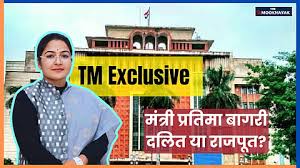
Congress SC Department President Pradeep Ahirwar claims “the Rajput Bagri community received Scheduled Caste benefits unfairly,” prompting action after High Court rebuke Bhopal. The controversy surrounding the caste certificate of Madhya Pradesh Minister of State Pratima Bagri appears to be reaching a decisive turning point. On Wednesday, State President of the Scheduled Castes Congress Department Pradeep Ahirwar appeared before the state-level inquiry committee investigating the validity of the caste certificate with evidence and documents, calling Minister Pratima Bagri’s Scheduled Caste certificate “fake,” and demanding its immediate cancellation. Following the High Court’s intervention in the matter and directing a decision within 60 days, administrative activity has intensified. The Mooknayak investigation has revealed that this controversy isn’t limited to a single individual’s caste certificate, but rather is linked to a long-standing dispute over the use of the surname “Bagri” and Scheduled Caste eligibility in the Bundelkhand, Vindhya, and Mahakaushal regions of Madhya Pradesh. Congress leader Ahirwar claims that caste certificates were issued for years without distinguishing between the actual Scheduled Caste Bagri community and the Rajput-Thakur communities using the surname Bagri, impacting the reservation system. The Bagris of the Bundelkhand and Vindhya regions are Rajput (General). Documents submitted to the committee During the hearing held at Vallabh Bhavan in the ministry on Wednesday, Pradeep Ahirwar presented detailed documents to Principal Secretary E. Ramesh Kumar and other committee officials. He stated that when the list of Scheduled Castes was first compiled in 1950 and after the country’s independence, only those castes associated with social untouchability, untouchability, and lower social functions were included in it. According to him, the Bagri community living in the Central India region was classified as a Scheduled Caste under special circumstances, but the Rajput Bagri community living in the Vindhya and Bundelkhand regions was never recognized as a Scheduled Caste. In a conversation with The Mooknayak, Pradeep Ahirwar stated that the Bagri community living in Satna and Panna districts was not listed as a Scheduled Caste in the 1961 caste census. He also stated that after the formation of Madhya Pradesh in 1956, the districts where the Bagri community was granted Scheduled Caste status were primarily those in the Central India region, including Bhind, Morena, Shivpuri, Guna, Ujjain, Ratlam, Mandsaur, Indore, Dewas, Dhar, Jhabua, and Neemuch. After the regional restrictions were lifted in 1976, members of the Rajput-Thakur Bagri community in the Vindhya and Bundelkhand regions began obtaining Scheduled Caste certificates. Pradeep Ahirwar also argued before the committee that the Regaon Assembly seat in Satna district is reserved for the Scheduled Caste category, and that Pratima Bagri contested the election based on this certificate, became an MLA, and later rose to the position of minister. He alleged that if the certificate was issued contrary to the rules, it is not merely a personal matter but a serious question concerning the reservation system and constitutional rights. The Government of India amended the 2007 amendment. The complainant also cited orders issued by the state government in 2003. According to him, anthropological studies conducted by the state government and the Madhya Pradesh Tribal Research Institute (TRI) clarified that families with the surname “Bagri” living in Bundelkhand, Mahakaushal, and the Vindhya region actually belong to the Rajput-Thakur community and should not be issued Scheduled Caste certificates. According to the TRI report, these Bagri Rajputs are landlords of the Vindhya region. Based on the similarity in their caste names, they began obtaining SC caste certificates and began taking advantage of them. The Scrutiny Committee Did Not Issue Instructions Instructions in this regard were issued to all collectors on February 25, 2003, and July 14, 2003. A high-level scrutiny committee later upheld the government’s decision. An important point in this matter is the 2007 amendment. The central government had clarified at that time that the “Bagri/Bagri” community would be classified as a Scheduled Caste, but those from the Rajput and Thakur sub-castes who use only the surname “Bagri” would not receive this benefit. Ahirwar says that despite this, caste certificates continued to be issued at the local level without adequate scrutiny. Speaking to The Mooknayak, State President of the Scheduled Caste Congress, Pradeep Ahirwar, alleged that Minister Pratima Bagri and her family have been creating confusion about their caste identity for years. He said that Pratima Bagri’s side can submit land records and revenue documents dating back to 1950, which show her family’s surname as “Bagri.” But merely having the surname “Baghari” does not make a person eligible for the Scheduled Caste category. According to Ahirwar, the Rajput Bagri community of the Vindhya and Bundelkhand regions did not receive Scheduled Caste status in the constitutional Scheduled Caste list implemented in 1950. He claimed that the family did not register itself as a Scheduled Caste in the 1956 and 1961 documents and caste records because they belong to the Rajput (General) category. He stated that the Bagri surname in revenue records cannot be considered evidence of their Scheduled Caste status. Pradeep Ahirwar further stated that the Bagri caste is recognized as a Scheduled Caste only in the Central India region. And Minister Pratima’s family succeeded in obtaining the certificate by taking advantage of the similarity of the caste name with the same “Bagri” community. He expressed apprehension that attempts may be made to create confusion before the scrutiny committee based on old documents. Ahirwar claims that the documents in which the family’s surname “Bagri” is recorded actually belong to the Rajput Bagri community, not the Scheduled Caste category. The Bagri caste has not faced untouchability. The complaint also states that the Bagri families of the Vindhya and Bundelkhand regions have been known as an economically and socially influential farming community. The documents claim that these families have owned large tracts of agricultural land since before independence and have never faced social discrimination. Citing gazetteers and old administrative documents from the British era, the complainant states that the Rajput Bagri community of Seoni district is mentioned as a major farming community and has had marital relations
Under pressure from youth booked for stalking and harassment, teen Dalit girl ends life in MP
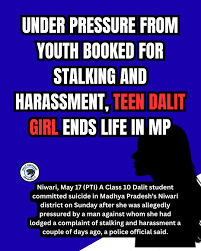
Niwari, A Class 10 Dalit student committed suicide in Madhya Pradesh’s Niwari district on Sunday after she was allegedly pressured by a man against whom she had lodged a complaint of stalking and harassment a couple of days ago, a police official said. The 16-year-old girl hanged herself in her house in Siyakhas village, around 18 km from the district headquarters, Prithvipur police station house officer (SHO) Jitendra Singh Gurjar told PTI. “She had earlier complained against Abhishek Yadav, a youth from the same village, after he allegedly caught hold of the girl with malicious intent when she was returning home from a temple with her sister-in-law two days ago,” he said. Following her complaint, Yadav and three others were booked under provisions of Scheduled Castes and Scheduled Tribes (Prevention of Atrocities) Act and Protection of Children from Sexual Offences (POCSO) Act, he said. “The accused allegedly pressured the girl’s family to withdraw the case. Possibly due to fear and pressure, she took the extreme step. Yadav has been arrested,” Gurjar said. This report is auto-generated from PTI news service. ThePrint holds no responsibility for its content. Courtesy : The Print Note: This news is originally published on https:/theprint.com/bha and is used purely for non-profit/non-commercial purposes, especially human rights
Tribals struggle for water in MP | Girls go down into wells to fetch dirty water, watch the report
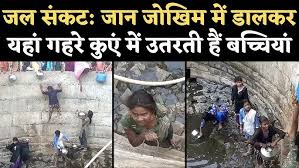
In the village panchayat of Peeparkund in the Pati development block of Barwani district in Madhya Pradesh, villagers are still struggling for clean drinking water. The Mooknayak’s ground report reveals horrific images from Kundiya Phalia and Kanjania Phalia, where people are forced to fetch dirty water from several kilometers away. Little girls go down into wells to fetch water, while women and elderly people carry water on mules and on their heads through difficult paths. Villagers allege that despite repeated appeals to the administration and public representatives, the village has not yet been provided with clean drinking water and hand pumps. This report highlights the gap between government claims and ground reality. Asif Nisar Courtesy : Hindi News
NCRB: Madhya Pradesh Ranks No. 1 in Atrocities Against Tribals, What’s the Reason? TM Exclusive
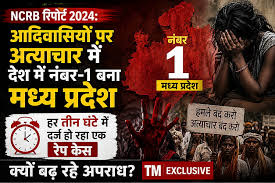
Crimes against women, children, and Dalit-tribal communities raise concerns; MP also ranks among the top states in dowry deaths, kidnappings, and POCSO cases. Bhopal. The latest NCRB data has raised serious questions about the law and order situation in Madhya Pradesh. The increasing crimes against women, tribals, children, and vulnerable groups have raised concerns about the state’s security system. Opposition parties and social organizations believe that the government’s indifferent attitude and administrative laxity are contributing to the steady rise in criminal incidents. They allege that criminals are losing their fear of the law, while victims are unable to access timely justice and protection. The “Crime in India 2024” report, released by the National Crime Records Bureau (NCRB), a nationwide crime data center, has raised serious questions about the law and order situation and social security in Madhya Pradesh. According to the report, Madhya Pradesh has reached the top spot in the country in crimes against the Scheduled Tribes (ST). The state also ranked among the top states in the country for crimes against women, dowry deaths, crimes against children, kidnapping, murder, and POCSO cases. The data revealed in the report indicates that the safety of women and vulnerable groups continues to be a challenge in the state. The NCRB released this report on May 6, 2026, and includes crime statistics for the year 2024. Normally, this report should have been released by September 2025, but this time, due to delays in data verification and matching of crime information, the report was released nearly eight months later. Rape every three hours in MP According to the report, a total of 32,832 cases against women were registered in Madhya Pradesh during 2024, ranking the state fifth in the country for the fourth consecutive year. According to the data, an average of more than 90 crimes against women were registered daily in the state. These include rape, dowry harassment, domestic violence, kidnapping, and other serious crimes. The report also states that a rape case is being registered every three hours in the state, which raises serious questions about the safety of women. The situation in Madhya Pradesh regarding dowry deaths is also extremely worrying. According to the NCRB, a total of 450 cases of dowry deaths were registered in the state in 2024. Of these, 232 cases were registered under sections of the Indian Penal Code (IPC) and 218 under sections of the Indian Penal Code (BNS). Madhya Pradesh ranked third in the country in this category. Uttar Pradesh ranked first with 2,038 cases, while Bihar ranked second. Experts believe that dowry practices and domestic violence against women remain serious social problems in both rural and urban areas. Increase in kidnapping cases The report also expressed concern about murder and kidnapping cases. Madhya Pradesh ranked fourth in the country for both murder and kidnapping. However, murder cases have seen a slight decline in the last two years. In 2022, 1,978 murder cases were reported in the state, which decreased to 1,832 in 2023 and 1,813 in 2024. This means a decrease of 173 murder cases was recorded in two years. In contrast, kidnapping cases have steadily increased. In 2022, 10,409 kidnapping cases were registered in the state, which increased to 11,768 in 2023 and 11,847 in 2024. This means that on average, 32 kidnapping cases are being reported daily in the state. Madhya Pradesh ranks fourth in kidnapping cases, after Uttar Pradesh, Maharashtra, and Rajasthan. Crimes against tribals on the rise Madhya Pradesh’s rise to first place in the country in crimes against the Scheduled Tribe (ST) category is considered a matter of great concern. According to the NCRB, 3,165 cases were registered against the ST community in the state in 2024. Madhya Pradesh ranked second in the country with 7,765 cases of crime against the Scheduled Caste (SC). Social organizations and human rights activists say that incidents of violence, land disputes, social discrimination, and harassment against tribal and Dalit communities continue to emerge, but effective measures to prevent them remain insufficient. Madhya Pradesh’s situation remains dire when it comes to crimes against children. However, it’s a matter of relief that while last year the state ranked first in the country in this category, this time it has slipped to third place. According to the NCRB report, 21,908 cases of crimes against children were registered in 2024. These include cases such as child sexual abuse, kidnapping, child marriage, child labor, and violence. 3,721 cases were also registered in the state under the Protection of Children from Sexual Offences (POCSO) Act, placing Madhya Pradesh fourth in the country. Tamil Nadu ranked first in this list with 5,320 cases, followed by Maharashtra with 4,829 cases, and Uttar Pradesh with 3,671 cases. Experts believe that this NCRB report not only reflects crime statistics but also presents a picture of social inequality, insecurity of women, oppression of vulnerable groups, and administrative challenges. The steadily increasing crime has raised questions about the functioning of the state government and police administration. Social organizations say that strict laws alone are not enough to control crime; instead, grassroots education, social awareness, sensitive policing, and a speedy justice system are also needed. Tribal Congress raises questions In a conversation with The Mooknayak, Ramu Tekam, State President of the Congress Scheduled Tribe Department, launched a scathing attack on the state government over the NCRB report. He said that the continuous increase in crimes against tribal communities in Madhya Pradesh is extremely worrying. The state’s ranking first in the country in cases of ST atrocities is proof of the complete breakdown of law and order in the state. He alleged that tribal communities are still victims of violence, exploitation, land grabbing, and social oppression, but the government has failed to take action with sensitivity. Ramu Tekam said that the government is only busy making announcements and advertisements, while the tribal community on the ground is feeling unsafe. He said that the increasing crimes against women, children, and vulnerable sections prove that criminals have
MP Dalit family beaten for failing to meet temple donation demand

A few women and children were also caught in the violent attack, while several others sustained injuries. Chhatarpur: A Dalit family was violently assaulted for failing to provide an adequate amount of wheat as a donation for a local temple in Madhya Pradesh’s Chhatrapur district. The incident occurred in the Maharajganj village, where local strongmen allegedly harassed the victim at their house and demanded two quintals (200 kilograms) of wheat as a form of temple donation. The situation turned violent when the family said they were unable to donate. The accused allegedly dragged the family out, abused them, and attacked with rods, bricks, sticks, and stones. A few women and children were also caught in the violent attack, while several others sustained injuries and were left bleeding. According to NDTV, the victims said they gave whatever they could, leaving some for their own family’s needs. “If I give away my wheat as a donation, what will I feed my children for the rest of the year?” the victim reportedly told the men who were collecting the contribution. A video of the incident, which surfaced on Wednesday, May 6, has gone viral on social media, sparking widespread outrage as it showed villagers beating the victims aggressively with sticks. One of the victims’ clothes was removed in the assault. The victims claimed Shyam Patel, Hardayal Patel, Kripal Patel, Raja Bhaiya Patel, Ramswaroop Patel, Bhagwatdayal Patel, and others were involved in the attack. The remaining wheat was forcibly seized and taken away, the family alleged. However, the vehicle reportedly used to transport the wheat has not yet been recovered, they said. “The incident stemmed from a request for wheat donations for a temple, which subsequently escalated into a physical altercation. The accused individuals have been arrested, and appropriate action will be taken in accordance with the law,” the Maharajganj police told the media. Four accused have been arrested, and one is absconding. They have been booked under the provisions of the Scheduled Caste/Scheduled Tribe Act. The victims remain unsatisfied, alleging that it was a deliberate and organised assault as they were pressured based on their caste under the guise of temple donation. They questioned the inaction against the committee on whose orders the accused were using pressure tactics to collect donations. Posted by Khadija Irfan Rahim Courtesy : TSD Note: This news is originally published on https:/thesiasatdaily.com/bha and is used purely for non-profit/non-commercial purposes, especially human rights
MP News: Dalit Family Allegedly Beaten Over Forced ‘Wheat Donation’ For Temple; 4 Arrested
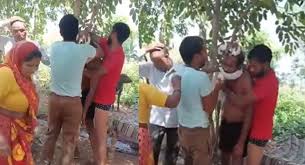
A Dalit family in Madhya Pradesh’s Chhatarpur district was allegedly assaulted by local strongmen for failing to provide the full quantity of wheat demanded as a temple donation. Five family members were injured, and police have arrested four individuals under the SC/ST Act following the incident. In a tragic incident, a Dalit family in Maharajganj village of Madhya Pradesh’s Chhatarpur district was allegedly assaulted after they failed to provide the full quantity of wheat demanded as a “donation” for a village temple. According to reports, local strongmen arrived at the family’s home and asked for wheat in the name of temple contribution. When the family said they were unable to meet the demand and had already given what they could afford, the situation escalated into violence. The accused allegedly abused the family, dragged members outside, and attacked them with sticks, rods, bricks, and stones. Women and children were also reportedly caught in the assault, leaving several family members injured and bleeding. The victims said the demand exceeded their financial capacity. “If I give away my wheat as a donation, what will I feed my children for the rest of the year?” the victim reportedly told those who came to collect the contribution. Five members of the family sustained injuries and were later taken to a local hospital after visiting the police station. A video of the incident has also surfaced, showing the alleged assault and triggering widespread concern over caste-based intimidation in the region. The victims have named several individuals, including Shyam Patel, Hardayal Patel, Kripal Patel, Raja Bhaiya Patel, Ramswaroop Patel, and Bhagwatdayal Patel, alleging their involvement in the attack. They also claimed that their remaining wheat was forcibly taken away. Police have said the incident began over a dispute related to temple donation collection that later turned violent. “The incident stemmed from a request for wheat donations for a temple, which subsequently escalated into a physical altercation. The accused individuals have been arrested, and appropriate action will be taken in accordance with the law,” NDTV quoted Civil Lines Inspector Ashutosh Shroti. Authorities confirmed that they have filed charges under the SC/ST Act against five people; four have been arrested, and one remains at large. However, the victims have stated that they are unhappy with the progress on their complaints and are convinced that what happened was not an impulsive disturbance but a premeditated effort to exert authority over them for the purpose of obtaining a religious donation. Courtesy : TDJ Note: This news is originally published on https:/thedailyjagran.com/bha and is used purely for non-profit/non-commercial purposes, especially human rights