
Teacher booked for allegedly beating up 8-year-old Dalit boy for drinking water from his bottle in Madhya Pradesh
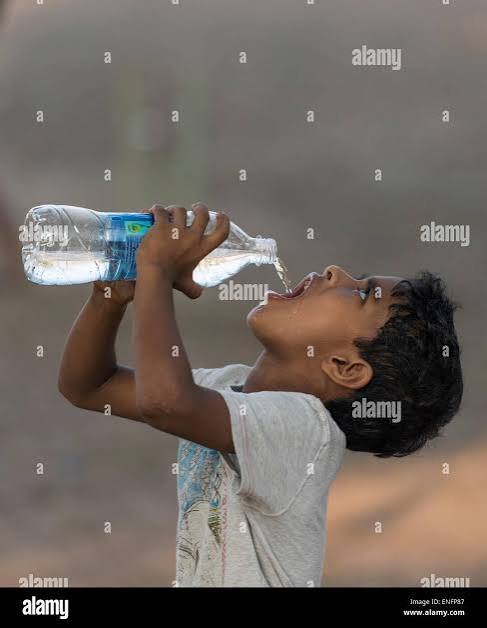
According to officials,the teacher, Lokesh Sharma, beat up the class 4 student using a cane in front of his fellow students after which the boy narrated the incident to her parents An eight-year-old Dalit boy was thrashed and targeted with racial slurs by a teacher in a government school in Madhya Pradesh’s Shivpuri district for drinking water from his bottle, officials said on Friday (July 31, 2026). According to officials, the incident took place on July 28 in a government primary school in Ukawal village under the Kolaras police station area, where the teacher, Lokesh Sharma, beat up the class 4 student using a cane in front of his fellow students after which the boy narrated the incident to her parents. The need to address caste-based atrocities Speaking to The Hindu, Shivpuri Superintendent of Police (SP) Yangchen Dolkar Bhutia said that an FIR has been registered under relevant provisions of the BNS and the SC/ST (Prevention of Atrocities) Act, based on a complaint from the student’s family. The teacher has been questioned in the matter, she said. As per the complaint, Ms. Bhutia said the teacher hit him on the hands with a cane and used racial slurs against him. “The family and the boy have alleged that the incident took place as he drank water from the teacher’s bottle. The teacher, however, is denying the allegation and is saying that he scolded the boy over the homework,” she said. Ms. Bhutia also said that the police have also taken statements from the boy’s schoolmates. “They are confirming the beating up but are unclear on the reason. We have also looked into the teacher’s record but have not found any such incident or complaint,” she said, adding that the police are probing the case from all angles. Mehul Malpani Courtesy : The Hindu Note: This news is originally published on https:/thehindu.com/bha and is used purely for non-profit/non-commercial purposes, especially human rights
MP: Teacher brutally beats 8-year-old Dalit student for touching water bottle, FIR filed

A case of alleged untouchability and caste discrimination has come to light at a government school in Shivpuri district, Madhya Pradesh. The teacher allegedly beat an eight-year-old student with a stick and used casteist slurs for touching his water bottle. A shocking incident has come to light in Shivpuri district, Madhya Pradesh, raising serious questions about both the education system and society. It is alleged that an 8-year-old student studying in a government school drank water from a teacher’s water bottle. Angered by this, the teacher allegedly beat the child and used casteist slurs against him. Following the incident, the family filed a police complaint. According to an NDTV report, the incident occurred at the government primary school in Ukawal village, Kolaras tehsil, Shivpuri district. According to reports, the 8-year-old student, a Class 4 student, arrived at school as usual. While studying, he felt thirsty and drank water from the teacher’s water bottle in the classroom. It is reported that this sparked a dispute, and the teacher’s anger was directed at the innocent student. Family members and local residents allege that teacher Lokesh Sharma became angry when the student touched his water bottle. They say the teacher first scolded the student and allegedly used casteist slurs against him. It is alleged that the teacher then brutally beat the student with a stick, saying, “How dare you touch my bottle?” The child returned home crying. When the student returned home after the beating, he was terrified. He informed his family about the incident. The family was shocked to hear his story. The family says that treating a young child in this manner simply for drinking water is a very serious matter. Following this, the family decided to take legal action and filed a complaint at the police station. FIR Registered On the complaint of the victim’s family, the Lukwasa police station in the Kolaras police station area has registered a case against the accused teacher, Lokesh Sharma. The police have registered a case under sections 296(A) and 115(2) of the Indian Penal Code (IPC). They have also taken action against the accused under sections 3(1)(d), 3(1)(d), and 3(2)(v) of the Scheduled Castes and Scheduled Tribes (Prevention of Atrocities) Act. Police Engaged in Investigation According to police officials, an investigation has been initiated into the case. Further action will be taken based on the complaint, witness statements, and other available evidence. Officials say that necessary legal action will be taken as per the law after the investigation is complete. Meanwhile, there is an atmosphere of anger in the village and surrounding areas following the incident. Locals say that schools are places to impart the message of education, equality, and respect to children. In such a context, the emergence of such allegations is extremely serious and worrying. Such incidents have happened before. It should be noted that similar incidents have occurred before. In April of last year, a 15-year-old Dalit student in Agra suffered fractures to two fingers and serious injuries to his thigh, shoulder, and jaw. It was alleged that a teacher beat him for touching a water bottle. This incident occurred at a private higher secondary school in Haripur. The student told the English newspaper TOI, “I was thirsty, and when I saw a water bottle on the table, I picked it up. As soon as I touched the bottle, my teacher, Mangal Singh Shakya, became angry and said, ‘How dare you touch the bottle? It’s no longer fit to be touched. Who will drink from it?’” The boy said that Shakya locked him in a room after school and beat him severely. A similar incident also occurred in Rajasthan in July 2022. A nine-year-old Dalit student died after being allegedly beaten by a teacher for drinking water from a water pot at a private school in Jalore district, Rajasthan. The victim was a student at a private school in Surana village, Jalore district. He was beaten on July 20 and later died at a hospital in Ahmedabad, Gujarat. Courtesy: Hindi News
Two Bhopal police constables arrested for allegedly abducting and rap!ng minor Dalit girl

Two Madhya Pradesh Police constables have been arrested for the alleged abduction and rape of a minor Dalit girl in Bhopal. The incident reportedly occurred on July 22, and the survivor filed a complaint at Jahangirabad Police Station the following day, leading to the registration of an FIR and the prompt arrests of both accused. Bhopal Additional Commissioner of Police (Law and Order) Shailendra Singh Chauhan identified the accused as constables Santosh Sen and Jitendra Singh. According to police, the men, who are serving police personnel, called the minor girl and took her away in a car. An officer familiar with the case said the pair allegedly lured her by claiming they were taking her to a birthday celebration. They then drove her to a secluded location where Santosh Sen is accused of raping her. Afterward, the men left the girl at a city square. A medical examination of the survivor has been conducted. She is currently at home and her condition is stable. The case has been registered under the Protection of Children from Sexual Offences (POCSO) Act, the Scheduled Castes and the Scheduled Tribes (Prevention of Atrocities) Act, and relevant provisions of the Bharatiya Nyaya Sanhita, including Section 137(2). Further investigation is underway. Courtesy : MM Note: This news is originally published on https:/muslimmirror.com/bha and is used purely for non-profit/non-commercial purposes, especially human rights
Special Court Decision: Five Convicts in Narsinghpur Murder of Dalit Middle-Aged Man Sentenced to Life Imprisonment

According to the prosecution, the incident occurred on March 14, 2025. Nitesh Mehra, a resident of Umaria village in the Gotegaon area, was called by accused Kamlesh Prajapati and abused… Read More Special Court Decision. Naidunia Representative, Narsinghpur. The court of Special Judge (Scheduled Castes/Tribes (Prevention of Atrocities) Act) Manoj Kumar Ladhiya, delivering swift justice in a serious case of murder and caste-based atrocity, convicted five accused from the same family and sentenced them to life imprisonment. The Special Court convicted the accused, Kamlesh Prajapati (28), Annilal Prajapati (50), Akhilesh Prajapati (24), Chhotu alias Umesh (22), and Savita Bai (47) (all residents of Umaria village, Gotegaon police station) under sections 103(1)/190 of the Indian Penal Code (IPC) and the SC/ST Act and sentenced them to life imprisonment and a fine. According to the prosecution, the incident occurred on March 14, 2025. Nitesh Mehra, a resident of Umaria village in the Gotegaon area, received a call from the accused, Kamlesh Prajapati, abusing him, and informing him that they were assaulting his father, Sukhlal Mehra. Nitesh immediately rushed to the scene (a gram field) and saw the accused brutally beating his father with sticks and kicks. Sukhlal suffered serious injuries due to a minor dispute (over leaving straw) and caste-based hatred. Sukhlal was later declared dead on the way to the hospital. Court Verdict and Sentence On behalf of the prosecution, ADPO Amit Kumar Rai presented strong evidence and oral arguments. The court agreed with the prosecution’s arguments and sentenced the five accused to life imprisonment and a fine of 2,000 rupees each under Section 103(1) of the IPC for murder. Kamlesh, Annilal, and Akhilesh were sentenced to 2 years’ rigorous imprisonment and a fine of 500 rupees each for rioting and other charges. Chhotu and Savita Bai were sentenced to 1 year’s rigorous imprisonment and a fine of 500 rupees each. BY VARIJ BAJPAIEDITED BY: NAVODIT SAKTAWAT Courtesy: Hindi News
Two M.P. Police constables arrested for raping minor dalit girl in Bhopal

According to the police, the incident took place on July 22 and that the minor survivor lodged a complaint on July 23, based on which a case was registered Two Madhya Pradesh Police personnel have been arrested for allegedly raping a minor Dalit girl after abducting her in Bhopal, police said on Friday (July 24, 2026). According to the police, the incident took place on July 22 and that the minor survivor lodged a complaint in Bhopal’s Jahangirabad police station on July 23, based on which a case was registered. Bhopal Additional Commissioner of Police (law and order) Shailendra Singh Chauhan told The Hindu that the accused have been identified as constables Santosh Sen and Jitendra Singh, and that the duo have been arrested. “The complainant approached Jahangirabad Police Station and reported that two individuals, who are basically police constables, called the minor girl and took her in a car somewhere where one of them raped her,” Mr. Chauhan said. Case registered The officer said that a case under relevant provisions, including the Protection of Children from Sexual Offences (POCSO) Act, the Scheduled Castes and the Scheduled Tribes (Prevention of Atrocities) Act, and BNS Sections like 137(2), has been registered, and investigation has been taken up. Mr. Chauhan said that a medical examination was conducted on the survivor. Another officer from Jahangirabad said that the accused had called the girl and lured her on the pretext of taking her to someone’s birthday. “They then took her to a secluded location where Santosh Sen raped her. After this they left the girl at a square in the city,” the officer said, requesting anonymity. The officer said that the girl is currently at her home and her health condition is fine. Mehul Malpani Courtesy : The Hindu Note: This news is originally published on https:/thehindu.com/bha and is used purely for non-profit/non-commercial purposes, especially human rights
The Forgotten Stakeholders of the Ken-Betwa Project: Why Dalit Voices Must Matter in India’s Largest River-Linking Experiment

The Ken-Betwa River Link Project, when it is discussed, tends to be overshadowed by the discussions on irrigation potential, ecological impacts and the future of the Panna Tiger Reserve. These are clearly important issues, but one crucial aspect has been largely ignored. It is the impact on Dalit people whose lives and livelihoods are intrinsically linked to the land now destined for transformation. As India embarks on one of its most ambitious water infrastructure projects, the question is not whether rivers can be interconnected but whether it is possible to grow in a socially just and inclusive manner. Development has never been asocial Major infrastructure investments rarely impact all communities equally. People who own property, have money and political power are usually better placed to get compensation or to rebuild their lives. Marginalised communities, particularly Dalits, tend to come into such processes with fewer assets, less bargaining power and a greater dependence on shared resources. In Bundelkhand, many Dalit households depend on agricultural wage labour, grazing grounds, woods, riverbanks and village commons for their survival. Even if they do not own the land being acquired, they risk losing access to economic networks that support their everyday life. That creates a dangerous paradox: a project aimed at reducing regional inequality may actually exacerbate existing socioeconomic inequities if rehabilitation policies are exclusively targeted at landowners. Hidden costs of displacement Public debate around rehabilitation often centres on compensation for seized land. But many Dalit households rely on labour for their livelihood, rather than ownership. Relocation of villages changes agricultural patterns and may eliminate job opportunities. While landowners may be compensated or given alternative plots of land, agricultural workers tend to lose both their livelihoods and social support systems. Seasonal jobs, access to forests for fuelwood, collection of minor forest produce, cattle grazing and informal economic activity could be lost overnight. Without understanding these losses, rehabilitation risks being a bureaucratic exercise rather than an exercise in meaningful justice. The pay is as important as the representation The Constitution guarantees equality before the law, but in reality participation in development planning is uneven. Important questions need to be asked: Were Dalit settlements consulted separately in public hearings? Were their interests tracked separately from the big landholding interests? Do rehabilitation committees effectively represent the scheduled castes? Are compensation schemes intended to recognize dependence on a livelihood, not just legal ownership? These questions are meant to bolster, not to stymie, growth. The Indian environmental governance framework is more about involvement. But meaningful participation also requires an understanding that communities are not homogenous. Social hierarchies in communities often determine who gets to be heard and whose concerns are dismissed. Learning from Previous Development Projects The history of India’s big dams, mining projects, industrial corridors and urban expansion tells us a familiar story: exposed areas often pay higher prices with fewer long-term benefits. Research on displacement in infrastructure projects has often found that Scheduled Castes and other marginal groups recover livelihoods more slowly due to a lack of economic assets and institutional support. The Ken-Betwa project is a chance to break free from this trend. Anusreeta Dutta Courtesy : TOP Note: This news is originally published on https:/theobserverpost.com/bha and is used purely for non-profit/non-commercial purposes, especially human rights
Madhya Pradesh: No bridge, no ambulance! Woman gives birth on a cot in the middle of a raging river, video goes viral

In Chhindwara, Madhya Pradesh, an ambulance was unable to reach due to a lack of roads and bridges. After this, villagers safely delivered a baby on a cot in the middle of a raging river. A video of the system’s negligence went viral. Madhya Pradesh: A shocking and system-shattering incident has come to light in Chhindwara district. A pregnant woman was forced to give birth on a cot in the middle of a raging river due to the lack of an ambulance. Heavy rains cut off this area from the main road, and the villagers’ long-standing demand for a bridge has remained unheeded. City and Local Guide This horrific incident occurred in the Lohari Mohalla of Hathoda Hiri village in the Amarwara block. During the monsoon, the river, which overflows with rainwater, completely cuts off approximately 20 families living there. A video of the incident surfaced on Sunday, showing villagers carrying a pregnant woman on a cot across a swollen river. The video exposed the daily hardships faced by residents of the area. According to family members, Shankar Vishwakarma’s 35-year-old wife, Savita Vishwakarma, suddenly experienced severe labor pains on Wednesday evening. Alarmed relatives immediately called the 108 ambulance service. However, due to the river’s overflowing waters and the lack of a proper road, the ambulance was unable to reach their neighborhood. With no other way to help, the family and villagers were forced to place the woman on a cot and set out on foot to cross the river. While wading through the rapidly flowing water, Savita’s pain intensified, and she gave birth to the baby on the cot. The villagers managed to reach the other side of the river with the mother and child, where they waited for an ambulance. But when no help arrived despite waiting for a long time, they gave up and resorted to a motorcycle. They were taken on the same motorcycle to Amarwada Civil Hospital, where doctors gave the reassuring news that both mother and newborn were completely healthy. Geographical Context The woman’s brother-in-law, Gopal Vishwakarma, expressed his anguish, explaining that their village is completely cut off every year during the monsoon. He said that his sister-in-law was in severe pain, and despite calling an ambulance, it could not reach them due to the river, forcing her to resort to a cot and deliver on the way. Gopal leveled serious allegations against the administration, saying that the villagers have repeatedly appealed for a concrete bridge and road, but no one has listened. The same situation arises every year during the rainy season, and even schoolchildren have to risk their lives crossing the river daily. The villagers have filed written complaints with the District Panchayat, SDM, and public representatives, but no concrete action has been taken to date. Regarding this entire incident, health officials at Amarwada Civil Hospital say they have no clear understanding of why the ambulance failed to arrive on time. A health official explained that the 108 ambulance service is operated directly from the Bhopal control room, but the good news is that both mother and child have reached the hospital and are safe. This incident has once again exposed the ground reality of health services in remote areas of Madhya Pradesh. Even though the scope of emergency ambulance services has expanded in the state, poor roads and lack of infrastructure still pose a major obstacle to timely medical assistance in many villages. Following this incident, angry villagers have once again intensified their demand for a bridge and an all-weather paved road. Rajan Chaudhary Courtesy: Hindi News
Dalit family attacked with sticks and rods while sleeping in Tikamgarh; one person dead, several injured
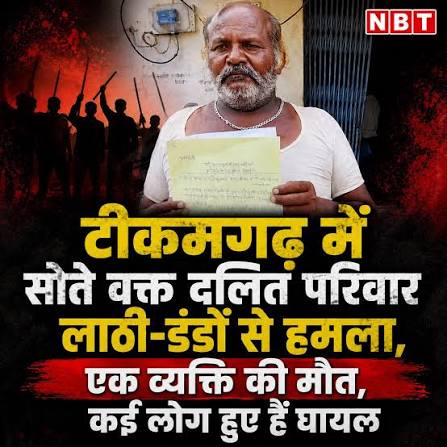
A Dalit family was attacked in Kanchanpur village, Tikamgarh. A man named Ghanshyam Prajapati was killed in the attack, and other family members were injured. Tikamgarh: A deadly attack on a Dalit family in Kanchanpur village, under the Mohangarh police station area of the district, late Wednesday night, sent shockwaves through the area. Around two dozen people attacked the family sleeping in their home with sticks, rods, and axes. One person killed The head of the family, Ghanshyam Prajapati (approximately 60 years old), died on the spot, while his wife, son, and grandson were seriously injured. All the injured have been admitted to the District Hospital, Tikamgarh, for treatment. Attack while sleeping According to reports, Ghanshyam Prajapati was sleeping with his family when some villagers, allegedly armed with weapons, arrived and suddenly attacked them. It is alleged that the attackers attacked Ghanshyam Prajapati with sticks and rods, killing him on the spot. His wife, son, and grandson were attacked with axes and sticks, leaving them seriously injured. Police Arrived at the Scene Upon receiving information about the incident, Mohangarh police arrived at the scene and the injured were immediately sent to the district hospital. Police inspected the scene and began an investigation. Preliminary investigations revealed that the deceased had been involved in a land dispute with some villagers. Furthermore, the deceased had filed a complaint with the Chief Minister’s Helpline against an alleged quack in the area. It is reported that the accused and the doctor belong to the same family. An ongoing land dispute The entire incident takes place in Mohangarh village of Tikamgarh district The accused murdered Ghanshyam Prajapati Other family members were injured in the attack Tikamgarh police are investigating the matter Police are investigating Mohangarh police station in-charge Ankit Dubey stated that the matter is being investigated and a case is being registered based on the statements of the family members. Meanwhile, Sagar Range IG Mithilesh Shukla has directed Tikamgarh police to take immediate action. In view of the tense situation in the village following the incident, additional police forces have been deployed, and the search for the accused is ongoing. Authored by: Muneshwar Kumar •Reported by: Narendra Arajaria About the author Muneshwar Kumar is the Principal Digital Content Producer (Chief Correspondent) at Navbharat Times Online. He covers Madhya Pradesh and Chhattisgarh, and also covers political news in other states. Courtesy: Hindi News
Madhya Pradesh: Dalits and tribals suffering from low compensation in the Ken-Betwa Link Project
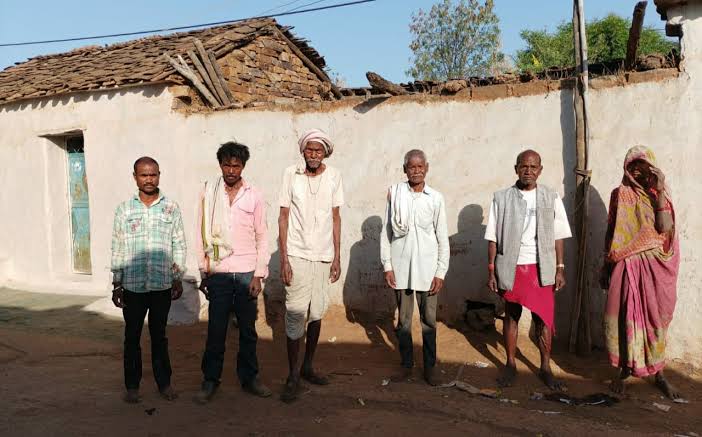
Chura Ahirwar, former sarpanch of Palkonha village, explains, “The main problem with the project is low compensation. In the village, some are being given Rs. 30,000, some Rs. 50,000, and some Rs. 1 lakh for their houses. With such low compensation, people can’t even buy the stones for their houses.” Read this report The Ken-Betwa Link Project in Madhya Pradesh is a river linking project. The project was approved for implementation under the chairmanship of Prime Minister Narendra Modi. The project involves transferring water from the Ken River to the Betwa River. The project cost is estimated at Rs. 44,605 crore. The project is estimated to irrigate a total of 10.62 lakh hectares annually. Meanwhile, 2.3 million trees will be cut for the project. Approximately 1,913 families will be affected by the project, and approximately 9,000 hectares of land will be submerged. In such a situation, the people primarily affected by this project are Dalits and tribals. They also face the threat of displacement. The biggest challenge in the project is the need for adequate compensation. For years, affected people have been taking steps like submitting memorandums and protesting to secure adequate compensation. Last April, the demand for compensation for the affected people took the form of a widespread Panchtatva Satyagraha movement. This movement began on April 5, 2026, and lasted for approximately 12 days. The affected people participated in the Panchtatva Satyagraha by smearing mud on their bodies, lying on pyres, committing symbolic hangings, conducting Jal Satyagraha, fasting, and extinguishing their stoves. During this period, slogans such as “Our village – your arbitrariness will not be tolerated” were raised. Ultimately, the affected people threatened a massive movement and gave the administration time to reconsider the compensation issue. We visited the rural areas of Panna district to understand the pain of the people affected by this project. These areas include Palkonha, Kadwara, Naiguwan, etc. in the Bijawar tehsil of the district. First, we arrive in Palkonha. Near the main road in this village, we discuss compensation with some villagers. Madanlal Ahirwar (50), a Scheduled Caste member, tells us, “I have been paid 30,000 rupees in compensation for my two-story house. We filed an application complaining about the low compensation, but have received no response. Can 30,000 rupees even lay the foundation for a house today?” Nanni Bai Ahirwar (70) is left without adequate compensation. She says, “I have two rooms in my house, for which I have not received any compensation. Similarly, my elder son’s house has not received compensation. Everything we have is at stake in this project. How will we manage our lives if we don’t receive adequate compensation?” Further into the village, near a platform, we meet Rammu Ahirwar (65) and Chura Ahirwar (48). In conversation, Rammu says, “My house cost around 10 lakh rupees. But I only received 4.5 lakh rupees in compensation. With that, we can’t rebuild our house like before.” He further adds, “Due to the lack of compensation, villagers are unable to go to cities like Indore, Bhopal, Delhi, and Mumbai for livelihood. Those who received little or no compensation are unable to build their own houses or get their sons and daughters married.” Chura Ahirwar, the former village sarpanch, adds, “The main problem with the project is the low compensation. Some in the village are being given 30 thousand rupees for a house, some 50 thousand rupees, and some 1 lakh rupees for a house. With such low compensation, people can’t even buy the stones for their houses.” After talking with the villagers of Palkonha, we head to Naiguwan village. We reach Naiguwan in about 30 minutes by bike. In this village, we meet some villagers near a banyan tree. Shakuntala Saur (40), a tribal woman, earns her living by working as a laborer. Sadly, she explains, “The government provides over 1 lakh rupees under the housing scheme. However, the compensation for our house is only 60,000 rupees. Just imagine, is this justice done to us? Who can build a house with this much? It can’t even build a proper toilet and bathroom.” As soon as Shakuntala finishes her sentence, Andu Saur (52) adds, “Our two-story house falls in the submergence zone of the project, and we haven’t received any compensation yet. When we complain to the officials about compensation, they say it will come…it will come. But we don’t know when it will come.” Then, we speak with Bihari Saur (55) about the project’s problems. He says, “The reason we haven’t received adequate compensation under this project is because of the lack of a proper survey. The officials didn’t conduct the compensation survey door-to-door, but instead gathered villagers together in one place. This has led to irregularities in the compensation.” After learning about the compensation issue in Palkonha village, we headed towards Kadwara village. We reached Kadwara by bike in about 40 minutes. In this village, we chatted with some villagers near a public water tap. Hakka Ahirwar (40 years old), a Scheduled Caste, says, “Our family, Bablu, Chandu, and I, three brothers, rely on 11 acres of agricultural land for our livelihood. This was acquired for the project. We received compensation of Rs. 5 lakh per acre for this land. However, when we go to buy land, we get Rs. 10-12 lakh per acre. Consequently, we are unable to purchase land. This is the problem faced by the farmers whose land is submerged in the project.” He further says, “We have only had the skill of farming for generations. The government hasn’t given us any other skills, nor has it provided any employment. Meanwhile, the government is paying 5 lakh rupees per acre as compensation for the land. At the same time, it’s deducting 5 lakh rupees from the residential plot being given to us. Is this fair?” Divya Ahirwar (60 years old) explains, “We received 2 lakh rupees in compensation for our two-story house. I spent 40 thousand rupees seven years ago to get a borewell installed in
Arun Yadav urges Rahul Gandhi to step in as Digvijaya Singh-Jitu Patwari row exposes MP Congress rift
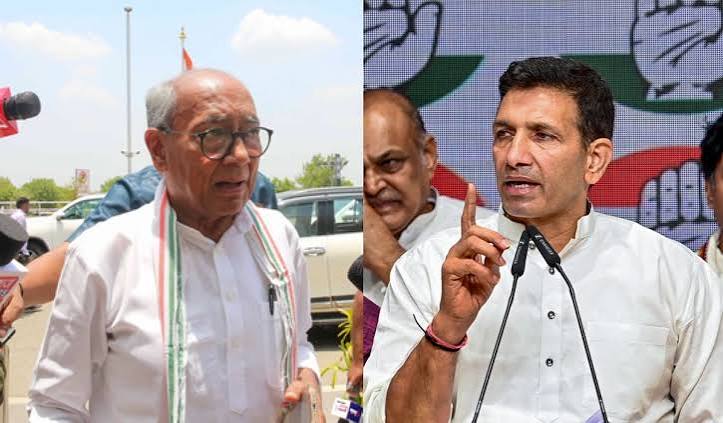
Yadav’s post came a day after reports of infighting surfaced during the Madhya Pradesh Congress Political Affairs Committee (PAC) meeting at the party headquarters in Bhopal. BHOPAL: Former Madhya Pradesh Congress president and ex-Union minister Arun Yadav has urged Leader of Opposition in the Lok Sabha Rahul Gandhi and the party’s central leadership to intervene to strengthen organisational unity in the state unit. “Honorable Shri Rahul Gandhi, the BJP and its government are grappling with internal conflicts, failures, and other problems in Madhya Pradesh. Even in this period, the truly loyal workers of the Congress party organization (in MP) are struggling ideologically. During such times, certain individuals are making futile attempts to break the morale of those workers under a contrived conspiracy; there is no doubt in this. “It is only by combining the enthusiasm of the youth and the wisdom of the party’s experienced leaders that we can confront the fascist ideology. In such a situation, if responsible people try to exploit their personal grievances and animosity at the expense of the party’s workers, it will not be timely. Kindly intervene through the central leadership to prevent the morale of the struggling workers from breaking and graciously strengthen the organizational unity,” Yadav posted on X on Wednesday. Yadav’s post came a day after reports of infighting surfaced during the Madhya Pradesh Congress Political Affairs Committee (PAC) meeting at the party headquarters in Bhopal. Former minister Sajjan Singh Verma, MLA Arif Masood and former MLA Pravin Pathak reportedly criticised senior Congress leader and former chief minister Digvijaya Singh for contradicting state Congress president Jitu Patwari’s stand on allegations relating to the allotment of land worth Rs 500 crore to a trust in Ujjain by the Mohan Yadav government. In a related development, Madhya Pradesh Congress general secretary Nidhi Chaturvedi, daughter of former MP Satyavrat Chaturvedi, launched a sharp attack on Digvijaya Singh in a social media post. “When will Congress be freed from ‘Naagpash’ of Digvijaya Singh. His (Singh’s) restlessness, anger, and indecorous conduct are nothing but a highly inappropriate, distressing, and condemnable step taken out of ‘attachment to his son.’ In his ambition to seat his son, Jaivardhan Singh, in the position of state party president, he has forgotten what party discipline means,” she wrote. The controversy stems from a June 24 press conference in New Delhi, where Patwari and Congress media department chairman Pawan Khera cited a national daily’s investigation into land purchases by Chief Minister Mohan Yadav, his relatives and associated real estate firms in Ujjain. Patwari had also alleged that government land worth Rs 500 crore in Ujjain had been allotted to the Veer Bharat Nyas for a token amount of Re 1. “Its trustee is Shriram Tiwari, who is the Chief Minister’s cultural advisor. On what basis was such expensive land given to this trust?” he had asked. Days later, Digvijaya Singh publicly disputed the allegation while speaking to reporters in Ujjain and later in Barwani. “It is being alleged that land worth Rs 500 crore has been rendered to a private trust for Rs 1 only. But I’ve all relevant papers with me, which establish that the concerned land hasn’t been given to any private trust, instead the concerned trust is a government trust. I don’t speak on any issue without proper research… There isn’t a dearth of dalals (brokers), who make false accusations and then earn money,” Singh had said. His remarks, seen as contradicting the state unit’s allegations, were repeatedly highlighted by the BJP to target Patwari while praising Singh’s stand. The reported differences triggered resentment among several Congress leaders during Tuesday’s PAC meeting, prompting Digvijaya Singh and Patwari to jointly address the media later in the day. “Entire Congress party in MP is united in the fight against corruption of Dr Mohan Yadav government. All complaints related to land deals by the state’s CM and his family are being probed at our level. We all will unitedly fight a definite battle on the issue,” the two leaders said. Seeking to end speculation over differences, Digvijaya Singh added: “Confusion is being spread about differences between me and state party chief Jitu Patwari. He (Patwari) is like my son. I’ve spent more than half a century in the Congress party. I can never use the word Dalal for any leader of the party, including the state party chief. I used the word Dalal for a journalist, whose name is Bhupendra Dalal.” With the reports of infighting dominating television coverage, the Madhya Pradesh Congress on Wednesday questioned why electronic media channels had not given similar prominence to the allegations over the chief minister’s land deals. “Instead of covering issues of burning public importance, efforts are being made to divert the public attention to other issues,” the party said. The state Congress has also announced a three-day Maun Satyagraha (silent protest). In an official statement, state Congress general secretary (organisation) Dr Sanjay Kamle said that, barring authorised press conferences and briefings, no Congress leader in the state would participate in television debates or give soundbites to TV channels during the next three days. Courtesy : TNIE Note: This news is originally published on https:/thenewindianexpress.com/bha and is used purely for non-profit/non-commercial purposes, especially human rights