
Centre fears ‘divergence of views’ among High Courts on new transgender law; asks SC to transfer cases to itself
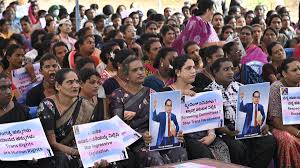
“We will see,” Chief Justice Kant said in response The Centre urged the Supreme Court on Wednesday (May 27, 2026) to transfer petitions challenging the constitutionality of the Transgender Persons (Protection of Rights) Amendment Act, 2026 from about four different High Courts to the apex court. Appearing before a Bench headed by Chief Justice of India Surya Kant, Solicitor General Tishar Mehta said the High Court are returning to work from summer recess in the first week of June. SC flags ‘risk’ of misuse in transgender self-identification debate The Supreme Court is already seized of several petitions challenging the 2026 Act, but it is is only partially working during June. Mr. Mehta, appearing for the Union government, said the High Courts may pre-empt the apex court by separately taking up the petitions before them and pass order. Mr. Mehta said the apex court should shift the cases pending in these High Courts to itself in order to avoid “divergent views” on the same Act. The top law officer urged the Chief Justice to list the Union government’s plea for transferring these petitions to itself on May 29. “We will see,” Chief Justice Kant said in response. The petitions in the apex court have criticised the controversial 2026 law of removing the right to self-identity. The 2026 Act requires a government-appointed medical board’s favourable recommendation for a District Magistrate to certify someone as a transgender person. NHRC asks Centre to review changes to trans law, ‘revisit’ community concerns on self-identification The petitioners, including activists like Laxminarayan Tripathi and others, said the Act disregarded transgender identity as an “authentic human identity, freely chosen”. They have argued that the requirement for a medical certification for gender recognition violated the rights of transgender persons and amounts to “medical gatekeeping” by the State. The government had countered that the intention of the Act was to ensure that deserving people from the community get benefits. He said forcible sex change was criminalised. The Transgender Persons Amendment Bill and the question of identity The petitioners highlighted that the Act had abruptly stopped ongoing sex-change therapies and treatment, leaving many in the community in dire straits. The petitions have argued that the 2026 amendments pull the carpet from under the 2014 NALSA judgment that declared that the right to self-identity was a fundamental right. It had held that identity was determined by the person, and not by biology, birth assignment or through State verification. Section 3 of the 2026 Act has omitted the right to self-perceived gender identity. The Hindu Bureau Courtesy : The Hindu Note: This news is originally published on https:/thehindu.com/bha and is used purely for non-profit/non-commercial purposes, especially human rights
Raped a Dalit woman under the pretext of a job, threatened her when she became pregnant; Kerala High Court denies bail to suspended Congress councilor!

The special SC/ST court had already denied Prasobh anticipatory bail after a police complaint was filed. Kochi—The Kerala High Court on Tuesday denied anticipatory bail to suspended Palakkad Congress city councilor Prasobh M in the alleged rape case of a Dalit woman. Justice A. Badruddin dismissed Prasobh’s appeal and upheld the lower court’s decision. Prasobh is accused of sexually exploiting a Dalit woman by promising her a job. A case was registered against him at the Palakkad Town South police station under the Indian Penal Code (IPC) and the Scheduled Castes and Scheduled Tribes (Prevention of Atrocities) Act, 1989, on charges of rape and intimidation. According to the prosecution, Prasobh, despite being married, maintained a relationship with the victim for over a year and a half. He repeatedly had physical relations with her, promising her a job and lifelong support. When the relationship became public, the accused threatened the woman and used caste-based slurs. She was even threatened when she became pregnant. The victim told the court that she met Prasobh when his father, who owned a tea stall, abused her. Prasobh persuaded her not to file a complaint and then remained in constant contact with her. He lured the woman into a sexual relationship with the promise of a good job. After a police complaint was filed, the Special SC/ST Court denied Prasobh anticipatory bail in April. The trial court stated that a prima facie case was made out against the suspended councilor. Following this, Prasobh approached the High Court. Senior advocate Sasimangalam S. Ajit Kumar and other lawyers represented Prasobh in the High Court. They argued that even if the allegations were considered true, the relationship was consensual. He also argued that the elements of the crime under the SC/ST Act were not met, and that the prohibition on anticipatory bail under this law did not apply. However, Justice Badruddin rejected these arguments, stating that the trial court’s decision was correct. The High Court clarified that the case primarily lay under the SC/ST Act. Therefore, the suspended councilor was denied relief. Geetha Sunil Pillai Courtesy: Hindi News
Dalit woman sexual exploitation case: Kerala High Court rejects anticipatory bail for expelled Congress councilor M.A. Prasobh
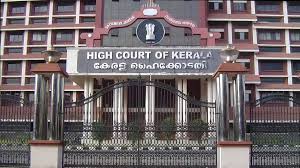
The Kerala High Court has taken a tough stand in the case of sexual exploitation of a Dalit woman on the pretext of a job and lifelong companionship. Expelled Congress councilor M.A. Prasobh was denied anticipatory bail. The Kerala High Court on Tuesday dealt a major legal blow to expelled Congress councilor M.A. Prasobh. The court rejected his anticipatory bail plea in the case involving the sexual exploitation of a Dalit woman on the pretext of a job and lifelong companionship. A bench headed by Justice A. Badruddin upheld the previous order of the Special SC/ST Court, which had rejected the former councilor’s pre-arrest bail application. The lower court had clearly held that a prima facie case was made out against the accused. The case was registered at the Palakkad Town South Police Station. The serious allegations surfaced, causing significant political embarrassment for the Congress in Palakkad, leading to the expulsion of the accused from the party. This issue has also been politically sensitive. Even during the assembly election campaign, the CPI-M used this incident as a major political weapon against the Congress. According to the prosecution, despite being already married, M.A. Prasobh remained in contact with the complainant for approximately one and a half years. It is alleged that he repeatedly engaged in physical relations with her by falsely promising her employment and lifelong support. The victim, who belongs to the Scheduled Caste community, claims in her complaint that she became pregnant during this relationship. When the affair became public, she was threatened and abused. Based on the victim’s complaint, the police have registered a case against Prasobh under various sections of the Indian Penal Code (IPC). These include rape, sexual exploitation by false pretenses, and criminal intimidation. He has also been charged with stringent provisions of the Scheduled Castes and Scheduled Tribes (Prevention of Atrocities) Act. Pleading for anticipatory bail in the High Court, the defense lawyer argued that even if all the allegations are accepted as true, this appears to be a case of a completely consensual relationship between two adults. The defense also argued that the SC/ST Act had been misused in this case, and therefore, the statutory bar on bail under the Act should not apply. They claimed that the special court did not record any clear finding substantiating the rape allegation and denied bail solely on the basis of the SC/ST Act. However, the complainant’s lawyer strongly opposed the bail plea, stating that the accused had emotionally and sexually abused the woman over a prolonged period. The victim stated in her complaint that she first met Prasobh when his father, who runs a tea stall, allegedly abused her. The woman alleges that after that incident, Prasobh persuaded her not to file a police complaint. He then gradually won her trust by promising her a job and security, trapping her in his net. Now, after the Kerala High Court rejected her anticipatory bail plea, the expelled councilor’s troubles have increased significantly. As the investigation progresses, the threat of arrest hangs over M.A. Prasobh. Rajan Chaudhary Courtesy: Hindi News
Kerala High Court Upholds Reproductive Autonomy of Transgender Man by Allowing Egg Cryopreservation

In a significant development concerning transgender rights and reproductive autonomy in India, the Kerala High Court recently permitted a transgender man to cryopreserve his eggs by allowing him to approach an Assisted Reproductive Technology (ART) bank of his choice. The order was passed in the case titled Hari Devageeth v. Union of India by Justice Sobha Annamma Eapen on May 15, 2026. The Court directed that the ART bank concerned should take steps to retrieve the petitioner’s oocytes and cryopreserve them for future reproductive use. The decision came in a writ petition filed by a transgender man who challenged the refusal of a private hospital to permit egg cryopreservation on the ground that transgender persons fall outside the statutory framework established under the Assisted Reproductive Technology (Regulation) Act, 2021. The case raised important constitutional and legal questions concerning the reproductive rights of transgender persons, the scope of healthcare protections under Article 21 of the Constitution, and the interpretation of statutory provisions regulating assisted reproductive technologies in India. While granting relief to the petitioner, the High Court also left open the constitutional challenge to Section 21(g) of the ART Act, which restricts ART services to women between the ages of 21 and 50 years and men between 21 and 55 years. The petitioner before the Court was a person assigned female at birth who identified as a man. According to the pleadings, the petitioner had undergone breast removal surgery as part of gender affirmation procedures but had not yet undergone complete sex reassignment surgery, including hysterectomy or removal of ovaries. Before proceeding further with gender-affirming procedures, the petitioner sought to preserve his reproductive potential by cryopreserving his eggs. However, KIMS Hospital allegedly refused permission for the procedure, citing restrictions under the ART Act and the absence of a legal framework expressly recognising transgender persons within assisted reproductive services. This refusal prompted the petitioner to approach the High Court seeking constitutional protection of reproductive choice and healthcare access. The litigation quickly evolved into a broader debate regarding the rights of transgender persons to parenthood, reproductive healthcare, and equal treatment under Indian law. It also highlighted gaps within existing legislation governing ART services, surrogacy, and adoption, all of which largely continue to operate on binary gender assumptions. The matter attracted significant attention because it brought into focus the intersection between gender identity, medical autonomy, constitutional dignity, and reproductive justice. Senior Advocate Anand Grover appeared on behalf of the petitioner and argued that denial of cryopreservation violated the petitioner’s fundamental rights. The Union Government opposed the plea, contending that existing statutory frameworks consciously excluded transgender persons from availing such services. Although the High Court’s detailed judgment is awaited, the operative order permitting cryopreservation has already emerged as an important judicial intervention in the evolving jurisprudence surrounding transgender rights in India. Arguments of the Parties: The petitioner argued that the refusal to permit egg cryopreservation amounted to a direct infringement of his constitutional right to reproductive autonomy and healthcare. It was submitted that although the petitioner identified as a man, he had been assigned female at birth and retained reproductive organs capable of producing oocytes. Therefore, prior to undergoing further gender-affirming surgical procedures, he wished to preserve his eggs for possible future reproduction. The petitioner clarified that he had not undergone complete sex reassignment surgery and had only undergone breast removal surgery. Since the uterus and ovaries remained intact, it was argued that the petitioner retained the biological capacity to reproduce. Counsel submitted that transgender men are capable of experiencing pregnancy and reproduction, and therefore, denying them access to fertility preservation services solely because of gender identity would be discriminatory and unconstitutional. A central argument advanced by the petitioner was that reproductive choice forms an essential component of personal liberty protected under Article 21 of the Constitution. The plea asserted that the right to make decisions regarding reproduction, parenthood, and fertility preservation is inseparably connected with bodily autonomy, dignity, and privacy. The petitioner contended that denial of cryopreservation effectively deprived him of the possibility of biological parenthood in the future. Once gender-affirming procedures such as hysterectomy or removal of ovaries are performed, the ability to retrieve oocytes would permanently cease. Therefore, refusal to permit cryopreservation would cause irreversible harm to the petitioner’s reproductive future. The petitioner also relied upon the protections available under the Transgender Persons (Protection of Rights) Act, 2019 and the accompanying Rules of 2020. It was argued that the statutory framework expressly prohibits discrimination against transgender persons in matters relating to healthcare access. Consequently, exclusion from ART services merely because the petitioner was a transgender man amounted to unlawful discrimination prohibited by statute and constitutional principles of equality. Another important submission made on behalf of the petitioner was that the ART Act did not contain any explicit prohibition against cryopreservation of eggs by transgender persons. According to the petitioner, while the legislation regulates eligibility for assisted reproductive procedures, it does not impose an absolute bar on fertility preservation. Therefore, the authorities could not rely upon legislative silence to deny healthcare access. Senior Advocate Anand Grover argued that reproductive rights must be interpreted in a gender-inclusive manner consistent with constitutional morality and the recognition of transgender identity affirmed by the Supreme Court of India in landmark transgender rights jurisprudence. It was submitted that constitutional protections cannot be denied merely because statutory frameworks have failed to evolve alongside contemporary understandings of gender identity and reproductive health. The Union Government opposed the plea and defended the existing legislative framework governing assisted reproductive technology and surrogacy in India. The Centre argued that the ART Act specifically permits assisted reproductive procedures only for a “commissioning couple” or a single woman. Under the statutory definition, a commissioning couple refers strictly to a legally married man and woman. According to the Government, transgender persons and single men were intentionally excluded from the categories of persons eligible to avail ART services. Since cryopreservation of oocytes forms part of ART services regulated under the statute, the petitioner could not claim
Allahabad HC defers hearing on plea seeking probe into Rahul Gandhi’s alleged disproportionate assets

Division bench of Justices Rajesh Singh Chauhan and Zafeer Ahmad passed the order on a BJP worker’s plea, directing documents be sealed. LUCKNOW: In order to avoid an open court hearing while exercising utmost caution with documents attached to the case file, the Lucknow Bench of the Allahabad High Court on Wednesday deferred the hearing on a plea seeking a probe into the alleged disproportionate assets (DA) of Congress MP and Leader of Opposition in the Lok Sabha, Rahul Gandhi, till May 12. The division bench, comprising Justice Rajesh Singh Chauhan and Justice Zafeer Ahmad, passed the order on a writ petition filed by Karnataka BJP worker S. Vignesh Shishir, while directing that the documents related to the case be kept in a sealed envelope. The petitioner moved the Lucknow Bench of the Allahabad High Court on April 25, 2026, and the bench took up the case for its first hearing on May 6, 2026. Interestingly, both judges heard the matter in their chamber. After Wednesday’s hearing, they issued directions to seal the entire copy of the writ petition before them, and it was ordered to be kept in the custody of the Senior Registrar of the High Court. The judges further directed the Senior Registrar to place the case file before the bench on May 12 at 2:15 pm for a further hearing in chambers. “The seal shall be opened by the Bench Secretary of this Court on the next date of listing,” the judges ordered. Significantly, prior to the commencement of the hearing, the petitioner moved an application urging the bench to direct the authorities concerned to preserve the records of the present writ petition in safe custody. The petitioner has levelled serious allegations against the Congress leader, claiming that he has allegedly amassed substantial wealth from unknown sources. The petitioner has made the Government of India, CBI, ED, CBDT, Uttar Pradesh Police and the Director of the Serious Fraud Investigation Office, New Delhi, parties to the petition, and has sought directions from the court for an inquiry into the matter. The hearing was deferred after counsel for the central and state agencies sought time to obtain written instructions. After the first hearing, the bench recorded in its order that the petitioner had argued at length, following which counsel for the opposite parties requested a short adjournment to obtain written instructions from their respective governments and agencies. Agreeing to this request, the bench posted the matter for the next hearing on May 12. Namita Bajpai Courtesy : TNIE Note: This news is originally published on https:/thenewindianexpress.com/bha and is used purely for non-profit/non-commercial purposes, especially human rights
Sultanpur court denies forensic voice test request against Rahul Gandhi
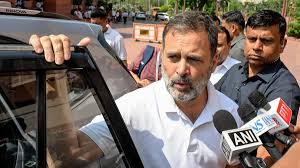
A Sultanpur court rejected a plea seeking a voice sample of Rahul Gandhi in a defamation case filed by a BJP leader, posting the matter for May 11, with the complainant planning to challenge the order Sultanpur (UP): A local MP/MLA court on Saturday rejected a plea seeking a voice sample of Rae Bareli MP Rahul Gandhi in a defamation case filed by a BJP functionary against the Congress leader, and posted the matter for the next hearing on May 11. The plea, filed by BJP leader Vijay Mishra through his counsel Santosh Kumar Pandey, had sought Gandhi’s voice sample for a forensic test to compare it with an audio clip. After the petition was dismissed, Pandey said they would file a revision plea before the sessions court against the order. The court rejected the plea after hearing the arguments of both sides, including Gandhi’s counsel Kashi Prasad Shukla. The matter dates back to 2018 when Mishra, a local BJP leader, filed a defamation suit over Gandhi’s alleged objectionable remarks targeting Amit Shah while campaigning for the Karnataka Assembly elections. After five years of legal proceedings, the court issued a warrant against Gandhi in December 2023. The Rae Bareli MP surrendered before the court in February 2024, and was granted bail on two sureties of Rs 25,000 each by a special magistrate. On July 26 last year, the Congress leader recorded his statement before the court, claiming innocence and calling the case a political conspiracy. Earlier this year, multiple hearings were postponed due to a strike by lawyers and the ill-health of Gandhi’s counsel. Courtesy : Telangana Today Note: This news is originally published on https:/telanganatoday.com/bha and is used purely for non-profit/non-commercial purposes, especially human rights
Allahabad HC Dismisses Plea For FIR Against Congress Leader Rahul Gandhi Over ‘Indian State’ Remark, Upholds Lower Court Order
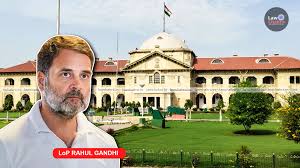
The Allahabad High Court dismissed a petition seeking an FIR against Congress leader Rahul Gandhi over his remarks on the “Indian state”. The court upheld a Sambhal trial court’s earlier order rejecting the complaint as weak. The plea was filed challenging the lower court’s decision, which has now been reaffirmed. Allahabad HC Dismisses Plea For FIR Against Congress Leader Rahul Gandhi Over ‘Indian State’ Remark | File Photo Prayagraj: The Allahabad High Court has granted major relief to Congress leader and Leader of Opposition in Lok Sabha Rahul Gandhi by dismissing a petition seeking registration of an FIR against him. Petitioner and Challenge The petition was filed by Simran Gupta, who had challenged a Sambhal trial court order that rejected her plea for criminal proceedings against Gandhi. She had sought directions for lodging an FIR based on Gandhi’s remarks concerning the Indian state. The High Court dismissed the plea and upheld the lower court’s decision, bringing the matter to a close at this stage. Origin of Complaint The case stems from a complaint filed in a Chandausi court in Sambhal, where the petitioner alleged that Gandhi’s statement made on January 15, 2025, during the inauguration of the Congress headquarters Indira Bhawan warranted legal action. In his speech, Gandhi had said that the Congress was fighting not only the BJP and RSS but also what he described as the “Indian state”. The trial court had earlier rejected the complaint, terming it weak. The petitioner then moved the High Court challenging that order, which has now been dismissed. Meanwhile, Gandhi continues to face legal scrutiny in another matter before the High Court concerning allegations linked to his alleged British citizenship. The case is being heard separately, with the next hearing scheduled later this month. The matter pertains to a plea seeking investigation into claims regarding his citizenship status. Courtesy : TFPJ Note: This news is originally published on https:/thefreepressjournal.com/bha and is used purely for non-profit/non-commercial purposes, especially human rights
Dalit girl case probe: Andhra Pradesh HC raps police

Expressing serious concern, the court criticized the police for failing to support the victim and instead allegedly pressuring her family to withdraw the criminal case. VIJAYAWADA: The Andhra Pradesh High Court has come down heavily on the police for allegedly attempting to shield ruling Telugu Desam Party (TDP) leaders accused of sexually harassing a minor Dalit girl in West Godavari district on Friday. Expressing serious concern, the court criticized the police for failing to support the victim and instead allegedly pressuring her family to withdraw the criminal case. The case pertains to a complaint filed by a 13-year-old girl on February 18 in Bhimavaram, accusing local political leader Chennu Chanti and his son of sexual harassment and caste-based abuse. Based on her complaint, a case was registered under relevant provisions, including the Protection of Children from Sexual Offences (POCSO) Act. However, the victim’s family later approached the High Court, alleging that police officials were threatening them to withdraw the case and were not conducting a fair investigation. During the hearing, Justice Yadawalli Lakshmana Rao strongly reprimanded the police, questioning their conduct and impartiality. The court observed that it is the duty of the police to investigate the complaint thoroughly and file a charge sheet, rather than speculate about alleged political motives behind the complaint. The judge expressed displeasure over statements made by Bhimavaram DSP Raghuveer Vishnu, who reportedly suggested political involvement in the case. “Do you have divine insight to claim political motives?” the court asked, adding that such determinations fall within the jurisdiction of the judiciary, not the police. The judge further criticised the delay in arresting the accused, noting that the incident occurred in February but no significant progress had been made. The court also expressed shock after reviewing parts of the victim’s complaint, stating that the allegations reflected disturbing and shameful conduct that would make any civilised society ‘bow its head in shame.’ It accused the police of derailing the investigation and acting under external pressure. In strong remarks, the court told the officials to resign from the service if they were unable to withstand political pressure. It also questioned the alleged intimidation of the victim’s mother and emphasised that the police must act lawfully and independently. Finding the DSP’s explanation unsatisfactory, the court directed the West Godavari Superintendent of Police to appear in person with all case records. The matter has been adjourned to May 1 for further hearing. Courtesy : TNIE Note: This news is originally published on https:/thenewindianexpress.com/bha and is used purely for non-profit/non-commercial purposes, especially human rights
Note: This news is originally published on https:/timesofindia.com/bha and is used purely for non-profit/non-commercial purposes, especially human rights
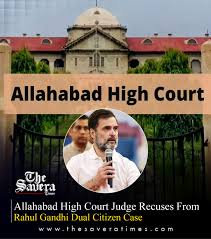
LUCKNOW: Perturbed with unpleasant situation caused in Congress MP Rahul Gandhi’s dual citizenship case, Justice Subhash Vidyarthi of Lucknow bench of Allahabad high court on Monday recused himself from hearing of the case and requested the chief justice to constitute another bench. On Monday, Justice Vidyarthi was particularly peeved by the social media posts of petitioner S Shishir Vignesh after his previous order. Justice Vidyarthi , however, admitted that he should have issued notice to Rahul Gandhi in the case before dictating filing of an FIR on April 17, 2026 in an open court . He also chastised the lawyers of all the parties for not placing before him the correct legal position as to whether the proposed accused was required to be heard. Hearing a plea from of a Karnataka BJP worker, Justice Vidyarthi on April 17, 2026 had dictated an order in open court , directing Uttar Pradesh police to register an FIR against Rahul in case of alleged double citizenship controversy. However, when the order came to be uploaded on high court’s website on April on April 18, 2026 , it stated that before the order was typed and signed , the judge came to know that in a leading verdict of the Allahabad high court, it was mandatory to issue notice to the proposed accused , in this case Gandhi, before delivery any judgment on the issue. The judge had, thereafter, instead of signing the order, posted the matter for further hearing on April 20 on question of issuance of notice to Gandhi. In its order passed on Monday, the judge clarified that it was mandatory to issue notice to Gandhi prior to passing any order in the case. The judge was specially peeved by the social media posts made by the petitioner, S Shishir Vignesh. “The messages posted by the petitioner on social media after passing of the order on April 17 amount to casting aspersions on this court and keeping those in consideration, I find it appropriate to recuse from hearing this case”, said Justice Vidyarthi. Expressing annoyance that proper legal assistance was not given to him by informing that issuance of notice to proposed accused was necessary, Justice Vidyarthi observed, “ I am pained to note that the lawyers appearing in this case have failed to perform their duty of providing assistance to the Court in a fair manner.” Courtesy : TOI Note: This news is originally published on https:/timesofindia.com/bha and is used purely for non-profit/non-commercial purposes, especially human rights
Allahabad high court stays FIR order against Rahul Gandhi in dual citizenship case
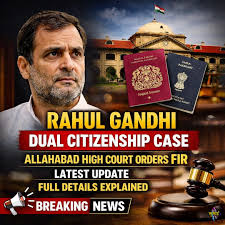
The Allahabad high court on Saturday stayed its earlier direction ordering the registration of an FIR against Congress leader and Lok Sabha leader of opposition Rahul Gandhi in connection with an alleged dual citizenship case.The court also stated that no decision could be taken without first hearing the accused, as news agency ANI reported. A day earlier, the Lucknow bench of the high court had directed the Uttar Pradesh police to register an FIR against the Congress MP, citing allegations that he concealed British citizenship while incorporating a company in England in 2003. The bench of Justice Subhash Vidyarthi had also allowed the state government to transfer the probe to any central agency. It noted that a prima facie reading of the allegations indicated cognizable offences, warranting a detailed investigation. The direction came after the Deputy Solicitor General submitted relevant documents as sought by the court. The plea was filed by Karnataka BJP worker Vignesh Shishir, who alleged that Rahul had declared himself a UK citizen while incorporating a company, M/S Backops Ltd, registered in August 2003. According to the petitioner, Rahul had voluntarily listed his nationality as British and provided a Director Identification ID along with addresses in London and Hampshire. While passing its earlier order, the bench had set aside a January 28, 2025 ruling by a special MP/MLA court in Lucknow, which had declined to order an FIR. The high court observed that the lower court failed to adequately examine whether the allegations disclosed prima facie cognizable offences. During the hearing, deputy solicitor general SB Pandey presented central government records related to the citizenship issue, while state government counsel VK Singh agreed that the allegations, on the face of it, warranted investigation. The bench had concluded that the material on record suggested the need for a probe into the claims of dual citizenship. Courtesy : TOI Note: This news is originally published on https:/timesofindia.com/bha and is used purely for non-profit/non-commercial purposes, especially human rights