
Minorities, Dalits and deprived sections must unite to fight for their constitutional rights, say intellectuals

Meeting presided over by Justice Ranjit Singh (Retd.), former Judge of the Punjab and Haryana High Court The representatives of the Sikh, Muslim and Dalit communities, along with intellectuals and social activists, on Saturday resolved to establish a common front to raise concerns over the constitutional rights and equal opportunities of deprived minorities and marginalised sections. The resolution was adopted at a joint meeting of Sikh, Muslim and Dalit thinkers held at Kendri Sri Guru Singh Sabha, here, to mark the 350th martyrdom anniversary of Sri Guru Tegh Bahadur. The meeting was presided over by Justice Ranjit Singh (Retd.), former Judge of the Punjab and Haryana High Court. GeographicReference Former Rajya Sabha MP Mohammad Adeeb said that the Muslims who remained in India after Partition and Sikhs who supported the Indian Union on the assurances of Jawaharlal Nehru and Sardar Vallabhbhai Patel now feel those promises have not been fulfilled. He said that if the BJP seeks to establish a ‘Hindu Rashtra’, it should obtain the people’s mandate through a national referendum. The gathering observed that although India adopted democracy, secularism and constitutional governance after Independence, the successive governments have increasingly pursued policies favouring the majority community and upper-caste interests. Former Chief Justice Iqbal Ansari alleged that the ruling establishment promotes religious polarisation by setting one community against another for electoral gains. Noted Sikh scholar Gurtej Singh, IAS (Retd.), endorsed the proposal for a united platform of minorities and deprived communities and recalled that Sant Harchand Singh Longowal had entrusted him with initiating dialogue with Muslim leaders as early as 1983. The participants further stated that many minorities and deprived communities have been reduced to second-class citizens and are being used as scapegoats for advancing Hindutva politics. They stressed the need for minorities, Dalits and other marginalised sections to unite on a common platform to safeguard their rights and dignity. Among those who addressed the gathering included Prof Sham Singh (President), Dr Pyara Lal Garg, Gurpreet Singh (Global Sikh Council), Daya Singh Delhi, Anzarul Bari, Rajwinder Singh Rahi, Senior Journalist Jaspal Singh Sidhu, Surinder Singh Kishanpura and several other distinguished speakers. Courtesy : The Tribune Note: This news is originally published on https:/thetribune.com/bha and is used purely for non-profit/non-commercial purposes, especially human rights
Allahabad High Court’s Important Directive: A QR Code-Based System Should Be Implemented to Prevent Fake Caste Certificates in Uttar Pradesh

To curb the circulation of fake caste certificates in Uttar Pradesh, the Allahabad High Court has given the Yogi government a crucial suggestion to implement a new system based on QR codes and software. Uttar Pradesh: Expressing serious concern over the increasing number of fake caste certificates, the Allahabad High Court has issued a crucial suggestion to the Uttar Pradesh government. The court believes that a software and QR code-based certification system should be implemented for Scheduled Castes (SC), Scheduled Tribes (ST), and Other Backward Classes (OBC). This new technology will directly combat fraud. The High Court clarified that this technology-based verification system will bring transparency to the entire process, eliminate arbitrary powers held by officials, and curb the issuance of fake caste certificates. The court also noted that adopting such innovative measures will facilitate proper audits and provide a reliable means of verifying the authenticity of issued certificates. This significant observation was made by a division bench of Justice Saumitra Dayal Singh and Justice Swarupama Chaturvedi while hearing a Public Interest Litigation (PIL). The PIL was filed by the UP Koli Kori Pratinidhi Sabha. The petition drew the court’s attention to a serious ground reality. The petitioner organization alleged that Scheduled Caste certificates were being issued to members of the “Koli” caste, even though this caste is not recognized in the Scheduled Caste list. This was happening simply because its pronunciation resembles that of the “Kori” caste, which is actually listed as a Scheduled Caste. The petition alleged that local officials were issuing certificates to the wrong people based solely on similar names or spellings, a direct violation of the President’s orders. No one appeared on behalf of the petitioner during the hearing. However, Additional Advocate General Manish Goyal presented his case on behalf of the state government. Given the gravity of the matter, the division bench strongly criticized the flaws in the current verification process. The court stated that the current system empowers lower-level officials with excessive privileges. Prima facie, it appears that modern technology is so capable that the state government can provide a robust and transparent software-based system for SCs, STs, and OBCs. This will eliminate the unnecessary and unchecked powers held by officials up to the tehsildar level, which often lead to the issuance of questionable or incorrect certificates. Following these strong and important observations by the High Court, Additional Advocate General Manish Goyal sought time from the court to obtain necessary instructions from the relevant officials. In its July 2 order, the division bench directed the matter to be listed for further hearing on July 23. Rajan Chaudhary Courtesy: Hindi News
‘Rape’ of Dalit woman: Kerala HC denies bail to Palakkad councillor
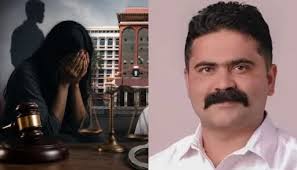
The Congress councillor was expelled from Palakkad District Congress Committee after the political controversies over the allegations against him The High Court had earlier denied an anticipatory bail plea, which had claimed that the allegations lacked merit and that there were errors in the investigation. The High Court had earlier denied an anticipatory bail plea, which had claimed that the allegations lacked merit and that there were errors in the investigation. | Photo Credit: RK Nithin The Kerala High Court on Monday (June 29, 2026) dismissed the bail plea of Prasobh Valsan, a councillor of Palakkad Corporation, in the alleged rape of a Dalit woman. The High Court had earlier denied an anticipatory bail plea, which had claimed that the allegations lacked merit and that there were errors in the investigation. However, the court had noted that the prosecution had made out a prima facie case for his arrest and denied the plea. Following this, Mr. Valsan had surrendered to the police at the Palakkad Town Station. Congress expels Palakkad councillor over sexual assault complaint Mr. Valsan was expelled from the Palakkad District Congress Committee after the political controversies over the allegations against him. The Dalit woman had alleged that Mr. Valsan had entered her house under the pretext of offering her a job and then raped her. The Hindu Bureau Courtesy : The Hindu Note: This news is originally published on https:/thehindu.com/bha and is used purely for non-profit/non-commercial purposes, especially human rights
Rahul Gandhi files application in MP HC, expresses regret over remark against Shivraj Singh Chouhan’s son
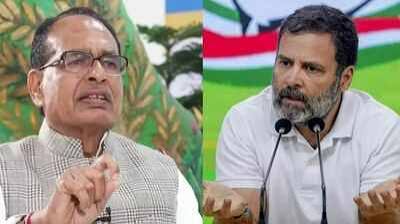
Shivraj Singh Chouhan’s son Kartikeya Singh filed a defamation case against Rahul Gandhi, alleging that Gandhi mentioned his name while referring to Panama Papers leak case, damaging his reputation. Congress leader Rahul Gandhi has approached the Madhya Pradesh High Court with an application expressing regret for his allegedly defamatory statement about Union Minister Shivraj Singh Chouhan’s son Kartikeya Singh. Kartikeya Singh had filed a defamation complaint in a Bhopal court against the Leader of the Opposition in the Lok Sabha. Gandhi’s application, filed by his lawyer on Wednesday, said his statement was not related to Singh. In the defamation complaint lodged in the Bhopal court for cases against MPs-MLAs, Kartikeya Singh alleged that during an election rally in Jhabua in 2018, Gandhi mentioned his name while referring to the Panama Papers leak scandal, thus damaging his reputation. The court issued a summons to Gandhi for personal appearance, following which the Congress leader moved the HC seeking to quash the summons as well as the defamation case. Justice Pramod Kumar Agarwal will hear Gandhi’s petition on Thursday. The petitioner on Wednesday produced the records of the lower court, as directed by the HC. Advocate Sankalp Kochhar represented the complainant before the high court. Responding to Gandhi’s regret application, Kartikey through his counsel on Thursday said that he didn’t intend to escalate the issue any further, so the proceedings before the MP HC as well as the trial court in Bhopal be closed. Courtesy : TNIE Note: This news is originally published on https:/thenewindianexpress.com/bha and is used purely for non-profit/non-commercial purposes, especially human rights
Rajgir Dalit Massacre: CPI-ML demands High Court investigation, punishment for the guilty, jobs and compensation for the victims’ families; warning of nationwide agitation
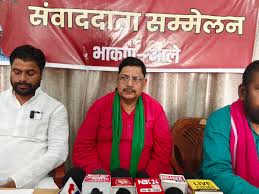
CPI-ML has attacked the government over the mob lynching of two Dalit youths in Rajgir, Nalanda district, and the police action against villagers demanding a degree college in Nagarnausa. Party leaders questioned the administration at a press conference on Wednesday after meeting with the families of the victims and affected people. The press conference was addressed by CPI-ML MP Sudama Prasad, MLA Sandeep Saurabh, former MLA Manoj Manzil, and former MLA Gopal Ravidas. They demanded an investigation into the Rajgir massacre by a sitting High Court judge, severe punishment for the culprits through a speedy trial, and compensation and government jobs for the victims’ families. Government failing to control crime MP Sudama Prasad alleged that crime is continuously increasing in Bihar and the government has completely failed to control it. He said that “encounter raj” prevails in the state, while criminals are carrying out crimes with impunity. Prasad questioned the government’s silence on the mob lynching of two Dalit youths in Rajgir. He demanded that the case be investigated under the supervision of a sitting High Court judge and that the culprits be punished with rigor by conducting a speedy trial. He also demanded compensation of ₹50 lakh each for the families of the deceased and a government job for one family member. Sudama Prasad also alleged that instead of taking action against criminals, the government is targeting the poor, laborers, Dalits, and those raising legitimate demands. Police entered homes and assaulted people in Nagarnausa Paliganj MLA Sandeep Saurabh said that while the Chief Minister constantly talks about taking strict action against criminals, incidents of murder, rape, and other crimes are continuing unabated in the state. He alleged that the administration brutally treated students and villagers protesting for a degree college in Nagarnausa. Police entered homes and beat people, breaking down the doors of approximately 300 houses, and arresting several people and sending them to jail. Saurabh claimed that even minor girls were assaulted during the operation. He demanded the immediate suspension of the local police station in-charge, action against the guilty officers, the unconditional release of the 39 arrested individuals, and the withdrawal of all cases. He said that a degree college should be established in the Nagarnausa block headquarters, as this has been a long-standing demand of local youth. The DM and SP should be held accountable. Former MLA Gopal Ravidas said that incidents of mob lynching are continuously increasing in the state, which is extremely worrying. He held the Nalanda district administration responsible for the Rajgir incident and demanded that the DM and SP be held accountable. He demanded that the district administration be held accountable for the entire matter and that an impartial investigation be conducted into the allegations against the chief priest of the Jhunukia Baba complex. A spectacle in the name of encounters Former MLA Manoj Manzil said that crime has reached its peak in the state. Incidents of atrocities against Dalits, women, and vulnerable groups are on the rise. He alleged that the police are attempting to suppress many cases instead of providing justice. Manoj Manzil said that a “spectacle in the name of encounters” is being staged, while crime and insecurity persist on the ground. CPI-ML leaders warned that if the government does not seriously consider their demands, the party will consider launching a statewide movement. Courtesy; Hindi News
Kerala HC dismisses PIL against free KSRTC bus travel for women, transgender persons

The Kerala High Court on Monday dismissed a Public Interest Litigation (PIL) challenging the state government’s newly-launched “Priyadarshini Scheme, which provides free travel to all women and transgender persons in ordinary KSRTC buses. A Division Bench comprising Chief Justice Soumen Sen and Justice Syam Kumar VM dismissed the PIL petition that sought to quash the Government Order (GO) which introduced the scheme. “There is nothing before us that Exhibit P1 G.O is contrary to the statutory norms or is perverse or illegal. Hence the litigation fails and it is dismissed,” the Court pronounced. The court rejected the argument that a few affluent beneficiaries could invalidate a welfare scheme targeted at broader socio-economic empowerment. The PIL petitioner, Muhammed Firdouz, challenged the scheme on the ground that it was arbitrary, discriminatory, and violative of Articles 14 and 15 of the Constitution of India. He claimed that there was no income criterion, residential qualification, or specifically identified disadvantage that was sought to be remedied by the scheme which would cost the public exchequer approximately Rs.2 crores per day or around Rs.800 crore per annum. “The Impugned GO itself acknowledges the financial impact by creating a ‘dedicated cash-transfer mechanism’ and directing the KSRTC CMD to develop non-fare revenue sources, which is an admission that the scheme imposes a significant, ongoing burden on a public institution already receiving Rs. 1,500 Crore per year in State support, now burdened with an additional Rs. 800 Crore without any demonstrated operational, social, or constitutional necessity,” the petition stated. The state government submitted that similar travel schemes are available in different parts of the country and contended that gender-based affirmative action has been affirmed by the Supreme Court. Courtesy : The Statesman Note: This news is originally published on https:/thestatesman.com/bha and is used purely for non-profit/non-commercial purposes, especially human rights
A 65-year-old Dalit woman was left running around for eight months, and the Orissa High Court sharply reprimanded the police for claiming a “lost file.”
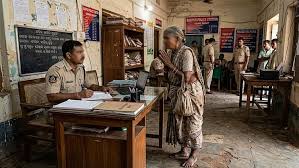
The Orissa High Court took a strong stance on the eight-month delay in filing an FIR against an elderly Dalit woman who was defrauded of ₹2.10 lakh in a land deal, completely rejecting the police’s excuse of “lost file.” New Delhi: A 65-year-old Dalit woman, who was defrauded of ₹2.10 lakh in a land deal, had to approach the Orissa High Court for justice. Despite a magistrate’s clear instructions, the police did not file an FIR in the fraud case for more than eight months. The High Court has issued a stern remark, criticizing the police for this significant delay. The court clarified that arguments such as “lost file” or “unavailability of court orders” can no longer be routine excuses to undermine the judicial process. In her June 12 order, Justice Savitri Ratho expressed deep concern over the local police’s attitude towards court orders. While hearing the case, he stated that it is possible for files to go missing, but unfortunately, this is not an isolated incident. The judge explained that he has encountered numerous cases where local police do not comply with the orders of the family court or magistrate. Despite repeated reminders and extensions, police officers remain unmoved. The timeline for this case is astonishing. The magistrate had clearly ordered the registration of an FIR in the case on August 6, 2025. However, the case was registered at the Ranpur police station eight months later, on April 24. The court noted that in such cases, the police often make the same common excuse: that the court order or warrant was lost, or that the officer concerned had recently joined duty. The court found this explanation completely unacceptable. The court argued that every police station maintains separate registers to record orders and letters received from various courts and officials, making the claim of a missing file meaningless. In light of these negligences, the Orissa High Court has urged the state’s Director General of Police (DGP) to issue necessary guidelines to his officers to ensure respect for judicial orders and their prompt implementation. The root of this entire dispute stems from a fraud that occurred in May 2025. The 65-year-old petitioner, belonging to the Scheduled Caste community, was duped into selling her land by the accused. Under the pretense of registering a sale deed with the sub-registrar, the accused extorted a hefty sum of ₹2.10 lakh from the elderly woman. However, they never executed the sale deed nor returned her money despite repeated requests. Fighting for her rights, the victim first approached the lower court, which took the matter seriously, registered an FIR, and ordered an investigation. When the police refused to listen to her complaint and took no action, she was forced to seek recourse to the High Court through advocate Umakant Sahu. On the other hand, representing the state government, Additional Standing Counsel Saroj Kumar Rout informed the court that an FIR has now been registered in the matter and Sub-Inspector Hasina Pradhan is investigating it. Despite this, the Orissa High Court continued to strongly criticize the eight-month delay in complying with the magistrate’s order and the irresponsible explanation given by the police. Rajan Chaudhary Courtesy: Hindi News
Transgender pleas shifted to top court as HC proceedings face nationwide stay

Petitions question new medical verification rules and changes to self-identification provisions introduced under the 2026 legislation The Supreme Court on Monday stayed proceedings in high courts related to multiple petitions challenging the constitutional validity of the Transgender (Protection of Rights) Amendment Act, which they alleged grossly diluted transgender rights. A bench of Chief Justice Surya Kant and Justice V. Mohana, while staying the pending proceedings before the high courts of Delhi, Rajasthan, Karnataka and Kerala, transferred the cases to itself on a plea made by the Centre through solicitor-general Tushar Mehta. “Issue notice…. Further proceedings before the high courts…shall remain stayed,” the CJI said. The CJI indicated that either the top court may hear the batch of petitions or consolidate them and transfer them to one of the high courts for adjudication. Mehta requested the transfer of proceedings from high courts to avoid conflicting verdicts. He said the apex court, too, had on May 4 issued notice on a PIL challenging the amendments to the Act, hence, the matter should ideally be dealt with by it. The batch of petitions before the high courts and the Supreme Court had mainly challenged the amendments to the Act in 2026, which limited the definition of transgender individuals to hijra, kinner, aravani, jogta, eunuch, as well as those with congenital sex variations. The 2026 Act seeks to amend the original 2019 Act, which had permitted an individual to identify themselves as a “transgender” under the legal framework of “self-identification”. However, the 2026 amendment has made it mandatory for a person to be declared transgender through a medical board verification process. Courtesy : The Telegraph Note: This news is originally published on https:/thetelegraph.com/bha and is used purely for non-profit/non-commercial purposes, especially human rights
Calcutta HC grants Abhishek Banerjee interim relief in signature forgery case
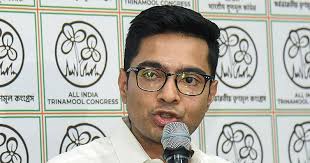
Justice Kausik Chanda granted the relief for three weeks and directed Banerjee to appear before the CID at its headquarters, Bhabani Bhaban, in Kolkata by 6 pm on Thursday for questioning. KOLKATA: The Calcutta High Court on Thursday interim protection from coercive action to TMC MP Abhishek Banerjee in a signature forgery case linked to the party’s choice of Leader of Opposition in the West Bengal Assembly. The court also directed him to appear before the Criminal Investigation Department (CID) under the state police at Bhabani Bhaban by 6 pm to face the agency probing the case. It’s not yet known whether the nephew of the Trinamool Congress supremo and former Bengal Chief Minister Mamata Banerjee will appear before the CID at Bhabani Bhaban. He went to Delhi on Saturday and met the Congress leader Rahul Gandhi and is expected to return to Kolkata this afternoon. While hearing the case at the High Court on Thursday, Justice Kausik Chanda directed Abhishek Banerjee to appear before the CID at its Bhabani Bhaban headquarters in Kolkata by 6 pm on Thursday for questioning in the matter. The court also granted him protection from any coercive action for three weeks. The MP’s lawyer informed the court that Abhishek, the number two after Mamata in the Trinamool Congress, was scheduled to arrive in Kolkata from Delhi at around 4 pm. The court will hear the case again after two weeks. The CID has already served three notices separately to Abhishek asking him to appear before the investigating agency at Bhabani Bhaban but he didn’t face it showing medical ground and his busy schedules in Delhi till 9 June. He was brought under the scanner of the CID after serious allegations surrounding a meeting convened by Trinamool Congress chief Mamata Banerjee at her Kalighat residence to discuss the party’s choice for the Leader of Opposition post in the House. Abhishek wrote a letter armed with the meeting’s resolution signed by the party MLAs to the speaker Rathindranath Bose selecting Sobhandeb Chattopadhyay, veteran legislator from the Ballygunj constituency in the city, as the LoP in the Trinamool legislature party. The controversy erupted after claims surfaced that signatures of several MLAs were affixed to related resolution copy despite their absence from the meeting, sparking a political row in West Bengal and prompting an investigation into alleged forgery. Based on the complaint lodged by two rebel Trinamool Congress MLAs Ritabrata Bandyopadhyay from Uluberia Purba in Howrah and Sandipan Saha from Entally in the city, with the speaker an FIR was filed by the House with Hare Street police station. With the directive of the Chief Minister Suvendu Adhikari, a special investigation team (SIT) under the CID was formed to probe the alleged signature forgery case. The SIT has already interrogated several MLAs who have reportedly admitted that their signatures were affixed to the resolution copy though they absent in the meeting at Kalighat residence of Mamata Banerjee landing Trinamool Congress leadership in trouble particularly at a time when the party is grappling with unprecedented internal crisis after it suffered a crushing defeat to BJP winning only 80 out of 294 seats in the recent assembly polls in the state. Subhendu Maiti Courtesy : TNIE Note: This news is originally published on https:/thenewindianexpress.com/bha and is used purely for non-profit/non-commercial purposes, especially human rights
Centre seeks transfer to SC petitions filed in HCs against Transgender Persons (Protection of Rights) Amendment Act, 2026
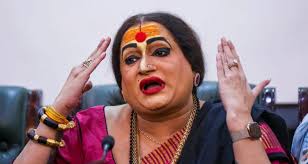
The SC had asked respondents to file replies after senior counsel AM Singhvi pointed out that the amendment took away transgender persons’ fundamental right to self-determination of gender “There are more than one High Court. There may be divergent views,” Solicitor General Tushar Mehta cautioned. File Photo The Centre on Wednesday sought transfer to the Supreme Court multiple petitions pending in various high courts challenging the Transgender Persons (Protection of Rights) Amendment Act, 2026 which introduced certain contentious changes in the legal framework governing the recognition, rights and protection of transgender persons. “We have filed transfer petitions to transfer the challenge to Transgender Amendment Act here in this court. Can the transfer petition be listed on Friday? If notice also goes, we can ask high courts to wait,” Solicitor General Tushar Mehta told a Bench of Chief Justice of India Surya Kant and Justice Joymalya Bagchi. “Sometimes, we can have an advantage of high courts’ views also,” the CJI said, noting that parallel proceedings before high courts could be beneficial to it. On May 4, the Supreme Court had issued notices to Centre, states and union territories on petitions challenging the validity of the Transgender Persons (Protection of Rights) Amendment Act, 2026. It had asked the respondents to file their replies after senior counsel AM Singhvi pointed out that the amendment took away transgender persons’ fundamental right to self-determination of gender. The petitioners contended that transgender persons receiving hormonal therapy would face problems due to the amendment. He, however, didn’t press for stay of the amendment as it had not been notified. Passed by Parliament in March this year during the Budget Session, the law amended the Transgender Persons (Protection of Rights) Act, 2019 and redefined who qualified as a “transgender person”. It also strengthened penal provisions to address serious offences such as forced identity and bodily harm. President Droupadi Murmu had given her assent to the ‘Transgender Persons (Protection of Rights) Amendment Act, 2026’ on March 30, 2026 Petitioners transgender persons Laxmi Narayan Tripathi, Zainab Patel and others – who have have challenged the validity of the amendment—alleged that it caused “irreparable constitutional injury” to the fundamental rights of transgender persons guaranteed under Articles 14 (right to equality), 15 (right to non-discrimination), 19 (right to freedom of speech and expression) and 21 (right to life and liberty) of the Constitution. Tripathi is the Acharya Mahamandaleshwar of the Kinnar Akhara, a Bharatanatyam dancer, author and social activist, Patel is the Director (Inclusion & Diversity) at KPMG India, and a Member of the National Council for Transgender Persons (Western Region). They wondered if the State, through legislation, could define who a person was by substituting biological or socio-medical classifications for a person’s lived and self-perceived identity. The PIL alleged that the amendment dismantled the principle of self-identification of gender recognised as a fundamental right by the Supreme Court in the landmark verdict in National Legal Services Authority (NALSA) versus Union of India (2014). Referring to the provision requiring the District Magistrate to issue a certificate of identity for a transgender person only after examining the recommendation of a medical board, the petitioners said it violated transgender persons’ right to privacy. “Parliament has, by the stroke of a legislative pen, repealed the statutory right that this Court held to be a fundamental right under Article 21. The impugned deletion does not even require elaborate constitutional analysis to expose its unconstitutionality: a provision that directly codifies a right declared fundamental by this Court cannot be omitted by ordinary legislation without violating Article 21 and the doctrine of non-retrogression of fundamental rights,” they submitted. The amendment has been criticised by LGBTQIA+ groups on the ground that they were not consulted before the introduction of the Bill. National Council of Transgender Persons (NCTP) members Kalki Subramanium and Rituparna Neog had resigned in protest. Former Delhi High Court judge Asha Menon who headed a committee set up by the Supreme Court to examine transgender rights has asked the Centre to withdraw the Bill. Article_Author Satya Prakash Courtesy : The Tribune Note: This news is originally published on https:/thetribune.com/bha and is used purely for non-profit/non-commercial purposes, especially human rights