
Bengaluru: Dalit body seeks sites for revenue land losers in Karanth Layout
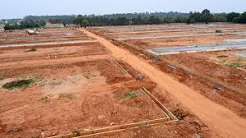
The organisation said the land losers had been waiting for nearly nine years and alleged that the BDA had failed to adequate coordinate with them. Bengaluru: The Dalit Sangharsha Samithi has urged the Bangalore Development Authority (BDA) to reserve and allot alternative sites in Dr K Shivaram Karanth Layout to revenue site owners who lost their properties for the project. In a letter to the BDA, the organisation said allotment of sites to farmers and members of the public in the Karanth Layout began on August 31, but revenue site owners were yet to be considered. The organisation said the land losers had been waiting for nearly nine years and alleged that the BDA had failed to adequately coordinate with them. It also questioned the apparent sidelining of the Justice V G Bopaiah Committee, appointed by the Supreme Court to safeguard the interests of revenue site owners. The Samithi demanded that revenue site owners be treated on par with farmers and allotted alternative sites Courtesy : DH Note: This news is originally published on https:/deccanherald.com/bha and is used purely for non-profit/non-commercial purposes, especially human rights
Rajya Sabha list: A message to the upper castes, as well as the backward and Dalit communities, an attempt to address not just one but both elections.
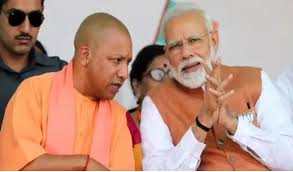
BJP Rajya Sabha list in UP: The BJP on Monday released a list of eight Rajya Sabha candidates in Uttar Pradesh. In this list, the BJP has relied on cadre rather than any outside leaders. With the announcement of eight candidates for the ten Rajya Sabha seats, the Bharatiya Janata Party has not only addressed the Upper House’s arithmetic, but also sought to send a political message for the 2027 Assembly elections and the 2029 Lok Sabha elections. By prioritizing long-time and loyal workers in the list, the party has assured the core cadre that long-term commitment and loyalty will be respected within the organization. It has also attempted to contain the resentment among the upper castes and to keep the backward and Dalit communities firmly connected. The party did not give a second chance to any of the current eight Rajya Sabha members. Influential figures from Western Uttar Pradesh, such as Union Minister BL Verma and former Chief Minister Kalyan Singh’s son Rajveer Singh, were also excluded from the list. On the contrary, by sending Cabinet Minister Dharampal to the Rajya Sabha, the party has signaled the creation of a new axis of backward leadership in Western Uttar Pradesh. Meanwhile, the selection of Shruti, the daughter of a prominent Kurmi leader from Rohilkhand and Jharkhand Governor Santosh Gangwar, has raised a new question about the BJP’s balance between nepotism and organizational loyalty. This list is also significant because the BJP is in a crucial phase of preparing for the 2027 assembly elections. At this time, selecting candidates for the Rajya Sabha is not merely a means of sending them to Delhi, but also a means of sending messages to different social groups, regions, and organizational factions. For some time now, there have been discussions about the political distance and dominance between BL Verma and Rajveer Singh regarding the leadership of the Lodhi community in Western Uttar Pradesh. BL Verma was once close to Kalyan Singh, while Rajveer Singh is considered a natural successor to his father’s political legacy. The exclusion of both from the Rajya Sabha list cannot be a normal occurrence. In contrast, the decision to send Livestock Minister Dharampal, a multiple-time MLA from Amla, to the Rajya Sabha is being seen as a strategy to promote a new leadership face among the Lodhi voters of western Uttar Pradesh. A Message to the New Through Old Faces Most of the eight names are those whose political identity has been built within the BJP organization. Among these, Priyanka Singh Rawat and Shruti Katiyar can be considered relatively new faces. Meanwhile, through names like Gopikrishna Pandey, Radhakant Ojha, Dharampal Singh, Prakash Pal, Vidyasagar Sonkar, and Rampratap Singh, the party has signaled to its old cadre that the path to the Upper House is open to those who have worked for the organization for a long time. Social alignment is also part of this strategy. By including three upper caste, three backward caste, and two Dalit candidates, the BJP has not only targeted its traditional upper caste base but also sent a message of representation to OBC and Dalit voters. Shruti’s selection, being the daughter of Santosh Gangwar, the Governor of Jharkhand and a multiple-time MP from Bareilly, again brings to the fore the question of nepotism within the BJP. The BJP has long leveled this accusation against opposition parties. In such a situation, the decision to send Shruti, who comes from a political family, to the Rajya Sabha despite her organizational background raises questions about the party’s standards. However, it is also being seen as an attempt to appease the Kurmi community in western Uttar Pradesh. While the regional balance in the Rajya Sabha list may not appear completely equal, the social and organizational message is more clear. While the BJP has sought to mitigate potential resentment among the upper castes, it has also attempted to reassure the backward castes and Dalits that their representation is secure. The biggest message is that the party may prioritize leadership preferences and electoral expediency over factional pressure or political legacy within the organization. Sudhir Kumar Singh, Lucknow Published by: Rohit Mishra Courtesy: Hindi News
Even in Many Churches, India’s Caste System Lasts Into the Grave
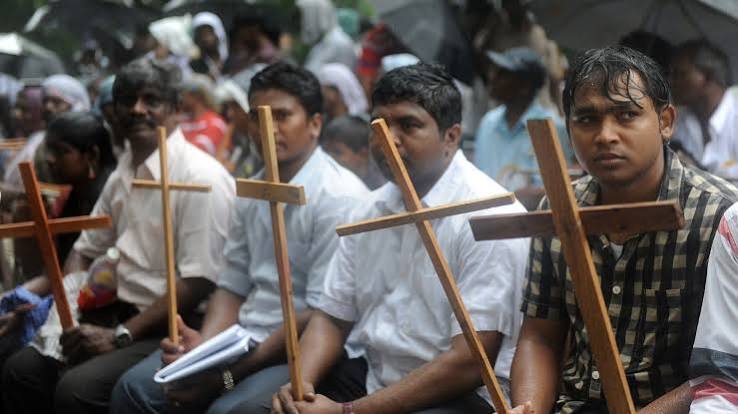
A Dalit burial dispute highlights persistent discrimination dividing Indian believers in pews and pulpit. When A. Raju died July 17 in the southern Indian state of Tamil Nadu, a three-day standoff over his rights as a Dalit held up his burial. As the family of the 89-year-old Catholic grieved, higher-caste Christian groups objected to having him laid to rest in their village’s common Catholic cemetery. With police keeping watch as tensions rose over the dispute, local authorities and church leaders negotiated with the groups for permission to bury Raju there. Bishop Jeevanandam Amalanathan said the protestors—which included fellow Catholics—were “vociferous” in their opposition. Authorities finally forced opponents to step aside and allow Raju’s burial at the half-acre cemetery. But the dispute has sparked sharp reactions from across Catholic, Protestant, and evangelical groups, shedding light once again on the reality of caste divisions among Indian Christians. “If we do not shed caste affiliations even after accepting Christ, we should be ashamed of being called Christians,” Vincet Raj, a Pentecostal Christian from Tamil Nadu, told Christianity Today. Dalits are at the bottom of the caste pyramid in India and historically have been denied the right to own land, pushed into sanitation and menial work, and forced to live outside villages. India counts roughly 201 million Dalits but includes only Hindus, Sikhs, and Buddhists in that number—excluding Christians and Muslims in its tally. Long spurned by dominant castes, marginalized Dalits have embraced Christianity over the past century, drawn by its message of love and equality. Missionary efforts providing education, health care, and livelihood—as well as dignity and hope—have also drawn converts among the Dalits. Even as people from various castes have embraced the gospel, Dalit Christians continue to face discrimination among fellow believers. Pastors, church leaders, and Dalit activists told Christianity Today that although Dalits today account for at least 70 percent of India’s 28 million Christians, they are shut out of leadership and decision-making roles across Catholic, mainline Protestant, and evangelical churches. In recent years, Catholics have tried to rectify the issue. Earlier this year, the Catholic Bishops’ Conference of India—which includes eastern Catholics such as those of the Syro-Malabar rite—elected Archbishop Anthony Poola of Hyderabad, the first Dalit cardinal, as its president. But Dalit representation in the church hierarchy remains thin: Of India’s 200 Catholic bishops, 11 are Dalits, even though an estimated 60 percent of the nation’s Catholics are Dalits. Meanwhile, mainline Protestant and evangelical institutions lack the organizational structure to make similar changes. “Caste permeates through both mainline and independent Protestant churches too, yet it is implicit and hush-hush,” said Richard Devadoss, president of the National Dalit Christian Watch. “Nobody talks about it; that doesn’t mean caste is absent here.” Leaders associated with various mainline Protestant churches revealed, on the condition of anonymity out of fear of reprisal from church committees, that care is taken during the selection processes to ensure that a Dalit bishop or a priest is not posted to head a diocese or church where non-Dalits dominate the pews. “In cases [where] that doesn’t work, either you [as a Dalit] are co-opted by the dominant caste congregants or face discrimination in subtler ways,” said a Dalit pastor from a prominent established church in Tamil Nadu where non-Dalits are in the majority. He serves the church alongside a non-Dalit pastor. Although both pastors are required to participate in church growth meetings, outreach activities, budget planning, and organizing Christmas and other activities, he said the church committee doesn’t allow him to attend any of them. “It deeply pains me, but I have no option but to silently finish my tenure here,” he lamented. In some extreme cases, Dalit groups also discriminate against each other based on subcaste loyalties. One church with nearly 500 worshipers in Andhra Pradesh State holds separate Sunday services for two Dalit subgroups, said Paul David, a Dalit Christian activist. The Malas, historically considered at the top of the Dalit socioeconomic ladder in the region, worship first—and then the Madigas gather for their own service. “This is not a one-off case,” David said. “Many churches reflect hierarchy rather than Jesus’ core teaching of love and equality.” In major urban centers, where independent, storefront charismatic churches with large numbers of new converts have exploded, the influence of caste is less acknowledged. “That’s because caste gets camouflaged as class,” David said. Higher-caste church members typically benefit from more education and financial resources than lower castes. “Class—which goes by another name as resourcefulness and community feeling—is a byproduct of caste.” Unlike in established mainline churches, high-profile pastors and their family members—who are from dominant castes—make all the decisions within the church. Sagar, a Dalit who asked to use only his first name due to fear of upsetting his church, told CT that for four years, he has volunteered as an usher at a charismatic church in Hyderabad that draws thousands across three services every Sunday. He said people who have joined the church since he first arrived have moved into key roles supporting the celebrity pastor. Sagar continues to serve, but he has since concluded that other considerations beyond commitment to the church—such as caste—determine his role there. Outside church, Dalit Christians are caught in a legal limbo. Dalit converts to Christianity cannot claim Scheduled Caste (SC) status under Indian law, which grants access to education and employment opportunities through affirmative action. The SC status is restricted to Hindu, Sikh, and Buddhist Dalits. For decades, Dalit Christians have campaigned to have that status extended to them as well, but to no avail. “There is enough evidence to suggest that Dalit Christians experience the same marginalization” as Dalits from other faiths, said Emanual Nahar, professor and former chair of the Punjab State Commission for Minorities. “It is a long-pending issue, and the government must make SC status religion-neutral.” From leadership roles in churches to securing places in graveyards, Dalit Christians are still reminded of their marginalized status. Advocates for the Dalit expressed hope that the Raju case would
IIT Bombay Investigation: APPSC Fears Sahil Wakode’s Case Will Follow the Same Fate as Ambhore and Solanki, “Conclusion Already Decided”
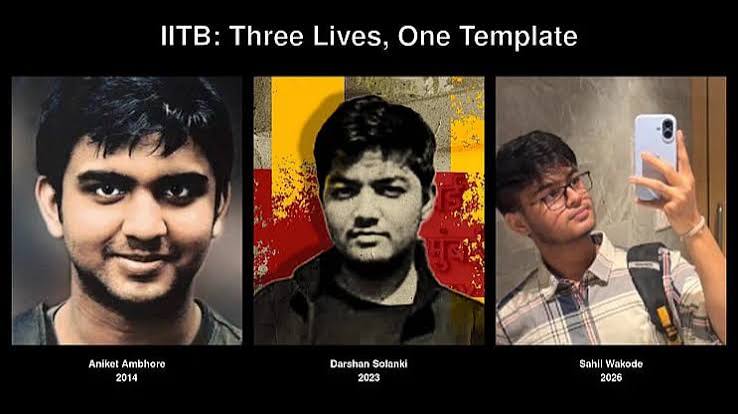
Student Group Alleges Inquiry Committees Follow a “Template,” Always Clean Chit to the Institute of Caste Discrimination Mumbai – The Ambedkar Periyar Phule Study Circle (APPSC), a student group at IIT Bombay, believes that the institute’s internal investigation into Sahil Wakode’s death has already concluded. According to the group, like the cases of Aniket Ambhore and Darshan Solanki, this case will also be considered to have no caste discrimination. The group alleged that the institute investigates the deaths of Scheduled Caste (SC) and Scheduled Tribe (ST) students according to a set “template.” It called Wakode’s death an “institutional death” and reiterated its demand for an independent, external investigation. In a statement on Sunday, the group cited the reports of two previous internal committees. The student group stated that a committee headed by Professor A.K. Suresh was formed after Aniket Ambhore’s suicide. According to the group, its report (page 24) concluded that the institute and its official bodies did not discriminate, either explicitly or implicitly. The committee headed by Professor Nand Kishore, formed to investigate Darshan Solanki’s death, stated in its report (page 6) that none of the people interviewed—friends, wingmates, teachers, TAs, mentors, and Hostel 16 staff—mentioned caste-based or any other discrimination. Neither Solanki himself nor any of his friends mentioned this. The APPSC stated that these findings reflect a pattern rather than an independent investigation, “a template is set and the conclusions are predetermined.” Questioning the functioning of the inquiry committees, the group stated, “These committees are formed by the Board of Governors and work in coordination to quickly rule out caste-based discrimination.” The group alleges that they operate in isolation, within a well-designed institutional framework, and consistently draw the same limited sample and ultimately exonerate the institution of all charges. The statement describes these ad hoc committees as “placeholders for institutional inertia.” The group also commented on the committees’ social composition. According to it, their members are not separate from the country’s social fabric, and caste does not exist for them because it is not an intimate experience of their lives. The group argues that this blanket denial of discrimination reveals how caste privilege masks inequality within the institution. The Students’ Collective argues that investigations demand evidence of “clear acts of caste aggression.” This reduces a multi-layered and nuanced phenomenon to a narrow set of criteria. According to the group, this places the burden of proof on the person least capable of doing so, as dominant groups define “intent” and “overt act.” The group also raised three questions about campus preparations: Have those with authority over students fresh out of school received caste sensitivity training? Is there a system in place to identify and bridge the gap in social and material status among peers? Why should SC/ST students be burdened with creating a safe and inclusive environment, when they already bear the double burden of proving merit, grappling with the “stigma of quotas,” and constantly being wary of their caste identity? What are the Supreme Court’s directives? The statement said that the Supreme Court’s guidelines in the case of Sukadeb Saha v. State of Andhra Pradesh and others are binding on every educational institution in the country from July 25, 2025. These require: Written protocols for immediate referral to mental health services. Twice-yearly training of staff to recognize warning signs. Dedicated mentors, especially during examination periods. The group states that the IIT Bombay administration is guilty on many of these counts, but is vulnerable to acquittal at every turn due to institutional apathy and the “dominance of caste-blind forces.” The statement questions the image of IITs as destinations for the country’s brightest minds. According to the group, rankings and research output create an image of a “smooth-flowing machinery of academic production,” while the merit that is celebrated is “upper caste dominance couched in the language of modernity and castelessness.” The group alleges that the system implicitly requires students to be upper caste, while the space for disadvantaged students is “limited and restricted.” According to it, acknowledging caste discrimination would be detrimental to the notions of post-colonial modernity and merit that privileged castes celebrate. Citing RTI data, it stated that as of September this year, out of 412 professors at IIT Bombay, only 5 are from the SC and 6 from the OBC categories, while there is no professor from the ST community. According to the group, this demonstrates that knowledge production is limited to a specific segment of society. Citing the institute’s motto, “Gyanam Param Dhyeyam,” the student collective also stated that the institute’s knowledge production process is an “echo chamber of upper-caste-disseminated knowledge,” making it devoid of diversity. The Students Collective states that IITs are designated as “Institutes of National Importance” under the Institutes of Technology Act, 1961. Citing scholar Jayaram (2011), it states that these institutions operate autonomously and have largely been free from government or political interference. According to the group, it is time to subject IITs to close scrutiny and open dialogue among stakeholders and civil society. It described the institute’s “caste amnesia” as “ridiculous and violent.” The statement also said that IITs have long been free from student politics, which should be condemned in a democratic framework. The group claims that the aim of these institutes is to produce an “obedient, caste-blind, and efficient workforce.” Referring to the Wakode case, the APPSC said that the same institutional indifference persists here, and the “falsity” of IIT excellence and reputation remains unchallenged. The group reiterated its demands, demanding an external and independent investigation without institutional interference or “unconditional support” for the accused. They demanded that the committee be chaired by a person from the SC/ST community and include at least one external expert member to ensure a fair investigation. The committee should have at least 50% SC/ST representation and at least 50% women members from various disciplines. Geetha Sunil Pillai Courtesy: Hindi News
A Dalit woman (VOA) was slapped, dragged by her hair, and thrown to the ground during a village council meeting in Telangana; an FIR was filed against the Congress leader under the SC/ST Act.
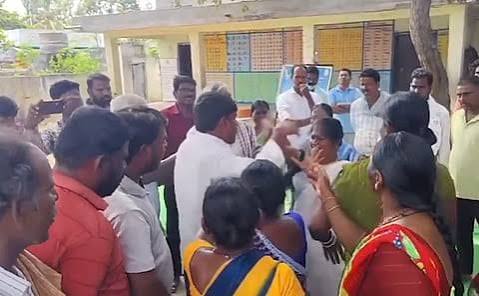
Dalit organizations strongly condemned the incident and demanded strict action against Amarnath Goud. MRPS leader Manda Krishna Madiga strongly condemned the incident and called for a massive road blockade at the Chintapalli mandal headquarters. Nalgonda: A shameful incident of a Dalit woman being publicly assaulted during a village council meeting on October 2nd occurred in PK Mallepally village, Chintapalli mandal, Nalgonda district, Telangana. Local Congress leader Amarnath Goud (Kappula Amarnath) assaulted, mistreated, and verbally abused the woman during a dispute over women’s savings group funds on the village panchayat office premises. The victim, Ganipalli Madhavi (30), wife of Abbaiah, belongs to the Scheduled Caste (Madiga) community. She had been working as the village’s Village Organization Assistant (VOA) for the past eight years and was removed from the position four months earlier. On the day of the incident, she was participating in a discussion with women from the Samabhavana Sangham (women’s savings group). Amarnath Gaud also arrived at the Gram Sabha and began an argument with Madhavi over an old rivalry and the savings group’s funds. He used casteist slurs, slapped Madhavi, dragged her by her hair, threw her to the ground, and kicked and punched her. This all happened near the Gram Panchayat office in the presence of villagers, which escalated tensions at the scene. The victim recounted her ordeal to the police, saying, “Amarnath asked, ‘Who are you? Why have you come to the Gram Sabha? We removed you. What’s the point of coming here? Why have you come?” She continued, “They slapped me, dragged me by my hair, threw me to the ground, and trampled me. They humiliated me in front of so many people. They’ve been harassing me for three months. They targeted me because I asked for money. No one provided justice. They’re mentally harassing me, pushing me to suicide. I have two young children. Whatever they did, it was completely malicious.” Madhavi filed a complaint at the Chintapalli police station around 6 p.m. that same day. Police registered an FIR under Crime No. 172/2026. It includes sections 74, 115(2), and 352 of the Indian Penal Code (IPC), as well as sections 3(1)(r), 3(1)(s), and 3(2)(va) of the Scheduled Castes and Scheduled Tribes (Prevention of Atrocities) Act, 2015. Police confirmed that the investigation is ongoing. Videos of the incident are going viral on social media. Dalit organizations strongly condemned the incident and demanded strict action against Amarnath Goud. Madiga Reservation Protest Committee (MRPS) leader Manda Krishna Madiga strongly condemned the incident and called for a massive road blockade at the Chintapalli divisional headquarters. The protesters staged a sit-in on the road, completely halting vehicular traffic in the divisional headquarters. They demanded the immediate arrest of the accused and justice for the victim. Geetha Sunil Pillai Courtesy; Hindi News
Officials ensure entry of Dalits into Chennakesava Swamy temple in AP
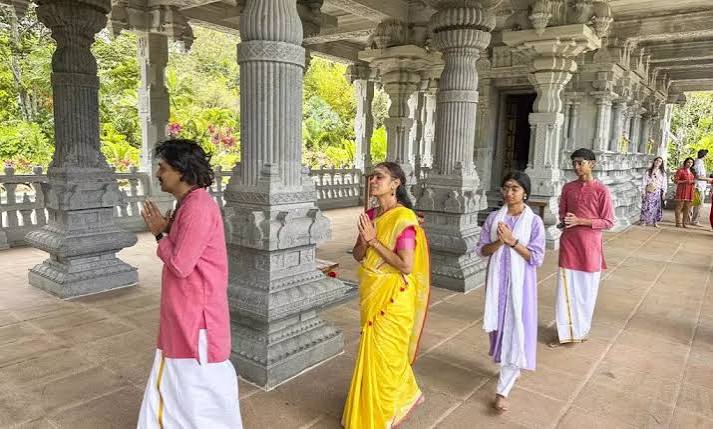
A video circulating on social media purportedly showed a Dalit devotee and his daughter being prevented from entering and subjected to caste-based abuse. KADAPA: Officials intervened in a controversy over alleged denial of temple entry to Dalits at the Sri Lakshmi Chennakesava Swamy temple in Erragudipadu village, Kamalapuram and facilitated their entry and darshan on Sunday. Reports said Chandra and his family visited the temple on Saturday to offer prayers, but former sarpanch Brahmananda Reddy allegedly objected, claiming Dalits were not permitted. The confrontation led to a complaint with Dalit organisations. Based on a complaint by Ramu, Kamalapuram police registered a case against Reddy. A video circulating on social media purportedly showed a Dalit devotee and his daughter being prevented from entering and subjected to caste-based abuse. The complainant alleged they were told to worship from outside the temple premises. The incident sparked widespread debate online. Responding on Sunday, DSP Balaswamy Reddy, Tahsildar Srinivasulu Reddy, CI Mohan and SI Srinivasulu visited the village, consulted locals and took steps to prevent tensions. Later, the affected family and Dalit leaders were allowed to enter the temple and have darshan. Courtesy : TNIE Note: This news is originally published on https:/thenewindianexpress.com/bha and is used purely for non-profit/non-commercial purposes, especially human rights
Dalits Allegedly Served Separate Meal at Karnataka Temple Fair on Gandhi Jayanti, Case Filed
People from the Dalit community in Karnataka’s Bagalkot district were allegedly served a separate meal at a temple fair, triggering a controversy over alleged caste discrimination and untouchability. The incident was reported from Tamadaddi village in Teradal taluk, where a Lakshmi Devi temple fair was held on October 2. A complaint was filed at Teradal Police Station by Basappa Yaladagal, a Dalit resident of the village. According to his complaint, separate arrangements were allegedly made for members of the Dalit community during the fair. Dalits Allegedly Served Ganji Separately According to the complaint, members of upper caste communities were served a regular meal, while Dalit attendees were allegedly served only ganji separately. Ganji is a fermented rice-based dish consumed in several parts of India. IndianMinorities Reports A case was registered on October 3 based on Yaladagal’s complaint. Around 20 people have been named, including Sukumar Patil, Basavaraj Yadawad, Nandappa Nandappanavar, Bhimappa Konnur and Suresh Akkivatti. The allegations have raised concerns over possible caste-based discrimination at a public religious gathering. Article 17 Prohibits Untouchability Untouchability is prohibited under Article 17 of the Indian Constitution, which states that its practice in any form is abolished. Laws including the Protection of Civil Rights Act, 1955, provide for penalties for enforcing disabilities arising from untouchability. The incident took place on October 2, which is observed as Gandhi Jayanti, marking the birth anniversary of Mahatma Gandhi. Gandhi had opposed untouchability and advocated equal access to public spaces, including temples and schools. Similar Allegations Reported Earlier The incident has also raised concerns because similar allegations had reportedly surfaced earlier in Tamadaddi village during another religious event, the Panchakalyanotsava. Courtesy : TOP Note: This news is originally published on https:/theobserverpost.com/bha and is used purely for non-profit/non-commercial purposes, especially human rights
Dalit Woman Delivers Baby On Road After Being Denied Hospital Admission In UP; Doctor Sacked
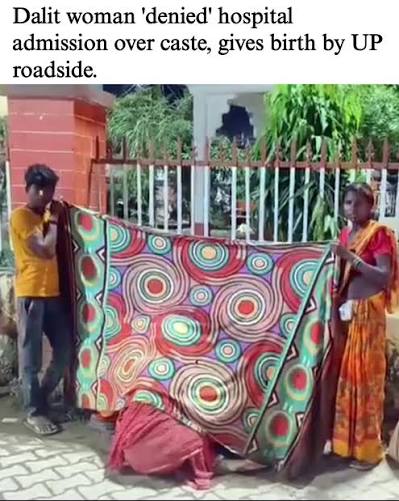
UP Deputy Chief Minister Brajesh Pathak, who also holds the portfolio of the in-charge of the health department, took serious note of the issue after the video surfaced. The mother and the newborn were later admitted to the hospital. | Image for representation A 20-year-old woman from a Dalit community gave birth to a baby in a public place outside a government hospital in Uttar Pradesh’s Bhadohi after she was denied admission to the health centre. A video of the incident has gone viral on social media, prompting action against the on-duty doctor and other staff. Family Helps Woman Deliver Baby By Roadside The incident took place outside Maharaja Chet Singh District Hospital in Gyanpur. Rani was taken to the hospital on Tuesday night after she went into labour. Her family alleged that hospital staff refused to admit her after identifying her as belonging to the Musahar community. As they were leaving the hospital, Rani’s condition deteriorated and her family helped her deliver the baby outside the facility. Following the incident, CMO Dr SK Chak ordered an inquiry and ensured that Rani and her newborn were admitted to the hospital. 4-Member Panel Formed A four-member panel subsequently found lapses in the handling of the case. EMO Dr Pankaj, who was on duty when Rani arrived, was sacked after the inquiry found that he referred her without examining her. Staff nurse Neelam Maurya was transferred, while the salary of obstetrician Dr Mukesh Prajapati was withheld. The inquiry also recommended state-level action against CMS Dr Ajay Tiwari and Dr Neelima Dhawan. The report said Dhawan had examined Rani a day earlier but referred her elsewhere despite her severe anaemia. The CMS was also held negligent. Dr Prajapati was away from the district and arrived about 90 minutes later. The nurse was also accused of refusing admission while referring to the family as Musahar. Published By : Manisha Roy About the Author Manisha Roy is a Senior Sub-Editor at News18.com, with over 7 years of experience in journalism. She covers politics and a wide range of hard news, with a keen interest in national and international developments. Courtesy : News18 Note: This news is originally published on https:/news18.com/bha and is used purely for non-profit/non-commercial purposes, especially human rights
UP: SP Focuses on Dalit Votes! A Major Dalit Conference in Agra on November 15th, Akhilesh Yadav to Be Chief Guest
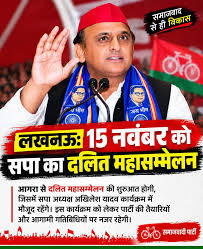
Agra News: Ahead of the 2027 Assembly Elections, the Samajwadi Party will hold a major Dalit conference in Western Uttar Pradesh on November 15th at the GIC Grounds in Agra. Akhilesh Yadav will be the chief guest. Sunil Saket, Agra: Ahead of the 2027 Assembly Elections, the Samajwadi Party has intensified its efforts to strengthen its political base among Dalit voters in Western Uttar Pradesh. As part of this strategy, a major Dalit conference in Western Uttar Pradesh is being held on November 15th at the GIC Grounds in Agra. SP National President Akhilesh Yadav will be the chief guest. The party is preparing to mobilize a large number of workers and supporters from various districts of Western Uttar Pradesh for the conference. Recent reports have also confirmed the Agra conference on November 15th and Akhilesh Yadav’s presence. SP National General Secretary and Rajya Sabha member Ramji Lal Suman held a press conference on Saturday regarding the preparations for the conference. He said that from Agra, a message will be sent to politically unite the Dalit community in western Uttar Pradesh. The SP’s strategy is to strengthen the PDA (Backward, Dalit, and Minority) social equation. This effort by the party comes at a time when all major parties are busy balancing social equations for the 2027 assembly elections. “BJP is a communal party” Ramji Lal Suman, targeting the BJP and RSS, said that a large number of people in western Uttar Pradesh are opposed to the RSS’s ideology. Calling the BJP a communal party, he said that those who want to remove the BJP from power are joining the SP. He said that issues such as the rights, reservation, employment, and social respect of the Dalit community will be prominently raised through the conference. Suman accused the government of working towards weakening reservation. He also raised the issue of the lack of government jobs and recruitment through outsourcing. Referring to incidents of damage to statues of Baba Saheb Dr. Bhimrao Ambedkar, he claimed that 151 statues of Baba Saheb have been vandalized recently, but the government has not taken any action against them. This figure of 151 statues damaged was also recently claimed by the Samajwadi Party. A Look at the BSP’s Political Base The SP’s strategy also reflects an attempt to reach out to the BSP’s traditional Dalit base. Suman also launched a political attack on the BSP and Mayawati, and spoke of the SP’s increasing acceptance among Dalit voters. He said that the BSP’s vote share, which was 30 percent in the last two assembly elections, has now dropped to 9 percent. The choice of Agra for the conference also has a political message. The party is trying to reach out to Dalit voters in Western Uttar Pradesh and integrate the PDA equation into the election campaign. The November 15 conference will be a major public platform for this strategy. Recent reports have also described the conference as an attempt to expand the SP’s reach among Dalit voters. What did he say about the Deputy CM’s statement? Regarding the Deputy Chief Minister’s statement on Akhilesh Yadav, Suman said that he did not want to respond to the statements of smaller leaders. He said that the SP will contest the 2027 elections based on its strategy and organization, and that the Dalit conference to be held in Agra will prove to be historic. However, on the question of crowd gathering, he said that while he has not estimated the crowd size, a large influx of his workers from Western Uttar Pradesh will be expected. Edited by: Devesh Pandey About the Author Devesh Pandey works for Navbharat Times Online. He is a member of NBT’s Uttar Pradesh-Uttarakhand digital team. Devesh has 9 years of extensive experience in digital, web, and broadcast journalism. He joined Navbharat Times Online in May 2025. Courtesy: Hindi News
Sant Ravidas Yatra is part of BJP’s Dalit outreach program
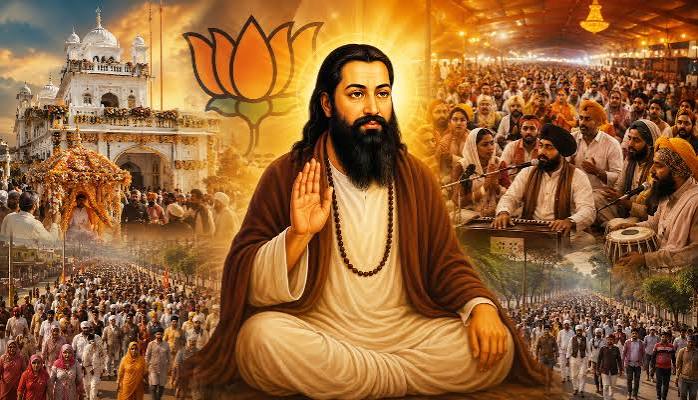
Multi-state outreach seeks to deepen party connections among Dalit communities before key elections. The Bharatiya Janata Party (BJP) plans to strengthen its outreach among Dalit voters in Uttar Pradesh, Punjab and Uttarakhand through the Sant Ravidas Yatra, which was launched across eight states. The fourth phase of the yatra is also set to begin soon. The BJP launched the Sant Ravidas Yatra from Varanasi on July 29, the birth anniversary of Sant Ravidas, which coincided with Guru Purnima. The yatra has so far passed through states including Uttar Pradesh, Uttarakhand, Haryana, Delhi and Madhya Pradesh. A key feature of the yatra is that it has received support not only from Dalit communities but also from people belonging to other sections of society. The Sant Ravidas Yatra will have a total of five phases. The first phase, the Kalash Vandan Abhiyan, was completed from July 29 to August 31 and received a strong response. The second phase was the Sant Sampark Abhiyan, under which the BJP connected around 80,000 saints, sadhus and maths across the country with the yatra. The third phase is the Samrasta Yatra, scheduled from October 5 to November 5. It will begin from Jalandhar in Punjab. The yatra is being viewed as being directly linked to the Punjab elections. The fourth phase will be the Chhatrawas Sampark Abhiyan, scheduled from November 26 to January 15. To prepare the plan for this phase, the yatra’s coordinator and BJP national vicepresident Lalsingh Arya has convened a meeting in Delhi on October 9. The fifth and final phase of the yatra will continue until February 20. Religious and cultural programmes will be organised during this period, with the yatra concluding in Varanasi on February 20. There is a possibility that Prime Minister Narendra Modi himself may attend the concluding ceremony in Varanasi. Varanasi is also his parliamentary constituency. The objective of the Sant Ravidas Yatra was to connect Dalits with the BJP. Punjab has a 33 per cent Dalit population, the highest in the country, while Dalits account for around 22 per cent of the population in Uttar Pradesh. A large section of these votes has traditionally gone to Mayawati’s Bahujan Samaj Party (BSP). The BJP is focusing on this Dalit vote. Sources said the BSP has continued to receive 12 to 14 per cent of the Dalit vote in Uttar Pradesh even in its weakest electoral phases. According to sources, the BJP initially planned the Sant Ravidas Yatra with Dalit voters in Punjab in mind. Uttar Pradesh and Uttarakhand were later included in the yatra’s programme. By: Sanjay Sharma Courtesy : TSG Note: This news is originally published on https:/thesundayguardian.com/bha and is used purely for non-profit/non-commercial purposes, especially human rights