
Amazing stories of the Chief Minister: The Dalit woman who became the Chief Minister of Uttar Pradesh for the first time with the support of the BJP. Learn the full story of 1995.
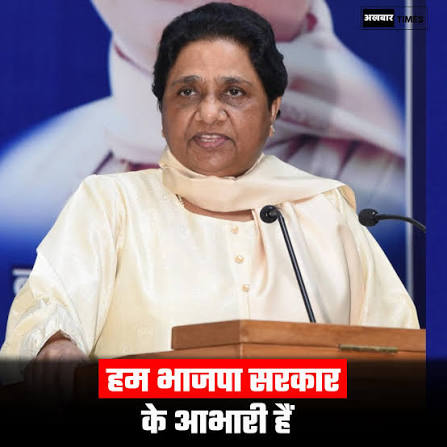
UP CM’s amazing kisses, Mayawati’s BJP support: Mayawati is a prominent figure in Uttar Pradesh politics. There are many stories related to her political life that are still discussed today. But there is one incident when the political equations changed in just one day and it took her to the position of Chief Minister of Uttar Pradesh. In 1995, after the alliance with the Samajwadi Party broke, the BJP supported Mayawati. On June 3, she took oath as Chief Minister and became the first Dalit woman Chief Minister of Uttar Pradesh. So, in ‘Amazing Stories of the UP CM’, read the entire fascinating story of Mayawati becoming the Chief Minister of Uttar Pradesh for the first time with the support of the BJP. Mayawati’s First CM Story: Mayawati’s name needs no introduction in Uttar Pradesh politics. She has served as Chief Minister of Uttar Pradesh four times. But the most important milestone in her political journey was the year 1995, the year she became the Chief Minister of Uttar Pradesh for the first time. At that time, she was around 39 years old. Significantly, Mayawati’s government was formed with the support of the BJP. She took the oath of office as Chief Minister on June 3, 1995. With this, she became the first Dalit woman Chief Minister of Uttar Pradesh. This alliance between the SP and BSP had broken. Subsequently, with the support of the BJP, Mayawati’s path to power was paved. In this part of “Amazing Stories of UP CMs,” read the entire story in detail, when a Dalit woman became the Chief Minister of Uttar Pradesh with the support of the BJP, bringing about a major change in the state’s politics. Mayawati Entered Politics with Kanshi Ram Mayawati’s political journey was not easy. During her studies and employment in Delhi, she met Kanshi Ram. Kanshi Ram inspired her to enter politics. Mayawati then entered active politics with the Bahujan Samaj Party. Kanshi Ram founded the Bahujan Samaj Party in 1984. Mayawati gradually became a prominent face of the party. She began to be recognized as a vocal leader of the Dalit community, particularly in the Dalit community. Mayawati won the Bijnor seat in the 1989 Lok Sabha elections. After this, her name began to rise rapidly in national politics. UP’s politics changed in 1993 Now the story turns to the 1993 assembly elections. At that time, the BJP had emerged as the dominant force in UP. However, Mulayam Singh Yadav and Kanshi Ram joined forces after the elections. The Samajwadi Party and the Bahujan Samaj Party formed a government together. Mulayam Singh Yadav became the Chief Minister, and Mayawati’s party became a partner in the government. However, this alliance between the two parties did not last long. Tensions between the two parties grew, and eventually the alliance broke. A major political turning point occurred on June 2, 1995 In 1995, a development occurred in UP politics that captured national attention. Mayawati decided to withdraw support from Mulayam Singh Yadav’s government. This completely changed the power dynamics in the state. Mayawati staked claim to form the government, but she lacked a majority on her own. This is where the BJP came into play. BJP Supports Mayawati At that time, the Bharatiya Janata Party decided to support Mayawati. With the BJP’s support, the path was cleared for Mayawati to become Chief Minister. On June 3, 1995, Mayawati was sworn in as Chief Minister of Uttar Pradesh. She became the first Dalit woman Chief Minister of Uttar Pradesh. This was a historic moment in Indian politics. A Dalit woman’s rise to the top position of power in the country’s largest state was a major political event in itself. Mayawati’s first term was short. For the first time, Mayawati failed to remain Chief Minister for long. Her government, formed with the support of the BJP, lasted only about four months. In October 1995, her government fell. Following this, President’s rule was imposed in Uttar Pradesh. However, in these few months, Mayawati demonstrated such political strength that she later became one of the most prominent leaders in Uttar Pradesh politics. The Politics of the BJP and the BSP Changed From Here This experiment of 1995 was not only significant for Mayawati. It also marked the beginning of a political relationship between the BJP and the Bahujan Samaj Party. In the following years, the two parties formed several alliances. Sometimes Mayawati became Chief Minister with the support of the BJP, and sometimes the BJP supported her government. This alliance is considered one of the most interesting political events in Uttar Pradesh politics during that period. Mayawati became Chief Minister four times again After 1995, Mayawati became Chief Minister of Uttar Pradesh three more times. She also became Chief Minister in 1997. After this, her government was formed with the support of the BJP in 2002. However, in 2003, the BJP withdrew its support, and her government collapsed. Subsequently, in 2007, Mayawati secured a majority on her own. This was the strongest phase of her political career. She formed a government with an absolute majority and completed a full five-year term. An alliance changed her entire political journey. Mayawati’s first Chief Ministership is also special because she came to power at a time when forming a government in Uttar Pradesh was difficult for any single party. On one hand, the Samajwadi Party and BSP alliance had broken down. On the other hand, the BJP had emerged as the most powerful political force. Meanwhile, the BJP’s support catapulted Mayawati to the position of Chief Minister. The same Mayawati, who became Chief Minister in 1995, later became a leader who surprised all political parties by forming a majority government in Uttar Pradesh in 2007. The woman who first assumed the Chief Ministership with the support of the BJP, a few years later, came to power on her own. This is the biggest and most interesting turning point in Mayawati’s political journey. Written by:Krishna.Pandey Courtesy: Hindi News
How the Matang reservation debate is reshaping Maharashtra’s Dalit politics
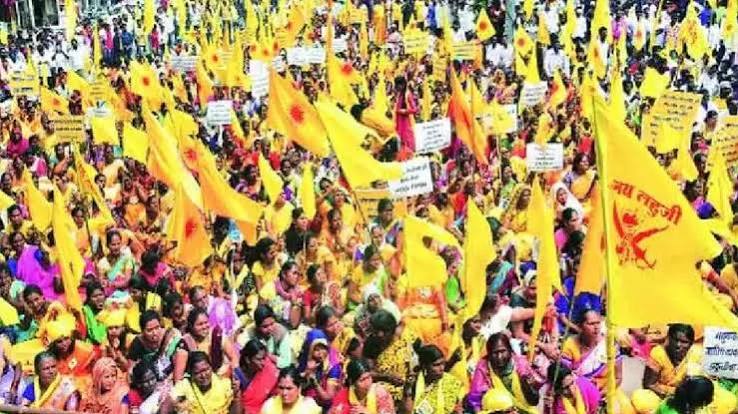
The Matang community is intensifying its demand for the sub-categorisation of Scheduled Castes in Maharashtra to combat historical marginalisation and secure a fair share of reservation benefits Social conflict has once again erupted in Maharashtra over the demand for subcategorisation within the Scheduled Castes (SC) category. The Matang community has intensified its agitation for sub-categorisation, while legislators from various parties within the category have taken a firm stand against it. Over the past two decades, demands for reservation and the issue of sub-categorisation among various castes have remained central to political discourse in Maharashtra. Although the Supreme Court has empowered state governments to implement sub-categorisation within Scheduled Caste and Scheduled Tribe reservations, the Maharashtra government faces opposition from legislators across party lines and various Dalit organisations regarding this decision. But how do electoral arithmetic and the politics of pressure tactics adversely affect the decentralisation of power? In the context of intra-category disparities within the Scheduled Castes and the equitable distribution of resources, how are issues such as cultural politics, caste identity, and political polarisation shaping the policy of social justice? Marginalisation of the Matang community In 2003, the then state government established the ‘Krantivir Lahuji Salve Matang Samaj Study Commission’ to consider the demands of the Matang community. The commission examined appointments to posts reserved for Scheduled Castes across various government departments. It highlighted the dominance of the Mahar and Chambhar communities in reserved positions at all levels of the administration. Available data indicates that the Matang community has lagged behind regarding government posts across all employment categories. For example, according to statistics from the Lahuji Salve Commission, based on data received from 22 municipal corporations in the state, out of 21,066 posts reserved for Scheduled Castes, the Mahar community secured 12,299 positions and the Chambhar community secured 3,578, whereas the Matang community received opportunities for administrative employment in only 1,897 posts. These figures demonstrate that both the Mahar community (which has a larger population than the Matang community) and the Chambhar community (which has a smaller population) secured greater representation. History of categorisation demand In 2003, the then Maharashtra government constituted the ‘Krantivir Lahuji Salve Matang Samaj Study Commission’. The mandate of this commission was to conduct an in-depth study of the backwardness of the Matang community and allied sub-castes in the state and to make recommendations for their comprehensive development. The study report was submitted in 2008. Based on the backwardness of the Matang community and allied subcastes, the commission recommended granting a separate 5 per cent reservation to the Matang community through a process of sub-categorisation. Since then, the Matang community has been continuously agitating across the state to press for this demand of sub-categorisation. In 2024, responding favourably to the Matang community’s demand, the state government established the ‘Justice Anant Badar Committee’, a one-member judicial commission. This commission submitted its report regarding the social and educational backwardness of the Scheduled sub-castes to the state government in March 2026. However, the report has not yet been made public, as the government has issued instructions to invite objections regarding the matter. The government is facing a dilemma, as legislators from all political parties are demanding that the report be made public immediately and that the process of sub-categorisation be halted. Despite the Supreme Court’s approval of subclassification, various Dalit organisations in the state have launched strong opposition to it. Mahar and Matang: Divergent social paths Dr Babasaheb Ambedkar belonged to the Mahar community. On October 14, 1956, at Deekshabhoomi in Nagpur, he embraced Buddhism along with millions of his followers. On that day, millions of Ambedkar’s followers renounced Hinduism and embraced Buddhism. Following this historic event, hundreds of thousands of Ambedkar’s followers in Maharashtra embraced Buddhism. This was not merely a religious conversion; it marked the starting point of a new struggle for education, social equality, human dignity, and political rights. The movement instilled a sense of self-respect within the Dalit community and initiated a new wave of social transformation. During the period of Ambedkar’s conversion movement, some followers from the Matang and Chambhar communities also embraced Buddhism alongside the Mahar community. However, the extent and social scope of conversion varied across these communities. Due to their distinct historical, cultural, and spiritual legacies, significant sections of the Matang and Chambhar communities remain connected to Hindu traditions, deities, and religious practices, a fact to which the Mahar community, and indeed the Dalit movement at large, takes strong objection. Given the history of untouchability and denial of temple entry, following Ambedkar’s path of conversion, viewed as the first step toward social advancement, remains a central issue for the Dalit movement. The socio-economic structure of the landless and resource-poor Matang community has played a vital role as artists within religious and folk traditions. Consequently, the economic and cultural practices of the Matang community appear historically intertwined with various religious activities of the Hindu tradition. This leads to criticism from within the Dalit movement: that the Matang community, despite experiencing untouchability, acts as a key bearer of Hindu religious and cultural traditions. This lies at the heart of the contention. Identity crisis of Matangs Inspired by Ambedkar, his followers established the Republican Party of India (RPI) in 1957. Subsequently, the party split due to leadership disputes and organisational conflicts. However, this political movement produced several prominent Dalit leaders, such as Rajabhau Khobragade, R.S. Gavai, Ramdas Athawale, and Prakash Ambedkar. All these leaders hail from the Mahar community, highlighting the long-standing influence and role of ‘Mahar’ leadership in Dalit politics in Maharashtra. Under the leadership of Ambedkar, a comprehensive movement encompassing education, organisation, and political representation emerged within the Mahar community; this movement remains their greatest strength to this day. However, a similar process of social transformation did not take place within the Matang community. Ambedkar’s influence helped overcome the fragmentation within the Mahar community; their unity regarding social issues is a significant asset. Educational progress and political representation have accelerated the process of social development for the Mahar community. In contrast,
Allegations of discrimination against Dalit students at KGBV: They alleged caste-related abuses and forced them to clean; families filed a complaint at the District Magistrate’s office.
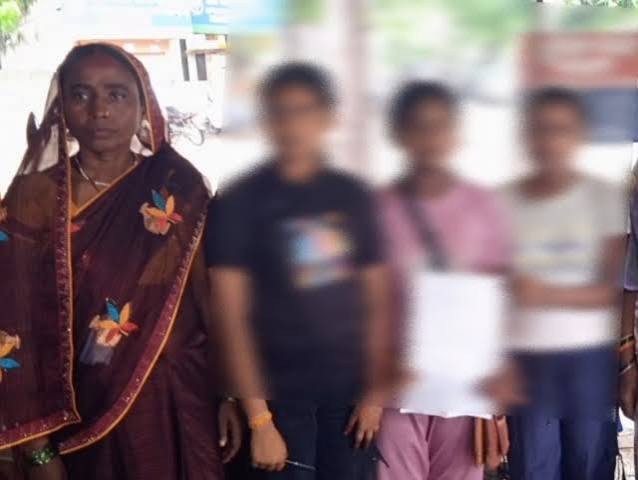
A case of alleged discrimination and inhumane treatment of Dalit students has come to light at the Kasturba Gandhi Balika Awasiya Vidyalaya (KGBV) in Asothar block, Fatehpur. The students and their families have accused some teachers of making caste-related remarks, not providing adequate food, and making them clean the bathrooms and other areas. At around 4:30 pm on Tuesday, the victim families reached the District Magistrate’s office and demanded an impartial investigation and action against the culprits. Geeta Devi, a resident of Sato village in Asothar block, stated that her granddaughters Kiran and Kashish, along with another student, Anjali, attend the school. According to the families, a complaint was made some time ago regarding the quality of the food at the school. This complaint was also investigated. It is alleged that the school administration became increasingly displeased with the students after this. Allegations of being threatened with expulsion for asking for food In a complaint letter submitted to the District Basic Education Officer, serious allegations have been made against teachers Parveen Bano, Aruna Gautam, and Preeti Gautam. The complaint states that female students were threatened with expulsion from the school if they asked for food. There are also allegations of assaulting older students if they protested. Allegations of caste-based humiliation and cleaning duties Families allege that female students were humiliated because of their caste. In addition to studying, they were also made to clean the school bathrooms and other areas. According to the complaint, comments were made linking the female students’ caste to cleaning duties, causing them mental distress. Demand for Fair Investigation and Security from the DM The victim families have demanded an impartial investigation from the District Magistrate. They demanded a safe and respectful environment for the female students and strict action against those responsible if the allegations are found to be true. They now await the district administration’s investigation and the action taken based on the investigation. Ram Chandra Saini | Fatehpur Courtesy: Hindi News
A Dalit student, distressed by harassment, left her studies for a year. She resumed her studies after being harassed again, and appealed to the Superintendent of Police in Amethi for justice.
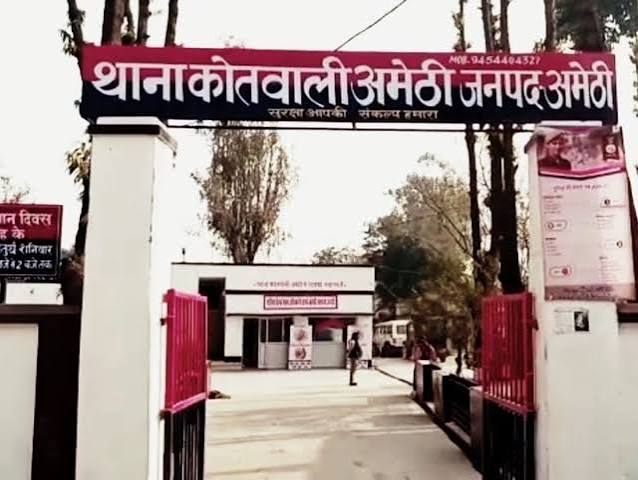
In a village in the Amethi Kotwali area, a student, distressed by harassment, left her computer studies for nearly a year. The student alleges that some young men repeatedly harassed her, leading her to discontinue her studies. According to the student, when she resumed her computer studies after about a year, the accused young men began harassing her again. Distressed by the continued harassment, the student returned home and informed her family about the incident. The student then went to the Amethi Kotwali with her mother and filed a complaint with the police. It is alleged that after receiving no response at the police station, the student went to the Superintendent of Police’s office with her mother and demanded action. The Superintendent of Police took the matter seriously and directed the concerned police officers to investigate and take necessary action. The police then began questioning the student and gathering information about the case. Amethi Kotwali police station in-charge Shivakant Tripathi stated that the matter is being investigated based on the complaint. Further action will be taken based on the facts and evidence revealed in the investigation. Courtesy: Hindi News
Villagers oppose Dalit womans as anganwadi helper

Shivamogga: A controversy has arisen at Mugadthi village, located under the Heddaripura GP near Ripponpete in Hosanagara taluk of Shivamogga district, following the appointment of a Dalit woman as an anganwadi helper. Some villagers refused to send their children to the centre following her appointment. Shivamogga DC Prabhuling Kavalikatti took the matter seriously and directed the department of women and child development to inspect the location immediately. Responding to the directive, child development project officer (CDPO) Gayatri Ramachandra, along with personnel from the Ripponpete police station, visited Mugadthi on Monday and convened a meeting with the residents to address the situation. She clarified that the recruitment was carried out strictly in accordance with govt regulations and legal merit criteria. She said children must not be deprived of health and educational facilities provided at the anganwadi. Local villager Gururaj, who is also the president of Mugadthi Balamuri Ganapathi Temple, denied any caste-based discrimination or opposition in the village, stating that residents from all communities live together in harmony. He suggested the matter arose from a misunderstanding or miscommunication and assured full cooperation for the welfare of the children. Courtesy : TOI Note: This news is originally published on https:/timesofindia.com/bha and is used purely for non-profit/non-commercial purposes, especially human rights
AAP leader arrested for allegedly encroaching Dalit colleague’s property

New Delhi, Aug 17: Aam Aadmi Party’s National Council Member Sri Chand Vohra was arrested by Delhi Police from Gwalior, Madhya Pradesh, for alleged encroachment of the property of his party’s Dalit worker in south-east Delhi’s Jaitpur Extension, sources said on Monday. Sri Chand Vohra is the husband of AAP Councillor from Jaitpur, Hema Vohra. He has been named in a police complaint filed by AAP Dalit worker Rakesh Kumar over his alleged dispossession from his own property. A police complaint filed by Rakesh Kumar said that around three weeks ago, Vohra allegedly threw his belongings, kept on the first floor of the property, onto the street. Following an investigation, the police added penal sections relating to an alleged conspiracy to take possession of the plot. The penal provisions invoked in the case carry a maximum punishment of 10 years. Earlier, Delhi BJP questioned the silence of AAP leaders Arvind Kejriwal and Saurabh Bharadwaj over the alleged harassment of their own party’s Dalit worker. Delhi BJP Media Head and Spokesperson Praveen Shankar Kapoor condemned Vohra’s alleged injustice against Rakesh Kumar and demanded early police action against him. Kapoor, along with BJP Chief Spokesperson Anil Gupta, asked Kejriwal to immediately ensure justice for the Dalit AAP worker by restoring possession of his plot and expelling Vohra and his wife from the party. The Delhi BJP Media Head said that Vohra has been directly associated with Kejriwal since the party’s formative days and had himself contested the Municipal Corporation election from Jaitpur in 2017. In 2022, his wife Hema contested the election and is currently serving as a Municipal Councillor. In 2019, on the pretext of setting up a private political office, Vohra took a vacant plot belonging to active Dalit AAP worker Rakesh Kumar in Jaitpur Extension. After about a year, Rakesh Kumar began asking for his plot back, but Vohra allegedly kept delaying the matter till 2022. Towards the end of 2022, Vohra’s wife Hema was elected as a Municipal Councillor from Jaitpur. According to the BJP leaders, this was followed by alleged harassment of Dalit worker Rakesh Kumar, which ended only after an FIR was registered at a police station around two weeks ago. Courtesy : TAT Note: This news is originally published on https:/theassamtribune.com/bha and is used purely for non-profit/non-commercial purposes, especially human rights
“Mallikarjun Kharge’s insult is a direct attack on the existence of Dalits,” Telangana Congress holds protest with appeal for unity against BJP
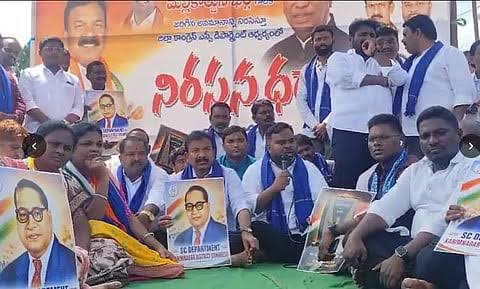
The alleged insult of Congress President in Haldwani has sparked widespread outrage in Telangana. The TPCC issued a stern warning to the BJP-RSS and appealed to Dalits to unite. New Delhi: The alleged insult to Congress National President Mallikarjun Kharge has sparked widespread outrage within the Telangana Congress. On Monday, August 17, members of the Telangana Pradesh Congress Committee (TPCC) held a massive protest against the Bharatiya Janata Party (BJP). Congress leaders have made a clear call that the time has come for Dalits across the country to unite against the BJP’s policies. The protest was organized to protest the alleged “purification” of the stage after Kharge’s event in Haldwani, Uttarakhand. South Asians and Diaspora The main event of this strong protest was held in Karimnagar. Dr. Kavampally Satyanarayana, the party’s Scheduled Caste (SC) Cell Chairman and MLA, attended the protest. He described the humiliation of Kharge as highly condemnable and appealed to the marginalized sections of society to unite. The controversy began on August 13th. Mallikarjun Kharge, the Leader of the Opposition in the Rajya Sabha and Congress chief, alleged that some individuals associated with the BJP had desecrated the stage immediately after his speech at the Ramlila Maidan in Uttarakhand. Expressing deep regret over this act, Kharge said that coming from a Dalit background, the incident had made him acutely aware of the “sting of untouchability.” Addressing the protesters at the protest, MLA Satyanarayana sharply attacked the ruling party. He said that this humiliation of Mallikarjun Kharge was not just an attack on one person, but on the self-respect and existence of the entire Dalit community. It should not be taken lightly at any cost. He urged all Dalits to stand firmly against the BJP’s discriminatory and oppressive policies. People and Society The TPCC directly blamed the BJP, which is in power at the center, for this purification ritual. Congress leaders said the ruling party should bow its head and take accountability to prevent such discrimination in the future. Satyanarayana issued a stern warning to the BJP, the Rashtriya Swayamsevak Sangh (RSS), and the Sangh Parivar, urging them to remain vigilant. He accused these organizations of staging a hypocritical drama. Citing the Haldwani incident, he clarified that this mentality of the BJP is an insult to democratic spirit and a blatant violation of constitutional values. Rajan Chaudhary Courtesy: Hindi News
Winds of change in Muzrai dept as Dalit takes over as minister
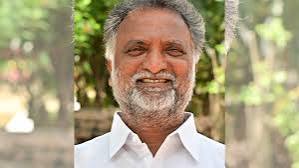
The Mayakonda MLA hails from a humble background and grew up amidst hardship as the son of civic workers Sangappa Pailwan and Hanumakka. Bengaluru: In 2020, senior Congressman G Parameshwara offered the Legislative Assembly a chilling account of caste-based discrimination. “I became an MLA for the first time in 1989. While going on a victory round, they took us to a village which naturally will have temples and Ramesh Kumar (in an apparent reference to fellow Congress leader Ramesh Kumar, a Brahmin) must be there. They took me into the Hanuman temple, I saluted the deity, took the Mangalarathi and came out. After I left, there was a fight as to how could I have been taken inside the temple”. Narrating this, Parameshwara, who hails from Dalit (right) community, said thereafter, he avoids entering temples with discriminatory practices and instead, does the rituals outside the premises on some pretext. Six years later, the Congress government, with Parameshwara as deputy CM, has taken a progressive step by appointing first-time MLA K S Basavanthappa from Dalit (left) community as minister for Muzrai department, which manages Hindu temples. The Mayakonda MLA hails from a humble background and grew up amidst hardship as the son of civic workers Sangappa Pailwan and Hanumakka. His appointment is being interpreted as a powerful counter to the despicable practice of caste-based discrimination in some temples. Though Rudrappa Lamani also held Muzrai portfolio in previous Congress government during 2016-18 (he hails from Lambani sub-sect among scheduled castes), Basavanthappa is the first from among SC (left)/SC (right) communities, which are comparatively more marginalised, to do so. On Aug 10, right-wing outfit Shri Ram Sena Dharmarth Seva Nyas performed Shuddhikaran (‘purification’), after AICC president Mallikarjun Kharge’s speech at Ramlila maidan at Haldwani, Uttarakhand on Aug 8. A senior minister told DH that the government believed in 12th-century social reformer and anti-caste crusader Basavanna’s principle of ‘Kayakave Kailasa’ (work is worship). “There is a quote inscribed at the entrance of Vidhana Soudha that says ‘Government work is God’s work’. Ultimately, it’s about carrying out the responsibility bestowed on an individual by the party. If an atheist is handed over the responsibility of the muzrai or minorities welfare department, he or she should still undertake the duty,” he said. Leader of the Opposition in the Council Chalavadi Narayanaswamy said one way of looking at it would be to appreciate the decision. But, he also wondered if “upper castes” were ready for such a development. The BJP leader, who hails from SC (right) community, felt the decision could be a “test case” to gauge society’s reaction. Sujay B M DHNS Courtesy : DH Note: This news is originally published on https:/deccanherald.com/bha and is used purely for non-profit/non-commercial purposes, especially human rights
Congress protests venue ‘purification’ after Kharge’s event
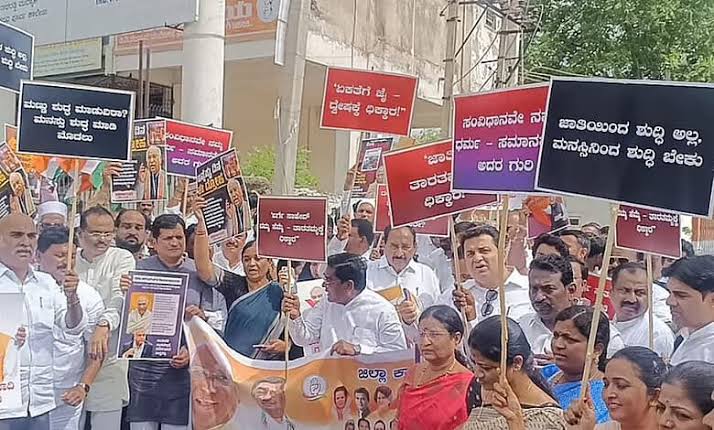
Protesters raised slogans like ‘Jai Bhim, Jai Samvidhan,’ ‘Unity over hatred,’ and ‘Dalit discrimination is anti-national.’ Bengaluru: Congress workers took out a protest march in Karnataka’s Kalaburagi on Sunday, August 16, against the purification ritual performed in Haldwani, where Congress president Mallikarjun Kharge held a public meeting. The Kalaburagi District Congress Committee organised the demonstration. Party workers gathered at the district Congress office on Sedam Road and marched towards Annapurna Cross, raising slogans against the governing Bharatiya Janata Party (BJP), Rashtriya Swayamsevak Sangh (RSS) and alleged communal and casteist practices. The protesters objected to the reported cleaning and purification of the venue following Kharge’s visit, terming it an insult to Dalits and a reflection of continuing caste discrimination. Several protesters carried placards highlighting equality and constitutional principles. Messages included “Jai Bhim, Jai Samvidhan,” “Unity over hatred,” “Dalit discrimination is anti-national” and “Purify the mind before purifying the soil.” Protestors burn tyres as part of demonstration The protesters also questioned whether caste discrimination had truly disappeared 80 years after Independence. They said no individual should be considered ‘impure’ because of their caste and argued that such practices undermine the principles of equality and dignity guaranteed by the Constitution. The protestors burnt tyres as part of the demonstration and raised slogans demanding an end to caste-based discrimination and communal politics. Speaking to the gathering, District Congress Committee president and MLC Jagadev Guttedar, MLA Allamaprabhu Patil and MLC Tippannappa Kamaknur criticised the alleged incident and accused communal forces of attempting to divide society along caste and religious lines. The leaders said the Congress would continue to oppose discrimination and defend constitutional values. They called upon people to reject hatred and work towards social harmony, equality and fraternity. Courtesy : TSD Note: This news is originally published on https:/thesiasatdaily.com/bha and is used purely for non-profit/non-commercial purposes, especially human rights
Two lovers arrested for murdering a pregnant woman: Rape and murder in Kanpur; body found in a mango orchard
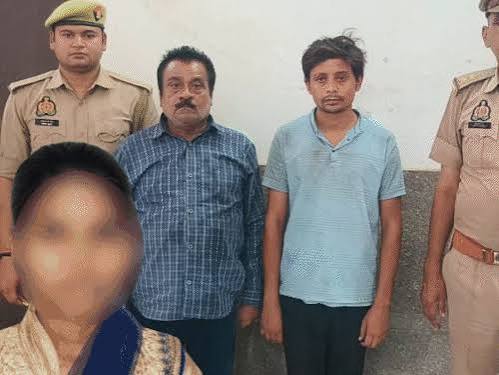
The accused of raping and murdering a Dalit woman in Ghatampur, Kanpur, have been arrested. The woman was found lying under suspicious circumstances in an orchard on the outskirts of the village. The post-mortem report confirmed that she was seven months pregnant. The doctor suspected rape and created a slide, while the DNA of the unborn child was also preserved. The report did not clearly state the cause of death. Based on the father’s complaint, Ghatampur police registered a case against the two lovers under serious sections. Subsequently, both lovers were arrested on Sunday and sent to jail. Police are investigating the incident. The woman had met Pranjul at her maternal home; they had been in contact for four years. Ghatampur ACP Krishnakant said that the body of the young woman, a resident of a village in the Ghatampur police station area, was found lying in a mango orchard on the outskirts of her village. Based on the father’s complaint, the police filed a report against Arvind, alias Gola Pandey, a resident of Patara, and Pranjul Pal, a resident of Naraini in Fatehpur district. Both were arrested, presented in court on Sunday, and sent to jail. During police interrogation, accused Pranjul revealed that his mother’s aunt’s house is in Hirni village, in the Ghatampur police station area. He used to visit his maternal grandmother’s house. He met the young woman there. The two had been in a relationship for about four years. He would often take time off to visit her. The young woman had taken money from him several times in the name of medical treatment. He also used to talk to the young woman to pass the time. He said he had no idea he would get trapped like this. Now he regrets talking to the young woman. Six years of continuous help, but now he regrets it. Arvind Pandey, alias Gola Pandey, a resident of Patara town, told police during interrogation that he used to lease his land to his father. He met the young woman while working in the field. Gradually, they began talking and he helped her a lot. He provided the girl with a scooter and money for her treatment. During this time, the girl told him she was seven months pregnant. He then took her to a hospital in Kanpur, where he introduced himself as the girl’s father and offered to treat her. The doctor, upon seeing the girl, refused to treat her. He then brought the girl to the outskirts of the village in an ambulance and told her to go home. He then returned home. When he learned that the girl’s body had been found that morning, he fled out of fear. He now regrets having helped the girl so much, but her family framed him for murder. ACP said: Both accused were produced in court and sent to jail. Ghatampur ACP Krishnakant stated that a murder case has been registered against both accused based on the father’s complaint in the girl’s murder case. Both have been arrested, produced in court, and sent to jail. Police are investigating the incident. Himanshu Tiwari | Kanpur Courtesy: Hindi News