
Karnataka’s Raichur man booked for practising untouchability

Small eateries and hotels allegedly deny Dalit customers service and refuse them regular tumblers, instead pouring water directly when they ask to drink. BENGALURU: Police have registered a case under the Scheduled Castes and Scheduled Tribes Prevention of Atrocities Act against a hotel owner in Raichur district for practising untouchability. Deputy Commissioner Raichur S Poovita told TNIE that an FIR was registered after a preliminary enquiry by Lingasugur tahsildar Satyamma. There was public ire after a video went viral on social media that showed the hotel owner, Shivappa S Hadapad, standing beside a Dalit man and pouring drinking water into a man’s mouth in Itchanal village. Small eateries and hotels in the area often do not entertain Dalit clients and whenever they request for water to drink they refuse to give them a tumbler used by regular clients and pour them water. Some keep separate cutlery and cups and plates for the Dalit clients. Some explained that while some Dalit castes like Bhovis and Lambanis are touchable Dalits these restrictions apply to untouchable Dalits. Sources say that in some eateries and restaurants there are designated tables and seats for Dalits. Bansy Kalappa Courtesy : TNIE Note: This news is originally published on https:/thenewindianexpress.com/bha and is used purely for non-profit/non-commercial purposes, especially human rights
Dalit middle-aged man beaten for demanding repayment of 13-year-old loan: 80,000 rupees case in Hardoi, assault with sticks, allegations of casteist slurs
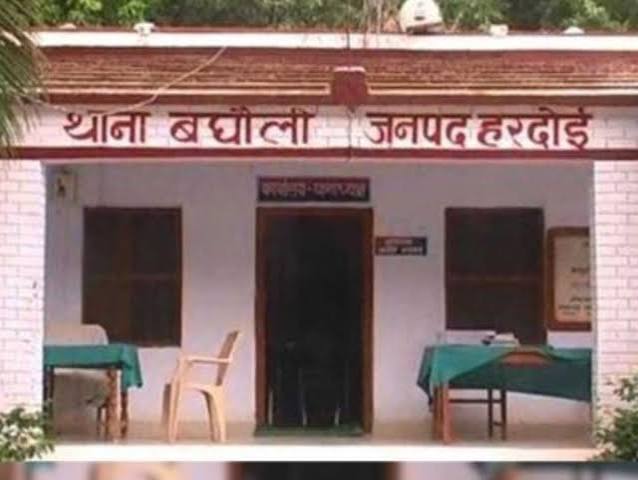
In Baghauli, Hardoi, demanding repayment of a 13-year-old loan proved costly for a Dalit middle-aged man. When he demanded the return of 80,000 rupees given in 2013, the accused kicked, punched, and beat him with sticks. He used casteist slurs and threatened to kill him. A case has been registered against the accused following court intervention based on the victim’s complaint. The report was filed at Baghauli police station at 9:15 pm on Thursday. Ram Avtar (52), a resident of Jutela village, had lent 80,000 rupees to Kamlesh Kumar Dixit of his own village in 2013. Ram Avtar paid the amount in four installments via check from the Aryavart Regional Rural Bank branch in Baghauli. This included ₹40,000 on May 23, ₹8,000 on June 4, ₹12,000 on June 11, and ₹20,000 on June 15, 2013. This transaction was documented on a ₹100 stamp in front of witnesses. When the money wasn’t returned, Ram Avtar complained to the Superintendent of Police. Threat of being implicated in a false case The police had arranged for payment by November 22, 2024, but even then, the money was not received. When the victim went to ask for the money again at 5 p.m. on June 12, 2026, the accused assaulted him with sticks and hurled casteist slurs at him. He also threatened to implicate him in a false case. When his complaint was not heard at the police station, the victim filed an application in the court of the Special Judge, SC/ST Act. On the court’s orders, Baghauli police registered a case against the accused, Kamlesh, and began an investigation. The police are investigating the matter. Shahnawaz Khan | Hardoi Courtesy: Hindi News
Pawan Khera attacks AAP govt over Dalit man’s death, hasty cremation
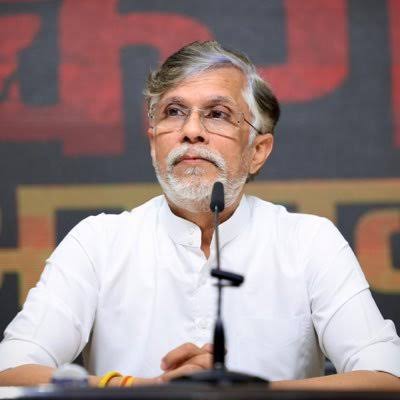
Congress Slams AAP Government Congress leader Pawan Khera on Wednesday attacked the Aam Aadmi Party (AAP) government in Punjab over the death and hasty cremation of Gulzar Singh, a 42-year-old Dalit labourer from Sangrur district. Criticising the ruling party in Punjab for alleged high-handedness and constitutional overreach, Khera, in a post on X, condemned the denial of dignity to the victim’s family. “The forcible cremation of Gulzar Singh Ji’s body under heavy police deployment — and without the family’s consent — under the AAP regime in Punjab is deeply disturbing,” he said. Gulzar Singh, a member of the Valmiki community, died by suicide after allegedly facing harassment, intimidation, and threats from local party affiliates. This followed a public encounter where Singh confronted Punjab Finance Minister Harpal Singh Cheema regarding the unchecked drug menace that had affected his own son. Khera explicitly drew parallels between the Punjab incident and the September 2020 Hathras case in Uttar Pradesh, where the state police similarly cremated a 19-year-old Dalit victim’s body late at night without the family’s consent or presence. “It is a chilling reminder of September 2020, when the Uttar Pradesh Police hastily cremated the body of the 19-year-old Dalit rape victim from Hathras in the dead of night, without her family’s presence or consent,” added Khera. The forcible cremation of Gulzar Singh Ji’s body under heavy police deployment – and without the family’s consent – under the AAP regime in Punjab is deeply disturbing. It is a chilling reminder of September 2020, when the Uttar Pradesh Police hastily cremated the body of the… pic.twitter.com/NDgnz5fBTG — Pawan Khera 🇮🇳 ಪವನ್ ಖೇರಾ (@Pawankhera) September 9, 2026 Following Singh’s death, his family members alleged that police and administrative officials forcibly conducted his final rites under heavy security deployment, denying the grieving family their right to perform traditional last rites or bid a proper farewell. “Denying a grieving family even the basic dignity of deciding how and when their loved one’s last rites are performed – or even the final chance to see their loved one – is an inhuman abuse of state power. With this, the AAP has made one thing abundantly clear: It is just English medium BJP,” he added. Rahul Gandhi Demands Minister’s Resignation Leader of the Opposition in the Lok Sabha, Rahul Gandhi, on Wednesday also slammed the AAP government in Punjab. In a post on X, Gandhi alleged that Singh was tormented, humiliated, and ultimately driven to suicide after he publicly questioned Punjab Finance Minister Harpal Singh Cheema about the unchecked drug menace that had impacted his own son. He demanded immediate action in the Gulzar Singh case, calling for the resignation of the Punjab Finance Minister and an independent, impartial and time-bound investigation, saying that “anything less is eyewash.” “The people of Punjab, and especially the Dalits, should become vigilant regarding the misuse of power by the AAP government. Listen to what happened to Gulzar Singh Ji, who belonged to the Valmiki community, in his final days—hear it straight from the mouths of his family, his mother, his wife, and his brother. They tormented him in life, and even in death, they are dishonouring Gulzar Singh Ji. The grieving family members themselves are saying that even his right to traditional last rites was snatched away from them”, he said. Background of Gulzar Singh’s Death 46-year-old Gulzar Singh allegedly died after consuming poison shortly after publicly questioning Harpal Singh Cheema about the illicit drug trade. Gulzar Singh, whose son is allegedly struggling with severe drug addiction, had raised concerns with the minister about the easy availability of synthetic drugs, locally known as chitta, in the area. Following the interaction, Gulzar Singh allegedly faced harassment and pressure from local leaders and panchayat members to publicly apologise for questioning the minister. He allegedly consumed poison and passed away while undergoing treatment at a hospital in Ludhiana. (Except for the headline, this story has not been edited by Asianetnews Editorial staff and is published from a syndicated feed.) Courtesy : Asianet News Note: This news is originally published on https:/asianetnews.com/bha and is used purely for non-profit/non-commercial purposes, especially human rights
Adopting the color blue won’t win Dalit votes: Om Prakash
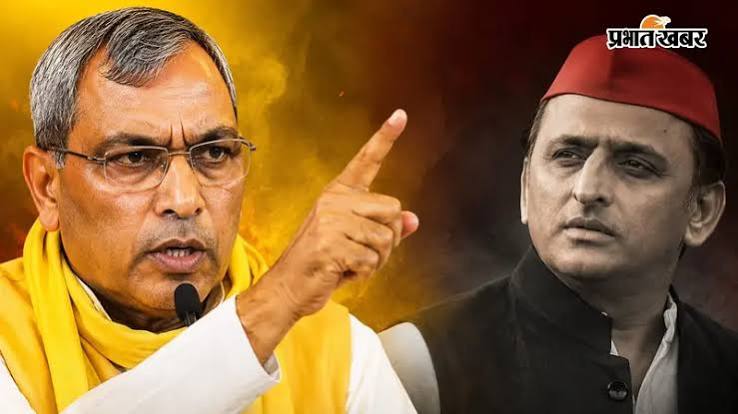
Ambedkar Nagar. District in-charge minister and Subhaspa president Om Prakash Rajbhar once again launched a scathing attack on the Samajwadi Party and Akhilesh Yadav on Wednesday. Speaking at the Circuit House on Baskhari Road, he said that merely adopting the color blue won’t win Dalit votes. Regarding the formation of the Rashtriya Suheldev Sena, he said he has been running the army for 24 years. According to him, the organization has 100,000 soldiers and 21,000 commanders, each with a distinct uniform. Taking aim at the SP’s dress code, Rajbhar said that the color blue wasn’t the SP’s creation. The BSP and he have been using this color for a long time. He sarcastically said that the SP is now copying the color. He said that Akhilesh Yadav changes his formula daily and is also repeatedly changing the PDA. He said, “In the PDA, you lost the first time with the P, you lost the second time with the D, and you will lose again this time with the A.” Rajbhar also accused Akhilesh Yadav of ignoring Dalit interests. He said that reservations in promotions were abolished and schemes named after great men were discontinued. He also alleged that districts named after Kanshi Ram and Baba Saheb were renamed. Courtesy: Hindi News
Searing questions that Mallikarjun Kharge saga throws up over Dalit rights, law
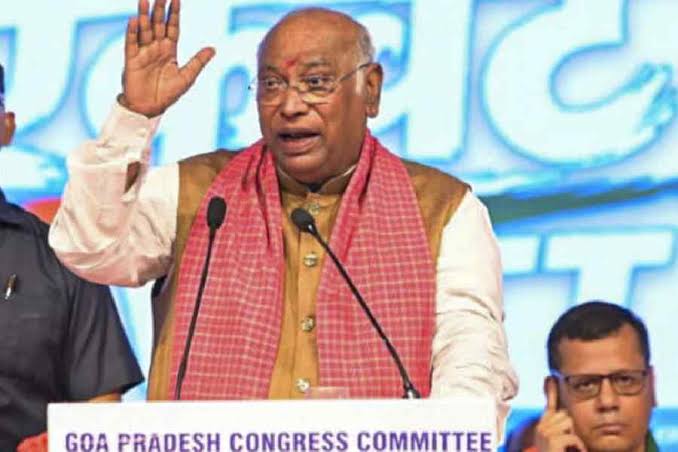
Justice Madan Lokur says the ritual is a cognisable offence as delayed police action and the FIR against Rahul Gandhi raise concerns over Uttarakhand policing In Indian law is it a crime to conduct a shuddhikaran at a site where a Dalit leader has just held a rally? Is the filing of an FIR necessary? Can the organisers of the shuddhikaran really claim they were only responding to slogans they deemed inappropriate and not Mallikarjun Kharge? And what about the FIR against Rahul Gandhi accusing him of promoting enmity and outraging religious feelings? Is that justified? Or ludicrous? Finally, what does all of this tell us about the Uttarakhand government’s attitude to crimes against Dalits and the way it enforces the law, which it’s sworn to uphold? These are some of the questions that underlie the shuddhikaran saga that haven’t been addressed adequately. It’s possible they haven’t been asked of the right people. I want today to focus on what I, at least, believe are the right answers. Justice Madan Lokur, one of our finest former Supreme Court judges, says a shuddhikaran at the Haldwani Ramlila Maidan, days after Kharge’s rally, was definitely a crime under Indian law. It’s a cognisable offence. Justice Lokur adds that under the applicable Act, if a public servant — and that includes police officers — fails to respond, he too will be deemed complicit in the crime. So, then, what should we make of the refusal of the Uttarakhand government to register an FIR for almost a month? Of course, they were wrong not to. But consider the explanations given. The organisers of the shuddhikaran, the Shri Ram Sena Dharmarth Seva Nyas Sangathan, claim it wasn’t targeted at Kharge but to counter-slogans raised by Congress members during the rally and a previous statement by Kharge comparing the BJP and RSS to a poisonous snake. Does that argument carry weight? Even if true, Kharge is still the target. He stands at the core of these explanations. Mahendra Bhatt, the BJP Uttarakhand chief, defends the shuddhikaran on the grounds that the venue had been polluted by slogans that were not appropriate for a religious place. But the Ramlila Maidan is not a religious place. It’s a public venue. Surely, this defence has little value unless, of course, it was a hint to the police how to respond. The chief minister of Uttarakhand claims the people of his state are not aware of Kharge’s caste. In other words, they don’t know he’s a Dalit and can’t be accused of untouchability. Can we really believe that? And is ignorance a defence? Let’s now come to the bizarre twist this story has taken. Whilst delaying registering an FIR against those who conducted the shuddhikaran, an FIR was registered against Rahul, on the complaint of a certain Amit Kumar, a Scheduled Caste member, who’s claimed his sentiments were hurt by the Congress leader’s characterisation of the shuddhikaran as an act of untouchability. The FIR accuses Rahul of promoting enmity on grounds of religion, deliberate and malicious acts intended to outrage religious feelings and giving false information to mislead a public servant. Let me ask you bluntly: do you believe Rahul Gandhi is guilty of any of this? I certainly don’t. T.C. Manjunath, the senior superintendent of police in Nainital, has said: “Amit Kumar submitted all the required evidence to substantiate his allegations, following which an FIR has been registered.” What possible evidence could there be? As Justice Lokur puts it, this is a classic instance of turning the law on its head. I can’t resist the feeling the Uttarakhand police have not acted of their own volition but were directed by the BJP government to file the FIR. On their own I doubt they would have done it. And that raises a significant question. If a shuddhikaran can be held when someone as senior as Kharge makes a speech at a rally and no action is taken for nearly 30 days, what does this tell us about the Uttarakhand government’s attitude to crimes against Dalits? And what does it say of the way it enforces the law, which it’s sworn to do? Think carefully before you answer. I’m not exaggerating when I say it’s the key issue in this sorry tale. Karan Thapar Courtesy : The Telegraph Note: This news is originally published on https:/thetelegraph.com/bha and is used purely for non-profit/non-commercial purposes, especially human rights
SP to Increase Focus on Dalit Voters Ahead of UP Elections, Plans to Hold ‘Save the Constitution, PDA Jan Panchayats’ in the State
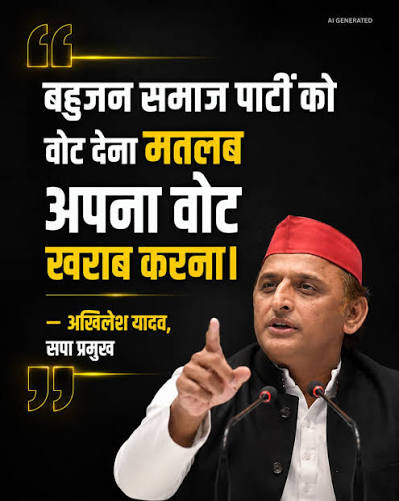
Ahead of the UP Assembly elections, the SP has further increased its focus on reserved seats. The party will organize ‘Save the Constitution, PDA Jan Panchayats’ in all reserved seats across the state. SP Focuses on Dalit Voters Lucknow: The Samajwadi Party, which is preparing for the assembly elections, has further increased its focus on reserved assembly seats. After launching the Samajwadi Chhatra Sabha uniform, the party will now organize ‘Save the Constitution, PDA Jan Panchayats’ in all reserved assembly seats across the state. The responsibility for this has been assigned to Samajwadi Baba Saheb Ambedkar Vahini, the SP’s frontal wing. It will organize ‘Save the Constitution, PDA Jan Panchayats’ in Aurai in Bhadohi, Ajgara in Varanasi, and Chakia in Chandauli on September 12, 13, and 14. The campaign will then be expanded to Dalit-dominated general constituencies. Focus on Dalit-dominated settlements The party leadership believes that strengthening the PDA (Backward, Dalit, and Minority) social equation can increase its reach among the Dalit community. As part of this strategy, issues such as the Constitution, social justice, and reservation will be prominently raised in the Jan Panchayats. According to party sources, the Samajwadi Party is preparing to field Dalit candidates in approximately 100 seats in the upcoming assembly elections. The Samajwadi Baba Saheb Ambedkar Vahini is continuously organizing programs among Dalit voters and strengthening the party at the booth level. The Vahini will organize Save the Constitution PDA Jan Panchayats in all reserved and Dalit-dominated constituencies. Programs for this are ongoing. Why the emphasis on reserved seats? There are approximately 84 assembly seats reserved for Scheduled Castes in the state. Dalit voters directly play a decisive role in elections in these seats. The SP will first take the message of “Save the Constitution” and “Save Reservation” to these seats to increase its acceptance among Dalit voters. By handing over the campaign to the Samajwadi Baba Saheb Ambedkar Vahini, the party has clearly indicated that it is prioritizing Dalit leaders, rather than Yadav leaders, to reach out to the Dalit community. This will send a message that the party wants to give representation to Dalit leadership. Edited by: Prashant Singh About the Author Prashant Singh is a consultant writer at Navbharat Times Online. He has 1.5 years of experience in journalism. He is currently part of the Uttar Pradesh and Uttarakhand teams. Previously, he covered news in West Bengal, Tamil Nadu, Kerala, Maharashtra, Andhra Pradesh, Jammu and Kashmir, Punjab, Haryana, Goa, and the Northeast. Courtesy: Hindi News
AICC pleased with Revanth Reddy’s stand on Dalit issue
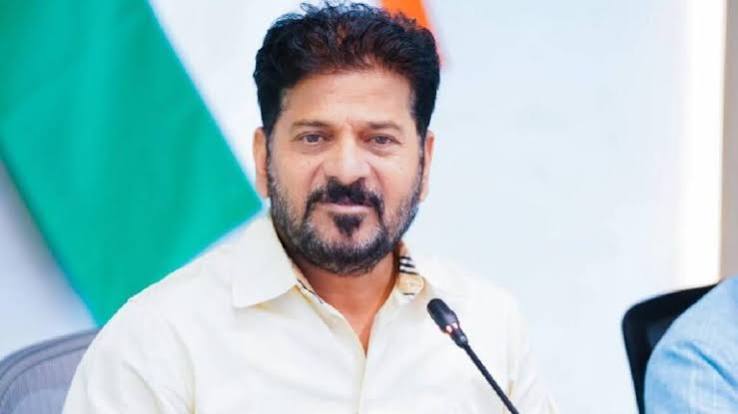
Hyderabad: The Congress high command is learnt to be pleased with Telangana Chief Minister A. Revanth Reddy’s handling of the recent controversy involving Assembly Speaker Gaddam Prasad Kumar, with the issue also fitting into the party’s larger national campaign on Dalit dignity and social justice. According to party sources, the AICC leadership has taken positive note of the Chief Minister’s response and has conveyed its appreciation to the Telangana Pradesh Congress Committee. AICC Incharge Meenakshi Natrajan too reportedly spoke to TPCC Mahesh Kumar Goud. Congress leaders are also said to have received encouraging feedback from Dalit organisations and sections of the community following the developments. The controversy began after BRS MLCs Tata Madhusudhan and Naveen Kumar Reddy were accused of making derogatory remarks against Gaddam Prasad Kumar, who belongs to the Scheduled Caste community. The two leaders were subsequently arrested, though a Hyderabad court rejected their remand and they were released on bail. The political row intensified after Congress workers organised a “Chaavu Dappu” protest near former Chief Minister K. Chandrashekar Rao’s Erravelli farmhouse. BRS workers were subsequently accused of conducting a “purification” ritual at the site after the protest. The Congress described the act as an insult to Dalits, while the BRS disputed the Congress version of events. Revanth Reddy strongly backed Speaker Gaddam Prasad Kumar in the Assembly and announced a comprehensive investigation into the episode. The Telangana episode comes at a time when Congress is already raising a similar controversy involving its national president Mallikarjun Kharge. After Kharge, who belongs to the Scheduled Caste community, addressed a rally at Ramlila Ground in Haldwani, Uttarakhand, on August 8, a ritual was subsequently conducted at the venue. Congress alleged that it was a “purification” exercise carried out because Kharge had addressed the gathering there. The controversy has since become a national political issue, with an FIR being registered under provisions including the SC/ST (Prevention of Atrocities) Act. Against this backdrop, Congress leaders see Revanth Reddy’s response in Telangana as strengthening the party’s wider political narrative on Dalit dignity. The development also adds to what Congress has been projecting as its Telangana model of social justice. The Revanth Reddy government conducted a comprehensive caste survey covering around 97 per cent of the state’s population. Telangana has also enacted legislation for sub-categorisation of Scheduled Castes, dividing 59 SC communities into three groups for the distribution of reservation benefits. With the BC caste survey, SC sub-categorisation and now the government’s stand in the latest Dalit controversy, Congress is seeking to present Telangana nationally as an example of its social justice agenda. For the AICC, the latest episode is learnt to have further strengthened that political pitch, with Revanth Reddy’s handling of the issue receiving positive feedback from the party leadership. By Naveena Ghanate Courtesy : Telugu 360 Note: This news is originally published on https:/telugu360.com/bha and is used purely for non-profit/non-commercial purposes, especially human rights
Telangana Congress leaders urge Governor to protect self-respect of Dalits, women
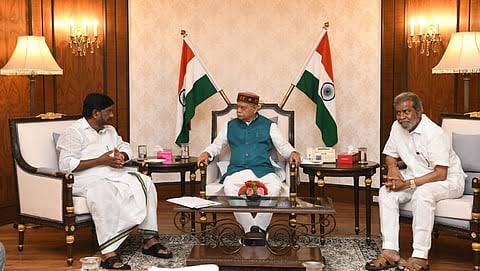
The ministers also said that September 8, 2026, was a dark day in history. BRS MLCs Tata Madhu and Naveen Reddy targeted Assembly Speaker Gaddam Prasad Kumar, hurting the entire Dalit community. HYDERABAD: A delegation of Congress leaders, led by Deputy Chief Minister Mallu Bhatti Vikramarka, on Wednesday called on Governor Shiv Pratap Shukla and submitted a memorandum, requesting him to protect the self-respect of Dalits and women. The delegation, which also comprised other ministers, met the Governor in the wake of “purification” of roads near KCR’s Erravalli farmhouse. They sought the intervention of the Governor in protecting the dignity, safety and self-respect of Dalits and women. The ministers also said that September 8, 2026, was a dark day in history. It was the day when BRS MLCs Tata Madhu and Naveen Reddy targeted and humiliated Assembly Speaker Gaddam Prasad Kumar, hurting the entire Dalit community. “BRS MLA T Harish Rao first removed his shirt, followed by several others, and threw it at police officers, before pressing forward, touching and coming unacceptably close to women police personnel on duty,” they informed the Governor, while alleging that several BRS leaders, led by party’s working president KT Rama Rao, assaulted police personnel, including women officers. Courtesy : TNIE Note: This news is originally published on https:/thenewindianexpress.com/bha and is used purely for non-profit/non-commercial purposes, especially human rights
Dalit sanitation worker attempts suicide after alleged caste discrimination at workplace Vartha Bharati

Madurai: A 37-year-old Dalit sanitation worker in Kambur panchayat near Melur allegedly attempted suicide days after raising complaints of caste discrimination at her workplace, including allegations that Dalit workers were made to use separate disposable cups and that she was asked to carry the panchayat secretary’s footwear. The woman, identified as Sasikala, was found vomiting outside her house at around 11 am on Sunday. According to police sources cited by The Observer Post, a neighbour took her to the Melur Government Hospital, where doctors found that she had consumed pesticide. She was admitted for treatment and is reportedly in critical condition. Sasikala has been working as a sanitation worker in Kambur village for around eight years. She had recently approached Madurai district collector Nishant Krishna, seeking action over alleged caste-based discrimination and threats at her workplace. Her husband, T Prakash, alleged that panchayat secretary Roopa subjected Dalit sanitation workers to discriminatory treatment. “Dalit workers were not allowed to use the common metal tumblers for tea. They were asked to use separate disposable cups,” Prakash alleged. He claimed that the practice continued despite objections from the workers and alleged that sanitation duties were also assigned on the basis of caste. Prakash further alleged that Sasikala was made to carry the secretary’s slippers on some occasions because she belonged to the Dalit community. He also alleged that the family came under pressure after Sasikala raised complaints regarding the functioning of the panchayat. “Associates of Roopa are frequently giving us death threats and asking my wife to withdraw the police complaint,” Prakash alleged. In her representation to the district collector, Sasikala said she had previously approached local authorities and the police regarding the alleged discriminatory treatment. She also claimed that she and another sanitation worker who supported her were subsequently threatened and targeted. Sasikala sought an inquiry into the allegations and action against the panchayat secretary. The allegations have now been followed by a police case. A senior police officer was quoted by The Observer Post as saying that Kottampatti Police registered a case on September 4 under Sections 296(b) and 351(2) of the Bharatiya Nyaya Sanhita (BNS), relating to obscene acts and criminal intimidation, along with relevant provisions of the Scheduled Castes and Scheduled Tribes (Prevention of Atrocities) Act. Melur DSP Sivakumar is investigating the case. (Assistance for overcoming suicidal thoughts is available on the state’s health helpline 104, Tele-MANAS 14416.) Courtesy : Vartha Bharati Note: This news is originally published on https:/varthabharati.com/bha and is used purely for non-profit/non-commercial purposes, especially human rights
Dalit groups protest over reservation row, 8 detained
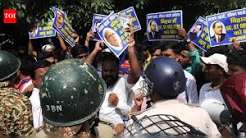
Patna: Dalit organisations intensified their protest over reservation in Patna on Tuesday with a large number of protesters gathering at Gandhi Maidan for the “Reservation Badhao, Samvidhan Bachao” (increase reservation, save the Constitution) movement. The protesters raised slogans against social injustice and marched towards Lok Bhavan but were stopped near J P Golambar. Eight protesters, including committee convener Amar Azad, were detained. The protesters demanded 65% reservation for SC, ST, OBC and EBC communities in Bihar, reservation in promotions for SC-ST employees and its implementation in the private sector, judiciary and Supreme Court. They also sought abolition of the collegium system, reservation under the Ninth Schedule, 50% reservation in govt contracts, an end to killings of dalits and justice for victims. People from different areas reached Gandhi Maidan carrying banners, flags and posters of Dr BR Ambedkar and Mahatma Gandhi. One poster read, “Implement reservation in the Supreme Court.” Protesters also raised slogans including, “Whoever clashes with Dalits will be crushed.” Police erected barricades at J P Golambar and Dak Bungalow Square to prevent the march towards Lok Bhavan. This time, barbed-wire barricades were used instead of iron sheets placed at construction sites during the previous protest. Some protesters climbed over the barricades and clashed with police, following which several were detained. Around 400 police personnel, including 23 station officers and nine ASPs and DSPs, were deployed at Dak Bungalow crossing. A water cannon was also kept ready. Amar said dalit and tribal communities continued to face caste-based discrimination and atrocities, including after reaching senior positions such as IAS and IPS officers. Gandhi Maidan SHO Akhilesh Kumar Mishra said eight people had been detained. “No force was used on the protestors, and heavy security was deployed to stop them from proceeding towards restricted area,” he said. Courtesy : TOI Note: This news is originally published on https:/timesofindia.com/bha and is used purely for non-profit/non-commercial purposes, especially human rights