
From the memoir: What waiting in line at toilets taught a Dalit writer about social inequality
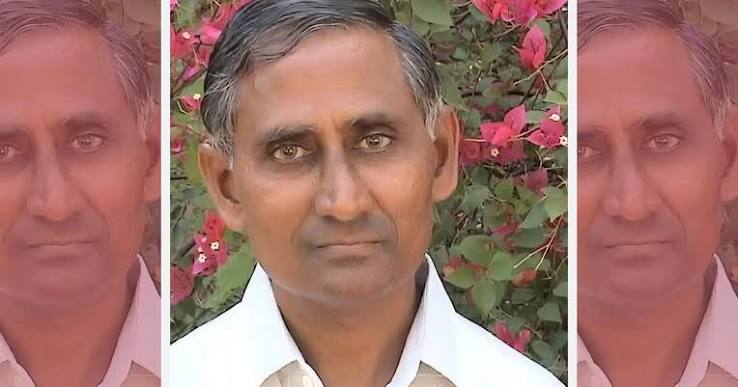
An excerpt from ‘Homes without Windows’, by Chandu Maheria, translated from the Gujarati by Hemang Ashwinkumar. I think my life shares as deep a bond with my excretory system as it does with my respiratory system, for whenever I jog my memory and drag it to the far end of my early childhood, the odd things that invariably surface on that mnemonic landscape are the sordid toilets of the neighbouring chawl, named after its owner Hiralal. And rightly so. For, as if the question of filling the bottomless pits of hunger was not vexed enough, the daily dilemma of emptying our bowels had made our lives, both personal and social, embarrassing and miserable. The rub was that our chawl didn’t have even a single public toilet attached to it, something that compelled us to use those hellish toilets of Hiralal’s chawl. Kids like us could squat anywhere on the footpath outside, but what would the elders do? And what about the women? Our chawl was inhabited in large part by the Rohits, people of the tanner caste, who had migrated from Charotar, a large swathe of fertile land covering districts like Kheda and Anand in central Gujarat. However, the rest of the chawls, including that of Hiralal, were populated by the Vankars, people of the weaver caste, from Mehsana, a district in north Gujarat. Deprived of the social respectability that separate toilets attached to one’s chawl brought, we had to sheepishly go relieve ourselves at Hiralal’s. Toilets of their own had got the Hiralalwallas inebriated with a sense of entitlement, so they threw their weight around, name-called us with slurs like the chanotara and let go of no opportunity to harass us. We too got even with them by calling them – not publicly, however – bloody patanwadia, the people from Patan district. And all this cheek was for toilets that were no better than hellholes. Can you beat that? Unlike the ones we commonly use these days, the floor of those toilets was not set in marble or glossy, ceramic tiles. With coats of plaster dropping off its walls, the goddamn structures sported big patches of brick-and-mortar design at several places. And in most cases, the lousy excuse for a door had neither a stopper nor a chain latch to boast of. Something that left the squatter on the edge throughout the business … to the mercy of Lord Rama, if you will. A soiled, soggy chamber pot, flanked by two parallelly placed uneven stones, was all one had in the name of a toilet seat. No marks for guessing, one of the stones would either be broken or on the verge of it, which made the whole human squat installation lean on one side. Even in such an awkward position, the user literally had to hold fast to the makeshift chain, or whatever that secured the rickety door, lest someone from outside pulled it open, out of innocence or sheer malice. As the wavy line of prospective users grew outside, a howl of protest from the disgruntled and impatient queuers soared, warning the user inside to make haste. At such moments, if someone snitched about such and such chanotaro occupying such and such toilet, the precariously hinged door would be yanked open with a bang and the water in the brass pot, carried for washing and flushing, would be drained with a resounding kick. Despite waiting in the queue till your legs ached, at the time of your turn, if a patanwadia kid materialised – God knows from where – you had to forgo your right to use the loo and give the queue-jumper the right of way. Again, a rowdy Vankar harrying a chanotari, filling her pitcher with water from the public tap, by thrusting his filthy toilet pot midstream and letting it overflow was a common sight. A strange thing to say but it was in these queues that I had learnt my first lessons in social inequality. All these people were extremely beleaguered, a harried lot that had come here to escape poverty, untouchability, oppression and exploitation, and yet they saw hierarchy and hatred as natural ways of being, such that even the slightest breach in the set order resulted in exchanges of expletives and blows. Though not untouchability in its conventional sense, these practices were rooted in direct discrimination, in an ordained difference between the high and the low, that had seeped right up to the bottom of the caste order. One scene in particular comes back to me repeatedly, no matter how hard I try to forget it. The first house at the mouth of our chawl was that of Bala Dhedh, a Vankar from Kheda and thus, a chanotaro for the patanwadia. In the “thatch” – a kutcha hut – attached to the house stayed Neno Ma’raj, a man of priestly Garoda caste, considered the highest among the Dalits. A mill worker of no consequence, Ma’raj would, in a blatant exhibition of his caste pride, lay his string cot out on the footpath every evening and lounge there like a maharaja, a veritable badshah holding his royal court. At such a time, the area became off-limits for everyone, even for a mangy-looking cur. For if the poor thing came up, barking or sniffing, from within the chawl, an affronted Ma’raj would fly into a lion rage, hurl a stick at it and roar, “Buzz off in, you … stay in ….” In his exhaustive, eye-opening study of the forms of untouchability practised by non-Dalits and Dalits (among themselves) in Gujarat, my friend Martin Macwan has pegged the numbers at ninety-eight and ninety-nine, respectively. Where would this kind of untouchability, and its distinctive, discriminatory form, figure in those lists? And in the dragnet of such divisions and sub-divisions, what happens to Dalit biradari, the idea of fraternity and caste solidarity? I have often wondered why we Dalits use the same word gandh [odour] to refer to both fragrance and stench. Perhaps, in
Dalit child beaten and locked in a straw room: Mother assaulted and subjected to casteist slurs in Shahjahanpur; FIR filed 15 days later on SP’s orders

A case of assault and alleged casteist harassment of a Dalit child and his mother has come to light in the Nigohi police station area of Shahjahanpur. It is alleged that a neighbor first beat the child and locked him in a straw room. The mother who went to rescue him was abused, subjected to casteist remarks, and assault. The victim alleges that the police did not take action on the initial complaint. Finally, after the intervention of the Superintendent of Police (SP), an FIR was filed 15 days after the incident. According to the FIR, the incident occurred around 3 pm on June 30 in Jathiura village. The victim’s son was playing outside the house. It is alleged that the neighbor, Sanjeev, grabbed him, beat him, and locked him in a straw-filled room. When the child’s mother went to rescue him, the accused also abused her, used casteist slurs, and threatened to kill the mother and son. Lives Saved When Villagers Arrive According to the victim, villagers rushed to the scene after she raised an alarm. Seeing the crowds approach, the accused fled, saving the mother and child. The victim alleges that she filed a complaint at the Nigohi police station on the same day as the incident, but no action was taken. She also filed a petition the following day, on July 1st, but no case was registered. She claims the police colluded with the accused and drove her away from the police station. Despite multiple complaints, no hearing was held. Entered the House and Pressured to Settle at Gunpoint The victim alleges that on July 6th, the accused entered her house, assaulted her, held a pistol to her chest, and pressured her to withdraw the complaint. He threatened to kill her if she resisted. The victim also alleges that a police inspector pressured her to reach a settlement, which frightened her and forced her to agree to the settlement. A case was filed after a complaint to the Superintendent of Police. The victim claims that the accused continues to threaten to implicate her in a false case and is also being pressured by the police. She subsequently complained to the Superintendent of Police. Following the SP’s intervention, an FIR was registered against the accused at the Nigohi police station. Police stated that action had previously been taken for breach of peace. Nigohi Inspector-in-Charge Rajiv Kumar stated that action had previously been taken against the accused for breach of peace. However, following the victim’s complaint and demand for action, a case has been filed based on the written complaint. The matter is being investigated and further legal action is being taken. Courtesy: Hindi News
UP Dalit woman murder: Probe reveals cop ‘conspired’ with brother to kill Lalita Gautam

MEERUT: A Provincial Armed Constabulary (PAC) constable was arrested on Wednesday for allegedly conspiring with his brother in the murder of a 20-year-old Dalit woman in UP. The accused has been identified as 31-year-old Ankit. He is the latest person to be arrested in connection with the murder of Lalita Gautam, news agency PTI reported. His brother, Ankush Kumar, had earlier been arrested for allegedly killing Gautam following an argument. According to police, Gautam’s father approached TP Nagar Police Station on May 16 and reported that his daughter was missing. Her body was found the next day in a forested area near Upsiya village. Based on a complaint filed by her father, an FIR was registered against Ankush Kumar on charges of murder. Police arrested him on May 18 on the basis of CCTV footage and other evidence, PTI reported. Police also said that although Gautam’s father alleged her body had been disfigured using a chemical, the post-mortem examination did not support the claim. During the investigation, police found that Ankit, who was on leave from the PAC at the time of the incident, was present at the crime scene and had allegedly conspired with his brother and helped destroy evidence. According to police, Ankit had availed leave from May 11, claiming that his wife was pregnant and expected to deliver on May 15. However, witnesses and villagers disputed this claim. Investigators said Ankit returned to his village on May 11, the same day Gautam wrote a letter expressing fear for her life. The probe further revealed that Ankit was upset over an earlier dispute involving Gautam and his brother. The Kalyanpur village resident has been booked under sections related to murder, destruction of evidence and criminal conspiracy, along with provisions of the SC/ST (Prevention of Atrocities) Act. Courtesy : TOI Note: This news is originally published on https:/timesofindia.com/bha and is used purely for non-profit/non-commercial purposes, especially human rights
Dalit youth allegedly beaten for demanding wages: Died during treatment in Chitrakoot; family files murder case and demands action

A Dalit tribal Kol youth, injured in an alleged assault at a brick kiln in the Manikpur police station area of Chitrakoot, died while undergoing treatment at the district hospital. The family has accused the kiln operators of brutally beating him, the police of failing to listen to his complaint, and a hospital doctor of inhumane behavior. The family is demanding action by filing a murder case. According to the family, they took the injured youth to the Manikpur police station hoping for justice, but instead of registering their complaint, they were turned away. Subsequently, the youth was admitted to the district hospital for treatment, where his condition remained critical throughout treatment. The deceased’s family has also made serious allegations against a doctor at the district hospital. They claim that the youth’s leg was not functioning. While trying to check his leg, the doctor allegedly burned his leg with a lighter, worsening his condition. The young man died during treatment around 10 p.m. on Wednesday night. Upon receiving the news of his death, his family was enraged. They alleged that if the police had acted promptly and the hospital had provided sensitive treatment, the young man’s life could have been saved. The family has demanded that a murder case be filed against the kiln operators, an investigation into the role of the police officers who failed to act on the complaint, and strict action be taken against the doctor involved. Currently, questions are being raised about the police’s performance and hospital management in the case. However, no official statement has yet been issued by the police or the health department on these allegations. Attempts were made to contact Manikpur police station in-charge Ajit Pandey, but he was unsuccessful. Jitendra Kumar | Chitrakoot Courtesy: Hindi News
Dalit boy stabbed by two classmates at Sivaganga school

Sivaganga: Police apprehended two 17-year-old Class XII boys on charges of stabbing a 16-year-old classmate belonging to the dalit community at the Adi Dravidar Welfare Higher Secondary School in Mallal near Sivaganga on Wednesday. Police said the victim was admitted to the intensive care unit of Sivaganga Govt Medical College Hospital and his condition is stable. A senior police officer said the incident stemmed from bullying based on caste identity and that the attackers were thevar boys. Last week, the victim was provoked by one of the attackers who mocked him. The enraged boy inflicted a bleeding injury on him using an iron nail. Subsequently, the school administration took up the matter with the parents of the boys and decided to drop it with warnings to both boys. The injured 17-year-old boy was absent for the past week and returned to the school on Wednesday. Before the classes began, he along with another boy tried to attack the victim. “The two boys chased the victim around the campus and finally caught him inside the staff room. As one was holding him, another boy stabbed him using a blade at four places on his chest and back,” a police officer said. Sipcot police rushed to the spot and detained one of the attackers, who was captured by school staff. Another boy was detained in the evening. Police registered a case under sections 296(b), 115(2), 127(2), and 109 of BNS and Scheduled Castes and Scheduled Tribes (Prevention of Atrocities) Act. The boys were lodged in a govt observation home. The school education department has also initiated an inquiry. It may be recalled that the department last week sent an advisory to govt and private schools to avoid caste, religious, and political events in schools to strengthen the safety and unity among students. Courtesy : TOI Note: This news is originally published on https:/timesofindia.com/bha and is used purely for non-profit/non-commercial purposes, especially human rights
Dalit woman gang-raped in Baheri, video captured and blackmailed: Victim went to village headman’s house, case filed against 3 under SC-ST Act, 2 detained

A Scheduled Caste woman in Gursauli village, under the Baheri Kotwali area, has accused three young men of gang-raping her, blackmailing her with a video, and threatening to kill her. Based on the victim’s complaint, police have registered a case under serious sections and the SC-ST Act. Two accused have been detained in the case. According to the police report, the victim’s 30-year-old husband is disabled and was away working. On the afternoon of July 6th, the woman went to the village headman’s house to inquire about a gas connection. The village headman’s son and several other young men were present. She was told the headman was not home and was asked to return later. The victim alleges that while returning, the three accused stopped her, forcibly took her inside a house, and raped her one by one at gunpoint. The accused also filmed the incident. The woman said that when she protested, the accused used casteist slurs. They also threatened to make the video viral on social media and kill her and her family if she complained. Police have registered a case against Ajay, son of Dayashankar, Guddu alias Tejpal, son of Nathu, and Shivam, son of Niranjan Lal. This action has been taken under relevant sections of the BNS and the Scheduled Castes and Scheduled Tribes (Prevention of Atrocities) Act. Baheri Inspector Dinesh Kumar said that after preliminary investigations revealed Ajay and Shivam’s role, both have been taken into custody. Police are investigating the case based on the video and other evidence. Mumtaz Ali | Baheri Courtesy: Hindi News
From ‘Untouchable’ to India’s Spin Bowling Legend: How Palwankar Baloo Became an Inspiration for Dr. B.R. Ambedkar and Thousands of Dalits
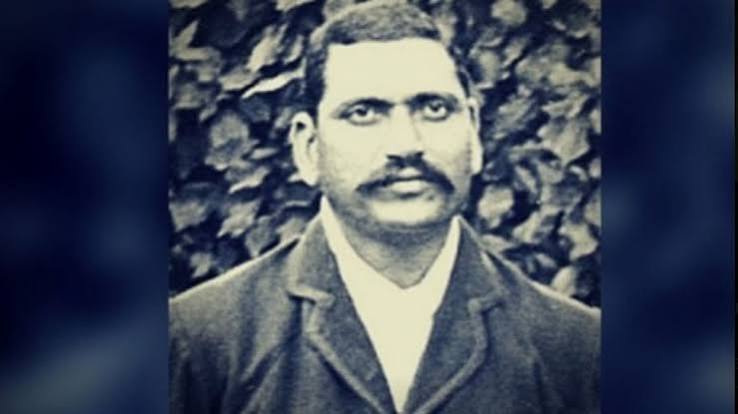
Palwankar Baloo was not only an inspiration for aspiring cricketers but also for young B.R. Ambedkar, who is known as the architect of the Indian constitution. CRICKET IN THE SUBCONTINENT is marked by spin tracks and a few masters of the art. Bishan Singh Bedi, Bhagwat Chandrashekhar, S. Venkataraghavan are some of the legends that come to mind when we speak of Indian spinners. However, Palwankar Baloo was a name that laid the foundation on which this fortress was built. He was not only an inspiration for aspiring cricketers but also for young B.R. Ambedkar, who is known as the architect of the Indian constitution. Despite his achievements on the field, Palwankar Baloo was never treated as an equal off it. At tea breaks, while his upper-caste teammates sat inside the pavilion drinking from porcelain cups, Baloo, a Dalit, was made to stand outside and drink from a separate clay cup. His story is not just about a legend of the sport, but an example of an era where caste discrimination persisted even in a sport often called the “gentleman’s game.” Palwankar Baloo: From Groundsman to India’s Greatest Spin Bowler Palwankar Baloo was born on March 19, 1876 in Dharwad to a family belonging to the Chamar community. According to historian and cricket enthusiast Ramachandra Guha’s book A Corner of a Foreign Field: The Indian History of a British Sport, Baloo’s father worked with the British Army in Poona, where Baloo and his younger brothers first learnt cricket using equipment discarded by British officers. Like many children in poor families, he began working at a young age. His introduction to the game was not as player but as a groundsman. “Baloo’s own first job was at a cricket club run by Parsis. Here he swept and rolled the pitch, and occasionally bowled to the members at the nets. For this work he took home Rs 3 a month,” Guha writes. Later, he joined the prestigious Poona Club, where he prepared pitches, set up nets and bowled to British club members. One of those members was English cricketer Captain J.G. Greig, who quickly realised Baloo’s spin bowling talent. According to Guha, Hindu cricket administrators were divided over selecting Baloo in the team because he belonged to a Dalit community. It was Greig who convinced them that leaving out such a talented bowler because of his caste would be foolish. Guha notes that Greig’s attempt shouldn’t necessarily be seen as him trying to reform society, but simply wanting to test himself against a talented net bowler in competitive matches. Once selected, Baloo soon became the biggest weapon of the Poona Hindus team. His left-arm spin troubled even the strongest European sides. His performances also earned him a place in the historic 1911 All-India team that toured England—the first Indian cricket team to play on British soil. Historian Prashant Kidambi writes in Cricket Country that it took “12 years and three failed attempts” before an Indian team could finally make “its debut on the playing fields of imperial Britain.” When the team returned to Bombay on September 15, 1911, thousands gathered at the harbour to welcome them. Baloo had finished the tour as India’s leading wicket-taker and returned home as one of the country’s biggest sporting heroes. The Spin Legend Who Was Still Treated as an ‘Untouchable’ The Indian society’s taboo was hard to forego especially in the early 20th century. Success on field did not change how Baloo was treated by his own teammates. According to Guha, caste discrimination continued even inside the cricket ground. “At the tea interval… Baloo was served the liquid outside the pavilion, and in a disposable clay matka, while his colleagues drank in white porcelain cups inside,” Guha writes. He faced similar treatment during lunch. “Baloo also ate his lunch off a separate plate, and on a separate table. But he took plenty of wickets all the same. Due chiefly to Baloo’s bowling the Poona Hindus defeated the Poona Europeans and other local sides as well,” Guha writes. Even then, Baloo’s performances were impossible to ignore. Social reformer Mahadev Govind Ranade publicly honoured him after one of his major victories, while Indian freedom fighter Bal Gangadhar Tilak also praised his achievements. Slowly, Baloo’s cricket started challenging many caste prejudices, even if they did not disappear. It was also reinforced in his own family as the Palwankar family became one of Indian cricket’s first great sporting families. His brothers Shivram, Vithal, and Ganpat all went on to play at a high level. In 1923, Baloo’s younger brother Vithal Palwankar became the first Dalit captain of the Hindu team in the Bombay Quadrangular and led the side to several famous victories. The Cricketer Who Inspired Ambedkar, But Later Became His Adversary Dr. B.R. Ambedkar sitting on desk signing documents Being a Dalit, Baloo’s influence reached far beyond cricket. After the 1911 England tour, Bombay’s Depressed Classes organised a public felicitation for him. According to Guha, the welcome address was delivered by a young college student who was then unknown—Bhimrao Ramji Ambedkar. Quoting historian Eleanor Zelliot, Guha writes that this was “the first public appearance” of the man who would later become the architect of the Indian Constitution. “By virtue solely of his deeds on the cricket field, Baloo had become a hero and inspiration to countless Untouchables. And the young B.R. Ambedkar was one of them,” Guha writes. However, when both of them became influential figures for their community, they later disagreed on the future of Dalits in India. Guha writes that Baloo strongly believed in Mahatma Gandhi’s view that caste discrimination could be removed through reform within Hindu society. Ambedkar, on the other hand, believed the Depressed Classes would get justice only through independent political rights and by moving beyond the Hindu social order. During Gandhi’s fast against the Communal Award in 1932—a proposal by the British government to allow ‘untouchables’ to become an electorate separate from the main Hindu community, Baloo was among those who appealed
UP: Dalit priests may be appointed for the Sapta Mandapam, a decision on the recruitment of new priests is likely on July 22nd.

A decision on the recruitment of new priests for the Ram Temple complex is likely to be made at the meeting on July 22nd. According to sources, for the first time, qualified Veda-reading priests from the Dalit community may be offered the opportunity to serve in the Sapta Mandapam temples. This initiative is being taken keeping in mind the increasing number of devotees and social harmony. The Shri Ram Janmabhoomi Teerth Kshetra Trust is preparing to appoint new priests for the Ram Temple complex. According to sources, the new recruitment process for priests may begin after the proposed trust meeting on July 22nd. For the first time, priests from the Dalit community are also likely to be included in this recruitment. If this happens, it will be considered an important step towards further strengthening the message of social harmony in the Ram Temple complex. According to sources, the proposed appointments may include priests from the Dalit community, who may be responsible for performing pujas in the Sapta Mandapam temples located in the Ram Temple complex. The Sapta Mandapam houses temples dedicated to Maharishi Valmiki, Maharishi Vashistha, Maharishi Agastya, Maharishi Vishwamitra, Nishadraj, Mata Shabari, and Mata Ahalya. All these figures and sages are considered symbols of social harmony and inclusion in Indian tradition. Opportunities for priests being considered Sources indicate that given the growing number of devotees and the expansion of the temple complex, there is a need for new priests. Keeping this need in mind, along with social representation, opportunities are being considered for qualified priests from the Dalit community. Recently, the Trust appointed Dr. Krishna Mohan, a Dalit, as interim General Secretary. Consequently, the proposed priest appointments are being seen as aligned with the Trust’s vision of harmony and inclusion. However, no official announcement has been made by the Trust in this regard. A final decision is expected to be made at the July 22nd meeting Currently, 35 priests are serving at the Ram Temple. Currently, a total of 35 priests are serving at the Ram Temple complex. Of these, 20 perform puja at Ram Lalla and Ram Darbar. Ten priests are deployed in two shifts, morning and evening, each with 10 priests. In each shift, five priests perform puja at Ram Lalla and five at Ram Darbar, while the responsibility of aarti is assigned to all priests in turn. The remaining 15 priests perform puja at the fort and Sapta Mandapam temples. Nitin Mishra, Amar Ujala Network, Ayodhya Published by: Akash Dwivedi Courtesy: Hindi News
Immerse in this new book that dives into the life of a Dalit boy in Gujarat
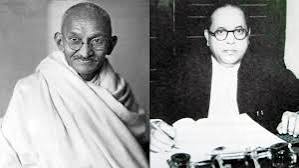
This is most prominently witnessed in the chapter exploring his relationship to Mahatma Gandhi and his ideas Title: Homes Without WindowsAuthor: Chandu MaheriaGenre: MemoirPublisher: JuggernautCost: Rs 699 Gujarati writer Chandu Maheria’s new book Homes Without Windows (Juggernaut), translated into English by Hemant Ashwinkumar, is an honest account of what it meant to grow up as a Dalit boy in the working-class suburb of Rajpur in Gujarat. We learn how several Dalit families left their villages after independence to settle in parts of Ahmedabad. Through 11 essays, Maheria helps readers draw a brief history of caste politics in Gujarat: from aggression in schools of the Khadol village in the 1960s, to the anti-reservation riots and the growing consciousness of Dr Babasaheb Ambedkar’s ideology across the state in the 1980s. Through it all, Maheria’s tone is understated and nuanced. This is most prominently witnessed in the chapter exploring his relationship to Mahatma Gandhi and his ideas. He excavates the reasons why a majority of the Dalit community resents Gandhi and prefers to advocate Dr Ambedkar’s views. Without disagreeing with the concerns of the community on the Gandhi-Ambedkar debate, he argues that one cannot disregard Gandhi’s role in bringing the subject of caste to the forefront of public discussion and politics. Maheria’s most distinctive quality is how he examines everyday objects and gives evidence from his personal experience to portray how deeply entrenched the caste system is in India. Chapters like ‘Your Chappals, Our Skulls’, which highlights footwear, or ‘The Mayor’s Bungalow’, which looks at public toilets, become significant in this regard. For instance, he recollects being turned away at the school gate as a kid, on the first day of school, because he couldn’t afford footwear and reached barefoot. The final chapter on fighting rumours and sicknesses with multiple hospitalisations offers a poignant closing to a sensitive and necessary book Nandini Varma Courtesy : Mid-Day Note: This news is originally published on https:/mid-day.com/bha and is used purely for non-profit/non-commercial purposes, especially human rights
The road to the Dalit settlement in Gorakhpur is dilapidated and muddy: Villagers face difficulties commuting, demanding repairs from the administration.

The road leading to the Dalit settlement in Mainabhagar Gram Panchayat, in the Jungle Kaudiya development block of Gorakhpur, is extremely dilapidated and muddy. Local villagers allege that the condition of this road has been poor for a long time, causing significant difficulties in commuting. According to villagers, children, women, elderly people, and other villagers travel this route daily. The situation becomes even worse during the rainy season, as the entire route is waterlogged and muddy. Local residents reported that while other roads in the village are in good condition, the road to the Dalit settlement has not been repaired. Consequently, schoolchildren face particular difficulties commuting to and from school. Villagers say they have lodged complaints several times in this regard, but no action has been taken yet. They have demanded that the administration and public representatives resolve the transportation problem by constructing the road as soon as possible. Sugreev Kumar Yadav | Bhauramal (Gorakhpur Sadar), Gorakhpur Courtesy: Hindi News