
Dalit Women Attacked, Denied Entry At Odisha Temple; NCSC Summons Collector, SP
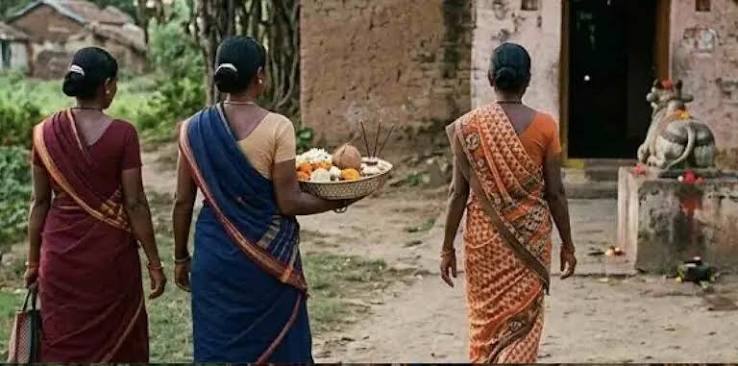
Bhubaneswar: The National Commission for Scheduled Castes has initiated suo motu proceedings into an alleged incident in which a group of Dalit women were barred from entering a Shiva temple in Odisha’s Jagatsinghpur district.Andhra Pradesh news The statutory body intervened following media reports detailing the August 10 altercation at Atimati village under Erasama police limits when a group of women from the Dalit community had visited a local Shiva temple to perform traditional rituals and offer holy water on the auspicious occasion of Shravan Somvar. Discover soft, comfortable and stylish shoes for you. Loose‑cut, skin‑friendly fabrics, perfect for daily wear, gatherings and casual shoes. The Commission has issued summons to the Jagatsinghpur district collector and the SP, directing them to submit a detailed action-taken report within three days. The required documentation must detail the exact number of arrests made, the date and number of any chargesheet filed, compensation provided to the victims, and other steps taken in the matter. The collector and SP have been asked to appear either in person or through authorised representatives. The Commission has indicated that failure to respond within the stipulated period could lead it to exercise the powers of a civil court conferred upon it. According to reports, several villagers carrying sticks allegedly blocked the entrance and prevented the women from entering the temple. The victims alleged that they were subjected to abusive and casteist remarks and threatened with violence if they did not vacate the area. When the women stood their ground, the villagers reportedly threw their bhog offerings to the ground. During the confrontation, one of the accused is alleged to have attacked one of the women with a knife, causing serious injuries. Following the assault, the women were forced to leave without offering prayers and subsequently lodged a complaint against eight individuals at the local police station. Following which, police registered cases under relevant provisions of the Bharatiya Nyaya Sanhita and the Scheduled Castes and Scheduled Tribes (Prevention of Atrocities) Act. Erasama police station IIC Parthsarthi Beura confirmed that police had received the NCSC notice and were taking steps to comply. He added that one accused had been arrested, and further investigation was under way. To ease tensions and uphold constitutional rights of access to public places of worship, police later facilitated the Dalit women in completing their darshan at the temple in the presence of officials. Additional police personnel were deployed in the village to maintain order, with authorities stating that the situation remained under control. Courtesy : Odisha Bytes Note: This news is originally published on https:/odishabytes.com/bha and is used purely for non-profit/non-commercial purposes, especially human rights
‘I stand with them’: Rahul Gandhi backs protest by Bundelkhand tribals against ‘Ken-Betwa project’
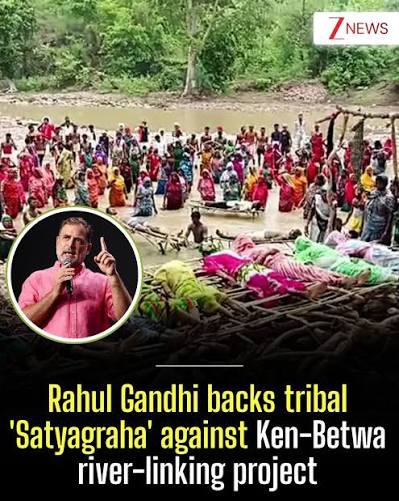
NEW DELHI: Congress leader and leader of opposition in the Lok Sabha, Rahul Gandhi, on Wednesday backed tribal residents of Madhya Pradesh’s Bundelkhand region protesting against the Ken-Betwa River Link Project, saying the Congress stands with them and promising to visit the protest site to pressure the government over their demands for compensation and rehabilitation. Rahul shared a video on X featuring accounts from tribal residents affected by the project and said, “The problems, demands, struggles, and personal ordeals of the tribal brothers and sisters who are carrying out a satyagraha against the Ken-Betwa project–their own account. For years, these residents of Bundelkhand have been enduring injustice and oppression solely for their rights; they deserve respect and support,” he said. “In this fight of our tribal brothers and sisters, I and the Congress stand with them,” he said. In the video, a tribal representative claimed that the project would affect 21 tribal-dominated villages and lead to the loss of around 4.6 million trees, besides affecting the Panna Tiger Reserve. The representative also claimed that around 11,500 acres of land belonging to nearly 7,000 families would be affected. The residents urged Rahul to raise their concerns about alleged administrative harassment in Parliament and join their movement. Rahul assured them that he would visit the site and put pressure on the government. The tribal residents have been holding a Satyagraha against the project, demanding adequate compensation and dignified rehabilitation for people whose land is being acquired. Rahul had also supported the agitation earlier in July. Sharing a poem and visuals from the protest, he said the tribal residents were demanding fair compensation through non-violent means and described tribal people as the “original owners of the country”. “The tribal brothers and sisters of Madhya Pradesh had sat on a water satyagraha and hunger strike because their land was taken away for the Ken-Betwa project, but they received neither fair compensation nor dignified rehabilitation. The ‘truth’ is that tribals are the original owners of the country–the first right to water, forests, and land belongs to them alone. And their ‘satyagraha’ is because that very right is being snatched from them today.” “In their unique way, their demand is simply this: provide a proper means of livelihood–or else life is no different from a funeral pyre. But even this is unacceptable to the BJP government. Instead of listening to them, their peaceful protest is being crushed with police force. We stand with our tribal brothers and sisters. We will secure justice for them–compensation and rehabilitation will have to be provided,” he added. The Ken-Betwa Link Project is a major river-linking initiative aimed at transferring surplus water from the Ken river in Madhya Pradesh to the Betwa river through a 221-km-long link canal. The project is being implemented in the drought-prone Bundelkhand region of Madhya Pradesh and Uttar Pradesh. The Rs 44,605-crore project is the first river-linking project under the National Perspective Plan. According to the government, it is expected to irrigate 1.062 million hectares, provide drinking water to around 6.2 million people and generate hydropower. The project involves construction of the 77-metre-high Daudhan Dam and two tunnels in the Ken river basin in Panna. The government says the project will enable irrigation across 8.11 lakh hectares in 2,000 villages across 10 districts and benefit around seven lakh farmer families. It is also expected to provide drinking water to 44 lakh people in Madhya Pradesh and 21 lakh people in Uttar Pradesh, while generating 103 MW of hydropower and 27 MW of solar energy. Courtesy : TOI Note: This news is originally published on https:/timesofindia.com/bha and is used purely for non-profit/non-commercial purposes, especially human rights
SP-Congress’s new plan! Dalit youth to be in charge of general constituencies as well; will the political equation change before 2027?
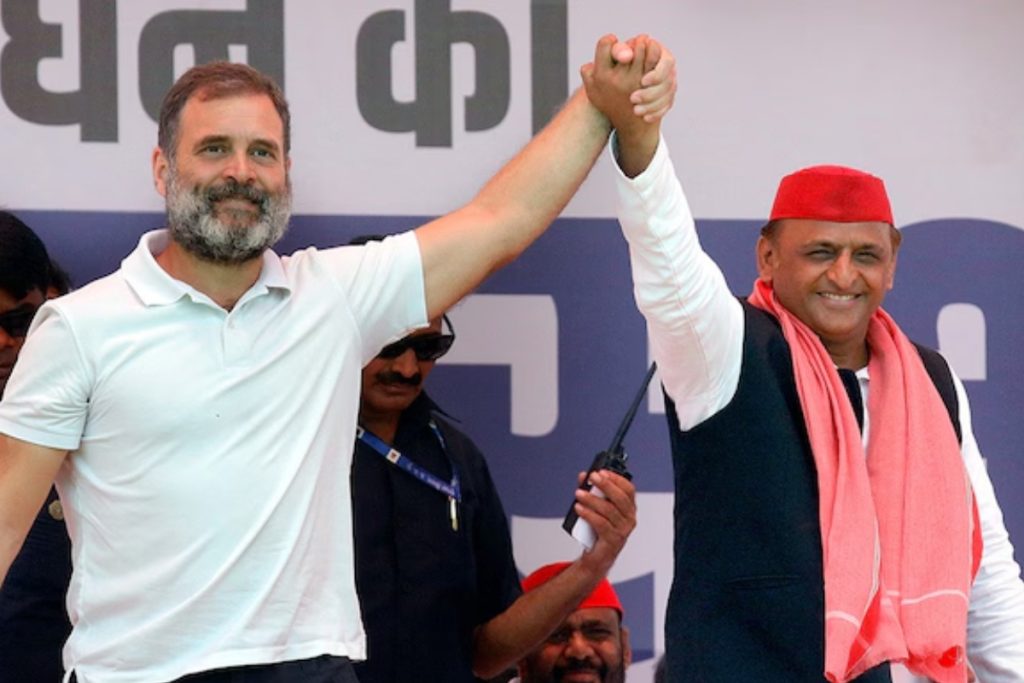
Political parties in Uttar Pradesh have already intensified their preparations for the 2027 assembly elections. Following the BJP, efforts to balance social equations have begun in the opposition camp as well. The Samajwadi Party and Congress have begun giving Dalit and backward class youth key organizational responsibilities. Significantly, Dalit youth are also being appointed in-charge of general assembly constituencies. Both parties are attempting to connect with youth influenced by socialist and Ambedkarite ideology. These youth are being given the responsibility of strengthening the organization in various assembly constituencies and connecting new members to the party. Dalit youth given responsibility for general seats As part of this strategy, the Samajwadi Party has appointed Dalit youth as assembly in-charges for several general seats. Manoj Paswan has been appointed in Unchahar, Shivshankar Saroj in Babaganj, and Ram Karan Nirmal in the Kaushambi-Fatehpur region. Meanwhile, Vineet Kushwaha from Madhuban and Rahul Raj from Kushinagar have also been assigned organizational responsibilities. These leaders have been primarily tasked with expanding their reach among youth, engaging new workers, and strengthening the party’s ideology. This initiative by the SP is being considered an important step towards strengthening the PDA (Backward, Dalit, and Minority) social equation. Congress also focusing on youth Congress has also planned to activate youth at the assembly level. The party has assigned the responsibility of strengthening the organization among youth to Shailendra Dhruv Yadav in Ballia, Murali Manohar in Velthara Road, Subhash Pal in Bilgram, and Tarun Patel in Gaura. The strategy of opposition parties is not limited to reconnecting with their traditional voters. They are also targeting youth who were once with the BSP or are reportedly dissatisfied with the current political situation. BSP’s focus on the old Brahmin equation On the other hand, the Bahujan Samaj Party is also trying to re-establish its old social equation for 2027. Mayawati’s party is once again eyeing the Brahmin community. However, several prominent Brahmin leaders of the BSP have left the party in recent years. Antu Mishra’s expulsion is considered the latest in this trend. Discussion of the 2007 formula is rekindled. In the 2007 assembly elections, the BSP fielded a large number of Brahmin candidates. The party gave tickets to over 80 Brahmins, of whom 41 won the elections and reached the assembly. This social equation played a key role in the BSP’s formation of a full majority government. Now, ahead of 2027, while the SP and Congress are busy strengthening the PDA through Dalit and backward youth, the BSP faces the challenge of recapturing its old Brahmin base. Consequently, social equations may play an even more important role in Uttar Pradesh’s electoral politics in the coming days. By Asha Sharma Courtesy: Hindi News
Amazing stories of the Chief Minister: The Dalit woman who became the Chief Minister of Uttar Pradesh for the first time with the support of the BJP. Learn the full story of 1995.
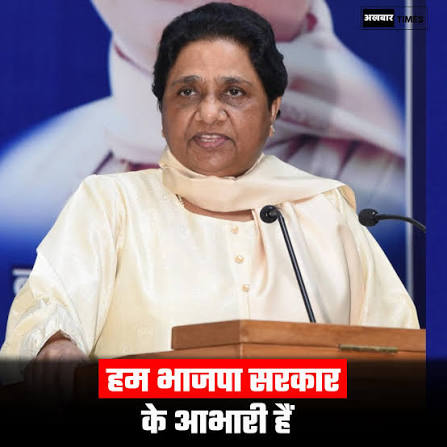
UP CM’s amazing kisses, Mayawati’s BJP support: Mayawati is a prominent figure in Uttar Pradesh politics. There are many stories related to her political life that are still discussed today. But there is one incident when the political equations changed in just one day and it took her to the position of Chief Minister of Uttar Pradesh. In 1995, after the alliance with the Samajwadi Party broke, the BJP supported Mayawati. On June 3, she took oath as Chief Minister and became the first Dalit woman Chief Minister of Uttar Pradesh. So, in ‘Amazing Stories of the UP CM’, read the entire fascinating story of Mayawati becoming the Chief Minister of Uttar Pradesh for the first time with the support of the BJP. Mayawati’s First CM Story: Mayawati’s name needs no introduction in Uttar Pradesh politics. She has served as Chief Minister of Uttar Pradesh four times. But the most important milestone in her political journey was the year 1995, the year she became the Chief Minister of Uttar Pradesh for the first time. At that time, she was around 39 years old. Significantly, Mayawati’s government was formed with the support of the BJP. She took the oath of office as Chief Minister on June 3, 1995. With this, she became the first Dalit woman Chief Minister of Uttar Pradesh. This alliance between the SP and BSP had broken. Subsequently, with the support of the BJP, Mayawati’s path to power was paved. In this part of “Amazing Stories of UP CMs,” read the entire story in detail, when a Dalit woman became the Chief Minister of Uttar Pradesh with the support of the BJP, bringing about a major change in the state’s politics. Mayawati Entered Politics with Kanshi Ram Mayawati’s political journey was not easy. During her studies and employment in Delhi, she met Kanshi Ram. Kanshi Ram inspired her to enter politics. Mayawati then entered active politics with the Bahujan Samaj Party. Kanshi Ram founded the Bahujan Samaj Party in 1984. Mayawati gradually became a prominent face of the party. She began to be recognized as a vocal leader of the Dalit community, particularly in the Dalit community. Mayawati won the Bijnor seat in the 1989 Lok Sabha elections. After this, her name began to rise rapidly in national politics. UP’s politics changed in 1993 Now the story turns to the 1993 assembly elections. At that time, the BJP had emerged as the dominant force in UP. However, Mulayam Singh Yadav and Kanshi Ram joined forces after the elections. The Samajwadi Party and the Bahujan Samaj Party formed a government together. Mulayam Singh Yadav became the Chief Minister, and Mayawati’s party became a partner in the government. However, this alliance between the two parties did not last long. Tensions between the two parties grew, and eventually the alliance broke. A major political turning point occurred on June 2, 1995 In 1995, a development occurred in UP politics that captured national attention. Mayawati decided to withdraw support from Mulayam Singh Yadav’s government. This completely changed the power dynamics in the state. Mayawati staked claim to form the government, but she lacked a majority on her own. This is where the BJP came into play. BJP Supports Mayawati At that time, the Bharatiya Janata Party decided to support Mayawati. With the BJP’s support, the path was cleared for Mayawati to become Chief Minister. On June 3, 1995, Mayawati was sworn in as Chief Minister of Uttar Pradesh. She became the first Dalit woman Chief Minister of Uttar Pradesh. This was a historic moment in Indian politics. A Dalit woman’s rise to the top position of power in the country’s largest state was a major political event in itself. Mayawati’s first term was short. For the first time, Mayawati failed to remain Chief Minister for long. Her government, formed with the support of the BJP, lasted only about four months. In October 1995, her government fell. Following this, President’s rule was imposed in Uttar Pradesh. However, in these few months, Mayawati demonstrated such political strength that she later became one of the most prominent leaders in Uttar Pradesh politics. The Politics of the BJP and the BSP Changed From Here This experiment of 1995 was not only significant for Mayawati. It also marked the beginning of a political relationship between the BJP and the Bahujan Samaj Party. In the following years, the two parties formed several alliances. Sometimes Mayawati became Chief Minister with the support of the BJP, and sometimes the BJP supported her government. This alliance is considered one of the most interesting political events in Uttar Pradesh politics during that period. Mayawati became Chief Minister four times again After 1995, Mayawati became Chief Minister of Uttar Pradesh three more times. She also became Chief Minister in 1997. After this, her government was formed with the support of the BJP in 2002. However, in 2003, the BJP withdrew its support, and her government collapsed. Subsequently, in 2007, Mayawati secured a majority on her own. This was the strongest phase of her political career. She formed a government with an absolute majority and completed a full five-year term. An alliance changed her entire political journey. Mayawati’s first Chief Ministership is also special because she came to power at a time when forming a government in Uttar Pradesh was difficult for any single party. On one hand, the Samajwadi Party and BSP alliance had broken down. On the other hand, the BJP had emerged as the most powerful political force. Meanwhile, the BJP’s support catapulted Mayawati to the position of Chief Minister. The same Mayawati, who became Chief Minister in 1995, later became a leader who surprised all political parties by forming a majority government in Uttar Pradesh in 2007. The woman who first assumed the Chief Ministership with the support of the BJP, a few years later, came to power on her own. This is the biggest and most interesting turning point in Mayawati’s political journey. Written by:Krishna.Pandey Courtesy: Hindi News
How the Matang reservation debate is reshaping Maharashtra’s Dalit politics
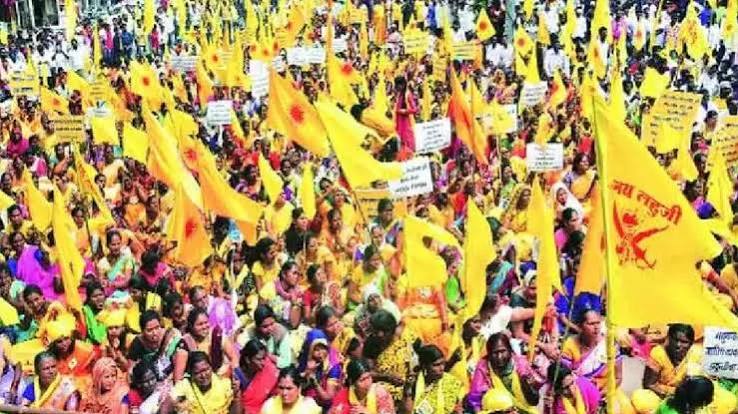
The Matang community is intensifying its demand for the sub-categorisation of Scheduled Castes in Maharashtra to combat historical marginalisation and secure a fair share of reservation benefits Social conflict has once again erupted in Maharashtra over the demand for subcategorisation within the Scheduled Castes (SC) category. The Matang community has intensified its agitation for sub-categorisation, while legislators from various parties within the category have taken a firm stand against it. Over the past two decades, demands for reservation and the issue of sub-categorisation among various castes have remained central to political discourse in Maharashtra. Although the Supreme Court has empowered state governments to implement sub-categorisation within Scheduled Caste and Scheduled Tribe reservations, the Maharashtra government faces opposition from legislators across party lines and various Dalit organisations regarding this decision. But how do electoral arithmetic and the politics of pressure tactics adversely affect the decentralisation of power? In the context of intra-category disparities within the Scheduled Castes and the equitable distribution of resources, how are issues such as cultural politics, caste identity, and political polarisation shaping the policy of social justice? Marginalisation of the Matang community In 2003, the then state government established the ‘Krantivir Lahuji Salve Matang Samaj Study Commission’ to consider the demands of the Matang community. The commission examined appointments to posts reserved for Scheduled Castes across various government departments. It highlighted the dominance of the Mahar and Chambhar communities in reserved positions at all levels of the administration. Available data indicates that the Matang community has lagged behind regarding government posts across all employment categories. For example, according to statistics from the Lahuji Salve Commission, based on data received from 22 municipal corporations in the state, out of 21,066 posts reserved for Scheduled Castes, the Mahar community secured 12,299 positions and the Chambhar community secured 3,578, whereas the Matang community received opportunities for administrative employment in only 1,897 posts. These figures demonstrate that both the Mahar community (which has a larger population than the Matang community) and the Chambhar community (which has a smaller population) secured greater representation. History of categorisation demand In 2003, the then Maharashtra government constituted the ‘Krantivir Lahuji Salve Matang Samaj Study Commission’. The mandate of this commission was to conduct an in-depth study of the backwardness of the Matang community and allied sub-castes in the state and to make recommendations for their comprehensive development. The study report was submitted in 2008. Based on the backwardness of the Matang community and allied subcastes, the commission recommended granting a separate 5 per cent reservation to the Matang community through a process of sub-categorisation. Since then, the Matang community has been continuously agitating across the state to press for this demand of sub-categorisation. In 2024, responding favourably to the Matang community’s demand, the state government established the ‘Justice Anant Badar Committee’, a one-member judicial commission. This commission submitted its report regarding the social and educational backwardness of the Scheduled sub-castes to the state government in March 2026. However, the report has not yet been made public, as the government has issued instructions to invite objections regarding the matter. The government is facing a dilemma, as legislators from all political parties are demanding that the report be made public immediately and that the process of sub-categorisation be halted. Despite the Supreme Court’s approval of subclassification, various Dalit organisations in the state have launched strong opposition to it. Mahar and Matang: Divergent social paths Dr Babasaheb Ambedkar belonged to the Mahar community. On October 14, 1956, at Deekshabhoomi in Nagpur, he embraced Buddhism along with millions of his followers. On that day, millions of Ambedkar’s followers renounced Hinduism and embraced Buddhism. Following this historic event, hundreds of thousands of Ambedkar’s followers in Maharashtra embraced Buddhism. This was not merely a religious conversion; it marked the starting point of a new struggle for education, social equality, human dignity, and political rights. The movement instilled a sense of self-respect within the Dalit community and initiated a new wave of social transformation. During the period of Ambedkar’s conversion movement, some followers from the Matang and Chambhar communities also embraced Buddhism alongside the Mahar community. However, the extent and social scope of conversion varied across these communities. Due to their distinct historical, cultural, and spiritual legacies, significant sections of the Matang and Chambhar communities remain connected to Hindu traditions, deities, and religious practices, a fact to which the Mahar community, and indeed the Dalit movement at large, takes strong objection. Given the history of untouchability and denial of temple entry, following Ambedkar’s path of conversion, viewed as the first step toward social advancement, remains a central issue for the Dalit movement. The socio-economic structure of the landless and resource-poor Matang community has played a vital role as artists within religious and folk traditions. Consequently, the economic and cultural practices of the Matang community appear historically intertwined with various religious activities of the Hindu tradition. This leads to criticism from within the Dalit movement: that the Matang community, despite experiencing untouchability, acts as a key bearer of Hindu religious and cultural traditions. This lies at the heart of the contention. Identity crisis of Matangs Inspired by Ambedkar, his followers established the Republican Party of India (RPI) in 1957. Subsequently, the party split due to leadership disputes and organisational conflicts. However, this political movement produced several prominent Dalit leaders, such as Rajabhau Khobragade, R.S. Gavai, Ramdas Athawale, and Prakash Ambedkar. All these leaders hail from the Mahar community, highlighting the long-standing influence and role of ‘Mahar’ leadership in Dalit politics in Maharashtra. Under the leadership of Ambedkar, a comprehensive movement encompassing education, organisation, and political representation emerged within the Mahar community; this movement remains their greatest strength to this day. However, a similar process of social transformation did not take place within the Matang community. Ambedkar’s influence helped overcome the fragmentation within the Mahar community; their unity regarding social issues is a significant asset. Educational progress and political representation have accelerated the process of social development for the Mahar community. In contrast,
Allegations of discrimination against Dalit students at KGBV: They alleged caste-related abuses and forced them to clean; families filed a complaint at the District Magistrate’s office.
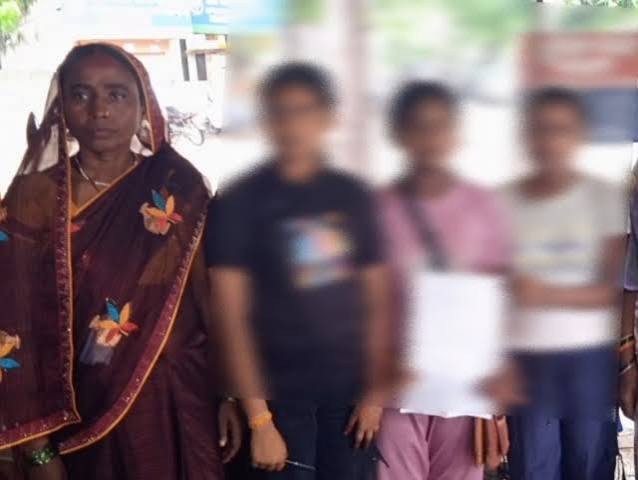
A case of alleged discrimination and inhumane treatment of Dalit students has come to light at the Kasturba Gandhi Balika Awasiya Vidyalaya (KGBV) in Asothar block, Fatehpur. The students and their families have accused some teachers of making caste-related remarks, not providing adequate food, and making them clean the bathrooms and other areas. At around 4:30 pm on Tuesday, the victim families reached the District Magistrate’s office and demanded an impartial investigation and action against the culprits. Geeta Devi, a resident of Sato village in Asothar block, stated that her granddaughters Kiran and Kashish, along with another student, Anjali, attend the school. According to the families, a complaint was made some time ago regarding the quality of the food at the school. This complaint was also investigated. It is alleged that the school administration became increasingly displeased with the students after this. Allegations of being threatened with expulsion for asking for food In a complaint letter submitted to the District Basic Education Officer, serious allegations have been made against teachers Parveen Bano, Aruna Gautam, and Preeti Gautam. The complaint states that female students were threatened with expulsion from the school if they asked for food. There are also allegations of assaulting older students if they protested. Allegations of caste-based humiliation and cleaning duties Families allege that female students were humiliated because of their caste. In addition to studying, they were also made to clean the school bathrooms and other areas. According to the complaint, comments were made linking the female students’ caste to cleaning duties, causing them mental distress. Demand for Fair Investigation and Security from the DM The victim families have demanded an impartial investigation from the District Magistrate. They demanded a safe and respectful environment for the female students and strict action against those responsible if the allegations are found to be true. They now await the district administration’s investigation and the action taken based on the investigation. Ram Chandra Saini | Fatehpur Courtesy: Hindi News
A Dalit student, distressed by harassment, left her studies for a year. She resumed her studies after being harassed again, and appealed to the Superintendent of Police in Amethi for justice.
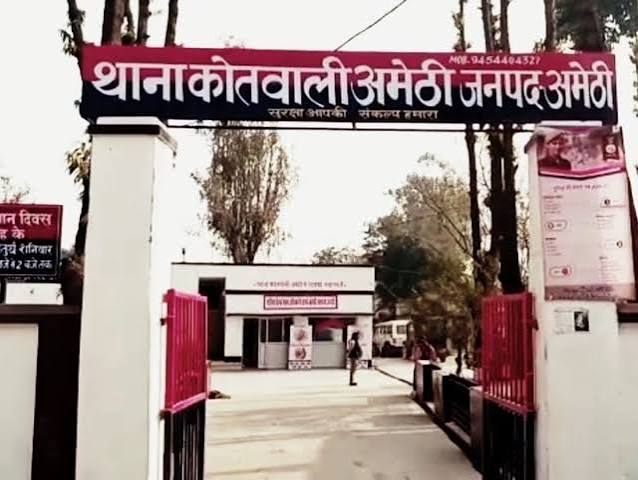
In a village in the Amethi Kotwali area, a student, distressed by harassment, left her computer studies for nearly a year. The student alleges that some young men repeatedly harassed her, leading her to discontinue her studies. According to the student, when she resumed her computer studies after about a year, the accused young men began harassing her again. Distressed by the continued harassment, the student returned home and informed her family about the incident. The student then went to the Amethi Kotwali with her mother and filed a complaint with the police. It is alleged that after receiving no response at the police station, the student went to the Superintendent of Police’s office with her mother and demanded action. The Superintendent of Police took the matter seriously and directed the concerned police officers to investigate and take necessary action. The police then began questioning the student and gathering information about the case. Amethi Kotwali police station in-charge Shivakant Tripathi stated that the matter is being investigated based on the complaint. Further action will be taken based on the facts and evidence revealed in the investigation. Courtesy: Hindi News
Villagers oppose Dalit womans as anganwadi helper

Shivamogga: A controversy has arisen at Mugadthi village, located under the Heddaripura GP near Ripponpete in Hosanagara taluk of Shivamogga district, following the appointment of a Dalit woman as an anganwadi helper. Some villagers refused to send their children to the centre following her appointment. Shivamogga DC Prabhuling Kavalikatti took the matter seriously and directed the department of women and child development to inspect the location immediately. Responding to the directive, child development project officer (CDPO) Gayatri Ramachandra, along with personnel from the Ripponpete police station, visited Mugadthi on Monday and convened a meeting with the residents to address the situation. She clarified that the recruitment was carried out strictly in accordance with govt regulations and legal merit criteria. She said children must not be deprived of health and educational facilities provided at the anganwadi. Local villager Gururaj, who is also the president of Mugadthi Balamuri Ganapathi Temple, denied any caste-based discrimination or opposition in the village, stating that residents from all communities live together in harmony. He suggested the matter arose from a misunderstanding or miscommunication and assured full cooperation for the welfare of the children. Courtesy : TOI Note: This news is originally published on https:/timesofindia.com/bha and is used purely for non-profit/non-commercial purposes, especially human rights
AAP leader arrested for allegedly encroaching Dalit colleague’s property

New Delhi, Aug 17: Aam Aadmi Party’s National Council Member Sri Chand Vohra was arrested by Delhi Police from Gwalior, Madhya Pradesh, for alleged encroachment of the property of his party’s Dalit worker in south-east Delhi’s Jaitpur Extension, sources said on Monday. Sri Chand Vohra is the husband of AAP Councillor from Jaitpur, Hema Vohra. He has been named in a police complaint filed by AAP Dalit worker Rakesh Kumar over his alleged dispossession from his own property. A police complaint filed by Rakesh Kumar said that around three weeks ago, Vohra allegedly threw his belongings, kept on the first floor of the property, onto the street. Following an investigation, the police added penal sections relating to an alleged conspiracy to take possession of the plot. The penal provisions invoked in the case carry a maximum punishment of 10 years. Earlier, Delhi BJP questioned the silence of AAP leaders Arvind Kejriwal and Saurabh Bharadwaj over the alleged harassment of their own party’s Dalit worker. Delhi BJP Media Head and Spokesperson Praveen Shankar Kapoor condemned Vohra’s alleged injustice against Rakesh Kumar and demanded early police action against him. Kapoor, along with BJP Chief Spokesperson Anil Gupta, asked Kejriwal to immediately ensure justice for the Dalit AAP worker by restoring possession of his plot and expelling Vohra and his wife from the party. The Delhi BJP Media Head said that Vohra has been directly associated with Kejriwal since the party’s formative days and had himself contested the Municipal Corporation election from Jaitpur in 2017. In 2022, his wife Hema contested the election and is currently serving as a Municipal Councillor. In 2019, on the pretext of setting up a private political office, Vohra took a vacant plot belonging to active Dalit AAP worker Rakesh Kumar in Jaitpur Extension. After about a year, Rakesh Kumar began asking for his plot back, but Vohra allegedly kept delaying the matter till 2022. Towards the end of 2022, Vohra’s wife Hema was elected as a Municipal Councillor from Jaitpur. According to the BJP leaders, this was followed by alleged harassment of Dalit worker Rakesh Kumar, which ended only after an FIR was registered at a police station around two weeks ago. Courtesy : TAT Note: This news is originally published on https:/theassamtribune.com/bha and is used purely for non-profit/non-commercial purposes, especially human rights
“Mallikarjun Kharge’s insult is a direct attack on the existence of Dalits,” Telangana Congress holds protest with appeal for unity against BJP
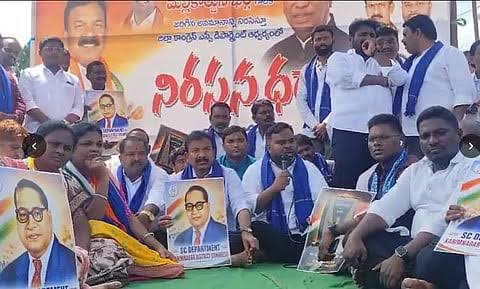
The alleged insult of Congress President in Haldwani has sparked widespread outrage in Telangana. The TPCC issued a stern warning to the BJP-RSS and appealed to Dalits to unite. New Delhi: The alleged insult to Congress National President Mallikarjun Kharge has sparked widespread outrage within the Telangana Congress. On Monday, August 17, members of the Telangana Pradesh Congress Committee (TPCC) held a massive protest against the Bharatiya Janata Party (BJP). Congress leaders have made a clear call that the time has come for Dalits across the country to unite against the BJP’s policies. The protest was organized to protest the alleged “purification” of the stage after Kharge’s event in Haldwani, Uttarakhand. South Asians and Diaspora The main event of this strong protest was held in Karimnagar. Dr. Kavampally Satyanarayana, the party’s Scheduled Caste (SC) Cell Chairman and MLA, attended the protest. He described the humiliation of Kharge as highly condemnable and appealed to the marginalized sections of society to unite. The controversy began on August 13th. Mallikarjun Kharge, the Leader of the Opposition in the Rajya Sabha and Congress chief, alleged that some individuals associated with the BJP had desecrated the stage immediately after his speech at the Ramlila Maidan in Uttarakhand. Expressing deep regret over this act, Kharge said that coming from a Dalit background, the incident had made him acutely aware of the “sting of untouchability.” Addressing the protesters at the protest, MLA Satyanarayana sharply attacked the ruling party. He said that this humiliation of Mallikarjun Kharge was not just an attack on one person, but on the self-respect and existence of the entire Dalit community. It should not be taken lightly at any cost. He urged all Dalits to stand firmly against the BJP’s discriminatory and oppressive policies. People and Society The TPCC directly blamed the BJP, which is in power at the center, for this purification ritual. Congress leaders said the ruling party should bow its head and take accountability to prevent such discrimination in the future. Satyanarayana issued a stern warning to the BJP, the Rashtriya Swayamsevak Sangh (RSS), and the Sangh Parivar, urging them to remain vigilant. He accused these organizations of staging a hypocritical drama. Citing the Haldwani incident, he clarified that this mentality of the BJP is an insult to democratic spirit and a blatant violation of constitutional values. Rajan Chaudhary Courtesy: Hindi News