
Uproar over Dalit woman’s roadside delivery amid untouchability allegations

Rani Vanvasi, a 20-year-old pregnant woman gave birth on the roadside outside government district hospital in Bhadohi on September 29, after she was allegedly denied admission for delivery; the victim’s family also alleged that hospital staff failed to provide timely treatment and did not admit her. Uproar escalated on Friday (October 2, 2026) after a video went viral showing a Dalit woman who was allegedly denied admission at the government hospital in Bhadohi district during labour pain and forced to deliver outside the hospital in public. While the victim’s family and Opposition parties alleged untouchability, claiming feudal elements are running the government in Uttar Pradesh, the authorities said disciplinary action has been taken against personnel found guilty of partial negligence. “The family categorically alleged that hospital staff failed to provide timely treatment and did not admit due to her caste affiliation, this is so sad and inhuman that even after 79 years of independence, untouchability and discrimination prevails in government system, forcing a Dalit woman to give birth on the roadside, outside a government hospital. The feudal elements within the administrative system are emboldened by the Bharatiya Janata Party (BJP) government. The fight of the Samajwadi Party (SP) for justice, equality is against such tendencies,” said Sunil Singh Yadav ‘Sajan’, the SP spokesperson. “The incident is a cruel, evil act, which is unacceptable in a civilised society,” said Ajay Kumar Lallu, a senior U.P. Congress leader. In the matter, Rani Vanvasi, a 20-year-old pregnant woman gave birth on the roadside outside government district hospital in Bhadohi on September 29, after she was allegedly denied admission for delivery. The victim’s family also alleged that hospital staff failed to provide timely treatment and did not admit her. Ms. Vanvasi eventually went into labour near the hospital gate while she and her family were leaving. Women accompanying her used saris or a sheet to provide privacy as she delivered the baby beside the road. “The victim had a hemoglobin level of around five grams per deciliter, indicating severe anemia. She was referred to a higher-level facility in Mirzapur but in the meantime the pain started. Upon learning of the incident, I immediately arrived at the scene and provided appropriate medical assistance. Currently, both the infant and mother are completely healthy and recovering at the district hospital. Disciplinary action has also been taken against personnel found guilty of partial negligence. The remaining statements were found to be untrue,” said the Chief Medical Officer of the Hospital. Mayank Kumar Courtesy : The Hindu Note: This news is originally published on https:/thehindu.com/bha and is used purely for non-profit/non-commercial purposes, especially human rights
‘100% Govt Failure’: Rahul Gandhi BASHES BJP Over Deaths Of 30+ Tribal Children In Balaghat
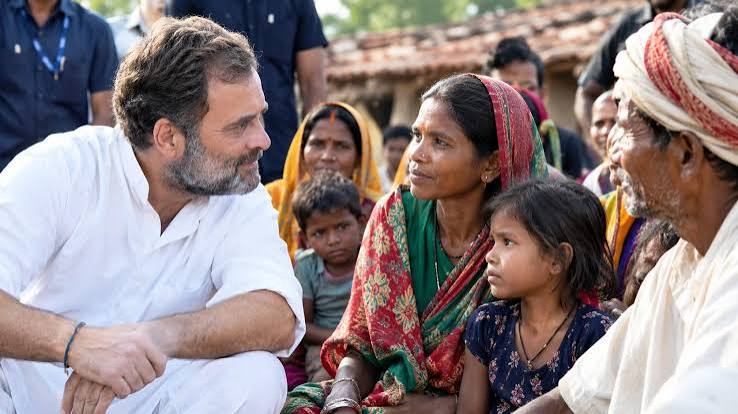
Congress leader and Lok Sabha Leader of Opposition Rahul Gandhi visited Jagla village in Madhya Pradesh’s Balaghat district to meet families of tribal children who have died in recent months amid reports of suspected infectious diseases and malnutrition. More than 30 children, primarily from the Baiga tribal community, have reportedly died in the Birsa block. Gandhi alleged that the government has failed to provide adequate healthcare, education, employment and support on issues including land rights, MGNREGA and the Forest Rights Act. He called the situation a “complete government failure” and said he would raise the issue in the Lok Sabha, including concerns affecting tribal communities across the country. Courtesy : TOI Note: This news is originally published on https:/timesofindia.com/bha and is used purely for non-profit/non-commercial purposes, especially human rights
Punjab: The family of a Dalit youth had been protesting for five days over his death; the police forcibly seized his body and performed his last rites.
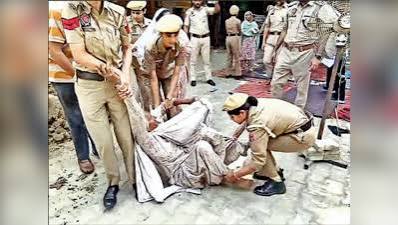
In Sangrur, Punjab, the police removed the family members who had been protesting for five days and performed the last rites of the Dalit youth without their consent. The Aam Aadmi Party Sarpanch is accused of harassment. Punjab: Serious allegations have been leveled against the police in the case of a 23-year-old Dalit youth’s suicide at Sangrur Civil Hospital on Thursday. The family alleges that the police forcibly removed them from the mortuary and conducted the post-mortem and cremation in their absence. The deceased has been identified as Sanamdeep Singh, a mason by profession and a resident of Kanoi village. Sanamdeep consumed poison on September 25th and died a day later on September 26th. The family had kept the body in the hospital mortuary for the past five days, demanding justice. They were staging an indefinite sit-in protest, refusing to conduct a post-mortem or accept the body until the village sarpanch and his associates, affiliated with the Aam Aadmi Party (AAP), were arrested. Sanamdeep’s uncle, Gora Singh, has leveled several serious allegations against the administration and the sarpanch. He stated that an FIR was filed against the sarpanch in 2019 based on Sanamdeep’s complaint. Gora Singh alleges that a false FIR was also filed against seven members of his family five months ago to pressure him into withdrawing the same case. The deceased was constantly subjected to mental harassment. Even when a sewer line was laid in the village, four of his houses were deliberately left out, and Sanamdeep was denied work under MNREGA. Tensions escalated further on Thursday afternoon when police and administration teams arrived to clear the entrance to the mortuary. The family alleges that the police brutalized them. Sanamdeep’s mother and grandmother were dragged into a police van and the funeral was forcibly performed without the family’s consent. According to Gora Singh, they were peacefully demanding justice and the implementation of the SC/ST (Prevention of Atrocities) Act. He alleges that the police broke their promises, used excessive force, manhandled women, and, in collusion with municipal corporation employees, secretly cremated the body. He also said that the entire village was turned into a cantonment as if they were dealing with terrorists. Amidst this commotion, the police arrested Congress official Rajinder Singh Deepa and three others from Sunam. They are accused of attacking policemen, damaging public property, and obstructing government work. They were produced in court and sent to judicial custody. In addition, the police detained eight members of Sandeep’s family and four others, although no FIR was filed against them. On behalf of the police, Sangrur DSP Dalbir Singh Sidhu defended the entire action. He said that the body had begun to decompose severely, forcing the administration to take this drastic step. The senior medical officer had issued several notices warning that the body was rapidly decomposing. Section 301 of the Indian Penal Code (IPC) makes it a crime to insult or leave a dead body in a deplorable state. Executive Magistrate-cum-Tehsildar Jagdeep Singh and health officials issued several notices to the family, but they refused to accept them due to political incitement. DSP Sidhu clarified that on September 28, based on a complaint from Sandeep’s father, an FIR had already been registered at the Sangrur Sadar police station under sections 108 (abetment to suicide) and 3(5) of the IPC. Despite this, Deepa and other outsiders used the family as a pawn for political gain and insisted on arbitrary arrests before the post-mortem. According to the police, when they initiated the legal process, the protesters became violent, hurling abuses, breaking bus windows, and attacking officers. Police had to use mild force to disperse the crowd. A board of three medical officers eventually conducted a post-mortem examination, and the young man’s last rites were performed at the crematorium on Ubhawal Road in the presence of municipal officials and some panchayat representatives. Rajan Chaudhary Courtesy: Hindi News
Sending obscene videos on WhatsApp also falls within the scope of ‘public view’: Bombay High Court’s decision in SC/ST Act case, no anticipatory bail for accused
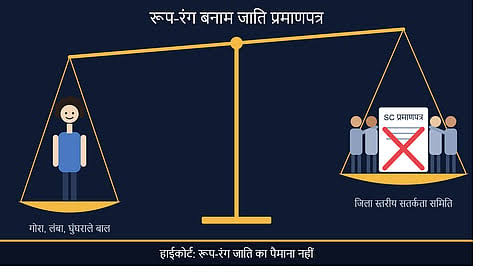
The accused contacted a woman and demanded physical relations. When she refused, he sent an obscene video made on his mobile phone to her husband and close relatives via WhatsApp. Nagpur – The Nagpur bench of the Bombay High Court has rejected the anticipatory bail plea of a government employee from Ghughus (Chandrapur district) in an SC/ST Act case. Justice Y.G. Khobragade issued the order on September 29. The case relates to the posting of obscene videos and photos of a married woman belonging to the Scheduled Caste on social media. The case pertains to Criminal Appeal No. 127/2026, in which the accused is Nikhil, son of Madhukar Thepale (28 years old). He is in government service and lives near the Sneh Prabha Mangal office in Ward No. 3 of Ghughus. Advocate Mahesh Rai appeared for the accused, while Additional Public Prosecutor G.S. appeared for the state. Umale and the victim’s lawyer, Sanket Joshi, appeared. According to the prosecution, the victim is a married woman belonging to the Scheduled Caste. The accused and the victim live in the same area and are known to each other. It is alleged that on November 4, 2025, the accused contacted the woman and demanded physical relations. When the woman refused, he sent an obscene video made on his mobile phone to the woman’s husband and close relatives via WhatsApp. According to the FIR, nude photos were also sent to the woman’s sister-in-law from an unknown mobile number. The woman’s sister also received calls and WhatsApp messages from the accused’s mobile number, stating that he wanted to speak with her. In the FIR, the woman has listed the mobile numbers of her husband, sister-in-law, mother-in-law, and the accused. On November 5, 2025, a case was registered at the Ghughus police station under sections 77 and 78 of the Indian Penal Code, 2023, sections 66(E) and 67 of the Information Technology Act, 2000, and sections 3(1)(r), 3(1)(w)(ii), and 3(2)(va) of the Scheduled Castes and Scheduled Tribes (Prevention of Atrocities) Act, 1989. The accused initially sought anticipatory bail in the lower court, which was rejected. Subsequently, he filed Criminal Appeal No. 599/2025 in the High Court. On February 9, 2026, he withdrew this appeal with the concession that he could file a new application after the charge sheet was filed. The accused then filed Anticipatory Bail Application (ABA) No. 73/2026. On February 21, 2026, the Special Judge (Atrocities Act) and Additional Sessions Judge of Chandrapur rejected this application. The accused approached the High Court for the second time against this same order. On March 12, 2026, the High Court granted interim relief and temporary anticipatory bail on certain conditions. The accused submitted a bond and sureties in the lower court. The charge sheet in the case has now been filed. The accused stated that the SC/ST Act does not apply if the victim is merely sent via WhatsApp. Advocate Rai stated that according to the FIR, the accused demanded sexual intercourse and, after being refused, sent videos and photos to her husband and relatives. According to him, merely sending the sexual favors via WhatsApp does not constitute offenses under Sections 3(1)(r), 3(1)(w)(ii), and 3(2)(va) of the SC/ST Act, and therefore, the bar on anticipatory bail under Section 18 of the Act does not apply. He argued that the lower court’s order was passed without considering the facts and law, and therefore, it should be set aside. Additional Public Prosecutor Umale, representing the state, and Advocate Joshi, representing the victim, strongly opposed the appeal. The prosecution stated: The accused has been absconding since the FIR was filed. The accused knew the victim’s caste. The incriminating videos and photos are stored on the accused’s mobile phone, but the mobile phone has not yet been seized. Custodial interrogation is necessary to seize the mobile phone and gather further information. Publicly humiliated the victim by circulating nude photos on the mobile phone after she refused his demand for sexual intercourse. After reviewing the records, Justice Khobragade stated that the accused was well aware of the victim’s caste. She also stated that the accused is not a member of a Scheduled Caste or Scheduled Tribe, while the victim is a Scheduled Caste. The accused has not denied this fact. The court prima facie held that the accused made nude videos and photos of the woman and circulated them via WhatsApp when his sexual desires were not satisfied. Regarding the absconding of the accused, the court cited Lavesh v. State (NCT of Delhi) (ALL MR (Cri.) 3300) and stated that generally, the question of granting anticipatory bail to a fugitive or proclaimed offender does not arise. The court remarked: “The accused in this case has been absconding since the date of registration of the crime; therefore, in my opinion, he is not entitled to anticipatory bail.” Regarding the argument of “public view,” the court did not accept the argument of the accused’s lawyer that the accused did not publicly insult the victim with caste-related slurs. The court said: “Making objectionable videos/photos of the victim and sending them to her husband, close relatives, and others through social media such as WhatsApp certainly falls within the scope of “public view” within the meaning of Section 3 of the Atrocities Act.” The court cited the Supreme Court’s case of Kiran v. Rajkumar Jivraj Jain (2025 AIR (SC) 4083). According to this, Section 18 of the SC/ST Act bars anticipatory bail under Section 439 of the Code of Criminal Procedure for these offenses. The court stated in its own interim order that the interim relief granted on March 12, 2026, was on the grounds that the provisions of the Act were not applicable to the FIR. However, upon reviewing the material now on record, it states: “Prima facie, the essential ingredients of the offenses under Sections 3(1)(w)(ii) and 3(2)(va) appear to be present, as objectionable videos/photos of the victim were circulated on social media from the accused’s mobile phone, which is in the public domain.
Demand for Reservation in the Private Sector: AIISCA President Says “Reservation Is Not Charity, It’s the Only Link Connecting Us to the State”
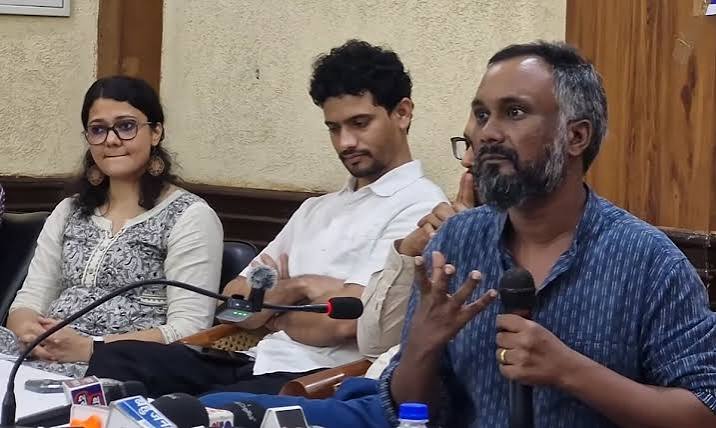
Dalit Organization Launches Nationwide Protest at Press Club, Major Event at Ambedkar Bhawan on October 2 New Delhi. The All India Independent Scheduled Caste Association (AIISCA) held a press conference at the Press Club in Delhi, reiterating its demand for reservation and affirmative action in private employment and private educational institutions. The organization stated that government jobs and government educational institutions are continuously shrinking, while employment, education, and economic power are becoming concentrated in private hands. Therefore, it is essential to extend the system of social justice to the private sector. On this occasion, the organization released a document titled “Reservation in the Private Sector: From Government Jobs to Private Employment, Education, and Economic Power.” The conference was addressed by the organization’s president, Dr. Rahul Sonpimple, Prof. Sumit Mhaskar, Prof. N. Sukumar, and Prof. Sonajharia Minj and student leaders Aishwarya, Ashwini Kumar, Bhomaram, and Ashutosh Vidrohi addressed the gathering. AIISCA Founder President Dr. Rahul Sonpimple stated that reservation in the private sector is “a political issue in every sense” and that it is not a question of today, but dates back to the British era. He cited Dr. Ambedkar’s demand for separate electorates at the Round Table Conference. According to him, the Poona Pact was a contract between India’s emerging modern state and the Scheduled Castes. In this agreement between equal parties, the Scheduled Castes gave up separate electorates and received the promise of reservation in jobs and politics. He also cited the promises made to the tribals (Fifth and Sixth Schedules, autonomy) and the Constituent Assembly debates. He said that just as Jinnah expressed lack of confidence in the demand for a separate country, Ambedkar believed in democracy. He cited Ambedkar’s speech that discussed the contradiction between political equality and socio-economic inequality. Sonpimple asked the gathering whether inequality had decreased, stating that no one could say yes to this. He concluded that when inequality persists, the state’s contract is incomplete. He stated that reservation is not a favor or a charity. According to him, it is the only thread connecting disadvantaged communities and the Indian state, and at the same time, a very fragile one. He alleged that the current government is weakening this thread. He urged social justice advocates to abandon their defense of reservation, as it is their constitutional right. Sonpimple stated that government jobs have declined and sectors like mining are being transferred to private hands. According to him, mining takes place on tribal land, but local tribals are not getting even small jobs. He criticized the slogan “Minimum Government, Maximum Governance” and named the Adani Group as one of the allegations. These allegations are the speaker’s own, without any independent verification. He claimed that the Scheduled Caste population would exceed 200 million in a correct count, and that OBCs constitute approximately 52% of the population according to the Mandal Commission’s estimates. Regarding the caste census, he said it was a victory of the Bahujans’ long struggle that the government had to acknowledge it. He criticized the social media trolling and TV debates surrounding the suicide of an IIT student. He said that dismissing a complaint of caste discrimination if it is filed late is wrong. Referring to the Prime Minister’s claim of being an OBC and the Kalekar Commission, he questioned why the ruling party has not issued any statement on incidents against Dalit and Adivasi students on campuses. He urged Dalit and Adivasi youth not to silently tolerate insults and abuse in the name of “morality” and not to hesitate to respond. He said, “We must not die,” and cited the struggles of his parents. He explained that his father used to drive a cycle rickshaw and his mother was a construction worker. He said that the community is not “just for voting.” He demanded that both the ruling party and the opposition embrace this demand. The bill for reservation in the private sector be discussed and passed in the upcoming winter session of Parliament. In his words, the community will stand with whoever supports this demand. He declared that a new struggle on this issue would begin on Gandhi Jayanti. He linked it to the Poona Pact, saying that the new fight would begin on the day Gandhi “snatched separate electorates from us.” What other speakers said Aishwarya, a research scholar from the Law Department of Delhi University, presented the constitutional and legal aspects. Citing the All India Survey on Higher Education 2023-24, she said that between 2013 and 2023, the number of private universities increased by 149%, while government universities increased by 45%. Referring to disinvestment, outsourcing, and contractualization, he claimed that since 2018, 63 Group A-level positions (Joint Secretaries, Directors, Deputy Directors, etc.) were filled through lateral entry, where reservation was not applicable. In 2024, 45 such positions were withdrawn after protests. According to him, only about 4% of the total workforce is in government employment at most, and accurate figures are not available due to the lack of a census. Citing ILO 2024 estimates, she stated that 88.4% of the workforce is informal. 7.3% of Scheduled Castes and 5.1% of Scheduled Tribes are in formal employment, compared to 16.2% in the unreserved category. Based on her fieldwork, she pointed to undeclared “reservations” in sanitation-related jobs. She cited Article 15(5) of the 93rd Constitutional Amendment (2006), which provides for legislation for backward classes in private (aided and unaided) educational institutions. She noted that Haryana, Maharashtra, Karnataka, Uttar Pradesh, Bihar, Arunachal Pradesh, Kerala, and Assam have enacted their own laws. She demanded a central law, fixed category-wise quotas, transparent admissions, and a caste census. Aishwarya said that in August 2025, a Parliamentary Standing Committee recommended a central law to implement Article 15(5) in private higher education institutions, but the Ministry of Education stated that it was within the discretion of the states. He cited a Chennai study that found lower-caste applicants had to submit approximately 20% more applications despite equal qualifications. He also cited the Cisco case in California, ILO Convention
Sons gone, justice still elusive: Two Dalit families in Mumbai and Thoothukudi, holding photographs, ask one question: When will justice be delivered?
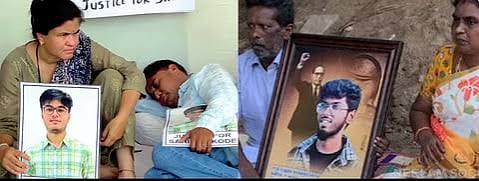
Both families believe society’s casteist mindset is responsible for their son’s death, and both believe the culprits are still eluding the law. Mumbai/Thoothukudi—Only parents who have lost a young son can truly understand the pain of losing one. Ravindra and Sonali Wakode sit hungry at Azad Maidan in Mumbai, holding a photograph of their 20-year-old son, Sahil. Sahil was a second-year B.Tech student at IIT Bombay. He committed suicide in his hostel room on September 18th. Ersaan, Chandrashekhar and Tamilselvi in Arumugamangalam, Tamil Nadu, are staging a protest, holding a photograph of their beloved 27-year-old son, Kevin. Kevin was a software engineer who was brutally murdered in Tirunelveli in July 2025, allegedly in a caste-based honor killing. The parents sitting on the protest hold their sons’ photographs and helplessness in their eyes, and they each have one question: will their sons get justice? Along with the grief of losing their sons, they now have to fight for justice. They must seek justice from the same system that Dalit and marginalized families often struggle to achieve. Therefore, whoever extends a helping hand, whether a leader, a commission, or an ordinary person, they see a glimmer of hope that justice may finally be achieved. Kevin’s mother and father tearfully declared that they had lost Kevin and that no other child should suffer the same fate. Sahil’s father said that the fast will continue until the accused are arrested. Two cities, two protests, but the parents’ pain is the same: their sons are gone, and now all that remains is the hope for justice. Parents devastated after chargesheet against son’s murder accused dismissed 27-year-old IT engineer Kevin Selvaganesh was a resident of Arumugamangalam near Eral in Thoothukudi district. He was murdered with a sword-like weapon on July 27, 2025. He belonged to the Scheduled Caste and was in love with a young woman. The young woman’s younger brother, Surjeet, was arrested for the murder. Surjeet surrendered at the police station within hours of the murder. Surjeet’s parents, Saravanan and Krishnakumari, were also accused in the case. Both were in the police force. Krishnakumari was a sub-inspector in the Tamil Nadu Special Police Force and was arrested by the CB-CID nine months after the incident. Following the CB-CID investigation, a lengthy chargesheet was filed in court. This 800-page chargesheet reportedly includes CCTV footage, forensic evidence, and statements from 83 witnesses. The case was being heard in the Special SC/ST Atrocities Prevention Act Court in Tirunelveli. The prosecution alleged that after the incident, Surjeet told his father, and his parents together asked him to destroy his clothes and mobile phone and remove the two-wheeler’s number plate. But on Tuesday, September 29, Justice R. Vijayakumar of the Madras High Court’s Madurai Bench dismissed the charge sheet against Saravanan and Krishnakumari. The court stated that there was no evidence linking them to the crime. Citing a Supreme Court ruling, the court stated that mobile tower information only indicates the range of the tower, not the exact location of the phone. With this order, both were acquitted of the murder charge. However, the court rejected Surjeet’s relative, Jaipal’s, petition seeking to dismiss the charge sheet against him. The court stated that the question of Jaipal’s role in the conspiracy would be decided in the trial. Following the verdict, Kevin’s father, Chandrashekhar, and mother, Tamilselvi, staged a sit-in protest. They sit in front of their house in Arumugamangalam with a picture of Kevin. They sit under a banyan tree in front of the house and say that the charges were dropped due to lack of evidence. Tamilselvi says, “What were we fighting for all this time? The charge sheet has been dismissed citing lack of evidence. If that’s the case, where did we get justice?” The protesting parents questioned how the arrests were made if there was insufficient evidence in the case. They demanded that the CBI continue the investigation and gather more evidence. Tamilselvi said, “Since the people involved in this case are police officers, their role should also be thoroughly investigated. The incidents that we believe led to the destruction of evidence in the case should also be investigated.” She further stated, “We have no personal enmity with anyone. We believe in justice and fairness. We have been fighting solely on the basis of justice. We respect the court’s decision. At the same time, we want accurate answers to our doubts and questions.” Tamilselvi appealed to Chief Minister C. Joseph Vijay to intervene, initiate an appeal on behalf of the government, and take steps for further investigation. She stated that her protest would continue until her questions were answered and her son received justice. The case has also drawn political backlash. VCK leader Thol. Thirumavalavan called the decision “shocking.” He said that cancelling the charge sheet before the trial began would set a bad precedent. Leaders have reached out to Kevin’s family in the past. Following the incident, Kanimozhi MP and ministers K.N. Nehru and Anitha Radhakrishnan visited the family, and then-Chief Minister M.K. Stalin consoled the parents over the phone. Social Justice Minister Vanni Arasu also visited Arumugamangalam to meet the family on the first death anniversary. Sahil’s parents continue their hunger strike at Azad Maidan for the fifth day. Sahil, the 20-year-old son of Ravindra and Sonali Wakode, residents of Yavatmal, was a second-year B.Tech student at IIT Bombay. He was found dead in his hostel room on the evening of September 18th. That same day, he was allegedly caught using ChatGPT on his mobile phone during his mid-semester exam. The parents allege that Sahil had complained about caste discrimination at the institute. Professor Suryanarayan Dulla is named in the police FIR. He has been charged with abetment to suicide. The FIR also mentions caste discrimination. Professor Dulla has been placed on leave to ensure a fair investigation. The institute’s board has formed a 10-member inquiry committee, while the Mumbai Police Crime Branch is investigating the case. The Crime Branch is investigating CCTV recordings
Court takes tough stance in two Dalit harassment cases: Ayodhya court takes tough stance, requires response within one day
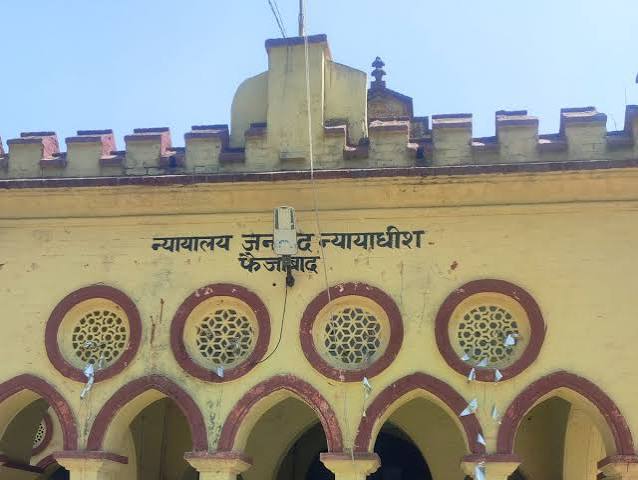
The court of Special Judge SC-ST Act Deepak Yadav, located in the Civil Lines court of Ashfaqulla Khan Ward in Ayodhya, has taken a tough stance in two cases of Dalit harassment. The court has sought an explanation from the Circle Officer (CO), Rudauli, for not filing the charge sheet on time. He has been directed to respond within one day. The first case was filed by Holupur resident Arvind Kumar against Deepchand, Ramnaresh, Changu, and Surendra Kumar. The second case was filed by Kalai resident Jaglal Ravidas against Suresh, Sonu, Ramdayal, Sachin, and two unidentified persons. Both cases were investigated by CO Rudauli. The CO stated that the charge sheet could not be filed due to law and order and government work. The court stated that the charge sheet was neither filed on time nor was an application for an extension granted. The deadline for filing a charge sheet in SC-ST Act cases is 60 days. Prashant Shekhar | Civil Lines Courtesy: Hindi News
Bhatti Vikramarka, enraged by Mallikarjun Kharge’s “insult,” called for a nationwide Dalit-Adivasi movement for self-respect.

Telangana Deputy Chief Minister Bhatti Vikramarka, calling Congress President Mallikarjun Kharge’s insult a direct attack on Dalit self-respect, warned of a nationwide movement. New Delhi: Calling Congress President Mallikarjun Kharge’s alleged insult a symbol of the ongoing discrimination against marginalized communities, Telangana Deputy Chief Minister Bhatti Vikramarka delivered a strong message on Tuesday. He called for a nationwide movement to protect the dignity and self-respect of Dalits and Adivasis. South Asians and Diaspora Addressing the “Dalit-Adivasi Self-Respect Conference” organized by the Congress SC and ST MPs Forum in New Delhi, Vikramarka emphasized that protecting the Constitution and its core values of equality, liberty, fraternity, and social justice is the paramount responsibility of every citizen of the country. During his address, he recalled that the Congress party had passed the first resolution against untouchability and later played a key role in implementing the Constitution. Targeting the BJP-led central government, he alleged that attempts are being made to weaken constitutional values and promote the ideology of Manusmriti in place of the Constitution. Bhatti stated that the Constitution of India binds every citizen of the country in a strong bond, and violating it directly means weakening the foundation of the nation. He expressed concern that although many stringent laws were enacted during the Congress governments to address discrimination against Dalits and tribals, unfortunately, incidents of discrimination continue to surface in society. Referring to Mallikarjun Kharge’s political stature, he clarified that he is not merely a Dalit leader, but a senior national leader who has achieved high constitutional and political positions through decades of public service. He described the alleged “purification” ritual that followed Kharge’s public meeting in Haldwani as a direct attack on Dalit self-respect. He also strongly criticized the action taken against Rahul Gandhi, who had demanded an FIR in the matter. Questioning the functioning of the system, he said that if someone seeks justice for an insulted person or questions the authorities, they are then sued. He believes this situation fully exposes the deep-seated discrimination against Dalits and tribals within the system. Appealing to Dalits, tribals, and minorities to unite against discrimination, Bhatti sternly stated that we cannot accept a situation where millions of people, including Scheduled Castes, tribals, and minorities, are treated as second-class citizens. He strongly urged everyone to come together and fight to protect their self-respect. Rajan Chaudhary Courtesy: Hindi News
Illegal occupation of a Dalit woman’s plot in Mainpuri: Allegations against powerful people, no action despite complaint; pleads with the Superintendent of Police for help

A Dalit woman in Bewar, Mainpuri, has demanded action from the Superintendent of Police, alleging that her plot has been forcibly occupied and construction has been carried out. The woman says that despite repeated complaints, her complaint has not been heard. Now, she has also appealed to the authorities for the safety of her family. Meena Devi, wife of Rajendra Kumar, a resident of Etawah Road, Bewar, submitted a complaint to the Superintendent of Police, stating that she owns a plot. She alleges that Rajnesh Mishra, his wife Bima, Anubhav Dubey, and Vaibhav Mishra forcibly occupied the plot and began construction there. According to the woman, she complained several times to the Bewar police station, but no action was taken. Victim Rajendra Singh says that he subsequently filed a complaint with the Superintendent of Police. After receiving no relief, he submitted a petition to Cabinet Minister Jaiveer Singh. According to the woman, the minister wrote to the District Magistrate requesting action, but the matter was not heard. In her complaint, the woman alleges that she was turned away on the pretext that the matter pertains to the Bhogaon Assembly constituency. Meena Devi alleges in her complaint that due to political pressure, officials and police were called to refrain from taking action regarding her plot. She also alleged that she was told that the encroachers were relatives of the MLA and that no action should be taken against them. Husband Rajendra Singh, citing his financial situation, stated that his five daughters are marriageable. Amidst financial difficulties, the encroachment on the plot has further exacerbated the family’s difficulties. It is alleged that the encroachers are powerful and cunning, leaving the family terrified. Victim Rajendra Singh has alleged that he and his family have been threatened with death and subjected to caste-based abuse. The victim has demanded that the authorities free the plot from encroachment and ensure the safety of his family. Abhishek Jain | Mainpuri Courtesy: Hindi News
Sahil Wakode death: Global Dalit groups demand accountability from IIT Bombay

The Ambedkar Association of North America (AANA) and a coalition of Dalit and Ambedkarite organisations from North America and Europe have condemned IIT Bombay’s handling of the death of Sahil Wakode, a second-year BTech student from the Scheduled Caste community who died on 18 September 2026, hours after he was removed from an examination. His family has alleged caste-based harassment, and an FIR under the SC/ST Act names an IIT Bombay faculty member. The organisations said IIT Bombay did not wait for the truth and, within a day, publicly stated that Sahil had been caught using ChatGPT in his examination. They argued that an institution whose faculty member was named in an FIR publicly presented its version of a dead student’s conduct before the facts were established, calling it extremely irresponsible and saying it fuelled hostility against Sahil and the SC/ST community. The coalition said the most important questions remain unanswered, including whether examination procedures were properly followed, what happened after Sahil was removed from the hall, what occurred in the Dean’s office, and why examination-hall CCTV was leaked and circulated while footage from the Dean’s office and surrounding areas remains undisclosed. It also criticised the response of the SC/ST Cell and Faculty Forum at IIT Bombay, saying the SC/ST Cell issued statements defending the institution while the investigation was still underway, and that three days after Sahil’s death the Faculty Forum organised a march supporting a faculty member named in the FIR. The organisations added that they had received highly concerning reports of discrimination against SC/ST students following the filing of Sahil’s parents’ complaint at the police station. Demanding action, the organisations said IIT Bombay must retract its premature public characterisation of Sahil’s conduct, apologise to his family, and ensure an independent investigation with SC/ST representation and external experts. They demanded that IIT Bombay and Mumbai Police secure all CCTV footage from the examination hall, surrounding corridors and the Dean’s office, provide it to investigators and Sahil’s family or counsel, and identify those responsible for the leak. They also said the Maharashtra government and Mumbai Police must establish a time-bound Special Investigation Team to fully investigate the allegations against the accused professor and ensure that evidence and witnesses are protected. Central and regulatory authorities must fill vacant SC/ST/OBC faculty positions in IITs and central institutions through a time-bound process and conduct a nationwide audit of SC/ST representation, reservation and PhD admissions, while the NCSC, Maharashtra SC/ST Commission, UGC and Ministry of Education must take suo motu cognizance and institute a nationwide audit of SC/ST students’ experiences, complaints and institutional grievance mechanisms, the statement said. Addressing SC/ST students of IIT Bombay, the organisations said they are not alone and are not on trial. They asked those needing support to contact aanausa@gmail.com and promised to stand with them and protect their identity. By A Representative Courtesy : Counterview Note: This news is originally published on https:/counterview.com/bha and is used purely for non-profit/non-commercial purposes, especially human rights