
Dalit woman’s suicide: Anbumani demands ban on DMK’s Rs 8,000 coupon campaign

CHENNAI: A political firestorm has erupted in Tamil Nadu following the suicide of a young dalit woman at Manachanallur in Trichy, allegedly after being harassed and insulted by DMK workers. The incident has prompted PMK president Anbumani Ramadoss to demand an immediate ban on the DMK’s controversial “Rs 8,000 coupon” campaign, labelling it a fraudulent election manoeuvre. In a post on X, he said the victim, identified as Sindhuja of Manachanallur, reportedly entered into an argument with local DMK functionaries over the distribution of “model coupons” for the proposed Illatharasi (homemaker) scheme. When Sindhuja questioned why she had not received the coupon being distributed in her area, DMK workers allegedly targeted her with “obscene language” and intimidated her. Distressed by the humiliation and the verbal abuse, the young woman reportedly took her life by hanging. The scheme, a key promise in the DMK’s 2026 manifesto, pledges a Rs 8,000 coupon for non-income tax-paying households to purchase home appliances. In another post on X, he said a college student was brutally attacked with a sickle by a gang of drug addicts at her residence in Vallur village near Minjur. Anbumani while condemning the incident alleged that even women inside their homes are no longer safe under the current DMK regime. The victim, a college student, was at home preparing for her upcoming examinations. A three-member gang, allegedly under the influence of ganja, barged into her house. The gang members attempted to sexually assault the student. When she resisted and fought back, the assailants hacked her with a sickle, inflicting severe injuries. The student has been hospitalized in a critical condition. Anbumani linked the assault directly to the widespread availability of narcotics. “This horrific event is a grim testament to the uncontrollable spread of drugs like ganja under the DMK rule,” he stated. “Until now, there was a sense of fear regarding women’s safety in public spaces. But now, the situation has deteriorated to a level where women are not safe even within the four walls of their homes,” he said. Courtesy : TOI Note: This news is originally published on https:/timesofindia.com/bha and is used purely for non-profit/non-commercial purposes, especially human rights
Battle over Ambedkar’s political legacy: Dalit empowerment needs more than icon worship

These are challenging times. The world is being reshaped by conflict and uncertainty. The recent American–Israeli attack on Iran has shocked global opinion, reviving the specter of imperialism and colonialism. Civilians are dying, children are being killed, hospitals reduced to rubble, schools bombed—and yet there is no forum where the victims can truly complain. Even speaking out risks international alienation. The price is heavy, but it is precisely in such moments that we must recall the life and courage of Baba Saheb Ambedkar, whose 135th birth anniversary was commemorated worldwide on April 14. For millions, Ambedkar is not merely an icon but an intimate presence—remembered from dawn to dusk as guardian and forefather. For scholars, he is a prolific source whose writings fill volumes published by the Government of India. For political leaders, he is a vote bank. Yet the sudden embrace of Ambedkar is not accidental; it reflects the strength Dalits have asserted and the confidence Ambedkarism has instilled in resisting injustice. Still, his political legacy—embodied in the Republican Party of India and later the Bahujan Samaj Party—has been systematically weakened. Unlike the Dravidian movement, which safeguarded Periyar’s legacy through strong parties like DMK and AIADMK, Ambedkarite parties have been undermined, leaving his thought vulnerable to appropriation. Respecting Ambedkar is welcome, but empowerment cannot be reduced to symbolic gestures. Without strong political organizations rooted in Ambedkarite ideology, Dalits risk losing their collective voice. The future of the BSP, particularly in the 2027 Uttar Pradesh elections, will be critical. The challenges of our time demand that Ambedkarites expand their agenda. Caste discrimination and untouchability remain central, but silence on issues such as privatization, monopolies, communalism, climate change, environmental degradation, and the struggles of farmers, Adivasis, and industrial workers is untenable. These are Bahujan issues, and they must be confronted. Misinterpretations of Ambedkar’s thought are spreading quietly, reducing him to ritual rather than radical critique. We must ask: what would Ambedkar say about today’s economic policies, education system, agrarian distress, industrial unrest, or the resurgence of imperialism? He would not have remained silent. He was a man of intellect and conviction, willing to stand alone against the tide of power. Ambedkar was indeed pragmatic, but his pragmatism was never opportunism. He sought the best for India’s marginalized while holding firm to core values. He understood that political empowerment must be accompanied by cultural renaissance to humanize society. To celebrate Ambedkar is to speak uncomfortable truths, build alliances with like-minded forces, and never abandon the vision of a socialist state. As long as caste inequality, hunger, poor healthcare, and inadequate education persist, the promise of democracy remains hollow. The Western capitalist model, once held up as success, now stands exposed. The state must be held accountable for ensuring equality in health, education, and welfare. Abdication of responsibility will only deepen caste divisions and inequality. It is time to re-read Ambedkar—not as ritual, but as guide—to ask the right questions of those who seek our votes. His idea of India remains our compass. By Vidya Bhushan Rawat* Courtesy : Counterview Note: This news is originally published on https:/counterview.com/bha and is used purely for non-profit/non-commercial purposes, especially human rights
Dalit woman dies by suicide allegedly after assault by DMK members over election gift items
A 25-year-old Dalit woman, Sindhuja, died by suicide in Tiruchirappalli after allegedly being assaulted by DMK workers who refused to give her gift items. Nine people have been booked, and six have been arrested so far. A 25-year-old Dalit woman died by suicide on April 14 following an attack allegedly by DMK members who were angered after she questioned the bias in distributing utensils as gift items. The incident took place in Valaikattai village in Tiruchirappalli district. The deceased has been identified as Sindhuja. She was married to Prashanth and is survived by her daughter. According to the police, on the night of April 13, at around 7.30 pm, local DMK workers campaigning for their candidate, S Kathiravan, were distributing gifts on behalf of the party. However, when Sindhuja requested one, the DMK members allegedly refused, stating that the gifts would be distributed only to their associates and party members, police said in a statement. Objecting to this, Sindhuja reportedly threatened to raise the issue when the DMK candidate visited the village seeking votes. Angered by her response, the accused allegedly pulled her hair and her churidar, abused her using obscene language, and assaulted her with a broomstick. According to the police, Sindhuja’s husband, Prasanth, who works as a driver, was out of town at the time of the incident. The following day, Sindhuja reportedly confronted her husband for not taking action against the accused. She then pushed him out of the house, locked the door from inside, and attempted suicide. With the help of neighbours, Prasanth broke open the door and tried to rescue her. Although she was rushed to the hospital, she was declared dead on arrival. On Wednesday, Sindhuja’s family and relatives blocked the Trichy–Lalgudi Road, demanding the arrest of the perpetrators. Subsequently, following a complaint by Sindhuja’s mother, a case was registered against nine individuals—Raja, Rajendran, Ravikumar, Rajkumar, Sureshkumar, Pushpam, Rajeswari, Karthiga, and Angumani—under Sections 296 (obscene acts), 115(2) (voluntarily causing hurt), 351 (criminal intimidation), 79 (insult to the modesty of a woman), and 108 (abetment of suicide) of the Bharatiya Nyaya Sanhita (BNS), along with relevant provisions of the Tamil Nadu Prohibition of Harassment of Women Act and the Representation of the People Act. Among the accused, six were arrested, produced before a court, and remanded in judicial custody, while the remaining three are absconding. Superintendent of Police Selvanagarathinam stated that efforts are underway to arrest the other accused soon. Meanwhile, several political leaders condemned the incident on social media, including TVK president and actor Vijay, BJP state president Nainar Nagenthran, former BJP state president K. Annamalai, AMMK general secretary T.T.V. Dhinakaran, PMK leader Dr. Anbumani Ramadoss, and the AIADMK IT wing. Written by:TNM Staff Courtesy : TNM Note: This news is originally published on https:/thenewsminute.com/bha and is used purely for non-profit/non-commercial purposes, especially human rights
Dalit Athlete Injured in Attack in Muzaffarnagar; Career Jeopardized: Misses Railway Physical Test, Rod Inserted in Leg; No Justice Even After a Month

The case involving an attack on a Dalit family in Muzaffarnagar is no longer limited merely to an incident of physical assault; it is now evolving into a narrative of “delayed justice” and “the ruined career of a budding athlete.” Nearly a month after the incident, the lack of concrete action against the accused has raised serious questions regarding the conduct of the police. In this incident, which occurred on March 19 in the Rampuri locality under the City Kotwali police station area, a young man named Satyam sustained severe injuries. According to his family members, Satyam is an athlete who has even won medals for the country. However, this attack has put his entire career in jeopardy. He suffered such severe injuries to his leg during the attack that he had to be hospitalized, where he underwent treatment for approximately 10 days. His condition was such that a metal rod had to be surgically inserted into his leg. This injury proved to be the biggest setback for him, as it prevented him from participating in his physical trials for the Railways—a crucial opportunity that could have given a new direction to his career. The victim’s family alleges that, following a minor verbal altercation, local strongmen stormed their home and targeted the entire family with sticks and clubs. Several people were injured during the assault. Most disturbingly, even a month after the incident, the victim has yet to receive justice. The family states that the accused are roaming freely and are continuously issuing death threats, while the police have, thus far, failed to take any strict action against them. On Wednesday, the victimized athlete—displaying dozens of medals he has won—met with the Senior Superintendent of Police (SSP) along with his family to appeal for justice in the matter. The family unequivocally asserts that had timely action been taken, their son might not have been sidelined from the race of his dreams today. Varun Kumar Sharma | Muzaffarnagar Courtesy: Hindi News
BSP Supports Women’s Reservation; Demand for Separate Quota for Dalit and OBC Women Intensifies

SC/ST/OBC Reservation: Bahujan Samaj Party (BSP) Supremo Mayawati has welcomed the decision to grant 33 percent reservation to women in the Lok Sabha and State Legislative Assemblies; however, she has simultaneously raised a demand for a separate reservation quota specifically for women belonging to the Dalit and OBC communities. Lucknow News: BSP Supremo Mayawati has welcomed the decision to grant 33 percent reservation to women in the Lok Sabha and State Legislative Assemblies, while simultaneously demanding a separate reservation quota for women from the Dalit and OBC communities. Addressing a press conference, she stated that her party has long advocated for granting 50 percent reservation to women; however, for the time being, the party views the current 33 percent reservation as a positive step and therefore extends its support to it. **Get the Full Details** Mayawati explicitly stated that a general reservation for women alone would not fully achieve the objective of social justice. She emphasized that it is imperative to provide a separate reservation quota for women belonging to the Scheduled Castes (SC) and Other Backward Classes (OBC) to ensure their equal participation in the political sphere. According to her, this measure would prove instrumental in empowering the marginalized sections of society. **What She Said About the Congress** During the press conference, the BSP chief also launched a scathing attack on the Congress party. She remarked that when the Indian National Congress was in power, it failed to take any serious initiative regarding women’s reservation. Now that steps are finally being taken in this direction, the Congress is attempting to interfere with this reform. She alleged that the Congress’s stance is opportunistic and that the party is merely playing politics over this issue. **Tribute Paid to Dr. Ambedkar** Additionally, Mayawati made reference to the birth anniversary of Dr. Ambedkar. She noted that tributes were paid to the architect of the Constitution, Dr. Ambedkar, across the country, and she herself offered her homage to him. She further observed that in recent times, several political parties have begun incorporating the color blue into their programs in an attempt to woo Dalit voters; however, she asserted that the true significance and impact of this symbolism remain inextricably linked solely with the BSP. In conclusion, Mayawati stated that the BSP would continue to relentlessly struggle for social justice, equality, and the rights of marginalized sections of society. She expressed confidence that only her party’s policies could truly empower the Dalit and backward communities. Stay tuned to Zee News for the latest updates from Uttar Pradesh! Read UP News here and get real-time information. Every news story from Uttar Pradesh reaches you first, because we keep you prepared for every moment. Stay connected with us and stay updated! Courtesy : Hindi News
Noida traffic advisory: Traffic diversions announced in Noida for Ambedkar Jayanti Event at Dalit Prerna Sthal
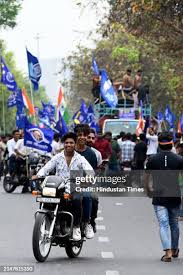
The traffic police in Gautam Buddh Nagar have issued a detailed traffic advisory ahead of a major public event scheduled on April 14, 2026, at Dalit Prerna Sthal in Sector 95, Noida. The programme is being organised to mark the birth anniversary of Dr. Bhimrao Ambedkar, and is expected to draw a significant number of visitors, prompting authorities to implement temporary traffic diversions and parking arrangements across key routes in the city. According to the advisory posted by the official handle of Noida Traffic Police (@Noidatraffic) on X, traffic congestion is anticipated particularly along the Noida–Greater Noida Expressway and adjoining sectors, which serve as major access points to the event location. For those commuting from Greater Noida to Noida via the Noida–Greater Noida Expressway, traffic diversions may be implemented if congestion builds up near Dalit Prerna Sthal. In such situations, vehicles will be redirected at the Mahamaya Flyover towards Sector 37, after which commuters can proceed through Atta Peer Chowk, Rajnigandha Chowk, and Sector 15 Golchakkar to reach their destinations. 04 of the Dalit Prerna Sthal, traffic will be diverted from the Film City Flyover towards Sector 18. Vehicles will then be able to proceed through Rajnigandha Chowk, Sector 15 Golchakkar, or use the Sector 18 underpass and elevated road network for onward travel. Traffic movement from Noida towards Greater Noida will also be affected. In the event of congestion near the DND Flyway or Film City Flyover, vehicles will be redirected from the Sector 14A Flyover towards Sector 15 Golchakkar. From this point, commuters can take the route via Rajnigandha Chowk, Atta Peer Chowk, and Sector 37 to continue towards their destination. In addition to traffic diversions, authorities have outlined specific parking arrangements for attendees arriving from different directions. Light vehicles coming from Pari Chowk, Sector 37, and Greater Noida West will be accommodated inside Gate No. 01 of the Dalit Prerna Sthal premises. Vehicles approaching from Delhi will be directed to use the designated multi-level parking facility within Film City. For travelers coming from the Kalindi Kunj end, provision of parking space has been made at the underground parking adjacent to the Sector 95 nala (Ganda Nala), near the Dalit Prerna Sthal. This has been done to ease vehicular management and prevent crowding on the roads. Further, the notice states that ambulances, fire engines, and other emergency vehicles will not be hindered by the traffic diversion and will have free access to all points during the period. The traffic police will manage traffic at important intersections and help commuters where required. It is requested that the citizens follow the traffic management plan and use alternate routes to reduce traffic. In case of any problem or help, they can call the traffic helpline number at 9971009001. Given the massive attendance expected for Ambedkar Jayanti, it becomes essential that citizens follow the notice strictly. Courtesy : TOI Note: This news is originally published on https:/timesofindia.com/bha and is used purely for non-profit/non-commercial purposes, especially human rights
How Do Memorials Empower Dalits? BJP Launches Campaign on Ambedkar Jayanti; Strategy to be Based on Feedback
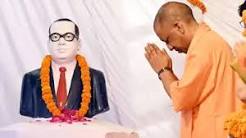
UP BJP Campaign News: Addressing the question of how memorials serve to empower Dalits, the UP BJP has launched a major campaign. Through this initiative, the party aims to deepen its outreach and influence within the Dalit population. Lucknow: To what extent has—or will—the construction or renovation of Dalit memorials in Uttar Pradesh empowered the Scheduled Caste (SC) community? This will serve as a key metric for feedback during an ambitious public outreach campaign currently being conducted by the Bharatiya Janata Party (BJP) on the occasion of the 135th birth anniversary of Dr. B.R. Ambedkar, the architect of the Constitution. To this end, the party launched the ‘Basti Sampark Abhiyan’ (Settlement Outreach Campaign) today—Wednesday. Its objective extends beyond merely commemorating Ambedkar’s legacy. As part of this campaign, the UP BJP will also systematically gather ground-level feedback regarding the effectiveness of various welfare schemes and government initiatives currently being implemented for marginalized communities. This initiative comes on the heels of a decision by the Yogi Adityanath government to allocate ₹1 crore for the renovation of Dalit memorials in each of the state’s 403 Assembly constituencies. Part of BJP’s Strategy Chief Minister Yogi’s move is viewed as an integral part of the BJP’s broader strategy to further consolidate its outreach among SC voters. Additionally, one of its key objectives is to counter the ‘PDA’ (Backward Classes, Dalits, and Minorities) narrative championed by the Samajwadi Party-Congress alliance ahead of the crucial Assembly elections scheduled for next year. According to party sources, the BJP’s SC Morcha (wing) has been entrusted with the responsibility of spearheading this campaign, with a specific emphasis on engaging directly with people at the booth level. Sources further revealed that teams—comprising leaders from both the ‘Savarna’ (upper-caste) and SC communities—will tour various districts to visit Dalit-dominated localities. These teams will engage in direct interactions with the residents of these areas. **SC Morcha Chief Provides Details** Ram Chandra Kannaujia, Chief of the BJP State SC Morcha, stated that this campaign will definitively assess whether the renovation of Dalit monuments has truly had any impact on socially deprived sections of society—and if so, to what extent. He further added that party workers would also seek public feedback on local issues and identify additional measures necessary for the welfare of the community. This emphasis being placed on the construction and renovation of monuments signals a shift in the BJP’s approach. Such symbolic politics has traditionally been associated with BSP Chief Mayawati. During her tenure as Chief Minister, she prioritized the construction of statues, parks, and monuments as a means to establish Dalit identity and psychologically empower the community. **District-Level Workshops** As part of this campaign, workshops will also be organized at the district level. The objective of these workshops will be to raise awareness regarding the various welfare schemes currently being implemented for marginalized groups. By linking the redressal of grievances with the dissemination of information about these schemes, the BJP is attempting to transform its welfare initiatives into political capital. Party insiders revealed that the primary aim of this initiative is to counter the opposition at the grassroots level, while simultaneously accelerating organizational preparations ahead of the 2027 Assembly elections. Viewed as a calculated blend of symbolism and grassroots mobilization, this campaign underscores the BJP’s broader strategy: to acknowledge and validate identity, while simultaneously consolidating its support base among SC voters by integrating these efforts with its development-centric messaging. Reported by: Pankaj Shah • Curated by: Rahul Parashar Courtesy: Hindi News
Massive Outrage Over Dalit Student’s Suicide Due to Alleged Caste Discrimination
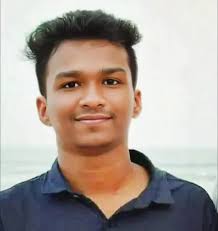
The suicide of a first-year BDS Dalit student in Kerala’s Kannur district has sparked widespread outrage, with various organizations taking to the streets to demand strict action against the teachers held responsible. (DC) Student, youth, women organisations, call it “institutional murder” demand stringent action against accuse Thiruvananthapuram: The suicide of a first-year BDS Dalit student in Kerala’s Kannur district has sparked widespread outrage, with various organizations taking to the streets to demand strict action against the teachers held responsible. On Monday, student, youth, and women’s groups linked to the CPM, Congress, and BJP staged separate protest marches to Kannur Dental College in Anjarakandy, accusing the police of protecting the culprits. Protesters called the death an “institutional murder” and demanded justice. Nithin, 26, was found on April 10 lying on a stone-paved area between the campus’s administrative block and hospital building. The police registered a case of unnatural death under Section 194 of the Bharatiya Nagrik Suraksha Sanhita (BNSS). They also booked two teachers, Dr. K. M. Ram, head of the department, and K. T. Sangeetha Nambiar, after Nithin’s family alleged harassment and caste-based abuse. The absconding teachers have been charged under Section 3(1)(r) of the Scheduled Castes and Scheduled Tribes (Prevention of Atrocities) Act, which addresses intentional insult or intimidation of an SC/ST community member in public, and Section 108 of the BNS for abetment of suicide. The case followed the emergence of audio clips in which Nithin alleged caste-based harassment. On Monday, a police team from Kannur visited Nithin’s home in Uzhamalakkal, Thiruvananthapuram district, to record statements from his parents and relatives. A seven-member Special Investigation Team (SIT), including cyber experts, has been formed to investigate the case. Three audio clips linked to Nithin have emerged, in which he accuses a faculty member of making casteist remarks, insulting him, and issuing threats. In one clip, he says he was called an “idiot” in the staff room and threatened with physical harm. “I tolerated the insults as much as I could,” he says in the recording. Dental College Principal Vinod Moni, however, told media persons on the day of the incident that no complaints related to caste abuse have been received. He said the academic administration will fully cooperate with the police for a detailed probe. Police are also looking into a loan angle Kannur City Police earlier mentioned a loan repayment issue as a possible factor in Nithin Raj’s death by suicide. His family stated that he had taken the loan with their knowledge to pay for his mother’s treatment. Kannur City police commissioner Nidhinraj said that an analysis of Nithin’s mobile phone call records showed he had taken a loan through a mobile app between December and January. Nithin had received several calls about the loan, and the lending agency had even obtained the contact number of one of his teachers. When the loan went unpaid, the agency reached out to the teacher, with similar calls made on April 10, which may have caused mental stress. However, the family said neither the teacher nor the institution informed them about the matter. “They have my contact details; they could have told me at least once. I would have cleared my son’s dues,” said Nithin’s father. Students allege harassment Some students from Ancharakandi Dental College revealed on Monday that the accused teacher, Ram, was a constant source of trouble. “He often uses foul language, body shames girls, tells boys to hit girls, and threatens to lower marks,” said one student. “Even though we faced harassment, we stayed silent out of fear. He would claim that all the external examiners were his colleagues or juniors, and if we complained, he’d instruct them to fail us,” added another studen Courtesy : Deccan Chronicle Note: This news is originally published on https:/deccanchronicle.com/bha and is used purely for non-profit/non-commercial purposes, especially human rights
GTU study maps Dalit entrepreneurship in Gujarat
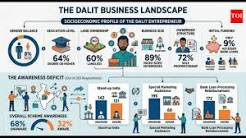
Ahmedabad: A doctoral study from Gujarat Technological University (GTU) offers one of the most comprehensive assessments to date of Dalit entrepreneurship in Gujarat, detailing how many within the community are turning to business ownership as a means of economic independence and self reliance, an idea articulated by Dr B R Ambedkar. The PhD thesis, titled ‘An In Depth Study of Dalit Entrepreneurship in Gujarat’, by research scholar Jay Raval, is based on a survey of 263 Dalit entrepreneurs across all 31 districts of the state. The study is supported by 35 in depth interviews, discussions with eight bankers and government officials, and case studies from Ahmedabad, Bhavnagar and Sanand. Raval says, “The absence of land makes formal finance almost inaccessible. That one structural gap shapes everything.” According to the study, the lack of land ownership affects access to institutional finance and influences business operations. One entrepreneur from the outskirts of Gandhinagar reported that his vehicle sales remained at 2-3 units a month until he changed his surname, after which sales rose to 8-10 units a month. Another entrepreneur, originally surnamed ‘Parmar’, adopted an upper caste name. Overall, 45% of respondents said they actively conceal their surnames to avoid bias. The research also notes the limited presence of Dalit entrepreneurs in food and hospitality. Raval writes that “caste notions of ‘purity’ govern consumer behaviour,” resulting in Dalit entrepreneurs being more concentrated in sectors such as construction and labour contracting. Bindiya Soni, Raval’s research guide and a professor at Anand Institute of Management and Information Science, described entrepreneurship as “the most powerful tool for social reform” while pointing out that access to government support remains uneven. The study found that 68% of respondents were unaware of any entrepreneurship scheme, including 195 out of the 263 who had no knowledge of the Special Marketing Assistance Scheme. At the same time, 55% of Dalit entrepreneurs reported employing workers from other communities. “As first generation entrepreneurs, our money mathematics is different,” said Devendra Khuman, an entrepreneur from Ahmedabad and former functionary of the Dalit Indian Chamber of Commerce & Industry (DICCI). “The barrier is not only caste: it’s capital, confidence, and an ecosystem that is still forming.” The study records relatively high educational attainment, with 64% of respondents holding a graduation degree or higher. However, 60% of those surveyed are landless. Among those who own land, 23% possess less than 0.5 acre, limiting their access to collateral-based institutional lending. As a result, 89% of Dalit-owned enterprises are micro-sized, and 72% operate as sole proprietorships. Half of the respondents reported a median annual turnover of less than Rs 6.5 lakh. The community’s entrepreneurial participation also remains skewed by gender, with 92% male and 8% female entrepreneurs. Raval describes the financing gap as a “chicken and egg” situation. Only 9% of respondents secured bank loans for startup capital. Instead, 44% relied on family savings, 28% on loans from friends, and about 100 respondents used their own funds entirely. The study finds that 88% of entrepreneurs own a single business, reflecting limited scope for expansion. Courtesy : TOI Note: This news is originally published on https:/timesofindia.com/bha and is used purely for non-profit/non-commercial purposes, especially human rights
Vaanam Art Festival’s Fifth Edition Reclaims Dalit Narratives
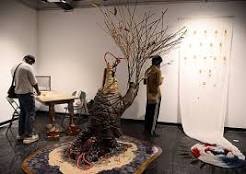
At Lalit Kala Akademi, 36 artists confront caste through powerful works Segregation isn’t always loud; most times it’s in the quiet differences that remind you where you stand. For many Dalits, even today, this isn’t a thought experiment, it’s a lived reality. Exploring the struggles, resistance, and evolving identities of Dalit communities; histories that have long been marginalised or overlooked, in observance of Dalit History Month, is The Whole Story. The fifth edition of Vaanam Art Festival by the Neelam Cultural Centre, brings together 36 artists from across India. The art works here are not just paint on canvas or clay shaped into sculptures. Each one carries a clear sense of identity, shaped by histories of exclusion, everyday negotiations of dignity, and acts of quiet defiance. As you walk through the exhibition, certain elements repeat. Eyes appear in many of the paintings, almost as if they are watching back, making it hard to just pass by. They hold your gaze, making you more aware and accountable. Mirrors placed around the hall and within some artworks pull you into the frame, making you part of what you are looking at. Nothing feels random; every detail seems to be shaped by a long history of caste and exclusion, much like the histories these works reflect. Continue further, and a mud wall stands firm, representing the spaces these women come from, with fibre sculptures of Dalit women emerging from it, as if stepping out of those confined environments into new spaces. “Despite their work and contributions, Dalit women have long remained sidelined, their contributions rarely finding space in recorded histories,” says artist and curator Natarajan Gangadaran. The work resists their historical erasure and insists on visibility in spaces that once excluded them. Among the figures is Annai Meenambal, the first woman president of the South India Scheduled Castes Federation, who is seen reclaiming a place in history that has often left women like her out. “Thambi, left ah right ah?” (used in Thirunelveli to determine Pallar as left and Paraiyar as right), “Neenga enna aalunga?”— phrases like these which are often used casually, carry embedded markers of caste. As a student, Purushothaman did not fully understand their meaning until much later. Today, he brings these expressions into his artwork. “As a non-Dalit, I feel it’s important for me to be part of this. If we are moving towards caste abolition as a society, I think the responsibility lies more with non-Dalits,” he says. How deeply rooted are discrimination and pain, that one begins to find moments of happiness within them? Catherine, born and raised in Chennai, draws from her childhood to answer this. Growing up in confined spaces, she recalls how rainwater, often mixed with sewage, would enter their homes. Yet, amid this, there were small moments of joy, making paper boats from old notebooks with her brother and letting them float in the water. She brings this memory through a stone sculpture. “The landscapes have not changed in these places,” she says. “Most people here are workers who are oppressed and segregated and that’s why I wanted to present this here.” One of the works that stands out is Rajasekar’s depiction of Savitribai Phule, highlighting how she used education to empower women, what the artist calls a “silent revolution”. At the centre of the painting, Phule sits surrounded by a small group of students, an open book in her hands from which light emerges, symbolising knowledge being passed on to the widowed and Dalit women. “In the next frame, I’ve portrayed her as a metaphor, almost like an angel,” Rajasekar explains. “She holds a cage and opens it, and the women inside are like birds. When birds are freed, we usually offer them grains, but here, the angel holds stars. The stars represent knowledge,” he adds. As the women, imagined as birds, reach out to these stars, they move towards an endless blue sky, a space that opens up beyond the frame. These are just five stories of artists, their thoughts, and lived experiences. The art works at the exhibition make it harder to look away from the caste system. The Whole Story, the fifth edition of the Vaanam Art Festival, is on view until April 18 at the Lalit Kala Akademi. Raksha Maalya RV Courtesy : TNIE Note: This news is originally published on https:/thenewindianexpress.com/bha and is used purely for non-profit/non-commercial purposes, especially human rights