
CCTV Inside Kerala Principal Office Shows Moments Before Dalit Student’s Death
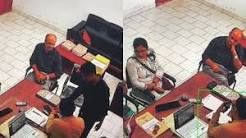
Teachers had earlier stated that Nithin Raj was called to the principal’s office after they began receiving repeated calls from the recovery agent, which they described as persistent harassment. The visuals also show Nithin Raj explaining his situation to teachers inside the principal’s room.Kannur: Days after Nithin Raj, a Dalit student, fell from the fifth floor of his college building and died, NDTV has accessed CCTV footage from inside the principal’s room at Anjarakandy Dental College in Kerala’s Kannur that captured the events that unfolded about 25 minutes before his death. According to police sources, the footage shows teachers speaking to representatives of an instant loan app that had allegedly been making repeated recovery calls linked to a loan taken under Nithin Raj’s name. The agent on the call is heard refusing to remove contact numbers of people connected to the student, including that of a professor, from the reference list until the payment is completed. The visuals also show Nithin Raj explaining his situation to teachers inside the principal’s room. In another CCTV clip, Nithin Raj is seen walking away in tears – a development that investigators are treating as significant in reconstructing the sequence of events leading up to his death. Teachers had earlier stated that Nithin Raj was called to the principal’s office after they began receiving repeated calls from the recovery agent, which they described as persistent harassment. Meanwhile, two teachers named as accused in the case, Dr Ram and Dr Sangeetha Nambiar, have approached the Thalassery Sessions Court seeking anticipatory bail, arguing that they had no role in the suicide and that threats from the loan app may have led to the student’s death. Nithin Raj, a Dalit from a daily wage labourer’s family in Thiruvananthapuram, had secured a BDS seat at Anjarakandy Dental College in Kannur. On the afternoon of April 10, he fell from the fifth floor of his college building and died. What followed was a storm: audio clips of a young man describing caste-based humiliation by his professors, a loan app whose recovery agents had been threatening his teachers, a meeting in the principal’s office, and a family that says they knew none of this was about money. The parents held the caste-based ill treatment by teachers responsible for their son’s death. But the latest police investigation has also revealed continuous harassment from a loan recovery app as a parallel thread that authorities are now probing. Chakkarakkal police initially registered a case of unnatural death. By April 12, they added charges of abetment of suicide under Section 108 of the Bharatiya Nyaya Sanhita and invoked the SC/ST Prevention of Atrocities Act. The FIR was based on a complaint filed by Nithin’s father, Rajan. Kannur City Police Commissioner P Nidhinraj confirmed the formation of a Special Investigation Team headed by Assistant Commissioner of Police Hari Prasad, with cyber cell experts included in the team. Reported by: Aswin Nandakumar Courtesy : NDTV Note: This news is originally published on https:/ndtv.com/bha and is used purely for non-profit/non-commercial purposes, especially human rights
Dalit labourer abducted and killed in UP’s Muzaffarnagar, police book three

The deceased has been identified as Suresh (45), a resident of Ibrahimpur village under Ramraj police station limits in Muzaffarnagar district. A Dalit labourer was allegedly abducted, strangled to death and his body disposed of in a Ganga canal following an altercation, police said on Saturday. Based on CCTV footage and investigation, police have registered a case against three persons and arrested one accused, identified as Vikal (32). The deceased has been identified as Suresh (45), a resident of Ibrahimpur village under Ramraj police station limits in Muzaffarnagar district. Station House Officer (SHO) Ravindra Yadav said a case has been filed against Vikal, Kartik Bhati and Aadesh Goswami under charges of murder and provisions of the Scheduled Castes and Scheduled Tribes (Prevention of Atrocities) Act. According to police, Suresh had left for work at a brick kiln on April 16 but did not return home thereafter. Courtesy : TNIE Note: This news is originally published on https:/thenewindianexpress.com/bha and is used purely for non-profit/non-commercial purposes, especially human rights
Parked Bolero Row Sparks Dalit–Upper Caste Clash in MP’s Sidhi on Ambedkar Jayanti, Over 200 Storm Police Station

Clashes during Ambedkar Jayanti rally in Sidhi left over 12 injured, police station vandalised amid caste tensions. Violence erupted during an Ambedkar Jayanti rally in Sidhi, Madhya Pradesh, after a minor dispute escalated into a major clash between two groups, leaving over a dozen people injured and a police station vandalised. According to officials, the incident took place in the Amiliya area on April 14 when members of the Bhim Army were taking out a rally to mark the birth anniversary of B. R. Ambedkar. The situation turned tense when rally participants asked two men sitting in a parked vehicle to move it. An argument broke out, which quickly escalated into violence. Eyewitnesses said the two men were dragged out of the vehicle and beaten. “One of them collapsed unconscious, but people kept hitting him,” a local resident said, adding that another victim tried to escape but was chased and assaulted inside a nearby house. Clash Turns Into Caste Violence As the rally moved forward, tensions deepened and the incident reportedly took on a caste angle, turning into a clash between Dalit and upper-caste groups. Stone-pelting began from both sides, creating panic in the area. ‘Nida Khan at Home, No Police Visit’: Family Alleges Foul Play in Nashik TCS Case, Moves for Anticipatory Bail Eyewitness Ramakant Shukla said, “Stones were being thrown from all sides. Even my car was hit, and I got injured when I tried to understand what was happening.” Another local, Dinesh Kumar Shukla, said, “Around 20 people were beating the two men. They were not listening to anyone and kept attacking them.” Mob Attacks Police Station The violence escalated further when a large group reached the local police station after the rally ended. Police said more than 200 people stormed the premises, vandalised property, and attacked personnel, including the station in-charge. Officials confirmed that CCTV cameras were damaged, vehicles were destroyed, and officers were assaulted. Station in-charge Rakesh Bais was reportedly chased and beaten during the chaos. Additional Superintendent of Police Arvind Shrivastava said, “The attack was sudden. A group tried to free some people brought to the police station, which led to vandalism and violence.” Injuries and Security Measures Authorities said over 12 people were injured in the violence. While some sustained minor injuries, others required medical attention. District Collector Vikas Mishra said, “We immediately sent teams to the spot. The situation is under control now, and we are ensuring proper treatment for the injured.” Heavy police deployment remains in the area, with more than 200 personnel stationed across key points. Officials have restricted large gatherings and intensified patrolling to prevent further escalation. Allegations and Counterclaims Dalit leader Rani Verma alleged that members of Bajrang Dal were involved in the violence and claimed she was threatened. “They told people to finish me because I support Babasaheb,” she said, adding that the station in-charge intervened and ensured her safety. Meanwhile, police have not confirmed these allegations and said the matter is under investigation. Despite the tension, the local market reopened the next day under heavy security presence. Authorities say the situation is currently under control but remain cautious. Officials have assured strict action against those responsible. “Law and order will not be compromised. Anyone involved in violence will face action,” a senior officer said. The administration is continuing its investigation to determine the sequence of events and identify those behind the clashes. Courtesy : TOP Note: This news is originally published on https:/theobserverpost.com/bha and is used purely for non-profit/non-commercial purposes, especially human rights
Protests erupt at Kannur Dental College over Dalit student’s death following alleged harassment

Student representatives told reporters that the college management has not addressed key concerns even days after the incident. Students of Kannur Dental College on Thursday staged a protest on campus following the death of BDS student Nithin Raj, who was allegedly subjected to caste-based harassment by faculty members. Students from all batches, except those appearing for university examinations, took out a march within the campus and held a dharna in front of the dental college at Anjarakandy. As part of their protest, they also decided to boycott wearing white coats until justice is delivered and action is taken against the accused faculty members. Nithin Raj R L (22), a first-year BDS student, was found critically injured near the medical college block after allegedly falling from a building on April 10. He later succumbed to his injuries. Police have registered a case against two faculty members for abetment of suicide and under provisions of the SC/ST (Prevention of Atrocities) Act, following allegations that he was harassed on the basis of caste and complexion. Student representatives told reporters that the college management has not addressed key concerns even days after the incident. They said a detailed petition outlining their demands would be submitted to the administration. Among their key demands is the removal of Dental Anatomy Head of Department M K Ram, who is named as a prime accused in the case. They also demanded action against other staff allegedly involved. The students alleged that the institution lacks transparency in its functioning and said they are not aware of the composition of the college management. They further said the students’ union has limited effectiveness due to lack of institutional support. They stressed that the inquiry into Nithin Raj’s death must be transparent and time-bound, and said protests would continue until their demands are met. With university examinations underway, they are currently observing a silent protest. Meanwhile, apart from the police investigation, separate inquiries have been initiated by the Kerala SC/ST Commission, the Kerala State Human Rights Commission, the Kerala State Youth Commission, and the Medical Education Department. The accused faculty members, including M K Ram and Dr Sangeetha, remain untraced. In a related development, DYFI activists allegedly damaged the nameboard of Dr Dilna’s Dental Clinic in Edakkad, Kannur, during a protest march. Police said the march was initially stopped by barricades, but a few protesters entered the premises and vandalised the clinic signage before erecting party flags and banners. Separately, the Muslim Youth League staged a march to the office of the Kannur City Police Commissioner, protesting the delay in arresting the accused. Police blocked the march with barricades and used water cannons after protesters refused to disperse, continuing their agitation into the afternoon. Courtesy : TNIE Note: This news is originally published on https:/thenewindianexpress.com/bha and is used purely for non-profit/non-commercial purposes, especially human rights
Telangana caste survey: Dalits nearly four times more likely to avail loans for medical treatment than upper castes

The Expert Working Group recommended a shift in how the state delivers financial protection, moving away from population-share models toward what the report calls a “social justice 2.0” framework. Synopsis: The survey also revealed a troubling divide regarding where marginalised communities borrowed money for medical treatment. STs reported the highest dependency on informal moneylenders at 9.7%, followed closely by SCs at 8.8%. General Caste households reported just 5.1% reliance on moneylenders and access to private banks at a rate of 19.3%, compared to only 5.9% among ST households. The Telangana government’s Socio, Economic, Educational, Employment, Political and Caste (SEEEPC) Survey 2024, which covered 3.55 crore individuals across the state, has found that Scheduled Caste households are nearly four times more likely to borrow money for medical treatment than General Caste households, even when both earn the same income. The survey identified dependency on medical loans as one of its primary indicators of financial insecurity and the absence of savings to absorb sudden health shocks. Across Telangana, 11.5% of urban households and 10.2% of rural households reported borrowing specifically for medical purposes. But those averages conceal a deeply unequal distribution across caste categories. In urban areas, Scheduled Caste households reported the highest medical loan dependency at 17.3%. Backward Classes follow at 12.4%, Scheduled Tribes at 12.6%, and General Caste households at just 4.9%. In rural areas, the SC figure stood at 15.9%, against a General Caste average of just 4.7%. Across both urban and rural settings combined, SCs report a state-wide medical loan dependency of 10.9% against 3% for General Caste households, a gap of nearly fourfold. The SC Beda community was identified as the most financially exposed in the entire state, with 14.7% of households dependent on medical loans. At the other end, OC Jains reported the lowest reliance in the state at just 1%. Poverty is not casteless The most significant finding on medical borrowing is what happens when income is removed as a variable entirely. The Independent Expert Working Group isolated only those households earning below ₹1 lakh annually, the survey’s definition of the extreme poor, and examined their medical loan dependency across caste categories. Among the extremely poor, 12% of SC households carried medical debt. Among General Caste households at the same income level, the figure was just 4%. A poor Dalit family and a poor upper-caste family earning the same amount faced fundamentally different financial risks when a health crisis struck. The Expert Working Group concluded that this reflected a structural absence of family support networks, savings buffers and informal financial safety nets among marginalised communities, advantages that General Caste families retain even in poverty. Also Read: Telangana releases caste survey, reveals BCs make up 56% of state’s population Who is lending, and at what cost The survey also revealed a troubling divide regarding where marginalised communities borrowed money for medical treatment. STs reported the highest dependency on informal moneylenders at 9.7%, followed closely by SCs at 8.8%. General Caste households reported just 5.1% reliance on moneylenders and access to private banks at a rate of 19.3%, compared to only 5.9% among ST households. The distinction mattered enormously. Loans from scheduled or private banks come with regulated interest rates and formal repayment structures. Loans from moneylenders do not. For SC and ST families, borrowing out of desperation rather than investment, unregulated interest rates could convert a medical emergency into a multi-year or even generational debt burden. The district picture The scale of the problem varied considerably across Telangana’s districts, but the caste hierarchy within it remained consistent. In Jayashankar Bhupalpally, 32.1% of urban SC households reported medical loans, compared to 10.8% of OC households in the same district. In Jagitial, the urban SC figure stood at 28.2% against 9.3% for OCs. In Rajanna Sircilla, 26.9% of urban SCs reported medical borrowing compared to 11.4% for OCs. Even in Greater Hyderabad, the gap persisted. SC households in GHMC reported medical loan dependency of 12.5%, while OC households in the same area reported just 5.2%. In rural areas, SC households in Jagitial reported 23% medical loan dependency against 4.9% for OCs. In Peddapalli, the rural SC figure was 26.3% versus 7.4% for OCs. In Jayashankar Bhupalpally, 25.2% of rural SC households reported medical borrowing, compared to 6.8% for OCs in the same district. One consistent pattern across districts was that the OC figure rarely crossed 12% even in the most medically stressed districts, while SC figures regularly exceeded 20%, and in some districts, they approached 30%. The welfare paradox The survey’s findings on medical debt become more striking when placed alongside data on welfare access. Scheduled Castes already make up 21% of Aarogyasri health scheme beneficiaries, a share higher than their 17% population share in the state. SCs are over-represented among those receiving the state’s primary health welfare scheme, and they are still borrowing for medical treatment at nearly four times the rate of upper-caste households. The implication is direct: existing health coverage is not sufficient to prevent medical emergencies from pushing Dalit households into debt. The Expert Working Group described the findings as a “severe indictment” of existing financial inclusion models, arguing that access to a welfare scheme is not the same as financial protection against health shocks. One nuance the data reflected was the relative financial exposure of rural General Caste households. In rural areas, OC households reported medical loan dependency of 4.7%, which, while still far below the SC rural figure of 15.9%, was notably higher than the 4.9% figure for urban OC households. This suggested that the absence of healthcare infrastructure in rural areas created additional financial pressure even for relatively privileged communities. But the gap with SC households remained wide regardless of geography. Even in rural Telangana, SC households borrowed for medical treatment at roughly three times the rate of their OC neighbours in the same districts. What the survey recommends The Expert Working Group recommended a shift in how the state delivers financial protection, moving away from population-share models toward what
Baba Saheb Ambedkar’s Statue Vandalized During BJP Leader’s Birthday Party; Angry Mob Resorts to Violence

A video of the incident is going viral, in which people can be seen running helter-skelter amidst stone-pelting. It is reported that a birthday celebration for BJP leader Ajay Pratap was being held in the village last night, attended by a large number of people. During the festivities, news spread that a finger on the statue installed in Ambedkar Park had been broken, and almost instantly, the atmosphere turned tense. Ambedkar Park Statue Vandalism: In the Moradabad district of Uttar Pradesh, just two days after Ambedkar Jayanti, the situation suddenly deteriorated on Friday when reports emerged that the statue of Baba Saheb installed in Ambedkar Park had been vandalized. It is alleged that between 10:00 PM and 11:00 PM last night, as news spread that a finger on the statue in Ambedkar Park had been broken, the atmosphere became tense; within moments, stone-pelting ensued, leaving several people injured. A video of the incident is circulating online, showing people running in panic amidst the stone-pelting. It is reported that a birthday party for BJP leader Ajay Pratap was being celebrated in the village last night, attended by a large gathering. It was during this time that the news regarding the broken finger on the statue in Ambedkar Park spread, and the situation quickly escalated into tension. BJP Leader Ajay Pratap’s Birthday Celebrated in the Village According to reports, the entire incident took place in Narayanpur Chhanga village, located within the jurisdiction of the Thakurdwara Kotwali police station. A birthday celebration for local BJP leader Ajay Pratap was underway in the village, attended by a large crowd. Amidst the festivities, news spread that a finger on the statue in Ambedkar Park had been broken; the atmosphere immediately turned tense, and stone-pelting began, reportedly resulting in injuries to several individuals. Dalit Community Members Level Serious Allegations Regarding the Incident Members of the Dalit community have leveled serious allegations regarding the incident. They claim that a group of individuals first entered Ambedkar Park, consumed alcohol there, and subsequently used offensive language. The locals further allege that casteist slurs were directed against them and that the atmosphere was deliberately vitiated. Following the incident, reports have emerged that villagers vandalized several homes and vehicles belonging to 50 Dalit families, creating an atmosphere of fear and tension throughout the village. Police arrived at the scene and have deployed a heavy force to bring the situation under control. The police are continuously patrolling the area to ensure the situation does not deteriorate further. **Allegations of Disrespectful Acts Against Baba Saheb’s Statue** Women have alleged that disrespectful acts were committed against the statue of Baba Saheb (Dr. B.R. Ambedkar), sparking outrage across the entire community. Following these allegations, a large number of people gathered at the site, bringing the two opposing factions face-to-face. This confrontation escalated into physical altercations and stone-pelting, leaving more than a dozen people injured. **’Baba Saheb’s Statue Vandalized by Supporters of a BJP Leader’** A local resident named Vishal stated that a birthday party for a BJP leader was being held in the village when his supporters vandalized Baba Saheb’s statue; they also allegedly hurled casteist slurs and beat people with sticks and clubs. Another villager, Rajkumar, explained that a rally was organized in the village on April 14th to celebrate Bhimrao Ambedkar Jayanti. He noted that the BJP leader had not been invited to this rally, and it was precisely out of resentment over this exclusion that his supporters vandalized Baba Saheb’s statue. The aggrieved party has filed a written complaint with the police, demanding strict action against the accused. Regarding the matter, police officials have stated that an investigation is underway and that appropriate action will be taken after considering all aspects of the case. One of the injured victims, Mansi, alleged, “Baba Saheb’s statue was broken, and casteist slurs were directed at us.” **’Statue Vandalized Out of Anger Over BJP Leader’s Exclusion’** According to Shweta, a local woman, Baba Ambedkar’s statue had been installed just last year. She recounted that this year, on April 14th, Bhimrao Ambedkar Jayanti was celebrated, but the BJP leader was not invited. Angered by this omission, the leader and his supporters allegedly vandalized Baba Saheb’s statue; furthermore, they reportedly barged into people’s homes to assault them, engaged in stone-pelting, and damaged vehicles. Also Read: Bike-borne robbers flee after tearing both ears of an elderly woman to snatch her gold earrings; blood-soaked victim left writhing in agony on the road. Reported by: Mirza Ghalib, Edited by: Shiv Om Gupta Courtesy: Hindi News
Paint meets protest at this dalit art exhibition in Chennai

Chennai: A sketch of Ambedkar burning the only book he hated, the Manusmriti; a sculpture of a cracked foot symbolising social discrimination; Rohith Vemula’s iconic words, ‘My birth is my fatal accident’. The fifth edition of the Dalit Aesthetics Art Show 2026 titled ‘The Whole Story’, on at the Lalit Kala Akademi, brings together 36 artists from across the country. Presented by Neelam Art Collective, founded by filmmaker Pa Ranjith, the show is held as part of the Vaanam Festival, an annual cultural initiative that brings together artists, thinkers, and audiences to engage with issues of social justice, identity, and creative expression. This year’s edition honours senior artist Savindra Sawarkar. “He was the first person who started using the word ‘Dalit art’, in the 1960s and 1970s, says Prema Revathy, who represents Neelam Art Collective. “His work speaks about Varnashrama, how Buddhism is an alternative to that and how dalits are taking up Buddhism.” The show is loosely divided into two sections, says Revathy. “On the one hand are the everyday crises and the struggles of resistance. But more important is the other side, the joy, the celebrations and contributions of dalit people to society. We also have a whole gallery of work on Ambedkar,” she says. The exhibition is being held in April as it is Ambedkar’s birth month and observed as dalit history month. Natarajan Gangadaran’s installation speaks about six dalit women who have done incredible work but whose struggles, he says, have “always been invisible”. “They include Krishnammal Jagannathan, Meenammal, Veerammal, Annapoorniammal and Sathyavani Muthu,” he says. Melody Dorcas’ work looks at war and genocide while Tamil artist Osheen Siva’s is futuristic and dystopic, employing the fluorescent colours of the black art movement. “My works have been influenced by Afrofeaturism and indigenous featurism. Another area I’m interested in is counter mythology, which looks into denaturalising and foregrounding marginalised histories and culture and looks into stories and histories that are not within the dominant Hindu canon,” says Osheen. “Ajay Kumar is a non-Dalit artist but has created an animation about his own struggles forming a relationship with Ambedkar’s works. The show will be on till April 18. Courtesy : TOI Note: This news is originally published on https:/timesofindia.com/bha and is used purely for non-profit/non-commercial purposes, especially human rights
Kerala Dalit student death: Family raises suspicion on hospital treatment

His sister Rekha said the college authorities were yet to disclose details of the treatment provided to him after he was found injured. Thiruvananthapuram: The family of a BDS student who died after falling from a building at a dental college in Kannur in a suspected suicide case on Wednesday, April 15, alleged that he was denied timely treatment after the incident. Nithin Raj RL (22), a first-year Bachelor of Dental Surgery student, was found critically injured near the medical college block after falling from a building on April 10 and later succumbed to his injuries. The family alleged that Raj ended his life following harassment over caste and colour by faculty members. Delay in identifying his blood group Speaking to reporters, his sister Rekha said the college authorities were yet to disclose details of the treatment provided to him after he was found injured. “He was admitted to the medical college for two hours. There was a delay in treatment as his blood group could not be identified. How much time does it take for a medical college to identify a blood group,” she asked. The family does not believe the claims made by the institution, Rekha added. “They claim five units of blood were given. We want to know what treatment was provided to him. Students who saw him said he had only suffered a fracture in one leg,” she said. Rekha alleged that no clarification has been given so far by the medical college, which is part of the dental college. She also denied claims by the college authorities that the family could not be contacted after a loan app-related issue surfaced. Something suspicious happened at college, sister alleges The college had claimed that Raj was under pressure after borrowing money through a loan app, whose operators had even contacted one of the teachers seeking repayment. “If his father was unavailable on phone, they should have asked for an alternative contact number,” she said. “There is something suspicious that has happened at the college. Raj would not end his life out of sympathy for a teacher who was disturbed over loan app operators contacting her,” Rekha said. She further alleged that Raj’s phone had been taken by the college authorities before his death. “If the phone was with him, he could have contacted us and changed his mind. But they did not give it to him,” she alleged. Rekha said the family was aware of a loan issue involving Raj, but alleged that he had been subjected to harassment from college faculty. Accused suspended from college, but absconded Earlier, police had registered a case against two faculty members for abetment of suicide and under provisions of the Scheduled Caste/ Scheduled Tribe (Prevention of Atrocities) Act, following allegations that Raj was harassed over his caste and complexion. The two accused, who have been suspended, are currently absconding. Meanwhile, television channels aired a purported voice message of Raj in which he alleged harassment by faculty members and expressed apprehension about being intentionally failed in the exam, though he also voiced hope of completing his course. A Special Investigation Team probing the case has recorded statements from Raj’s classmates, some of whom also alleged that they faced hardships from college teachers. RL Nithin Raj Courtesy : TSD Note: This news is originally published on https:/thesiasatdaily.com/bha and is used purely for non-profit/non-commercial purposes, especially human rights
How Dalit outreach is peaking in Uttar Pradesh in run-up to 2027 polls

From the BJP restoring statues of social justice icons to Rahul Gandhi and Akhilesh Yadav invoking Kanshi Ram, the politics of symbolism is hard to miss As Uttar Pradesh moves closer to next year’s assembly polls, the politics of symbolism is getting harder to miss. Statues, memorials and historical figures are once again at the heart of the messaging, and it’s not a one-party phenomenon. The ruling BJP is taking the lead. The Yogi Adityanath administration has rolled out a Rs 403 crore scheme to upgrade and maintain statues of B.R. Ambedkar and other social justice icons, such as Sant Ravidas, Sant Kabirdas, Jyotiba Phule and Maharishi Valmiki, across the state’s 403 assembly constituencies. The plan goes beyond routine upkeep and focuses on making these sites more attractive. Accordingly, funds are being allocated for lighting, landscaping, boundary walls and protective structures. Each constituency is expected to get funds for multiple statues, but there will be a cap on spending per site. While officials say the aim is to honour social reformists and improving public spaces around their memorials, the timing has a clear electoral context. Since the 2024 Lok Sabha polls, when its tally in Uttar Pradesh fell by almost half to 33 seats and the Samajwadi Party (SP)-Congress alliance made significant gains, the BJP has been looking to rebuild its social coalition in the state. That electoral shift in 2024 was visible even within reserved constituencies. Of the 17 Scheduled Caste seats, the BJP won eight while the SP won seven and the Congress one seat. The result suggested that the Dalit vote, once seen as tightly aligned, was now more open and contested. For the BJP, reinforcing its outreach within these communities has become a priority. Alongside the memorial upgrade, chief minister Adityanath has spoken about installing protective canopies over the statues of Ambedkar and other icons. The effort is seen as one to project the BJP as a party that cherishes the legacy of social justice leaders. In political terms, it is a way of countering the SP’s Pichada, Dalit, Alpasankhyak (PDA) pitch, which seeks to consolidate the backward classes, Dalits and minorities into a single bloc. The Opposition is responding with its own push. Consider SP chief Akhilesh Yadav’s moves. At his ancestral home in Etawah, a large temple complex is coming up, blending personal legacy with a broader cultural signal. For a leader often framed through a narrow political lens, it all appears designed to widen that perception. In western Uttar Pradesh, his outreach has taken another form. At a rally in Dadri, a Gurjar-dominated area, Akhilesh announced that a statue of the 9th century king Mihir Bhoj would be installed in Lucknow. The choice seemed well crafted as Bhoj is revered by both Gurjars and Rajputs. The announcement seemed to fit into a larger effort by the SP to expand its social base. All this symbolism is also tied to a deeper churn around the Dalit vote. Scheduled Castes make up roughly 21 per cent of Uttar Pradesh’s 243 million population and are spread widely across communities such as the Jatavs, Pasis and Valmikis. For decades, this base was firmly anchored with Mayawati’s Bahujan Samaj Party (BSP), but that grip has loosened in recent years. The BSP drew a blank in the parliamentary elections in Uttar Pradesh in 2024. Dalit voters have also opened up to newer faces outside the BSP, such as Chandrashekhar Azad, the Lok Sabha MP from Nagina. The legacy of Kanshi Ram too is acquiring newer political meaning. The late BSP founder, who reshaped Dalit politics in north India, is being invoked by several parties. Congress leader Rahul Gandhi has described Kanshi Ram as a figure who transformed political representation for the marginalised communities. He wrote to Prime Minister Narendra Modi for a Bharat Ratna for Kanshi Ram. Akhilesh too has been invoking Kanshi Ram’s legacy while recalling his party’s past alliances with the BSP. While this seeks to position the SP within that broader history of social justice politics, the party has also sharpened its PDA narrative, placing Dalits at the centre of its electoral strategy. The Dalit push from political opponents has drawn a sharp response from BSP chief Mayawati. She accused the SP and Congress of trying to appropriate Kanshi Ram for electoral gains, warning Dalit voters against such ‘opportunistic’ politics. Her argument rests on the familiar claim that the BSP alone represents the interests of Bahujan Samaj. As Dalit outreach peaks in Uttar Pradesh a year before a decisive election, no party can claim exclusive control over this vote base. Instead, it has become the site of active competition, wherein both policy and symbolism are being used to breach walls and build connections. Avaneesh Mishra, Edited By: Ashish Mukherjee Courtesy : India Today Note: This news is originally published on https:/indiatoday.com/bha and is used purely for non-profit/non-commercial purposes, especially human rights
BSP Chief Mayawati Backs Women’s Quota, Seeks Separate Reservation For Dalit And OBC Women

BSP chief Mayawati on Wednesday supported the proposed 33% reservation for women in Lok Sabha and state assemblies but demanded a separate quota for Dalit and OBC women. Addressing a press conference in Lucknow, she said ensuring representation of marginalised sections is crucial and reiterated her party’s long-standing demand for 50% reservation in legislatures. BSP Chief Mayawati Backs Women’s Quota, Seeks Separate Reservation For Dalit And OBC Women | Lucknow: Bahujan Samaj Party chief Mayawati on Wednesday welcomed the decision to provide 33 percent reservation for women in the Lok Sabha and state assemblies, but demanded a separate quota within it for women from Dalit and Other Backward Classes. Addressing a press conference, Mayawati said her party has consistently advocated 50 percent reservation for women in legislatures. She said that while the BSP supports the proposed 33 percent quota as a step towards improvement, it is equally important to ensure representation for marginalised sections among women. The BSP supremo also targeted the Indian National Congress, alleging that it had not taken concrete steps to introduce women’s reservation during its time in power. She accused the party of attempting to stall the reform now by raising new issues. Reiterating her party’s stand, she said the BSP supports the decision in principle but will continue to press for sub-categorisation to protect the interests of Dalit and OBC women. Referring to the birth anniversary of B. R. Ambedkar observed across the country on Monday, Mayawati said she paid tributes to the architect of the Constitution. She also criticised other political parties for what she described as attempts to woo Dalit voters by adopting symbols associated with the BSP. She said several parties have recently used the colour blue in their programmes to attract Dalits, but asserted that the community remains aligned with the BSP’s ideology and such efforts would not succeed. BISWAJEET BANERJEE Courtesy : TFPJ Note: This news is originally published on https:/thefreepressjournal.com/bha and is used purely for non-profit/non-commercial purposes, especially human rights