
TM Investigation | Hopes dashed: No consultation with NCSC, so how was the path to becoming pilots blocked for Dalit students?
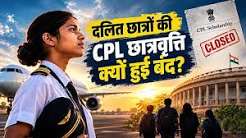
After a detailed BANAE report, Rahul Gandhi demanded the restoration of scholarships from the Social Justice Minister. New Delhi. Major decisions are often recorded in very short lines in government files. The story of the end of the Commercial Pilot License (CPL) scholarship for Scheduled Caste (SC) students is also contained in one such line in documents obtained by TM. The minutes of a meeting of the Steering Committee of the Top Class Scholarship Scheme, held on July 7, 2023, state that there was a “broad consensus” that the CPL course should be removed from the scheme due to the very high fees and lack of employment certainty for the beneficiary students. This policy decision concerning the Scheduled Caste community was made without consulting the National Commission for Scheduled Castes, which not only violates constitutional provisions but has also deprived 200 deserving Dalit students, who perhaps dreamed of becoming pilots, of their dream careers over the past four years. More than three years after that Steering Committee meeting, this decision is now at the center of political debate. On September 26th, Rahul Gandhi, Leader of the Opposition in the Lok Sabha, wrote a letter to Dr. Virendra Kumar, Union Minister of Social Justice and Empowerment. He demanded that the CPL scholarship be immediately reinstated and all pending cases from 2023 be approved. This letter was not written suddenly; it was represented by a Mumbai-based organization. On September 11th, the Dr. Babasaheb Ambedkar National Association of Engineers (BANAE), based in Andheri (Mumbai), sent a detailed letter to Rahul Gandhi. The organization’s national president, Nagsen Sonare, requested Rahul Gandhi to personally raise the issue with the Minister of Social Justice, citing it as “most urgent/on top priority.” BANAE clearly stated that this was not merely a scholarship complaint, but rather a question of adherence to constitutional safeguards in major policy decisions affecting Scheduled Castes. Fifteen days later, Rahul Gandhi wrote his letter to the Minister, enclosing BANAE’s full representation. In his letter, Gandhi wrote, “Young Dalits across the country dream of looking up to the sky and flying. For years, government scholarships made these dreams come true. These dreams have been shattered since 2023-24. In 2023-24, the CPL course was removed from the “Top Class Scholarship Scheme” for SC students. The Ministry states that eligible students can apply under the Post-Matric Scholarship for SC Students.” Rahul Gandhi says that the scheme’s guidelines do not include any provision for CPL training, and therefore “the path to the cockpit has been closed for most Dalit youth.” The issue arose after a complaint by a Bahujan activist from Uttar Pradesh. Dwarika Prasad, a retired general manager of the Oil and Natural Gas Corporation Limited (ONGC), is the complainant in this entire episode, whose letter brought the matter to the National Commission for Scheduled Castes (NCSC). Through three years of tireless efforts, Dwarika Prasad collected documents through the Right to Information Act and uncovered the reasons behind the closure of this ambitious scheme. Dwarika Prasad, a resident of Mathura district, wrote a letter to the NCSC Chairman, stating that the free scholarship and fee for CPL courses for SC students had been in place for over four decades, but the Ministry of Social Justice had arbitrarily discontinued it. Dwarika Prasad explains that hundreds of poor Scheduled Caste students had benefited from this scheme. They alleged that this decision was taken in violation of Article 338(9) because it appeared that the Ministry had not consulted the Commission before making this major policy decision. They requested the Commission to take up the matter with the Ministry. On January 19, 2026, the Commission’s Under Secretary, K.J. Bhatt, sent a letter to the Secretary, Department of Social Justice, under file number ESDW/IP/UP/2024/259953, based on this complaint. Dwarika Prasad’s representation was attached to it for “appropriate action,” and a copy of the letter was also provided to him. This same Commission letter was later referenced in both BANAE’s representation and Rahul Gandhi’s letter. More than seven months after the Commission’s letter, no effective solution has been found. When CPL was part of the Post-Matric Scholarship To understand what changed, we need to look back. The Centrally Sponsored Post Matric Scholarship Scheme (PMS-2010), which came into effect on July 1, 2010, clearly states CPL as a Group I course, the same category as medical, engineering, and management courses. The CPL course also included training for a commercial helicopter pilot license and multi-engine rating on aircraft like the A-320. Fifty CPL awards were set aside for the entire country each year. State governments and union territories would scrutinize applications and submit the names of eligible candidates to the ministry, which would approve up to 50 awards nationwide on a first-come, first-served basis. Selected students received a maintenance allowance at Group I rates: ₹1,200 per month for hostel residents and ₹550 per month for day scholars. Flight charges were also covered, in addition to all mandatory fees. The same document also stipulated that scholarships would not be awarded for private pilot license and aircraft maintenance engineer courses. Thus, CPL was not an exception, but rather included in the scholarship-eligible courses. Speaking to The Mooknayak, BANAE President Nagsen Sonare says that the CPL scholarship was not a new concession. It was an established facility, recognized by the government as a specialized professional education. Sonare also cited the 2005-06 Union Budget, in which the then Finance Minister announced in Parliament that all three existing scholarship schemes for SC/ST students – pre-matric, post-matric, and merit-based – would continue. In the same speech, he proposed a new window of larger scholarships for SC/ST students enrolled in select institutions of excellence. This later became the “Top Class Education for SC Students” scheme, which came into effect in June 2007. Sonare says that in 2018, CPL was removed from the original Post Matric Scholarship framework, but the government did not discontinue it at that time. The benefit was transferred to the Top Class Education Scheme. The scheme’s guidelines, effective
Karnataka High Court: Acquittal of 26 accused in 17-year-old case of desecration of Baba Saheb’s portrait and SC/ST atrocities upheld
On behalf of the state, public prosecutor K. Nageshwarappa argued that the acquittal was “illegal, invalid, and contrary to the law, evidence, and material on record.” According to him, the lower court failed to properly evaluate the witnesses’ testimony, leading to a miscarriage of justice. Bengaluru: The Karnataka High Court on October 1 dismissed the state government’s appeal against the acquittal verdict delivered by the Chamarajanagar Special Court. The case relates to a 2009 incident in Bommanahalli village in Gundlupet taluk, in which a portrait of Dr. B.R. Ambedkar and a community hall signboard were vandalized, and members of the Scheduled Castes were assaulted and subjected to casteist abuse. A single bench of Justice G. Basavaraj delivered the verdict while hearing the case. The appeal was filed by the state government through the Terakanambi police. According to the prosecution, on June 6, 2009, at around 7 p.m., 29 accused persons formed an unlawful assembly in Bommanahalli village. They were armed with deadly weapons and had gathered with the common intention of rioting. They were alleged to have toppled the signboard of a “community hall” and a portrait of Dr. Ambedkar. According to the prosecution, this act was committed in public with the intention of outraging the sentiments and insulting the Scheduled Caste community. The accused were charged under sections 143, 147, 148, 341, 323, 324, 506, 427, and 295(A) of the Indian Penal Code and sections 3(1)(x) and (xi) of the Scheduled Castes and Scheduled Tribes (Prevention of Atrocities) Act, 1989. After the charge sheet was filed, the court took cognizance and issued summons. All the accused appeared and were granted bail. However: Accused No. 2 failed to appear in court despite a non-bailable warrant, and a separate Special Case No. 51/2010 was filed against him. Accused No. 25 died and the case against him was abated. The trial court framed charges and read them out to the accused in their own language. The accused pleaded not guilty and expressed their willingness to face trial. The prosecution presented a total of 13 witnesses, 21 documents (Ex. P1 to P21), and 25 material objects. In their statements recorded under Section 313 of the Code of Criminal Procedure, the accused completely denied all evidence against them but offered no defense. After a hearing, the trial court acquitted Accused Nos. 1, 3 to 12, 14 to 24, and 26 to 29. The State’s arguments in the appeal The State’s Public Prosecutor, K. Nageshwarappa argued that the acquittal was “illegal, invalid, and contrary to the law, evidence, and material on record.” According to him, the trial court failed to properly evaluate the witnesses’ testimony, leading to a miscarriage of justice. He stated that there were seven injured witnesses, and there was no reason to disbelieve them. These witnesses clearly stated that the accused attacked with hands, sticks, and sickles, causing injuries all over their bodies. He also stated that caste-based abuses were hurled and stones were thrown to break the community hall signboard bearing the image and name of Dr. B.R. Ambedkar. The public prosecutor also argued that atrocities against Dalits are punishable under a special law that serves a social purpose, and therefore, the trial court should not have insisted on a harsh interpretation of the law. Advocate Manjunath N.D., representing the accused, stated that the trial court correctly evaluated the evidence in accordance with the law and facts, and there was no basis for interfering with the verdict. He sought dismissal of the appeal. In its order, the High Court cited paragraph 30 of the lower court’s judgment. It states that the complainant is injured, the other witnesses are his son, wife, and his elder brother’s wife, while four separate witnesses belong to the same community. All eyewitnesses admitted that the scene was dark and there was no electricity in the village since 6:45 p.m. that day. The lower court remarked, “None of the eyewitnesses explained how they saw the incident and in what light.” The court also noted that there were several significant contradictions in the evidence, which cast doubt on the occurrence of the incident. In conclusion, the lower court held that “the benefit of the doubt should accrue to the accused” and the prosecution failed to prove the accused’s guilt beyond a reasonable doubt, therefore, all 10 issues were answered in the negative. The High Court, after re-examining the entire material on record, refused to interfere with the lower court’s findings. Justice G. Basavaraj said in his order, “After re-evaluating, reconsidering, and re-examining the evidence, I do not find any legal or factual error committed by the lower court.” The court thereby dismissed the appeal. Geetha Sunil Pillai Courtesy: Hindi News
Dalit family attacked for protesting abusive language during thirteenth day ceremony: Woman hit with brick after entering home; case filed against accused Rinku Singh
A Dalit family was attacked in Dadera village, under the Purakalandar police station area. The victim, Ramkumar, has filed a complaint against Rinku Singh, a resident of the village. According to Ramkumar, his wife’s thirteenth day ceremony was held on October 3, 2026. The accused, Rinku Singh, abused the family. When they protested, he used obscene language. Villagers intervened and sent him home. It is alleged that at around 6 a.m. on October 6, Rinku Singh entered Ramkumar’s elder brother’s house and assaulted him. He hit Ramkumar’s sister-in-law (Manoj’s wife) on the head with a brick, seriously injuring her. Following the complaint of the family, who had been receiving threats for three days, Purakalandar police have registered a case and handed over the investigation to police officer Ashutosh Tiwari. In this regard, the Pura Qalandar police station stated that a preliminary report has been filed regarding the incident, and the investigation is ongoing. Further action will be taken as directed by the Deputy Superintendent of Police. Brijesh Chandra Pandey | Pura Bazaar (Ayodhya), Ayodhya Courtesy: Hindi News
Rahul Gandhi’s style has changed: In a closed room, he ordered party leaders to think outside the box; Congress is in for more surprises!
Political analysts believe that Rahul Gandhi’s political style has changed. He is surprising everyone on the political stage. Congress may take even more surprising steps in the future. Rahul Gandhi has advised party leaders to work on new ideas. New Delhi: Rahul Gandhi’s style has changed. Now he is surprising his opponents, surprising them on the political stage with unexpected moves. This is becoming visible on the streets of Delhi. This is the result of his strategy. He has also told party leaders to abandon old methods and do something that surprises everyone, attracts people’s attention, and becomes the topic of discussion during street protests. Rahul Gandhi gave the idea to the leaders in a closed-door meeting Some Congress leaders say that Rahul Gandhi conveyed this message in a closed-door meeting with party officials at the party headquarters on Monday. The very next day, he was seen climbing a police barricade, waving the tricolor, and sitting on a sit-in with his sister Priyanka Gandhi, which was followed by a protest from Janpath to Jantar Mantar on Wednesday. Some party officials are viewing Rahul Gandhi’s remarks not only in the context of the ongoing conflict between the government and the opposition, but also in the backdrop of the “Cockroach Janata Party” launching a second round of protests on the same issues. Previously, their protests over the paper leak issue had made headlines. Emphasis on Strategic Shift in Protest Methods While talking about strategic shifts in protest methods to make a greater impact on social media, Rahul Gandhi also cited an example at a meeting of AICC and PCC officials on October 5th. The meeting was called to plan the party’s upcoming campaigns/protests. He said that one method that had a truly shocking impact was the shirtless protest by a group of Youth Congress workers during the AI Summit at Bharat Mandapam in February last year. A party official quoted Gandhi at the meeting as saying, “That day, people only discussed how the Youth Congress carried out the protest, not the discussions at the AI conference.” Gen Z, Congress Focus on Youth Rahul Gandhi’s student engagement campaign, Chhatra Ki Goonj, features surprising elements. These include a ramp-like stage, Rahul Gandhi deliberately walking on it while speaking, organizers welcoming him with a shower of confetti, or colored pieces of paper, and a selfie session at the end. All of these are intended to resonate with and attract Gen Z audiences. Ideas for a unique and surprising protest According to sources, when the meeting discussed the MPs’ march in New Delhi and the Congress’s block-level demonstrations and village-level outreach programs, Rahul Gandhi believed that while these programs were fine, they were common and conventional. Rahul Gandhi stressed the need to think about ideas for different and surprising protests. Inspired by this, many enthusiastically supported Rahul Gandhi’s position. Some pointed out the powerful and surprising impact of Rahul Gandhi’s sit-in protest near the Prime Minister’s residence in July. Others emphasized how the sit-in by Rahul, Priyanka, and others at the Parliament Street police station in August went viral. Congress is about to take more surprising steps! Having understood their leader’s thinking and witnessed Rahul Gandhi climbing the barricades, Priyanka Gandhi jumping over the gate, and their sit-ins at Akashvani Bhavan on Tuesday and Janpath-Jantar Mantar on Wednesday, many Congress leaders are now expecting more surprise moves. This could pressure party officials to organize similar events. Reported by: CL Manoj•Edited by: Varun Shailesh Courtesy: Hindi News
For quota baiters, a lesson from salons as Dalit youths challenge caste barriers
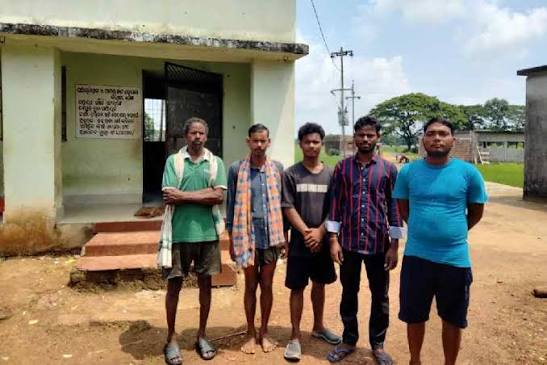
Youths in Puri district invoke the SC/ST Act after salons deny them haircuts, activists say education and reservation have helped them assert their rights In May, a group of determined Dalit youths from Jorakani Bhoi Sahi under Sauria grampanchayat in Puri district decided to assert themselves by demanding haircuts in salons that had traditionally served only the upper castes. The youths’ effort failed and set off a legal battle against the practice of untouchability, which continues even 76 years after India adopted a Constitution that guarantees equality, freedom, and justice for all. The incident stood out at a time when affluent sections have launched a campaign demanding dilution of caste-based reservation and the Scheduled Castes and Scheduled Tribes (Prevention of Atrocities) Act. There are six salons in nearby Ghoradia market run by barbers, largely OBCs. Traditionally, barbers have held the ceremonial lamp in front of wooden palanquins carrying idols from temples in processions through villages. Bhagyarathi Kandi, 26, a graduate who ekes out a living by giving tuitions, said all the shops denied them entry. “They (the barbers) said they serve the God in the temple and their caste would be diluted if they cut our hair. They said God would be annoyed too,” Bhagyarathi said. The Dalit youths filed an FIR at the Delang police station under the SC/ST Act and named the salon owners. People of the dominant Brahmin and Khandayat castes have supported the barbers’ stand to deny entry to Dalits, Bhagyarathi said. “The upper caste people met the police and demanded no action against the barbers. They said cutting the hair of Dalits means the barbers will no longer enjoy their social status and will not be able to render their services at religious events. We continue to face this untouchability,” Bhagyarathi said. Nandu Kandi, 30, said the fight would continue till the salons opened their doors to Dalits. “The boycott of Dalits is not restricted to salons. We are not allowed to attend any village festival. We celebrate our own festivities,” Nandu said, pointing to the Mangala Temple set up by Dalits. “The Brahmin priest does not come to our temple. One family from our caste is a Vaishnav Gosain (Dalit priest). He performs the rituals at the temple. On Holi or Diwali, we celebrate ourselves,” Nandu said. Rights activist Akshya Behera said the Dalits of Jorakani gathered courage to fight because many youths among them are now educated. “If we are able to fight the Savarnas (upper caste), it is because of reservation that helped us get educated. There are five/six graduates in the 25 Dalit families. They are aware of their rights and duties. The barbers, with the support of the Brahmins and Khandayats (a landed warrior caste), had never allowed entry to Dalits. But now this cannot be continued,” Behera said. He criticised the campaign to abolish caste-based reservation and the SC/ST Act. “The police are sitting on the FIR. They are not giving it any importance although the case has been filed under the SC/ST Act. The law is not enough. It must be implemented properly. Those who are demanding abolition of caste-based reservation and the scrapping of the SC/ST Act should visit Ghoradia and see how untouchability and atrocities are going on against Dalits,” Behera said. Basant Kumar Mohanty Courtesy : The Telegraph Note: This news is originally published on https:/thetelegraph.com/bha and is used purely for non-profit/non-commercial purposes, especially human rights
‘Where were 300 MPs? Rahul Gandhi is doing theatrics’: BJP hits back at Congress over EC protest
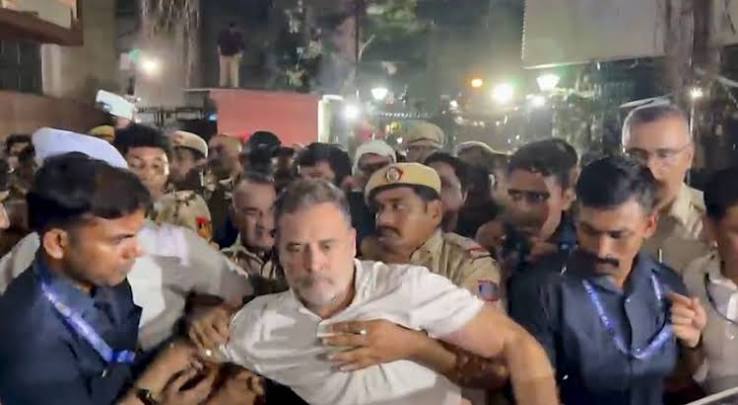
BJP MP Sudhanshu Trivedi cites the Election Commission’s latest press release, claiming that no formal request from Congress or its delegation to meet the poll panel had been received LoP in the Lok Sabha Rahul Gandhi being detained by police personnel after over eight-hour sit-in inside Akashvani Bhawan premises for not being allowed to march towards the Election Commission’s office, during a protest march against CEC Gyanesh Kumar, in New Delhi. (AICC via PTI Photo) BJP MP Sudhanshu Trivedi on Tuesday launched a sharp attack on Congress leader Rahul Gandhi over the opposition party’s protest at the Election Commission office accusing it of creating a “theatrics” after the poll panel issued a statement clarifying its position on the proposed meeting. Trivedi cited the Election Commission’s latest press release, claiming that no formal request from Congress or its delegation to meet the poll panel had been received. He said the ECI learnt around 4 pm through the Delhi Police DCP that Gandhi wanted to meet its officials. “Rahul Gandhi asked for time, and when time was given, he did not go,” Trivedi said, adding that the Commission had offered to meet Congress representatives and had also offered to send a senior official to receive their memorandum. He questioned the Congress’ claim that around 300 MPs were part of the protest. Related news: After 8-hour standoff, Rahul Gandhi, Priyanka detained from Akashvani Bhawan “Where were the 300 MPs?” Trivedi asked, arguing that the numbers visible at the protest did not match the Congress’s claim. He also questioned why senior Congress lawyers and leaders were not part of the delegation. The BJP further attacked the Congress over its reported attempt to seek a meeting with the Election Commission at Parliament, arguing that constitutional authorities cannot simply be “summoned” by Parliament or political parties. The ruling party also criticised Congress protesters for entering the Akashvani premises, asking why they did so if their objective was merely to stage a demonstration. Taking a swipe at Gandhi’s repeated political setbacks, Trivedi compared the Congress leader’s attempts to relaunch himself to satellite launch vehicles. “The Congress should now be called FSLV-Failed Satellite Launch Vehicle,” he said. Trivedi, addressing the press conference at party headquarters alleged that the Congress was trying to manufacture a confrontation with constitutional institutions after failing to substantiate its allegations against them, accusing the party of being “frustrated” and rejected by voters. Article_Author Manikant Mishra Courtesy : The Tribune Note: This news is originally published on https:/thetribune.com/bha and is used purely for non-profit/non-commercial purposes, especially human rights
Nestlé India launches transgender culinary internship

Nestlé India has launched a new culinary internship called Kaabil, giving transgender people the chance to learn professional cooking skills and explore careers in the food and hospitality industry. The 15-day programme is designed to help participants build confidence in the kitchen while picking up practical skills that employers are looking for. Training covers everything from kitchen basics and regional dishes to international cuisine, recipe development, live cooking, and workplace readiness. Participants will also receive career guidance to help them take the next step into the industry. Kaabil is led by Nestlé Professional with support from the company’s LGBTQ+ employee resource group, BEACON. The programme is being delivered in partnership with the Sahodari Foundation and the Tweet Foundation, with training taking place in Delhi, Mumbai, and Bengaluru. As part of the internship, participants will also be mentored by Nestlé chefs and get a closer look at the hospitality industry through the Indian School of Hospitality. By focusing on hands-on training and real career opportunities, Kaabil aims to open more doors for transgender people looking to build a future in one of India’s fastest-growing industries. Korina Estrada A writer and an advocate of self-love and body positivity. She loves baking cookies, practicing her calligraphy, and creating short stories of local folklore. Courtesy : Transgenderfeed Note: This news is originally published on https:/transgenderfeed.com/bha and is used purely for non-profit/non-commercial purposes, especially human rights
Rajya Sabha list: A message to the upper castes, as well as the backward and Dalit communities, an attempt to address not just one but both elections.
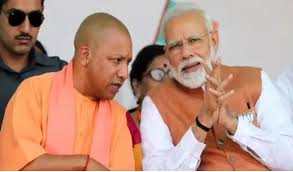
BJP Rajya Sabha list in UP: The BJP on Monday released a list of eight Rajya Sabha candidates in Uttar Pradesh. In this list, the BJP has relied on cadre rather than any outside leaders. With the announcement of eight candidates for the ten Rajya Sabha seats, the Bharatiya Janata Party has not only addressed the Upper House’s arithmetic, but also sought to send a political message for the 2027 Assembly elections and the 2029 Lok Sabha elections. By prioritizing long-time and loyal workers in the list, the party has assured the core cadre that long-term commitment and loyalty will be respected within the organization. It has also attempted to contain the resentment among the upper castes and to keep the backward and Dalit communities firmly connected. The party did not give a second chance to any of the current eight Rajya Sabha members. Influential figures from Western Uttar Pradesh, such as Union Minister BL Verma and former Chief Minister Kalyan Singh’s son Rajveer Singh, were also excluded from the list. On the contrary, by sending Cabinet Minister Dharampal to the Rajya Sabha, the party has signaled the creation of a new axis of backward leadership in Western Uttar Pradesh. Meanwhile, the selection of Shruti, the daughter of a prominent Kurmi leader from Rohilkhand and Jharkhand Governor Santosh Gangwar, has raised a new question about the BJP’s balance between nepotism and organizational loyalty. This list is also significant because the BJP is in a crucial phase of preparing for the 2027 assembly elections. At this time, selecting candidates for the Rajya Sabha is not merely a means of sending them to Delhi, but also a means of sending messages to different social groups, regions, and organizational factions. For some time now, there have been discussions about the political distance and dominance between BL Verma and Rajveer Singh regarding the leadership of the Lodhi community in Western Uttar Pradesh. BL Verma was once close to Kalyan Singh, while Rajveer Singh is considered a natural successor to his father’s political legacy. The exclusion of both from the Rajya Sabha list cannot be a normal occurrence. In contrast, the decision to send Livestock Minister Dharampal, a multiple-time MLA from Amla, to the Rajya Sabha is being seen as a strategy to promote a new leadership face among the Lodhi voters of western Uttar Pradesh. A Message to the New Through Old Faces Most of the eight names are those whose political identity has been built within the BJP organization. Among these, Priyanka Singh Rawat and Shruti Katiyar can be considered relatively new faces. Meanwhile, through names like Gopikrishna Pandey, Radhakant Ojha, Dharampal Singh, Prakash Pal, Vidyasagar Sonkar, and Rampratap Singh, the party has signaled to its old cadre that the path to the Upper House is open to those who have worked for the organization for a long time. Social alignment is also part of this strategy. By including three upper caste, three backward caste, and two Dalit candidates, the BJP has not only targeted its traditional upper caste base but also sent a message of representation to OBC and Dalit voters. Shruti’s selection, being the daughter of Santosh Gangwar, the Governor of Jharkhand and a multiple-time MP from Bareilly, again brings to the fore the question of nepotism within the BJP. The BJP has long leveled this accusation against opposition parties. In such a situation, the decision to send Shruti, who comes from a political family, to the Rajya Sabha despite her organizational background raises questions about the party’s standards. However, it is also being seen as an attempt to appease the Kurmi community in western Uttar Pradesh. While the regional balance in the Rajya Sabha list may not appear completely equal, the social and organizational message is more clear. While the BJP has sought to mitigate potential resentment among the upper castes, it has also attempted to reassure the backward castes and Dalits that their representation is secure. The biggest message is that the party may prioritize leadership preferences and electoral expediency over factional pressure or political legacy within the organization. Sudhir Kumar Singh, Lucknow Published by: Rohit Mishra Courtesy: Hindi News
Even in Many Churches, India’s Caste System Lasts Into the Grave
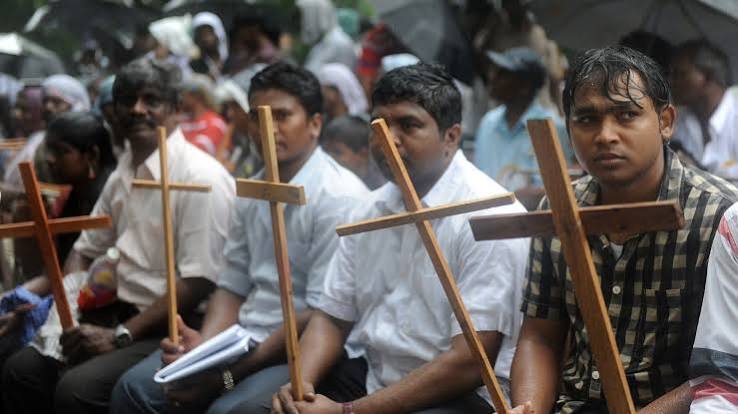
A Dalit burial dispute highlights persistent discrimination dividing Indian believers in pews and pulpit. When A. Raju died July 17 in the southern Indian state of Tamil Nadu, a three-day standoff over his rights as a Dalit held up his burial. As the family of the 89-year-old Catholic grieved, higher-caste Christian groups objected to having him laid to rest in their village’s common Catholic cemetery. With police keeping watch as tensions rose over the dispute, local authorities and church leaders negotiated with the groups for permission to bury Raju there. Bishop Jeevanandam Amalanathan said the protestors—which included fellow Catholics—were “vociferous” in their opposition. Authorities finally forced opponents to step aside and allow Raju’s burial at the half-acre cemetery. But the dispute has sparked sharp reactions from across Catholic, Protestant, and evangelical groups, shedding light once again on the reality of caste divisions among Indian Christians. “If we do not shed caste affiliations even after accepting Christ, we should be ashamed of being called Christians,” Vincet Raj, a Pentecostal Christian from Tamil Nadu, told Christianity Today. Dalits are at the bottom of the caste pyramid in India and historically have been denied the right to own land, pushed into sanitation and menial work, and forced to live outside villages. India counts roughly 201 million Dalits but includes only Hindus, Sikhs, and Buddhists in that number—excluding Christians and Muslims in its tally. Long spurned by dominant castes, marginalized Dalits have embraced Christianity over the past century, drawn by its message of love and equality. Missionary efforts providing education, health care, and livelihood—as well as dignity and hope—have also drawn converts among the Dalits. Even as people from various castes have embraced the gospel, Dalit Christians continue to face discrimination among fellow believers. Pastors, church leaders, and Dalit activists told Christianity Today that although Dalits today account for at least 70 percent of India’s 28 million Christians, they are shut out of leadership and decision-making roles across Catholic, mainline Protestant, and evangelical churches. In recent years, Catholics have tried to rectify the issue. Earlier this year, the Catholic Bishops’ Conference of India—which includes eastern Catholics such as those of the Syro-Malabar rite—elected Archbishop Anthony Poola of Hyderabad, the first Dalit cardinal, as its president. But Dalit representation in the church hierarchy remains thin: Of India’s 200 Catholic bishops, 11 are Dalits, even though an estimated 60 percent of the nation’s Catholics are Dalits. Meanwhile, mainline Protestant and evangelical institutions lack the organizational structure to make similar changes. “Caste permeates through both mainline and independent Protestant churches too, yet it is implicit and hush-hush,” said Richard Devadoss, president of the National Dalit Christian Watch. “Nobody talks about it; that doesn’t mean caste is absent here.” Leaders associated with various mainline Protestant churches revealed, on the condition of anonymity out of fear of reprisal from church committees, that care is taken during the selection processes to ensure that a Dalit bishop or a priest is not posted to head a diocese or church where non-Dalits dominate the pews. “In cases [where] that doesn’t work, either you [as a Dalit] are co-opted by the dominant caste congregants or face discrimination in subtler ways,” said a Dalit pastor from a prominent established church in Tamil Nadu where non-Dalits are in the majority. He serves the church alongside a non-Dalit pastor. Although both pastors are required to participate in church growth meetings, outreach activities, budget planning, and organizing Christmas and other activities, he said the church committee doesn’t allow him to attend any of them. “It deeply pains me, but I have no option but to silently finish my tenure here,” he lamented. In some extreme cases, Dalit groups also discriminate against each other based on subcaste loyalties. One church with nearly 500 worshipers in Andhra Pradesh State holds separate Sunday services for two Dalit subgroups, said Paul David, a Dalit Christian activist. The Malas, historically considered at the top of the Dalit socioeconomic ladder in the region, worship first—and then the Madigas gather for their own service. “This is not a one-off case,” David said. “Many churches reflect hierarchy rather than Jesus’ core teaching of love and equality.” In major urban centers, where independent, storefront charismatic churches with large numbers of new converts have exploded, the influence of caste is less acknowledged. “That’s because caste gets camouflaged as class,” David said. Higher-caste church members typically benefit from more education and financial resources than lower castes. “Class—which goes by another name as resourcefulness and community feeling—is a byproduct of caste.” Unlike in established mainline churches, high-profile pastors and their family members—who are from dominant castes—make all the decisions within the church. Sagar, a Dalit who asked to use only his first name due to fear of upsetting his church, told CT that for four years, he has volunteered as an usher at a charismatic church in Hyderabad that draws thousands across three services every Sunday. He said people who have joined the church since he first arrived have moved into key roles supporting the celebrity pastor. Sagar continues to serve, but he has since concluded that other considerations beyond commitment to the church—such as caste—determine his role there. Outside church, Dalit Christians are caught in a legal limbo. Dalit converts to Christianity cannot claim Scheduled Caste (SC) status under Indian law, which grants access to education and employment opportunities through affirmative action. The SC status is restricted to Hindu, Sikh, and Buddhist Dalits. For decades, Dalit Christians have campaigned to have that status extended to them as well, but to no avail. “There is enough evidence to suggest that Dalit Christians experience the same marginalization” as Dalits from other faiths, said Emanual Nahar, professor and former chair of the Punjab State Commission for Minorities. “It is a long-pending issue, and the government must make SC status religion-neutral.” From leadership roles in churches to securing places in graveyards, Dalit Christians are still reminded of their marginalized status. Advocates for the Dalit expressed hope that the Raju case would
‘Misleading’: EC fact-checks Rahul Gandhi’s claim that Gyanesh Kumar changed Form 6 ‘illegally’
Election Commission of India says Rahul Gandhi’s statement was misleading The Election Commission of India (ECI) on Monday fact-checked Leader of Opposition (LoP) Rahul Gandhi over his statement alleging that Chief Election Commissioner (CEC) Gyanesh Kumar changed Form 6 “illegally and unilaterally”. Sharing a screenshot of the Election Commission’s September 26 statement on X, Gandhi highlighted a paragraph which stated, “The declaration attached to Form 6 for SIR has been upheld by the Supreme Court. For the non-SIR period, the forms applicable as per Rules (the Registration of Electors Rules, 1960) will be used.” ‘Any modified Form 6 not approved by us’: Supreme Court refutes EC claim over new declaration in SIR states Comment: CEC is not the Election Commission: The Chief Justice has made it clear that the Supreme Court did not give its approval to the modified Form 6 “It is now established beyond doubt that Gyanesh Kumar changed Form 6 illegally and unilaterally. This is just one more proof of him abusing his position to help the BJP. He and everyone else involved in this criminal assault on our democracy will be held accountable,” he said in a post on X. In response, the Election Commission, while terming his statement “misleading”, said, “The order for SIR in Bihar issued on June 24, 2025, was issued with the unanimous approval of the Commission. This order has been upheld by the Hon’ble Supreme Court of India in its judgment dated May 27, 2026.” It further added, “In its Press Note No. 120 dated September 26, 2026, in Point 1(iii), the ECI has stated that, ‘The declaration attached to Form 6 for SIR has been upheld by the Hon’ble Supreme Court.’” Animesh Singh Courtesy : The Tribune Note: This news is originally published on https:/thetribune.com/bha and is used purely for non-profit/non-commercial purposes, especially human rights