
Dalit family blocked from drawing water from government hand pump: Violent individuals also blocked the road, police investigating

A case has come to light in the Hargaon police station area of Sitapur district where a Dalit family was prevented from drawing water from a government hand pump. In Pandit Purva, a hamlet of Sarawa Gram Panchayat, members of another community are accused of preventing the Dalit family from drawing water and blocking the path to the hand pump. Villager Ramkumar stated in a police application that some influential members of the village prevented him from drawing water from the hand pump. They had placed logs and blocked the path to the hand pump. According to Ramkumar, the influential individuals also threatened to prevent any Hindu from drawing water. The victim, Ramkumar, has appealed to the police for justice in this matter. Basant Kumar, in-charge of the Ramnagar outpost in Hargaon, stated that he was unaware of the incident. He assured them that he would immediately investigate the matter and take necessary action. Vinay Kumar Singh | Hargaon, Sitapur Courtesy: Hindi News
Dalit History Month: Why is April 2, 2018, a memorable day for social justice movements?
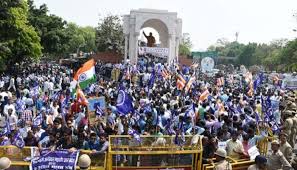
Dalit organizations considered this an attack on the spirit of the Act and said it would hinder justice for SC/ST victims of atrocities. Dalit History Month is celebrated by Bahujan communities worldwide in April. Dedicated to the birthday of Dr. Bhimrao Ambedkar, this month aims to remember and convey to the new generation the historical struggles of the Dalit-Bahujan community, which have often been suppressed in mainstream history. Inspired by Black History Month, Bahujan organizations, intellectuals, and social activists discuss the suffering, resistance, and achievements of the Dalit community. Remembering the community’s struggles during this month is important because these struggles not only remind us of the need to stand up against caste-based atrocities but also point the way to social justice even today. This time, during Dalit History Month, one event is being specifically remembered – April 2, 2018, when the country witnessed the largest social movement in history to protect the SC/ST (Prevention of Atrocities) Act. On March 20, 2018, the Supreme Court delivered its verdict in the case of Dr. Subhash Kashinath Mahajan vs. State of Maharashtra, weakening some key provisions of the SC/ST Act. The Court directed that a DSP-level preliminary investigation be mandatory before filing an FIR, that the arrest of public servants requires the permission of the appointing authority, and that anticipatory bail be granted in certain cases. Dalit organizations considered this an attack on the spirit of the Act and said that it would hinder justice for SC/ST victims of atrocities. This decision sparked anger across the country. Various Dalit and Bahujan organizations called for a Bharat Bandh on April 2, 2018. Millions of people took to the streets – trains were stopped, roads were blocked, and protesters demanded the government repeal the Supreme Court’s decision. Protests broke out in several states, including Madhya Pradesh, Uttar Pradesh, Rajasthan, Bihar, Punjab, Haryana, Maharashtra, and Delhi. In many places, the protests turned violent, leading to clashes with police, vehicle burnings, and stone-pelting. Curfews were imposed, internet services were shut down, and security forces were deployed. Fourteen people were martyred in the violence during this movement, while hundreds were injured. According to various media reports and official figures, Madhya Pradesh recorded the highest number of deaths (9) (including Gwalior, Bhind, and Morena), followed by Uttar Pradesh (3), and Rajasthan (2). These martyrs sacrificed their lives in the fight for the dignity and security of the Dalit community. Under pressure from the protests, the central government filed a review petition in the Supreme Court. In August 2018, Parliament passed the SC/ST (Prevention of Atrocities) Amendment Act, 2018, which repealed the Supreme Court’s March 2018 directives and restored the original provisions. April 2, 2018, was etched in the struggles for social justice as it demonstrated that the Bahujan Samaj could unite to protect its constitutional rights. Remembering this event during Dalit History Month is a reminder of the struggles that protected the law. Geetha Sunil Pillai Courtesy: Hindi News
Unless caste-based insults are in “public view,” the SC/ST Act will not apply: Why is the Bahujan community agitated by this Supreme Court decision?

Is caste-based abuse in a private home no longer a crime? The CPI(M) raises serious questions New Delhi – In a judgment on May 11, the Supreme Court held that if caste-based abuse or insult occurs within a private residence and is not in “public view,” no offense is made out under Sections 3(1)(r) and 3(1)(s) of the Scheduled Castes and Scheduled Tribes (Prevention of Atrocities) Act, 1989. A division bench of Justice N.V. Anjaria and Justice Prashant Kumar Mishra overturned the Delhi High Court order in Gunjan @ Girija Kumari v. State of Delhi (NCT) and quashed the FIR and charge sheet filed against the accused. The dispute arose from a family property dispute in the Kirti Nagar police station area of Delhi. The complainant and the accused are relatives. On January 28, 2021, the complainant, who belongs to the Scheduled Caste, alleged that the accused, Girija Kumari, addressed him with derogatory casteist slurs such as “Chuda,” “Chamar,” and “Harijan,” and that the other accused issued threats. FIR number 42/2021 was registered at the Kirti Nagar police station. The trial court framed charges under sections of the SC/ST Act, and the Delhi High Court upheld that decision, leading to the Supreme Court. Supreme Court’s Argument: “Public View” Essential Condition The Supreme Court clarified that offenses under Sections 3(1)(r) and 3(1)(s) of the SC/ST Act are made out only when the insult or casteist slur is uttered “in any place within public view.” The Court noted that the incident took place in a residential house in Ramesh Nagar, New Delhi, and the FIR did not state that any independent member of the public was present at the time or that the incident occurred in public view. Both points 5(b) and 6(e) of the FIR mentioned the same residential address. The court, citing its earlier judgments—Swaran Singh v. State (2008), Hitesh Verma v. State of Uttarakhand (2020), and Karuppudayar v. State (2025), held that “public view” means that the incident occurred in a place where the public could see or hear it. An incident occurring within a boundary wall, where the public had no access, did not satisfy this condition. The court also dismissed charges under Sections 506 (criminal intimidation) and 34 (common intention) of the Indian Penal Code, stating that the contents of the complaint did not establish either “intent to alarm” or “common criminal intent.” According to legal experts, this judgment reaffirms two key principles: first, the necessity of the “public view” condition under sections of the SC/ST Act; And second, the requirement that all legal elements must be clearly stated in the FIR and accompanying charge sheet before prosecution can begin. However, actual incidents of caste-based humiliation committed in public places are still fully punishable. This Supreme Court decision has caused deep unease among Dalit and Bahujan organizations. They argue that caste-based oppression often occurs within the confines of homes, where there are no outside witnesses. Therefore, making the “public view” requirement mandatory practically closes the doors to justice for victims. Social justice advocates argue that caste-based humiliation occurring within the confines of a home is no less painful. Ambedkarite activist Ravi Parmar says, “If tomorrow some Manuwadi forcibly kidnaps a Dalit person, takes him to his private home, and insults him with caste-based slurs, it will not be considered a crime under the SC/ST Act. It’s amazing. As long as the collegium system exists, attacks on the rights of Dalits and tribals are certain to continue.” Bahujan thinker Ravi Ratna says, “The atrocities in Khairlanji happened in public. The victim and her daughter were raped, paraded naked, brutally abused, and killed. The victim’s son and another youth were killed in broad daylight. But the court ruled that the murders were committed out of revenge and were not caste-related, so no SC/ST Act was applied.” Anti-caste activist Dr. Rehna Ravindran says, “Read it this way: If the murder happened in a private home, there’s no fault. If the rape happened in a private home, there’s no fault. If the husband beats his wife in a private home, there’s no fault. So, do you understand the absurdity behind these statements? Prejudiced casteists will go to any lengths to weaken the legal protections afforded to Scheduled Castes and Scheduled Tribes.” This isn’t the first time a Supreme Court decision on the SC/ST Act has sparked political and social opposition. In 2018, the court’s weakening of arrest provisions under the same Act sparked nationwide protests, a Bharat Bandh, and the deaths of several protesters, after which Parliament intervened to restore the original provisions through amendments. The CPI(M) had also called the decision “retrograde” and demanded an immediate review petition from the central government. The 2026 judgment is now being viewed by critics as part of a continuing judicial trend of diluting the Act’s safeguards. CPI(M) Politburo Expresses Deep Concern Over Judgment The Politburo of the Communist Party of India (Marxist) has expressed deep concern over the judgment delivered by the two-judge bench of the Supreme Court. The party said that in the case of Girija Kumari and others v. State of Delhi, the Supreme Court adopted a narrow approach based solely on legal technicalities and ordered the quashing of the FIR and chargesheet, which is extremely unfortunate. The Politburo said that this judgment is worrying for several reasons: firstly, it comes at a time when incidents of atrocities against SC and ST communities are rapidly increasing in most parts of the country, and secondly, this judgment is the latest in a long series of Supreme Court judgments that adversely impact the rights of these communities. The party feared that if this decision was not reversed, incidents of abusive treatment of SC/ST persons in homes, offices, schools, colleges, and other places would increase, as perpetrators would assume that the law could do nothing against them. The CPI(M) demanded the immediate intervention of the central government and an appeal to the Supreme Court to reconsider this decision. Communist Party of India General
Caste-based insults against sanitation worker leader in Jodhpur Municipal Corporation: DC accused of threatening to implicate him in a false case
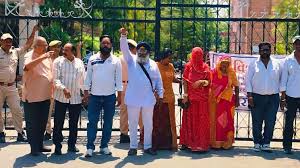
The letter also states that since 2018, non-Valmiki community members have not been performing sanitation work, placing additional burden on women from the Valmiki community. Therefore, they should be immediately deployed to the wards for sanitation work. Jodhpur. Even after 78 years of independence, another shocking case of social and mental exploitation of the Valmiki (Mehattar) community has emerged from the Jodhpur Municipal Corporation. Sardar Prakash Singh ‘Vidrohi,’ District President of the All India Safai Mazdoor Congress, has alleged in a letter to the Union Defense Minister that the corporation’s DC, Swaroop Singh, insulted him with caste-based slurs and threatened to implicate him in a false case of obstruction of government work. According to the letter, the leader was on a hunger strike on May 12th during the sanitation workers’ long-standing struggle for their ten-point demands. Due to the intense heat and the negligence of officials, Sardar Prakash Singh, who had already undergone bypass surgery, became seriously ill, but the municipal administration remained unconcerned. According to Vidrohi, as the situation worsened, Deputy Commissioner Swaroop Singh expelled all the policemen, officers, and organization members from the room. He then insulted them with casteist slurs, saying, “You Bhangi don’t have the guts to fight us.” Meanwhile, Vidrohi’s health suddenly deteriorated. He initially remained seated on a chair, then, as his condition worsened, he lay down in the Deputy Commissioner’s room. He was also threatened with a false case of obstructing government work against the Commissioner. Sardar Prakash Singh called this mentality a blot on humanity, saying that while the entire world is planning to settle on the moon, educated officials are still living with the same old mindset. During the talks with the police and organization members, I sat on a hunger strike in the scorching sun from 10:30 a.m. to 4:30 p.m., but none of the corporation officials took any notice, leading to my health deteriorating during the talks. I had previously undergone bypass surgery. Even then, the corporation’s DC and no other official took it seriously. My colleagues immediately called an ambulance and rushed me to the hospital, where doctors advised complete bed rest.- Sardar Prakash Singh In his letter, Sardar Prakash Singh made several demands to the Union Defense Minister. He demanded that the Jodhpur Municipal Corporation’s current cleaning contract be canceled and permanent staff recruitment, DPC, and criminal compassionate appointments be conducted soon. He also demanded that members of the Valmiki community be appointed as sanitation in-charges based on seniority and diplomas. The letter also stated that non-Valmiki community members have not been performing sanitation work since 2018, placing additional burden on women from the Valmiki community. Therefore, they should be immediately assigned to the wards. The most important demand is the immediate transfer of DC Swaroop Singh and departmental action against him. Warning that if timely action is not taken, Sardar Prakash Singh will approach the court and file a case against the DC under the SC/ST Act. Copies of this letter have also been sent to Union Minister Gajendra Singh Shekhawat, Rajasthan Chief Minister, and Jodhpur MLA Atul Bhansali. At present, there has been no response from the Municipal Corporation administration, but Sardar Prakash Singh’s allegations have sparked outrage within the Valmiki community. Geetha Sunil Pillai Courtesy: Hindi News
Delhi: “We are Pandits, you are a Chuhra… Nothing will happen to me,” Dalit youth publicly abused; despite video, police remain empty-handed.
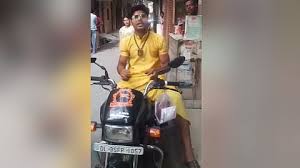
A Dalit youth in Delhi’s Mehrauli was publicly subjected to casteist abuse. Despite having the video and the vehicle number, the police are reluctant to register an FIR. New Delhi: A case of caste-based harassment and gross police negligence has come to light in the Mehrauli area of the capital Delhi. An unknown person publicly abused a Dalit youth, Vipin Kumar Duggal, with vulgar casteist slurs and attempted to assault him. Despite the victim having a video of the incident and the accused’s vehicle number, the police have been reluctant to register an FIR for the past several days. The entire incident occurred on May 10, 2026, at around 5:35 p.m. Vipin Kumar Duggal was returning home from the market on his motorcycle. When Vipin, riding a black Hero Splendor (DL3SFP1057), stopped him from cutting him off (driving dangerously) near the residence of former Mayor Satbir Singh, he began abusing him. During a minor altercation, the accused suddenly became aggressive and began pushing and insulting Vipin. According to the victim, the accused publicly shouted, “I know you… We are Pandits, you are a Chuhra… You are a Chuhra… Yes, I am telling you.” When Vipin began filming the incident on his mobile phone, the accused, claiming to be an army soldier, threatened him, saying that the police could not do anything to him. The victim immediately called PCR on 112 and went to Mehrauli police station to file a written complaint (DD No. 145A). The victim alleges that the accused, along with some of his friends, went to the police station to exert pressure and misbehaved there as well. However, as soon as the victim began filing a written complaint, the accused took advantage of the situation and fled. The investigation of this case has been entrusted to SI Naveen Kumar, but the police’s attitude has been extremely evasive. The complainant provided the accused’s mobile number (76XXXXXX94) and True Caller details to the police. Despite this, the investigating officer consistently avoided taking calls and offered only assurances instead of taking any concrete action. Frustrated by this police indifference, the victim sent an email to the DCP (South), ACP (Mehrauli), and SHO on May 12th, pleading for justice. He has also filed a complaint with the National Commission for Scheduled Castes. According to the victim, when he again visited the police station to meet with the SHO, he denied any knowledge of the incident even four days after the incident, which raises serious questions about police performance. Investigating this entire matter, we attempted to obtain the police’s version of events. We called the SI investigating the case twice to clarify the situation, but were unable to reach him. The Delhi Police’s failure to register an FIR despite the existence of clear evidence and the occurrence of a cognizable offense under the SC/ST Act is a matter of grave concern. Rajan Chaudhary Courtesy: Hindi News
Former Pradhan in Pratapgarh accused of assaulting Dalit woman and children: Police register case under SC/ST Act and begin investigation

In Pratapgarh’s Udaipur police station area, former Pradhan Amarnath Pal has been accused of assaulting a Dalit woman and her children. Police have registered a case under various sections, including the SC/ST Act, and have begun investigation. The incident occurred on Sunday in the village of Poore Man Singh in the Rehua Lalganj market. The victim, Rinku Devi, wife of Ramesh Saroj, stated in her complaint to the police that her husband was not at home at the time of the incident and she was ill. Her daughter, Saloni, was cooking at home. According to Rinku Devi, former Pradhan Amarnath Pal had initially asked her to work. Angered by her inability to work due to illness, Amarnath Pal arrived at her house with his wife and daughter. It is alleged that he abused and assaulted Rinku Devi, her daughter Saloni, and son. The accused also threatened to kill them before leaving. Upon receiving information about the incident, the police took immediate action and conducted medical examinations of the victims. Former village head Amarnath Pal dismissed the allegations, saying there was a minor altercation between the women. He claimed that all the allegations made by Rinku Devi are not true. Station in-charge Mohammad Aftab Alam stated that based on the medical examination and investigation, a case has been registered under relevant sections, including the SC/ST Act. The investigation is ongoing, and further legal action is being taken. Anoop Kumar Singh | Sangipur (Pratapgarh) Courtesy: Hindi News
NEET aspirant dies by suicide in Rajasthan days after exam cancellation over paper leak allegations

According to family members, Pradeep was expecting to score over 650 marks in NEET-UG 2026, a score they believed could have got him admission to any reputed government medical college. JAIPUR: A 23-year-old NEET aspirant died by suicide in Rajasthan’s Sikar on Friday, days after the cancellation of the NEET-2026 examination amid allegations of a massive paper leak. The deceased, identified as Pradeep Mahich, allegedly hanged himself from a ceiling fan using his sister’s scarf at his rented accommodation in Sikar’s Jaldhari Nagar area on Piprali Road. Originally from a village in Jhunjhunu district, Pradeep had been preparing for NEET in Sikar for the last three years. According to family members, Pradeep was expecting to score over 650 marks in NEET-UG 2026, a score they believed could have got him admission to any reputed government medical college. His relatives claim he had been under severe mental trauma ever since the National Testing Agency (NTA) cancelled the examination following the paper leak controversy. Pradeep’s family and members of the local community gathered outside the mortuary of SK Hospital after the incident. Pradeep, the only son of a financially struggling family, lived in Sikar with his two sisters who were preparing for railway recruitment exams, his father Rajesh Kumar Meghwal said. According to police and family members, the incident took place on Friday afternoon. Pradeep’s younger sister had gone to coaching classes while his elder sister was in the bathroom, when Pradeep allegedly hanged himself inside the room. When the elder sister returned, she found him hanging from the ceiling fan. She immediately informed the landlord and alerted the police. Police personnel reached the spot and rushed Pradeep to SK Hospital, where doctors declared him dead. The police is investigating the matter based on the information provided by the family. The tragedy comes amid a widening investigation into the alleged NEET-UG 2026 paper leak, which has placed Rajasthan’s coaching hub Sikar under intense scrutiny. Before the examination held on May 3, a 150-page document titled “Guess Paper” was allegedly circulated among students in Rajasthan’s Sikar and Jhunjhunu districts. The document reportedly contained 410 questions, of which 135 are alleged to have matched the actual NEET paper. According to sources, the similarities extended beyond the questions themselves. Officials reportedly found matches in the sequence of options, language patterns, and even punctuation marks. On May 7, the NTA acknowledged receiving inputs regarding alleged irregularities, four days after the examination. Around the same time, Special Operations Group (SOG) teams reached Sikar and Jhunjhunu to begin an investigation. On May 8, the NTA formally handed over the matter to central agencies. The Rajasthan SOG subsequently launched a full-scale investigation into the alleged paper leak. By May 12, at least 13 people had reportedly been arrested from Sikar and several other locations across the country, including Jaipur, Nashik and Gurugram. Among those currently in custody are Dinesh Binwal, his brother Mangilal, Mangilal’s son Vikas, and another accused, Rakesh, who allegedly operated a consultancy firm linked to the racket. Investigators suspect that Dinesh Binwal allegedly procured the leaked paper for his son Rishi, who was preparing for NEET in Sikar, and later sold it to other candidates for money. The probe has also expanded to examine admissions secured by other members of the Binwal family last year. Sources claim that five children from the families of Dinesh and Mangilal, all considered academically average, had reportedly cleared NEET in 2025. The revelation has now raised fresh questions over the integrity of last year’s examination process as well. Rajesh Asnani Courtesy : TNIE Note: This news is originally published on https:/thenewindianexpress.com/bha and is used purely for non-profit/non-commercial purposes, especially human rights
Opposition slams Rs 3 fuel price hike; says move will worsen inflation, economic distress

Congress said the fuel crisis was caused by government failures and incompetence, with ordinary citizens bearing the brunt of the economic distress. NEW DELHI: Several opposition parties, including the Congress, Samajwadi Party, Trinamool Congress and CPI(M), on Friday attacked the government over the increase in petrol and diesel prices, saying the decision would aggravate inflation and hurt economic growth. Leading the opposition criticism, Congress leader Rahul Gandhi said the public was paying for the Modi government’s “mistakes”, adding: “The Rs 3 shock has already arrived, the remaining recovery will be extracted in installments.” Party President Mallikarjun Kharge accused the Centre of pushing the country into an economic crisis because of a “leadership crisis, lack of vision and incompetence”. Kharge said the crisis was created by the government and ordinary citizens were suffering its consequences. He alleged that apart from the global fuel crisis, the Modi government’s failures and widespread incompetence were major reasons behind India’s economic troubles. In a statement, the CPM Politburo condemned the fuel price increase, saying it would place an additional burden on people already struggling with inflation, unemployment, stagnant wages and worsening economic distress. The party demanded an immediate rollback and asked its units to organise protests against the hike. CPI General Secretary D Raja said the crisis stemmed from PM Narendra Modi’s “disastrous foreign policy” and alleged that the government was functioning like a recovery agency for crony capitalists and foreign interests. Samajwadi Party chief Akhilesh Yadav said the bicycle, his party’s election symbol, remained the only alternative. The Trinamool Congress accused the Centre of deceiving citizens after the elections and deepening the economic crisis. Addressing a press conference, TMC leader Sagarika Ghose said, “After looting votes, you are now looting the purse of citizens”. Preetha Nair Courtesy : TNIE Note: This news is originally published on https:/thenewindianexpress.com/bha and is used purely for non-profit/non-commercial purposes, especially human rights
Why are Dalit organisations staging an indefinite protest for the PTCL Act in Karnataka?

To understand the reasons behind the protests at Freedom Park in Bengaluru, one has to look back at the sordid history of the hostility of the revenue bureaucracy and apathy of the judiciary towards the Karnataka Scheduled Castes and Scheduled Tribes (Prohibition of Transfer of Certain Lands) Act, 1978 (PTCL Act). “Do you see those apartments? That is where our lands used to be,” Krishnamurthy, a resident of Attibele in Bengaluru, said. Growing up in a landless Dalit family, he heard stories about how once his family had owned some land in the village, which was sold off for a petty amount. But nobody in his family knew where those lands were. This was Krishnamurthy’s primary motivation in joining a prominent Dalit organisation, founded by a leader from his own village. After hundreds of visits to the local tehsildar office, he discovered that his grandfather was granted 3 acres of land in 1951 with the condition that the land could never be alienated. But in 1958, the land was sold to a Lingayat landlord of the village. Since then, the land was transacted many times, eventually being bought by a developer who erected residential apartments on it. The land was worth a fortune today, if only Krishnamurthy could get it back. This is where the Karnataka Scheduled Castes and Scheduled Tribes (Prohibition of Transfer of Certain Lands) Act, 1978 (PTCL Act, 1978) came in. This special legislation was enacted to come to the aid of landless families like Krishnamurthy’s, allowing them to reclaim their lands which were alienated in violation of any of the conditions attached to the grant. But there was a problem. The Supreme Court of India had delivered a judgement in Nekkanti Rama Lakshmi vs State of Karnataka (2017), which held that applications for restitution of lands under the PTCL Act, 1978 should be filed without “unreasonable delay”. By the time Krishnamurthy could collect all the necessary documents, 40 years had elapsed since the enactment of this legislation, and he feared that his application would be dismissed on grounds of “unreasonable delay” as had happened to hundreds of others like him, who had become aware about this legislation only recently. For this reason, he was mobilising youths like himself to participate in the indefinite protests at Freedom Park in Bengaluru, when we met him in November 2022. Several Dalit organisations, including his own, were demanding that the government pass an amendment to overcome the difficulties created by the Supreme Court verdict. Eventually, these protests lasted for 208 days (7 months), and while the outgoing BJP government did not heed the demands, the Congress included them in their 10-point poll promises for the Dalit community in the state. When the Siddaramaiah-led Congress government came to power in Karnataka in 2023, one of the first legislative steps it took was to bring an amendment to the PTCL Act, 1978, raising hopes among those like Krishnamurthy that they can now get their lands back. But these hopes have been belied. Dalit organisations have resumed their protest on April 30, with a charter of 15 demands. To understand why such a protest became necessary despite the 2023 amendment, one has to look back at the sordid history of how the hostility of the revenue bureaucracy and apathy of the judiciary towards the objectives of this special legislation has almost entirely hollowed it out. Historical sources of land ownership for Dalits in Karnataka Broadly, there are three sources through which any person can come to own a piece of land – inheritance, purchase, and grant by the government. Historically, the first two channels were closed to Dalits because of the operation of custom, economics, and statutory law, undergirded by their location in the caste system, as noted by Dr BR Ambedkar in Untouchables or the Children of India’s Ghetto (BAWS, Vol 5, p 23): In an agrarian country, farming can be the main source of living. But this source of earning a living is generally not open to the Untouchables. This is so for a variety of reasons. In the first place, purchase of land is beyond their means. Secondly, even if an Untouchable has the money to purchase land s/he has no opportunity to do so. In most parts, the caste Hindus would resent an Untouchable coming forward to purchase land and thereby trying to become the equal of the so-called ‘Touchable’ class of Hindus. Such an act of courage on the part of an Untouchable would be seen as a provocation for harsh collective punishment. An entire community could be targeted for an individual’s transgression. In some parts, Dalits are disabled by law from purchasing land. For instance, in the Province of Punjab there is a law called the Land Alienation Act. This law specifies the communities which can purchase land and the Untouchables are excluded from the list. The result is that in most part the Untouchables are forced to be landless labourers. The reference here is to the Punjab Agricultural Land Alienation Act, 1901 which classified communities into agricultural and non-agricultural, and prohibited acquisition of land by the later sets of communities. Two of the most populous Dalit communities were included in the non-agricultural category, prohibiting transfer of lands to them. While the Dalits were not statutorily prohibited from purchasing land in the Princely State of Mysore, other caste-derived disabilities operated to ensure that here too, they were largely landless labourers. The 1931 Census, considered to be the most comprehensive, showed that while the Depressed Classes comprised only 15% of the population of the state, their share in agricultural labourers was over 36%. Of all the members of Depressed Classes deriving income from agriculture, over 46% were agricultural labourers, while just over 8% were tenant cultivators. Historically, there were two major sources of land ownership among Dalits in the Princely State of Mysore – grants of lands referred to as darkhast lands and gift of lands in lieu of services referred to as inams. The rulers of
KC Venugopal will remain in the game with ‘powerplay’, say his supporters

There is palpable discontent within the Venugopal camp over the manner in which he was, according to his supporters, “disgracefully” elbowed out by the Congress high command. THIRUVANANTHAPURAM: Till Thursday, for some, Congress organisational general secretary K C Venugopal was the ‘kingmaker’. A powerful ‘Goliath’. But all that changed as the political landscape around him shifted dramatically in a matter of hours. Within party circles, the mighty Goliath appeared to fall before ‘David’ — V D Satheesan. And, with the tables now turned, the question being asked is: What next for the once-invincible and trusted lieutenant of Rahul Gandhi? Venugopal’s name was among the first to emerge for the post of chief minister after the UDF’s sweeping victory in Kerala. His political rise — from KSU state president in 1988, Youth Congress state president, MLA, MP, state minister, Union minister, and finally to the Congress’s second most powerful organisational post — had long been regarded as enviable. Consequently, he has as many detractors as admirers, with many now privately rejoicing his fall. Meanwhile, there is palpable discontent within the Venugopal camp over the manner in which he was, according to his supporters, “disgracefully” elbowed out by the Congress high command. “The high command should have asked him to stay away from the race if it had decided that Satheesan would be the chief minister,” said an associate of Venugopal. “Venugopal has played the role of kingmaker in several states while selecting chief ministers. However, in his own state, he could not even announce the next chief minister. The high command could have avoided such a humiliation.” Notably, it was Venugopal who played a major role in making Satheesan the leader of the opposition in 2021, even though Ramesh Chennithala enjoyed majority support in the Congress legislative party at that time. Subsequently, however, the Venugopal camp got rattled as Satheesan began asserting control over the organisation. As a counter, Venugopal first tightened his grip over the Youth Congress by appointing loyalists. Then, during the KPCC reorganisation, his faction secured near-complete control over the organisation. This was reflected in the distribution of Assembly election tickets, helping him secure the support of more than 40 MLAs for his chief ministerial ambitions. Meanwhile, the Venugopal camp dismissed murmurs that the Satheesan faction had begun influencing these MLAs. Leaders close to Venugopal indicated that, as long as he enjoys the trust of Rahul and remains the AICC organisational general secretary, he would continue to play a major role in the state Congress in the coming days. “In politics, power dictates everything. A Congress chief minister cannot move forward without relying on the AICC leadership. That dependence begins with cabinet formation,” said a veteran Congress leader. K S Sreejith Courtesy : TNIE Note: This news is originally published on https:/thenewindianexpress.com/bha and is used purely for non-profit/non-commercial purposes, especially human rights