
Free bus travel in Kerala: ‘Priyadarshini Scheme’ to begin on June 15, women and transgender individuals to benefit
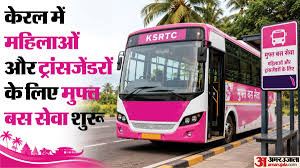
The Kerala government has decided to implement the ‘Priyadarshini Scheme’, under which women and transgender individuals will travel free on KSRTC ordinary buses. The government will compensate for the revenue loss. Read the full story The Kerala government on Wednesday approved the ‘Priyadarshini Scheme’, which will provide free travel to women on KSRTC ordinary buses from June 15. Chief Minister V.D. Satheesan made the announcement after the weekly cabinet meeting. He said there will be no eligibility criteria for the scheme, and there will be no age or income restrictions. Who will compensate? The government has decided to fully compensate KSRTC for the revenue loss caused by this initiative. It is estimated that this scheme will cost the state treasury approximately ₹800 crore annually, which will be transferred to KSRTC as compensation. “Currently, the state government will provide approximately ₹1,500 crore annually as financial assistance to the KSRTC,” Satheesan told the media shortly after the weekly cabinet meeting. “The additional burden arising from the free travel scheme will now be added to this assistance.” Review after six months The scheme will initially apply only to general service buses. The government plans to review it after six months. The KSRTC has been asked to increase revenue and strengthen its financial position during this period. Transgender persons will also benefit from the scheme, broadening its scope. This announcement is part of the government’s efforts to increase access to public transport and ensure mobility for women. The scheme is expected to become one of the new government’s major welfare initiatives, but its financial impact on the KSRTC and the state budget is likely to remain a major topic of discussion in the coming months. Responding to the discussion at a CPI-M party meeting, which analyzed the CPI-M’s crushing electoral defeat and suggested that a secret pact had been reached between the Congress and the BJP, which benefited both parties, Satishan said, “Was this the main point of discussion at their various party meetings? But from what we have read, the focus of the discussions at their meetings was that the main reason for their defeat was their leadership and their style of governance.” He also stated that no decision has yet been taken on the future course of action regarding the controversial PM-Shri project and the proposed high-speed rail project, which was discussed with Metroman. Published by: Asmita Tripathi Courtesy: Hindi News
Flawed changes
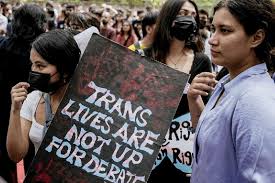
Under the 2019 Act, a transgender person could apply to the district magistrate for a certificate of identity on the basis of self-perceived gender identity. The 2026 amendment scraps that right There is a peculiar institutional reflex in Indian welfare legislation wherein when the State does not know what to do with a body, it hands it to a doctor. The doctor issues a certificate. The certificate becomes the body’s legal identity. And the person, somewhere in this chain of transactions, disappears. A person with a disability will recognise this sequence. The Rights of Persons with Disabilities Act, 2016, hailed as a transformative law, retained the same medical certification architecture it was supposed to supersede. Persons with disability, regardless of their experiences of impairment and exclusion, must obtain a Disability Certificate from a designated medical authority to access any of the Act’s protections. The Transgender Persons (Protection of Rights) Amendment Act, 2026 has now reproduced this architecture with even less ambiguity. Under the 2019 Act, a transgender person could apply to the district magistrate for a certificate of identity on the basis of self-perceived gender identity. The amendment scraps that right. Now the district magistrate will issue a certificate only after examining the recommendation of a designated medical board headed by a chief medical officer. The body must go to the doctor, once again, before the State will acknowledge it. This is not accidental bureaucratic design but rather ideological. The medical model of gender understands trans identity not as a variation in human experience but as a condition to be diagnosed, treated, and certified. The model produces a gatekeeping function wherein only those who conform to the clinical narrative of gender dysphoria gain access to legal recognition. The parallel with disability certification is not merely structural. It is philosophical. Both proceed from what disability studies scholars call the “medical model” — eligibility for legal protection depends on one’s body being assessed and classified by a medical professional. The disability rights movement has long argued for the “social model”, the understanding that disability is produced not by impairment but by the failure of society and institutions to accommodate human variation. Trans rights scholars have mounted an identical critique. Florence Ashley, writing in the Canadian Medical Association Journal, argues that the presumptive right to gender self-determination follows from the core medical ethics principle of autonomy. When the State erects medical barriers to this self-determination, it treats being transgender as pathology rather than diversity. Incidentally, the Supreme Court had said otherwise. In NALSA vs Union of India, the court asserted that gender identity belongs to the individual, and the State cannot condition its recognition on medical procedures. By interposing a medical board between a person and legal identity, it creates the conditions NALSA judgment was meant to dismantle. The Amendment’s definitional narrowing makes the medical logic explicit. The 2019 Act recognised trans men and trans women regardless of whether they had undergone any medical procedure. The Amendment removes this entirely. It confines recognition to historically accepted socio-cultural categories like hijra, kinner, aravani, jogta, and persons with medically recognised intersexed variations. Trans masculine persons disappear from the legal framework. Trans women who do not belong to these specific communities lose their footing. Genderqueer people, included in 2019, are struck out. The Amendment also adds a revealing category: persons “forced to assume a transgender identity” through mutilation or castration, effectively making victimhood the default frame for trans existence. The medical model, whether applied to disability or gender, does not function as protection. It functions as a rationing of recognition, of rights, of the State’s acknowledgement that a person legally exists. Parliament, which has congratulated itself on the 2016 RPwD Act, has enacted a transgender law that repeats that model’s foundational error. Shashank Pandey Courtesy : The Telegraph Note: This news is originally published on https:/thetelegraph.com/bha and is used purely for non-profit/non-commercial purposes, especially human rights
The minor daughter of a widowed mother was kidnapped and gang-raped, even a transgender woman sleeping alone was not spared; Two rape incidents in 24 hours shook Gopalganj, Bihar.

A case of gang rape of a minor girl who had left her home for the market has come to light in Gopalganj, Bihar. According to reports, two accused abducted the girl, gang-raped her, and then dumped her on the roadside before fleeing. The minor daughter of a widowed mother was kidnapped and gang-raped, even a transgender woman sleeping alone was not spared; Two rape incidents in 24 hours shook Gopalganj, Bihar. A case of gang rape of a minor girl who had left her home for the market has come to light in Gopalganj, Bihar. According to reports, two accused abducted the girl, gang-raped her, and then dumped her on the roadside before fleeing. Upon receiving information about the incident, local police immediately swung into action and arrived at the scene with their forces. The police wasted no time in admitting the gang rape victim, who was in extremely critical condition, to Gopalganj Sadar Hospital for treatment. She is receiving intensive treatment under the supervision of a special team of doctors. Following this horrific incident, the victim’s helpless and widowed mother mustered courage and filed a written complaint at the local police station. Based on the victim’s statement, the police have registered an FIR against the accused under relevant sections. The weeping mother pleaded with the police administration for justice and demanded the strictest punishment for the culprits. Gang-raped in a field, beaten, and dumped unconscious on the roadside The accused raped the girl in a deserted field. They then assaulted her and left her unconscious before fleeing. When she did not return home for a long time, her family began searching for her. They found her unconscious in the field. The victim’s condition is reported to be critical. The police have stated that all the accused will be arrested soon and action will be taken under the law. Advertisement A deaf and mute transgender woman was also raped. Another rape incident was reported in Gopalganj within just 24 hours. Late on Monday night, a transgender woman was sleeping in her cattle shed in the Vijaypur police station area. A young man approached her and forcibly raped her. Following the incident, the victim filed a complaint at the police station. Acting swiftly, the police arrested the accused, Vinod Ram, and are interrogating him. The victim has been sent to Sadar Hospital for a medical examination. Ankur Shrivastava Courtesy: Hindi News
HIV cases among gays in Karnataka rise from 166 to 412

The highest number of registered individuals was in the 26-35 age group, followed by those aged 18-25 years. BENGALURU: The number of HIV-positive cases among men who have sex with men (MSM) in Karnataka has increased from 166 in 2023-24 to 412 in 2025-26, according to data from the Karnataka State AIDS Prevention Society (KSAPS). The figures show a steady rise over the three years, with cases increasing to 362 in 2024-25 before reaching 412 in 2025-26. Data from KSAPS also shows that the number of MSM individuals registered under targeted Intervention Programmes (IP) increased from 44,581 in 2023-24 to 62,664 in 2024-25 and 66,606 in 2025-26. The highest number of registered individuals was in the 26-35 age group, followed by those aged 18-25 years. An IP for MSM refers to targeted public health initiatives aimed at preventing the spread of HIV and other STIs. “Among the MSM population, lack of awareness and misinformation about HIV and sexual health continue to be major concerns. Many individuals engage in sexual activity without knowing safe sex practices and the importance of regular HIV testing. With the increasing use of dating applications, people are able to connect easily. There is a need for sustained education and outreach to ensure that individuals have access to accurate information and preventive services,” said Padma Basavanthappa, Project Director, KSAPS. She added that the state records around 12,000 to 13,000 HIV-positive cases annually across all categories, including MSM. NGOs working with key populations, including MSM, transgender people, female sex workers, migrants and truckers, play a crucial role in HIV prevention efforts. “The NGOs are given a target of increasing their numbers by 25% each year,” Basavanthappa said. “The individuals are given condoms, they are guided on how to have safe sex, their health check-ups are done, and they are linked to social security schemes,” she stressed. Manohar Elavarthi, State Committee Member of the Movement for Gender and Sexual Pluralism, said HIV awareness initiatives need to adapt to changing patterns of communication among young people. “Instead of blaming youths, the government must find effective ways to reach them on the digital platforms that they use every day,” he said. Hanumantha Rayappa, deputy director of Integrated Counselling and Testing Centres (ICTC), said many people with HIV remain unaware of their infection due to the absence of early symptoms. He encouraged the use of the Break Free App and free HIV testing at ICTCs in Karnataka, with free Antiretroviral Therapy services at government hospitals. Gayathri M Kurup Courtesy : TNIE Note: This news is originally published on https:/thenewindianexpress.com/bha and is used purely for non-profit/non-commercial purposes, especially human rights
Knives out at INDIA bloc meeting as allies turn heat on Congress over lack of coordination, DMK exit

Raising the issue of the DMK’s absence, SP chief Akhilesh Yadav said that as the largest party in the bloc, Congress should be “magnanimous” and display a “large heart” in dealing with allies. NEW DELHI: Knives were out at the crucial meeting of the opposition INDIA alliance on Monday, where the Congress, the largest constituent of the bloc, came under sharp criticism from several allies over poor coordination and the party’s approach towards the coalition partners. The Samajwadi Party (SP), Rashtriya Janata Dal (RJD), NCP (SP), National Conference (NC) and the Left parties raised strong objection to Congress’s handling of the alliance partners, especially the DMK. According to sources present at the meeting, the main bone of contention was the absence of the DMK, with several leaders questioning why one of the alliance’s most important constituents was not present. They also urged the Congress to take steps to bring the Dravidian party back into the fold. DMK boycotted the meeting, citing discontent of its cadres over the “betrayal” by the Congress after the grand old party chose to join the Vijay-led TVK government in Tamil Nadu. The sharpest criticism came from SP chief Akhilesh Yadav. Invited by Congress president Mallikarjun Kharge to speak first, Yadav did not mince words as he attacked Congress for its failure to coordinate effectively with allies at the state level. Raising the issue of the DMK’s absence, Yadav said that as the largest party in the bloc, Congress should be “magnanimous” and display a “large heart” in dealing with allies. He reminded the meeting that there had been an understanding among alliance constituents that, wherever regional parties were strong, Congress would support them rather than compete with them. In a veiled reference to Congress’s attacks on the Aam Aadmi Party (AAP) and Left parties in various states, Yadav said the opposition alliance must maintain a uniform position on issues such as the alleged misuse of central agencies by the BJP-led government. “From Kashmir to Kanyakumari, the Congress must adopt the same position,” he said, according to sources. The SP chief also stressed the need for more frequent bloc meetings and expressed concern that the alliance had failed to focus on several pressing issues facing the country. Yadav said minority voters were being removed in large numbers from the electoral rolls of Uttar Pradesh and called on the alliance to collectively raise such concerns. RJD leader Tejashwi Yadav was equally critical of the Congress. Taking aim at the party’s functioning in Bihar, he termed the Congress’s state unit as “compromised” and said that the opposition alliance had lost a Rajya Sabha seat because Congress MLAs had defected to the BJP. Tejashwi also blamed infighting within the alliance and the Congress for electoral setbacks, claiming that the opposition had lost at least 13 to 14 Assembly seats because of poor coordination and internal disputes. Backing Akhilesh Yadav’s statements, the RJD leader strongly pitched for the DMK’s return to the alliance. He also argued that the bloc would have been in a stronger position had it managed to retain Janata Dal (United). NCP leader Supriya Sule echoed the sentiment, arguing in favour of efforts to bring the DMK back into the opposition coalition. The Left parties also used the meeting to express their dissatisfaction with the Congress leadership. CPI(M) Rajya Sabha MP John Brittas objected to recent remarks by Congress leaders Rahul Gandhi and Mallikarjun Kharge suggesting a “deal” between the CPI(M) and the BJP in Kerala. On Saturday, CPI(M) general secretary M A Baby had written a strongly worded letter to Kharge, seeking clarification over statements made by senior Congress leaders regarding an alleged CPI(M)-BJP deal in Kerala. According to sources, Brittas told the meeting that allegations carried greater weight when they came from leaders such as Kharge and Rahul Gandhi, who represented the face of the Congress party. Reminding Rahul Gandhi of the Left’s role in national politics, Brittas said that in 2004, the CPI(M) had defeated the Congress in several constituencies but nevertheless contributed to the formation of the UPA government by extending support with 64 seats in order to keep the BJP out of power. “We have never compromised in our fight against the BJP,” Brittas said. He also accused the Congress of missing the larger political picture and abandoning an important ally. “You wanted our leader, Pinarayi Vijayan, to be arrested. In the National Herald case, we supported you. You missed the larger picture and deserted your ally DMK for two ministerial berths,” he said. CPI general secretary D. Raja supported Brittas’s arguments and also took exception to Rahul Gandhi’s recent statement in Kerala that the “Left is not Left anymore.” According to sources, Rahul defended his remarks, saying he spoke on the basis of facts and citing the Left government’s decision to allow the Adani Group’s port project in Kerala as evidence. However, Brittas immediately confronted it, saying that it was the previous Congress-led government under Oommen Chandy that had originally brought the Adani project to Kerala. Rahul also said that “allegations and counter-allegations are part of local elections.” Sources said other allies, including National Conference leader Omar Abdullah, also stressed the need for better coordination among alliance partners and supported efforts to bring the DMK back into the opposition bloc. Despite the criticism, Rahul Gandhi struck a conciliatory note in his concluding remarks, said leaders who were present. Rahul said the Congress was willing to accept criticism from its partners and acknowledged the need for stronger coordination within the alliance. The priority for all opposition parties should be to remain united in the fight against the BJP and work together in the larger interest of the country, he said. Preetha Nair Courtesy : TNIE Note: This news is originally published on https:/thenewindianexpress.com/bha and is used purely for non-profit/non-commercial purposes, especially human rights
Dalit settlement has been without electricity for eight years: Electricity and pension issues raised at a public awareness meeting.

On Tuesday, a night village meeting was held in the village panchayat of Bari Bisa in the Deegh development block under the Central Government’s “Integrated Public Welfare and Public Awareness Campaign.” During the meeting, villagers presented their basic problems to officials, highlighting the lack of electricity in the Dalit settlement for eight years and pension-related issues. Villager Mahendra Kumar Bind informed officials that electricity poles and wires were installed in the settlement about eight years ago under the Saubhagya Yojana. However, electricity supply has not been restored to date, forcing dozens of families to live in darkness. The villagers demanded the electricity department to immediately restore power supply. Villagers also expressed displeasure over the absence of a Social Welfare Department official at the meeting. Nageshwar Nath Dubey, a resident of Bari Bisa, explained that his old-age pension has been suspended for nearly a year, but the absence of the relevant official prevented his problem from being resolved. Several other villagers also filed complaints related to social security schemes. A total of 11 complaints were received at the Chaupal. Village Development Officer Dharmendra Pratap Singh reported that a total of 11 complaints were received at the Chaupal. Ten of these cases were resolved on the spot, while one case was referred to the concerned department for further action. Regional Forest Officer Rahul Singh, Regional Accountant Ranjan Gupta, Dharmendra Kumar of the Agriculture Department, and Anand Dubey of the Health Department, along with other officials, were present at the Chaupal. The officials assured the villagers of resolving their issues and directed the concerned departments to take necessary action. Manoj Tiwari | Koirauna, Bhadohi (Sant Ravidas Nagar) Dainik Bhaskar on Google
Rohta police file case against five individuals for extortion and use of casteist slurs based on a complaint by a Dalit youth.

Following a complaint from a Dalit youth in Rasulpur village, under the Rohta police station area, police have filed a case against five individuals for extortion, use of casteist slurs, and death threats. This action has been taken under various sections, including the SC/ST Act. The victim, Roshan Lal, son of Ramanand, stated in his report that he and his brother purchased two residential plots in Rasulpur village in 2023. These plots have also been fenced. It is alleged that on January 25, 2026 (possibly 2024 or 2023), when Roshan Lal went to inspect his plot, some villagers arrived armed with weapons. They allegedly used casteist slurs and threatened to take over the plot. According to the victim, the accused demanded a ransom of 25 lakh rupees each from him and his brother in exchange for vacating the plot. When they protested, they were beaten and threatened with death. Hearing the noise, people from the vicinity rushed to the scene, after which the accused left. However, they warned of dire consequences before leaving. Rohta police have registered a case under the SC/ST Act against Sandeep alias Sunny, Chaman Singh, Rajkumar, Shahidu, and Suraj alias Neetu (all residents of Rasulpur). Police stated that an investigation has been initiated and further action will be taken based on the investigation. Akash Malik | Sardhana Courtesy : Hindi News
Brutality in Punjab: Two Dalit youths were stripped, beaten, tied with ropes, and paraded through the village on suspicion of mobile phone theft.
In Sri Muktsar Sahib, two Dalit youths were tied with ropes, beaten, and paraded publicly on suspicion of mobile phone theft. The police and SC Commission took strict action after the video of the incident went viral. Punjab: A horrific incident that shames humanity has come to light in Sri Muktsar Sahib district. Two youths were tied with ropes, beaten, and paraded publicly through the village on suspicion of mobile phone theft. Videos of this brutal incident are rapidly going viral on social media, sparking widespread outrage. According to initial information, this entire incident took place in Jhorad village. It is being reported that these two youths were suspected of snatching mobile phones from migrant laborers. Based on this accusation, some villagers allegedly forcibly abducted them from their homes. They were then tied with ropes and brutally beaten. According to eyewitnesses and viral videos, the mob went to extremes, stripping the victims, brutally beating them, and parading them publicly through the village streets. Following this inhumane incident, the victims’ families have made several serious allegations. The families claim that the two young men belong to the Dalit community and were deliberately subjected to this brutality. The families allege that the mob not only physically assaulted the young men but also hurled vulgar caste-related abuses at them throughout the incident. They strongly condemn this violent act by the mob, calling it a gross violation of human dignity and the law. On the other hand, the villagers have a different perspective on the matter. They claim that the two young men were directly involved in the frequent incidents of mobile phone snatching in the area. These conflicting and contradictory claims from both sides have significantly complicated the police investigation. Given the seriousness of the matter, the police administration has taken prompt action. Police officials have confirmed that both suspects have been detained and a case has been registered against them. At present, both youths have undergone medical examinations, and further legal action will be taken based on the facts revealed in the initial police investigation. Officials have also made it clear that strict action will be taken against those who allegedly took the law into their own hands and assaulted the victims. DSP Jaspal Singh Dhaliwal of Malout issued a strong statement on the incident. DSP Dhaliwal categorically stated that although the youths were suspected of wrongdoing, the villagers had no right to take the law into their own hands. He said that instead of taking the punishment themselves, the villagers should have immediately reported the incident to the police. Following the outrage and growing outrage on social media, the State Scheduled Caste Commission has also taken strict cognizance of the matter. Chairman of the Punjab State Scheduled Caste Commission, Jasvir Singh Garhi, expressed deep displeasure over the violent incident. It has summoned a detailed investigation report from the Senior Superintendent of Police (SSP) of Sri Muktsar Sahib, through the Superintendent of Police Headquarters. The Commission has set a deadline of June 9, 2026, for the police to submit this detailed report. Rajan Chaudhary Courtesy: Hindi News
Firing between two groups over village headman election rivalry: Dalit woman shot in left hand, seriously injured
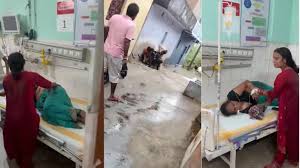
In Nagla Ranjita village, under the Akrabad police station area of Aligarh, several rounds of firing took place between two groups over a village headman election rivalry. A Dalit woman was shot in the hand, seriously injuring her. Police immediately rushed the injured woman to the hospital. The accused fled the scene. Upon receiving information, a heavy police force, including the SP Rural, was deployed to the scene. The incident occurred around 8 p.m. on Monday night. A dispute was going on between village headman representative Thakur Tanuj (son of Udayveer), a resident of Nagla Ranjita village, and the other party’s village headman candidate Thakur Bhajni (son of Surendra Singh). During this dispute, one of the two sides opened fire several times. Meanwhile, Pinky Devi (wife of Vinod Kumar), who was coming from the fields, was shot in the hand. Upon receiving information about the shooting, SP Rural Manish Kumar Mishra, Circle Officer Barla Garvit Singh, and Station House Officer Vinod Kumar arrived at the scene with police force. They immediately rushed the injured woman, Pinky Devi, to the Akrabad Health Center for treatment. Given her critical condition, doctors referred her to the medical college. Police have launched an investigation into the shooting incident. A heavy police force has been deployed to maintain peace in the village. Circle Officer Barla Garvit Singh stated that a woman was injured during a shootout between two groups in Nagla Ranjita village. Police have rushed the injured woman to the hospital. The accused have fled the village. Police are searching for them. Zainul Abedin Khan | Akrabad (Kol), Aligarh Courtesy: Hindi News
Dalit woman assaulted, FIR filed on court order: Accused of casteist slurs and assault
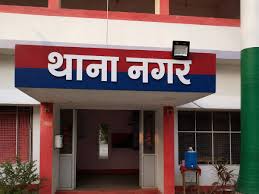
A case has been registered in Catholia Lala village, under the Basti Nagar police station area, for assaulting a Dalit woman and her daughter, using casteist slurs, entering their home, and threatening to kill them. The city police took this action on the orders of the Special Court under the SC/ST Act. The victim, Gujarati Devi, stated in her petition to the court that the incident occurred on the morning of January 27th. Village resident Shakeela was sweeping and throwing garbage in the courtyard in front of her house. When Gujarati Devi objected, Shakeela allegedly threw garbage at her and insulted her using casteist slurs. It is alleged that as the dispute escalated, Gujarati Devi’s daughter, Shalu, tried to intervene, but Shakeela began assaulting her. Shakeela then called her husband, Yusuf, and sons, Mubarak, Saddam, Salman, and Sameer. All the accused dragged Shalu to the street, kicked, punched, and beat her with shoes, and also made casteist remarks. The victim also alleges that when she protested, the accused entered her home and assaulted her as well. During this, the accused attempted to dishonor her daughter by tearing her clothes. Hearing the noise, nearby villagers rushed to the scene, saving the mother and daughter. In her petition, Gujarati Devi stated that the accused family had been pressuring her to occupy her courtyard land for a long time and had been repeatedly hurling casteist abuses and threatening to kill her. The victim had previously filed complaints at the city police station, the Superintendent of Police’s office, and through registered mail, but when no action was taken, she had to seek legal recourse. On May 8, 2026, the Additional District and Sessions Judge/Special Judge, SC/ST Act, Basti, registered an FIR under Section 173(4) of the BNSS and ordered legal action. Station House Officer Bhanu Pratap Singh informed that in compliance with the court order, a case has been registered under relevant sections and the SC/ST Act and investigation has been initiated. Mohammad Shakeel | Nagar Bazaar (Basti Sadar), Basti Courtesy: Hindi News