
Amid TMC merger buzz, Sena (UBT) leader Sanjay Raut urges NCP (SP) to merge with Congress
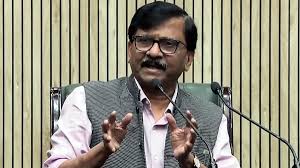
Sources said the NCP (SP) remains divided on the issue, with one section favouring a merger with the Congress and another advocating the party’s independent identity. MUMBAI: After reports of the Trinamool Congress (TMC) merging with the Congress, speculation has now emerged about the possibility of the NCP (SP) merging with the grand old party. Shiv Sena (UBT) leader Sanjay Raut said that the time has come for regional parties that originated from the Congress, such as the TMC and NCP (SP), to rejoin the Congress if they genuinely want to defeat the BJP. Raut said that the Congress is the party that can lead the fight against the BJP under the leadership of Lok Sabha Leader of Opposition Rahul Gandhi. Therefore, all parties aligned with the Congress should merge with their parent party, he said. According to Raut, such a move would make the Congress a much stronger force in India. Reacting to the suggestion, NCP (SP) Lok Sabha MP Supriya Sule said the party would consider Raut’s remarks. She said that Raut is a senior leader whose experience is valuable and, therefore, whatever he has suggested would be considered. Maharashtra Chief Minister Devendra Fadnavis, reacting to the development, said that parties considering a merger have experienced leadership and do not need anyone’s advice on whether to merge with the Congress. He said that some people in politics offer unsolicited advice even when it is not sought. In this photo from Feb. 7, 2025, Shiv Sena (UBT) MP Sanjay Raut addresses a press conference at the Constitution Club in New Delhi. ‘Seeking structural changes’: NCP (SP) MP Sule vows to bring bill to stop horse trading “I am sure that the regional parties will not merge with a sinking ship like the Congress party. Congress is no longer as strong a party as it was earlier. Therefore, the regional parties that came out of Congress will not make the mistake and merge with a dying party. “Even though they dare to make a mistake, that would not have an impact on the BJP. In fact, it will create more political space for the BJP so our expansion will continue even though the opposition consolidates,” Fadnavis said. Sources said the NCP (SP) remains divided on the issue, with one section favouring a merger with the Congress and another advocating the party’s independent identity. However, any decision will ultimately rest with Sharad Pawar. The party will first examine the merger proposal in detail, and only then will a final decision be taken, a source said, requesting anonymity. Sudhir Suryawanshi Courtesy : TNIE Note: This news is originally published on https:/thenewindianexpress.com/bha and is used purely for non-profit/non-commercial purposes, especially human rights
The ‘Dark Web’ of Human Trafficking in Bihar! A Three-Tier Syndicate Stretches From Villages to Cities, Targeting Poor and Dalit Girls
Bihar Human Trafficking: A large human trafficking network is operating in Bihar. Recent operations by the Bihar Police have revealed that underprivileged girls from backward and rural areas are being targeted. Patna: According to recent investigations and rescue operations by police and social organizations, a highly organized three-tier human trafficking network is reportedly targeting adolescent girls from poor and Dalit families in rural and backward areas of Bihar. This network operates through a well-planned system in which rural girls are lured with false promises of jobs, marriage, friendship, or a better life and taken to major cities across the country. Many victims are later forced into domestic work, bonded labor, or marriages against their will. What do the statistics say? These revelations come amid growing concern about the rising number of missing children in Bihar, which is being identified as a major source of human trafficking. According to official data, 12,000 to 14,000 children go missing in Bihar every year. This number reached 14,699 in 2025 alone. Adolescent girls remain the most vulnerable group. Nearly 60 percent of all missing children in the state are girls under the age of 18. The situation was particularly alarming in 2023, when 12,299 children were reported missing. Nearly 75 percent of these were girls, meaning three out of every four missing children were girls. Police Action Continues Police and social organizations have rescued thousands of girls over the past two years. During 2024-25, police rescued 1,970 girls, while another 1,492 girls were rescued during 2025-26. These operations have helped investigators understand the structure and functioning of trafficking gangs operating in Bihar and other states. According to investigators, the human trafficking system operates through three interconnected layers. What do the human trafficking statistics say? Every year, 12,000 to 14,000 children go missing in Bihar. This figure reached 14,699 in 2025. Adolescent and minor girls are most at risk. Nearly 60 percent of children are girls under the age of 18. In 2023, 12,299 children were reported missing. Girls constituted 75 percent of the missing. Police rescued 1,970 girls during 2024-25. Another 1,492 girls were rescued during 2025-26. An active network at the rural level? At the first stage, local youth act as agents and identify vulnerable girls in villages. Victims are often lured through friendships, love affairs, marriage proposals, or promises of jobs. Agents reportedly work under pressure to recruit girls within a short period of time. Once trust is established, girls are persuaded to leave their homes and villages. Trafficking Method After leaving their villages, victims are handed over to transportation networks. They are often transported from one place to another at railway stations and bus terminals. In some cases, victims are allegedly drugged or threatened to comply. They are then transported to distant cities via long-distance trains and other modes of transportation. Trafficking Centers in Cities! The final stage operates primarily in metropolitan cities. Victims are reportedly held in undisclosed locations, subjected to physical and mental abuse, and stripped of their identities. Many women are allegedly sold into forced marriage or forced to work as bonded laborers. Case Study Number One A 19-year-old woman from Sahibganj was trafficked to update her Aadhaar card. After leaving home, she was allegedly taken to Hyderabad. Lured with the promise of employment, the traffickers took her to a nearby city and sold her. Police later recovered the 19-year-old woman. Case Study Number Two A 15-year-old student from Rohtas was subjected to human trafficking. Her friend lured her, drugged her, and then ran away. He took the student to Secunderabad and then escaped. The victim was rescued by police at Secunderabad railway station. Case Study Number Three An 18-year-old girl from East Champaran was lured and abducted by her friend. The girl was taken to Secunderabad and forced into bonded labor. Police rescued the girl before she could be allegedly forced into marriage. Case Study Number Four A 22-year-old woman in Gopalganj went out to buy medicine. The woman was first lured with the promise of marriage. The woman was then forcibly taken to Kolkata. Police successfully recovered the woman after 15 days. A rescue team traveled directly from Kolkata to Hyderabad. Where a 21-year-old woman from Siwan was rescued from the same network. Girls Reaching the South! Experts believe that over six girls have been rescued from Hyderabad and Secunderabad with the help of the police in the last six months. According to them, most of the victims were lured with promises of permanent jobs or marriage. They were forced to work long hours before being prepared for forced marriage. What does Bihar Police say? Suhita Anupam, Additional Director General of Police, Vulnerable Classes and Crime Investigation Department, said that major trafficking centers across Bihar are being identified and placed under special surveillance. She said that as a precautionary measure, registration has been made mandatory for orchestra groups and similar organizations. The ADG also said that villages with repeated incidents of human trafficking are being identified and monitored. Anupam further said that an online monitoring system has been established at the police headquarters level to more effectively monitor human trafficking cases. Public awareness and community vigilance remain crucial to prevent human trafficking and protect vulnerable girls from exploitation. Edited by: Ashutosh Kumar Pandey About the Author Ashutosh Kumar Pandey, Courtesy: Hindi News, serves as Principal Digital Content Producer at Navbharat Times (Digital). He joined Navbharat Times, the digital wing of the Times Group, in September 2022. Currently, Ashutosh manages the desk at NBT Bihar-Jharkhand Digital. Courtesy: Hindi News
Justice Balakrishnan Commission report on SC status for Dalit converts ready for submission
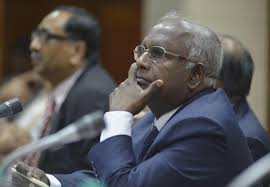
The Commission, set up in October 2022, has got several extensions; it was to study the discrimination faced by Dalit converts, their demand for SC status, the opposition to the demand, and the impact on existing SC communities The Justice (Retd.) K.G. Balakrishnan Commission examining the issue of Scheduled Caste status for Dalit converts has finished its study and prepared the report it was tasked with almost four years ago, The Hindu has learnt. The three-member Commission of Inquiry was constituted by the Union government in October 2022, just as the Supreme Court was about to resume hearing a batch of pleas that sought SC status for Dalit Muslims and Christians. The issue has been pending in the top court for 20 years now. The Commission’s mandate included examining whether SC status can be granted to Dalits who have converted to any faith other than those mentioned in the Constitution (Scheduled Castes) Order of 1950. Currently, only Dalits of Hindu, Buddhist, and Sikh faiths are entitled to an SC classification, unlike the Scheduled Tribe status, which does not have a religion criterion. Multiple extensions Nearly four years after the Commission was formed, officials aware of the matter said that the report has been prepared and is currently being readied in a “book format” for official submission. One official said that the Commission should be able to submit its report “in a few days”. The Commission was initially given a two-year deadline to finish its work and submit a report to the government. Since 2024, the Commission has been given multiple extensions, the last one in April this year, which set the latest deadline at June 10, 2026. Gazette records do not show any further extension granted to the Commission. Pending case According to the government, the Commission’s study was meant to look at the demand for SC status for Dalit converts, the opposition to this demand and its impact on existing SC communities, and the levels and types of discrimination faced by Dalit communities after they convert to other faiths. Even as a batch of petitions remains pending in the Supreme Court on the Constitutional question of whether Dalit Christians and Muslims can be granted SC status, the top court had recently ruled in the case of a Christian pastor from Andhra Pradesh that the religion bar as it exists for the SC classification was “absolute”. Notably, the Union Social Justice Ministry has made multiple submissions to the Supreme Court in these matters, arguing that the SC status should be denied to people who had converted to faiths like Islam and Christianity, citing the foreign origins of these religions, while the religions currently included are Indic in nature. Abhinay Lakshman Courtesy : The Hindu Note: This news is originally published on https:/thehindu.com/bha and is used purely for non-profit/non-commercial purposes, especially human rights
Dalit youth beaten to death in Barabanki: Dance was taking place on the road after a feast, brutally beaten for asking for way.

A Dalit youth died in a dispute over giving way in Azad Nagar Mirpur village, under the Mati police station area of Barabanki district. The family has alleged that the youth was beaten to death. The family has demanded strict action against the accused. The deceased has been identified as Durgesh Rawat, an electricity worker. According to the family, Durgesh was on his way to his aunt’s village in Mirpur late at night to pick up laborers to repair a high-tension line fault. After the feast, a DJ was playing on the road near Azad Nagar and some people were dancing, blocking the road. Durgesh asked the people present there to give way. This sparked an argument, which soon escalated into a physical altercation. The family alleges that Durgesh was brutally beaten, leaving him seriously injured. The injured Durgesh was taken to the Community Health Center, Deva, where doctors declared him dead. His family arrived at the hospital around 2 a.m. after receiving information from the hospital. The deceased’s family is demanding the immediate arrest of the culprits and justice. Mati Police Station in-charge Ajay Kumar Tripathi stated that the police have received information about the incident and are investigating the matter. He also stated that no written complaint has been received yet. According to the station in-charge, further legal action will be taken based on the receipt of the complaint and the investigation. The police are thoroughly investigating all aspects of the case and will take necessary action once the facts emerge. Sarfaraz Warasi | Barabanki Courtesy: Hindi News
Malout police arrest 7 in Jhorar Dalit youths assault case; 4 accused still at large
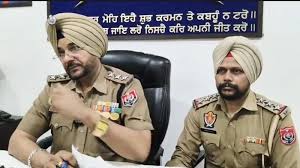
Victims were allegedly paraded semi-naked, tied to a tree and beaten over mobile phone theft allegations The Malout Sadar police have traced and arrested all seven unidentified people in the case relating to two Dalit youths, accused of snatching a mobile phone, who were allegedly paraded semi-naked, dragged through fields, tied to a tree and beaten by a group of people at Jhorar village in Muktsar district on Saturday afternoon. However, those already named in the FIR and yet to be arrested are Hardeep Singh, his father Avtar Singh, Rimpa Singh and Manpreet Singh, all residents of Jhorar village. Malout DSP Jaspal Singh said the arrested accused have been identified as Ram Chander, Ramesh Kumar, Hira Sahni, Basant Sahni, Ram Babu Sahni, Ram Bali Sahni and Varinder Sahni, all residents of Nepal, who were staying at co-accused Avtar Singh’s house in the village. The DSP said all seven accused have been sent to judicial custody. A case under various Sections of the BNS and the SC/ST (Prevention of Atrocities) Act had earlier been registered against four accused and seven unidentified persons. Notably, the Punjab State Scheduled Castes Commission had taken cognisance of the incident and sought a report from the district police in this regard. Article_Author Archit Watts Courtesy : The Tribune Note: This news is originally published on https:/thetribune.com/bha and is used purely for non-profit/non-commercial purposes, especially human rights
‘Equality Is Not a Luxury’: Inside the Supreme Court Battle Over India’s Blood Donation Ban

A 2017 guideline permanently bars gay men, transgender persons and sex workers from donating blood in India. In March 2026, the Supreme Court signalled it would not intervene. We spoke to the petitioners, the lawyers and those living the exclusion. On March 13, 2026, Sharif Rangnekar attended a blood donation camp in his residential colony, organised by a young woman to address what everyone agreed was a real problem. India has an acute shortage of blood. Rangnekar, a petitioner in one of three Supreme Court cases seeking to lift the ban on blood donation by gay men, was glad the drive was happening. And then he felt something else entirely. “I was both happy, but I was also irked at that moment that I can’t participate,” he says. “Had I gone, no one would have stopped me. But when I raised this issue, that you’re doing a great thing, but unfortunately I can’t participate because I’m homosexual, some people expressed surprise. Some were unaware that there’s even a need for your blood to be tested before it is given to anyone.” What followed in that WhatsApp group was a microcosm of the larger national conversation: confusion, defensiveness, and one doctor who insisted the ban was simply a safeguard. “I said, safeguards are exactly what we’re asking for,” Rangnekar recalls. “This is not a safeguard. This is ensuring that we are banned, when there is technology in many parts of the world for safeguarding the interests of everyone.” India’s prohibition on blood donation by gay men, transgender persons and female sex workers is codified in Clauses 12 and 51 of the Guidelines for Blood Donor Selection and Blood Donor Referral, 2017, jointly issued by the National Blood Transfusion Council and NACO. Clause 12 classifies these groups as permanently “at risk.” Clause 51 mandates a lifetime deferral, no waiting period, no individual assessment, no path to eligibility. The logic dates to the AIDS epidemic of the late 1970s and early 1980s. Nearly five decades on, neither the science nor the testing technology is the same. The guidelines are. The legal challenge was brought as a PIL in 2021 by Thangjam Santa Singh, the Manipur-based transgender activist known as Santa Khurai, represented by senior advocate Jayna Kothari. Rangnekar and activist Harish Iyer subsequently filed related petitions. Together, the three cases challenge the blanket exclusion as a violation of Articles 14, 15 and 21 of the Constitution. In May 2025, the Supreme Court directed the government to constitute an expert committee to review the policy. By August, the committee reported that the 2017 guidelines were “firmly rooted in national and international research.” On 13 March 2026, the Centre told the court that diluting the ban “would be injurious to public interest.” The bench, led by Chief Justice Surya Kant, appeared largely persuaded. The hearing’s most consequential moment was not a ruling but an observation. Chief Justice Kant asked Kothari: “Tell us one good reason that we should issue a direction. After all, there are millions and millions of poor people who take free blood facilities. They cannot afford private hospitals. If there is even a one per cent chance of infection, why should they suffer?” Kothari’s response was direct: all donated blood is tested before use, including for HIV, and Nucleic Acid Testing exists precisely to close the gap the government invokes. She also flagged the central inconsistency: a gay man in a monogamous relationship cannot donate blood, while a heterosexual man engaging in unprotected sex with multiple partners faces no restriction at all. Advocate Rahul Sangwan, who has worked on the legal arguments in higher courts, puts the constitutional problem plainly: “The ban is not rationally connected to the objective of blood safety. It presumes that an entire class of people is unsafe, without any evidence tied to individual conduct. What this ban does is penalise people for their sexual orientation, which is intrinsically against the identity and dignity of an individual, as held in Navtej Singh Johar.” There was a second observation that provoked a sharper response. Reports from Live Law and Bar & Bench quoted the bench characterising the petition as a “luxury.” The framing drew immediate comparisons to 2013, when a previous bench described queer Indians as a “miniscule minority”, a formulation that preceded the recriminalisation of homosexuality under Section 377, and which the court itself repudiated in Navtej Singh Johar in 2018. Rangnekar was direct: “Is the shortage of blood an elite issue? The blood that we donate goes into a blood bank. After that, it doesn’t decide who it goes to based on caste or religion.” Sangwan was unequivocal: “Equality is not a luxury. Calling a petition that challenges identity-based exclusion a luxury petition trivialises the constitutional promise of equality.” The government’s case rests partly on the absence of Nucleic Acid Testing at most Indian blood banks, and a testing window of up to 33 days during which an infection may not be detectable. These are real limitations, but petitioners argue they indict the system, not the donors. “There is already contaminated blood in the system,” Harish Iyer, another petitioner at the Supreme Court, says. “There are cases of people getting contaminated blood; sometimes it’s not even checked. That is not because of anything other than the fact that we have not yet got a proper testing system in place. And knowing how governments work when systems don’t function properly, they would rather let people be ignorant and carry on with the bias.” A public health expert with fifteen years in HIV intervention programmes, trans, queer, and asked not to be named, offered a systemic critique: “When we look at trans people, trans women, hijra women especially, we look at them from the lens that they do sex work, they have STIs, they spread HIV. That gaze still continues in our programmes; it is evident from NACO’s guidelines, which mandate the permanent deferment of trans people on the basis of high-risk behaviour. We pick up one identity
Transgender rights: Heatwaves, identity laws deepen risks for trans Indians

The amended transgender law deepens the community’s climate vulnerability by making disaster relief harder to access The passage of the Transgender Persons (Protection of Rights) Amendment Act 2026 poses an existential threat to trans persons in a rapidly warming India. This amendment strikes at the heart of the right of trans persons to self-perceived gender identity. By removing the erstwhile Section 4(1) of the Transgender Persons (Protection of Rights) Act, 2019, the newly passed amendment questions the very existence of trans persons and places them at the mercy of medical boards for state authentication of their identities to obtain legal documentation. This constitutes a direct violation of the judgment delivered by the Supreme Court in the case of National Legal Services Authority v. Unionof India (NALSA), which held that any person can assert their gender identity solely based on their psychological or social experience without the need to undergo medical gender-affirmative surgery. The implications of obliterating the right to self-perceived gender identity are especially severe in a country increasingly beset by erratic climatic events. This is because access to disaster relief and rehabilitation measures is often dependent upon legal identification in India. It is well documented that during climate-induced flooding in Assam in the year 2020, persons from the trans community were among the worst-hit. Despite possessing the right to self-perceived identity at that time, they faced immense discrimination. Many struggled to access government relief measures, primarily due to a lack of legal documentation and social stigma associated with their identity. By curtailing the right to self-determination, the 2026 Amendment may further obstruct transgender persons from accessing shelter schemes such as Garima Grehs during climate disasters and in ordinary times alike. This becomes a Sisyphean endeavour, particularly when trans persons seek identity certificates required under the amended law. Consequently, it can be safely stated that the 2026 Amendment is both climate- and identification-blind. The vulnerability heightened by the 2026 Amendment is not confined to flood-related disasters alone but extends to broader climateinduced crises such as recurring heatwaves. In 2026, heatwaves are affecting states including Uttar Pradesh, Maharashtra, Tamil Nadu, and Bihar. Incidentally, led by Uttar Pradesh, these states also have a high population of trans communities. Heatwaves are particularly debilitating for the trans community because of their heightened social and economic precarity, especially in relation to accessing safe and climateresilient housing and consequent social affirmation. Pushed to the peripheries of the cities, trans communities who are estranged from their families are mostly compelled to reside in the most unsafe and disaster-prone areas. These are typically low-lying, peri-urban areas or slum settlements that also lack basic sustenance facilities. In this context, the 2026 Amendment appears particularly apathetic because minimal protection from heat, such as access to shelter schemes like Garima Greh (which provide food, medical assistance, and recreational facilities), is now contingent upon producing transgender identity certificates under the amended law. Left on policy’s margins Extreme heat exposure creates a multiplier effect on their vulnerability, making them more prone to heat-related illnesses. This is also mainly due to the lack of gender-neutral washrooms, which force trans communities to either confront violence and gender dysphoria daily or risk disease. Lacking adequate access to dignified housing settlements, these communities also face a severe shortage of WASH (Water, Sanitation, and Hygiene) infrastructure, which is particularly crucial during heat waves. This impacts their hydration and sanitation facilities, further undermining their ability to cope with extreme temperatures. Ironically, despite representative numbers and heightened vulnerabilities, trans communities are rarely accounted for as vulnerable populations in heat action or climate action plans, which are the primary policy-guiding documents for a city’s or state’s climate action. These plans, although not legally binding, still provide a visionary framework for climate action in India’s cities. With their health, existence, and identity at stake, it is high time that these persons and their lived experiences are adequately accounted for in the State’s urban planning instruments. Apart from this, every legislation in India must be audited from a climate-vulnerability lens to ascertain its impact on vulnerable communities. Legislation such as Transgender Persons (Protection of Rights) Amendment Act, 2026, thought of as climate-neutral, have unintended impacts and compound vulnerabilities of trans persons. Climate change is an undeniable reality, and as it intensifies, trans persons remain disproportionately vulnerable, confronting the looming threat from both climate disasters and systemic State neglect. Prathiksha Ullal (The writer is a senior resident fellow at the Vidhi Centre for Legal Policy) Disclaimer: The views expressed above are the author’s own. They do not necessarily reflect the views of DH. Courtesy : DH Note: This news is originally published on https:/deccanherald.com/bha and is used purely for non-profit/non-commercial purposes, especially human rights
Calcutta HC grants Abhishek Banerjee interim relief in signature forgery case
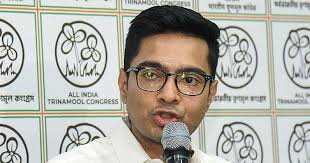
Justice Kausik Chanda granted the relief for three weeks and directed Banerjee to appear before the CID at its headquarters, Bhabani Bhaban, in Kolkata by 6 pm on Thursday for questioning. KOLKATA: The Calcutta High Court on Thursday interim protection from coercive action to TMC MP Abhishek Banerjee in a signature forgery case linked to the party’s choice of Leader of Opposition in the West Bengal Assembly. The court also directed him to appear before the Criminal Investigation Department (CID) under the state police at Bhabani Bhaban by 6 pm to face the agency probing the case. It’s not yet known whether the nephew of the Trinamool Congress supremo and former Bengal Chief Minister Mamata Banerjee will appear before the CID at Bhabani Bhaban. He went to Delhi on Saturday and met the Congress leader Rahul Gandhi and is expected to return to Kolkata this afternoon. While hearing the case at the High Court on Thursday, Justice Kausik Chanda directed Abhishek Banerjee to appear before the CID at its Bhabani Bhaban headquarters in Kolkata by 6 pm on Thursday for questioning in the matter. The court also granted him protection from any coercive action for three weeks. The MP’s lawyer informed the court that Abhishek, the number two after Mamata in the Trinamool Congress, was scheduled to arrive in Kolkata from Delhi at around 4 pm. The court will hear the case again after two weeks. The CID has already served three notices separately to Abhishek asking him to appear before the investigating agency at Bhabani Bhaban but he didn’t face it showing medical ground and his busy schedules in Delhi till 9 June. He was brought under the scanner of the CID after serious allegations surrounding a meeting convened by Trinamool Congress chief Mamata Banerjee at her Kalighat residence to discuss the party’s choice for the Leader of Opposition post in the House. Abhishek wrote a letter armed with the meeting’s resolution signed by the party MLAs to the speaker Rathindranath Bose selecting Sobhandeb Chattopadhyay, veteran legislator from the Ballygunj constituency in the city, as the LoP in the Trinamool legislature party. The controversy erupted after claims surfaced that signatures of several MLAs were affixed to related resolution copy despite their absence from the meeting, sparking a political row in West Bengal and prompting an investigation into alleged forgery. Based on the complaint lodged by two rebel Trinamool Congress MLAs Ritabrata Bandyopadhyay from Uluberia Purba in Howrah and Sandipan Saha from Entally in the city, with the speaker an FIR was filed by the House with Hare Street police station. With the directive of the Chief Minister Suvendu Adhikari, a special investigation team (SIT) under the CID was formed to probe the alleged signature forgery case. The SIT has already interrogated several MLAs who have reportedly admitted that their signatures were affixed to the resolution copy though they absent in the meeting at Kalighat residence of Mamata Banerjee landing Trinamool Congress leadership in trouble particularly at a time when the party is grappling with unprecedented internal crisis after it suffered a crushing defeat to BJP winning only 80 out of 294 seats in the recent assembly polls in the state. Subhendu Maiti Courtesy : TNIE Note: This news is originally published on https:/thenewindianexpress.com/bha and is used purely for non-profit/non-commercial purposes, especially human rights
Uttarakhand Horror: Death penalty for befriending an upper caste girl; Dalit boy’s nails pulled out and nails driven into his feet

An 18-year-old Dalit student was beaten to death in Tehri Garhwal for befriending an upper caste girl. The girl’s family called him home and beat him, leading to his death. The girl’s father and grandfather have been arrested in connection with the case. Nainital: A heartbreaking incident has come to light from Tehri Garhwal, Uttarakhand. An 18-year-old Dalit student was beaten to death simply because he was friends with an upper caste girl. Ketan Lal, a 12th-grade student, was subjected to brutal torture before being murdered. This incident occurred on Sunday. Ketan’s father, Dhanpal Lal, stated in his police complaint that the girl’s family invited Ketan and his friend to their home. They then locked them in a room overnight and brutally beat them. The girl’s father, Yashbir Singh Panwar, called Dhanpal on Monday morning and threatened to throw his son and his friend into the river. When the father, alarmed by this, arrived at the scene, he found both boys covered in blood. Ketan died on the way to the hospital. On the way, Ketan recounted the entire incident to his father. He said he had gone to the girl’s house with his friend at her request. However, upon arriving, the girl’s father and grandfather grabbed them and locked them in a room. The family alleges that during the overnight assault, iron nails were driven into Ketan’s legs and he was subjected to caste-related abuse. Ketan’s friend, Diwakar, is also seriously injured. He suffered severe head and body injuries and is undergoing treatment. Initial police investigations have revealed that the girl’s family was strongly opposed to her friendship with Ketan. The Senior Superintendent of Police of Tehri Garhwal stated that the girl’s father had previously met with Ketan’s father and warned him not to harass his daughter. This old rivalry led to this horrific murder. In this case, the police have arrested the girl’s father, Yashbir Singh Panwar, and grandfather, Vidyadutt Panwar. They have been charged with murder and under the Scheduled Castes and Scheduled Tribes (Prevention of Atrocities) Act. Police say they are awaiting the post-mortem report to determine the exact severity of the injuries. Read the latest news on Uttarakhand’s pilgrimage and tourist destinations, hilly areas, weather, government schemes, and local administration. Follow the Uttarakhand News in Hindi section for reports from Dehradun, Rishikesh, Haridwar, and the hill districts—reliable and comprehensive state coverage right here. Author: Satyam Bhardwaj Courtesy: Hindi News
Bengaluru Traffic Advisory Today: Dalit Protest In Freedom Park Till 6pm; Check Alternate Routes

Day-long protest at Bengaluru’s Freedom Park is set to reshape traffic across the city centre. Road closures, diversions and parking curbs could test commuters throughout Thursday Bengaluru traffic police have announced a series of temporary restrictions and diversions across the Central Business District (CBD) on Thursday in view of a protest organised by the Karnataka Dalitha Sanghatana Samithi at Freedom Park. According to a Deccan Herald report, the demonstration is scheduled from 8 am to 6 pm. Motorists travelling from Mysore Bank Circle towards Freedom Park via KG Road have been advised to avoid the usual route. Instead, they should take a right turn and proceed via Maharani Underpass Road and Palace Cross Road. The stretch between Freedom Park Junction and Kanakadasa Circle will remain closed to vehicular traffic in both directions during the protest, with no movement of vehicles permitted along the route. Traffic police have also issued an advisory for vehicles moving from Khode Junction towards KR Circle. As protest participants are expected to march on foot from the City Railway Station via the flyover road to Freedom Park, motorists have been asked to use Old JD(S) Office Road to avoid congestion. In a temporary measure to ease traffic flow, the road connecting Subbanna Junction and MTR Junction, which normally operates as a one-way stretch, has been converted into a two-way route. Commuters travelling towards Gandhinagar can use this corridor as an alternative. Parking Restrictions In Force Parking of all types of vehicles has been prohibited along several key stretches in the city during the protest. The restrictions cover the route from Khode Junction to Maharani Junction, as well as V Ramachandra Road, Kalidasa Road, Palace Road and KG Road. The traffic police have urged commuters to plan their journeys in advance and use the designated diversions to minimise delays during the day-long protest. Published By : Parishmita Saikia Courtesy : News18 Note: This news is originally published on https:/news18.com/bha and is used purely for non-profit/non-commercial purposes, especially human rights