
Aadhaar authentication made mandatory for beneficiaries of central scheme for transgender persons
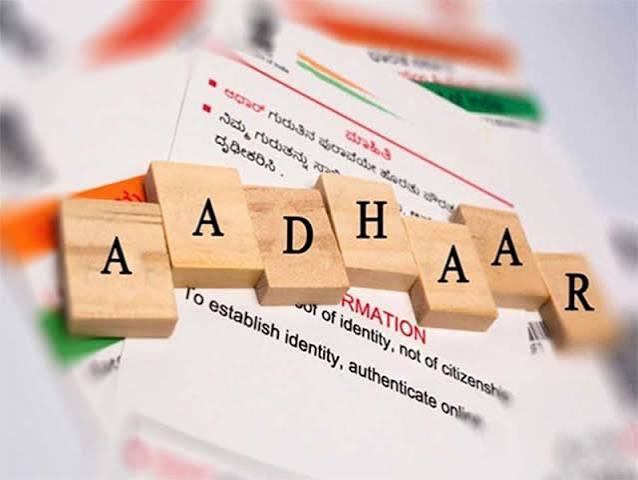
The notification, issued under the Aadhaar (Targeted Delivery of Financial and Other Subsidies, Benefits and Services) Act, 2016, lays down procedures for establishing the identity of applicants and verifying their eligibility for benefits The Union Ministry of Social Justice and Empowerment has notified rules making Aadhaar authentication a requirement for beneficiaries of a centrally sponsored scheme for transgender persons, while providing alternative identity documents for those who do not have an Aadhaar number. According to a notification, the requirement applies to individuals seeking benefits under the scheme administered by the Department of Social Justice and Empowerment. The notification, issued under the Aadhaar (Targeted Delivery of Financial and Other Subsidies, Benefits and Services) Act, 2016, lays down procedures for establishing the identity of applicants and verifying their eligibility for benefits. Under the rules, individuals who have been assigned an Aadhaar number must provide proof of Aadhaar authentication or possession of the number to receive benefits under the scheme. Those who have not yet been assigned an Aadhaar number will have to apply for enrolment and provide proof of enrolment, along with other prescribed documents, to establish their identity and eligibility. “For transgender beneficiaries aged 18 years and above who do not have an Aadhaar number, the notification provides for alternative documents, including a voter identity card issued by the Election Commission of India, a ration card, a caste certificate or an income certificate issued by a competent authority, a government-issued service identity card, a driving licence, a passport and educational certificates,” the notification said. Other documents specified in the notification include certificates issued by recognised institutions and authorities, as well as prescribed documents relating to foreign nationals, depending on their citizenship and immigration status. For beneficiaries below 18 years of age who have not been assigned Aadhaar numbers, the rules provide for alternative documents such as a birth certificate, a certificate issued by a recognised educational institution, a ration card and other prescribed identity documents. The notification also addresses cases in which transgender beneficiaries are unable to complete Aadhaar enrolment or authentication. The authorities implementing the scheme will be required to make arrangements to facilitate access to benefits in accordance with the prescribed procedure. The rules require the concerned authorities to publicise the Aadhaar-related requirements and ensure that eligible beneficiaries are informed about the documents they can submit. The notification is intended to establish a framework for identity verification and delivery of scheme benefits while providing for applicants who have not yet obtained Aadhaar. Article_Author Surya S Pillai Courtesy : The Tribune Note: This news is originally published on https:/thetribune.com/bha and is used purely for non-profit/non-commercial purposes, especially human rights
Chandrashekhar Azad vs. Akash Anand in UP: Who will support Dalit voters? BSP to hold a flurry of rallies starting October 28th
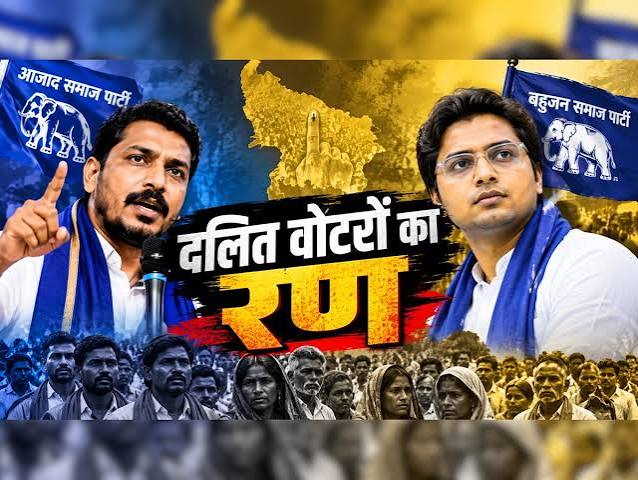
Uttar Pradesh has approximately 22% Dalit voters. The battle for Dalit voters in the state has become Azad Samaj Party vs. BSP. Akash Anand will begin his election rallies from October 28th, and Chandrashekhar Azad will begin his election rallies from October 18th. In response to the Azad Samaj Party’s proposed rallies, the BSP has also released its schedule. The BSP has fielded Akash Anand against Chandrashekhar Azad. Chandrashekhar Azad presents himself as a prominent Dalit leader in UP. Ahead of the upcoming assembly elections in UP, the battle for Dalit politics has now become Chandrashekhar Azad vs. Akash Anand. Dalit voters are at the center of the political battle between the Azad Samaj Party and the BSP. Both parties’ politics revolve around Dalits. Mayawati has fielded Akash Anand against Chandrashekhar. Akash Anand faces the challenge of regaining the BSP’s lost base, while Chandrashekhar faces the challenge of political expansion. The most important question now is who will Dalit voters support in the upcoming state assembly elections. Akash Anand to Hold a Series of Rallies Bahujan Samaj Party (BSP) chief Mayawati has made full preparations to field her nephew and party’s national convener, Akash Anand, in the electoral fray. A rally for Akash is scheduled for October 28th in Anupshahr, Bulandshahr. Following this, meetings are also scheduled in Saharanpur, Ayodhya, Agra, and Kanpur divisions. Through these rallies, the party will announce potential candidates and attempt to recapture its lost support base. Major Challenges Facing Akash Political analyst Vinod Shukla explains that Akash Anand faces more than just the challenge of holding election rallies. He must also demonstrate how active the BSP organization is at the booth level, how connected old workers are, and what the party is doing to bring its traditional supporters back to the polling booths. The campaign, which begins on October 28th, is crucial in this regard. After Anupshahr, meetings are scheduled in Nakur, Saharanpur, on November 2nd, Bikapur, Ayodhya, on November 20th, Agra, on November 22nd, and Bilhaur, Kanpur, on November 29th. Akash Anand’s programs have also been scheduled in Punjab and Uttarakhand. Assembly elections are due in these two states, along with Uttar Pradesh. Chandrashekhar’s path is not easy. Chandrashekhar Azad’s political career is rooted in Dalit rights, the Constitution, voices against social discrimination, and grassroots movements. After establishing his identity through the Bhim Army, he formed the Azad Samaj Party (Kanshi Ram) and won the Nagina seat in the 2024 Lok Sabha elections. His victory demonstrated that there are political parties for Dalits in Uttar Pradesh beyond the BSP. According to political analysts, winning one Lok Sabha seat does not necessarily sway Dalit voters across the state. Chandrashekhar’s programs are scheduled for Amroha on October 18, Aligarh on October 19, and Muzaffarnagar, Prayagraj, Varanasi, and Ghazipur from October 24 to 28. Chandrashekhar did not win due to the Dalit equation. In the 2024 Lok Sabha elections, Chandrashekhar Azad won the Nagina seat. Chandrashekhar received 512,552 votes, defeating BJP’s Om Kumar by 151,473 votes. BSP candidate Surendra Pal Singh received 13,272 votes. Political analysts say that Muslim voters voted for Chandrashekhar to defeat the BJP, which is why he won. The Dalit equation played no role in his victory. Will the Dalit vote be divided? Vinod Shukla says that Dalit voters in Uttar Pradesh have long been the BSP’s core support base and traditional vote bank. Azad’s victory in Nagina certainly saw a decline in the BSP’s old electoral base, but this result is specific to a specific Lok Sabha constituency. Therefore, this cannot be seen as a permanent shift in Dalit votes across Uttar Pradesh. He stated that Dalit voters will remain with the BSP. The likelihood of them switching to Azad is very low. There are approximately 22 percent Dalit voters in Uttar Pradesh, which is the BSP’s traditional vote bank. The role of Akash Anand and Chandrashekhar Azad will be in the spotlight for the 2027 UP Assembly elections regarding the support of Dalit voters. The BSP faces the challenge of re-establishing its old political base and organization. Chandrashekhar Azad faces the challenge of converting his victory in Nagina into a widespread electoral presence. Manoj Mishra Courtesy: Hindi News
Rereading the book of democracy
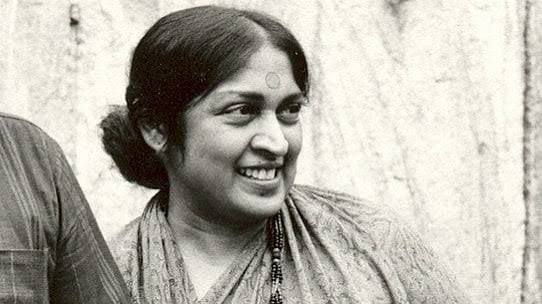
Before Indian democracy turns its next page, there needs to be atonement for earlier excess. Most repressive laws being used today were enacted earlier. What’s the plan, Rahul Gandhi was asked. He replied that tandava, the cosmic dance of destruction and creation, does not need a plan. The cosmos knows the steps already. It’s fortunate that he gets it, because after the dancing is over, his party is likely to play a key role in restoring the Indian political system. That’s assuming that the protesters remain steadfast and that all else remains constant in a turbulent world. If so, it’s an educated guess that the Modi government’s repressive actions would backfire and that power may slip from its fingers sooner rather than later. Young protesters may not have a plan, but they know exactly what they want: systemic change. Goodbye to the ossified politics of pervasive corruption, outdated hierarchies and rituals, and absurd totems and hatreds. That means dismantling the very foundation—India’s culture of distrust, which is a colonial hangover from when the rulers and the ruled were species apart. Democracies which were not preceded by colonialism are usually trust-based cultures. What the citizen says is believed and the onus to prove otherwise is on the government. In contrast, Indian citizens are presumed guilty until proven innocent and the onus of proof is on them. Many of India’s chronic disorders flow from this differential. The Congress is the right party to dismantle this superstructure, because it erected most of its beams and girders. Not because it is particularly vile, but because it has had the advantage of time—it has been in power much longer than the competition. The BJP has been spectacularly anti-democratic—its run rate is much higher, but its innings has been far shorter. India’s police and paramilitaries are earning disgrace globally for indiscriminately detaining and assaulting thousands of peaceful protesters, bystanders, women and even children on the orders of their political masters. This is inevitable because in the absence of reform, they are still performing the role of a colonial force subjugating a native population. Calls for police reform reached a crescendo in 1977, following extreme brutality during the Emergency. The actress and activist Snehalata Reddy died following ill-treatment for eight months in jail without trial. The engineering student P Rajan died under torture. These were only the most shocking cases. The National Police Commission was formed in 1977 to professionalise the force and insulate it from political pressure. Four committees and commissions were appointed since then, a PIL was filed by the senior police officer Prakash Singh and the Supreme Court issued directions in 2006. Compliance has been incomplete. So now, students, activists, MPs and journalists, many of them women, are being abused and physically and sexually assaulted by the police and paramilitaries. Would a future Congress-led alliance be willing to enforce police reforms―and renounce the ability to use the force as a private army? Consider the draconian laws which the Modi government has used to imprison and harass a long list of perceived enemies, from the Bhima-Koregaon detenus of 2018 to Sharjeel Imam and Umar Khalid, who remain in custody without trial. The laws most amenable to such ignoble purposes were originally legislated by the Congress or the Congress-led UPA: the Unlawful Activities (Prevention) Act (1967), the National Security Act (1980), the IT (Amendment) Act of 2008 (which added the controversial Section 66A). Financial curbs were initiated under COFEPOSA (1974) and the Foreign Contribution (Regulation) Act (1976) followed during the Emergency to prevent Indian NGOs from being caressed by the “black hand of the CIA”. The UPA government used it to clamp down on the non-profit sector, and the present home ministry uses it for close control over voluntary and charitable work. Legislations of the BJP-led NDA governments have sharpened the teeth of these laws. While recasting the statute books, the BJP also tuned up colonial-era laws, making it easier to make dissent resemble sedition—a crime which should have vanished along with royalty. The objective of listing laws originated by Congress and UPA governments is to point out that when it appears that a page is about to be turned in Indian politics, and that the Congress’s hand could help turn that page, it has an opportunity to atone. In long-term electoral defeat, the nature of the party and its leadership has improved. It has also adapted better to the times than the BJP, which remains feudal. The Congress could resist the temptation to make new laws like MISA and UAPA, which are tools of repression dressed up as instruments for securing important-sounding but vague goals like national security, unity and integrity, public safety, cybersecurity, responsible use of social media, protection against the foreign hand―it’s a long list. From the time of the Ram Janmabhoomi movement, Indian politics has been the province of oppressive peevishness, a game-board for petty grudge matches over half-imaginary grouses and traumas. The soul of India has always been much larger, ample and forgiving. Soon, there will be an opportunity to return to a healthier political culture which looks forward to the future instead of nursing the grievances of a poorly-lit past. But to find the path of progressive politics which India was once celebrated for, past excesses must be acknowledged and abjured. After the tandava ends, perhaps the story of Indian democracy will begin anew. Pratik Kanjilal Pratik Kanjilal | SPEAKEASY | For years, the author has been speaking easy to a surprisingly tolerant public (Views are personal) Courtesy : TNIE Note: This news is originally published on https:/thenewindianexpress.com/bha and is used purely for non-profit/non-commercial purposes, especially human rights
Sold RS seat to ‘Mumbai bizman’: Yogi targets Akhilesh for ‘ignoring backward, Dalit candidates’

Uttar Pradesh CM Yogi Adityanath’s remarks came in the context of SP nominating senior Reliance Industries executive Dhanraj Parimal Nathwani to RS in the election this month. Lucknow: Uttar Pradesh Chief Minister Yogi Adityanath has accused the Akhilesh Yadav-led Samajwadi Party (SP) of selling a Rajya Sabha seat to a wealthy businessman while sidelining its “PDA” or “pichhda (backward), Dalit, alpsankhyak (minorities)” plank. Yogi’s remarks came in the context of Yadav nominating senior Reliance Industries executive Dhanraj Parimal Nathwani to the Rajya Sabha in the election held earlier this month, where the SP won two seats unopposed. Nathwani, one of the two SP winners, is also considered close to Prime Minister Narendra Modi and Union Home Minister Amit Shah. His father Parimal Nathwani is an Independent Rajya Sabha MP from Jharkhand. The latter had won the seat in April this year after defeating Congress candidate Pranav Jha. Addressing a teachers’ conference in Varanasi Wednesday, Yogi questioned the SP’s commitment to PDA, asking, “Those who kept raising slogans about PDA… where did that PDA go when it came to Rajya Sabha tickets?” “We have been saying from day one that PDA in the Samajwadi Party stands for ‘parivar development authority’ or, at best, ‘Paraya Dhan Apna’,” the chief minister said. Yogi said the SP leader fielded his uncle Ram Gopal Yadav from one of the seats it won, although he could have chosen a Yadav leader from Kashi, Ghazipur or Ballia for one seat. “For the second seat, they could have nominated a Dalit or someone else, or even a Muslim from their traditional vote bank. But they did not do so. Instead, they sold the seat to a wealthy businessman from Mumbai. Both ‘parivar development authority’ and ‘paraya dhan apna’ have been proved right,” he alleged. Yogi targets SP over recruitment row The chief minister also attacked the erstwhile SP government over alleged irregularities in recruitment, accusing it of compromising the future of young people. He referred to the appointment of Anil Yadav as chairman of the Uttar Pradesh Public Service Commission during the SP’s tenure in 2013—the appointment was set aside by the Allahabad High Court in 2015 amid questions over his selection—and claimed he was not qualified for the post. He further alleged that a candidate who had secured third division in high school, intermediate and graduation had topped the Uttar Pradesh Public Service Commission examinations under the previous government. “What kind of anarchy and hooliganism was this? The future of young people was being played with. Meanwhile, riots, unrest and mafia elements dominated the state,” Yogi alleged. SP’s Rajya Sabha wins The remarks come after 10 Rajya Sabha members from Uttar Pradesh were elected unopposed on October 9. The BJP secured eight seats, while the SP won two. The SP’s elected candidates were senior party leader and national general secretary Ram Gopal Yadav and businessman Nathwani. Within a few days of filing nomination, Nathwani’s social media post praising Prime Minister Narendra Modi had triggered unease within the party, with some leaders questioning how they would defend the candidature amid the SP’s opposition to the BJP and Modi. Nathwani, a Gujarat-based businessman associated with the Reliance Group, posted a lengthy message on X (formerly Twitter) on 9 October, congratulating Modi on completing 25 years in public office. He also shared a video highlighting Modi’s political journey from Gujarat chief minister to Prime Minister. Prashant Srivastava Edited by Sunanda Ranjan Courtesy : The Print Note: This news is originally published on https:/theprint.com/bha and is used purely for non-profit/non-commercial purposes, especially human rights
“Until the guilty are behind bars, the struggle will intensify”: AIISCA warns ahead of IIT Bombay’s internal report
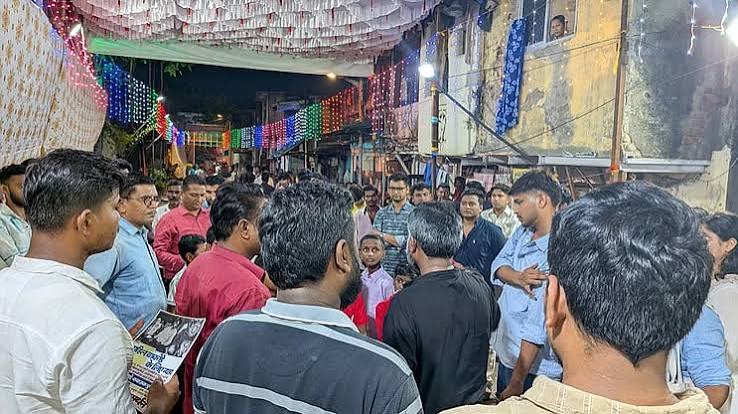
IIT Bombay has updated its anti-discrimination guidelines, stating that asking classmates about their caste, admission category, or entrance exam rank is inappropriate. Mumbai—Following the death of Sahil Wakode, protests are intensifying from the IIT Bombay campus to Azad Maidan. Deepali Salve, Maharashtra General Secretary of the All India Independent Scheduled Castes Association (AIISCA) and Director of the SRC, issued a stern warning ahead of the release of the institute’s internal report. She stated that if Professor Suryanarayan Dulla is not permanently expelled from the institute, they will protest on campus and that Director Professor Shirish Kedare will be held responsible for whatever happens next. Meanwhile, Sahil’s parents have been on a hunger strike at Azad Maidan for several days, and AIISCA has called for a protest there on October 16. Salve said that it is better to choose the path of rebellion than to succumb to injustice. According to him, this fight for justice for Sahil Wakode is no longer just a case, but a declaration of standing against oppression. He said, “This struggle will intensify until the perpetrators are put behind bars.” Regarding IIT Bombay’s internal report, Salve said it was forthcoming and that he believed it would be in favor of Professor Dulla. Addressing the institute directly, he said that if Professor Dulla was not permanently expelled, they would storm the campus and hold Director Kedare responsible for “whatever happens.” Sahil’s parents have been on a hunger strike at Azad Maidan in Mumbai for several days. A six-member delegation was allowed to meet with Kedare regarding the death of student Sahil Wakode and the allegations against Dulla. However, activists said the director did not provide any clarity regarding the ongoing investigation nor did he assure immediate action against the professor. Protest organizers alleged that more than 30 protesters were detained, assaulted, and taken to the Powai police station before being released. They warned that they would return to campus if Dula was not suspended. The protesters alleged that students were dragged onto the road and excessive force was used. AIISCA has appealed to all civil society organizations, Ambedkarites, community members, political parties, activists, and justice-minded citizens to show solidarity with them. The protest will take place at Azad Maidan on October 16th, starting at 10:30 am. Its slogan is “Justice for Sahil.” The Ambedkar Periyar Phule Study Circle (APPSC) protested the incident that occurred on October 14th. The group also alleged that the administration opened the gate for the police and kept it closed for others. According to it, the administration has taken no action toward the students who have been on strike for 27 days, and has done nothing to conduct a fair investigation into the Sahil case, instead spreading “fake news” and promoting a “media trial.” The APPSC condemned the “coalition” between the administration and the Powai police and demanded that all voices be heard and that there be dialogue with the protesting students. New Guidelines: What the Institute Said According to a Hindustan Times report, IIT Bombay has updated its anti-discrimination guidelines, stating that asking classmates about their caste, admission category, or entrance exam rank is inappropriate. An email sent by the Dean of Student Affairs’ office stated that asking about caste, admission category, or entrance exam rank, even out of curiosity, can create prejudice and negatively impact students. The institute urged students, faculty, and staff to avoid conversations that reveal someone’s caste or background and to build friendships based on shared interests. According to the email, while the question may seem innocent to the person asking it and may be motivated by mere curiosity, such a question can often have an adverse impact on another student. Sharing abusive, hateful, casteist, or gender-biased messages, as well as content that depicts prejudice based on religion or sexual orientation, is also prohibited. The institute reiterated its commitment to implementing the reservation policy “in letter and spirit” and warned of strict punishment for violations. Statements Recorded So Far in the Police Investigation According to the Hindustan Times, the Crime Branch has so far recorded statements from approximately 70 people, including Director Kedare, Professor Dulla, several students, and the deceased’s girlfriend and classmate. Police have gained access to the deceased’s phone, tablet, and laptop, but the iPhone has not yet been unlocked and is in the forensic laboratory in Kalina. Police have also sought documents from the institute, such as mark sheets, written complaints, and, if any, apologies. Prof. Dulla is named in a police FIR alleging abetment to suicide on the grounds of caste discrimination, and has been sent on leave to allow a fair investigation. Geetha Sunil Pillai Courtesy: Hindi News
The issue of caste discrimination and mental harassment of a Dalit M.Ed. student at CSJMU heats up, with Bhim Army and student organizations staging a violent protest.
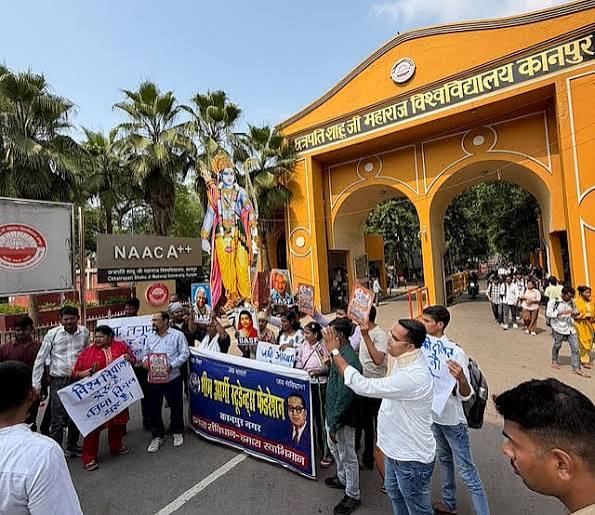
The Bhim Army Students Federation has launched a protest against the caste discrimination and mental harassment of an M.Ed. student at Chhatrapati Shahuji Maharaj University, leveling serious allegations against the administration and police. Lucknow: Student organizations, led by the Bhim Army Students Federation (BASF), have launched a protest to secure justice for Prema Devi, a Dalit M.Ed. (session 2024-26) student studying in the Department of Teacher Education at Chhatrapati Shahuji Maharaj University (CSJMU), Kanpur, with the support of the AISA student organization. As soon as the student organizations joined the protest, the police administration turned the entire campus into a cantonment, but the Bhim Army Students Federation remained firm on its demands and launched a vigorous protest. The Bhim Army Students Federation (BASF) submitted a detailed memorandum to the Vice Chancellor of the University, demanding strict action against the accused teachers. Student leaders accused the university administration of suppressing the ongoing cases of caste-based harassment and discrimination on campus. During the memorandum, Hemant Vidyarthi, District Coordinator of the Bhim Army Students Federation, stated that this is not the first case at the university, and that many previous instances of caste-based discrimination and administrative neglect have been reported against researchers and students. He alleged that whenever students raise their voices for their rights, the administration, instead of showing sensitivity, attempts to hush up the cases. During the protest, student leader Sachin Chandra stated that the Vice Chancellor is showing no urgency in providing justice to Prema Devi. Meanwhile, Abhishek Comrade, in his address, stated that casteism is rampant in the university and that if the victim does not receive justice, this place will be turned into Jantar Mantar. The organization has issued a strong warning that if the victim, Prema Devi, does not receive immediate justice, this fight will be escalated into a massive public movement from the university campus to the entire state. According to the complaint submitted by the victim, she was selected fourth in her class in the entrance examination, yet the Head of Department, Dr. Tanuja Bhatt, publicly discredited her by claiming that she had received admission through pleading. The student also alleges that teacher Dr. Vimal Singh targeted her with abusive language in class. The complaint further states that during the farewell ceremony, she was publicly humiliated, caste-based remarks were made that were derogatory to her dignity, and threats were made to ruin her future. The student alleges that when she protested, she was subjected to biased evaluation of answer sheets and undue pressure was exerted to enroll in mid-term examinations, contrary to the rules. Despite a previous complaint to the then Head of Department, Dr. Rashmi Gore, and the internal committee, an attempt was made to suppress the matter instead of conducting an impartial investigation. The memorandum submitted to the Vice Chancellor places a number of key demands. The first demand is that, given the sensitivity of the matter, an immediate administrative inquiry be initiated against the Head of Department, Dr. Tanuja Bhatt, and if the allegations are proven, legal action should be taken under the Scheduled Castes and Scheduled Tribes (Prevention of Atrocities) Act. The second demand states that, for a fair and transparent investigation, the accused teachers be removed from their current positions and an independent inquiry committee be formed, with no direct or indirect interest in the matter. The third demand calls for an independent review of the student’s answer sheets, internal marks, and evaluation records by impartial experts. The fourth and final demand calls for ensuring that any form of retaliatory action or psychological pressure against the student is completely prevented during the investigation process and that her legitimate academic rights are fully protected. Sachin Chandra, Abhishek, Kartik, Swarnkant, Rajesh, Amarkant, Riya, Neelam, Asha, Savita, and Govind, along with many other students, were present during the demonstration and memorandum program. Rajan Chaudhary Courtesy: Hindi News
‘I am representing Rahul Gandhi,’ Kapil Sibal tells Supreme Court
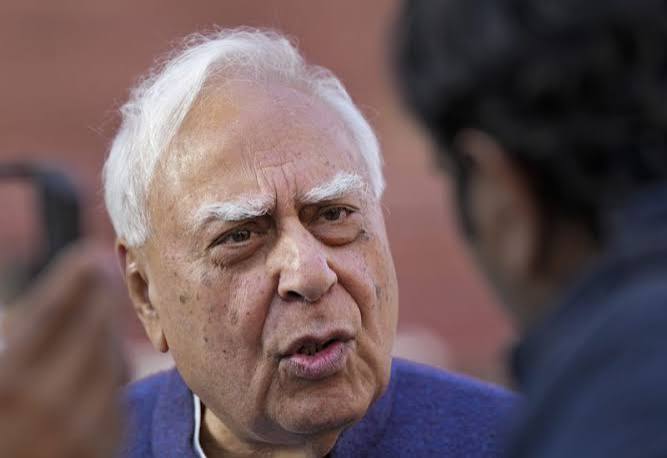
Sibal, who was a Cabinet Minister in the UPA Government led by Manmohan Singh, an Independent member of the Rajya Sabha from Uttar Pradesh As the Supreme Court issued notices to the Election Commission on a petition filed by Congress leader Rahul Gandhi and others seeking suspension of the Special Intensive Revision (SIR) of electoral rolls, many were surprised to see senior counsel Kapil Sibal represent the Gandhi scion. ‘I am representing Rahul Gandhi,” Sibal told a Bench of Chief Justice of India Surya Kant and Justice Joymalya Bagchi thrice even as senior counsel Abhishek Manu Singhvi was on his legs in the front row in Court No. 1 of the Supreme Court. Singhvi—a Rajya Sabha MP of Congress—has been representing the party and Gandhi in several cases, including the criminal defamation case filed over his 2019 “Modi-thieves” remark and the National Herald money laundering case. Sibal, who was a Cabinet Minister in the UPA Government led by Manmohan Singh, too, has defended the Congress and Gandhi in several cases in the past. However, he quit Congress in 2022 and currently he’s an Independent member of the Rajya Sabha from Uttar Pradesh. Article_Author Satya Prakash Courtesy : The Tribune Note: This news is originally published on https:/thetribune.com/bha and is used purely for non-profit/non-commercial purposes, especially human rights
Honour is not family’s monopoly, Yogi says, invoking dalit freedom fighter
The CM said that the intersection where Masuriya Din’s statue was installed would be named after him and sought a proposal from the Prayagraj Mayor. LUCKNOW: Reminding people of the contributions of several Dalit icons to winning freedom for the nation, UP CM Yogi Adityanath, on Thursday, said Leader of Opposition Rahul Gandhi should know that it was not only Jawaharlal Nehru but also Masuriya Din Pasi who had gone to jail for the freedom of the country. Asserting that honour was not the exclusive property of any family, CM Yogi said those who raised their voices for Dalits and the deprived sections and dedicated their lives to the nation and society must also be given due respect. He was addressing a gathering after unveiling a statue of Masuriya, a Dalit freedom fighter from the Pasi community, at Mahashay Masuriyadin Smarak Inter College in Teliyarganj in Prayagraj. Notably, Masuriya Din Pasi was co-elected from the Phulpur Lok Sabha constituency twice, in 1952 and 1957, along with Nehru, and is also known to have worked towards the education of the Scheduled Castes. The CM stated that, as a member of the Constituent Assembly, Masuriya was the one who had got the British Criminal Tribes Act abolished. “After suffering defeat in the First War of Independence in 1857, the British enacted the Criminal Tribes Act in 1871 and humiliated numerous castes, including the Pasi community. Babasaheb and Masuriya Din ji fought against that law and eventually got it abolished, connecting the Pasi, Sonkar, deprived and Dalit communities with the mainstream of the nation and inspiring them to live a life of dignity,” said the CM. He added that Masuriya Din lived for 66-67 years, of which he spent nine years (1932-1944) in jail for taking part in the freedom movement. Even after his release, he continued to carry out public awareness activities. The CM said that the intersection where Masuriya Din’s statue was installed would be named after him and sought a proposal from the Prayagraj Mayor. “The name of one institution in Prayagraj would also be changed to Mahashay Masuriya Din’s name. His statue would also be installed, as the society can progress only by honouring great personalities,” said the CM. He claimed that by honouring the past, the present could be improved, and only by improving the present could the future be bright. “Honouring Mahashay is honouring the freedom fighters, and no shortcoming will be allowed in this regard,” he stated. “He was pushed into oblivion in the annals of history, but the BJP government, which believes in development and heritage, does not allow great personalities to be forgotten. We have unveiled his statue to keep his memories alive,” the CM added. Yogi also invoked the history of Pasi warriors, citing Maharaja Bijli Pasi, who, he said, established 12 forts in and around the state capital in the 12th century as part of the efforts to resist foreign invaders. He also recalled the contribution of Makkha Pasi and his wife, freedom fighter Uda Devi Pasi, who took up the fight against the British after her husband’s death and laid down her life in the struggle. Namita Bajpai Courtesy : TNIE Note: This news is originally published on https:/thenewindianexpress.com/bha and is used purely for non-profit/non-commercial purposes, especially human rights
Hardoi teenager held hostage and raped in Rajasthan: Lured with the promise of a job, forced to marry in a temple
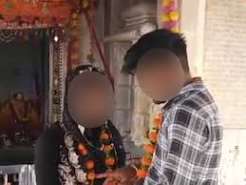
A 17-year-old Dalit girl from Hardoi has alleged that she was held hostage and raped in Rajasthan after being lured with the promise of a job. The victim alleges that she somehow managed to escape from the accused’s clutches and reach home. Subsequently, she filed a complaint at the police station around 4 pm on Tuesday, demanding action against the accused. The case is registered at Baghauli police station. Police have begun an investigation. Now learn the full story… According to the victim, she has studied up to grade eight. It is alleged that on August 3, 2026, a young man from her village, a truck driver in Rajasthan, lured her with the promise of a good-paying job in Chandigarh. Instead of taking her to Chandigarh, the accused took her to Rajasthan and held her captive there. During this time, he forced her into sexual intercourse against her will. Threatened to return home When she resisted and insisted on returning home, the accused threatened to kill her. The victim also alleges that the accused staged a forced marriage at a temple. 50,000 rupees withdrawn from bank account The teenager alleged that the accused fraudulently withdrew approximately 50,000 rupees from her bank account. Later, when the accused’s family learned about her caste, they refused to accept her. Shahnawaz Khan | Hardoi Courtesy: Hindi News
Allegations of house lock, assault, and forged deed: 75-year-old Dalit woman and family protest for the second day, administration begins investigation
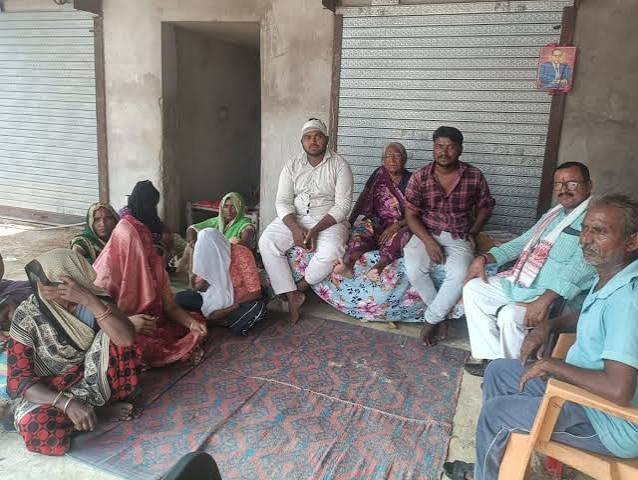
Phool Kali, a 75-year-old Dalit woman, continued her protest with her family for the second day in Gauhania Kaundhiara. The woman, from Barethia village, alleges that her house was locked, she was assaulted, and a forged deed was executed. At the behest of SDM Bara, a revenue department accountant arrived at the protest site and heard the woman’s complaint. Phool Kali alleges that on October 7th, Rammilan Kushwaha, the operator of Kanak Hospital, arrived at her house with about two dozen people. They assaulted her children and locked the house. The woman filed a complaint and provided the police with a video of the assault. However, the police also filed a case against her family. The dispute also relates to a deed. According to Phool Kali, Rammilan Kushwaha had executed the deed of land belonging to her son Sohan in November 2022. In January 2026, a deed was also executed for the same portion of the house through Sohan, which the woman claims is fraudulent. She has demanded an investigation and cancellation of the deed. The elderly woman has demanded the unlocking of the house, a proper investigation into the assault, and justice by investigating the fraudulent deed. She has stated that the protest will continue until justice is achieved. Pravez Alam | Parsara (Bara), Prayagraj (Allahabad) Courtesy: Hindi News