
Transgender Rights Act 2026: ESG Risks and Corporate Compliance Challenges

India’s Transgender Persons (Protection of Rights) Amendment Act, 2026, has introduced new regulatory oversight for gender recognition. This shift may impact corporate Diversity, Equity, and Inclusion (DEI) policies, potentially affecting ESG ratings for Indian companies that rely on international capital and global talent standards. What Happened The government has enacted the Transgender Persons (Protection of Rights) Amendment Act, 2026. This legislation introduces stricter bureaucratic oversight regarding gender recognition, moving away from the previous self-identification framework. For investors and corporate India, this represents a notable shift in the legal landscape regarding social inclusivity and workplace rights. While this is primarily a policy matter, the financial implications are significant, particularly for publicly listed companies that have integrated Diversity, Equity, and Inclusion (DEI) initiatives into their operational and ESG (Environmental, Social, and Governance) frameworks. The ESG And Capital Flow Angle Global institutional investors—including Foreign Portfolio Investors (FPIs)—increasingly use ESG metrics to screen their investments. The ‘Social’ component of these scores often evaluates a company’s commitment to inclusive workplace practices, human rights, and non-discriminatory policies. When national legislation creates a mismatch with established global DEI standards, it can create friction for multinational corporations and large Indian exporters who adhere to global reporting standards. Investors often monitor these shifts to assess whether they might lead to downgrades in ESG risk ratings or impact a company’s reputation among international clients and stakeholders who demand strict adherence to inclusive policies. Corporate India’s Compliance Dilemma Many large-cap Indian firms, particularly in the IT, banking, and professional services sectors, have codified DEI policies that support self-identification and inclusive benefits. The 2026 Amendment Act creates a new regulatory layer that may conflict with these internal corporate policies. For companies, this creates a compliance risk. Management teams may now face the challenge of reconciling internal DEI mandates with new legal requirements. Investors will likely look for updates on how firms plan to navigate this regulatory change without compromising the inclusive culture that has become central to attracting and retaining high-value global talent. Talent Risk and Operational Continuity In a competitive hiring environment, talent retention is a critical driver of operational performance. Companies that have built strong brands around being an ’employer of choice’ often leverage their inclusive work environments to attract top-tier professionals. If the new legal framework forces companies to pivot away from established diversity practices, there is a risk of talent attrition or a potential decline in the company’s employer value proposition (EVP). Human capital efficiency is a primary driver of financial performance for many service-oriented businesses; thus, any disruption to workplace policies that directly affects employee engagement can be a material business concern. What Investors Should Track Next Investors may monitor upcoming annual reports and ESG disclosures to see how companies address these regulatory changes. Key monitorables include: any modifications to internal HR and diversity policies, official statements from management regarding compliance and inclusivity, and potential updates from credit rating agencies or ESG data providers that analyze India’s social governance metrics. Further, any guidance from industry bodies on reconciling internal DEI policies with the new Act will be crucial for understanding the operational impact. Author Vihaan Mehta Courtesy : Whalesbook Note: This news is originally published on https:/whateabook.com/bha and is used purely for non-profit/non-commercial purposes, especially human rights
57 years after Stonewall, why equality, inclusivity still a battle for India’s queer community
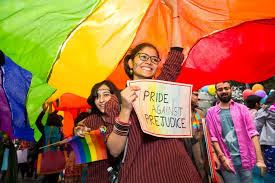
On June 28,1969, police raided New York’s Stonewall Inn, detaining many transgender persons and drag performers and subjecting others to humiliating searches and questions. The resistance that followed is known as the Stonewall Riots and June continues to be celebrated as Pride Month to commemorate the incident. For many in India, Pride is not a parade, but the hope of a life lived without discrimination and humiliation. At 1.20 a.m. on June 28, 1969, a Saturday, four police officers in plainclothes, accompanied by two uniformed patrolmen, walked up to the double doors of a small bar in New York’s Greenwich Village. “Police. We’re taking the place,” one of them announced. The bar was called the Stonewall Inn, a clandestine ‘gay’ bar. Patrons were lined up, their identity papers examined, and those whose appearance did not conform to what the police believed men and women should look like were singled out. Many transgender persons and drag performers were detained. Others were subjected to humiliating searches and questioning. Raids like these on places identified as queer hubs were routine back then. But that night was different. The people inside Stonewall Inn refused to quietly submit. The crowd outside swelled. Resistance replaced fear. The Stonewall Riots became the defining moment of the modern LGBTQIA+ rights movement. Fifty-seven years later in India, during Pride Month (celebrated in June to commemorate the 1969 riots), Stonewall feels less like history and more like a warning. A conversation beyond survival Imagine a 20-year-old transgender student growing up in Harda, Hapur or Hazaribagh. She has never attended a Pride parade. There is no queer community centre in her town. No support group she can walk into after college. No café where she can simply exist without being stared at. She worries less about rainbow flags than about whether her college will recognise her identity, whether a landlord will rent her a room, whether a hospital will treat her with dignity, and whether the law sees her as the person she knows herself to be. For years, it seemed that India was slowly moving in that direction. In National Legal Services Authority v. Union of India (2014), popularly known as the NALSA judgment, the Supreme Court recognised that gender identity lies at the heart of dignity, equality and personal autonomy and affirmed the principle of selfidentification. Four years later, in Navtej Singh Johar v. Union of India (2018), the Court decriminalised consensual same-sex relationships by reading down Section 377 of the Indian Penal Code (which had criminalised ‘carnal intercourse against the order of nature’), declaring that constitutional morality must prevail over social prejudice. More recently, in Supriyo @ Supriya Chakraborty v. Union of India (2023), while the Supreme Court declined to recognize marriage equality, it unequivocally acknowledged the dignity and equal citizenship of queer persons. Taken together, these decisions did not solve every problem, but they changed the direction of travel. They told queer Indians that the Constitution saw them not as criminals or outcasts, but as equal citizens. The conversation, slowly but surely, was beginning to move beyond survival. The questions were changing. Could queer couples marry? Could they adopt children? Would health insurance recognise their partners? Would workplaces guarantee equal opportunities? Could a partner make medical decisions during an emergency? Would families eventually choose acceptance over silence? These are the questions of people imagining a future. Fresh anxieties That is why the present moment has generated so much anxiety. The Transgender Persons (Protection of Rights) Amendment Act, 2026, which is presently under challenge before the Supreme Court, has reignited concerns among many transgender persons and rights advocates that the constitutional principle of self-identification recognised in NALSA could be substantially diluted. Whether those concerns ultimately withstand constitutional scrutiny will be for the Court to determine. But the very fact that the debate has returned to who gets to define a person’s identity has left many wondering whether hard-won gains are becoming fragile. History never repeats itself exactly. Yet it often asks remarkably similar questions. In 1969, people gathered outside the Stonewall Inn because they refused to accept that the State could decide who they were. In 2026, transgender Indians are once again asking who has the authority to define their identity. The context is different. The question remains hauntingly familiar. For queer Indians living in Delhi, Mumbai or Bengaluru, community spaces, support networks and affirming workplaces, while still limited, at least exist. But what does Pride mean to someone living in a small town? Where does that young student from Harda go? There are no community spaces like the Stonewall Inn. There may be no counsellor trained in gender identity, no local support group, no understanding within the family and no legal aid organisation nearby. Every decision, whether to come out, seek healthcare or simply exist openly, carries consequences that extend far beyond personal identity. It may determine whether someone can continue their education, keep a roof over their head or remain financially secure. Even today, queer persons in India continue to face barriers that extend well beyond legal recognition. Marriage equality remains unavailable. Adoption rights remain uncertain for same-sex couples. Many struggle to access affirming healthcare. Workplace discrimination persists. Police harassment and social stigma continue to be reported. For countless young people, the fear of rejection by their own families remains the greatest obstacle of all. Equality and inclusion This is precisely why the debate cannot stop at self-identification. The next chapter of LGBTQIA+ rights in India should be about enabling ordinary lives. The right to marry the person one loves. The right to build a family. Equal opportunities in education and employment. Access to healthcare without humiliation. Insurance, inheritance, pensions and legal recognition that treat queer families with the same dignity as everyone else. These are not extraordinary demands. They are the ordinary incidents of citizenship. Across the world, many democracies have already begun answering these questions. South Africa constitutionally prohibits discrimination on the basis of sexual orientation and has recognised same-sex marriage for nearly
Janseva Dal to contest 403 assembly seats: In Aligarh, the party stated, “We no longer want votes, but equal rights to power.”

The Janseva Dal in Aligarh has announced its intention to contest all 403 seats in Uttar Pradesh ahead of the upcoming assembly elections. The party held a public meeting at Jupiter Lodge on ITI Road on Sunday evening, June 28, 2026, targeting mainstream political parties. Party National President Vinesh Thakur (Karpoori) alleged that while the votes of the most backward, most Dalit, and working-class castes form governments, they do not receive equal rights to power and respect. Vinesh Thakur stated that since independence, the Nai, Sen, Savita, Pal, Baghel, Prajapati, Kashyap, Nishad, Mallah, Saini, Kushwaha, Kori, Khatik, Valmiki, Dhobi, Tailor, and other working-class communities have been considered merely vote banks. He explained that promises are made during elections, but these communities have consistently been neglected in ticket distribution, government positions, and political participation. The National President of the Jan Seva Dal announced that his party is preparing to contest all 403 assembly seats in Uttar Pradesh. He clarified that candidates will be fielded from among the marginalized communities. Vinesh Thakur emphasized that this community will no longer be dependent on the mercy of any party, but will gain a share of power based on its political strength. Speakers at the meeting also mentioned Karpoori Thakur’s model of social justice. They questioned the governments’ intentions in not implementing the backward and extremely backward classifications. A state-wide public awareness campaign was also announced on this occasion. The program was chaired by District President Ramnaresh Singh, who reiterated his commitment to strengthening the organization down to the booth level. A large number of workers and officials from various social organizations attended the public meeting. The Jan Seva Dal also raised slogans like “Hand-made artisans will form the government” and “It’s not a caste, it’s a community; all the most backward are together,” reflecting their political warning. Naresh Pratap Singh | Kol Courtesy: Hindi News
SPECIAL | Rahul Gandhi weighs bigger role for Charanjit Singh Channi as Punjab Congress eyes Dalit, Sikh and Hindu vote balance ahead of 2027
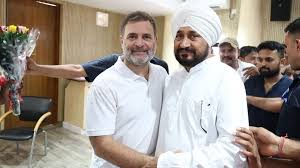
Sources familiar with the deliberations said the leadership, under Rahul Gandhi, is examining a formula that combines social representation with organisational stability. The Congress high command is learnt to be considering one of its biggest organisational exercises in Punjab since the 2022 Assembly election, with discussions indicating that former Chief Minister and Jalandhar MP Charanjit Singh Channi could be entrusted with a larger role in the state unit as part of a broader strategy to rebuild the party before the 2027 polls. According to party sources, the proposed restructuring goes far beyond a routine leadership change. The exercise is understood to be aimed at creating a carefully balanced organisational structure that gives representation to Punjab’s three most significant electoral segments, Dalits, Jat Sikhs and urban Hindu voters, while ensuring that senior leaders continue to remain politically relevant within the organisation. Sources familiar with the deliberations said the leadership, under Rahul Gandhi, is examining a formula that combines social representation with organisational stability. Alongside the appointment of a new state leadership, key election-related responsibilities, including campaign management, coordination, manifesto preparation and organisational planning, are also expected to be distributed among experienced leaders in an effort to minimise factionalism ahead of the Assembly election. Dalit vote bank at the centre of Congress calculations Political observers believe the reported move is primarily driven by Punjab’s unique social composition. Punjab has the highest proportion of the Scheduled Caste population among all Indian states, with Dalits accounting for nearly 32 per cent of the state’s population. The community plays a decisive role not only in the 34 Assembly constituencies reserved for Scheduled Castes, but also influences electoral outcomes in dozens of general seats across Doaba, Malwa and parts of Majha. Within the Congress, Channi is regarded as the party’s most recognisable Dalit Sikh leader. His tenure as Punjab’s first Dalit Chief Minister and his victory from the Jalandhar Lok Sabha constituency in the 2024 parliamentary election have strengthened perceptions within the party that he continues to enjoy considerable political acceptability among sections of Dalit voters. Party strategists are believed to feel that projecting a strong Dalit face at the organisational level could help the Congress regain a section of the traditional support base that has shifted towards rival political parties over the past several years. Balancing the Jat Sikh leadership is equally important Even as the Congress attempts to consolidate Dalit voters, the party is understood to be equally cautious about maintaining its influence among Punjab’s politically dominant Jat Sikh community. Although Jat Sikhs constitute an estimated 20 to 22 per cent of Punjab’s population, they continue to exercise significant political influence across rural constituencies, particularly in the Malwa region, which sends the largest number of MLAs to the Assembly. Party insiders believe any organisational restructuring that overlooks this influential community could create fresh internal challenges. Consequently, discussions are said to include assigning major organisational and election-management responsibilities to senior Jat Sikh leaders, allowing them to continue playing a central role in shaping the party’s campaign strategy while maintaining social equilibrium within the organisation. Urban Hindu voters also part of the strategy Another important element of the reported formula is the urban Hindu electorate. According to the 2011 Census, Hindus account for nearly 38.5 per cent of Punjab’s population. However, political strategists generally estimate that the decisive urban Hindu voting bloc constitutes around 25 to 26 per cent of the electorate and significantly influences election results in cities such as Ludhiana, Amritsar, Jalandhar, Patiala, Pathankot and several municipal centres. Congress leaders are believed to be exploring ways to ensure adequate organisational representation for leaders who enjoy influence in urban constituencies, thereby broadening the party’s appeal beyond its traditional rural support base. Lessons from the 2022 defeat The reported restructuring also reflects the Congress leadership’s assessment of the mistakes made during the 2022 Punjab Assembly election. The party had projected Channi as its chief ministerial face only a few months before polling. However, persistent factionalism, competing leadership centres, and organisational disunity overshadowed the campaign, reducing the Congress to 18 seats in the 117-member Assembly, while the Aam Aadmi Party secured a landslide victory. Many within the party now believe that social representation alone cannot deliver electoral success unless it is backed by organisational unity, clearly defined responsibilities and coordinated campaigning. 2024 Lok Sabha performance revives confidence The Congress’s improved performance in the 2024 Lok Sabha election, in which it won seven of Punjab’s 13 parliamentary seats, has reportedly prompted the central leadership to accelerate organisational restructuring well before the next Assembly polls. Party leaders are believed to view the parliamentary results as evidence that the Congress continues to retain substantial support in Punjab despite its defeat in the previous Assembly election. The leadership now appears keen to convert that momentum into a stronger organisational framework capable of sustaining a statewide campaign. Social engineering before 2027 Political analysts believe Congress is attempting to build a broader electoral coalition rather than relying on any single community. The reported strategy seeks to combine the electoral strength of Punjab’s nearly 32 per cent Dalit population, the politically influential 20-22 per cent Jat Sikh community, and the decisive urban Hindu electorate that plays a crucial role in several Assembly constituencies. If implemented successfully, such a leadership structure could allow the party to simultaneously target multiple voter segments while reducing internal friction among senior leaders. Unlike previous organisational changes that largely focused on individual appointments, the latest exercise appears to be centred on building a leadership model designed around Punjab’s electoral arithmetic and social realities. Although speculation over the proposed changes has intensified, Congress has not made any official announcement regarding the restructuring. The final shape of the Punjab unit is expected to emerge only after the party leadership completes its internal consultations. With less than a year and a half left before political activity gathers full momentum for the 2027 Assembly election, the decisions taken by the Congress in the coming weeks could play a significant role in determining whether
Maharashtra postpones TET 2026 on eve of exam after suspected paper leak; CM orders SIT probe

The breach came to light early on Saturday, when police acted on confidential intelligence regarding individuals possessing unauthorised information about the examination papers. The Maharashtra Teacher Eligibility Test (TET) 2026, scheduled to be conducted on Sunday, has been postponed after a leaked question paper was found during a raid in Thane’s Bhiwandi, just a day before the exam. As the development which affected around six lakh candidates followed the national scandal caused by the last month’s leak of the NEET-UG paper, Opposition leaders trained their guns on the BJP-led government, saying it was busy breaking political parties instead of ensuring foolproof examinations. Chief Minister Devendra Fadnavis ordered the constitution of a Special Investigation Team headed by Thane Joint Commissioner of Police Panjabrao Ugale to probe the paper leak, sources said. Fadnavis spoke to School Education Minister Dada Bhuse and state Director General of Police Sadanand Date and asked them to take strict action against the culprits, they added. The exam was scheduled to be conducted at 1,028 centres across the state on Sunday. The authority said that will be conducted in 37 places and 1028 exam centres across Maharashtra. In an official statement issued on Saturday, the Maharashtra State Examination Council said the test has been postponed to maintain the “transparency and the integrity” of the examination process. “The rescheduled examination date will be declared in the next two to three days,” said Priya Shinde, deputy commissioner of Maharashtra State Examination Council. The breach came to light when the Bhiwandi police, acting on a tip-off, conducted a raid at the Diamond Hotel in Bhiwandi in the early hours of Saturday. During the raid, the police found the leaked question papers of the exam in the possession of some individuals. Officials from the Maharashtra State Examination Council were immediately summoned to verify the material. Upon close inspection, it was confirmed that several questions in the possession of the suspects matched the actual question paper drafted for the June 2026 TET. Subsequently, the authorities announced the cancellation of the exam and a criminal case was registered at the Bhiwandi Police Station. Three people have been arrested so far in connection with the incident. The suspects were nabbed from the Sahar airport in Mumbai and police are investigating how they got the exam papers, along with their money transactions. Last year also a similar incident was reported from Kolhapur where the TET question paper was allegedly leaked. Slamming the repeated irregularities in examinations, Maharashtra Congress president Harshvardhan Sapkal on Saturday alleged that the BJP-led state government was busy in poaching MLAs and MPs instead of prioritising the future of the youth. He also stated that the Congress will launch a massive protest if the perpetrators are not brought to justice. “If the BJP government fails to take strict actions and find out the source of the leak, then the Congress party will come out on the streets. They (BJP government) cannot even conduct an exam in a proper manner. The BJP is playing with the future of the students,” Sapkal said. Sudhir Suryawanshi Courtesy : TNIE Note: This news is originally published on https:/thenewindianexpress.com/bha and is used purely for non-profit/non-commercial purposes, especially human rights
UP Elections 2027: Avinash Pandey removed, Congress prepares to balance Dalit-OBC equations by handing over the reins to Rajendra Pal Gautam

Ahead of the 2027 UP Assembly Elections, the Congress has made a major organizational reshuffle. Focusing on the Dalit and OBC vote bank, it is preparing to strengthen its hold within the “INDIA” alliance. Uttar Pradesh: Just before the Assembly elections, the Congress has begun laying out its strategic and organizational foundation in the state. The party’s entire focus is now on building a strong Dalit and OBC social alliance. The Congress is confident that this formula will not only regain lost ground in the state but also significantly strengthen its negotiating power within the opposition “INDIA” alliance. In a major move, the All India Congress Committee (AICC) on Friday removed Avinash Pandey from the post of General Secretary in-charge of Uttar Pradesh. In his place, Rajendra Pal Gautam, National President of the Scheduled Castes Department and a prominent Dalit leader, has been given this important responsibility. Just a day before this announcement, Gautam was in Lucknow, where he, along with Anil Jaihind, in-charge of the AICC’s OBC wing, celebrated Chhatrapati Shahuji Maharaj’s birth anniversary as ‘Reservation Day.’ According to senior Congress sources, Rajendra Pal Gautam’s appointment is not being seen as a simple organizational change. The party is aiming to send a major political message to Dalit voters ahead of the upcoming assembly elections. Congress also wants to establish that its ally, the Samajwadi Party (SP), is not the only option for Dalits in their fight for rights, but that the party is also a strong platform for them. According to reports from within the party, this organizational reshuffle in Uttar Pradesh will not be limited to the change of in-charges. Ahead of the elections, major changes have already been scripted for the state’s co-in-charges (secretaries) and state leadership. There is talk that the next president of the Uttar Pradesh Congress Committee (UPPCC) could be appointed to a prominent OBC leader, ensuring the party’s Dalit-OBC social engineering strategy is fully implemented. A senior Congress leader explained this strategy, stating that the party fought the 2024 Lok Sabha elections strongly on issues of social justice and protection of the Constitution, yielding positive results. If the Congress wants to carry this discourse into the 2027 assembly elections, it must demonstrate this social commitment within its organizational structure. Currently, the Uttar Pradesh Congress is headed by Ajay Rai, a prominent Bhumihar leader from eastern Uttar Pradesh. He was appointed state president in August 2023, replacing Dalit leader Brijlal Khabri. Rai had contested the previous two Lok Sabha elections against Prime Minister Narendra Modi from the Varanasi constituency, which was crucial for the party’s electoral strategy at the time. In the 2024 elections, he also succeeded in significantly reducing PM Modi’s victory margin. However, Congress strategists believe that the political demands of Lok Sabha and Assembly elections are completely different. The perception within the party has grown increasingly strong that the campaign to protect the Constitution and reservations in the last Lok Sabha elections led a significant portion of Dalit voters to the “India” alliance. Retaining this vote bank in the upcoming electoral battle is crucial for the party’s future. While Samajwadi Party leaders are publicly downplaying this Congress assessment, Congress leaders argue that this support from Dalits and backward classes will put them in a strong position during seat-sharing negotiations for the upcoming Assembly elections. It’s clear that Congress’s entire restructuring plan has been designed with the 2027 election battle in mind. Rajan Chaudhary Courtesy: Hindi News
Three workers cleaning a septic tank in Delhi died tragically after inhaling toxic gas; three others, including the factory owner, have been arrested.

Three workers died from toxic gas while cleaning a septic tank in Mundka, Delhi; police arrested the factory owner and contractor, raising serious questions about administrative negligence. New Delhi: A tragic and disturbing incident occurred on Friday in the Mundka Industrial Area of the national capital, Delhi. Three workers who had entered a septic tank at a printing press factory lost their lives while cleaning it. Police took swift action and arrested three people, including the factory owner and contractor. Initial police investigations revealed that the three workers entered the tank one after the other and died after inhaling the suffocating and toxic gases present within. According to an official, at 12:03 pm, the police, Delhi Fire Service, and Delhi Disaster Management Authority (DDMA) received an emergency call about people trapped inside the factory in Mundka. The deceased have been identified as 38-year-old Arun, 32-year-old Sandeep, and 42-year-old Chand. All three were residents of the Indira Lake area of Sultanpuri. Following the rescue operation, police pulled out the bodies from the tank and sent them to Sanjay Gandhi Memorial Hospital for post-mortem to confirm the exact cause of death. Outer Delhi Deputy Commissioner of Police (DCP) Vikram Singh, giving details of the case, said that factory owner Suraj Marwah had hired a contractor named Neeraj, a resident of Nangloi, to clean the septic tank. Police have arrested Suraj Marwah, contractor Neeraj, and factory employee Jayant. A case has been registered against them under sections 106 (causing death by negligence) and 3(5) (common intention) of the Indian Penal Code (IPC). They have also been charged under Section 9 of the Prohibition of Employment as Manual Scavengers and their Rehabilitation Act, 2013, and the stringent provisions of Section 3(1)(j) of the SC/ST (Prevention of Atrocities) Act, 1989. Senior government officials say a detailed report will be prepared to ascertain the exact sequence of events and the cause of death. Officials also clarified that the Delhi State Industrial and Infrastructure Development Corporation (DSIIDC) is primarily responsible for cleaning septic tanks in the city’s industrial areas. Following this heartbreaking incident, Bezwada Wilson, national convener of the Safai Karmachari Andolan, met with the families of the victims. He expressed concern that there are approximately 30,000 sanitation workers in Delhi, of whom 10,000 work solely as septic and sewer tank cleaners. He clarified that no worker should be asked to enter the tank, even with safety equipment, and that the work should be done entirely through mechanized methods. Meanwhile, Sucheta Dey, Vice President of the All India Central Council of Trade Unions (AICCTU), claimed that even government departments are sometimes seen employing manual scavengers without any safety gear. The incident has also drawn political backlash. Delhi Congress President Devendra Yadav has termed the incident as a result of gross administrative negligence. He has demanded a thorough investigation into the matter and adequate compensation for the destitute families of the deceased. This is not the first case of deaths during sewer cleaning in the capital. Similar deaths were reported last year in Ashok Vihar, New Friends Colony, and Narela. According to official data shared by the National Commission for Safai Karamcharis (NCSK) in the Lok Sabha in March this year, 62 deaths have occurred in Delhi since 2017 due to hazardous sewer and septic tank cleaning. The Commission’s data also shows that Delhi was one of the first cities to ban the practice, yet among 22 states and two union territories, Delhi recorded the highest number of complaints related to manual scavenging in 2025, at 140. Rajan Chaudhary Courtesy: Hindi News
‘Ban the RSS’: Dalit organizations enraged by BJP leaders’ comments on Priyank Kharge, sparking violent protests in Karnataka

Dalit organizations, enraged by BJP leaders’ comments on Priyank Kharge, staged a violent protest in Kalaburagi, demanding a ban on the RSS and the removal of Mohan Bhagwat’s security. Karnataka: Kalaburagi witnessed massive protests on Thursday. The Dalit Sanghatanegala Samanvaya Samiti (DSS) and several other Dalit organizations staged a strong protest outside the Deputy Commissioner’s office. The protest was directed at recent comments made by Bharatiya Janata Party (BJP) leaders against state minister Priyank Kharge. Priyanka Kharge had raised some questions about the status and functioning of the Rashtriya Swayamsevak Sangh (RSS). The protesters say that BJP leaders should have responded rationally to the issues raised by Kharge. Instead, they launched personal attacks on the minister and are threatening him. The protesters categorically stated that the statements made against Kharge by BJP MP Ramesh Jigajinagi and former ministers K.S. Eshwarappa and C.T. Ravi were highly objectionable. They believed these leaders’ statements were completely insulting and intimidating. Dalit organizations have appealed to the state government to take this entire incident seriously. They stated that democratic values and freedom of expression must be protected at all costs. Recently, Kharge wrote a letter to RSS chief Mohan Bhagwat, seeking clarification regarding the organization’s registration and its stated objectives. The protesters defended this move, stating that these questions were being asked in the interest of public accountability and transparency, and not to target any particular individual. These organizations have called on the state government and the Congress party to extend their full support to Priyank Kharge. They reiterated their demand for a thorough investigation into the functioning of the RSS, stating that there is a severe lack of transparency in its structure. They also demanded that the organization be registered under a proper regulatory framework. Protesters formed a human chain outside the Deputy Commissioner’s office in Kalaburagi to register their protest. They raised slogans, expressing solidarity with Kharge and demanding the registration of the RSS. Participants held placards bearing strong messages, including “Ban the RSS,” “The RSS must be registered,” “Withdraw RSS chief Mohan Bhagwat’s Z-plus security,” and “We stand with Priyank Kharge.” Following the protest, the organizations submitted a memorandum addressed to Chief Minister D.K. Shivakumar through the Deputy Commissioner. The memorandum urged the state government to examine the legal status of the RSS and take appropriate steps to uphold constitutional values and social harmony. The entire protest was led by social activists Devendra Sinnur, Mallappa Hosamani, Renuka Singhe, Dinesh Doddamani, and several other members of various organizations. Rajan Chaudhary Courtesy: Hindi News
The Importance of Being DK Shivakumar in Rahul Calculus

Shivakumar is yet to acquire national status, but definitely has national recall. He has emerged as a serious national trouble-shooter for his party. No thanks to Rahul, who detests mass leaders who will not kowtow to him It seems the Congress has a credible national face at last. A trouble shooter who has negotiated the complexities of Opposition politics, which it badly needs, especially after it couldn’t get its Rajya Sabha nominee in Jharkhand through. Last week, a masterclass in the difference between rhetoric and reality happened in Karnataka: the Congress won all five Legislative Council seats it contested—plus an additional seat by persuading cross voting by the BJP. It was the kind of outcome old Congress managers once considered routine, but which the Rahul Congress has no idea, or interest, on how to achieve. The architect of the win is DK Shivakumar; probably the reason Uddhav Thackeray—whose party rapidly imploded after six MPs crossed over to the Shinde-BJP camp—invited him to Mumbai to confabulate. Whether DKS, with all his political management skill, can pull off a miracle in Maharashtra to save an INDIA ally is questionable. It was left to him to soothe MK Stalin, whom Rahul treated churlishly in public during the Tamil Nadu elections and dumped unceremoniously. Shivakumar is yet to acquire national status, but definitely has national recall. He has emerged as a serious national trouble shooter for his party. No thanks to Rahul, who detests mass leaders who will not kowtow to him. Yet, political kinetics keeps pulling DKS’s name into the national conversation. But for today’s Congress, such interlocutors and enforcers are suspect. The party historically marginalises leaders of the DKS type. In the 1970s, Devaraj Urs built the most sophisticated social coalition the Congress had ever achieved in Karnataka by forging OBCs, Dalits, and minorities into an unprecedented electoral force. Discarded by Indira Gandhi, he died politically diminished. Sharad Pawar built Congress into a dominant force in Maharashtra, cultivating the cooperative sector and managing the competing interests of the Maratha peasantry, Mumbai’s working class, and Pune’s commercial communities. Expelled in 1999, he formed the NCP, and sank the Congress’s political future. Sachin Pilot resuscitated the Rajasthan Congress from its post-2013 coma, delivered in 2018, and was then subjected to deliberate humiliation, denied the chief ministership, and was pushed to the point of open rebellion in 2020 after he was denied the chief ministership like DKS initially was. The party has neither earned nor acknowledged such a restraint and loyalty. While Sachin has faded from the national radar, for now, DKS occupies the alternative position. In a party where giant leaders like Ahmed Patel, Ghulam Nabi Azad, Kamal Nath, and Pranab Mukherjee could forge inter-party consensuses, apart from Bhupesh Baghel and Mukul Wasnik, now, the Rahul coterie comprises Kaushal Vidyarthee, Alankar Sawai, KB Byju, Praveen Chakravarty et al. Chakravarty who? Exactly. Kharge, in spite of all the respect he commands, cannot influence a single voter in UP. Rahul’s pernicious puppeteer KC Venugopal wouldn’t know the name of a single party worker in Bihar. CWC members like geriatric AK Antony, Anand Sharma, Deepa Dasmunsi, Channi, etc. can’t get 10 voters between them in Madhya Pradesh. Himanta Sarma humiliated Gaurav Gogoi. To call Jairam Ramesh a mass leader is like calling a Tiffin box a buffet—all are has-beens or will-never-beens. The Congress’s last bastion is the South. It has three Congress CMs, and is an alliance partner in Tamil Nadu. Hence, the national choice is limited. DKS speaks Hindi without the self-consciousness that afflicts many southern politicians, and English without the affectation of someone mimicking cosmopolitanism. He is a Vokkaliga from the dominant Karnataka community, but he has consistently reached beyond community arithmetic to keep his party afloat. In UP, Bihar, Madhya Pradesh, Rajasthan, and Haryana, the BJP has built a ruthless victory machine over decades of patient work. The Opposition’s only effective response will be to build a counter-machine with equal patience and seriousness. That requires someone who understands the construction of party infrastructure at the district and booth level, financial savvy seduction, soothing of local egos, and the management of factional disputes before they become the internal wars that cost the party winnable seats. The only Congress alternative to the BJP is DK Shivakumar; and it knows this, too. With such powerful adversaries like Modi and the RSS, it won’t be smooth sailing for him. The distinction between what Rahul and Karnataka’s DK Shivakumar offers is not what is better or worse. DKS commands a rare combination which cannot be earned with genetic entitlement: charisma and calculation. He understands not just how elections are won, but also how they are fought. In politics, ideological, cadre-driven machines defeat movements. The man who can build the Congress such a machine is waiting. Will his own party, and Rahul Gandhi, allow him to do that? Ravi Shankar Courtesy : TNIE Note: This news is originally published on https:/thenewindianexpress.com/bha and is used purely for non-profit/non-commercial purposes, especially human rights
lawyer Surendra Gadling completed eight years in prison : Bhima Koregaon
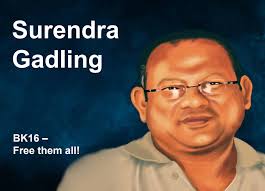
On June 6, lawyer Surendra Gadling completed eight years in prison. Arrested on this day in 2018, he was sent to the Yerawada prison in Pune, and then, in February 2020, he and other prisoners, accused in what has come to be known as the Bhima Koregaon case, were transferred to Taloja jail following the handing over of the case to the NIA. Out of the 16 accused in this case, he is the sole one still to be released. Whilst he was given bail in the Bhima Koregaon case by the Bombay High Court, he is awaiting the outcome of the plea in the Supreme Court for what has come to be known as the Surajgarh arson case. इरोनिकाल्ली, he has been held under the draconian Unlawful Activities Prevention Act (UAPA for almost a decade, considering that he is a foremost lawyer in it and other anti terror laws. He is someone whose expertise in this very field has helped secure the release of thousands of Dalits and Adivasis unfairly imprisoned as alleged Maoists. During his three decade long career before his arrest, he came to be viewed as a formidable figure in court with his ability to argue cases in TADA, POTA, UAPA, the Scheduled Caste and Scheduled Tribes (Prevention of Atrocities) Act. His legal acumen helped in the acquittal of those held under these laws. He also took up cases of fake encounters, dowry deaths and was involved in securing justice for those who protested against the barbaric Khairlanji caste murders in 2006. Among the high profile cases he had taken up, before his own arrest, were those of Dr G N Saibaba, the wheelchair bound professor, who spent about seven years in jail before acquittal. Tragically and cruelly Saibaba died just a few months after his release. Hem Mishra , the student activist, who was also arrested along with Saibaba, recalled in a social media post how Gadling is not just his lawyer but a true People’s Lawyer. He has been a tireless champion for political prisoners taking up the cases that very few dare to do so. Growing up in the humble Dalit neighbourhood of Indora in Nagpur, Gadling became influenced by the radical politics of the seventies during his college years, recalls Sudhir Dhawale, his fellow student and also co accused in the case. Both of them played an important role in the Namantar or movement to rename the Marathwada University after Bababasaheb Ambedkar and were also witness to the huge atrocities inflicted on Dalits. They drew heavily on the cultural activism fostered by the folk forms of Maharashtra where street plays and ballads have been intertwined with resistance and revolution. It is perhaps this element of performative tactics in the courtroom that made Gadling a much admired and popular lawyer. People and juniors flock to the court whenever he argues a case. I was witness to some of his passionate and humorous arguments whilst pleading for various issues related to his own case during the proceedings. But whether it was for the right to a chair, or access to medical care, Gadling’s purpose has been clear. It is to shine a light on the conditions in jail and urgent need for reform. In Pune, in the early days of the arrests, a bunch of lawyers from Punjab turned up in court to show solidarity with him. Similar shows of solidarity have come from lawyers from Delhi, Telangana, Kerala and Kolkata. When the court in Bombay did not allow visitors because of the pandemic, it was a moving sight to see a group of lawyers standing outside the building in support of their mentor. His feisty spirit and ability to deploy the cultural forms of protest that has been an intrinsic part of his journey of resistance, was demonstrated when he was released on temporary bail in 2021. The court allowed him to conduct rituals for the first anniversary of his mother’s death. He had been denied permission by the NIA Special court to attend the funeral in 2020. Donning his lawyers’s suit he headed for the Nagpur sessions court and outside he sang a song written by co accused Ramesh Gaichor, an activist of the Kabir Kala Manch. The song ingeniously weaves in the privation in prisons and denial of basic amenities. Ek duree chhe by doh seh … the area allotted to each prisoner becomes the space for satire with the comment that this is the “aish” or comforts that prisoners enjoy in popular imagination. One of the significant features of life in Taloja jail, as narrated by the Bhima Koregaon prisoners is the way they collectively demonstrated cultural activism through poetry and special song sessions at night. The various members housed in various floors of the building would take up songs and sing in unison. A poignant illustration of how though caged the spirit sings. …. A brilliant lawyer and human rights defender has spent almost a decade in jail. The trial has not even begun. The Supreme Court must act speedily to release him as urged by hundreds of civilians, legal bodies and international human rights defenders.