
“Those who laid the foundation stone of the Ram Temple were Dalits…” Arun Bharti’s major attack
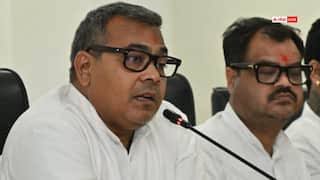
Arun Bharti in Ayodhya: Arun Bharti launched a scathing attack on the opposition over the recent controversy surrounding the Ram Temple, the opposition’s protests in Parliament, and their comments on Sanatan Dharma. He labeled the opposition as anti-Dalit. Lok Janshakti Party (Ram Vilas) MP from Jamui, Arun Bharti, arrived in Ayodhya on Sunday (August 2). He first performed puja at Hanumangarhi and then visited Ram Lalla at the Shri Ram Janmabhoomi complex. Speaking to the media after the darshan, Arun Bharti launched a scathing attack on the opposition over the recent controversy surrounding the Ram Temple, the opposition’s protests in Parliament, and their comments on Sanatan Dharma. During this visit, he called the opposition anti-Dalit for not visiting the Ram Temple. He said, “They didn’t go because a Dalit, Kameshwar Chaupal, laid the foundation stone for the temple. They were Dalits, so they didn’t go for darshan.” He further questioned, “Will you further defame the name of Mata Shabari? The descendants of Mata Shabari will protect their faith and honor and will take whatever steps are necessary.” What did Arun Bharti say after visiting the Ram Temple? After visiting Ram Lalla, Arun Bharti said that he, his family, and his party have always received the blessings of Lord Ram and the saints of Ayodhya. He said that it is his privilege and duty to come to Ayodhya to seek the saints’ blessings, express his gratitude, and bow at their feet. Regarding the recent controversy surrounding the Ram Temple, the MP said that the investigation report does not allege any priest, saint, or Mahant. According to him, the allegations are only against the contractor’s employees. He alleged that the same people who previously opposed the temple’s construction and consecration are trying to defame Lord Ram and the Ram Temple. Accused the opposition of having an anti-Dalit mentality Arun Bharti also accused the opposition of having an anti-Dalit mentality. He said that Kameshwar Chaupal, who laid the foundation stone of the Ram Temple, is being insulted. Referring to Mata Shabari, he said that the opposition is constantly questioning the Sanatan faith and its associated symbols. Responding to the opposition’s protest in Parliament, Arun Bharti said that insulting Sanatan, God, and saints will not be tolerated at any cost. He said that this is not just a question of the faith of saints and sages, but of the entire Sanatan society, and that the Dalit community will always stand up to protect its faith and honor. Written By: Shivendra Dwivedi, Ayodhya | Edited By: Fayaz Ul Mustafa About the author Shivendra Dwivedi is associated with ABP News from Ayodhya. With four years of experience, he keeps a close eye on religious, social, and administrative news. Courtesy: Hindi News
YSRCP Alur MLA Virupakshi, son arrested following ‘attack’ on Dalit family
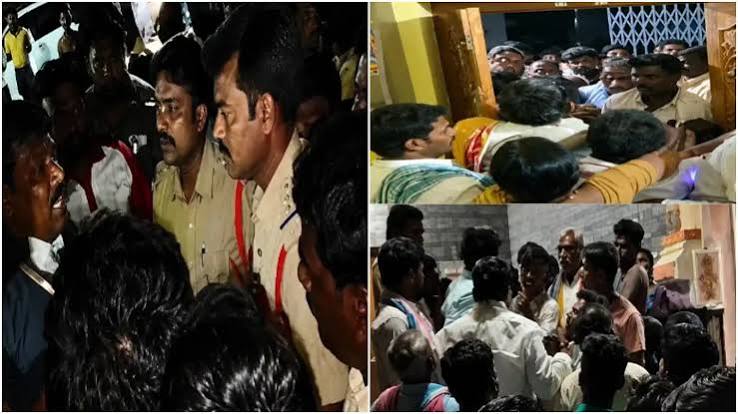
Tension prevailed at Sangala and Nemakallu villages of Chippagiri mandal following the clash and also at the Chippagiri police station with the YSRCP leaders staging a protest demanding the release of the arrested MLA YSR Congress Party (YSRCP) legislator from Alur B. Virupakshi and his followers were arrested in the early hours of Sunday for their alleged involvement in the attack on a Dalit family following a clash between the followers of the YSRCP and TDP activists. Tension prevailed at Sangala and Nemakallu villages of Chippagiri mandal following the clash and also at the Chippagiri police station with the YSRCP leaders staging a protest demanding the release of the arrested MLA. According to information reaching here, an argument allegedly broke out between a TDP activist from Nemakallu and a YSRCP activist from Sangala on some issue over phone. The issue allegedly escalated with Mr. Virupakshi visiting Nemakallu in support of his follower. This led to attacks and counter attacks, with the TDP alleging that the MLA and his followers entered the house of a party SC activist, Nagaraju, and attacked him and his wife. It was alleged that the clothes of Mr. Nagarajau’s wife were torn by the mob. Tension prevailed for some time as the two groups attacked each other. The vehicles of Mr. Virupakshi and TDP leader Purusotham were damaged. Mr. Virupakshi’s brother suffered an injury on his hand. The police reached the village and brought the situation under control. Well past midnight, the police reached the residence of Mr. Virupaksha and picked him and his son Chandrasekhar from their residence at Chippagiri. Fourteen YSRCP activists were also arrested. TDP Alur Assembly incharge Vaikuntam Jyothi held the YSRCP responsible for the clashes and alleged that the followers of the MLA attacked Mr. Purushotham, TDP mandal convener, and damaged his car. YSRCP leaders condemned the midnight arrest of Mr. Virupakshi, describing it as blatant misuse of police machinery. They claimed that the MLA rushed to Chippagiri only after receiving a distress call from YSRCP activist Giri, whose life, they said, was under threat. Instead of protecting the victim, the TDP workers attacked the MLA and his brother with stones and sticks, they alleged. The police registered attempt-to-murder and SC/ST cases against the victims, they added. YSRCP leaders also condemned the manner of the arrest, stating that the police broke open the doors of the MLA’s residence at around 3 a.m., seized CCTV hard disks, and forcibly took away the MLA and his son without allowing them to even change their clothes. Hareesh P Courtesy : The Hindu Note: This news is originally published on https:/thehindu.com/bha and is used purely for non-profit/non-commercial purposes, especially human rights
A rollback of rights, or an imperfect step forward? India amends transgender rights act.
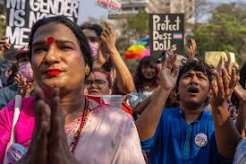
Activists and members of the transgender community shout slogans during a protest against a transgender rights amendment bill passed in the lower house of Parliament, in Mumbai, India, March 25, 2026. On a hot evening at Jawaharlal Nehru University in south Delhi, students sit painting protest banners beneath rainbow flags. Verses of the Urdu poets Faiz Ahmed Faiz and Habib Jalib – long associated with protest movements across South Asia – play from a speaker nearby. They have gathered to oppose a new law that has ignited a debate that echoes in many parts of the world: Who has the authority to determine a person’s gender identity? The individual, a doctor, or the state? Since 2014, India has granted transgender people legal recognition by grounding their self-identification in constitutional rights. That changed in March when the Parliament passed the Transgender Persons (Protection of Rights) Amendment Act, which requires medical evaluation and state certification of gender. Why We Wrote This India has changed the process for how individuals identify their gender, sparking protests and court challenges. The government says this amendment is about ensuring that benefits reach the right people, while LGBTQ+ rights activists call the law regressive. India’s new law comes in the context of wider debates about identity in India under the leadership of Prime Minister Narendra Modi. Supporters say the change is necessary to prevent misuse of welfare programs intended for transgender individuals. Critics say it reverses a decade of legal gains. The amendment is currently being challenged at the Supreme Court, where trans rights advocates are arguing that it violates Indians’ constitutional rights. “There is nothing wrong with a simple verification process,” says Arvind Sharma, a master’s student, outside the Jawaharlal Nehru University protest. “This law will help the actual transgender community and expose the fake ones.” Despite its strength, US military faces a reputational crisis over Iran Students gather beneath rainbow flags during a protest against India’s Transgender Persons (Protection of Rights) Amendment Act at Jawaharlal Nehru University in New Delhi, April 11, 2026. Supporters of the law say it creates a more accountable system for legal recognition, while critics argue it rolls back transgender rights. Aakash Hassan The debate is deeply personal for Bhumi, a transgender undergraduate from Lucknow in northern India who, like many in India, uses a single name. Raised as a girl and recognized as such in her official documents, she worries the new law could place her identity under state scrutiny. “I don’t want someone else deciding whether I am transgender enough,” she says. “That feels invasive and humiliating.” Get the Monitor Stories you care about delivered to your inbox. Your e-mail address Sign up By signing up, you agree to our Privacy Policy. “I hope the courts will intervene,” she adds. How this fits into the history of trans rights in India South Asia has a long, unique history of gender diversity. For centuries before modern LGBTQ+ rights movements emerged, the region recognized there were communities that existed outside biological designations of gender. Most famous are the hijras, who traditionally attended weddings, births, and religious ceremonies across the subcontinent, offering blessings and receiving gifts or alms in return. In southern India, two other groups, the Aravanis and jogtas, uphold local Hindu traditions. America’s debt is skyrocketing. Why isn’t Congress doing anything about it? Visibility has not translated into social acceptance. The term hijra has long carried social stigma, and transgender Indians face high levels of discrimination, family rejection, and economic exclusion. Yet the existence of these third-gender communities has helped shape the LGBTQ+ rights movement in India. While Western countries debated whether trans people existed, in India, that was a widely accepted fact. It made it harder to argue that LGBTQ+ rights are a foreign import. On the contrary, activists in India say that anti-LGBTQ+ discrimination is a colonial holdover. But this history brings unique challenges, too. For years, terms like “transgender” and “third gender” were largely treated as synonymous with belonging to one of these traditional communities, which left many Indians in a legal gray area. That changed in 2014, when India’s Supreme Court recognized transgender people and affirmed their right to determine their own legal gender markers – no government or medical sign-off required. Nazariya Kutty gets ready in a parlor to participate in the Koovagam transgender festival in Villupuram, in the southern Indian state of Tamil Nadu, April 28, 2026. Mahesh Kumar A./AP The unanimous ruling was seen by supporters of self-identification as a watershed moment, pushing India ahead of much of South Asia on transgender rights. Yet the ruling itself did little to outline how benefits and protections would be delivered to India’s trans population, which researchers estimate is between 2 million and 6 million people. (India’s 2011 census recorded 487,803 transgender people, but that is broadly considered a vast undercount due to a reluctance to self-report.) A 2019 law called the Transgender Persons (Protection of Rights) Act prohibited discrimination against trans Indians, retained a broad definition of transgender identity, and outlined a process for trans Indians to obtain official recognition through district authorities. Many LGBTQ+ activists criticized the 2019 act for creating bureaucratic barriers, but welcomed the reaffirmation of the right to self-identification. The new law signed in March “erases all of that,” says Arundhati Katju, a senior advocate challenging the amendment before the Supreme Court. The new law narrows the definition of transgender people to recognized sociocultural communities or those meeting specific biological criteria, and grants the state the authority to determine who qualifies. The debate today Medha Vishram Kulkarni, a member of Parliament from the ruling Bharatiya Janata Party (BJP) and a primary supporter of the new act, says the government has “no intention of undermining” Indians’ constitutional rights. “Self-identification is central to an individual’s dignity and lived experience,” she says, in a written interview with the Monitor. “However, where legal entitlements, welfare benefits, or official records are involved, the State also has a responsibility to ensure transparency, consistency, and accountability.” When
Teacher booked for allegedly beating up 8-year-old Dalit boy for drinking water from his bottle in Madhya Pradesh

According to officials,the teacher, Lokesh Sharma, beat up the class 4 student using a cane in front of his fellow students after which the boy narrated the incident to her parents An eight-year-old Dalit boy was thrashed and targeted with racial slurs by a teacher in a government school in Madhya Pradesh’s Shivpuri district for drinking water from his bottle, officials said on Friday (July 31, 2026). According to officials, the incident took place on July 28 in a government primary school in Ukawal village under the Kolaras police station area, where the teacher, Lokesh Sharma, beat up the class 4 student using a cane in front of his fellow students after which the boy narrated the incident to her parents. The need to address caste-based atrocities Speaking to The Hindu, Shivpuri Superintendent of Police (SP) Yangchen Dolkar Bhutia said that an FIR has been registered under relevant provisions of the BNS and the SC/ST (Prevention of Atrocities) Act, based on a complaint from the student’s family. The teacher has been questioned in the matter, she said. As per the complaint, Ms. Bhutia said the teacher hit him on the hands with a cane and used racial slurs against him. “The family and the boy have alleged that the incident took place as he drank water from the teacher’s bottle. The teacher, however, is denying the allegation and is saying that he scolded the boy over the homework,” she said. Ms. Bhutia also said that the police have also taken statements from the boy’s schoolmates. “They are confirming the beating up but are unclear on the reason. We have also looked into the teacher’s record but have not found any such incident or complaint,” she said, adding that the police are probing the case from all angles. Mehul Malpani Courtesy : The Hindu Note: This news is originally published on https:/thehindu.com/bha and is used purely for non-profit/non-commercial purposes, especially human rights
Rahul Gandhi leaves for Tamil Nadu tour, will meet the families of three students who committed suicide over the NEET controversy.
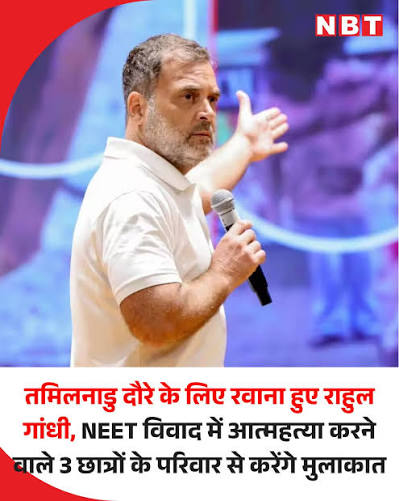
Rahul Gandhi left for Tamil Nadu on Saturday morning. He will meet the families of three students who committed suicide in Chennai over the NEET controversy. Tamil Nadu unit president B. Manickam Tagore stated that there is no plan to meet with Chief Minister Vijay. New Delhi: Leader of the Opposition in the Lok Sabha, Rahul Gandhi, left for Tamil Nadu on Saturday from his residence in New Delhi. Today in Chennai, he will meet with three families whose children allegedly committed suicide during the NEET paper leak controversy. Rahul Gandhi will also discuss with party officials under the “Sangthan Srujan Abhiyaan,” an initiative to strengthen the party at the grassroots level in Tamil Nadu. However, no meeting with Tamil Nadu Chief Minister Thalapathy Vijay is currently planned. According to reports, Rahul Gandhi will meet with three families in Chennai whose children committed suicide due to irregularities in the NEET UG exam regarding the NEET paper leak. Regarding Rahul Gandhi’s meeting with Tamil Nadu Chief Minister Vijay Thalapathy, the party stated that “there is no plan for Rahul Gandhi to meet Chief Minister C. Joseph Vijay during his visit to Tamil Nadu.” Will Address Officials Congress General Secretary and Tamil Nadu in-charge Ghulam Ahmed Mir and the party’s Tamil Nadu unit president B. Manickam Tagore told reporters in Chennai that Rahul will address officials on Saturday at the closing ceremony of the 10-day training camp for District Congress Committee presidents held from July 23 to August 1 in Mamallapuram. Initiative to Strengthen the Party at the Grassroots Level Rahul is expected to arrive in Chennai at 11 a.m. on August 1, where he will preside over a party event held there, and then depart for Delhi at 6 p.m. The training camp for the Chennai Congress Committee presidents is an initiative to strengthen the party at the grassroots level under the “Organization Creation Campaign.” When asked about the possibility of Rahul Gandhi meeting Chief Minister Vijay, Tagore said that the top leader’s Chennai program is related to party organization. Congress is part of the Tamil Nadu coalition government led by the Tamil Nadu Vetri Kazhagam (TVK). Curated by: Abhishek Pandey About the Author Abhishek Pandey is a digital journalist at Navbharat Times. He joined Navbharat Times, the digital wing of the Times of India Group, in July 2025. He currently covers news for the National and Delhi desks. Courtesy: Hindi News
Eyewitness to Dalit youth murder case in Tehri arrested on rape charges

New Tehri, Diwakar Dimri, an eyewitness to the murder of Dalit youth Ketan Lal in Uttarakhand’s Tehri district, has been arrested on rape charges. Police announced this on Thursday. Police said Dimri was arrested on Tuesday evening on charges of raping a minor girl involved in the case. According to a police complaint filed by Dhanpal Lal, father of Ketan (18), a resident of Dewal village, at 11 pm on June 7, his son, along with his friend Dimri, arrived at the minor girl’s house in Kholgarh village at her call, where the girl’s family locked them in a room and severely beat them. The next morning, the minor girl’s father called Ketan’s family and asked them to take his son away. According to the complaint, when they reached Kholgarh, Ketan was found bleeding and died on the way to be taken for treatment. The injured Dimri was admitted to the district hospital for treatment. Now, with Dimri’s arrest, the incident that occurred last month in Kholgarh village in the Pratapnagar area has once again gained momentum, where the family members of the deceased staged a protest at the Collectorate on Thursday demanding the release of Dimri and the arrest of his alleged co-accused. However, Ketan’s family and villagers later ended the protest after District Magistrate Nitika Khandelwal assured them of a fair investigation. Earlier, the family members of the minor girl and the people of the area, who had long threatened to protest after Dimri’s arrest, postponed a planned protest and siege of the District Magistrate’s office on Wednesday. According to the police, a case of alleged rape was registered against Dimri on July 11 at the Lambgaon police station under various sections, including the Protection of Children from Sexual Offences (POCSO) Act, based on the complaint of the minor girl’s mother. During the investigation, he was arrested based on the victim’s statement and other evidence. Meanwhile, the deceased’s father, Dhanpal Lal, mother, Rukma Devi, along with other family members and villagers staged a sit-in protest at the Collectorate on Thursday, demanding the arrest of alleged co-accused in the Ketan murder case. The protesters alleged that other individuals were also involved in Ketan’s murder, against whom no action has yet been taken. They also claimed that the minor girl’s mother and others also played a role in Ketan’s beating. The protesters demanded that the case be heard in a fast-track court, all co-accused be arrested, the Forensic Science Laboratory (FSL) report be made public, and the arrest of arrested eyewitness Dimri. Investigating officer and Police Circle Officer Chandramohan Singh stated that the investigation is ongoing and four individuals have been arrested so far in connection with Ketan’s murder. He added that further action will be taken based on whatever facts and evidence emerge from the investigation. Deepti Shafiq This story has been auto-fed from Bhasha news agency. ThePrint is not responsible for its content. Courtesy: Hindi News
Life imprisonment for raping a Dalit girl: POCSO court in Ambedkar Nagar also imposed a fine of 40,000 rupees, ruling in a 6-year-old case.

In the case of rape of a Dalit girl in the Jaitpur area of Ambedkar Nagar, Special Judge under the POCSO Act, Mohan Kumar, convicted the accused, Anand Singh alias Jhinak Singh, and sentenced him to life imprisonment. The court also imposed a fine of 40,000 rupees. According to the prosecution, the incident occurred on September 11, 2020. The accused, Anand Singh alias Jhinak Singh, a resident of Bhitaura South, gagged a Dalit girl who was outside her house, dragged her into the bushes, and raped her. When she resisted, the accused beat her and threatened to kill her. Charge sheet filed after investigation Following the incident, the police registered a case based on the complaint of the victim’s family. After the investigation was completed, the charge sheet was filed in the court. During the hearing, statements and evidence from the victim and other witnesses were presented before the court. The court delivered its verdict based on the evidence. The prosecution demanded a harsh punishment for the accused. Despite the defense’s arguments, the court deemed the available evidence and witness statements sufficient and convicted the accused. Sentence under the SC-ST Act and rape sections The special judge sentenced the accused to life imprisonment and a fine of ₹10,000 under the SC-ST Act. He also imposed various sentences under other sections, including 20 years of rigorous imprisonment for the crime of rape. The court also ordered a copy of the verdict be sent to the District Legal Services Authority to provide compensation to the victim. Arunesh Pratap Singh | Ambedkar Nagar Courtesy: Hindi News
Samajwadi Party’s ‘PDA’ Strategy On General Seats: Akhilesh Yadav To Field Over 100 Dalit Candidates In UP Assembly Polls
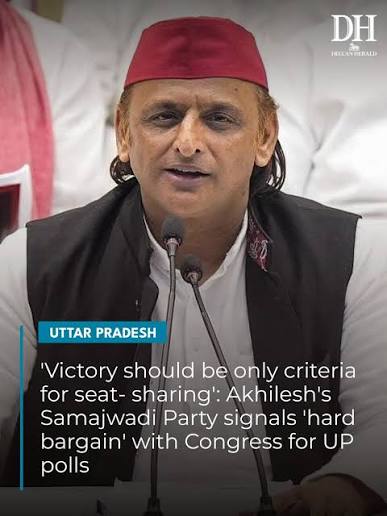
UP Assembly Election: Samajwadi Party is expanding its ‘PDA’ strategy for the 2027 UP Assembly elections, with Akhilesh Yadav planning to field over 100 Dalit candidates, including on general seats. This move aims to broaden SP’s voter base and challenge BJP’s social engineering in the state. Strategy aims to challenge BJP’s social engineering in UP. Jagran Correspondent, Lucknow: With just a few months remaining in the much-awaited Uttar Pradesh Assembly election, the Akhilesh Yadav-led Samajwadi Party (SP) has begun preparing its strategy. It is planning to expand the formula of “PDA” (Backward, Dalit, and Minority), the strategy that helped the Samajwadi Party in the 2024 Lok Sabha election as it emerged as the single largest party in the state. SP To Expand PDA Strategy As per the reports, along with seeking votes on the PDA formula, the socialist party is also planning to field candidates on this formula to target a larger voter base. Akhilesh Yadav is preparing a “2.0” version of the PDA formula, in which the “D” (Dalit) category of the PDA will also be assured a greater share. The reports suggest that along with the reserved seats, Akhilesh Yadav is in favor of fielding Dalit candidates on general seats as well. As per the experts, the effort is likely to increase the party’s acceptance among Dalit and non-Yadav backward voters while also challenging the BJP’s social engineering. More Dalit Candidates Likely Earlier in the 2022 assembly elections, the Samajwadi Party fielded Dalit candidates on only three general seats, in addition to the reserved seats. However, it is considering fielding Dalit and tribal candidates on over 100 seats, including 15 to 20 general seats in the 2027 polls, reported Jagran, citing sources. The party reportedly believes that fielding Dalit candidates on general seats will lead to political polarization in those seats, as well as in surrounding regions. The strategy could help the Akhilesh Yadav-led party in Western Uttar Pradesh and other regions where Dalits are in significant numbers. With this move, the SP also aims to weaken the BJP’s non-Yadav backward class and non-Jatav Dalit alliance. This equation has benefitted the saffron party for the past decade; however, the Samajwadi Party managed to make a dent in the last Lok Sabha elections. By Aditya Jha Courtesy : The Daily Jagran Note: This news is originally published on https:/thedailyjagran.com/bha and is used purely for non-profit/non-commercial purposes, especially human rights
Rape of Dalit girl in Nasirabad… Accused still absconding: Lok Janshakti Party and villagers protest, Samajwadi Party threatens agitation.
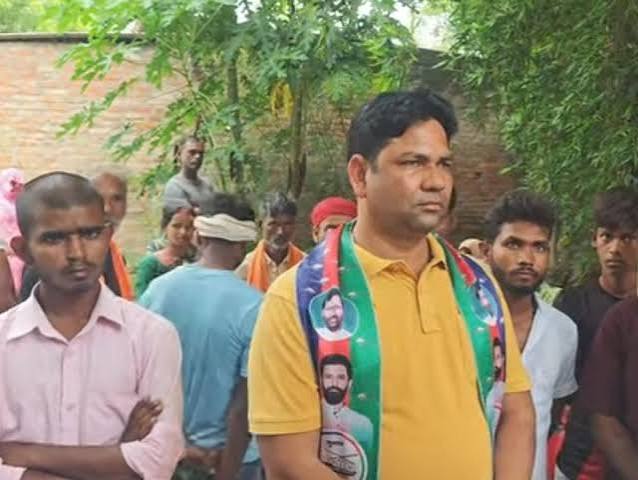
Lok Janshakti Party (LJP) workers and villagers protested on Thursday against the non-arrest of the absconding accused in the rape case of a Dalit girl in the Nasirabad police station area of Rae Bareli. Meanwhile, a delegation of the Samajwadi Party (SP) also met with the victim’s family and demanded immediate action. The incident dates back to last Tuesday, when a case was registered under sections of the rape and SC/ST Act for the rape of a Dalit girl. Police have arrested Prem Sagar Tiwari, but the other four accused are still reported to be absconding. Lok Janshakti Party, Amethi District President, Dharmraj Paswan, visited the victim’s family. The family alleged that the arrest of the remaining accused was being delayed and they were receiving constant threats. Following this, party workers and villagers protested in the village and demanded the immediate arrest of all the absconding accused. Assurances given to protesters Upon receiving information about the protest, Paraiya Namaksar outpost in-charge Atul Kumar Tripathi arrived at the scene with police force. During this, there was a minor altercation between the protesters and the police regarding the arrest of the accused. The police assured the protesters that continuous efforts were being made to arrest the absconding accused and that action would be taken soon. Following this, the protest ended. Demand for fair and strict action Meanwhile, a delegation from the Samajwadi Party also met with the victim’s family. SP leader Chaudhary Suresh Nirmal warned that if the absconding accused were not arrested within 24 hours, the party would launch a major agitation regarding the matter. He demanded fair and strict action from the police administration. LJP’s Chhavilal Pasi, Rakesh, Pushpendra, Ramesh and several other villagers were present on the occasion. Ashar Fapur (Salon), Rae Bareli Courtesy: Hindi News
Why are transgenders building a PM Modi temple in Bihar?

A proposal to build a temple dedicated to Prime Minister Narendra Modi has been approved by Bihar’s State Transgender Welfare Board. The board described the Transgender law passed by the PM Modi-led government as a milestone that gave the community institutional representation in the state. The Bihar State Transgender Welfare Board has approved a proposal to build a temple dedicated to Prime Minister Narendra Modi, saying the move is meant to honour him for giving the transgender community “respect and rights”. According to the news agency PTI, the proposal to build the temple was moved by the board member Ranjan Singh during the maiden meeting of the board under the Bihar Social Welfare Department. The proposal reportedly received unanimous support. Singh, who moved the proposal, said that the idea was brought by the fact that the transgender community in Bihar does not have a temple of its own and described the Transgender Persons (Protection of Rights) Act, 2019, passed by the PM Modi-led government as a milestone that gave the community institutional representation in the stat The temple proposal is less about religion than recognition. Members of the Bihar State Transgender Welfare Board say Prime Minister Narendra Modi is the first national leader who gave the community legal recognition and a formal place in governance. For the board, the temple is therefore a symbolic expression of gratitude rather than simply a place of worship. Its members see the proposal as an acknowledgement of what they consider the Centre’s role in bringing transgender rights into India’s legal and policy framework. WHAT CHANGED AFTER THE 2019 ACT? The Transgender Persons (Protection of Rights) Act, 2019, was the first central legislation dedicated to protecting the rights of transgender persons in India. Enacted by the central government, the law prohibits discrimination against transgender people in education, employment, healthcare, housing and access to public services. It also provides for the issuance of identity certificates, directs governments to frame welfare measures and calls for the establishment of institutional mechanisms to safeguard the community’s rights. The law also paved the way for the creation of bodies such as the National Council for Transgender Persons and prompted states to set up their own welfare mechanisms. In Bihar, the state government constituted the Bihar State Transgender Welfare Board in August last year under the Social Welfare Department to work towards the community’s social development and empowerment. It was this board that approved the proposal to build a temple dedicated to PM Modi, with its members describing the law as a milestone that gave the community greater institutional recognition. THE PROPOSAL TO BUILD TEMPLE FACES BACKLASH While the Bihar State Transgender Welfare Board has credited the central government for bringing legal recognition to the community, the Transgender Persons (Protection of Rights) Act, 2019, has also faced criticism from transgender rights activists across the country. Several organisations had opposed the law, arguing that its process for obtaining a transgender identity certificate placed unnecessary bureaucratic hurdles in the path of self-identification. Others criticised the absence of provisions for reservations in education and public employment, saying the legislation fell short of addressing the community’s long-standing demand for affirmative action. The differing reactions highlight that the transgender community is not monolithic. While the Bihar board sees the 2019 law as a milestone worthy of symbolic recognition, many activists continue to argue that the fight for equal rights and representation remains unfinished. For now, the temple remains a proposal. The Bihar State Transgender Welfare Board has approved the plan, but construction can begin only after the state government allots land and the necessary administrative approvals are in place. The proposal was unanimously backed by the board’s members during its maiden meeting, according to PTI. If it moves forward, the temple would be one of the rare instances in India of a place of worship being dedicated to a sitting Prime Minister. Written By: Gaurika Gulati Courtesy : India Today Note: This news is originally published on https:/indiatoday.com/bha and is used purely for non-profit/non-commercial purposes, especially human rights