
Dalit Man Attacked in Sultanpur: Three Men Beat Him in Front of His Children, Complaint Filed with SP
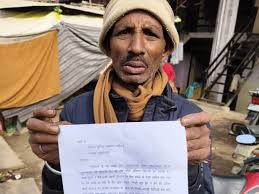
A Dalit man was attacked in Upadhyapur village under the Jaisinghpur police station area of Sultanpur district. In the incident, which took place around 7 am on Saturday, the victim, Ram Sundar, was beaten by three men from the village at his doorstep in front of his children. The victim has filed a complaint with the Superintendent of Police (SP) and demanded action. In his complaint, Ram Sundar stated that on the day of the incident, he was warming himself by a bonfire at his doorstep with his children. Three men from the village then arrived at his door. He alleges that they verbally abused him without any provocation. The attackers then grabbed Ram Sundar by the collar, threw him to the ground, and beat him with kicks and punches. Ram Sundar’s cries for help attracted nearby villagers. Following the intervention of the villagers, the attackers left, threatening to kill Ram Sundar. His daughter-in-law and neighbors intervened, saving his life. The victim also stated that this is not the first time these men have attacked him. The attackers had previously assaulted Ram Sundar twice. The lack of action by the police despite his previous complaints had emboldened the attackers. Ram Sundar had tried to file a complaint at the police station earlier, but he was turned away. Following the current incident, Ram Sundar has submitted a written complaint to the Superintendent of Police of Sultanpur. He has requested that his report be registered, that a medical examination of his injuries be conducted, and that strict action be taken against the attackers. No concrete action has been taken in the case so far. The Sultanpur Superintendent of Police has assured the victim that the matter will be investigated seriously and appropriate action will be taken. Surauli (Jaisinghpur), Sultanpur Courtesy: Hindi News
Periods will no longer stop girls from studying! A historic Supreme Court decision that you need to understand
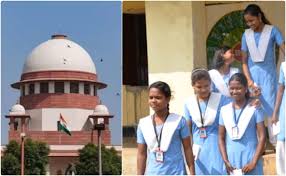
The Supreme Court acknowledged that the lack of menstrual hygiene management (MHM) prevents girls from attending school, thereby violating their dignity, privacy, bodily autonomy, and reproductive health. This situation is a clear violation of Article 14 (Right to Equality), Article 15(3) (Special provisions for women and children), Article 21 (Right to life and personal liberty), and Article 21A (Right to education). New Delhi – In a very important and far-reaching decision on January 30, the Supreme Court declared menstrual health an integral part of the right to life under Article 21 and the right to education under Article 21A of the Indian Constitution. A bench of Justices J.B. Pardiwala and R. Mahadevan delivered a detailed 126-page judgment in the case of Dr. Jaya Thakur vs. Union of India, in which the Court clearly stated that the absence of girls from school or dropping out entirely due to menstruation is unconstitutional. The Court said, “A period ends a sentence – not a girl’s education.” In the judgment, the Court acknowledged that the lack of menstrual hygiene management (MHM) prevents girls from attending school, thereby violating their dignity, privacy, bodily autonomy, and reproductive health. This situation is a clear violation of Article 14 (Right to Equality), Article 15(3) (Special provisions for women and children), Article 21 (Right to life and personal liberty), and Article 21A (Right to education). The Court stated that the right to live a life of dignity is only possible when girls can attend school during menstruation without shame, fear, or discomfort. The Court also analyzed Sections 3 and 19 of the RTE Act (2009) and clarified that “free education” means not only school fees but also includes all expenses and facilities related to menstrual hygiene management. If girls do not have access to sanitary napkins or if there are no separate, clean toilets in schools, it is a violation of the RTE Act. The court stated that “barrier-free access” in schools means not only access to the building but also the removal of all obstacles that prevent a child from attending school regularly. Under Section 3 of the RTE Act, free education includes not only school fees but also expenses related to menstrual hygiene management. The lack of separate toilets in schools is a violation of “barrier-free access.” Menstruation is no longer just a “women’s issue”; it is a collective responsibility. Under this judgment, the Supreme Court has issued strict instructions to all states and Union Territories to mandatorily provide the following facilities within three months: Every school (government or private) must have separate, fully functional toilets for boys and girls, with running water, soap, and privacy. Toilets must also be accessible for children with disabilities. Oxo-biodegradable sanitary napkins (meeting ASTM D-6954 standards) will be provided free of charge in every school, ideally through vending machines. If installing a machine is not immediately possible, these napkins will be kept at a designated place or with a designated person in the school. An “MHM Corner” will be established in every school, where spare undergarments, spare uniforms, disposable bags, and other necessary materials will be kept to deal with any emergencies during menstruation. Arrangements for the safe and environmentally friendly disposal of sanitary napkins must be made in every school, in accordance with the Solid Waste Management Rules. The court placed great emphasis on awareness and education. NCERT and SCERT have been directed to include menstruation, puberty, and problems like PCOS/PCOD in the curriculum to eliminate the shame and myths associated with it among girls. Training on sensitivity and support regarding menstrual health will be mandatory for all teachers (both male and female). The court specifically stated that it is also essential to educate boys that menstruation is a normal biological process, so that they can show empathy and respect towards their female classmates. For monitoring, the District Education Officer (DEO) has been ordered to inspect schools annually and collect anonymous feedback (surveys) from female students. The NCPCR and SCPCR have been entrusted with the responsibility of monitoring the implementation of this decision across the country. Non-compliance could lead to action, including the cancellation of the school’s recognition under Section 18 of the RTE Act. The court concluded with an emotional appeal, stating that this decision is not just a legal document, but for every girl who has been forced to drop out of school due to menstruation. The court said, “The fault is not yours. The change has now begun.” This case is still “part-heard.” Compliance reports have been sought from all states and union territories after three months. The Supreme Court has directed that this decision be communicated to all High Courts, state governments, and the Ministries of Education, Health, Jal Shakti, and Women and Child Development. Geetha Sunil Pillai Courtesy: Hindi News
Coimbatore: Cow dung smeared in office after Dalit manager’s transfer, bus driver suspended
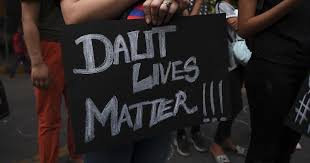
Coimbatore: A deeply shameful incident of caste discrimination has come to light from Coimbatore district of Tamil Nadu. Here, a bus driver from the Mettupalayam branch-1 had the floor of his branch manager’s office cleaned with cow dung after the manager’s transfer. The reason behind this despicable act is said to be the manager’s Scheduled Caste (SC) background. According to a report by the New Indian Express, after the incident came to light, senior officials of the Tamil Nadu State Transport Corporation (TNSTC) took swift action and suspended the accused driver, S. Sashiraj. Sashiraj is also the secretary of the transport corporation’s ‘LPF’ union. What is the whole matter? The incident took place on January 23. The then branch manager of the Mettupalayam branch, D. Prakashkumar, who belongs to the Scheduled Caste, was recently transferred to Ukkadam. It is alleged that immediately after his departure, Sashiraj had the office floor smeared with cow dung through a cleaner. According to eyewitnesses, the driver made derogatory remarks, saying that “the dirt (referring to the manager) has been cleaned from the branch.” Surprisingly, all this happened in front of Prakashkumar, who is deeply shocked and has not returned to work since then. Serious allegations of bullying and discrimination Sources in the transport corporation have made several serious revelations about Sashiraj’s working methods. While holding the post of Traffic Controller, Sashiraj allegedly assigned long and difficult routes to Scheduled Caste employees, while allocating shorter and more comfortable routes to people from his own community. It is alleged that he extorted money from employees for granting leave and preferred duties. Due to his political influence, he also disregarded the orders of the branch managers. In the last one and a half years, six branch managers have been transferred because of his actions. Reason for the conflict The current manager, D. Prakashkumar, had refused to comply with Shashi Raj’s arbitrary demands and had also issued him a memo for engaging in caste-based discrimination. Angered by this, Shashi Raj allegedly exerted pressure on higher officials, resulting in Prakashkumar’s transfer without any valid reason. The accused’s defense On the other hand, the suspended driver, Shashi Raj, has completely denied all these allegations. He claims that the accusations against him are politically motivated and false. Shashi Raj argued that he was merely maintaining the cleanliness of the office and that the room was cleaned that day as part of routine maintenance because it was dirty. TNSTC’s Coimbatore regional officials have confirmed that an internal inquiry into the matter has been initiated. The driver will remain suspended until the inquiry report is submitted. This incident has once again brought the deeply entrenched casteist mentality within government departments to the forefront of public debate. Rajan Chaudhary Courtesy: Hindi News
Refusal to see caste discrimination, not ‘false complaints’, is the real crisis on campus
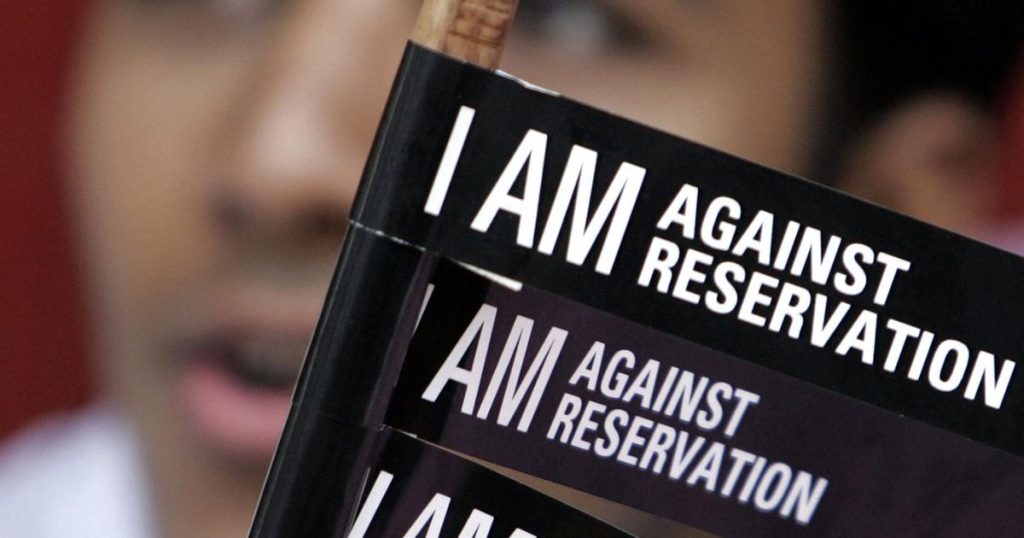
Little will change until institutes recognise the experiences of Dalit, Adivasi and OBC students. An Indian student during a protest rally against the government’s recommendation for 50% reservation for backward classes in education and government jobs, in this photograph from Bengaluru in May 2006. The University Grants Commission’s updated rules to address caste discrimination in higher education institutes have sparked outrage among Savarna commentators and students. They claim that they will become victims of false complaints and that the provisions will be weaponised against them. But this reflects a continuing refusal to listen to experiences of caste discrimination on campuses, something I have witnessed closely since 2022 when I became the first elected student representative of the Equal Opportunity Cell at the Indian Institute of Technology, Delhi. As part of student committees and through my research on caste injustice, I have seen how the claim that Dalit, Adivasi and OBC students misuse guidelines against general category students is invoked when a caste discrimination complaint is filed. This negative framing favours the student or professor accused of casteism and rarely accounts for the humiliation or insensitive behaviour faced by the student making the complaint. Over the past few days, Savarna students have framed themselves as potential victims of the UGC rules, issued on January 13, recentering the issue of casteist discrimination around their anxieties. On January 29, the Supreme Court stayed the new rules after hearing a public interest litigation which claimed that the guidelines were vague and could be misused. Akhil Kang, a queer Dalit scholar who has extensively written about “upper-caste victimhood”, argues that claims of upper-caste victimhood are not about actual harm. Instead, they are about preserving moral innocence in the face of caste accountability. Illustrating Kang’s observation, upper-caste students are floating hypothetical situations in which they could be victimised by the UGC guidelines. For example, one Instagram post claims that a general category female student is now afraid of being accused of caste discrimination if she rejects the advances of a male student from the Scheduled Caste/Scheduled Tribe category. Such claims displace attention from the everyday experiences of discrimination of Dalit and Adivasi students, who remain unacknowledged in classrooms and are rendered invisible on campuses where merit is routinely read through caste. Caste on campus As part of a meeting called by the National Task Force set up by the Supreme Court on January 12, I highlighted three crucial observations based on my experience of observing casteism on campus. The meeting was attended by anti-caste intellectuals, academics, activists and student representatives from universities in Delhi. First, caste is seemingly invisible and so it is difficult to prove that it exists. But the discriminatory effects of caste are primarily experienced by Dalit, Adivasi and OBC students. For example, a professor may make a student wait outside their office hours every day just to address one concern or speak to them. The student could wait for days on end, often feeling humiliated. But this will not be recognised as “casteism”. This same professor could ask about the student’s rank in the entrance exam – using the phrase “hawa kya hai?”, or what’s the AIR, or all India rank. Ambedkarite student collectives across the IITs have stressed that asking a student’s rank should be counted as caste discrimination. Rank indicates whether a student was admitted in the general or Dalit, Adivasi and OBC students. The student might then be labelled incompetent and underperforming, and the professor could suggest that they be expelled from IIT Delhi for not being meritorious. The student could find their admission and place at the institute being attacked and so end up writing to the administration and Equal Opportunity Cell, or SC/ST cell, seeking legal recourse. The Equal Opportunity Cell registers the student’s complaint, and thereafter, a committee is set up to inquire into caste discrimination. This illustrates how faculty and resource persons in an institution refuse to listen to a student who feels neglected or socially excluded. Congress workers protest against the death by suicide of doctoral scholar Rohith Vemula, in this photograph from January 2016. Credit: AFP. Second, caste reveals itself through networks and support systems. A general category student might instantly feel a sense of belonging in the classroom while a Dalit, Adivasi or OBC student may continuously invest energy in proving or defending their merit. As a student representative, I have observed that the network of Savarna scholars does not easily offer support to Dalit, Adivasi and OBC students and often has preconceived notions about who is meritorious or deserving. Savarna students travel easily through these networks, receiving guidance on scholarships abroad, building academic connections, seeking funding and finding opportunities to get published. But Dalit students have to hustle merely to get signatures on recommendation letters. Even if students have got admission on merit, they are always made to feel inadequate. “No matter how I perform, I feel invisible in the classroom,” a Dalit BTech student told me off the record on campus. “The Savarna professor never acknowledges my greeting.” Such an environment attacks the confidence of Dalit, Adivasi and OBC students. The demoralisation shows itself in lesser grades, poor progress reports and lonely or isolated students in campus spaces. It is a challenge to define this experience of being made to feel invisible, but what can be defined are broader actions – the implicit or explicit bias on the campus. Many Dalit and Adivasi scholars report feeling depressed, which I believe is a result of an uncaring institutional structure that does not provide motivation, appreciation nor respond to their efforts properly. In 2022, I emailed the IIT-Delhi mental health team asking why caste-based trauma was missing from the counselling options of gender, LGBTQ+, violence, relationship problems and campus problems. It was aimed at making the institute recognise the reality of the trauma of caste. IIT-Delhi positively implemented this, by adding “caste-based trauma” as an option on its YourDost website, which provides counselling to enrolled students. The third observation was the
Tamil Nadu, Karnataka lead list of Dalit, tribal & OBC judges in lower courts

SCs, STs and OBCs make up 45.7% of district court judges in the country; south India leads New Delhi: The district and subordinate courts in the country have 14.15% Dalits, 5.12% tribals and 26.64% OBCs as judges, with statistics showing that diversity among them is higher in south India with Tamil Nadu and Karnataka leading the spot compared to the rest of the count It showed that the lower judiciary is more representative compared to the High Courts where appointments since 2018 showed only 3.89% of 847 judges were Dalits, 2% tribals and 12.27% OBCs. These statistics were provided by Law Minister Arjun Meghwal in a written reply to senior RJD MP Manoj K Jha. States like Uttar Pradesh, Bihar, Maharashtra and Madhya Pradesh have impressive representation in lower courts while the statistics placed in Parliament showed “zero” SC, ST and OBC judges in lower courts in West Bengal and Andaman Nicobar Islands. According to the statistics, 45.76% or 9,534 – Civil Judge (Junior Division), Civil Judge (Senior Division) and District Judge – of 20,833 judges in district and subordinate courts are from SC, ST and OBC communities as on January 21. Of this, 14.15% (2,949) are SCs, 5.12% (1,068) STs and 26.64% (5,517) are OBCs. Among the big States, Tamil Nadu has 97.65% (1,205 of 1,234) from these categories – SC 20.66% (255), ST 1.21% (15) and OBCs 75.76% (935). SCs, STs and OBCs accounted for 88.82% (996) of 1129 district and subordinate court judges in Karnataka. Dalit judges numbered 226 (20.01%) and 47 (4.16%) were tribals while OBCs accounted for 733 (64.92%). Other south Indian States – Andhra Pradesh, Telangana and Kerala – also fared well in representation in lower judiciary. The OBC judges in Kerala accounted for 50.60% while Dalits accounted for 7.45% and 0.69% tribals while Andhra’s count were 38.98%, 18.88% and 5.59% and Telangana 44.71%, 15.28% and 8.98%, respectively. Overall, Uttar Pradesh has 53.56% or 1,414 of 2,640 judges belonging to the three communities – Dalits accounted for 20.22% (534), 1.43% tribals (38) and 31.89% (842) OBCs. Bihar has 253 or 20.01% Dalit judges in district and subordinate courts while the figures for tribals was 0.84% (14) and 28.76% (479) OBCs. Overall, 44.8% or 746 of 1,665 judges in Bihar districts belonged to SCs, STs and OBCs. While only those persons who are recommended by the Supreme Court Collegium are appointed as Judges of the Supreme Court and High Courts, the state governments in consultation with the respective High Courts frame the rules and regulations regarding appointment and recruitment of judicial officers in the respective State Judicial Service. Judges in districts and representation – State | Scheduled Caste% | Scheduled Tribe% | OBC% Tamil Nadu / 20.66 / 1.21 / 75.76 Karnataka / 20.01 /4.16 / 64.92 Kerala / 7.45 / 0.69 / 50.60 Andhra Pradesh / 18.88 / 5.59 / 38.98 Telangana / 15.28 / 8.98 / 44.71 Uttar Pradesh / 20.22 / 1.43 / 31.89 Bihar / 15.19 / 0.84 / 28.76 Maharashtra / 11.70 / 0.36 / 25.77 Madhya Pradesh / 16.04 / 14.15 / 18.79 Overall / 14.15 / 5.12 / 26.64 Shemin Joy DHNS Courtesy : DH Note: This news is originally published on https:/deccanherald.com/bha and is used purely for non-profit/non-commercial purposes, especially human rights
A Padma Shri & a visit by PM Modi: What’s behind BJP’s Dera Ballan outreach in Punjab
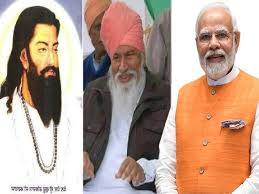
The visit is seen as a targeted strategy by the BJP to woo Dalit voters, particularly the Ravidasias and Ad-Dharmis, who often play a key role in close electoral battles in Punjab. Prime Minister Narendra Modi will visit Dera Sachkhand Ballan on February 1 for Guru Ravidas Jayanti. This is a strategic move by the BJP to attract Punjab’s significant Dalit voters, particularly the Ravidasias, ahead of next year’s Assembly polls. The visit aims to leverage identity recognition and secure support from this crucial demographic. *AI-generated summary. Check context in original text. Chandigarh: Prime Minister Narendra Modi is scheduled to visit Dera Sachkhand Ballan near Jalandhar on 1 February on the occasion of Guru Ravidas Jayanti, a move seen as part of the Bharatiya Janata Party’s (BJP) political outreach in the state to woo Dalit voters ahead of next year’s Assembly polls. The visit comes within days of the dera head, Niranjan Dass, being honoured with the Padma Shri. In December, the dera head, along with senior party leaders, met Modi and invited him for Gurpurab celebrations on 1 February. The dera head also requested the prime minister to centrally organise countrywide celebrations to mark the 650th birth anniversary of Guru Ravidas next year. With one year to go for the assembly polls in the state, experts see the prime minister’s visit as a more targeted strategy to reach out to specific caste communities that hold the key in closely contested electoral battles, particularly the Ravidasias and Ad-Dharmis, who constitute the largest subgroup among the Dalits in Punjab. “Ravidasias and other Dalit voters do not vote en bloc for a single party; they often shift depending on local issues, candidates and coalitions. The overt reaching out to the Ravidasia dera is strategically significant for the BJP,” says Dr Kanwalpreet Kaur of the department of political science, DAV College, Sector 10, Chandigarh. “The Ravidasias have been demanding recognition as an independent community, and the BJP intends to do just that—leverage identity recognition, aligning with the community’s demands for national visibility and respect for its spiritual leadership,” she added. ThePrint explains the significance of the prime minister’s visit to the central institution of the Ravidassia sect in the state. Also Read: BJP’s Ravidas Jayanti push to woo Dalits in poll-bound states — shobha yatras, sant sammelans BJP’s bid for a slice of the pie The BJP, once a junior partner of the Akali Dal, has been trying to build an independent electoral footprint in Punjab after the SAD-BJP alliance ended in 2020 over the contentious farm laws brought in by the BJP-led centre. The BJP’s strategy in the state has been successful enough for it to improve its vote share from 6.60 percent in the 2022 Vidhan Sabha elections to 18.56 percent in the 2024 parliamentary elections, cutting into the vote share of the AAP and the Congress. In the past year, the party has focused on increasing its foothold in rural areas dominated by Sikh peasantry. Dalits constitute almost 32 percent of Punjab’s population, the highest in the country. However, the Dalits are divided among Sikhs, Hindus and Christians, many of whom also follow deras. Deras, widespread on Punjab, are socio-religious centres of various sects and organisations. Unlike Sikh gurudwaras, where the Guru Granth Sahib is considered a living guru, derad are generally led by a living guru with a personal following. Dera Radha Soami Satsang Beas, Dera Sacha Sauda (headquartered in Sirsa) and Dera Sachkhand Ballan are the three most followed deras in Punjab, commanding a following running into several lakhs. Among the Dalits, the Ravidasias, Ramdasias and Ad-Dharmis are the major sub-groups, concentrated in the Doaba region districts of Jalandhar, Hoshiarpur, SBS Nagar and Phagwara. According to Dalit studies expert Ronki Ram of Panjab University in Chandigarh, the Ravidasias are the most prominent Dalit community in Punjab. “Out of the 39 SC castes in Punjab, the four major castes of Chamar (23.45 percent), Ad-dharmi (11.48 percent), Balmiki (9.78 percent) and Mazhabi (29.72 percent) constitute 74.44 percent of the total SC population,” he said. “Chamars are further divided into Ravidasias (leather workers) and Ramdasias (weavers). The Ravidasias are the most prominent for several reasons. They utilised the availability of reservation in education well, and are the most upwardly mobile. Many went abroad and constitute a large section of the NRIs from Doaba,” he added. As a result, Ronki Ram said, they have “become financially well-to-do”. “They have invested in Guru Ravidas deras and now have substantial social capital. They are also networked and, as a community, enjoy political clout,” he added. Guru Ravidas The Ravidasia identity is rooted in the teachings of Guru Ravidas, a 15th-century Bhakti saint and social reformer of the Chamar caste whose egalitarian message resonates with Dalit communities. “Ravidas was born into the Chamar caste, also known as Kutbandhla, one of the Scheduled Castes (SC) in Uttar Pradesh. Chamars are known by their profession of leather and tanning. They were oppressed and their touch and sight were considered polluting by the upper castes. Ravidas revolted against this inhuman system of untouchability. He adopted bhakti as a mode of expression for his revolt,” said Ronki Ram, quoting from his research paper. Guru Ravidas’s poetic hymns are also included in the holy text of the Guru Granth Sahib, considered a living Guru by Sikhs. “Ravidas holds a special place in the heart of Dalits, as he was one who unleashed a frontal attack on the traditional practice of caste-based social exclusion and oppression. Belonging to one of the lowest castes, his iconic figure continues to act as a catalyst in the emergence of a separate Dalit identity in Punjab,” said Ronki Ram. “Ravidas, as a spiritual figure who Omvedt (Gail Omvedt, an American sociologist) boldly called ‘the bhakti radical’, commands a massive following among his caste fellows, especially the Chamars in Punjab, who consider him their guru. They have built temples, gurdwaras, bhawans (memorial halls), educational institutions/ chairs, cultural organisations and hospitals in his name all over
Modi Playing the Dalit Caste Card to Push Rahul Gandhi Out of the Ring and Don the Mantle of Dalit Messiah
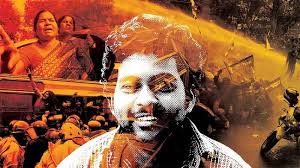
The Supreme Court’s decision to stay the recent University Grants Commission (UGC) regulation on the ground that it adopted a non-inclusive definition of caste-based discrimination and excluded certain categories from institutional protection is certainly not a setback for Narendra Modi. Instead, it could significantly elevate his stature in the eyes of Dalits and the poor. Politically, the most important observation made by the bench of Chief Justice Surya Kant and Justice Joymalya Bagchi—“If we don’t intervene, it will lead to dangerous consequences, divide society, and have grave impact”—will have far-reaching implications. The court also observed that by limiting the scope of “caste-based discrimination” only to SC, ST, and OBC categories, the UGC had effectively denied institutional protection and grievance redressal to individuals belonging to the “general” or non-reserved categories who may also face harassment or bias based on caste identity. However, this order also raises a crucial question: why did the court not take suo motu cognisance when hundreds of SC, ST, and OBC students in IITs and IIMs allegedly died by suicide due to discrimination? With the epithet “Hindu Hridaya Samrat” losing relevance amid the mushrooming of multiple claimants, Narendra Modi appears to have chosen a new path in saffron politics—to don the crown of a Dalit Messiah. For the first time in his eleven-year rule as Prime Minister, Modi has made a politically astute move by antagonising traditional upper-caste supporters through measures perceived as protective of Dalits and marginalised students. Modi refused to heed the advice of friends and well-wishers to retrace his steps, despite being aware of the consequences. Some protesters even targeted his caste identity, claiming that “the Teli is out to destroy our future” (Modi belongs to the Teli community, an OBC group). Yet Modi appears unmoved. He seems confident that upper-caste voters will not desert the BJP despite their anger over the new rules. With the 2029 Lok Sabha election in view, winning over Dalits and EBCs appears to be at the top of his priority list. Shivam Singh, one of the founders of the Savarna Sena (Forward Caste Army), stated that protests would be withdrawn if the government assured that general-category students would not be affected. Data shows that complaints related to caste discrimination in universities were around 173 in 2016–17 but rose to over 350 in the 2023–24 academic year, indicating a significant increase. Even memories of 1990, when upper-caste youth launched violent protests against the implementation of the Mandal Commission report, do not seem to deter Modi. During that agitation, over 150 people attempted suicide, with at least 63 succumbing to their injuries. The protest, which began after Prime Minister V.P. Singh announced the implementation of the Mandal Report, turned violent as many students resorted to self-immolation. Rajeev Goswami’s attempt became the symbolic face of the agitation. The compulsion to identify with Dalits and the proletariat has become so acute for Modi’s political survival that he has sought to reinvent himself as a modern Dalit Messiah. This shift also reflects the rise of hardline Hindutva leaders such as Yogi Adityanath within the BJP ecosystem, many of whom are associated with the “Hindu Hridaya Samrat” image. Modi, unwilling to be overshadowed by any rival within the saffron camp, appears determined to chart an independent path by aligning himself with Dalits and EBCs. Recent political developments have significantly strengthened Rahul Gandhi’s appeal among Dalits. What was once a peripheral issue has become a central ideological plank of his leadership as Leader of the Opposition. Although the Congress had historically lost Dalit trust in the 1990s, Rahul Gandhi has attempted to reclaim this space by linking social justice with the demand for a caste census—what he calls an “X-ray of the country.” He is increasingly perceived by Dalits and EBCs as a potential liberator. By placing the caste census at the centre of his political narrative, Rahul Gandhi has moved beyond tokenism. He aims to demonstrate the underrepresentation of Dalits, Adivasis, and OBCs in corporate, media, and academic institutions. He has targeted what he calls BJP’s “Manuvaad” and accused the government of weakening constitutional protections for marginalised communities. His claim that 95 per cent of upper-caste bureaucrats decide the fate of Dalits and the poor has found resonance among these communities. With Rahul Gandhi aggressively shaping the Dalit narrative, Modi appears left with little option but to reposition himself. Yet he faces competition not only from regional leaders but also from the BJP’s own targeted outreach strategies. After V.P. Singh, no national leader could fully capture the imagination of Dalits as a Mandal Messiah, although regional leaders like Mulayam Singh Yadav, Lalu Prasad Yadav, Ram Vilas Paswan, and Nitish Kumar emerged as protagonists of Mandal politics. Over time, however, they came to be seen largely as caste leaders rather than representatives of collective Dalit empowerment. Experts and liberals fear the emergence of violent protests similar to those witnessed after the Mandal Commission’s implementation in 1990. Upper-caste students in Bihar and Uttar Pradesh have already taken to the streets against the UGC’s Promotion of Equity in Higher Education Institutions Regulations, 2026. Sit-in protests have been organised across universities, with demonstrators claiming that the rules would lead to caste conflict and disrupt social harmony on campuses. Critics argue that the rules are one-sided and lack safeguards against false complaints. They question the effectiveness of “Equity Squads” and the potential for increased conflict. The regulations require every university and college to establish an Equal Opportunity Centre and an Equity Committee, with representation from SC, ST, and OBC communities. Institutions must address complaints within 24 hours, failing which they risk severe penalties. The 2026 regulations mark a legally binding step towards safer and more equitable campuses, aiming to curb the sharp rise in reported caste-based discrimination cases between 2019 and 2024. Yet a crucial question remains: why did the Modi government choose this moment and this mechanism to introduce such rules? In 2022, the Supreme Court had directed the UGC to formulate accessibility guidelines for students with
Dalit laborer dies in Saharanpur after under-construction roof collapses: Married a year ago, pregnant wife left without support
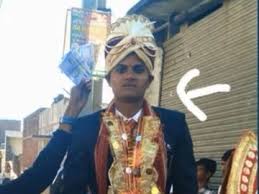
A laborer died on the spot when the roof of an under-construction house collapsed in the Kutubsher police station area of Saharanpur. The deceased has been identified as 21-year-old Nitin, son of Ramesh, a resident of Igrikala village. Nitin had gone to Rupdi Kapurpur village for work. The incident occurred on Wednesday when Nitin was demolishing the old roof of the house while working. Suddenly, the entire roof collapsed, and Nitin was buried under the debris. People nearby tried to rescue him, but he had already died. The news of the incident plunged the deceased’s family into mourning. Upon receiving the information, police and administrative officials reached the spot and assessed the situation. Following the accident, the administration immediately convened a meeting to address potential tensions between the two villages. After mutual discussions, an agreement was reached on the funeral and other related issues, maintaining peace in the area. The deceased, Nitin, had been married for about a year. His wife is approximately eight months pregnant. This incident has deeply affected the family, as Nitin was the sole breadwinner. Upon learning of the incident, BSP District President Rajneesh Bandhu, ASPA District President Sachin Khurana, Bhim Army Jai Bhim organization’s District President Sunny Gautam, and several other office bearers of social organizations reached the spot. These office bearers and socially responsible individuals like Rajneesh Ujala, Asif Ali, Beer Singh, Sukhbir Pradhan, Harshit Pradhan, and Narendra Gautam consoled the family. Immediate financial assistance was provided by the authorities, and further assistance from the government level was assured. In the presence of socially responsible people, the family declined any legal action and took the body with them. The young man’s last rites will be performed this afternoon. Tariq Siddiqui | Saharanpur Courtesy: Hindi News
SC Commission chairman urges swift action on Dalit welfare schemes
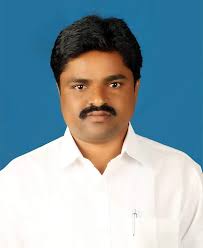
Andhra Pradesh Scheduled Castes Commission chairman K.S. Jawahar on Wednesday appealed to the officials to implement the welfare schemes meant for Scheduled Castes without delay. During interactions with Dalit leaders Mr. Jawahar received grievances on various issues before reviewing the implementation of the welfare schemes with officials. District In-Charge Collector Y. Megha Swaroop, East Godavari Superintendent of Police D. Narasimha Kishore assured timely action to execute the respective schemes and programmes of the government. The Hindu Bureau Courtesy : The Hindu Note: This news is originally published on https:/timesofindia.com/bha and is used purely for non-profit/non-commercial purposes, especially human rights
From Bihar, which shook Indira’s power, now a challenge is being sounded against Rahul! Why did a lifelong Congressman call him a coward?
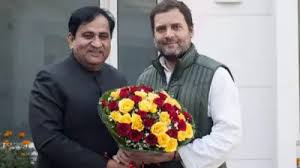
History is witness that sparks of protest rising from Bihar often shake the power in Delhi. After Indira Gandhi, a front has now opened against Rahul Gandhi from Bihar itself. Former Union Minister Dr. Shakeel Ahmed, a lifelong Congressman, has left the party and called Rahul a “coward” and “incompetent,” which is casting a shadow of crisis over the “shop of love.” Patna: The movement against Indira Gandhi started from Bihar, which led to the end of her rule. Now, the loudest voice of protest against Rahul Gandhi has resonated across the country from Bihar. History is witness that a voice of protest emanating from Bihar is never ineffective. Lest it happen that love departs from the shop of love, and only an empty shop remains. Why are those who love Congress leaving it? In reality, there cannot be a shop of love because it is a matter of the heart. Love is not a commodity that can be found in a shop. Now, the owner and proprietor of the shop (Rahul Gandhi) himself is being accused of lacking both competence and courage. Former Union Minister Dr. Shakeel Ahmed has been a lifelong Congressman. But what happened that he first left the Congress and is now calling Rahul Gandhi a cowardly leader? Grandfather was an MLA in 1937, father and son were MLAs 5 times each Can only those who flatter Rahul Gandhi and Sonia Gandhi remain in Congress? Can those with independent opinions not survive in Congress? Three generations of Dr. Shakeel Ahmed’s family served the Congress. His grandfather, Ahmed Ghafoor, was elected to the Bihar Assembly from Congress in 1937. His father, Shakur Ahmed, was an MLA five times from Congress between 1952 and 1977. After 1985, Shakeel Ahmed himself was a Congress MLA five times. He was also a Member of Parliament and a Union Minister. But after the 2025 assembly elections, he left the Congress party. If Shakeel Ahmed, a member of such a dedicated Congress family, has accused Rahul Gandhi of cowardice, there must be some truth to it. Rahul Gandhi lacks an understanding of electoral issues! If someone shows Rahul Gandhi a mirror, instead of fixing his appearance, he becomes intent on breaking the mirror. When Shakeel Ahmed left the party, he said that he still has unwavering faith in the party’s policies, but he has differences with some individuals at the top of the organization. This means his displeasure is with Rahul Gandhi. Some disgruntled Congress leaders say that Rahul Gandhi lacks an understanding of electoral issues. In Bihar, he worked tirelessly for 17 days through the Voter Rights Yatra to make SIR (State Information Commission) an election issue. He tried to create a favorable atmosphere by raising the slogan “Vote thief, leave the throne.” But all his efforts went in vain because it was not an issue in the eyes of the public. Not a single complaint was received against SIR. The debate on Rahul Gandhi’s shortcomings has started again. After Shakeel Ahmed’s statement, the debate on Rahul Gandhi’s shortcomings has intensified once again. It is alleged that Rahul Gandhi has destroyed the internal democracy of the party. When he resigned from the post of Congress president after the electoral defeat, he should have worked for the organization with a clear heart. He should have handed over the reins of the party to a capable leader from outside the family. But Rahul Gandhi could not free himself from the feeling of being the super boss. He did appoint Mallikarjun Kharge, a leader from outside the family, as president, but he kept all the powers in his own hands. Kharge is just a president in name; all the decisions are taken by Rahul Gandhi. Kharge’s signature is just a formality. Now, there is opposition to Rahul Gandhi even at the district level in Bihar. This strong voice against Rahul Gandhi emanating from Bihar will resonate far and wide. Now, even at the district level, Congress leaders have started questioning Rahul Gandhi’s incompetence. Currently, Bihar Congress leaders are holding public meetings in the districts under the ‘Save MNREGA Campaign’. A public meeting was held in Darbhanga on Tuesday. During this time, local leader Ram Narayan accused Rahul Gandhi, saying that the Congress party would not progress in Bihar until the buying and selling of tickets stopped. Local leaders started chanting slogans against Bihar in-charge Krishna Allavaru and state president Rajesh Ram. Authored by: Ashok Kumar Sharma • Edited by: Sunil Pandey About the Author Ashok Kumar Sharma is a senior journalist. He has more than three decades of experience in journalism. He understands the politics and society of Bihar very well and analyzes the changes taking place there with keen observation. He has done special reporting on Lok Sabha and Assembly elections in Bihar. Courtesy: Hindi News