
Dalit labourer lost his life while saving children in Bathinda, government still silent – waiting for compensation!
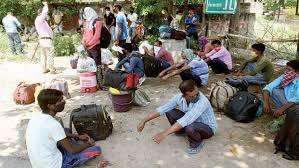
After the death of Dalit labourer Raj Kumar Singh in an explosion, the family has appealed to the government for financial assistance for livelihood and children’s education. Bathinda, Punjab – The family of a Dalit man who died in a plane crash and explosion on May 7 in Bathinda has formally demanded compensation from the government. This accident took place during the recent India-Pakistan conflict. Paramjit Kaur, wife of Raj Kumar Singh (38), submitted an application to the Naib Tehsildar of Goniana last week, demanding financial assistance for the maintenance of the family and education of the children. Singh, who was a resident of Kothe Natha Singh Wale, Mehma Sawai village, was a farm labourer. He was present in the fields on the day of the accident when a military aircraft crashed in the fields near Akaliya Kalan village. While Singh and his son Jagmeet Singh (15) were helping villagers douse the fire, another blast occurred in which they were seriously injured. They were referred first to the government hospital in Goniana Mandi and then to Bathinda for treatment. As their condition deteriorated, they were taken to AIIMS, Bathinda, where they died four days later. The first death in the accident was Govind Kumar (32), a resident of Haryana who had come to work as a farm labourer. He was among those who reached the spot immediately after the incident and was caught in the blast. Paramjit Kaur wrote in her application that the family’s livelihood was entirely dependent on labour and they have no other support after her husband’s death. Both her children—Jagmeet Singh and Gagandeep Kaur (14)—are studying in school and have no financial support. The incident has been confirmed in the general diary report filed by the local police on May 11. According to the statement of Singh’s younger brother Virwal, Raj Kumar stayed in the field that night and reached the spot with the villagers after the plane crash. Both he and his son were injured during the explosion. According to the police report, the explosion was an accident, no conspiracy or criminal intent has been found. The family has refused to take any legal action against anyone. Based on the statement of Singh’s brother, the police have initiated action under Section 194 (investigation of death) of the Indian Civil Security Code (BNSS). The deceased Govind Kumar is survived by his wife Mamta and two children—daughter Pari and son Prashant. He was the youngest of four siblings and lost his parents in his teens. Recently, he had come to Bathinda with his cousin and friends and was working as a wheat sack loader in a local mandi. All these workers were staying in a temporary shelter built in a field. Govind Kumar’s family has also demanded financial compensation from the Bathinda district administration. Rajan Chaudhary Courtesy: Hindi News
Opposed molestation… and was killed! Dalit farmer gets justice after 17 years

In 2008, Dalit farmer Saheb Singh was beaten to death in Mainpuri district of Uttar Pradesh. Now the SC/ST court has held the main accused guilty and sentenced him to life imprisonment and a fine of Rs 30,000. Mainpuri (Agra): After nearly 17 years, a special SC/ST court in Mainpuri on Wednesday convicted the main accused Anand Kumar (48) in the murder case of Dalit farmer Saheb Singh and sentenced him to life imprisonment. The court has also imposed a fine of Rs 30,000 on him. According to the police, on 22 December 2008, Saheb Singh and his son Ashok were returning from the field in Gangsi village of Mainpuri, when they were attacked by neighbor Anand Kumar, his father Munnalal Rai and uncle Hari Prakash with sticks and heavy objects. Both were seriously injured in the attack. Saheb Singh died during treatment. Additional District Government Counsel (ADGC) MP Singh said that Saheb Singh had complained against the neighbour’s son Anand Kumar for molesting his daughter-in-law. Tension had increased between the two families over this matter, which became the reason for this violent attack. According to the complaint of Saheb Singh’s wife, the accused had also used caste-related abuses and provoked others. The police had filed a charge sheet in this case under section 302 (murder) of IPC and sections of SC/ST Act. Accused Munnalal and Hari Prakash have died during the trial. The court held the main accused Anand Kumar guilty and sentenced him to life imprisonment and also imposed a fine of Rs 30,000. Rajan Chaudhary Courtesy : Hindi News
Kejriwal seized Rahul Gandhi’s ‘baraat ke ghode’ statement, took a jibe at him in Gujarat rally

Arvind Kejriwal has strongly attacked Congress MP Rahul Gandhi’s baraat ke ghode statement. Kejriwal took a jibe at Rahul Gandhi in Gujarat rally and said that all the baraat ke ghodes in Congress are only baraat ke ghodes. New Delhi: Congress MP Rahul Gandhi had made a big statement on 3 June 2025 in Bhopal, the capital of Madhya Pradesh, in which he said that now the time has come to separate the race horses and the wedding horses. At the same time, now Aam Aadmi Party chief Arvind Kejriwal has taunted him in a meeting in Gujarat. Arvind Kejriwal said that according to Rahul Gandhi, there are some race horses and some wedding horses in his party. But I want to say that all in Congress are wedding horses and all in AAP are long race horses. What did Rahul Gandhi say? In fact, while addressing his workers in Bhopal, Rahul Gandhi had said that there are many such workers in the party who work for the party with full strength. While there are many workers who are now tired of the race. In such a situation, now the time has come that the race horses and the wedding horses will have to be separated. Rahul Gandhi further said that I used to say earlier that there are two types of horses but now I believe that there are not two but three types of horses. One is a race horse, one is a wedding horse and the third is a lame horse. Now the time has come to separate the lame horse. If such workers harass the other horses i.e. workers, then action will be taken against them. Congress became arrogant in 1985: Arvind Kejriwal Arvind Kejriwal said that in 1985, Congress got majority in Gujarat, but in 2 years, it became arrogant and opened fire on the farmers, 10 farmers were killed there. After that, Congress could never return to Gujarat. Now BJP also has the same arrogance. With the martyrdom of Ashok Chaudhary ji, the countdown of BJP has started. The oppression on cattle rearers will not be tolerated anymore. If the government will raise the lathi again, then first of all it will have to use it on us. We will fight till our last breath for the rights of cattle rearers and farmers. PM goes abroad to get contract for Adani: Kejriwal Arvind Kejriwal said that PM goes abroad to get contract for Adani, but when a farmer of Gujarat asks for bonus, he is beaten with sticks. This is not a government of the poor, but of industrialists and the rich. Curated by: Sanjeev Kumar About the author Sanjeev Kumar is a resident of Begusarai, Bihar. He has studied journalism from West Bengal University. He has more than 5 years of experience in digital media. He covers local to national and current affairs. Before joining Navbharat Times, he has worked in institutions like Jagran New Media, One India and Amar Ujala. Courtesy: Hindi News
Tiruchy church discrimination row: Bishop skips car procession
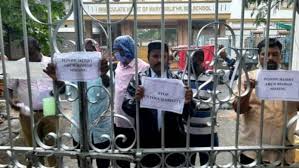
However, when revenue officials tried to hold a mediation meeting locally, Dalit representatives insisted that either the Bishop or a senior diocesan official must be present. TIRUCHY: A day after Dalit Christians alleged they were facing discrimination in the St Mary Magdalene Church at Kottapalayam near Thuraiyur, which comes under the Diocese of Kumbakonam, Bishop Jeevanandam Amalanathan boycotted the annual chariot procession on Tuesday. Over 20 Dalit Christian families hoisted black flags in their homes and boycotted the final day of the church’s 12-day annual festival which began on July 14. On Monday, a section of them sat on a hunger strike near the collectorate and submitted a petition during the weekly grievances meeting demanding equal rights in church administration and rituals. Speaking to TNIE, Collector V Saravanan said, “We have constituted a peace committee to address the issue. The RDO will conduct an inquiry. The existing laws are clear.” However, when revenue officials tried to hold a mediation meeting locally, Dalit representatives insisted that either the Bishop or a senior diocesan official must be present. “This is not simply Dalits versus non-Dalits issue. The church administration is part of the discrimination,” said J Doss Prakash, a Dalit Christian parishioner. “The festival committee is entirely controlled by non-Dalits. We are denied basic rights like paying subscription or take part in the planning. Even after decades, not even a small chariot enters our streets.” he added. Adding weight to the protest, Bishop Jeevanandam Amalanathan boycotted the procession, citing the ongoing caste tensions and the diocese’s alleged inability to resolve the matter. A peace meeting involving stakeholders is expected to be arranged later this week. Pearson Lenekar SR Courtesy : TNIE Note: This news is originally published on https://thenewindianexpress.com/bha and is used purely for non-profit/non-commercial purposes, especially human rights.
Andhra court allows re-investigation into Dalit youth’s murder by YSRCP MLC
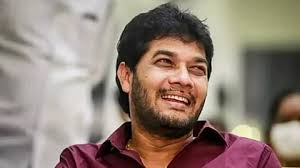
A Special Court for SC/ST cases in Rajamahendravaram, Andhra Pradesh, has granted permission for a re-investigation into the alleged 2022 murder of Dalit youth Veedhi Subrahmanyam by YSRCP MLC Ananta Uday Bhaskar. The court directed that a supplementary charge sheet be filed within 90 days. A Special Court for SC/ST cases in Rajamahendravaram town of Andhra Pradesh on Tuesday, July 22, allowed further investigation into the 2022 murder of a Dalit youth by YSRCP MLC Ananta Uday Bhaskar. The court directed that the supplementary charge sheet in the case should be filed in 90 days. The court order has cleared the way for re-investigation of the case ordered by the TDP-led NDA government. YSRCP leader and Kakinada MLC Ananta Uday Bhaskar, also known as Ananta Babu, had allegedly murdered his former driver Veedhi Subrahmanyam, a Dalit, and dumped his body at his residence in 2022. Ananta Babu had pushed the deceased during an argument, resulting in his fall and death on the night of May 19, 2022. The MLC also allegedly inflicted injuries on Subrahmanyam’s body to present it as a death in a road accident. However, the driver’s family refused to believe his version and lodged a complaint with the police. The MLC was arrested, and the YSRCP had subsequently suspended him from the party. The MLC had told police that Subrahmanyam was in an inebriated condition, and he pulled him up for not giving up bad habits. He claimed that it angered the driver, who allegedly questioned him. Allegedly enraged over this, the MLC held him by the neck and pushed. Subrahmanyam fell down and sustained head injuries. When the driver tried to hit back, the MLC pushed him again, and this time, the driver received a grievous head injury, he claimed. The MLC told police that he gave water to Subrahmanyam, but a few minutes after taking a sip, he was unresponsive. The legislator then thought of showing the incident as a road accident. He carried the body in the car to a dumping yard, where he inflicted injuries on the body with sticks. The MLC later carried the body to Subrahmanyam’s house and told his family members that he died in a road accident. After seeing the nature of injuries on the body, they refused to believe his version. There was an argument between them, and the MLC subsequently left the place, leaving behind the body in his car. As the investigation officer failed to submit the charge sheet within 90 days, Ananta Babu was released on default bail in December 2022. After the TDP-led coalition government came to power last year, it decided to re-investigate the case. In April this year, the government ordered re-investigation. Indian Police Service (IPS) officer and Kakinada DSP Manish Devraj Patil was appointed as the investigation officer. The investigating officer was asked to take the court’s permission. Written by : IANS Courtesy : TNM Note: This news is originally published on https://thenewsminute.com/bha and is used purely for non-profit/non-commercial purposes, especially human rights.
Dalit women reclaiming Punjab’s farmlands. ‘We are born on this land, have a right to it’
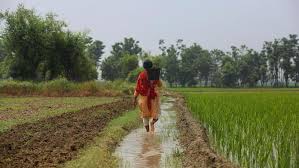
In village after village in the Malwa region, Dalit women have won the right to farm common land. They are now protesting and courting arrest to demand a new casteless settlement: Begumpura. Sangrur: Jasveer Kaur arrives on a shiny blue tractor and climbs down, her torn chappals sinking into the tilled soil. With glittering eyes and a faint smile, she surveys the newly planted paddy crop. “This land is ours,” she said proudly. It took Kaur several years of struggle to reach this moment. The seven acres of land in Sangrur’s Herike village aren’t in her name, but she fought and won the right to farm it. In village after village in the Malwa region, Dalit women like her are demanding what was long denied. They have already leveraged a 1961 law and turned it into a rallying cry for land, dignity, and ownership. The fire of hakk, or rights, is burning in their bellies. Now, Jasveer and hundreds of other women are part of a fresh agitation to claim 927 acres of unused estate land in Bir Aishwan village. They are marching, protesting, and courting arrest to demand a new settlement: Begumpura, a casteless village imagined by poet-saint Ravidas. “The Constitution of India has given us the right to own land, then why are we not given land just because we are from a lower caste?” said 41-year-old Jasveer. “We are born on this land and we have every right to have a piece of it.” Mustard fields, the Green Revolution, and, more recently, the farmers’ protests are the stories most associated with farming in Punjab. But beneath this image is a fraught history of caste discrimination. Dominant castes—primarily Jat Sikhs, along with Kamboj and Saini Sikhs—have sway over most of the farmland. Dalits, who make up about 32 per cent of Punjab’s population, own just 3.5 per cent of the state’s land. Most work as daily-wage labourers through heat waves and biting cold for around Rs 300 a day, planting and harvesting crops they have no claim on. But then, the Dalits in rural Punjab started fighting back. Their first weapon was a law that Punjab had passed in 1961. Under the Punjab Village Common Lands (Regulation) Act, one-third of village common land—known as panchayat land or shamlat deh— to be allotted to Scheduled Castes or Dalits for agricultural use. On paper, it gave Dalits the right to lease and farm these plots through panchayat auctions. In practice, the land stayed in the hands of dominant castes through dummy bidders and threats. The first major pushback came in 2008, when Dalit labourers in Benra village, Sangrur, took over panchayat land. In 2014, the Zameen Prapti Sangharsh Committee (ZPSC) began organising across the region, turning scattered protests into a coordinated campaign. Dalit women emerged as the heroes of this uprising. In their chappals and salwar-kameez, they stood on the roads, held up placards, and demanded their land. They faced off against Jats and other Chaudhrys (landlords) and braved arrests and beatings. The fierce battle spread like wildfire across the state. We women did not tell our husbands about the abuse we faced every day on the paddy fields because we feared we would not be allowed to work. Today we are here fighting for land In the Malwa region alone, Dalit families are now cultivating around 4,000 acres of land, according to the ZPSC. And now, many like Jasveer are demanding more. They are fighting for be-chirag (heirless) land to be redistributed to landless Dalits. The grit of Punjab’s Dalit women comes from years of daily indignities and casteist slurs on farms where they laboured or collected fodder. Today, they know they don’t have to tolerate it. “Dalit women have faced exploitation in the fields. They reared cattle and gathered fodder from the lands of the dominant caste,” said Ronki Ram, political science professor at Panjab University. “They did not want to depend on others’ land anymore and be subjected to everyday exploitation.” From a ‘nightmare’ to victory Until four years ago, Jasveer Kaur was just another woman in Herike village—feeding cattle, collecting fodder, raising her children, and working on a landlord’s fields. Her husband sold food from a thela, and the family scraped by on her daily earnings of Rs 300 from farm labour and selling milk. Men in the gurdwara called her “Churu Chamar”. Now she says they worry that Dalits like her might soon be called something else: landowners. On a pleasant July morning, the monsoon breeze brushed Jasveer’s hip-length hair as she briskly combed it. She was getting ready for a day in the fields. On such days, she likes to plait her hair. She gulped down three rotis with aloo ki sabzi and drank a glass of chilled water. Then she picked up her bright red dupatta and rushed to feed her three buffaloes—the mother, the father, and their newborn daughter. “Till three years ago, I was working at the farmland of the Chaudhrys. I used to collect the grass to feed the cattle from their field,” she said, as she scattered bhusa (fodder) for the animals. In many villages here, Dalit families rely on a mix of cattle rearing and daily-wage labour. Selling milk brings in some income, but fodder is always a challenge. For years, women like Jasveer gathered grass from the dominant caste’s fields and were regularly insulted for it. “It was a nightmare. It was usual for them to use abuse targeting our mothers and forefathers,” she recalled. Jasveer’s transformation began when members of the Zameen Prapti Sangharsh Committee came to Herike in 2021. She had never heard of the 1961 land law before. For the first time, someone told her she had a right to the soil beneath her feet. That same year, she and 14 other Dalit families in the village raised their voices during a panchayat land auction. They sat on dharnas and refused to work on the fields. After two years of pressure, the gram
“The church is ours, but why does the chariot not come to our streets?” — When Dalit Christians raised their voice, the bishop also rebelled!

Dalit Christians allege that the chariot is not brought to their locality, they are denied membership, the bishop protested Tamil Nadu/Tiruchi: Dalit Christians of Kottapalayam village near Thuraiyur began a hunger strike near the Tiruchi Collectorate on Monday. They alleged that they have been deliberately excluded from the ongoing annual festival of the century-old St. Mary Magdalene Church and are constantly being subjected to caste discrimination. The festival began on July 14 and the church comes under the Roman Catholic Diocese of Kumbakonam. The protesters say that they have not been included in the festival plans for decades, have not been given a place in the church committee and the Rath Yatra is not taken to their area. “Donate, but do not ask questions” J., who has been associated with the church for a long time. “We are not charged with various church memberships like others are charged with. Instead, we are only asked to pay ‘donations’. The aim is to stop us from raising our voices,” said Dos Prakash. Bishop’s symbolic protest According to a report in The New Indian Express, the church’s bishop, Jeevanandam Amalanathan, said he will not participate in Tuesday’s Rath Yatra. “The caste discrimination that continues in the parish is worrisome. Christians from dominant castes are not willing to give equal rights to Dalit Christians,” he said. However, he also said that there has been no discrimination from the church’s side. “Not a single chariot comes to our streets” The protesters said that a total of seven chariots are taken out during the festival, but not a single chariot comes to the streets of Dalit settlements. “We were abused with casteist slurs and threatened not to intervene at the festival planning meeting on July 6,” said a protester. Parishioner Raj Nobili said, “Only after giving membership do we get the right to ask questions. That is why we are not being made members. The administration should at least ensure that a chariot comes to our street as well.” “Violation of Constitution” Human rights lawyer Joe Kennedy, who was part of the protest, said, “This is a violation of the right to equality given in the Constitution of India. The church has to break the wall of casteism that has spread within it.” The protesters submitted a memorandum to the District Revenue Officer (DRO) and demanded legal action against the church pastor and others who allegedly made casteist remarks and threatened them. Key demands: Equal rights in all religious and festive activities Formation of an inclusive parish council Legal action on caste discrimination According to revenue department sources, the concerned officials have been directed to investigate the matter. Rajan Chaudhary Courtesy : Hindi News
‘SECL Chudi-Sari Pehne Lo’: When tribal women staged a semi-nude protest in Korba, Chhattisgarh!

This is the first time that women have staged a semi-nude protest inside such an office. Korba- A shocking incident came to light in Kusmunda area of Korba district of Chhattisgarh, when about 20-25 land-displaced tribal women staged a semi-nude protest at the main gate of the office of South Eastern Coalfields Limited (SECL). On July 18, the women staged this protest demanding proper compensation, jobs and rehabilitation after the acquisition of their ancestral lands. This is the first time that women have staged a semi-nude protest inside such an office. The women waved their bangles and sarees and shouted slogans- SECL Chudi-Sari Pehne Lo! Seeing this kind of anger and anger among the women, the administration was also shocked and the clips of the protest went viral on social media, after which the Chhattisgarh government was also severely criticized. Korba is a major industrial and mining area of Chhattisgarh, known for coal mines and power generation. SECL’s coal mines in Kusmunda are one of the largest mining projects in India. Large scale land acquisition was done for these projects, which includes ancestral lands of Korwa and other scheduled tribes. These communities were earning their livelihood through farming and forest resources on these lands for generations. Under the Forest Rights Act 2006, they have been given rights over land and forest resources, but these provisions have been violated repeatedly. SECL acquired these lands for coal mining and in return the affected families were promised compensation, jobs and rehabilitation. However, even after many years these promises have not been fulfilled, due to which there is deep disappointment and anger among the tribal communities. The employment case of land-displaced people has been pending for a long time, for which many years have passed since applying, but the land-displaced people could not get employment. The protesting women told that they had demonstrated and struck many times in the mine earlier also. The affected families said that their lands were snatched but they neither got proper compensation, nor jobs, nor rehabilitation facilities. SECL had promised jobs for the land displaced, but in many cases fake appointments were made. Some families alleged that other people were given jobs in their name or their rights were completely ignored. After the land snatching, these families have lost their livelihood and are facing financial difficulties. The protesting women said that their lands were snatched in the name of industrial development, but the big industrialists got the benefit, while the local tribal community was neglected. The president of Bhu-Visthaap Rojgar Ekta Mahila Kisan Kusmunda said that the persons employed fraudulently in place of the real land displaced should be removed. Also, repeated applications were made to keep the real heir. Despite complaining to the local administration and SECL officials several times, no concrete action was taken, which pushed these women to this extreme step. This protest attracted widespread attention at the social and administrative level. The incident was widely discussed on social media, especially on Twitter, and many called it a symbol of the government’s insensitivity. However, no official government statement or action has been confirmed in the matter yet. The protest also reflects the growing threat to the cultural and social identity of tribal communities. After the land was taken away, these communities have not only become economically weak, but their cultural roots are also in danger. Geetha Sunil Pillai Courtesy : Hindi News
MP Chhatarpur Police accused of torturing tribal youths by putting chilli powder in their private parts, three policemen suspended
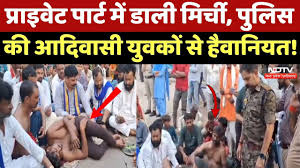
Superintendent of Police Aagam Jain has suspended Naugaon police station’s ASI Shiv Dayal Valmiki, head constable Ram Jat and constable Arvind Sharma with immediate effect. Bhopal. A sensational case of brutality of Naugaon police station has come to light in Chhatarpur district of Madhya Pradesh. Four youths of tribal society were taken into custody on suspicion of theft and not only brutally beaten, but also given inhuman torture by putting chilli powder in their private parts. In protest against the incident, Bhim Army workers gheraoed the Chhatarpur Superintendent of Police office on Saturday evening. When the matter escalated, three policemen were suspended. Meanwhile, Congress leader Digvijay Singh and Leader of Opposition Umang Singhar have assured justice by talking to the victims over the phone. What is the whole matter? Pratap Adivasi, a resident of Dharmapura village of Naugaon police station area, while talking to the media said that on the evening of July 15, at around 7:30 pm, he had gone towards Shikarpura road with his companions Shriram, Ritu, Meera and Balandi Adivasi. During this time, Naugaon police caught them and took them to the police station. According to Pratap, the police released them after questioning at 10:30 pm on July 15. But on July 16, they were again called to the police station and made to sit till 11 pm. On July 17, at 12 noon, the four youths were again taken into custody and brutally beaten on suspicion of stealing oil from the transformer. Not only this, according to the youths, the police crossed the limits of brutality by putting chilli powder in their private parts. After this, they were driven away from the police station without any case. The matter came to light when the condition of the victims deteriorated. Bheem Army gheraoed the Superintendent of Police office Bheem Army workers, along with the victims, gheraoed the office of Superintendent of Police Aagam Jain late on Saturday evening. The activists said that the youth of the tribal society have been treated like animals, which will not be tolerated. Three policemen suspended, investigation started Taking immediate action in the case, Superintendent of Police Agam Jain has suspended ASI Shiv Dayal Valmiki, Head Constable Ram Jat and Constable Arvind Sharma of Naugaon police station with immediate effect. Station in-charge Satish Singh clarified that some people were questioned on suspicion of theft, but no kind of beating or inhuman behavior was done. However, after the allegations of the victims and eyewitnesses, the role of the police is under suspicion. Digvijay Singh and Umang Singhar demanded action As soon as the information about the incident was received, senior Congress leader and Rajya Sabha MP Digvijay Singh spoke to the victim youths over the phone and assured them of justice. He also attacked the state government and said that atrocities are being committed against the tribals and the weaker sections continuously, and the administration is a mute spectator. Leader of Opposition Umang Singhar has also termed the matter serious and demanded strict action against the culprits. He said that police in Madhya Pradesh is becoming unbridled and tribal society is being continuously targeted. Ankit Pachauri Courtesy: Hindi News
Dalit woman and pregnant niece attacked in Gujarat! Caste violence captured in CCTV footage – Know what is the whole matter?

The Dalit woman accused the neighbors of using casteist abuses, assault and threats, while the other side also complained of forceful intrusion and attack. Gujarat: A dispute between neighbors that started over underground electricity repairs in Baroda village in Daskroi taluka of Ahmedabad district escalated to allegations of casteist abuses and assault. Both sides have lodged a police complaint against each other. According to the police, a 66-year-old Dalit woman has alleged that her upper caste neighbors abused her and her pregnant niece with casteist words, physically assaulted them and threatened to kill them. The incident took place on Sunday evening when the woman warned not to dig deep in the electricity repair work going on near her house, as there was a possibility of underground wiring. In the complaint, the woman said that when she was not heeded and the work continued, the dispute escalated and turned into violence. It is alleged that the neighbours snatched her stick and beat her as well as her niece. The woman says that the niece has injuries on her face and legs. She has submitted three video clips of the incident to the police as evidence and also named two people who allegedly intervened during the incident. On the other hand, the neighbours have also filed a complaint in return. They alleged that the Dalit woman and her niece forcibly entered their house and attacked them with an iron pipe and a wooden stick. The upper caste complainants say that they were threatened that they would be implicated in a false atrocity case and expelled from the society. The Vivekanand Nagar police station has registered an FIR under relevant sections of the Indian Penal Code (BNS) and the Scheduled Castes/Scheduled Tribes (Prevention of Atrocities) Act on the basis of complaints from both sides. Police say that the investigation into the case is ongoing. Rajan Chaudhary Courtesy : Hindi News