
Samajwadi Party Chief Akhilesh Yadav Accuses BJP Of Targeting Poor, Dalits & Minorities By Shutting Schools
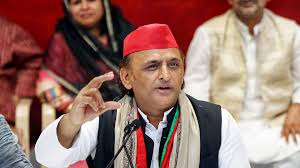
Yadav alleged that the BJP’s education policy is not only regressive but also discriminatory in nature. “Their aim is clear—they want to create an unequal society where the marginalized remain uneducated and voiceless,” he said. Lucknow: Samajwadi Party president Akhilesh Yadav has sharply criticized the Uttar Pradesh BJP government, asserting that it is “ruining basic and primary education.” He accused the ruling party of deliberately targeting the poor and PDA (Pichhde, Dalit, and Minority) communities by closing government-run schools, thereby robbing their children of a fundamental right guaranteed by the Constitution. Yadav alleged that the BJP’s education policy is not only regressive but also discriminatory in nature. “Their aim is clear—they want to create an unequal society where the marginalized remain uneducated and voiceless,” he said. By systematically shutting down schools in rural and underprivileged areas, the government is paving the way for private institutions that are financially inaccessible to common citizens, he added. He further stated that instead of improving infrastructure, filling vacant teaching posts, or modernizing classrooms, the government is dismantling the very foundation of public education. “The education of future generations cannot be compromised for political or economic motives,” he remarked. Akhilesh also expressed concern that such actions are in direct violation of the Right to Education (RTE) Act and run counter to the vision of inclusive growth. “If local schools disappear, where will the children of laborers, farmers, and daily wage earners study? What future are we offering them?” he asked. He urged citizens, especially educators and civil society, to raise their voices against this “dangerous trend” and vowed that his party would restore dignity, access, and equality in education if voted back to power Rahul M Courtesy : TFPJ Note: This news is originally published on https://thefreepressjournal.com/bha and is used purely for non-profit/non-commercial purposes, especially human rights.
Rahul Gandhi deliberately spread hatred in Savarkar case, UP government responded in Supreme Court
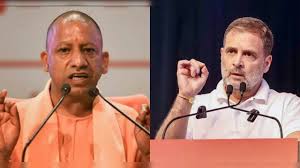
Rahul Gandhi Savarkar Case: The UP government has accused Rahul Gandhi of deliberately spreading hatred in the Savarkar case. The government has clearly opposed any kind of relief against the Congress MP. Lucknow: The Uttar Pradesh government has opposed any kind of relief against Rahul Gandhi on the Savarkar issue. In fact, a petition has been filed in the Supreme Court on behalf of Rahul Gandhi regarding the cancellation of the summons issued by the Lucknow court on the comments made against Veer Savarkar. The court had issued a notice to the UP government on the petition. In response to the notice, in an affidavit filed on July 23, the state government argued against any relief to Rahul Gandhi. The UP government has filed an affidavit in the Supreme Court. In this, Congress MP Rahul Gandhi has been accused of deliberately spreading hatred by making comments against Hindutva ideologue Vinayak Damodar Savarkar during the 2022 Bharat Jodo Yatra. The affidavit was filed in response to the notice on Rahul Gandhi’s petition to quash the summons issued by the Lucknow court on the comments. The case was to be heard on Friday i.e. today. Earlier, the state government has argued against any relief. Demand made in the petition The petition filed in the Supreme Court on behalf of Rahul Gandhi has pleaded to dismiss the summons issued by the Lucknow court and the case. The government’s affidavit states that the charges of promoting enmity and public nuisance under sections 153A and 505 of the Indian Penal Code apply to Rahul Gandhi. The court cited the investigation of the case. It said that this indicates deliberate spreading of hatred through pre-planned actions. The decision came in April In April, the court had strongly criticized Rahul Gandhi for calling Savarkar a ‘slave’ of the British. Also, the proceedings against him were stayed. The court said that this statement was given in Maharashtra, where Savarkar is worshiped like a god. The court said that he should not make any statement on freedom fighters without knowing history or geography. The court reminded Rahul Gandhi that his grandmother Indira Gandhi had written a letter praising Veer Savarkar while being the Prime Minister. It mentioned Mahatma Gandhi, who had described himself as a loyal ‘slave’ while communicating with the British Viceroy. Rahul Gandhi had argued Rahul Gandhi had called Savarkar a slave of the British, referring to the pension he received from the British. The court said in this case that no one becomes a slave just like that. The court said that one day you will say that Gandhiji was also a slave of the British. Freedom fighters are not treated like this. Senior advocate Abhishek Manu Singhvi, appearing for Rahul Gandhi, assured the court that no further statement would be made. The court warned that if any further statement is made, it will take suo motu cognizance and consider it. We will not allow anyone to make any statement against freedom fighters. Challenge to High Court’s decision Rahul Gandhi moved the apex court against the April 4 order of the Allahabad High Court. The Supreme Court had rejected the petition to quash the complaint against him. Lawyer Nripendra Pandey filed a complaint against Rahul Gandhi, saying that his remarks against Veer Savarkar hurt Hindu sentiments. He argued that Rahul Gandhi insulted a leader who fought for India’s independence. The lower court said in its summons that Rahul Gandhi spread hatred and ill will in the society through his speech against Savarkar. The complaint against him was dismissed in June 2023. After this the revision petition was filed. Rahul Gandhi argued in the High Court that the allegations against him are not equal to the crimes he has been accused of. Curated by: Rahul Parashar About the author Senior Digital Content Creator at Navbharat Times Digital. Started in journalism with Prabhat Khabar. Journey from Rashtriya Sahara, Hindustan, Dainik Jagran, Dainik Bhaskar to Times Internet. Courtesy : Hindi News
In Gurugram’s ‘Holding Centres’, Men Say They Are Detained Just for Speaking Bengali
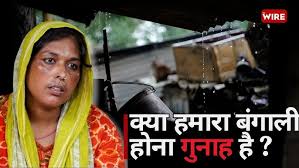
Amidst the ongoing crackdown on suspected foreign nationals from Bangladesh, hundreds of Bengali and Assamese migrants have been detained and kept in what the Gurugram police call “holding centres”. Gurugram: On July 19, Hafizur Sheikh (41) had finished his shift as a cleaner outside a liquor store in Gurugram when he was stopped by policemen and interrogated. Sheikh answered all their questions, but then he was asked to produce his identity cards to “verify his citizenship”. Despite having an Aadhaar card, a voter ID card and other identity documents on his phone, he was told that this was not enough. “The police wanted a physical copy,” his brother Amanur told The Wire. “My brother told them that he could bring the physical copy or they could accompany him to check the documents personally, but they did not listen and he was detained.” Sheikh, from West Bengal’s Nadia district, is among hundreds of mostly Muslim migrants detained by the police in Haryana’s Gurugram. These men usually work as cleaners in Gurugram’s MNCs, ragpickers and public sanitation workers, or in some instances as domestic workers, and delivery agents. On July 19, police detained at least 74 migrant workers – 11 from West Bengal and 63 from Assam – who they suspect are undocumented foreign nationals from neighbouring Bangladesh. They were taken to what the police are calling “holding centres” – that rights activists say are akin to detention camps. “This camp [in Sector 10, Gurugram],” said advocate and Communist Party of India (Marxist–Leninist) member Supanta Sinha, “has over 200 detainees.” On July 21, a two-member CPI-ML team visited one of the makeshift detention camps in Gurugram’s Sector 10 after they received “news of detention of scores of migrant workers purportedly for ascertaining their citizenship.” Sinha was a part of that team. He alleged that the workers were being forced to live under inhumane conditions. A CPI-ML statement alleged that “similar exercises have been conducted in other parts of Gurgaon as well, with some zones housing over 200 detainees currently”. These detentions appear to follow a Ministry of Home Affairs directive, said Sinha. They come in the backdrop of a nationwide drive against alleged undocumented foreign nationals. However, multiple reports show that Bengali-speaking Muslim migrants from West Bengal and Assam are facing the brunt of these drives. At a recent protest in Kolkata led by Mamata Banerjee, the Trinamool Congress protested various attacks against migrants in Delhi (Jai Hind colony), NCR and Odisha. Banerjee dared the BJP to put her in a detention facility. She has also condemned these attacks on social media. “The second most spoken language in the country, Bangla, is also the second most spoken language of Assam,” she wrote. “To threaten citizens, who want to coexist peacefully respecting all languages and religions, with persecution for upholding their own mother tongue is discriminatory and unconstitutional…” TMC Rajya Sabha MP and head of the Bengali Migrant Board, Samirul Islam, accused the BJP of inciting anti-Bengali sentiments. TMC MP Mahua Moitra termed these detentions as illegal abductions. ‘Not detained, just withheld’ When asked about the charges under which the migrants are being detained, Gurugram Police PRO Sandeep Kumar said, “They are not detained. As per the guidelines of the Ministry of Home Affairs (MHA), certain holding centres have been created, and suspected Bangladeshis are being kept there. All basic necessities, including medical facilities, are being provided to them at the centres.” In May, the Union government had directed states and union territories to identify, detain and deport undocumented immigrants across the country. Wion reported that the Centre gave states a 30-day deadline to verify documents of suspected undocumented immigrants and to initiate deportation proceedings against those who are unable to prove their citizenship. The MHA has also instructed states to establish district-level detention centres to hold such individuals. The ongoing crackdown appears to be in sync with this directive from the Union government. Kumar said that the ‘suspected immigrants’ are being held as per government guidelines, although he did not specify what these guidelines are. When asked about the number of such centres, he said that there are currently four such “holding centres” across Gurugram, but he declined to comment on the number of people currently being held at these centres. While other senior officials either declined to comment or remained unavailable, Kumar did not share any specifics. When asked about the process of verification, he said, “Among those kept in the centres, if anyone claims to be an Indian citizen, we contact the respective district magistrates (DMs). If the DM confirms their Indian citizenship, we release them. For those whose Indian citizenship is not confirmed, the deportation process will be initiated.” Only five to six people, he confirmed, have been released from these holding centres so far after their citizenship was verified. Hundreds flee Gurugram The Wire visited a neighbourhood in Gurugram’s Khatola village, known for its large Assamese Muslim population. On one side of the road stand tall, eye-catching multi-storey buildings housing corporate offices like that of American Express, while on the other side lies a slum cluster housing Assamese migrants who work as cleaners in these offices. Residents claimed that nearly 2,000 people used to live in the area. However, when The Wire visited, the colony was almost entirely deserted. Only around 10-12 women were present, who were about to visit their husbands and other male relatives currently held in detention centres. Barring a few, the entire neighbourhood has fled to Assam’s Dhubri following the recent crackdown. “How can we leave while our husbands and other relatives are rotting in detention centres? Who knows what the police will do to them?” said Rohima, when asked why she had stayed behind when most others had fled. The women claimed that on July 19, police detained over 40 men from the area. Among those detained was Rohima’s husband, Nazrul Islam Mondal. Rohima says Mondal was detained by the police despite having almost every document, even his name is in the
‘These figures are solid proof of Bahujans being deprived of their rights and Manuism’, Rahul Gandhi presented proof of low participation of SC-ST, OBC!
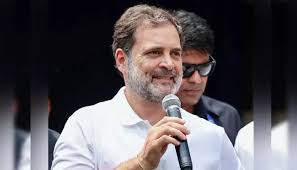
Opposition leader and Congress party MP Rahul Gandhi has targeted the Modi government on the very low number of Bahujans – Dalits, backward, tribals – in Indian universities. New Delhi: In many government institutions in the country, from low to high, the number of Bahujans like Dalits, backward, tribals is negligible. In many institutions, posts have been lying vacant for years, but appointments have not been made on them till date. On this issue, Congress MP Rahul Gandhi on Friday cornered the Modi government at the Centre. Posting on social media platform X (formerly Twitter), Rahul Gandhi wrote, “These figures presented by the Modi government in Parliament are solid proof of Bahujans being disenfranchised and institutional Manuwad. In central universities, 83% of Professor posts for ST, 80% for OBC and 64% for SC have been deliberately kept vacant. Similarly, 65% of Associate Professor posts for ST, 69% for OBC and 51% for SC have also been left vacant.” He further wrote, “This is not just negligence, but a well-planned conspiracy to keep the Bahujans out of education, research and policies. Due to lack of adequate participation of Bahujans in universities, the problems of deprived communities are deliberately hidden from research and discussion. In the name of NFS (Not Found Suitable), thousands of deserving SC, ST, OBC candidates are being declared ineligible under Manuwadi thinking and the government is not ready to take any responsibility. This is completely unacceptable. All vacant posts should be filled immediately – Bahujans should get their rights, not Manuwadi boycott.” These questions raised by Rahul Gandhi are like questions raised by just a handful of questions from the ocean of questions. In fact, its seriousness is even more shocking. According to the Ministry of Education, a total of 6,549 teaching posts are vacant in central universities, of which 3,669 are from reserved categories (SC/ST/OBC). Delhi University (900 vacancies), Allahabad University (622 vacancies), and BHU (532) have the highest number of vacancies. Reserved positions for SC/ST/OBC have also seen a decline in institutions of national importance (such as IITs, IIMs, NITs) and other central government institutions. According to 2013-14 data, the share of upper caste Hindus in these institutions was 70.2%, while the share of reserved categories was lower than expected. Representation of SC/ST/OBCs in higher positions in ministries (such as PMO, Ministry of Home Affairs, Ministry of Defence) is negligible. For example, the PMO has no SC/ST and only 4 OBCs as against 21 upper castes. Reasons for vacancies in government institutions Many experts and social activists believe that reserved positions are deliberately kept vacant in higher education institutions due to “institutional Manuvaad”. Candidates from reserved categories are rejected citing “Not Found Suitable (NFS),” which is seen as a conspiracy to eliminate reservation. Apart from this, lack of transparency in the interview process and upper caste dominance in selection committees is also a reason. The practice of hiring teachers and employees on contract instead of permanent appointments has increased in government institutions. Reservation policy is not applicable in contract and private sector, due to which SC/ST/OBC candidates do not get opportunities. Technically, the scope of vacancies in reserved posts is also increasing due to lack of government recruitment and privatization policies. Obviously, Dalit and tribal students and teachers have to face caste discrimination in higher education institutions, due to which many qualified candidates are reluctant to make a career in these institutions. Rohith Vemula’s suicide (2016) is a prime example of this. Rajan Chaudhary Courtesy : Hindi News
Will Samajwadi Party become the new destination for Dalits? SP’s big bet in Lucknow
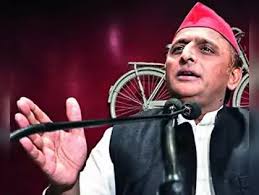
As part of its strategy to break into the Dalit vote bank, the Samajwadi Party is trying to create a new social equation through Ambedkar Vahini. Lucknow – Moving beyond its traditional backward class (OBC) based politics, the Samajwadi Party (SP) has now become active in presenting itself as a broad social alliance. In this episode, the party is going to organize the first national convention of its Dalit wing Baba Saheb Ambedkar Vahini in Lucknow on July 27. Launched on the occasion of Ambedkar Jayanti in 2021, through this Vahini, the SP is trying to reach the Dalit community at an institutional level, especially when the Bahujan Samaj Party (BSP) is struggling to handle its traditional vote bank and new Dalit leadership is emerging in many areas. This convention will try to connect 400 to 500 representatives from across the country, which will be a big and important milestone for the Ambedkar Vahini. Formed nearly three decades after the inception of the SP, this frontal organisation aims to build cadres and spread political awareness among the Dalit community. Rambabu Sudarshan, general secretary of Baba Saheb Ambedkar Vahini, said, “Our first national convention will be held in Lucknow, in which Vahini national president Mithailal Bharti will be the key speaker. The agenda of the convention will include issues like atrocities on Dalits under BJP rule, abolition of reservation through outsourcing and the recent alleged attack on Dalit MP Ramji Lal Suman.” BSP’s weakening support base and new search for Dalit voters This convention is taking place in a political scenario where the Mayawati-led BSP, which was once considered the only choice of Dalits, is now facing continuous electoral defeats. Since 2017, the BSP’s support base has declined and its core vote bank — especially the Jatav community — is looking for new options. If we talk about electoral figures, the BSP won 25.95% votes and 80 seats in the 2012 UP assembly elections. In 2017, it fell to 22.23% votes and 19 seats, while in 2022, the party won only one seat with just 12.88% votes. The decline is also evident in Lok Sabha elections — 19 seats (24.67%) in 2004, 20 seats (27.42%) in 2009, zero seats (19.77% vote share) in 2014, and 10 seats (19.42%) in alliance with the SP in 2019. Not just Dalits, SP is also in search… Prashant Trivedi, associate professor at the Giri Institute of Development Studies, says, “SP’s efforts to reach out to Dalits are not one-sided. Dalit society, especially the Jatav community, is also now re-evaluating its political options.” He says, “When SP and BSP formed an alliance in 2019, this trend got strengthened. Even after the alliance broke, Akhilesh Yadav never made personal attacks on Mayawati, which Dalit voters liked.” He said, “In 2024, SP and Congress formed an alliance, due to which the traditional identity of Dalits started getting associated with Congress again. Congress used to be the first choice of Dalits – now the same memory is emerging again in the new political circumstances. The politics of Uttar Pradesh is now moving towards the Bihar model, where Dalits and backwards are coming together on one platform.” From symbols to organization: SP’s changed strategy The strategy of SP to reach out to Dalits has now gone beyond symbolism and reached the organizational level. During the 2019 elections, SP started celebrating the birth anniversaries of Dr. Bhimrao Ambedkar and Kanshiram, and also installed a statue of Ambedkar in the party office along with the statue of Lohia. 2021 saw the formal launch of the Ambedkar Vahini and the same year the SP called upon workers to celebrate Ambedkar Jayanti as ‘Dalit Diwali’. In 2024, the party organised a week-long Swabhimaan-Samman Samaroh (self-respect) celebrations across the state on Ambedkar Jayanti, with events organised in collaboration with the Samajwadi Scheduled Caste Front. The same year, SP chief Akhilesh Yadav unveiled a bronze statue of Ambedkar in Etawah, in a sitting posture, to be installed in BSP offices. Along with this, several prominent BSP leaders also joined the SP — including Afzal Ansari, R.K. Chaudhary, Mithailal Bharti and Ram Prasad Chaudhary — indicating the growing influence of Dalit leadership in the party. PDA formula and growing acceptance The centrepiece of the SP’s social strategy is the PDA — that is, the backward, Dalit, minority alliance. It aims to organise these three sections on a political platform. The success of this formula was seen in the 2024 Lok Sabha elections, when the SP performed its best in the last ten years by winning 37 seats alone. This convention to be held in Lucknow is not just a symbolic program but is being considered an important step towards organizational empowerment of Dalit leaders and strengthening their participation in the party. As the politics of Uttar Pradesh is moving from social polarization to new equations, SP’s effort to establish itself as an inclusive social alliance can determine the direction of the state’s politics. Rajan Chaudhary Courtesy : Hindi News
Opposed molestation… and was killed! Dalit farmer gets justice after 17 years

In 2008, Dalit farmer Saheb Singh was beaten to death in Mainpuri district of Uttar Pradesh. Now the SC/ST court has held the main accused guilty and sentenced him to life imprisonment and a fine of Rs 30,000. Mainpuri (Agra): After nearly 17 years, a special SC/ST court in Mainpuri on Wednesday convicted the main accused Anand Kumar (48) in the murder case of Dalit farmer Saheb Singh and sentenced him to life imprisonment. The court has also imposed a fine of Rs 30,000 on him. According to the police, on 22 December 2008, Saheb Singh and his son Ashok were returning from the field in Gangsi village of Mainpuri, when they were attacked by neighbor Anand Kumar, his father Munnalal Rai and uncle Hari Prakash with sticks and heavy objects. Both were seriously injured in the attack. Saheb Singh died during treatment. Additional District Government Counsel (ADGC) MP Singh said that Saheb Singh had complained against the neighbour’s son Anand Kumar for molesting his daughter-in-law. Tension had increased between the two families over this matter, which became the reason for this violent attack. According to the complaint of Saheb Singh’s wife, the accused had also used caste-related abuses and provoked others. The police had filed a charge sheet in this case under section 302 (murder) of IPC and sections of SC/ST Act. Accused Munnalal and Hari Prakash have died during the trial. The court held the main accused Anand Kumar guilty and sentenced him to life imprisonment and also imposed a fine of Rs 30,000. Rajan Chaudhary Courtesy : Hindi News
Everyone was invited to the temple, but not Dalits! Gujarat HC seeks response from state government on allegations of boycott
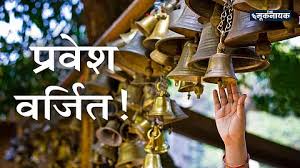
20 people from the Rabari community filed a petition to quash the FIR challenging the allegations of boycott of Dalits. Ahmedabad: The Gujarat High Court has issued a notice to the sarpanch of Paldi village panchayat in Banaskantha district and the state government. The notice has been sent on a petition filed by 20 villagers seeking quashing of an FIR registered under the Scheduled Castes/Tribes (Prevention of Atrocities) Act. The petitioners all belong to the Rabari community and are accused of boycotting the Dalit community. The case is related to the Prana-Pratishtha ceremony of Dudheshwar Mahadev temple held in Paldi village between April 28 and 30. According to the FIR, all the communities of the village and surrounding areas were invited to the ceremony, but members of the Scheduled Castes were deliberately not invited. The complainant is the 55-year-old sarpanch of the village and comes from the Scheduled Caste. The FIR alleges, “The organisers not only did not invite people from the Scheduled Castes, but our contributions were also rejected. It was a well-planned conspiracy to humiliate our caste and socially ostracise us. We were treated like untouchables.” Regarding the delay in filing the complaint, the sarpanch said that he did not complain earlier so that the religious event would not be disrupted. But later keeping in mind the sentiments of the people of his caste, he lodged a complaint at the Bhildi police station on May 9. While conducting a preliminary hearing on this petition on Tuesday, Justice Nirjar Desai passed an order, “Notice is issued to the respondents, the return date of which is August 5, 2025. The Additional Public Prosecutor on behalf of the state has accepted the notice. Respondent No. 2 is allowed direct service through the concerned police station.” Rajan Chaudhary Courtesy : Hindi News
80% OBC, 64% Dalit and 83% Tribal Professor-level Posts Vacant: Govt Data

The gap is most prominent in appointments made from the Scheduled Tribe community, while the maximum number of vacancies were filled under the general category. New Delhi: The government has admitted that there is a huge backlog in filling posts allocated for reserved categories in higher education, as mandated by a 2006 Act of parliament. The backlog is particularly striking if you look at the post of professor. Appointment of candidates from the general category outweigh those from the reserved categories, with postings from Other Backward Caste (OBC), Dalit and Tribal communities showing a far bigger gap. For instance, only 84 professors from the OBC community have been appointed against the sanctioned strength of 423. That means a vacancy rate of 80%. Meanwhile, only 111 professors belonging to the Dalit community have been appointed in the last five years, when at least 308 should have been. That is a vacancy rate of 64%. Similarly, 144 professors from the Tribal community should’ve been appointed, but only 24 made it. That is a vacancy rate of 83%. The total number of sanctioned posts for professor, associate professor and assistant professor in central universities, across all categories, as of June 30, 2025, was 18,951. Of these, 14,062 were filled, leaving 25% posts vacant. In the general category, only 15% of the seats remain empty while reserved categories stand out for their vacancy rate. For OBCs, a total of 3,688 posts were due. Of these, 2,197 had been filled, leaving a vacancy of 40%. Similarly, only 1,599 appointments were made from the Dalit community out of the 2,310 posts due. This translated to about 30% vacancies. The gap is most prominent in appointments made from the Scheduled Tribe (ST) community. Of the 1,155 sanctioned posts, only 727 appointments were made. This means 37% of the seats were left vacant. The highest number of seats were filled under the general category, according to data revealed in the Rajya Sabha by the Minister of State for Education Sukanta Majumdar, in reply to a question raised by Professor Manoj Kumar Jha, of the Rashtriya Janata Dal, calling for data on posts and vacancies in the past five years. The Wire Staff Courtesy : The Wire Note: This news is originally published on https://thewire.com/bha and is used purely for non-profit/non-commercial purposes, especially human rights.
Rape of Dalit student of class 10 in Saharanpur: Heinous punishment given for losing 50 rupees in cricket match, 7 friends arrested

Rape of Dalit student of class 10 on cricket bet: Shameful act of 7 friends in Saharanpur. Saharanpur, Uttar Pradesh: A heart-wrenching incident has come to light in Rampur Maniharan in Saharanpur district of Uttar Pradesh. Here 7 friends together committed the crime of rape with a Dalit student of class 10 in the forest. The reason for this heinous crime was a cricket bet of just 50 rupees, which the victim student was unable to pay to his friends after losing. After this, the accused made an obscene video of him to blackmail him and kept sexually exploiting him for a month. Rape started with cricket bet According to media reports, this student, a resident of Rampur Maniharan, used to play cricket regularly with some youths of his locality. About a month ago, during a cricket match, he placed a bet of 50 rupees, but he lost the match. Unable to pay the money, he asked the accused for some time. But the accused took him to the forest on some pretext, beat him up, took off his clothes and raped him. During this, they also made an obscene video of him. Blackmailing and exploitation for a month The victim student told the police that in the forest, two accused held his hands and feet, one gagged his mouth, and two others raped him. During this, the rest of the youths recorded the video. After this, the accused started blackmailing him by threatening to make the video viral. The victim offered money, but the accused refused to take the money and kept calling him to the forest again and again and kept raping him. This continued for a month. Told the family about the incident, complained to the police The family got suspicious after seeing the change in the behavior of the victim student. He had started being scared and silent. When the family inquired lovingly, he told the whole incident while crying. The family members were shocked and they immediately went to Rampur Maniharan police station and filed a complaint against the accused. The police have registered a case against the seven accused under various sections of the Indian Penal Code (BNS), SC/ST Act, and POCSO Act. Along with this, the victim was also medically examined. Police action Saharanpur SP City Vyom Bindal said that a case has been registered on the basis of the complaint of the family members. The victim has been medically examined and an in-depth investigation of the case has been started. He assured that all the accused will be arrested soon. Social outrage and questions This incident has created outrage among the local people. People are demanding strict action against the accused. This case not only raises questions on law and order, but also highlights the issues of increasing insensitivity and caste oppression in the society. Rajan Chaudhary Courtesy : Hindi News
Major injustice with Dalits in Bangalore University? Serious allegations of casteism against Vice Chancellor, CM orders investigation!
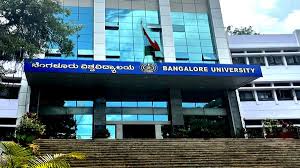
Allegations of violation of reservation policy, depriving SC-ST teachers of responsibilities and irregular transfers. Chief Minister sought report from Higher Education Secretary in 7 days. Bangalore: Several teachers and students of Bangalore University have made serious allegations of institutional caste discrimination and demanded the removal of Vice Chancellor Jayakar Shetty M. Taking the matter seriously, Karnataka Chief Minister Siddaramaiah has directed the Higher Education Secretary to investigate the allegations and submit a report within 7 days. The Scheduled Caste and Scheduled Tribe Teachers Association of the university wrote a letter to the Vice Chancellor on July 5, giving a detailed account of the allegations and demanding immediate rectification. The major allegations include transfer of professors from other universities without sanctioned posts, violation of reservation roster, depriving Scheduled Caste teachers of administrative responsibilities and allowances, and delay in appointments to reserved posts. On July 15, the university’s postgraduate and research students’ association also wrote to the chief minister, accusing the vice-chancellor of institutional casteism and demanding his removal. The SC/ST Teachers’ Association said, “We condemn these anti-Dalit actions of the university which hurt the dignity of Dalit teachers.” Objection to transfer without sanctioned posts The association says five professors were transferred to Bangalore University without sanctioned posts, affecting appointments and reservation system. “Such transfers affect the hiring capacity of the university and violate the reservation policy laid down by the Constitution,” said Prof. G. Krishnamurthy, president, SC/ST Teachers’ Association. State universities get a limited number of sanctioned posts department-wise. If a professor is transferred without a post, the number of vacancies in the university he is sent to decreases — thereby hampering appointments to reserved posts. The association said that none of the transferred professors belong to the Scheduled Castes or Tribes and it has not yet been decided under which roster they will be placed. Names of transferred professors: Prof. Basavaraj Benne (Sri Krishnadevaraya University, Ballari) Prof. Srinath B.S. (Mangalore University) Prof. Yerriswamy (Rani Chennamma University) Prof. K.S. Chandrasekhariah (Mangalore University) Prof. Ashwini K.N. (Karnataka State Akka Mahadevi Women’s University, Vijayapura) CM Siddaramaiah orders probe On July 11, Chief Minister Siddaramaiah wrote a letter to Higher Education Secretary K.G. Jagadeesha asking him to investigate the matter and submit a report within 7 days. In the letter, the Chief Minister admitted that the professors were transferred “without posts” and none of them belong to the SC/ST category, which is a violation of the reservation policy. He also said that 67 professors have demanded the university to clarify the roster and seniority. Rules ignored in handing over charge too? The teachers have also alleged that when the Vice Chancellor went on leave, he did not hand over the charge to the senior-most Dean as per Section 16(1) of the Karnataka State University Act 2000. The Vice Chancellors of Davanagere University, Bengaluru City University and Kuvempu University followed this law and handed over the charge to the senior-most Dean during their leave. Rajan Chaudhary Courtesy : Hindi News