
Revenue officials issue eviction notice to Caste Hindus to remove alleged ‘untouchability wall’ in Karur

The 1.25-acre land has been under the informal possession of the Caste Hindus for several years, and houses a small temple and a drama stage. KARUR: Revenue officials on Thursday issued an eviction notice to remove the alleged ‘untouchability wall’ constructed by Caste Hindus on a 1.25-acre government poramboke land at Muthuladampatti, Karur. The move comes in response to objections raised by Dalit residents living near the disputed land, amid concerns that the wall was built to restrict their access. Officials said the action was taken to prevent any untoward incidents. Speaking to TNIE, Karur Revenue Divisional Officer (RDO) M Mohammed Byzal confirmed that he had served an eviction notice to members of the Thottia Naicker community, who built a wall using concrete blocks, allegedly obstructing access for the Arunthathiyar community. “Despite being warned during a peace meeting held on July 29, 2025, convened following a complaint lodged by Dalit residents on July 11, that members of a particular community went ahead and constructed the wall on government poramboke land, which is a violation of norms. Hence, we have issued a notice for its immediate removal,” the RDO said. According to sources, around 200 families belonging to the Caste Hindu community and approximately 45 Dalit families live in separate settlements in Muthuladampatti, which is located within the Karur City limit near the collector office. The 1.25-acre land has been under the informal possession of the Caste Hindus for several years, and houses a small temple and a drama stage. The Dalit community, which has its temple within their settlement, has long been requesting a portion of this land to construct a drama stage and a toilet. However, their demands have remained unaddressed for years, according to sources. In a sudden move, members of the Caste Hindu community began constructing a wall, approximately 200 feet long and 10 feet high, between the two settlements. Dalits have termed it a “wall of untouchability,” alleging it was built to deny them free access to the adjacent Caste Hindu locality. They also claimed the wall was built using funds collected from every household in the area. Meanwhile, the Caste Hindus denied the allegation, saying the wall was intended to protect the land they have possessed for decades from being used for other constructions, such as a drama stage or toilet. Following instructions from District Collector M Thangavel, RDO Mohammed Byzal conducted an inquiry and issued the eviction notice, instructing the immediate removal of the structure, officials said. D Vincent Arockiaraj Courtesy : TNIE Note: This news is originally published on https:/thenewindianexpress.com/bha and is used purely for non-profit/non-commercial purposes, especially human rights.
Suspicious death of Dalit girl student in CUK: University surrounded by discrimination, silence and questions
The suspicious suicide of a Dalit girl student in Central University Karnataka has sparked a serious debate on caste discrimination, administrative negligence and social inequality in educational institutions. Suspicious suicide of Dalit girl student in Central University Karnataka raises questions, allegations of discrimination Kalburgi: The alleged suicide of 20-year-old Dalit student Jayashree Nayak of Odisha has raised serious questions about the academic environment and treatment of underprivileged communities in Central University Karnataka (CUK). The body of the girl student was found in a hostel room located in the university campus. Activists have alleged that the administration broke the door of the room without informing the police, which has increased the possibility of tampering with evidence. Protests have intensified in the university over the incident, while allegations of caste discrimination over the suspicious death of the Dalit girl have made the atmosphere even more sensitive. Serious allegations of systematic discrimination Nandakumar, former president of the Ambedkar Students’ Association of the central university and a student for 8 years, while talking to the media said that since the inception of the university, incidents of discrimination against Dalit students have been happening. He said, “When a Dalit student committed suicide in 2017, we had a place to register protest. But for the last 3-4 years, even the right to protest has been taken away. Today, if we raise our voice, an FIR is lodged against us.” Nandakumar also alleged that earlier the Scheduled Caste/Tribe (SC/ST) Cell used to give financial assistance of ₹20,000 to Dalit students presenting research papers at national and international forums, which has now been stopped. “Book banks, computer facilities and assistance for preparing for competitive exams are no longer available. The OBC cell is also closed. SC scholars are now charged the same fees as general students. A caste column has been added to the attendance register. Press releases say that SC/ST students are entitled to free accommodation and food, but in reality they are charged rent and fees, which are refunded only after protests,” he said. He also said the university had installed the Saraswati statue before the Ambedkar statue, which is in violation of Article 28(1) of the Constitution prohibiting religious symbols in educational institutions. Reaction of civil society and social activists Former Karnataka Backward Classes Commission chairman Dwarakanath C.S. also raised concerns over discrimination against Dalit students. He said he was once prevented from delivering a speech on Dr. Ambedkar on the university campus. He said, “We went there on the invitation of Dalit students, where we were only allowed to offer garlands to Ambedkar’s statue, but were not allowed to speak on their views. Many students told us that they are under mental stress due to caste discrimination. Now the government and the university administration should take this suicide seriously.” Kalaburagi-based social activist K. Neela alleged that the university has been adopting an anti-women and anti-minority stance in recent years. University administration’s stand Reacting to these allegations, Vice Chancellor Prof. Battu Satyanarayan rejected all allegations of caste or gender discrimination. He said, “It is absolutely wrong to say that the university is anti-women. We have more girl students than boys. We give equal opportunity to all students and fully implement the admission process under the reservation system.” He clarified that no caste column has been added in the attendance register and caste/class information is taken only during the admission process, so that reservation rules can be followed. Speaking on the suicide case, the Vice Chancellor said, “When the door of the student’s room did not open, the security personnel thought she might be alive and might need immediate treatment, so they broke the door. When her death was confirmed, the police was immediately informed and then her parents were informed. The family told us that the student had some health problems beforehand.” Demand for independent investigation intensifies Although the university administration has given clarification, student organizations and activists are demanding that there should be an independent and impartial investigation into the student’s death. Also, all allegations of caste discrimination in the university should also be investigated. Rajan Chaudhary Courtesy : Hindi News
Madhya Pradesh: Dalit girl gangraped in Sidhi forest, 7,418 rape cases registered against SC/ST women since 2022
A case of gangrape of a Dalit girl in the forest by five people has come to light in Sidhi district. According to government data, on an average, 7 cases of rape of Dalit-tribal women have been registered every day between 2022 and 2024. Bhopal – Another heart-wrenching case has come to light in Sidhi district of Madhya Pradesh, highlighting the brutality against Dalit women. A Dalit girl who went for a walk in a forest in Churhat police station area was allegedly gangraped by five people. According to the information, the victim had gone to the forest with her male friend to take pictures and take a walk. During this, both of them were surrounded by five people. The accused first attacked the youth on the head with a stick and then dragged the girl inside the forest. The victim told the police that she pleaded with the accused for mercy, even held their feet, but they did not relent. Two of the accused held her friend, while the other three raped her in turns. While leaving, the accused threatened them that if they mentioned the incident to anyone, they would kill them. Both of their mobile phones were also snatched. After the incident, at around 2:30 pm, the victim somehow managed to get out of the forest crying and reached a nearby construction site. There, she narrated her ordeal to the labourers. After this, the police was informed with the help of Dalveer Singh Gond, husband of the local sarpanch. The police reached the spot and during investigation in the forest, recovered a blood-stained towel and marks of struggle. Throughout the night, police teams kept raiding the nearby villages in search of the accused. A senior district police officer described the incident as a “heinous crime” and said that the victim was immediately given medical assistance. The officer admitted that the remoteness of the area and the absence of CCTVs have hindered the investigation, but the accused will be arrested soon and given the harshest punishment. Some suspects are being questioned, although no formal arrests have been made so far. Amid this gruesome incident, in response to a question asked by Congress MLA Arif Masood in the Madhya Pradesh Assembly, the government has presented shocking figures of crimes against Dalits and tribals. According to the government, between 2022 and 2024, 7,418 rape cases were registered against SC/ST women in the state – that is, an average of 7 rapes every day. During the same period, 338 gang rapes and 558 murders were also registered against Dalit and tribal women. It is worth noting that about 38% of the total population of Madhya Pradesh comes from Dalit and tribal communities, which makes these figures even more worrying. There is increasing pressure on the police and the state government to take swift action. This case proves once again that for the safety of marginalized women, not mere rhetoric but concrete changes are needed at the ground level. Rajan Chaudhary Courtesy : Hindi News
Civil society condemns Haryana Police for torture, use of casteist slurs against Dalit human rights advocate
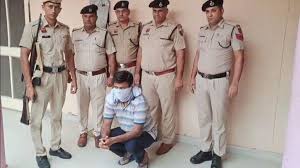
Civil society groups in Haryana’s Hisar have alleged and condemned the arrest of Dalit human rights lawyer and community rights activist Rajat Kalsan, who has also been subjected to police torture and casteist slurs. According to a statement by the Students for People’s Democracy (SfPD), Kalsan was arrested by the Hisar Police twice on the same day, in connection with two separate cases. A reputed lawyer in Haryana, Kalsan has been fighting cases on caste-based atrocities and has fought cases in India’s Khap-dominated regions, including cases of gang rapes, killings, and house burnings. On 30 July, Kalsan was arrested while he was visiting an auto market. The Haryana Police, who had been tracking him, reached the location to serve him a notice, according to SfPD. The lawyers in the case alleged that the police came in civilian clothes to serve him a notice, a pattern that is being observed in the arrest of many activists and lawyers. “However, the actual picture was that a group of 20 to 30 police officers in plain clothes came to serve him a notice at night when he was in the market. No formal procedure was followed; rather, intimidation techniques were used against him,” Lavanya Jha, activist and member of SfPD, told Maktoob. The Haryana Police, in a statement, also alleged that Kalsan had become violent and disrupted their work, for which he has been charged with “obstruction of justice as he verbally abused them and injured one officer.” SfPD has also accused the police of making Kalsan sit in a humiliating and demeaning posture. In a picture that is going viral, Kalsan can be seen squatting with two police officers standing beside him. These photographs were then circulated to shame him, Jha added. Members have also accused the police of torturing and beating Kalsan, including using casteist slurs. “Kalsan was subjected to third-degree police brutality and custodial torture, which is a blatant violation of Article 21 in the Indian Constitution. He was taken from one district to another in a police jeep. He was not given food, beaten, and abused with casteist slurs by the police. His family, who is in constant touch with him, told us that his health is in a weak state,” Jha added. Kalsan has been charged under various sections of the Bharatiya Nyaya Sanhita (BNS), including Section 115 (causing hurt), 121.1 (hurting a public servant), 126 (wrongful restraint), and 352 (insult with intent to provoke breach of peace). According to reports, two cases have been filed against Kalsan – one in Hisar and another in Hansi. In the first instance, Hansi police arrested Kalsan in connection with a complaint filed by a man named Sushil, who alleged that the activist had circulated a video accusing the complainant’s family and the police of corruption and misconduct in the Budana case. Acting on the complaint, Narnaund police registered an FIR under multiple sections of the IPC. Civil society members have alleged that Kalsan’s arrest is linked to a case related to the blind murder of a woman in Budana village in Hisar. “Kalsan was fighting a case of atrocity and sexual assault on a person whose family has now been accused of the murder. In connection to the blind murder case, a complaint was filed against Rajat, alleging that he circulated a video accusing the victim’s family and the police of corruption in the murder case. A day after he got interim bail in this case, he was again charged with a fake case of manhandling and obstructing police officials,” they said in a statement. Kalsan was later presented before a court, which granted him bail in the matter. However, soon after being released, he was rearrested by Hisar police in a separate case involving charges of manhandling and obstructing police officials. Kalsan was released on Monday after he was presented before the Judicial Magistrate with a bail bond of Rs. 50,000. The court, after hearing that Kalsan was a practicing lawyer, stated, “The court is of the view that no useful purpose would be served by detaining the accused in judicial custody.” In the previous month, the police raided his house three times, and he has been under constant surveillance by the police for the past year. The Haryana police have also blocked his social media account. “There is misinformation being spread by local media channels and local YouTubers who are celebrating his arrest, welcoming his arrest. The local media has been instructed not to report on Rajat Kalsan or the cases that he has been fighting,” a statement by SfPD stated. Previously, Kalsan has faced various cases against him, including intimidation by police authorities for his work defending the rights of Dalit people. In 2015 and 2016, two other cases were filed against him in reaction to his work against atrocities committed by dominant caste members. Kalsan has faced multiple death threats and physical assaults. In 2011, he was provided police protection. The protection was withdrawn in 2016 without any apparent reassessment of the risks he faces, according to SfPD. “Such abduction, wrongful incarceration, and custodial torture of activists, often with fabricated cases, has increasingly become a norm under the current fascist regime. This is not an isolated instance, but part of a growing trend of state repression against those who challenge communal hatred, caste oppression, and fascist rule. The arrest and prolonged imprisonment of scholars, lawyers, and activists in the Bhima Koregaon case, many of whom are yet to be granted bail despite there not being any evidence, exposes how the regime targets voices that stand with the oppressed. Similarly, numerous students, activists, and citizens who opposed the discriminatory Citizenship Amendment Act (CAA) and the National Register of Citizens (NRC) were arrested under draconian laws like UAPA, on farcical grounds and without due process,” SfPD said in a statement. Previously, in 2017, Amnesty International had also come out in support of Kalsan. In a statement, they said, “The threats and charges against Rajat Kalsan are part
‘OBCs, EBCs, Dalits To Get Tickets In Proportion To Their Population’: Bihar Congress Chief
Rajesh Kumar (Ram) said that Congress would ensure that OBCs, EBCs, Dalits get tickets for the upcoming assembly election and also get representation in the party organisation in proportion to their population. Patna: Rajesh Kumar (Ram)`s appointment as Bihar Congress president in an election year only demonstrates how the party`s top brass has immense faith in his leadership at a time when the grand old party has started asserting itself without ruffling its old ally, RJD. A Dalit leader and two time MLA from Kutumba, Ram said that Congress would ensure that OBCs, EBCs, Dalits get tickets for the upcoming assembly election and also get representation in the party organisation in proportion to their population. All castes and communities will get justice in ticket distribution as well as also in the organisation in proportion to their population –Jiski Jitni Hissedari, Uski utni bhagidari. At least four people from EBCs would be given tickets in the assembly election, he added. In an interview with FPJ, he, however, admitted that as of now, representation of OBCs and EBCs in the organisation was not in the right proportion, but this anomaly would be rectified as the state party committee was presently being reconstituted. Q- How much Congress is confident this time? A- Congress flags have started fluttering even in the non-traditional pockets as people say they have never left the party but instead the party had left them. Our leader Rahul Gandhi`s emphasis on social justice, caste census, increasing reservation quota and appointing a Dalit as Bihar Congress president has started attracting people towards Congress in Bihar. I am confident of my party putting up a better show in the assembly election, and also hopeful of INDIA bloc forming the next government in the state. Our alliance is tested, trusted, firm and also faithful to the people. We have made an assessment of our party`s prospects at 70 seats for the polls. Q – How caste politics in Bihar will impact the polls? A -Caste factors continued to play a major role in elections in states like Bihar and Uttar Pradesh as even BJP by somewhat deviating from its Hindutva plank has also started talking about caste equations in elections. Prominent party leaders including Prime Minister Narendra Modi do not hesitate in revealing their castes at public places. Q- Reservation quota on Telangana model A- Credit for Narendra Modi government`s announcement for conducting caste census should definitely go to Congress leader Rahul Gandhi who had been demanding for it since long. Caste census should be conducted on Telangana model under which people get reservation in government jobs as well as in schemes. It is deplorable that the Nitish government failed to frame policies for various sections of the society on the basis of caste and economic survey conducted in Bihar. Q- Focus points in election manifesto A- The party manifesto will include Mai Bahin Samman Yojana, free electricity up to 200 units, filling up of 4 lakh vacant posts in various government departments. These are not mere announcements as experts in Delhi have also worked on the financial viability of these programmes. Recently, Congress also organised a mega ‘Rozgar Mela’ in Patna as a large number of youths also got jobs there. Q- Chief Minister Nitish Kumar’s performance A- Nitish had failed on all three commitments he had made- crime, corruption and communalism- as everybody could see how crime graph had risen, how rampant corruption is all pervasive in government offices, and also how he has allied with BJP off and on. I pray for a long and healthy life for Nitish but his falling health is a matter of concern. Truly speaking, BJP people are exposing him as they do not want him to continue in the office for a long period. It is the reason he is losing control over the government machinery. “Sakar Ka iqbal khatm ho gaya hai”, (Government has lost its command). Q- On Prashant Kishor A- Everybody knows what is the role of Jan Suraaj Party founder Prashant Kishor in the assembly elections? Who has planted him in the election to derive political mileage? Jan Suraaj Party is actually a party of Pandeys (upper castes). Q- How do you assess SIR? A- Election Commission at the behest of BJP is conducting such an exercise. Its main objective is to divert people’s attention from real issues. Dheeraj Kumar Courtesy : TFPJ Note: This news is originally published on https://thefreepressjournal.com/bha and is used purely for non-profit/non-commercial purposes, especially human rights.
“Caste is acquired by birth, does not change by marriage”: Himachal High Court denies relief under SC/ST Act to woman accused who married a Dalit man, know the full case

The court specifically emphasized that a non-Dalit person cannot enter the Dalit community through marriage. If this is believed, it will promote caste discrimination in society. The trial court had acquitted her on the ground that she had married a Dalit man and thus she is now a member of the Dalit community herself. The High Court completely rejected this argument. Shimla- The Himachal Pradesh High Court has clarified in an important order that caste is determined by birth and cannot change after marriage. This order has come in a case where a non-Dalit woman had described herself as a member of the Dalit community after marrying a Dalit man. Rejecting this argument, the court has ordered to restart the case going on against her under the SC/ST (Prevention of Atrocities) Act. The case began when the accused Sarojini was booked under Sections 451, 323, 504, 506 of the IPC and Section 3(1)(s) of the SC/ST Act for having an affair with a Dalit man. The trial court had acquitted her on the ground that she had married a Dalit man and was thus now a member of the Dalit community herself. The High Court completely rejected this argument. The bench of Justice Rakesh Kainthala made it clear in its judgment that “caste is an innate identity which does not change throughout life”. The court said that if caste change is allowed after marriage, it would undermine the basic purpose of the SC/ST Act. The court cited the Supreme Court’s Valsamma Paul case (1996) in this matter. Justice Kainthala quoted the Bombay High Court’s observation: “The misery of a person born in a Scheduled Caste does not end by marrying a person from an upper caste. The label attached at birth persists irrespective of the marital relationship.” Similarly, the Karnataka High Court’s judgment in Bhimappa Jantakal vs State of Karnataka (2022) was cited, which held that “a Scheduled Caste woman does not lose her Scheduled Caste status on marrying a forward caste man, and the caste identity of her children continues to be retained.” All these judgments had made it clear that caste is acquired by birth and cannot be changed either by marriage or in any other manner. The court particularly emphasised that a non-Dalit person cannot enter the Dalit community through marriage. If this is held, it will promote caste discrimination in society. The High Court has set aside the trial court’s decision and remanded the case for reconsideration. The court has directed that the trial court should frame charges afresh after hearing both the parties. Along with this, both the parties have been directed to appear in court on August 1. This decision is being considered a big step towards social justice. This decision is not only important from the legal point of view but it will also have far-reaching consequences socially. This has made it clear that caste identity is not something that a person can change as per his convenience. The court clarified that its decision is only to clarify the legal position and it is not a comment on the merit of the case. Now the hearing of this case will start again in the trial court. Geetha Sunil Pillai Courtesy : Hindi News
Barodia Nonagir Dalit murder case: Serious allegations against former Home Minister, Supreme Court Justice J.K. Maheshwari recuses himself from the case!
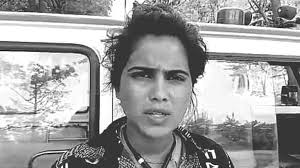
After Justice J.K. Maheshwari’s removal, the case will now be handed over to a new bench. The petitioner side demands that the entire matter be investigated independently by the CBI or SIT. Bhopal. In the much-discussed Barodia Nonagir Dalit murder case related to Khurai assembly constituency of Sagar district of Madhya Pradesh, senior Supreme Court judge Justice J.K. Maheshwari has recused himself from hearing. As soon as the hearing started last Friday, Justice Maheshwari clearly said, “I do not want to hear this case. It should be handed over to some other bench.” This decision has come at a time when the bench of Justice Maheshwari and Justice Vijay Bishnoi was continuously hearing this sensitive case since January 2024. Senior advocate Meenesh Dubey, on behalf of the petitioner, said, “This decision is shocking. They were hearing this case from the beginning. If they have recused themselves, there must be some serious reason behind it!” Know what is the Barodia-Nonagir Dalit murder case? This case starts in January 2019 from Barodia-Nonagir village of Khurai Dehat police station area of Sagar district, when Anjana Ahirwar, daughter of a Dalit family of the village, was allegedly beaten up and molested by some goons. The family alleges that the police did not add the section of molestation in the FIR, which weakened the process of justice. Since then, one by one, two members of this Dalit family were murdered and one suspicious death occurred. – 23 January 2019 Raghuveer Ahirwar’s son Vishnu was beaten up in the market. – 26 January 2019: Incident of beating and molestation of Anjana. Case registered under SC-ST Act. – 31 March 2021: Nitin alias Lalu arrested by police in a false case, family claims. – 24 August 2023: Nitin beaten to death by mob. Mother and elder daughter-in-law attacked, house vandalized. – 25 May 2024: Main witness Rajendra Ahirwar murdered with axe and sticks. – 26 May 2024: Anjana, who was returning with Rajendra’s body, died under suspicious circumstances after falling from a moving ambulance. What are the allegations in the petition? Anjana’s mother and sister-in-law have filed a petition in the Supreme Court in which they have directly accused Khurai BJP MLA and former Home Minister Bhupendra Singh of being involved in the murder conspiracy. The petition states that after Nitin’s murder, Anjana was called to the former minister’s house. She was threatened not to testify. A settlement of Rs 2 crore was offered which Anjana rejected. Anjana had given a written complaint to the police officers on 26 February 2024. The former minister pressured the family to give specified statements to the media. PUCL report also attached with the petition The People’s Union for Civil Liberties (PUCL) report released in July 2024 said that the entire incident is a well-planned caste violence, in which the Dalit family was repeatedly targeted and the justice process was affected by killing eyewitnesses. After Justice J.K. Maheshwari’s removal, the case will now be assigned to a new bench. The petitioner side demands that the entire case be investigated independently by the CBI or SIT. The influence of high profile political personalities should be stopped and witnesses and the victim’s family should be given protection. Ankit Pachauri Courtesy : Hindi News
Dalit shopkeeper stabbed for not giving loan- disgusting incident of casteism in Rajasthan
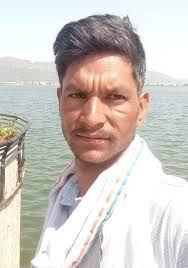
The Meghwal community has termed this incident as a disgusting example of casteism and violence and has demanded from the police administration that the accused should be arrested as soon as possible and given strict punishment. People of the community say that such incidents are not only a crime against the Dalit community, but also harm social harmony. Bari Sadri/Chittorgarh- A heartbreaking incident in Delwas village of Chittorgarh district of Rajasthan has created a wave of anger in the Meghwal community. Shivlal Meghwal, a Dalit shopkeeper running a grocery shop on Kalkipura Road, was attacked by three people with knives and sticks for not giving a loan. Shivlal was seriously injured in this attack, and an attempt was also made to molest his wife. This incident has shocked the local community and the Meghwal community has demanded strict action against the accused. According to information received by The Mooknayak from a community member, on July 28, Delwas resident Shivlal Meghwal was sitting at his grocery shop when Ganpat Lal Mogia came to the shop and asked for bidis, matchboxes, and tansen (gutkha) on credit. Shivlal refused to lend, following which Ganpat threatened Shivlal using caste-derogatory words like “chamarta” and “dhedya” and saying, “Your aukaat is that you won’t lend, I will see you tomorrow.” The next day, Tuesday, around 6 p.m., Ganpat Lal Mogia, Ramlal, and Ramlal’s wife attacked Shivlal’s shop. Shivlal’s wife Kusum and his mother-in-law were also present at the shop. Ganpat had a knife in his hand, while Ramlal and his wife were armed with sticks. The attackers insulted Shivlal with caste-related derogatory words like “Chamarta” and “Metar” and Ganpat stabbed Shivlal in the chest with a knife, leaving him bleeding and unconscious. Ramlal and his wife then hit Shivlal on the back with sticks. During the attack, Ramlal held Kusum in his arms and abused her. When Kusum screamed, people from the neighbourhood, Pritam Meghwal, Harish, Mukesh Meghwal, Dharmesh Meghwal, and Durgashankar, rushed to the spot. Seeing the crowd, the three attackers fled. Locals say that if they had not arrived on time, the attackers would have killed Shivlal on the spot. The injured Shivlal was immediately rushed to the hospital, where his condition remains critical. Shivlal’s wife Kusum attended the Dungla police station and filed a complaint against Ganpat Lal Mogia, Ramlal, and Ramlal’s wife. The police have registered case number 86/2025, and investigation and action in the case is going on under the direction of DYSP Badisadri. Injured Shivlal Meghwal This incident has caused great anger in the Meghwal community. The people of the society have demanded strict action against the three accused. Social worker Shankarlal Meghwal Bildi expressed deep grief over the incident and said, “Such incidents are a stigma on civilized society. The police administration should take quick and strict action to curb such incidents, so that such incidents can be prevented in future.” The Meghwal community has described this incident as a disgusting example of casteism and violence and has demanded from the police administration that the accused should be arrested as soon as possible and given strict punishment. People of the society say that such incidents are not only a crime against the Dalit community, but also harm social harmony. Geetha Sunil Pillai Courtesy : Hindi News
Why was the date of Rahul Gandhi’s Vote Adhikar Yatra in Bihar changed? Congress’s path with RJD is not easy
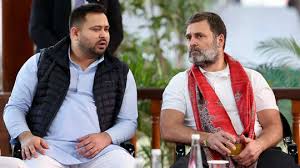
Bihar Vidhan Sabha Election: Assembly elections will be held in Bihar in October-November. Before this, Congress is trying to regain its lost political ground in Bihar, but its path will not be easy in the alliance. Patna: Congress is leading the Indian National Development Inclusive Alliance (INDIA Bloc). In alliance politics, parties have to make many compromises. Every party has its own agenda, its own principles and it is not easy to maintain coherence between them. The influence of one party can benefit the entire alliance, while the defamation of one party can also harm all the allies. Even though Congress is leading a big alliance, it is forced to keep its principles and beliefs limited to itself. It cannot show its eyes to the allies like BJP. In Bihar, the indications so far are that the main allies of the All India Alliance, Congress and Rashtriya Janata Dal (RJD), will contest the elections together. However, Congress is facing a huge dilemma because of RJD. The process of Special Intensive Revision (SIR) of the voter list of the Election Commission is going on in Bihar. Both Congress and RJD opened a front against the central government and the Election Commission against this process. RJD leader Tejashwi Yadav lodged an objection against the Election Commission for removing the names of 65 lakh voters from the list of the state. He even claimed that his name is not in the voter list. When the Election Commission replied to him that his name is in the list of two different constituencies, he did not have any precise answer. After this, a case has also been registered against him on the charge of getting two voter cards made. He has also received a notice from the Election Department. RJD has not only suffered due to this incident, Congress is also facing the brunt of it. Congress leader Rahul Gandhi was going to take out a ‘Vote Rights Yatra’ with Tejashwi Yadav on August 10 in Bihar, but Congress’s own ally RJD was accused of misusing the right to vote. Now the question is how can Rahul Gandhi talk about the right to vote in front of the common people? He has been forced to postpone this journey. Will Tejashwi talk about the right to vote with Rahul now? Congress MP Rahul Gandhi’s journey in Bihar will now start from Sasaram on August 17. Sasaram is in Rohtas district. However, it is not clear whether the name of this journey will remain ‘Vote Rights Yatra’ as before or not. At present, its purpose seems to be to create an atmosphere for the Bihar assembly elections. Congress President Mallikarjun Kharge will join this journey on the first day itself. Leaders of the India Alliance will also participate in this journey which will be held in several phases. If Rahul Gandhi will take up this journey on the issue of voters’ rights, will Tejashwi Yadav also join him? This is a question, the answer to which the Congress will have to find. Authored by: Suryakant Pathak About the author Suryakant Pathak is a consultant at Navbharat Times Online. He has been doing journalism for the last 31 years. He writes news, analysis and blogs on India’s international relations, political-social developments in the country and the world. He started as a reporter in Dainik Bhaskar in 1995 and then worked for Naiduniya, Amar Ujala, ET Courtesy : Hindi News
Pune Crime News: Dalit Girls Allege Casteist Abuse by Pune Police, Rohit Pawar Demands Action
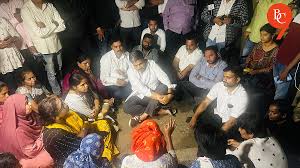
Three Dalit girls in Pune have accused police of casteist slurs and mistreatment during questioning. Despite repeated efforts, no FIR has been filed, triggering political outrage and protests by activists. Pune, Three Dalit girls in Pune have alleged that they were subjected to casteist slurs and humiliating treatment by a female police officer during questioning. The incident has sparked outrage, with political leaders and activists accusing Pune police of insensitivity and deliberate inaction. Join our WhatsApp Channel to Stay Updated! The girl at the centre of the issue had reportedly fled from Chhatrapati Sambhajinagar after facing injustice there and sought temporary shelter in Pune. She stayed with three other girls for some time. However, police soon summoned all of them for questioning. Ankur Nikam Courtesy : The Bridge Chronicle Note: This news is originally published on https:/thebridgechronicle.com/bha and is used purely for non-profit/non-commercial purposes, especially human rights.