
Lucknow: Advocate Parmanand Gupta sentenced to life imprisonment – 29 fake cases registered using Dalit woman’s identity

A special court in Lucknow sentenced advocate Parmanand Gupta to life imprisonment and a fine of Rs 5.10 lakh, he had registered fake cases by misusing the identity of a Dalit woman. Uttar Pradesh: A special court in Lucknow has sentenced advocate Parmanand Gupta to life imprisonment and also imposed a fine of Rs 5.10 lakh on him. The court found Gupta guilty of misusing the identity of a Dalit woman to register dozens of fake cases against his opponents. According to media reports, while delivering the verdict on Tuesday, Special Judge (SC/ST Prevention of Atrocities Act) Vivekanand Sharan Tripathi held Gupta guilty of conspiracy and misuse of law. The court found that Gupta had registered several fake cases in the name of Pooja Rawat, a Dalit woman, to target his rival Arvind Yadav and his family. Special Public Prosecutor Arvind Mishra said that Gupta had registered at least 18 cases in his name and 11 cases in the name of Rawat. Most of these were registered against Yadav and his family. These false cases included serious allegations like rape and molestation. The whole matter came to light when questions were raised on the complaints during the hearing in the Allahabad High Court. After this, reports were sought from the concerned police stations. Finally, the High Court ordered a CBI inquiry into the matter on 5 March 2025. The investigation revealed that Gupta used Rawat’s Dalit identity to trap the Yadav family. But the investigation made it clear that Rawat was not present at the spot at the time of the alleged incidents and the house she was claiming to rent was actually under construction by the Yadav family. Later on 4 August 2025, Rawat himself applied to the court and told that he was trapped by Gupta and his wife Sangeeta, who runs a beauty parlor. Rawat worked as an assistant in that parlor. He admitted in the court that he was forced to give false statements of sexual abuse before the magistrate under pressure. After this, the court granted him conditional pardon. The court said in its verdict that Gupta knowingly conspired for serious charges, which could have resulted in life imprisonment. Therefore, he should get severe punishment. While pronouncing the sentence, the court gave Gupta life imprisonment and ordered that a copy of the verdict be sent to the Uttar Pradesh Bar Council, so that “such a criminal lawyer Parmanand Gupta cannot enter the court premises and cannot practice, so that the dignity of the judiciary is maintained.” Rajan Chaudhary Courtesy : Hindi News
AI now eyeing FIRs of rape and SC/ST cases: Lucknow court’s masterstroke to expose those who make false complaints for compensation!

The special court in its decision regarding fake cases gave necessary instructions to Lucknow Police Commissioner and District Magistrate, relief amount will be given to the victim only after the charge sheet is sent Lucknow- The Special Court for SC/ST Act cases in the capital of Uttar Pradesh has given strict instructions to Lucknow Police, expressing deep concern over the increasing number of fake cases related to atrocities and rape. The court said that in such cases, the old FIRs of those who repeatedly complain should be mandatorily mentioned, so that fake complaints can be curbed. This decision came in the case of lawyer Parmanand Gupta, who had filed a false gangrape case using a Scheduled Caste student Pooja Rawat to implicate two innocent brothers in his wife’s property dispute. The court sentenced Gupta to life imprisonment, as well as advised the police and district administration to use AI tools to deal with fake cases. This decision was pronounced by Special Judge Vivekanand Sharan Tripathi on August 19, 2025, which indicates a tough stand on the misuse of protective laws. The SC/ST Act was made for the benefit of such sections of the society in this country, who suffer from atrocities on the basis of caste by persons of non-SC/ST caste. The purpose of this Act was also to punish the oppressors who commit atrocities against such Scheduled Caste/Scheduled Tribe sections, so that atrocities against SC/ST in the society end and social harmony increases. Special Court, SC/ST Act Court’s concern: Fake FIRs threaten the justice system The court in its decision expressed serious concern over the flood of fake cases related to SC/ST Act and rape. The judge said that false complaints in such cases not only harass the innocent but also undermine the credibility of the real victims. In the judgment, the court said, “The SC/ST Act was made for the benefit of such sections of society in this country, which suffer from atrocities by non-SC/ST caste people on the basis of caste. The purpose of this Act was also to punish the perpetrators of atrocities against such SC/ST classes, so that atrocities against SC/ST in the society end and social harmony increases and the dignity of the person mentioned in the Preamble of the Indian Constitution, brotherhood among all the people of India and unity and integrity of the nation can be ensured.” “On the other hand, when criminals like Parmanand Gupta start misusing this Act, then the members of non-SC/ST class, such as backward and upper castes, develop animosity against SC/ST caste people of the society that they are being implicated in false cases without any basis. In a way, this misuse of the Act in the long run, harms the dignity of the person mentioned in the Preamble of the Indian Constitution, brotherhood among all the people of India and unity and integrity of the nation. It also harms the mutual brotherhood and the unity and integrity of the nation. Therefore, this court is of the view that there is no need to show any mercy towards such criminals. If drops of sour substances are not stopped from falling in the ocean full of milk, then those drops will spoil and destroy the milk of the entire ocean. Similarly, if an advocate like Parmanand Gupta is not stopped from entering and practicing in the courts by this court, the Hon’ble High Court and the Hon’ble Supreme Court and the Bar Council of India and the Bar Council of UP for committing rape, gang rape and misuse of SC/ST Act, then the public’s faith in the Indian judiciary will be seriously shaken.” Mention of old complaints is mandatory In the decision, the Lucknow Police Commissioner was directed that in the FIR of a person or woman who repeatedly complains of rape, gang rape or under the SC/ST Act, their previous complaints should be mentioned compulsorily. The court said that it should be written as a comment in the FIR that how many times the complainant has lodged such FIRs or given applications in the IGRS portal / police station. This information should also be given when information is sought from the police in cases of FIRs being lodged through the court under Section 173 (4) BNSS. The court advised to use Artificial Intelligence Tools (AI Tools) so that fake cases can be easily identified. These instructions have been given to prevent fake FIRs and save the innocent. Curb on relief amount: Order to stop compensation in fake cases The court directed the District Magistrate, Lucknow to immediately withdraw any relief amount given to Pooja Rawat in Crime No. 40/2025. The judgment said that the relief amount under SC / ST Rules 1995 (10% to 25% at FIR level and 50% on charge sheet) should now be given only on receipt of charge sheet in lump sum, and not on mere registration of FIR. The court said: “The precious money and hard earned money of the taxpayers should be given as compensation to the miscreants who file false FIRs. The provisions of the relief amount made in the schedule Annexure-1 have been given in a graded and phased manner, when a prima facie case is made out, so that on giving a lump sum amount to a person of Scheduled Caste/Tribe, the victim of SC/ST Act may not become a victim of any other crime or violence by the accused who committed atrocities because of the relief amount. Therefore, using the powers prescribed under section 15A (7) of SC/ST Act, the District Magistrate, Lucknow is directed that the relief amount which is made available to the victim on filing of First Information Report for relief amount under SC/ST Atrocities Prevention Rules 1995, respectively (from 10 percent to 25 percent) and 50 percent at the stage of sending the charge sheet, all that amount should be given in lump sum, at the time of filing the charge sheet. This should be provided at the stage of sending the
UP News: Suspicious death of Dalit girl in Ghaziabad; kidnapping and gangrape allegations
23-year-old deaf-mute Dalit girl commits suicide after alleged kidnapping and gangrape in Ghaziabad district’s Loni; two accused arrested by police. Uttar Pradesh: A 23-year-old deaf-mute Dalit girl, who was allegedly kidnapped and gangraped in Ghaziabad district, was found hanging at her home in a village in Loni police station area. Police have also confirmed this. According to the police, the girl was allegedly kidnapped by three accused on August 18 and later sexually assaulted. After the incident, she was admitted to the hospital for treatment. The girl returned home on Wednesday night and was later found hanging from the fan in her room, police said. According to preliminary information, she may have committed suicide. The girl’s father, who makes a living by selling carpets, lodged an FIR at the Loni police station alleging that his daughter was gangraped. DCP (rural) Surendranath Tiwari confirmed the FIR and said a special team has been formed to arrest the accused. So far, two of the three accused—Rohit (23) and Bhola (45)—have been arrested. The search for the third accused is on. As the body was taken for post-mortem, several Bahujan Samaj Party (BSP) workers gathered at the local police station and protested demanding justice. Police officials spoke to the protesters and assured them of arresting all the culprits soon. Rajan Chaudhary Courtesy : Hindi News
Dalit girl from Gorakhpur who came to Lucknow to study, used her caste as a weapon: Know who is lawyer Parmanand Gupta who gets false cases registered as if it is a hospital OPD!
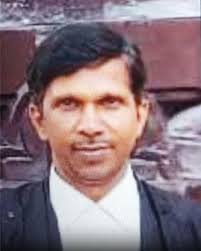
Lucknow’s special court awards life imprisonment to lawyer who got more than 30 false cases of SC/ST and rape registered Lucknow- If there is a mastermind for those who misuse the law, it is lawyer Parmanand Gupta! He ran a series of false cases as easily as if someone is getting medicine by getting a prescription in a hospital OPD. We are not saying this, but a Lucknow court has mentioned this in its 94-page order. In a historic verdict, the special court for SC/ST Act cases has sentenced lawyer Parmanand Gupta to life imprisonment, who had registered a fake gangrape and SC/ST atrocities case against two innocent brothers, Arvind Yadav and Awadhesh Yadav. In the trial, it was proved that Gupta got 11 false cases of gang rape and SC/ST Act registered against a 21-year-old Dalit student, Pooja Rawat, who had come to Lucknow to study, by using her caste and documents as a weapon, while Gupta himself filed 18 cases as a lawyer. To meet the expenses of her studies, Pooja came to work in Gupta’s wife Sangeeta’s beauty parlor, and Gupta obtained her identity documents in the name of getting them corrected and later lured her with money and made her join the scheme. All the false cases were filed by Gupta to gain financial benefits and settle personal scores. This shocking scheme was exposed and now the court has sentenced this sick minded lawyer to life imprisonment. This case arose from a property dispute related to Gupta’s wife Sangeeta Gupta, which shows that vulnerable women of Scheduled Castes are being used as weapons in false complaints to extort money and harass rivals. Gupta appeared as Pooja Rawat’s lawyer and instigated her to file a false FIR. On August 19, 2025, Special Judge Vivekanand Sharan Tripathi sentenced advocate Parmanand Gupta to life imprisonment after finding him guilty under several sections of the Indian Penal Code (BNS) and the SC/ST (Prevention of Atrocities) Act. The special public prosecutor requested the court to consider a total of 29 cases as Parmanand Gupta’s criminal history and said that no advocate gets so many cases registered in his personal name. “Convicted Parmanand Gupta used to get cases registered himself against SC/ST persons against whom SC/ST cases could not be registered or against non-SC persons in respect of whom he thought that his work would be done by merely threatening with a small case, as if he was running the OPD of a hospital. Where there was a serious case, in which a lot of property was involved and where simple threats to the opponent did not work, he used Pooja Rawat to get the cases registered by threatening with SC/ST rape and gang rape cases. It was similar to when a person cannot be treated in the OPD, then he should be sent to the ICU for serious treatment.” The court explained in its order that Gupta misused his professional position and used Pooja Rawat, a 21-year-old SC student from Gorakhpur, who had come to Lucknow for studies, as a weapon for his revenge. Puja, who worked as an assistant at Sangeeta Gupta’s beauty parlour, was lured into the scheme by Gupta by taking her Aadhaar card, caste certificate and other documents on the pretext of correction. They then used these to file false complaints, including this case, where Puja alleged that the Yadav brothers gangraped her at a house in Vibhuti Khand, Lucknow on July 24, 2024. The FIR, filed under crime number 40/2025, registered offences under sections 64, 74, 115(2), 316(2), 324(4), 333, 351(3), 352 BNS, 66D IT Act, and 3(2)(5) SC/ST Act, claiming that pornographic videos were made and threats were issued. An investigation by Assistant Superintendent of Police Radha Raman Singh revealed that the entire story was fabricated. Location data retrieved from mobile CDRs and call records revealed that Puja was nowhere near the alleged crime scene, an under-construction house owned by the Yadavs, in the period from March 1 to July 24, 2024. Medical examination revealed no signs of assault, and Puja refused an internal examination, later admitting to being under pressure from Gupta. Local witnesses confirmed that Puja was never seen as a tenant, and the property was in the possession of the Yadavs for years, where construction was underway. The investigation also revealed that Gupta’s wife had a civil suit (Case No. 747/2024) pending on Khasra No. 351L, which was adjacent to the Yadavs’ Khasra No. 76, and that the false rape allegation was a pressure ploy to settle the land dispute. Puja exposes Gupta’s criminal conspiracy The turning point in the case came when Puja Rawat, on realising her mistake, applied to become a witness under Sections 343 and 344 BNS on August 4, 2025. Pardon was granted on the condition that she state the truth, and Puja revealed in court that Gupta and his wife took advantage of her weakness. She said Gupta used her Scheduled Caste status to file several false complaints against his enemies, promising her a share of compensation from the government’s SC/ST relief schemes. Puja said in her chief testimony, “Parmanand Gupta, advocate, took my Aadhaar card, photo, income certificate, caste certificate, residence proof and PAN card on the pretext of correction. Using these, he registered a case in my name without my knowledge.” She said Gupta prepared her statements for the magistrate and the police, under which she had to claim gang rape. Puja’s cross-examination further exposed the conspiracy. She admitted that after the FIR, she received an interim relief of Rs 75,000 from the government, but Gupta kept all the money. “He said if I give a statement as per his instructions, I will get the money, but he kept everything,” she said. An attempt to intimidate the court by Gupta through video conferencing, in which he demanded to change Puja’s lawyer, was rejected to prevent molestation. The court referred to Puja’s crucial testimony: “I am a BA second year student and came to Lucknow
Telangana: Dalit family socially boycotted in village after inter-caste marriage, police questioned for not taking action
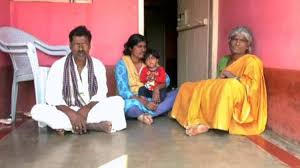
Alleged social boycott of Dalit family after inter-caste marriage in Chityala mandal of Nalgonda, demand to register case against accused under SC/ST Act. Nalgonda (Telangana): A case of social boycott has come to light after an inter-caste marriage in Chityala mandal. It is being told that in the month of April, a Dalit youth married a girl from Yadav community, after which a controversy arose. After marriage, the couple left the village and started living in another area. But on April 16, people of Yadav community allegedly called a panchayat and passed a resolution in the meeting that the Dalit family will no longer be employed as a drummer, laborer or driver in the village. Palamuru Nagarjuna, who is the state vice-president of Anti-Caste Discrimination Committee, alleged that the elders of the community have signed this resolution. According to him, this step is going to hurt the dignity of Dalits. Nagarjuna also said that the police have not taken any action so far on the incidents of violence and harassment of Dalits in Chityala mandal. He said that a complaint was lodged in this regard at the Chityala police station, but the police did not take any concrete action. Apart from this, he has also submitted a memorandum to the sub-inspector of Chityala, demanding registration of a case against the accused under the SC/ST (Prevention of Atrocities) Act. Rajan Chaudhary Courtesy : Hindi News
Case of kidnapping of Dalit girl in Barabanki: Allegation of the brother of the girl recovered from Mumbai – the accused are pressuring to convert
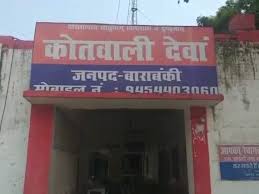
A case of kidnapping of a Dalit girl has come to light in June from Deva area of Barabanki. The girl’s brother has alleged that the accused are pressuring his sister to convert. They are threatening to kill her if she refuses to convert. A video of the girl’s brother has also surfaced. In the video, he is claiming that the accused have a connection with Changur. The brother has also given an application to the police station in-charge Deva on August 14. In the application, the girl’s brother told that a youth from the area along with his friends kidnapped his sister. The accused started pressuring her to convert. When the girl refused, she was sent to Mumbai. She was kept hostage there. The girl called her brother and informed him about being held hostage in Mumbai. After this, with the help of the police, the girl was recovered from Mumbai. Deva Kotwal Ajay Kumar Tripathi says that he has not received any complaint letter. He said that an old video of the girl has surfaced. In this video, she is saying that she went with the young man voluntarily. Police is investigating the matter. Sarfaraz Warsi Courtesy: Hindi News
The auspicious moment of the much-awaited Yogi cabinet expansion is coming soon, backward-dalit leaders including Puja Pal expelled from SP will get a chance!
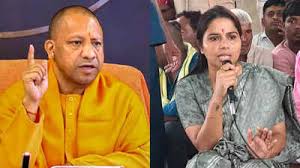
Pooja Pal News: The auspicious moment of Yogi cabinet expansion is about to come. If experts are to be believed, the cabinet expansion can happen in the coming Navratri, in which backward and dalit leaders including Puja Pal can be given a chance. Abhay Singh Rathore, Lucknow: After 2014, 2017, 2019, 2022 and 2024, now everyone’s eyes are on the UP assembly elections-2027. This election is very important for every political party, because the way to Delhi goes through UP. On the other hand, the ruling BJP is making every possible effort to win the 2027 assembly elections and score a hat-trick of victory, but the results of the crushing defeat that the BJP has suffered in UP in the last 2024 Lok Sabha elections have warned the BJP for the upcoming assembly elections. Samajwadi Party’s PDA (Backward, Dalit and Minority) is believed to have played an important role in this setback to BJP. At the same time, BJP has now taken a lesson from its old and bad results and has made a special strategy to blunt the edge of SP’s PDA. A sample of which will be seen in the Yogi cabinet expansion before the upcoming elections. Cabinet expansion can happen on the auspicious days of Navratri Actually, the first cabinet expansion of the second term of UP’s Yogi government is possible for a long time. There were discussions many times, but it remained limited to discussions only. But, now soon that auspicious moment is going to come, which is being awaited by MLA-MLC to the ruling party and most of all the opposition. If reliable sources are to be believed, the much-awaited cabinet expansion of the Yogi government can happen in the coming auspicious days. That is, there is a strong possibility of cabinet expansion in the days of the upcoming Navratri. This cabinet expansion is considered very important from the point of view of the upcoming assembly elections, because the caste and social equations that will be seen in this expansion will be the future strategy of BJP. That is, this cabinet expansion will leave the mark of the election strategy of the assembly elections. It is almost certain that Puja Pal, expelled from SP, will become a minister So far, the names of many leaders have been discussed among those who will be included in the Yogi cabinet expansion, which have remained limited to discussions only, but it is considered certain that the name of MLA Puja Pal, who was expelled from the Samajwadi Party, will be included in this cabinet. By making Puja Pal a minister, BJP will try to hit many targets with one arrow. The biggest strength of Puja Pal becoming a minister is said to be her coming from the extremely backward class. Also, the way she opened a front against mafia Atiq Ahmed in the recent assembly session and praised CM Yogi Adityanath, after that the Samajwadi Party has expelled her from the party. Due to this, BJP feels that the public will have sympathy with her. After BSP, SP, now she will soon start a new innings with BJP In her 20-year political journey, Puja Pal has been in BSP for 13 years and SP for about six and a half years. Now after being expelled from SP, Pooja Pal can soon start a new innings with BJP. Recently she also met CM Yogi. After which the discussion is intense. She will be included in the cabinet expansion only after joining BJP. Senior journalist Rajkumar Singh said that BJP can project Pooja Pal as a female firebrand leader. Also, by making Pooja Pal a minister, BJP will also try to hurt Akhilesh Yadav’s PDA. Similarly, other people from OBC can also be made ministers. Pooja Pal will become firebrand woman leader of BJP BJP has made a special strategy to deal with the PDA of Samajwadi Party. Now BJP’s maximum focus is on P i.e. backward and D i.e. Dalit except A (minority i.e. Muslim) of PDA in Akhilesh Yadav. BJP is now trying its best to bring the backward and Dalit class voters who had gone to SP in the Lok Sabha elections to its side. For this reason, the ruling BJP is now completely focused on backward and Dalit. Senior journalists say that UP BJP still lacks a female firebrand leader and the way Puja Pal has praised CM Yogi while making statements against her husband’s murderer Atiq Ahmed in the House, BJP seems to be overcoming the lack of a female firebrand leader. It is difficult for upper caste leaders to get a place in the cabinet By doing this, BJP will make inroads into anti-Muslim and Akhilesh’s Dalit vote on the pretext of Atiq. Senior journalists said that after being expelled from SP, Puja Pal has now become completely independent. Now she can go anywhere, so before being made a minister, Puja Pal will join BJP. If the senior journalist is to be believed, the chances of any Thakur-Pandit leader being included in this cabinet expansion are very low, because they (Thakur-Pandit) have adequate representation in the current government. In such a situation, if BJP includes any upper caste leader in the cabinet, then Akhilesh Yadav’s PDA will become more powerful. Taking advantage of this issue, Akhilesh Yadav can also attack BJP, so mostly leaders from backward and Dalit classes will become ministers in the cabinet. Bhupendra Chaudhary, Akash Saxena and many other names in discussion, Raja Bhaiya not in the list! Apart from Puja Pal, Akash Saxena, MLA from Rampur, can also be made a minister in this list. Also, MLA Thakur Ramveer Singh, who won the by-election from Kundarki seat of Moradabad, current UP BJP President Bhupendra Chaudhary and some other leaders can be included in the cabinet. There are 7 vacant ministerial positions in the Yogi government, out of which 5 new leaders can be made ministers. Ramveer Singh has sent a message by winning from Kundarki and Akash Saxena from
Behind Gender Balance In Karnataka’s Dalit Communities Lies A Story Of Exclusion
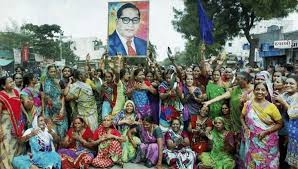
Beneath Karnataka’s recorded gender parity statistics among Scheduled Castes lies a fractured reality of caste hierarchies, poverty, and unequal opportunities for Dalit women. When the Justice H. N. Nagamohan Das Committee submitted its 1,766-page report on Karnataka’s Scheduled Castes earlier this month, one statistic jumped out of the dense pages of charts and tables. For the first time in decades, the state has recorded near gender parity in its Scheduled Caste population. Out of a total of 1.07 crore people surveyed, 53.6 lakh are men and 53.3 lakh are women, making the ratio 50.1 per cent male to 49.8 per cent female. The finding is significant in a country where skewed sex ratios have long symbolised discrimination and neglect. For policymakers in Karnataka, it marks what many are calling a “turning point” in caste and gender politics. ‘It is very rare in India’s caste demographics to see this kind of balance,’ a senior official in the Social Welfare said. ‘For us, this is not just a number; it has to become a foundation for gender-sensitive policy.’ The Committee too has framed this balance as a “positive development” that could shape the state’s future interventions in education, employment, and healthcare for Dalit women. Yet beneath the optimism lies a more complicated story. While parity is visible at the aggregate level, the micro realities of population distribution, poverty, and caste fragmentation raise the question of whether this statistical balance will actually translate into equality on the ground. The hidden divide: small sub-castes left behind The survey shows that 15 of the 101 Scheduled Caste sub-castes in Karnataka now have more women than men. Some of these groups are extremely small. The Lingader, for instance, have only 60 members statewide, but women form 62 per cent of their total population. The Mundala sub-caste, which is the largest among female-majority groups, has 31,726 members and a gender split of 52 per cent women to 48 per cent men. The district-level data also reveal striking variations. In Kodagu, Udupi, Dakshina Kannada, and Mandya, Scheduled Caste women constitute 52 per cent of the sub-caste populations, higher than the state average. ‘This kind of district-level variation is very important,’ said Dr Ramesh Gowda, professor of sociology. ‘It shows that in coastal and hilly districts, migration patterns and male mortality rates create a gendered demographic tilt. These women form the backbone of SC households, but their labour and struggles are often invisible.’ Karnataka’s Scheduled Castes have, for the first time, recorded near gender parity, with almost equal numbers of men and women. But beneath the promising statistic lies a fractured reality of caste hierarchies, poverty, and unequal opportunities for Dalit women. But parity in numbers does not automatically translate into parity in opportunity. The same report underlines that Karnataka’s Scheduled Caste population is far from homogenous. The internal composition is deeply unequal. Seventy-three of the 101 sub-castes have fewer than 10,000 members each. Another twelve fall in the 10,000 to 50,000 range. Only five groups fall between 50,000 and one lakh, while just eleven sub-castes exceed one lakh in population. The implications are clear: almost ninety per cent of Karnataka’s SC sub-castes are numerically small and scattered across the state. Their small numbers mean that even though they are constitutionally entitled to reservations, they do not have the organisational networks, political clout, or critical mass to convert quotas into tangible benefits. The report is frank about this imbalance. It observes that “despite having SC reservation, these groups do not have the numerical strength to compete with stronger communities.” In other words, the communities that are small in number end up being outcompeted by larger sub-castes within the SC umbrella, who are better networked and more visible in state institutions. The consequences of this imbalance are starkest in the area of poverty. The survey notes that many of the smaller sub-castes live in “maximum poverty”, with families struggling even to secure two proper meals a day. Beyond numbers: the politics of internal quotas For activists working in Dalit women’s rights, this gap between numbers and lived experience is painfully familiar. Shanta Devi, women activist in North Karnataka, said that the benefits of state schemes rarely trickle down to the smallest groups. ‘When the government announces scholarships or job quotas, it is usually the bigger sub-castes with hostels, coaching centres, and political leaders who benefit. Smaller communities, especially women among them, remain invisible,’ she said. The Das Committee itself cautions against reading parity as empowerment. While it notes the near-equal numbers of men and women, it also warns that “the smallest sub-castes face the greatest risk of being left out.” Many are not even properly documented in official records. Some sub-castes, like the Lingader or Adi Beda, have populations so tiny that they are easily subsumed within broader categories, erasing their distinct needs. For activists working in Dalit women’s rights, this gap between numbers and lived experience is painfully familiar. Shanta Devi, women activist in North Karnataka, said that the benefits of state schemes rarely trickle down to the smallest groups. ‘When the government announces scholarships or job quotas, it is usually the bigger sub-castes with hostels, coaching centres, and political leaders who benefit. Smaller communities, especially women among them, remain invisible,’ she said. The political backdrop to this survey is Karnataka’s long-running debate over internal reservation among Scheduled Castes. For decades, groups like the Madigas (classified as SC-Left) have argued that the benefits of the 17 per cent SC quota have been disproportionately cornered by the Holeyas or Chalavadis (SC-Right). After years of agitation, the state cabinet recently approved an internal division of the quota: 6 per cent for SC-Left, 6 per cent for SC-Right, and 5 per cent for all other SC groups. Officials described the Cabinet’s decision on internal reservation among SCs as an attempt to ensure ‘equity and social justice’ across all communities within the SC category.” Whether this formula addresses the concerns of the smallest sub-castes remains to be seen. Critics point out that
Opposition will benefit from Rahul’s walking
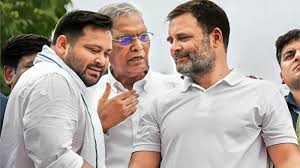
Rahul Gandhi has started ‘Vote Adhikar Yatra’ in Bihar, which is his fifth major padyatra. Its objective is to raise the issue of removal of names from the voter list and to unite the marginalized communities. Rahul Gandhi’s Bihar Voter Rights Yatra Subodh Ghildiyal: Rahul Gandhi has built his political identity and image around padyatras from the very beginning. The ‘Vote Rights Yatra’ which started from Bihar on Sunday is his fifth major padyatra. 508 days ago, he had done Bharat Jodo Yatra from Kanyakumari to Kashmir and Manipur to Mumbai, which was successful. Under his current campaign in Bihar, he will walk both on foot and by vehicle. He will cover a distance of 1300 km through 20 districts. Just need an opportunity. Even in his early days in politics, Rahul had done padyatra against land acquisition in Bhatta-Parsaul of West UP. To promote the issues of farmers, he did a ‘Kisan Yatra’ from Deoria to Delhi. In 2015, he visited Kedarnath. Its purpose was to show that the situation has become normal after the disaster of 2013. All these examples show that wherever there is a slight possibility, Rahul Gandhi takes to the streets. Shadow of SIR. But the Bihar Yatra is not like any previous campaign. It is happening at a time when the Supreme Court, accepting the demands of the opposition, has directed the Election Commission to make public the information of those whose names have been removed from the new draft roll. Assembly elections are to be held in Bihar by the end of this year and a few months before that, when the process of Special Intensive Revision i.e. SIR suddenly started, many doubts started arising. Fear of the opposition. The meeting with the Election Commission deepened the fear of the opposition that the workers, poor and marginalized people who have migrated outside the state may be excluded from the voter list. This class is considered anti-BJP. There were massive protests against SIR and the matter reached the Supreme Court. All this happened during the monsoon session of Parliament, which also gave a big platform to the opposition. This is how the possibility arose. On August 7, Rahul claimed that there was a large-scale manipulation in the voter list of Mahadevpura assembly constituency of Bengaluru Central Lok Sabha seat during the 2024 general elections. This claim shocked the country and strengthened the doubts that the Congress has been expressing on the results of some seats of Maharashtra Assembly elections and 2024 Lok Sabha elections. When the Supreme Court gave instructions to the Election Commission, it was believed that Rahul’s hard work has paid off. This also led to the possibility that could there be another yatra, which carries protest and election together? New identity. After the SIR controversy, RJD, CPI-ML and other allies welcomed the idea of the yatra. This 16-day yatra will pass through 100 to 125 assembly constituencies. There will be an attempt to woo the extremely backward classes, SC, ST, Muslims and poor sections. Rahul has created a new identity by combining caste census, removal of reservation cap, exposing atrocities and secularism. This is on the lines of Mukesh Sahni’s VIP Party and Dipankar Bhattacharya’s CPI-ML. Example of UP. The purpose of Rahul Gandhi’s Bihar visit is to attract the Bahujan Samaj and to make a dent in the vote bank of Nitish Kumar’s JDU and Chirag Paswan’s LJP. Akhilesh Yadav had made a similar strategy in UP last year, in which he was successful. In response to BJP’s extremely backward class, Samajwadi Party created its identity as PDA i.e. a party of backward, Dalit and tribal classes. Rahul Gandhi’s agenda of social justice worked in conjunction with Akhilesh and SP got a spectacular victory in the last Lok Sabha elections. SP’s victory. From 2004 till now, there is a lot of evidence that shows that in the states where Congress is marginalized, Rahul Gandhi’s presence benefits his allies or ideological rivals more. Rahul’s important role in the victory of the Mahagathbandhan in UP in 2024 is internally accepted. There is even talk that the campaign he launched against the corruption prevalent in UP in 2007 made BSP a villain and this became the basis for the victory of SP in 2012. The Rahul factor also worked during the Lok Sabha elections in Maharashtra last year. At the same time, despite Congress being a marginal party in Tamil Nadu, DMK gives importance to Rahul’s credibility. The journey will happen again. In Sasaram, Tejashwi Yadav was driving the jeep and Rahul was sitting on the seat next to him. This picture indicates that Tejashwi is in the lead role in his state. RJD has the organization, while Congress brings national leadership and ideology, whose face is Rahul. Bihar elections are still a few months away. In such a situation, this trip cannot be the last. It is expected that Rahul will hit the road again when the elections come closer. Edited by: Sanjeev Kumar Courtesy: Hindi News
When Reel Meets Real: Inter-Caste Love and Honour Killing, a Replicated Case of Dhadak-2 in Bihar

Caste inequality and discrimination breed the arrogance of caste pride, and this very understanding never allows oppressor-oppressed relations to become equitable in practice. Thus, the questions arise: In what ways can love relationships, as a site of resistance to caste-based discrimination, be antithetical to the oppressor-oppressed dichotomy in society? How far does a girl become the face of family pride? Do depressed individuals in Indian society aspire for those moments of ek dhadak? If yes, how are they crushed? I think this movie helps us deeply explore such terrain. Dhadak-2 is a romantic drama film themed on inter-caste love amid social intricacies and is considered a remake of the Tamil film Pariyerum Perumal (2018) by Mari Selvaraj. This 146-minute feature film, released on 1st August 2025, was written and directed by debutant director Shazia Iqbal. Her experiment to set the film in an urban landscape, where caste practices are camouflaged, is remarkable. In this new age of social life, where things are overtly presented, such a realistic movie perhaps sensitizes us as citizens in building a discrimination-free society across all spectrums. In the lead roles, Siddhant Chaturvedi as Neelesh Ahirwar and Tripti Dimri as Vidhi Bhardwaj played their characters authentically. Neelesh belongs to a Scheduled Caste, whereas Vidhi has Brahmin lineage. Vidhi’s first encounter with Neelesh occurs at her sister’s marriage function, where Neelesh was a paid drummer (Baja Wala). Later, Neelesh managed to get a scholarship and enrolled in a law college, where Vidhi and her brother were also enrolled. During his admission, Zakir Hussain as Haider Ansari, the Principal of the college, warned him against indulging in politics, otherwise labeling him as a “quota child” would demean him further. In the following parts, Haider Ansari—a lower-caste Muslim (Pasmanda) who himself has been a victim of caste-based discrimination—gives Neelesh straightforward advice: “Indeed, I stop you from doing politics, but if you have to choose between death and fight, you must choose to fight,” i.e., jeena hai to marna seekho, kadam kadam par ladna seekho. Neelesh’s entry into college was seen as an opening door for power and liberation, a belief his mother instilled in him during her perilous life. On the first day of college, while he was being ragged, he was immediately rescued by Shekhar—an Ambedkarite student activist who tried hard to recruit him into his organization, but Neelesh was afraid to join. Due to their involvement in campus politics, some student activists had their fellowships revoked, and as a struggle to continue their fellowships, their organization staged a sit-in protest. In such hopelessness and under administrative assault, Shekhar ultimately lost his life. He was a brilliant student and a star of the Ambedkarite galaxy, who once taught Neelesh that if you don’t join the struggle together, it will be hard to find solidarity for yourself in the future. I assume here that Priyank Tiwari, in the role of Shekhar, symbolizes the life of Rohith Vemula of the Ambedkar Students’ Association at the University of Hyderabad, where he hanged himself over similar issues. The same day, Neelesh also encountered Vidhi and reminded her of their first meeting. They became good friends, spent time together, and Vidhi became his biggest strength. Thereafter, their story spans from household discourses to happenings at the Law College (National University of Law), where both protagonists unearth the endemic Bahujan discourse of socio-linguistic discrimination in teaching pedagogy, maligned reservation debates, and the re-emphasized agenda of casteism from the status-quoist ecosystem. It captures the nuanced imagery of our everyday practices in sustaining an inequitable society. Neelesh and Vidhi are deeply in love and struggle to remain compatible lovers throughout, but the hindrances from Vidhi’s family were so disastrous that Neelesh was nearly murdered by someone named Shankar. Saurabh Sachdeva as Shankar, a special character portraying a Brahmin assassin whose goal was to eliminate low-caste people, espoused: “Main criminal nahi hoon, samaaj ki safai kar raha hoon. Poonya ka kaam hai.” I think he was an ideational embodiment of caste cruelty, a freak child of Brahmanism that hates and kills untouchables wherever they come into contact with him. Therefore, Shankar’s death at the end of the movie resonates with the destruction of such hateful ideology. Vipin Sharma as Neelesh’s father is a cross-dressing dancer who supports his family’s livelihood, and his mother’s resolute character depicts the sudden realities of depressed-class households in varying ways. His mother’s conviction, that according to the rule of the jungle, you either die or make others die for survival, is so stimulating that it corresponds to ek dhadak in the life of the depressed class, once in a while. The Case of Tanu Priya Jha and Rahul Kumar Mandal In Bihar, at Darbhanga Medical College and Hospital (DMCH), Rahul Kumar Mandal, aged 25, was a 2nd-year B.Sc. nursing student, and Tanu Priya Jha was a 1st-year B.Sc. nursing student, staying in the same campus hostel. Both fell in love and later got married unconventionally through a court marriage. Rahul Mandal belonged to an extremely backward caste group from Supaul district in Bihar, and his father, a working-class man, took informal and formal loans to bear the cost of his only son’s medical education. On the other hand, Tanu Priya Jha was a Brahmin girl whose father, Prem Shankar Jha, runs a private clinic in Saharsa, a district in Bihar. Prem Shankar Jha and his family were not ready to accept their daughter’s inter-caste marriage (pratiloma) with the “lowly” Rahul Mandal. During a college event, just three months after their marriage, Prem Shankar Jha himself carried a gun and shot his son-in-law on the campus premises in front of hundreds of students. As Rahul was shot, he ran toward his wife, Tanu Priya Jha, and collapsed in her lap. She screamed loudly in shock upon seeing her accused father, who had just killed her husband. Nearby students thrashed Prem Shankar Jha until the police arrived, protected him, and sent him to the hospital. All of this happened in the name of