
UP News: Dalit man stabbed to death in Hathras over old rivalry, angry villagers block highway

Life lost due to old rivalry, ruckus after murder, two accused arrested, police searching for others. Agra: There was a stir in Arjunpur village of Chandapa police station area of Hathras district on Tuesday night when some upper caste youths allegedly killed a Dalit man due to old enmity. The deceased has been identified as Vinay Kumar, who died in the hospital after being stabbed in the chest. After this incident, tension spread in the area and angry villagers and family members blocked the Agra-Aligarh highway for about two hours demanding justice. The angry mob also pelted stones at the houses of the accused. Members of Bhim Army and BSP also joined this protest, which made the situation more serious. Heavy police force had to be deployed on the spot to maintain law and order. When Vinay Kumar’s body reached the village on Wednesday, the atmosphere once again became heated. The family refused to perform the last rites until all the accused were arrested and a government job was assured to one of the relatives of the deceased. After a standoff that lasted for about four hours and talks with administrative officials, the body was cremated near the village pond after the assurances were given. Let us tell you that the deceased Vinay Kumar was in his 40s and he was an ‘animal friend’ who used to help in animal husbandry related work. Giving information on this matter, SP Chiranjeev Nath Sinha said, “A case has been registered immediately under the relevant sections in the matter. The two main accused, Rajesh Kaushik and Shiv Kumar, have been arrested and produced in court on Wednesday. Four police teams have been formed to arrest the remaining accused. The family has cremated the deceased as per legal and traditional procedures. The law and order situation in the area is now under control.” Police have registered a case under Indian Penal Code (BNS) sections 103 (murder), 191-2 (rioting), 109 (attempt to murder), 190 (unlawful assembly) and SC/ST Act. The deceased’s brother Litesh Kumar gave details of the entire incident in his complaint to the police. He said, “When my elder brother Vinay Kumar went out to see our animals in the barn, Raju Kaushik, Rajesh Kaushik, Shiv Kumar Kaushik, Vinod Kaushik, Ramkishan, Ramkumar and Shyamvihari from the same village surrounded him. Rajesh and Shiv Kumar caught hold of my brother, while Vinod, Ramkishan, Ramkumar and Shyamvihari were shouting, ‘Don’t leave him alive today, kill him.’ Meanwhile, Raju Kaushik stabbed my brother.” Litesh further said, “Hearing the screams, Vinay’s son Navnish, his wife, I and the neighbours ran outside and saw that they were attacking my brother. When my nephew Navnish tried to catch them, the attackers also seriously injured him. They also threatened to kill the entire family and drive them out of the village in future. I took my brother Vinay and nephew Navnish to Bangla Hospital, where doctors declared Vinay dead.” Rajan Chaudhary Courtesy : Hindi News
UP Dalit violently attacked for touching upper-caste man’s car

Dalits in India continue to face caste-based violence, discrimination, sexual assault and social boycott, despite legal protection and government laws. A Dalit young man in Uttar Pradesh’s Fatehpur district was allegedly assaulted on September 2 following a minor altercation. Aditya Kumar was reportedly riding a bike when he accidentally brushed against the vehicle of Krishna Patel, a resident of Bairagi Purwa village. Angered, Patel and his associates intercepted him and started violently attacking his head and hurling castiest slurs. Bleeding profusely, villagers rushed him to a nearby community health center, where he is currently undergoing treatment. Based on Kumar’s complaint, the police have registered a case. Dalits in India continue to face caste-based violence, discrimination, sexual assault and social boycott, despite legal protection and government laws. Recently, an eight-year-old Dalit boy was hanged upside down from a tree for touching a water pot in Rajasthan. He was asked to clean a washroom and collect garbage. The assailants launched into an attack when he asked for water after completing his work. Posted by Veena Nair Courtesy : TSD Note: This news is originally published on https:/thesiasatdaily.com/bha and is used purely for non-profit/non-commercial purposes, especially human rights.
UP Dalit woman accuses 5, including ex-Army solider of harassment

At one instance, the former soldier drag the woman into a field with the intention of raping. When she screamed for help, he ran away. A Dalit woman hailing from the Valmiki community in Aligarh’s Kotwali area of Uttar Pradesh has accused five individuals, including a retired Army soldier, of assault, molestation and death threats. In her complaint, she stated that her family is constantly pressured to leave the village. According to the Dalit woman, her mother-in-law had purchased a plot and built a house. However, a few members from the upper caste tried to construct a passage by placing shutters near her gate, even though an alternative route was available. The woman accused the retired Army soldier, Yogendra Singh, of repeated harassment and attempted rape. “He has beaten me and molested me several times. He often peeps into my house without shame. On March 8, when I went to cut fodder in the forest, he tried to drag me into a field with the intention of raping me. I screamed, and nearby farmers rushed to help. He fled, threatening to kill me,” her complaint said. He currently serves in the Provincial Armed Constabulary (PAC) in Agra. When her husband tried to oppose the harassment, Singh and his son Dushyant barged into her house with a pistol and threatened to kill him. A case has been registered under the SC/ST Act against Yogendra Singh, Dushyant Singh, Anita, Aarti, and Shivcharan. Posted by Veena Nair Courtesy : TSD Note: This news is originally published on https:/thesiasatdaily.com/bha and is used purely for non-profit/non-commercial purposes, especially human rights.
Odisha: Dalit man beaten to death after mob finds him skinning dead cow
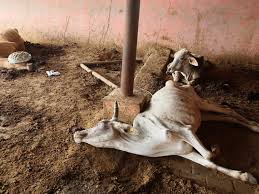
The victim, Kishore Chamar, hailed from Kaunsidhipa village and worked as a cattle skinner. In Odisha’s Deogarh district, a 35-year-old Dalit man was beaten to death on September 4 after being accused of killing a cow by a mob. The incident took place in Kendeijori village under the Reamal police station limits. The victim, Kishore Chamar, hailed from Kaunsidhipa village and worked as a cattle skinner. His co-worker was also assaulted, but the latter managed to escape. “The mob found them cutting up a dead cow. Angered, they attacked Kishore and his colleague. The latter escaped with injuries, but Kishore was not lucky,” Deogarh Superintendent of Police Anil Kumar said, adding the animal had died naturally. Six individuals, Prabhat Kumar Sahu, 36, Ghanashyam Pradhan, 30, Gajanan Kalet, 18, Kumarmani Karlo, 60, Suresh Kisan, 55 and Deepak Kumar Behera, 37, have been arrested. Further investigations are underway. Odisha has seen a string of similar incidents, with dairy farmers and cattle skinners facing brutal attacks and harassment over cow-related allegations. On September 6, four dairy farmers were allegedly attacked by cow vigilantes in Bhubaneswar, where one calf was killed in the midst of the chaos. Posted by Veena Nair Courtesy : TSD Note: This news is originally published on https:/thesiasatdaily.com/bha and is used purely for non-profit/non-commercial purposes, especially human rights.
Tippiri Tirupathi: New commander of Naxals, a Dalit from Telangana
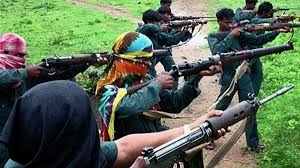
Tirupathi, in his 60s, hails from Korutla in Telangana’s erstwhile Karimnagar district. Hyderabad: Continuing the legacy of Telugu leadership within the Maoist movement, Tippiri Tirupathi, a Madiga Dalit operating under the alias Devuji, has been appointed as the new general secretary of the CPI (Maoist), according to sources in security forces. Tirupathi, in his 60s, hails from Korutla in Telangana’s erstwhile Karimnagar district. His elevation follows the killing of Nambala Keshav Rao alias Basava Raj during Operation Kagaar on May 21 a watershed moment that marked the first time in decades that the Maoists found themselves without a supreme leader, and the first successful neutralization of such a high-ranking Naxalite by security forces. Intelligence sources identified two frontrunners to succeed Keshav Rao, Tippiri Tirupathi and Mallojula Venugopal Rao. While Tirupathi leads the Central Military Commission (CMC), the party’s armed wing, Venugopal Rao serves as the current ideological head. Ultimately, the organization selected Tirupathi for the top position. In a significant parallel appointment, Madvi Hidma alias Santosh, commander of the People’s Liberation Guerrilla Army (PLGA) 1st Battalion, has been designated as secretary of the Dandakaranya Special Zonal Committee (DSZC). This role makes him responsible for party activities across Chhattisgarh’s Bastar division, considered a crucial operational region for the Maoists. through organizational ranks due to his early involvement and tactical acumen. Now commanding Battalion 1 of the PLGA, Hidma oversees one of the most lethal and rigorously trained units within the Maoist structure. Operating primarily across Sukma, Dantewada, and Bijapur regions of Chhattisgarh, this battalion distinguishes itself as the most heavily armed formation, with 80 percent of personnel equipped with automatic or semi-automatic weapons, including AK-series rifles, self-loading rifles, and light machine guns. Given his strategic importance, Hidma operates within a three-layer security cordon. Beyond his PLGA role, he serves as a Dandakaranya Special Zonal Committee member and has been inducted into the CPI (Maoist) Central Committee, making him among the youngest to achieve such status. The Maoists currently face their most severe leadership vacuum and organizational crisis in years. Since Operation Kagar’s launch, they have been unable to convene core committee meetings as cadres and leadership remain scattered. Security forces have strategically surrounded the Karregutta hills, a traditional safe haven along the Telangana-Chhattisgarh border from all directions. “Special forces discovered the leadership transition after interrogating Kamlesh, a Maoist Central Committee member who recently surrendered in Andhra Pradesh,” revealed a top source in the anti-Naxal squad. Since the 2004 merger that created the CPI (Maoist) by unifying the CPI (Marxist-Leninist) People’s War, predominantly active in Andhra Pradesh with the Maoist Communist Centre of India from Bihar and West Bengal, undivided Andhra Pradesh has consistently provided leadership to India’s Naxal movement. This tradition encompasses figures like Kondapalli Seetharamaiah, a former schoolteacher who established the CPI (ML) People’s War in 1980, and Nambala Keshava Rao alias Basavaraju from Srikakulam, who became the CPI (Maoist) General Secretary in 2018 and gained recognition for his military strategies. The significance of this regional influence was underscored when the merger was announced in Hyderabad, highlighting undivided Andhra Pradesh’s centrality to the movement. SNV Sudhir Courtesy : DH Note: This news is originally published on https:/deccanherald.com/bha and is used purely for non-profit/non-commercial purposes, especially human rights.
In a new book, a journalist writes about the life of a young Dalit boy growing up in Mumbai
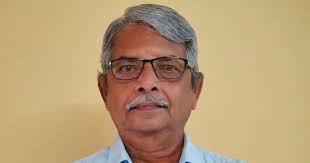
An excerpt from ‘Scum of the Earth: A True Story from the Margins’, by Rakshit Sonawane. When the Giraffe brand compass box was launched in the market, it became an instant craze among students. Within a week, everyone in Avinash’s class had one – except him. One evening, when he had accompanied Godavari to the market, he saw the compass box at a stationery shop. He told her about it, and she hesitantly inquired about its price. The shopkeeper promptly presented one of the compass boxes at the counter and mentioned its price. “Oh, we’ll buy it later,” she said, handing it back. Avinash knew the reason behind her answer and kept quiet. At school the next day, Panvelkar announced that he would conduct a special coaching class after school hours to prepare deserving students for the elementary and intermediate grade drawing examinations conducted by the state government. A few interested students raised their hands. Avinash wanted to take the class as well, but he did not raise his hand – signing up for the special class meant paying an extra fee. He avoided looking at Panvelkar and kept doodling in his notebook with a pencil stub, desperately wishing for some magic that would make him disappear from his teacher’s sight. “What about you?” he heard Panvelkar ask, but he did not look up. There was silence in the class. “Avinash, I’m asking you,” Panvelkar said. Prasad nudged him, and Avinash’s heart missed a beat. He stood up and looked around. The entire class was agog over the conversation that was unfolding. “Not interested?” Panvelkar asked. Avinash avoided making eye contact with his teacher and didn’t say anything. “You will pick up very fast,” Panvelkar said. “I want students like you.” “I’ll ask my parents,” Avinash mumbled, hanging his head. Panvelkar looked at him, bewildered. “All right,” he said. “Let me know.” That evening, when Avinash brought up the topic at home, Godavari got irritated. “Where will the money come from? You think it grows on trees?” she shouted. Without saying another word, he went and sat on the threshold of the house, looking at the fascinating spectacle of the city spread out below, vibrant as ever. A few days later, while walking in the school corridor during recess, Avinash spotted Panvelkar coming down the corridor from the opposite direction. To avoid him, he started walking behind some students. Keeping his head down as he walked, Avinash hoped that Panvelkar had not seen him, but in vain. “Avinash,” he heard Panvelkar’s voice and stopped. “Have you told your parents about the drawing class?” “Err … yes, sir,” he said. “But they said there was no need to join it.” “Why? What’s the problem?” Panvelkar asked. “They are not interested.” Panvelkar looked at him for a while. “Are you interested?” “I am, but …” “But?” “They say we can’t afford it.” “Oh. Ask your mother or father to see me, and you start coming to the extra class from today,” Panvelkar said. Avinash nodded. He wasn’t sure how his parents would react, but he hoped that Panvelkar would convince them to let him join the class. The temptation of playing with colours was irresistible. So, that day, he stayed back after classes and went to the art classroom. Without a word, Panvelkar opened a cupboard and provided him with pencils, colours, brushes and paper. Then he started instructing all the students in the class, and Avinash soon got lost in his favourite subject. Reaching home late in the evening, he found Godavari busy cooking and his father away on duty. She greeted him with a glare. “Why are you so late?” she demanded. When he told her about what had happened, she calmed down and after a long pause said, “Your education is becoming more and more expensive by the day.” The next day, when Avinash and the other students were in the art class, Dagadoo appeared at the door of the classroom. He was dressed in his watchman’s uniform. Avinash went to Panvelkar and told him that his father had come to meet him. Panvelkar asked him to continue with his work and went to talk to Dagadoo. The students in the class looked at one another, their eyebrows raised in curiosity. “That’s my father,” Avinash said. “Your father is a watchman?” Atharva asked. “Yes,” Avinash replied. Atharva shrugged, while some of the more amused students giggled. After a brief whispered conversation, Dagadoo folded his hands, smiled and left. “Your father has agreed to let you attend this class,” Panvelkar told Avinash when he came back in. “You can continue now.” When Avinash reached home that evening, Dagadoo told him that Panvelkar had waived the fee for him. It came as a beautiful surprise, and from that day onwards, Avinash started finding the school less repulsive. He would wait eagerly for the regular classes to conclude so that he could rush to the art classroom A month later, Panvelkar announced that an inter-school painting competition had been organised. He selected Avinash and three others, including Atharva, from the entire school to participate in it. When Avinash hesitated, Panvelkar called him closer and whispered that he would also provide the necessary drawing material for the competition, which was in two weeks’ time. The competition venue was the spacious hall of another school nearby. On the day of the competition, as he was nearing the entrance, Avinash saw Atharva approaching. They smiled and wished each other luck as they walked in together. “I had gone to a temple today to offer special prayers for my success,” Atharva said, pointing at the tilak, the holy mark, on his forehead. “You didn’t go?” Avinash shook his head. “We follow Buddhism, and there is no god in Buddhism,” he said as Atharva cast him a scornful glance. Suddenly, a cat crossed their path, startling Atharva, who halted and retraced a few paces, muttering something inaudibly. “What happened?” Avinash asked. “Didn’t you see the cat
Telangana HC clears constable post for Dalit woman after 8 yr case
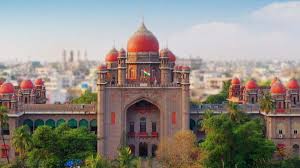
Division Bench upholds single-judge order, dismisses govt appeal against appointment under SC and local quota in 2015 constable recruitment. Hyderabad: A Dalit woman has secured an appointment as a police constable after the Telangana High Court upheld her petition. The court directed that she be considered under the Scheduled Caste reservation and local quota. In the 2015 recruitment for Stipendiary Cadet Trainee Civil Police Constable and Armed Reserve Constable posts, K Sangeetha of Hyderabad’s Gowliguda was rejected on the grounds of being a non-local candidate. She challenged the decision by filing a petition before the High Court in 2017. A single-judge bench ruled in March 2025 that she was entitled to be appointed under the SC reserved category and local quota. The state government and police recruitment board filed appeals questioning this order. A division bench of Chief Justice Apresh Kumar Singh and Justice GM Mohiuddin at the Telangana High Court on Monday dismissed the appeals, upholding the earlier direction for her appointment. Posted by P N Sree Harsha Courtesy : TSD Note: This news is originally published on https:/thesiasatdaily.com/bha and is used purely for non-profit/non-commercial purposes, especially human rights.
After the Voter Rights Yatra in Bihar, Congress is busy campaigning to keep the atmosphere hot against the government, released a newsletter

Bihar Assembly Election 2025: After the Voter Rights Yatra in Bihar, now the Congress is publicizing the purpose of this journey. It is accusing the BJP of vote theft and tampering with the voter list through SIR. Patna: Congress has started publicizing its purpose after Rahul Gandhi’s Voter Rights Yatra in Bihar. After the journey, the Congress released a newsletter. It tells about Rahul Gandhi’s nationwide campaign to “expose vote theft and protect democracy”. Regarding Rahul Gandhi’s visit to Bihar, the Congress has said that this journey was done to protect the rights of voters. This journey passed through 25 districts. The process of assembly elections in Bihar is likely to start after mid-October. Before this, the National Democratic Alliance (NDA) and India Alliance (INDIA Bloc) are putting all their strength to create an atmosphere in their favor. Congress said – will protect the rights of voters Congress has told about Rahul Gandhi’s campaign against “vote theft” in a post on X. Congress has said that the purpose of his Voter Rights Yatra in Bihar is to protect the rights of voters. Congress said, “Our campaign against vote theft has exposed how BJP is stealing votes and rigging elections in connivance with the Election Commission.” Congress has urged people to read the newsletter so that they can get more information. The newsletter explains in detail the campaign against electoral malpractices. It says that Rahul Gandhi exposed “voter fraud and the role of the Election Commission (ECI) in helping the BJP” for months. It also says that the real turning point came when he caught more than one lakh fake votes in Bangalore Central. After this, he started the Voter Rights Yatra in Bihar to convey the message directly to the people. Voter rights claim to become mass movement The newsletter claims, “What started as a leader’s fight has now become a mass movement to protect our right to vote.” It said the yatra highlighted the disenfranchisement of lakhs of voters through the Special Intensive Revision (SIR) of voter lists. The yatra covered 1300 km in Bihar and included 18 rallies. These were attended by All India Alliance leaders like RJD leader Tejashwi Prasad Yadav, CPI-ML’s Dipankar Bhattacharya and VIP’s Mukesh Sahni. The newsletter also said that Rahul Gandhi had a tea party with Bihar residents declared “dead” in the Election Commission’s SIR draft voter list. He participated in harvesting makhana with farmers in Purnia. He also traveled on a Bullet with his sister Priyanka Gandhi and Tejashwi. The newsletter alleged that BJP people are “stealing votes” in five ways. These methods are – fake and invalid addresses, misuse of Form 6, duplicate voters, bulk voters at the same address and invalid photographs. Curated by: Suryakant Pathak About the author Suryakant Pathak is a consultant at Navbharat Times Online. He has been doing journalism for the last 31 years. He writes news, analysis and blogs on India’s international relations, political-social developments in the country and the world. He started as a reporter in Dainik Bhaskar in 1995. Courtesy: Hindi News
Anticipatory bail in SC/ST Act is not easy! Supreme Court’s latest decision to stop Dalit oppression which is very important for you to know
The court, citing Ram Krishna Balothia vs State of Madhya Pradesh (1995), said that such crimes belong to a special category, which are related to untouchability, so the criminal cannot be given a chance to threaten the victims by granting bail. New Delhi- In a recent important decision, the Supreme Court has overturned the order of the Bombay High Court, taking a tough stand on granting anticipatory bail under the Scheduled Castes and Scheduled Tribes (Prevention of Atrocities) Act, 1989 (SC/ST Act). This decision is very important because it limits the facility of anticipatory bail in cases of casteist oppression against Dalit and tribal communities, thereby strengthening the process of getting justice to the victims and preventing the criminals from threatening or influencing the witnesses. The court clarified that there is a complete ban on anticipatory bail under Section 18 of the SC/ST Act, except in cases where the crime is not proved prima facie. This judgment is a strong step towards social justice, which strengthens the principle of abolition of untouchability under Article 17 of the Constitution. The case pertains to the Paranda police station of Dharashiv district of Maharashtra, where the appellant Kiran, who belongs to the Matang (Mang) Scheduled Caste community, lodged an FIR on November 26, 2024 against the accused Rajkumar Jivraaj Jain and others. The FIR registered offences under Sections 118(1), 115(1), 189(2), 189(4), 190, 191(2), 191(3), 333, 324(4), 76, 351(3) and 352 of the Indian Penal Code (BNS) along with Sections 3(1)(o), 3(1)(r), 3(1)(s), 3(1)(w)(i) of the SC/ST Act. The incident took place on 25 November 2024 at 11 am, a day after the assembly elections, when the accused and their associates reached the appellant’s house and attacked him using casteist slurs. According to the FIR, accused Rajkumar Jain hit the appellant on the head and back with an iron rod, saying “Mangtyan, you have become very arrogant”, causing the appellant to fall down. The accused also hurled casteist slurs at the appellant’s mother Mohini and aunt Rekha, pulled their sarees, assaulted them and threatened to burn down the house. During this, the mother’s one tola gold mangalsutra fell off and household articles were damaged. The appellant’s friend Yashwant Bodre was also beaten up for being from the Ramoshi community and voting against the government. The accused had a petrol bottle in their hand and were threatening to burn down the house. Some people from the village came to intervene, following which the appellant was sent to the hospital and an FIR was registered from there. The judgment is significant as it limits the facility of anticipatory bail in cases of casteist atrocities against Dalit and tribal communities, thereby strengthening the process of access to justice for victims and preventing perpetrators from threatening or influencing witnesses. The incident occurred due to the appellant not voting for the accused’s preferred candidate in the assembly election, which is an offence under Section 3(1)(o) of the SC/ST Act, as it deals with punishing a Scheduled Caste member for voting or not voting. The appellant alleged casteist insult, insult in a public place (Sections 3(1)(r) and 3(1)(s)), and touching of sexual nature against women (Section 3(1)(w)(i)). The accused belong to the Jain community, which is not a Scheduled Caste/Tribe, hence the SC/ST Act applies. Additional Sessions Judge, Paranda rejected the anticipatory bail plea of the accused as prima facie offence was proved, caste certificate confirmed the Scheduled Caste of the appellant and statements of witnesses were available. But the Aurangabad bench of Bombay High Court on 29th April 2025 granted anticipatory bail to the accused in Criminal Appeal No. 201/2025, stating that the case appears to be exaggerated, there are inconsistencies in the statements of witnesses and the incident is motivated by electoral politics. The High Court granted bail terming the nature of injuries as minor. The special leave petition of the appellant was heard in the Supreme Court, where Justice N.V. Anjaria along with Chief Justice B.R. Gavai and Justice K. Vinod Chandran delivered the judgment. The court set aside the High Court order and said that there is a complete bar on anticipatory bail under Section 18 of the SC/ST Act, which prevents the application of Section 438 of the Code of Criminal Procedure (CrPC). Citing earlier judgments such as Vilas Pandurang Pawar v State of Maharashtra (2012), Prithvi Raj Chauhan v Union of India (2020) and Shajan Skaria v State of Kerala (2024), the court clarified that the court has to examine the prima facie offence only on the contents of the FIR and not conduct a detailed analysis of the evidence or a mini trial. Here, it is clear from the FIR that the accused insulted the appellant by using the casteist word “mangtyans”, which happened in public view and was caste-related. The court said that in such cases, the bar can be lifted only as an exception when the offence is not made out prima facie, but here all the elements are present. The State of Maharashtra also opposed the bail of the accused. The judgment strengthens the objective of the SC/ST Act, which is to make the Scheduled Castes and Tribes socio-economically strong and protect them from humiliation. Citing Ram Krishna Balothia vs State of Madhya Pradesh (1995), the court said that such crimes belong to a special category, which are related to untouchability, so the offender cannot be given an opportunity to intimidate the victims by granting bail. Referring to the interpretation of “public view” in cases like Swarn Singh (2008), Hitesh Verma (2020) and Karuppudayar (2025), the court said that the incident outside the appellant’s house falls in public view. The judgment clarified that these comments are prima facie and will not affect the trial. The decision has been welcomed by Dalit rights activists, as it will speed up justice in cases of oppression and avoid political pressure. BANAE National President Dr Nagsen Sonare said, “Anticipatory bail cannot be granted under Section 438 of CrPC as it is prohibited
Kerala: Tribal settlements of Idukki still deprived of basic facilities, warning of election boycott

Tribal settlements of Idukki still away from road and health facilities, angry community decided to boycott elections. Kerala: Ahead of the local body and assembly elections in the state, the lack of basic facilities in the major tribal settlements of Idukki district has once again become a topic of discussion. The biggest concern is that two Muthuvan tribal settlements of Edamalkudi Panchayat and five settlements of Vattavada Panchayat are still completely cut off from road connectivity. A report submitted by the State Special Branch to the Kerala Government states that the resentment of the people is increasing due to the continuous lack of facilities in the Edamalkudi area. Carrying patients on bamboo stretchers Due to lack of road connectivity, patients in areas like Edamalakudi, Swamiyarlakudi, Koodallarkudi, Mele Valsapettikudi, Vayaltharakudi and Parasukkadavukudi have to be carried to the hospital through forests on makeshift stretchers made of bamboo. Recently, an elderly woman was carried to the hospital in Mankulam through dense forests for 10 km in a similar way. A child died on August 21. In another incident, a woman suffering from asthma could not be taken to the Family Health Centre in Societykudi in time, due to which her condition deteriorated and she later lost her life. “The tribals of the district have been demanding basic amenities and road connectivity for a long time, but no concrete steps have been taken so far,” said a tribal member of the Vattavada panchayat. Announcement of boycott of elections In a recent meeting of tribal leaders of two wards of the Vattavada Gram Panchayat, a decision was taken to boycott the upcoming elections. In the meeting of tribal chiefs (Ooru Kootam), it was decided that there will be no participation in the elections. To fill the reserved seats in the Panchayat, political parties need to field candidates from these five settlements, but no one is ready to come forward. Unfulfilled hopes even after 15 years According to the information, the recent death of a five-year-old child in Koodallarkudi settlement of Edamalakudi has shaken the people of the Panchayat. It is noteworthy that in the year 2010, the first tribal Gram Panchayat was formed exclusively for the Muthuvan community. But even after 15 years, the community is struggling for basic facilities. The Intelligence Wing report has recommended the government to intervene immediately and solve the problems. Rajan Chaudhary Courtesy: Hindi News