
Supreme Court adjourns plea on horizontal reservation for transgender doctors in NEET-PG admissions

The plea contends that the absence of horizontal reservation contravenes the Supreme Court’s NALSA ruling, which mandated affirmative action for transgender persons in education and public employment The Supreme Court on Thursday (September 18, 2025) adjourned till next week the hearing of a plea by three transgender doctors seeking implementation of one per cent horizontal reservation for transgender candidates in postgraduate medical admissions under NEET-PG 2025–26. The examination was held on August 3, and the results were declared on August 19. Senior advocate Indira Jaising, appearing for the petitioners, urged a Bench of Chief Justice of India (CJI) B.R. Gavai and Justice K. Vinod Chandran to pass an “innocuous order” earmarking two seats under the all India quota and two under the State quota for transgender candidates. The Chief Justice said such a direction could create uncertainty in the admission process. “We cannot keep seats everywhere in limbo. You are asking for two seats in the all India quota, two in the State quota,” he remarked. The Bench also noted the submission of the National Medical Commission counsel that counselling had not yet begun for the postgraduate medical courses and that no immediate urgency warranted such an order. “Counselling has not started. We will keep this matter for next week high on board,” the CJI said. The plea relies on the Supreme Court’s 2014 landmark ruling in NALSA v. Union of India, which recognised transgender persons as a “third gender” and mandated their inclusion through affirmative action in education and public employment. During the proceedings, Ms. Jaising informed the court that petitioner Kiran A.R. had withdrawn from the case and that only petitioners 2 and 3, from the OBC and general categories respectively, would continue with the plea. Appearing for the Union government and medical authorities, Additional Solicitor General Archana Pathak Dave submitted that Solicitor General Tushar Mehta wished to personally address the broader issue of reservation for transgender persons. The Bench then posted the matter for hearing on September 23. The top court had earlier observed that if there was a judicial direction mandating a quota for transgender persons, it ought to be implemented. Addressing the Solicitor General, the Chief Justice had remarked, “If the 2014 judgment requires reservation to be provided, you have to comply. Why don’t you implement it within the 15% quota?” Notably, 85% of seats in government medical colleges are reserved under the State quota, while the remaining 15% fall within the all India quota. Affirmative action The petitioners have also challenged the April 16 notice and April 17 information bulletin issued by the National Board of Examinations in Medical Sciences, contending that the omission of such a quota contravenes the court’s 2014 ruling, which mandated affirmative action and reasonable accommodation for transgender persons in education and public employment. “As a result of the impugned notice, the petitioners are left with a right without remedy, whereby there are now no reservations for transgender persons in postgraduate medical education despite the binding declaration of the law by this court,” said the plea, filed through advocate Paras Nath Singh. The plea argued that in the absence of horizontal reservation, transgender students would be deprived of equal opportunity, as no specific reservation is currently extended to them to ensure representation in postgraduate medical education, despite the community facing entrenched social barriers. It added that the 2014 verdict had recognised the fundamental rights of transgender persons under the Constitution, including the right to self-determination of gender identity. In March 2023, a Supreme Court Bench led by then Chief Justice D.Y. Chandrachud had refused to entertain an application seeking clarification on whether the NALSA judgment mandated horizontal reservation. Aaratrika Bhaumik Courtesy : The Hindu Note: This news is originally published on https:/thehindu.com/bha and is used purely for non-profit/non-commercial purposes, especially human rights
Dalit youth attacked with sword: Bullies slit his vein after he stopped him from drinking alcohol; Chandrashekhar Azad threatens agitation
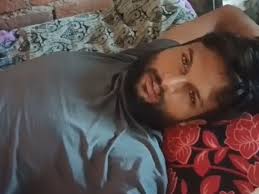
A case of a sword attack on a Dalit youth by bullies has come to light in the Bachhrayun police station area of Amroha. The incident occurred on August 17th, when Shivam Singh, a resident of Musallepur village, stopped some people from drinking alcohol outside his house. A man named Siddhant Deora was drinking alcohol with his friends outside the victim’s house. When he objected, the accused called his other friends. The bullies beat Shivam and his father, attacking them with a sword, severing a vein in Shivam’s hand. The victim was admitted to a private hospital in Meerut in critical condition, where he remained for 15 days. According to doctors, the severed vein in his hand will no longer function. Shivam works as a scrap dealer with his father, and their home is located on the roadside outside the village. Azad Samaj Party chief Chandrashekhar Azad has raised the issue on the social media platform X. He has demanded the state government arrest the accused. Chandrashekhar has warned that if the culprits are not arrested soon, his organization will launch a mass movement. Rohit Prajapati Courtesy: Hindi News
Protest against quota for other castes in Gorakhpur’s Dalit hostel: Students and MLCs take to the streets, demanding immediate intervention from the administration.
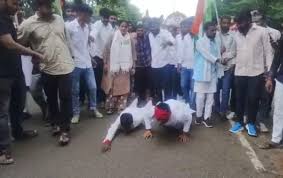
Dalit students in Gorakhpur today protested against the state government’s order. The Uttar Pradesh government has decided to reserve 30 percent of seats in the state-run Scheduled Caste hostel for students from other castes. Students say this move will affect their rights and the learning environment. The protest started from Town Hall Chowk and reached Ambedkar Chowk. A large number of students participated in the protest and protested the government’s order through sloganeering. Students say that giving a 30 percent quota to students from other castes in a hostel built solely for Dalit students’ studies and accommodation is completely unjust. The students warned that if the order is not withdrawn, the agitation will intensify. MLC Devendra Pratap Singh extends support Gorakhpur MLC Devendra Pratap Singh was also present at the protest with the students. He said that this order is not only unjust but also violates the rights of Dalit students. He assured the students of justice and his support for their struggle. Indeed, MLC Devendra Pratap Singh was injured in a road accident yesterday. Despite this, he participated in the protest with the students today. He said, “Just as Rana Sanga suffered 80 wounds in the war and still continued to fight, today I stand up for the rights of Dalit students.” Students threatened to intensify the agitation. The students insisted that the hostel was built solely for the convenience of Dalit students and that the 30 percent quota for students from other classes was wrong. They warned that if the government did not withdraw the order, the agitation could escalate. The students reiterated their demand for justice from the local administration and the state government. Abhijeet Singh Courtesy: Hindi News
Dalit Woman Gang-Raped in Odisha’s Puri Nation
Ex-CM Naveen Patnaik expresses shock, slams BJP govt’s failure on women’s safety. Bhubaneswar: A 20-year-old Dalit woman was allegedly gang-raped near the Maa Baliharachandi temple in Puri district, about 50 km from the state capital, after she and her male friend were filmed and blackmailed by a group of men. The incident, which took place on September 13, has sparked outrage across Odisha. According to police sources, the woman and her friend had visited the temple and later headed to a nearby beach, where they were followed by the accused. The men secretly filmed the couple and demanded extortion money, forcing them to transfer Rs 2,500 via mobile and pay Rs 1,000 in cash. When the duo refused to give more, the miscreants thrashed the man and then took turns to rape the woman in front of him. The couple was later abandoned in a nearby forest area. The survivor managed to narrate her ordeal to locals, who immediately informed the police. Three accused were taken into custody immediately while the main suspect, identified as Shiv Prasad Sahu, was arrested on Tuesday afternoon before fleeing to Andhra Pradesh. The police has seized the mobile phones used in the crime. Reacting strongly to the incident, BJD president and former Odisha Chief Minister Naveen Patnaik said he was “deeply shocked and anguished” to learn about the crime “It is heart-rending to witness such horrifying patterns of violence against women reported across Odisha,” Patnaik said, adding that the BJP-led state government had “miserably failed to create confidence in the system where our daughters feel safe, valued and heard.” He accused the ruling dispensation of making “theatrical displays of concern” while crimes against women continue unabated. Referring to similar incidents in Gopalpur, Balasore and Balanga, he said many victims and their families were still waiting for justice. “If such a crime happens near a popular tourist spot often thronged by visitors from across the world, it will not only devastate the survivor but also tarnish Odisha’s image nationally and internationally,” Patnaik warned. He urged the BJP government to take the “strongest possible action” to restore women’s faith in the justice system. Akshay Kumar Sahoo Courtesy : Deccan Chronicle Note: This news is originally published on https:/deccanchronicle.com/bha and is used purely for non-profit/non-commercial purposes, especially human rights
Shankar Bigha Massacre, Ranveer Sena killed 34 Dalits in exchange for 10 Savarnas:Vajpayee dismissed Rabri govt; women demanded arms instead of compensation from Rabri

The date was 25 January 1999. The country was preparing to celebrate the 50th Republic Day. Just moments earlier, President K. R. Narayanan had addressed the nation, saying: “Atrocities on Dalits must stop.” But something very different happened that night. Shankar Bigha is a village in the Arwal district of Bihar. At that time, it was part of Jehanabad district. There were about 110 houses in this village, with over 100 Dalit families living there. None of them had permanent houses or agricultural land. They had settled here for daily-wage labour. It was half past ten on a freezing winter night. Around 100 armed men entered the village, carrying guns and axes. The first house belonged to Bhairon Rajvanshi. He was sleeping with his wife and children when he heard a noise. Startled, he wrapped his bedding around himself, ran out, and shouted to his wife, “Take the children and run. The army people have come.” Bhairon managed to escape, but his wife and children stayed inside. The attackers entered the house, firing shots. The first bullet hit Bhairon’s wife in the legs, and she collapsed. One of the attackers grabbed the children from the cot and threw them on the ground. Bhairon’s wife screamed, “Leave my children alone. What harm have they done to you?” One attacker dragged her by the hair and shouted, “You people support the MCC, don’t you? No one in this village will survive tonight. We will wipe you all out.” The attacker shot both children dead on the spot. The woman beat her chest and wailed. Enraged, the attacker slashed her neck with a sword. Then four or five more assailants entered. They fired indiscriminately all around the house for a while and then left. A vigil was taking place in a large veranda. About 10–15 people were singing and dancing. The sound of gunfire had not yet reached them. Around 40–50 attackers had surrounded the veranda from all sides. One of them said, “Shall we pour kerosene and burn everyone?” Another replied, “No, they are all awake. They will run. They might even have guns.” An attacker, tying his dhoti tightly around his waist, said, “Look, we don’t have much time. Quickly get into the veranda and attack. Don’t give them a chance to escape.” The attackers charged in. They entered the porch, firing indiscriminately. Bullets rained down on the people performing kirtan. Within minutes, ten bodies lay there. A few somehow managed to flee into the fields. From there, the attackers moved house to house, shouting slogans. Whoever they found, they shot dead. Those who survived the bullets were hacked with axes. The entire village echoed with screams. Soon, gunfire was heard from neighbouring villages. The attackers’ commander was startled, wondering where the firing was coming from. Could it be that the MCC had arrived? He quickly told his men, “It seems the MCC people are here. Look, a crowd is coming. Let’s get out of here.” The attackers fired in the air, shouted slogans, and escaped towards the western side of the village. Bhairon Rajvanshi had been hiding in the haystack, watching everything. As soon as the attackers left, he ran home, gasping for breath. He called to his wife from the doorway, but there was no reply. Terrified, Bhairon stepped inside. Something struck his foot. Trembling, he switched on his torch. His wife’s body was lying before him. Blood was splattered everywhere. He stepped forward and saw the body of his elder son under the cot. Bhairon felt faint. He steadied himself and entered the other room. There, he found three more bodies – his two brothers and his younger son. Five members of his family had been slaughtered. He began screaming hysterically, “I am ruined! They have killed everyone. They have spared no one!” It was already midnight. The sound of crying and wailing echoed throughout the village. Corpses lay scattered in the streets. Meanwhile, the phone rang at the Jehanabad police station: “There has been a massacre in Shankar Bigha village.” Around 2 a.m., Jehanabad SP Manmohan Singh and ASP K. K. Singh arrived at the village. The SP went from house to house, surveying the scene. A total of 23 bodies were found. Among the dead were five women and seven children. One child was barely ten months old. The gunshot had ripped his intestines out – the attackers had pressed the barrel of the gun to his stomach before firing. Senior journalist Ramashankar Mishra recalls the massacre: “I reached the village on the morning of 26 January. It was a heart-wrenching sight. Some bodies were riddled with bullets, some had their hands cut off, others had their eyes gouged out. Houses, verandas, and alleys were all stained with blood.” This was the Shankar Bigha massacre. The Ranveer Sena was accused of carrying out the killings. About 20 days earlier, a newspaper had reported that the Ranveer Sena chief had announced the next location of their attack had been chosen. And it happened exactly there. In 1998, ten upper-caste people had been killed in Chauram, in Arwal district. The Maoist organisation MCC was accused of the killings. The Ranveer Sena believed that the people of Shankar Bigha had assisted the Maoists – and that was why the village was chosen for retaliation. On the morning of 27 January, Chief Minister Rabri Devi and Lalu Prasad Yadav reached Shankar Bigha. The crowd erupted in anger as soon as they saw them. Women hurled abuses. People shouted slogans – “Down with Lalu-Rabri! Social justice is a sham! End the Ranveer Sena! Rabri government, resign!” Lalu tried to pacify the crowd: “Listen, we will ensure justice for everyone. The families of those killed will receive one lakh rupees each. Every villager will be given twenty thousand rupees to build houses. A school and a panchayat building will be constructed here.” But the announcement only inflamed tempers. A woman carrying her child walked up to Rabri and screamed: “We don’t
Dalit man hacked to death in Mayiladuthurai over intercaste relationship

A 28-year-old Dalit mechanic, K Vairamuthu, was brutally murdered in Tamil Nadu’s Mayiladuthurai on September 15, allegedly over his relationship with a woman. The killing has sparked widespread protests, with political parties and rights groups demanding action under the SC/ST (Prevention of Atrocities) Act. A 28-year-old Dalit man from the Paraiyar community was hacked to death in Tamil Nadu’s Mayiladuthurai district late on Monday, September 15, allegedly over a relationship with a woman. The killing has triggered strong protests with the political leaders blaming the police for failing to thwart the crime despite repeated complaints. The deceased, identified as K Vairamuthu, a diploma holder in DME and a two-wheeler mechanic from Adiyamangalam village, had reportedly been in a decade-long relationship with Malini (26), an MBA graduate employed in Chennai. Her family had opposed the relationship. According to reports, around 10.30 pm, when Vairamuthu was on his way home, a gang of men intercepted him and attacked him with sickles. He sustained deep injuries to his neck and wrists and was rushed to the Mayiladuthurai Government Hospital, where he succumbed. While Malini’s father belongs to the Paraiyar community, her mother Vijaya is reportedly from the Backward Class (BC) Chettiar community. Vijaya is said to have strongly opposed Malini’s relationship with Vairamuthu and their plans to marry. On September 14, the police had mediated between the two families. Malini reportedly asserted her decision to marry Vairamuthu, even moving in with him after her family disowned her. Her family also gave a written statement to the police that they would not interfere in the marriage. On the day of the murder, Malini had travelled to Chennai to collect documents for registering their marriage. Later that night, Vairamuthu was waylaid and killed. Following a complaint by Vairamuthu’s mother, Rajalakshmi, police registered a case and formed four special teams. At least 10 suspects, including Malini’s brothers Gugan and Gunal, have been detained for questioning in connection with the murder. The killing has triggered protests in Mayiladuthurai, with over 150 people — including Malini, Vairamuthu’s relatives, and members of the Communist Party of India (Marxist) [CPI(M)], Democratic Youth Federation of India (DYFI), Viduthalai Chiruthaigal Katchi (VCK), and the Tamil Nadu Untouchability Eradication Front — staging a road blockade near the Mayiladuthurai Government Hospital and on the Mayiladuthurai–Kumbakonam highway. They have demanded that all accused, including Vijaya, be booked under the SC/ST (Prevention of Atrocities) Act and that adequate compensation be given to Vairamuthu’s family. Traffic on the highway was disrupted for hours on Tuesday as protesters refused to receive Vairamuthu’s body until their demands were met. CPI(M) state secretary P Shanmugam condemned the killing, describing it as a caste-based murder, and alleged that despite repeated threats and complaints, the police had failed to provide protection to Vairamuthu. Written by:TNM Staff Courtesy : TNM Note: This news is originally published on https:/thenewsminute.com/bha and is used purely for non-profit/non-commercial purposes, especially human rights
Dalit woman assaulted and robbed in Rae Bareli: Violent men beat a woman for building a field fence, snatched gold jewelry from a woman who came to her rescue; case filed
A Dalit woman was assaulted and robbed in Maharajganj, Rae Bareli. Following the orders of the SC/ST Court, police have filed a case against four individuals. The incident occurred at 2 p.m. on July 13th. Siyavati was building a fence in her field on the Mahua Kheda Gunawar border. Neighboring farmer Chhote Lal Singh, his son Shrikrishna Singh, grandson Rakesh Singh, and granddaughter Saroj Kumari arrived armed with sticks and iron rods. The accused hurled casteist slurs at Siyavati and began assaulting her. When Ashma, who was at a nearby poultry farm, came to her rescue, the accused struck her on the head with an iron rod. Ashma fell unconscious. During this, Saroj took the gold necklace, earrings, and bracelets from the unconscious Ashma’s neck. The victim complained to the Maharajganj police and the Superintendent of Police. When no action was taken, she appealed to the SC/ST Court on July 22nd. On the court’s orders, the Kotwali police registered a case and began investigation. Police Inspector Jagdish Yadav stated that a case has been filed against the four accused under relevant sections. Anand Kumar Singh Courtesy: Hindi News
Dalit woman attacked in field: Five women attacked with sharp weapons in Prayagraj, case filed a month later
A case of assault on a Dalit woman has come to light in Mauaima, Prayagraj. Rekha Devi, a resident of Sisai Sipha village, was working in her field on August 17th when five women, including Komal and Nanhi Devi, arrived with sharp weapons. The accused women attacked Rekha Devi. Passersby heard the victim’s cries and rescued her. The accused hurled casteist slurs at her and threatened to kill her before fleeing the scene. The victim immediately called 112. The police summoned her to the police station and asked her to return in two days after a medical examination. Rekha Devi continued to visit the police station for a month. When no action was taken, she contacted the DCP, Ganganagar. On the DCP’s orders, a case was registered on September 16th. Shyam Babu Gupta Courtesy: Hindi News
SC to hear plea on reservation for Transgender in medical education

According to Jaising, both petitioners had written the entrance exams, but ambiguity persisted over the cut-off marks applicable in case of transgender reservation being recognised. New Delhi: The Supreme Court on Tuesday agreed to hear on September 18 a plea over reservation of seats for transpersons in higher medical education institutions. A bench comprising Chief Justice B R Gavai and Justice K Vinod Chandran said if there was a top court order for granting quota to transgender persons, then it should be followed. Senior advocate Indira Jaising, appearing for few petitioners, said one of the issues was whether quota for the third gender persons will be horizontal or not. Under horizontal quota, transgenders, irrespective of the fact whether they belonged to SC, ST, OBC, and general categories, would get the benefit of reservation on account of them belonging to the third gender. Jaising sought implementation of reservation benefits for transgender candidates in postgraduate medical courses in line with the landmark 2014 NALSA judgment that recognised the rights of transgender persons, including their entitlement to affirmative action. The senior lawyer said she was representing three persons who applied for postgraduate medical training institutes. She said while one of the petitioners have now sought to withdraw the plea, the rest of the candidates, who belong to OBC and the general categories, respectively, want to avail the quota benefits. According to Jaising, both petitioners had written the entrance exams, but ambiguity persisted over the cut-off marks applicable in case of transgender reservation being recognised. She pointed out various high courts issued conflicting orders, some granting ad-hoc reservations for transgender candidates and some declining the relief. Posted by Marziya Sharif Courtesy : TSD Note: This news is originally published on https:/thesiasatdaily.com/bha and is used purely for non-profit/non-commercial purposes, especially human rights
Laxmanpur Bathe Massacre, 58 Dalits killed at midnight, 5 girls raped:Women’s breasts cut, shot in private parts; 45 accused but none proven guilty

Rabri Devi had not even been Chief Minister of Bihar for five months. Lalu Yadav was in prison in connection with the fodder scam. The government was being run with outside support from the Congress party. It was another matter that all its 29 MLAs had been made ministers. Jehanabad district in Bihar. The year was 1997 and the date 1 December. It was around 9 PM on a cold winter night. Thirty to thirty-five people were talking as they moved quickly towards the Son River. They carried guns, swords, sickles, and sticks in their hands. Within minutes, they reached the riverbank. Two or three men shouted – “Is there any boatman?” A boatman came running but froze on seeing the armed group. Trembling, he said, “Sir… where do you want to go at this hour? All the boats are tied up at the shore.” “Then untie them, we need to cross the river. Call two or three more boatmen,” said a middle-aged man of about 40–45 years, adjusting the gun belt on his shoulder. The boatman shouted out, “Hey, are you listening… the gentlemen need to go across, bring the boat quickly.” Within minutes, four boatmen arrived with two more boats. Everyone boarded the three boats. After an hour’s journey, the boats reached the other side. There, fifty to sixty armed men were already waiting for them. Their numbers had now swelled to about a hundred. They formed a circle and began talking amongst themselves. Then one man said, “Finish off these boatmen, otherwise the secret will be revealed.” Ten to fifteen people grabbed the five boatmen. Their hands and feet were tied. A man around thirty-five years old picked up a sword and struck it against a boatman’s neck. He screamed. The attacker struck his neck again, this time with force. The boatman’s neck was severed and hung limply. Now five or six others from the crowd attacked the remaining boatmen with swords. The boatmen pleaded, crying, “Sir… we have small children. Who will take care of them? We will not say a word to anyone. Please don’t kill us.” The attackers did not stop. They beheaded the remaining four boatmen as well. Blood spread through the boats. The sand on the riverbank was stained with blood. One attacker said, “Shall we pack these @#$%% in a sack?” A thin, middle-aged man spoke up, “Oh no, throw them all onto the shore. The more bodies are seen, the better it will be.” Now the group of attackers moved ahead. In front of them lay a village named Laxmanpur Bathe. One part of it was a Dalit settlement, while the other had the houses of the upper castes. The Dalit homes were made of mud, with many not even having doors. It was now 10:30 at night. The attackers quickly moved towards the Dalit settlement. They split into groups of ten to fifteen and began entering different houses, firing as they went. Three people were sleeping in the verandah of one house – a husband, wife, and their daughter. Hearing the gunshots, the husband jumped over the wall and fled, but his wife and daughter were caught. One attacker pointed a gun at them, but another said from behind, “Don’t waste bullets. Cut them with a sword.” The attacker struck the woman in the chest with a sword. She collapsed to the ground with a thud. Another attacker struck her neck three or four times, severing it. Meanwhile, one of the attackers grabbed the daughter. She began to tremble and pleaded, “Brother, please don’t kill me… let me go… I am falling at your feet.” The attacker, gritting his teeth, said, “@#%^& should I let you live to testify?” He slapped the girl hard three or four times, pushed her to the ground, and began raping her. She screamed continuously. Then a second attacker also raped her. Afterwards, he shot her in the lower part of her body before moving on. A forty to forty-five-year-old woman was hiding in a corner with her husband, brother-in-law, and two children, paralysed with fear. An attacker struck her husband with a sword, severing his hand, which hung loosely as he fell to the ground, writhing in pain. When her brother-in-law and the two children tried to escape, other attackers opened fire from behind. One was shot in the chest, another in the head. All three died on the spot. The woman could not bear to see her own sons murdered in front of her eyes. She began screaming loudly. At that moment, one of the attackers struck her husband’s neck with a sword, splattering blood on the walls. Another attacker chopped off his limbs. Within minutes, he lay motionless. Four or five attackers now dragged the woman into the courtyard. She screamed frantically. One attacker said, “Hey, this @#$%% is screaming too much. Stuff her mouth with a cloth.” One of them tore a towel and stuffed it into her mouth. Two or three attackers began pulling off her sari. Each attacker then took turns raping her. Meanwhile, one said, “Make sure she doesn’t survive.” The attacker shot the woman two or three times in the chest before leaving. An hour later, the man who had escaped by climbing over the wall returned home, crying. He switched on his torch and saw his wife’s mutilated body lying in the verandah. Blood was everywhere. His daughter’s body lay inside the room, blood flowing from her chest and lower waist. He sat holding his head, then staggered to his feet. Moving forward, he switched on the torch again. In another room lay the bodies of his two sons and two grandsons. And in the courtyard lay the naked body of his daughter-in-law. In a frenzy, he screamed and ran out of the house. He went to a neighbour’s house, where he saw the bodies of five people scattered. Some had been shot, others hacked with swords and axes. The breasts of a 25–30-year-old