
Dalit elderly man hit by car in Kushinagar: Driver first promised treatment, now threatening
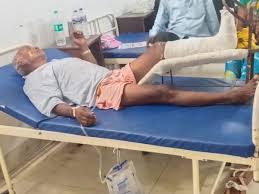
A Dalit elderly man was seriously injured in a car collision in the Nebua Naurangiya police station area of Kushinagar. On September 12th, at 5 p.m., Ram Avadh was driving at Shriram Square when the driver of a Maruti Suzuki Brezza car (UP57BC9434), Ram Pratap Singh, carelessly backed into him. Ram Avadh’s leg was broken in the accident. Locals rushed him to the hospital. People present at the scene recorded a video of the driver, in which he promised to cover the entire cost of his treatment. However, he has now reneged on his promise. The victim’s wife, Kalavati, has filed a complaint at the police station. She alleges that when the family members asked the driver for medical expenses, he used casteist slurs, abused them, and threatened to kill them. SHO Deepak Singh stated that the complaint has been received and the matter is being investigated. A case will be filed and action will be taken soon. Anoop Kumar Yadav Courtesy: Hindi News
Dalit women assaulted in Mainpuri: They were beaten by goons while watering their fields; disappointed at the police station, they went to the Chief Minister’s court.
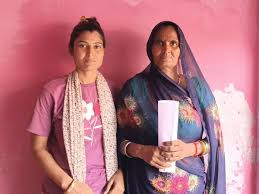
A case of assault on Dalit women has come to light in the Kishani police station area of Mainpuri. Pooja Jatav of Kudra village went to water her fields at 11 a.m. on August 12th. Ramakant and his father, Ashok Shakya, of Samadpur village, stopped her from doing so. When she protested, the accused hurled casteist slurs at her and assaulted her. Pooja’s mother, Nirmala Devi, was also not spared. The accused threatened to kill her. They said they would shoot her if she crossed the road behind their house. The victim said the accused had an illegal pistol. The incident was reported to 112, but no action was taken. On August 13th, when Nirmala Devi went to water her fields again, the accused attacked her with a shovel. She narrowly escaped. Police Station Accused of Not Hearing When she filed a complaint at Kishani Police Station, the police officers stated that it was not a crime. They stated that FIRs are only filed for molestation, rape, and murder. The victim stated that if they are not heard here, they will go to the Captain. Regarding this, the female police officer took the victim to SHO Lalit Mati and said, “These people are saying that if they are not heard at the police station, they will go to the Captain.” Upon hearing this, the SHO declared that only the Captain will hear their case; nothing will happen at the police station. He took the complaint with him and let the victim out of the station. This can be confirmed by CCTV camera footage installed at the police station. The victim filed an online IGRs complaint against the police and the accused. She was summoned to the CO’s office in Bhogaon to record her statement. The statement was recorded, but no action was taken. When no action was taken, she went to the Chief Minister’s Janta Darbar, where officials investigated and assured action. Ashish Kumar Courtesy: Hindi News
Samiti urge Dalits to register their religion as Buddhist in the upcoming Socio-Educational survey
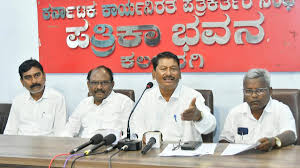
Devendra Hegde, member of Akhil Karnataka Buddha Dakhalaathi Andolan Samiti, addressing presspersons in Kalaburagi city on Saturday. Devendra Hegde, member of Akhil Karnataka Buddha Dakhalaathi Andolan Samiti, addressing presspersons in Kalaburagi city on Saturday. | Photo Credit: ARUN KULKARNI Akhil Karnataka Buddha Dakhalaathi Andolana Samiti of district unit-a consortium of Dalit Organisations, has urged the followers of B.R. Ambedkar to mark “Buddhism” as their religion while mentioning their respective castes in the caste column in the Socio-Economic survey by Karnataka State Backward Classes Commission to begin on September 22. Samiti members Devendra Hegde, Mariyappa Halli, and Arjun Bhadre addressing presspersons in Kalaburagi city on Saturday claimed that one does not face difficulties in enjoying reservation benefits by mentioning Buddhism as their religion. According to the Constitution (Scheduled Castes) Order (Amendment) Act, 1990, the members of Scheduled Castes who converted to Buddhism would continue to be recognised as Scheduled Castes and remain eligible for reservation benefits. Mr. Hedge said that Buddhism was not only a religion but a powerful force that could eliminate inequality inherent in the caste system. Members of the Karnataka State Scheduled Castes Right Communities Forum during a meeting held on September 18 at Bengaluru have resolved that people belonging to the ‘Right Communities’ to mention Buddhism as their religion followed by their respective castes in the caste column during the survey, Mr. Bhadre added. The Hindu Bureau Courtesy : The Hindu Note: This news is originally published on https:/thehindu.com/bha and is used purely for non-profit/non-commercial purposes, especially human rights
Mau: Dalit girl raped on pretext of marriage, accused who threatened her absconds
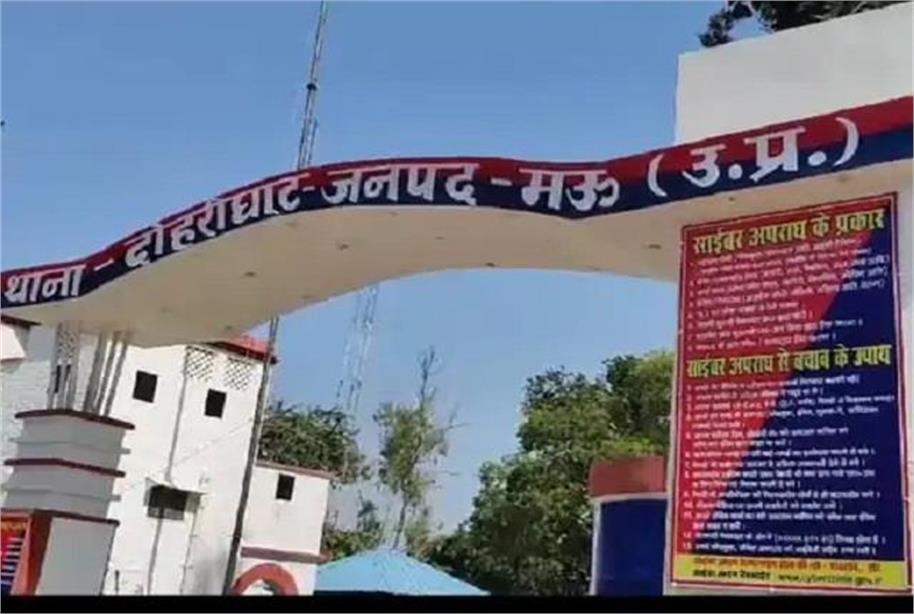
Mau: A case of rape of a Dalit girl on the pretext of marriage has come to light in the Doharighat police station area of Mau district, Uttar Pradesh. The victim alleges that a young man from the same village had been having physical relations with her for the past three to four years, promising to marry her. According to the woman, when she pressured the accused to marry her, he began to evade the proposal. Furthermore, when the victim reached the accused’s home, he used casteist slurs and threatened to kill her. Station in-charge Rajkumar Singh stated that based on the victim’s complaint, a case has been registered against the accused under sections of rape, intimidation, and the SC/ST Act. Police teams are searching for the accused, and an arrest is expected soon. Noida: Police in Noida, Uttar Pradesh, arrested three cyber criminals on Thursday for defrauding a retired officer from the Union Ministry of Commerce and Industry of ₹1.7 crore (17 million rupees) by digitally arresting him for three days. Meanwhile, the Cyber Crime Branch of the police has frozen Rs 17,48,000 of the fraud amount. Edited By Ramkesh, Courtesy: Hindi News
Why LGBTQIA+ community is battling India’s blanket ban on blood donation

Activists condemn exclusion of transgender women and gay men from donating blood, calling it unscientific, discriminatory, and out of step with global standards Despite strides in transgender and gay rights, India has latched on to a rather archaic and discriminatory policy, stemming from a fearful mindset, when it comes to the rights of homosexuals and transgender individuals in donating blood. Activists, medical experts, and members of the LGBTQIA+ community, who echo these sentiments, have slammed the Centre’s recent decision refusing to alter a long-standing ban on blood donation by transgender women and gay men. They say the ban is discriminatory, unscientific, and ignores advances in blood screening technology that make transfusions over 99 per cent safe. The government’s order has come even though the Supreme Court, in May this year, while hearing a petition on the matter, asked whether an entire identity group needs to be stigmatised when medical science has advanced to screen blood for infection. The issue in short ♦ India upholds blood donation ban on trans women, gay men ♦ Supreme Court questions rationale behind identity-based exclusions ♦ Activists call policy outdated, discriminatory, and unscientific ♦ Global shift favours behaviour-based screening over blanket bans ♦ Experts say modern tests ensure over 99% blood safety ♦ Queer community urges inclusive reforms, cites systemic healthcare bias “Why should an entire community be deemed unsafe when modern medical science can effectively screen blood for infection? This discourages willing donors and denies life-saving blood. Such prejudice is appalling,” Ujan, a transwoman from West Bengal, told The Federal. What does the law say? Clauses 12 and 51 under the Guidelines on Blood Donor Selection and Referral tag transgender individuals, homosexual and bisexual men, and female sex workers as “high-risk” groups and bar them from donating blood irrespective of their lifestyle, health conditions, or sexual practices. The guidelines were drafted in 2017 by the National Blood Transfusion Council (NBTC) and the National AIDS Control Organisation as a precaution during a time of declining HIV/AIDS incidence. It, however, continues to exclude entire communities without scientific justification, say activists. Santa Khurai, a transgender activist from Manipur, founder of the community organisation AMANA, and a petitioner in a 2021 case challenging this policy, noted, “The Supreme Court of India questioned the government’s stigmatising response to our petition in May 2025.” It was Khurai’s petition that the Supreme Court had referred to while posing the question to the Centre in May this year. Status in other countries Activists say the continuation of the ban in India is unfortunate, even though many countries, including the US, the UK, Canada, Brazil, and Australia, have replaced such blanket bans with behaviour-based risk assessments. “The US Public Health Service initially implemented a lifetime ban on men who have sex with men (MSM) donating blood in 1983, in response to the emerging HIV/AIDS epidemic. However, in 2023, the US Food and Drug Administration revised these guidelines to adopt a gender-inclusive, behaviour-based screening process,” Naveenraj, a queer activist and trainer based in Tamil Nadu, told The Federal. He emphasised that this modern approach prioritises individual risk factors over blanket bans based on sexual orientation or gender identity. Many countries, including Brazil, the UK, Canada, Australia, France, Spain, Italy, Argentina, and Chile, have already scrapped such discriminatory policies. Brazil’s Supreme Federal Court, for instance, ruled the ban unconstitutional and highlighted the efficiency of modern blood screening technologies. “India’s Supreme Court should similarly lift the ban, in keeping with its commitment to equality, dignity, and inclusion,” Naveenraj added. ‘Flawed science guides policy’ Medical professionals are also calling out the “flawed science” underpinning the policy. Umang, an undergraduate medical student in Pune, remarked, “Heterosexual and homosexual individuals can both transmit HIV. It’s practically impossible to determine someone’s sexual orientation during blood donation. With current methods, HIV detection in India is over 99.5 per cent accurate, so targeting MSMs is not about safety—it’s about exclusion.” This sense of injustice resonates deeply within the queer community. “Whether or not it’s a fundamental right, denying a minority group the chance to donate blood is dehumanising. India must take progressive steps, like the EU, Canada, and Australia, where donor eligibility is assessed based on behaviour, not identity,” Srini, a volunteer with Good As You, a Bengaluru-based queer support group, told The Federal Echoing this sentiment, Jayant Iyer, founder of Queer Nilayam in Bengaluru, called the government’s continued enforcement of the ban “disappointing, outdated, discriminatory, and unscientific.” He shared personal frustration: “I’ve been denied the chance to donate blood multiple times despite being healthy and willing. Even during shortages, prejudice trumps science and compassion.” ‘Structural transphobia’ For many, the policy reflects broader systemic bias. “Can the Indian government ban cisgender heterosexual people based on their gender or sexuality?” asked Rudrani Rajkumari, a transgender activist and founder of Xomonnoy in Guwahati. “This is not about protection; it’s about discrimination. Rather than investing in quality testing, the system excludes LGBTQIA+ people from saving lives.” From a global perspective, the issue strikes a chord with transgender communities elsewhere. “The Indian government’s stance wrongly associates LGBTQI+ identities with risk,” said Mandy Jovial, a South Africa-based transgender activist. “This is more than a blood ban—it’s structural transphobia. Fortunately, in South Africa, policies aren’t based on sexual orientation or gender identity, even though stigma persists.” What India needs Even within India, trans individuals raise questions about the logic of such exclusion. Vaidehi, a trans woman from Mysuru, asked, “How would anyone know someone’s SOGIESC [sexual orientation, gender identity and expression, and sex characteristics] unless disclosed? Assuming trans or homosexual persons have HIV is discriminatory. Anyone can have HIV. Besides, trans persons on hormone replacement therapy should consult a doctor before donating, but that’s a medical concern— not a reason to ban an entire community.” Medical experts agree that the government’s approach is flawed and misleading. “One data point doesn’t scientifically justify a ban,” said Dr Swathi SB, a public health practitioner and HIV physician in Karnataka. “Equating identity with sexual behaviour is dangerously reductionist. We need
Karnataka MLA Yatnal booked for remarks against Dalit women
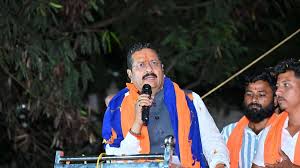
Dalit activist Mallikarjun Pujar filed a complaint, following which the police registered an FIR under sections relating to derogatory comments against women and promoting enmity. Karnataka MLA Basangouda Patil Yatnal has been booked by the local police over his statement that Dalit women must refrain from offering floral tributes to Goddess Chamundeshwari, stating that only women of the “Sanatan religion” are allowed to do that. Yatnal had made the remarks on Monday at Koppal; however, the video emerged on Wednesday, September 17, and has since been widely shared across social media platforms. “Those who offer floral tributes to Mother Chamundi should be from the Sanatan religion. Even ordinary Dalit women are not allowed to do so,” Yatnal is heard saying in the video. He also condemned Karnataka chief minister Siddaramaiah’s decision to allow Booker Prize winner Banu Mustaq to inaugurate Dasara festivities in Mysuru this year. He was booked under the provisions of the SC/ST Act for derogatory remarks against women and incitement of enmity, reported Makoob Media. Dalit activist Mallikarjun Pujar filed a complaint, following which the police registered an FIR under sections relating to derogatory comments against women and promoting enmity. Following a row over the comments, Yatnal, who was previously expelled from the BJP in March, has called the video doctored and politically motivated, meant to mislead people. Karnataka Information Technology Minister Priyank Kharge, a Dalit leader, denounced Yatnal’s derogatory statement. Accusing the BJP leaders of staying silent in a post on X, he stated, “What greatness do you seek in Hinduism when you paint a religious colour in the social system and look down on a particular class of people? Do you exclude Dalits when you say we are all Hindus, we are all one? Why are the BJP leaders, who were vocal when Shri Siddaramaiah said that there is inequality in Hinduism, silent?” Police are yet to make arrests as the investigation is underway. Edited by Syeda Faiza Kirmani Courtesy : The Siasat Daily Note: This news is originally published on https:/thesiasatdaily.com/bha and is used purely for non-profit/non-commercial purposes, especially human rights
The false lure of sheep herding: Two tribal children from Rajasthan were trapped in a trap of advance money, with the plan to take them abroad and force them into forced labor!
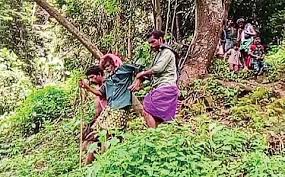
On the initiative of Gayatri Seva Sansthan, a total of five children were freed from bonded labor this month. Shepherds were forcing young children from tribal areas to work. Udaipur/Salumbar – The case of child labor involving tribal children under the false lure of sheep herding has once again come to light. In Salumber district, Rajasthan, two innocent children were rescued from the clutches of shepherds who were being forced to graze sheep in bondage for advance money. Acting on information from the local voluntary organization, Gayatri Seva Sansthan, the police took major action against child labor and human trafficking, filing a case against two accused. The rescued children have been placed in a safe place under the supervision of the Child Welfare Committee. In a major action against child labor and human trafficking in Salumber district, two tribal children were rescued from the clutches of shepherds through the ingenuity of the local voluntary organization, Gayatri Seva Sansthan. A case was registered against two individuals under the Jawar Mines police station on Thursday. It is noteworthy that a few years ago, upon receiving a similar complaint, the National Commission for Protection of Child Rights, Government of India, and the Rajasthan Child Commission, Government of Rajasthan, took it seriously and formed an investigation team to take action. Various organizations associated with Rebari, Raika, and shepherds were also appealed to identify those who employ child labor. Since then, such incidents have not been seen or heard of. In this direction, the then Chairman of the National Child Commission, Government of India, Priyank Kanoongo, and Rajasthan Child Commission member, Dr. Shailendra Pandya, also interacted with over 2,000 representatives of this community in the Bali Panchayat Samiti of Pali in the state. Payal Kenaria, Salumber District Coordinator of Gayatri Seva Sansthan, reported that Ravi Joshi, a conscious citizen of the society, had called the helpline. It was reported that three groups of shepherds were herding sheep on the Udaipur-Salumbar road, being attended to by two young children. The children were in critical condition, with their parents unaccompanied. Considering the seriousness of the information, the organization immediately informed Yashoda Paniya, Chairperson of the Child Welfare Committee, Udaipur, and the Jawar Mines Police Station. Investigation revealed that the children belonged to the Bhil community in the tribal region of Sirohi district, who were forced into bonded labor by paying them advance payments. Acting on the organization’s report, the police filed a case against Jaiparam Gadaria and Asaram Gadaria under serious sections of various laws. The accused are accused of luring children to work by promising them money and food, and then planning to take them out of the state for forced labor. The children rescued from the scene were handed over to the Child Welfare Committee, Udaipur, where they were sheltered. On this occasion, child rights expert and former member of the Rajasthan Child Commission, Dr. Shailendra Pandya, stated that the police have registered a case against the accused under sections 75, 79 of the Juvenile Justice Act, sections 16, 17, and 18 of the Bonded Labor Abolition Act, 1976, and various sections of the Indian Penal Code and have initiated an investigation. Previous cases of child labor by shepherds were reported in Banswara, Dungarpur, Udaipur, and Pali districts. Prominent members of society are strongly against child labor, but some individuals are still actively exploiting children’s childhood for greed. Strict action against them and better rehabilitation of the children is absolutely necessary. Amit Rao of the organization stated that the Gayatri Seva Sansthan is continuously working to eradicate social evils like child labor, child marriage, and human trafficking. A few days ago, the organization also freed three children from Pratapgarh district in a similar case. So far, a total of five children have been freed from bonded labor this month. Geetha Sunil Pillai Courtesy: Hindi News
Priyanka Gandhi ventured into the dense forests of Wayanad at the call of tribals, revealing shocking facts.
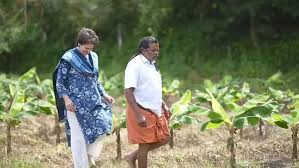
Priyanka met with the Cholanayakan community in the dense forests of Karulai, discussed their demands with officials, and also reviewed development projects such as roads and railways. Malappuram, Kerala: Congress MP Priyanka Gandhi Vadra continued her campaign to connect with people at the grassroots level in her parliamentary constituency, Wayanad. On Wednesday, she took a long walk through the dense forests of Karulai in Kerala’s Malappuram district and met with the Cholanayakan tribal community, which is on the verge of extinction. During the visit, she listened attentively to the community’s concerns and assured them of all possible support. Priyanka Gandhi has been touring her Wayanad Lok Sabha constituency since September 11. According to a party release, her forest visit came at the request of C. Vinod, a member of the tribal community. Vinod, who is pursuing a PhD in tribal economics, had informed Priyanka about the serious problems facing his community during the election campaign. During her visit to the forest, Vinod also briefed her on the conditions and challenges there. After meeting with the people in the tribal settlement, the Congress MP brought some of their representatives to the Forest Department’s inspection bungalow. There, she held a detailed meeting with Forest Department officials and community representatives regarding the community’s key demands, such as housing and a bridge. She also met with social activists working for the development of the tribal community. During her busy tour, Priyanka Gandhi visited the famous Nilambur Teak Depot after meeting the Cholanayakan community. She inspected the entire depot premises and eagerly inquired about the activities of the museum located there. Earlier in the day, Priyanka also reviewed the infrastructure development in the area. She visited the Nilambur Railway Station and reviewed the ongoing development work there. According to the release, she also held important discussions on the Vaniyambalam Railway Flyover, the renovation of Nilambur Station, and other railway-related needs in the area. Priyanka Gandhi shared a video on the social media platform ‘X’, detailing her visit to the construction site of the proposed Padinjarathara-Poozhithodu road in Kottiyambayal, Wayanad district. In her post, she wrote, “Visited the proposed Padinjarathara-Poozhithodu road site in Kottiyambayal along with the District Collector, District Forest Officer, and Executive Engineers of the Public Works Department (PWD). This new road will make a huge difference by providing an alternative route to the Thamarassery Ghat Road, improving connectivity in Wayanad district.” Rajan Chaudhary Courtesy: Hindi News
Dalit man dies in police custody: Allahabad High Court seeks response from Yogi government, demands ₹25 lakh compensation
Nawabganj Police Station death case: Petitioners demand ₹25 lakh compensation for the family and a High Court-monitored investigation. Prayagraj: Hearing a public interest litigation (PIL) seeking an investigation into the death of a Dalit man in police custody at Nawabganj police station in Prayagraj, the Allahabad High Court has directed the state government to file its reply (counter affidavit) within two weeks. The petitioners have also demanded compensation of ₹25 lakh for the deceased’s family members. The family has alleged that the man died due to custodial torture within the police station premises, while the police claim he died of a heart attack. Hearing a PIL filed by the Advocates Forum and two others, a division bench of Justice Siddhartha and Justice Santosh Rai, in its order on Wednesday, directed the PIL to be listed before the appropriate court for further hearing on October 10. According to the petitioner’s lawyer, Charlie Prakash, on May 27, the police picked up Hira Lal, a laborer, from his home in connection with a theft case in which no one was named. It is alleged that no member of Hira Lal’s family was allowed to meet him, and the police later informed him that he had died. Family members were asked to go to the mortuary at Swaroop Rani Nehru Hospital. The PIL alleges that Hira Lal’s body was not handed over to his family members, and the police cremated him at Daraganj Ghat in Prayagraj. The petitioner’s lawyer, Charlie Prakash, argued, “This is a case of brutal custodial death and murder by the police within the police station premises, in violation of Article 21 (right to life and personal liberty).” He demanded the formation of a high-level, independent, and impartial committee headed by a retired High Court judge to investigate the illegal detention, custodial torture, and custodial death of Hira Lal, a resident of Narrepar village, Budauna, under the jurisdiction of the Nawabganj police station. The PIL also states, “The investigation should be conducted under the supervision of the High Court and should submit its report within a stipulated time.” Rajan Chaudhary Courtesy: Hindi News
Dalit girl raped in Mau on the pretext of marriage: Threatened to kill, case filed against accused

A case of rape of a Dalit girl under the pretext of marriage has come to light in the Doharighat police station area of Mau. The girl has alleged that when she pressured him to marry her, the accused used casteist slurs and threatened to kill her. Police have registered a case in this matter and have begun searching for the accused. The victim, a resident of a village in the Doharighat police station area, stated in her complaint to the police that a young man from her village had been raping her for the past three to four years under the pretext of marriage. When she began pressuring him to marry her, he began to evade the allegations. According to the victim, when she went to the accused’s house, he used casteist slurs and threatened to kill her. Station in-charge Rajkumar Singh stated that based on the victim’s complaint, police have registered a case against the accused under relevant sections and further action is being taken. Mithilesh Kumar Rai Courtesy: Hindi News