
Bihar Elections: Congress claims Rahul Gandhi and Tejashwi Yadav’s alliance has shaken the BJP

Bihar Election 2025: Amidst the ongoing accusations and counter-accusations regarding the Bihar Assembly elections, Congress leader Adhir Ranjan Chowdhury has claimed that the BJP is afraid of the Rahul Gandhi and Tejashwi Yadav duo. Patna: The Rahul Gandhi and Tejashwi Yadav duo has given the BJP sleepless nights in Bihar. Congress leader Adhir Ranjan Chowdhury has made this statement. He claimed that the Congress, under Rahul Gandhi’s leadership, is opposing vote rigging and is confident that the Grand Alliance with Tejashwi Yadav will pose a significant challenge to the BJP in Bihar. Adhir Ranjan Chowdhury said, “They used to say they wouldn’t allow elections in Bengal, but under Rahul Gandhi’s leadership, we have made our stand. We have opposed vote theft, and whenever the right to vote is obstructed, Congress will not remain silent. Change is coming in Bihar too. The Rahul Gandhi and Tejashwi Yadav duo has shaken the BJP in Bihar.” Rahul Gandhi attacks PM Modi Congress leader and former Haryana Chief Minister Bhupinder Singh Hooda expressed confidence that the people have decided to form a Grand Alliance government. Hooda said, “The people of Bihar have made up their minds, and the Grand Alliance government will be formed in the upcoming elections. Ultimately, it is the people who will vote, no matter how many big leaders the BJP fields.” Congress MP Rahul Gandhi launched a scathing attack on Prime Minister Narendra Modi on Thursday. He alleged that the Modi government has failed to provide employment and healthcare facilities in Bihar. Addressing a public rally in Sheikhpura, Bihar, Rahul Gandhi questioned why hardworking youth from Bihar have to go to other states for jobs and wander for medical treatment. He said that Bihar should once again become a center of education and industry. Rahul Gandhi raised the issue of employment. Rahul Gandhi said, “A city like Dubai was built with the hard work of the people of Bihar. When you work so hard, why don’t you find employment? Why do young people from Bihar go to other states to work as laborers, but can’t find work in Bihar? Another question: Why do you have to travel from Bihar to AIIMS in Delhi for treatment? Can’t you get treatment in Bihar? Bihar was a center of education long ago, and it should become that again. Nalanda should have the best university in the world, and the entire country should know that the best education is available in Bihar.” He said, “I want your phone to say ‘Made in Bihar’ instead of ‘Made in China.’” The assembly elections in Bihar will be held in two phases on November 6 and 11. Votes will be counted on November 14. Curated by: Suryakant Pathak About the author Suryakant Pathak is a consultant at Navbharat Times Online. He has been a journalist for the past 31 years. He writes news, analysis and blogs on India’s international relations and political and social developments in the country and the world. Courtesy: Hindi News
Dalit youths attacked with sticks and rods in Khaga: Two injured, medical tests conducted, police investigating
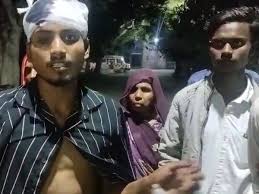
Dalit youths were attacked over a minor dispute in Gopalpur village, under the Khaga police station area of Fatehpur district. Dozens of people attacked them with sticks and rods, leaving them seriously injured. Sandeep Kumar, son of Ramsevak, was among the injured, who was referred to Fatehpur District Hospital after first aid. Police are investigating the matter. Injured Sandeep Kumar stated that he was returning home after grazing buffaloes in the forest. On the way, Raj Singh and Sandeep Singh (sons of Madhav Singh) saw the buffalo and started abusing him. When Sandeep protested, they assaulted him. Subsequently, they called in two other friends, Beta Singh (son of the late Indrapal) and Vipin (son of Beta Singh), along with about two dozen other people. The men brutally beat Sandeep, his brother Mithun, and mother Ramsakhi with sticks and rods. According to Sandeep, the attackers continued to beat him until he was covered in blood. Upon receiving information about the incident, police arrived at the scene and took the injured to the Hardo Community Health Center. The injured party has filed a complaint with the police. The police stated that a case has been registered in this matter and further action has been assured. Khaga Kotwali in-charge Rajkumar Singh stated that a case is being registered based on the complaint from the victim. The search for the attackers is ongoing and they will soon be arrested and sent to jail. He also stated that medical examinations of all the injured are being conducted, based on which relevant sections will be added to the case. Vikash Trivedi Courtesy: Hindi News
Karnataka: Amid demands for a Dalit CM, SC/ST ministers stage a major “show of strength,” preparing for “Dalit Ekta Samavesh” next month.
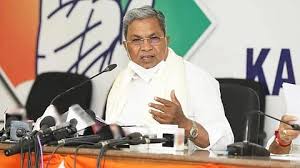
Is a show of strength being planned under the guise of “Dalit Ekta Samavesh”? Ministers united under G. Parameshwara’s leadership, with all eyes on the high command’s response. Bengaluru: A major development is taking place in Karnataka politics. Ministers from the state’s Scheduled Caste (SC) and Scheduled Tribe (ST) communities, led by Home Minister G. Parameshwara, have revived plans to hold a major community conference next month. The conference, dubbed “Dalit Ekta Samavesh,” is expected to be held in Chitradurga or Davangere. This proposed rally, seen as a potential “show of strength,” has created a stir in political circles. This move comes amid heightened debate over the possibility of a transfer of power from Chief Minister Siddaramaiah to his Deputy Chief Minister, D.K. Shivakumar. Additionally, the demand for a Dalit Chief Minister in the state is gaining momentum again. This isn’t the first time such a rally has been planned. Previous attempts to organize such a rally had been made, but had to be shelved after the party high command didn’t approve. At that time, it was believed that Shivakumar’s supporters opposed the event, seeing it as an attempt by the Siddaramaiah camp to undermine the informal power-sharing arrangement between the two senior leaders. However, this time, Dalit ministers are moving forward with renewed determination. After a meeting in Bengaluru with cabinet colleague H.C. Mahadevappa, Parameshwara said, “Dalit voters wholeheartedly supported the Congress in the elections, and it is our duty to express our gratitude.” He added, “We must inform them about the series of schemes implemented for them by our government and explain future plans.” Parameshwara, Mahadevappa, KH Muniyappa, RB Thimmapur, and Satish Jarkiholi (from the ST community) have regrouped to form an internal pressure group within the government. Former ministers KN Rajanna and B Nagendra (both from the Valmiki community) were also part of this group before being dropped from the cabinet. This group previously attracted attention by highlighting its role in the Congress’s landslide victory in the 2023 assembly elections. Significantly, Congress won 31 of the 36 SC-reserved seats and 14 of the 15 ST-reserved seats. The discussion about a Dalit Chief Minister has further fueled speculation. This debate was reignited when Siddaramaiah’s son and MLC Yatindra Siddaramaiah described Jarkiholi as his father’s “political successor.” Recently, party workers in Kolar raised slogans in support of Muniyappa for the top post. Parameshwara also openly supported Muniyappa, citing his long political career. But Muniyappa offered a measured response. He said, “Parameshwara is one of our most respected members. He has the distinction of serving as KPCC president for eight years, the longest tenure, and has also served as deputy CM. When we talk about a Dalit CM, Parameshwara will naturally be considered based on merit.” However, he added, “But now is not the time to discuss a CM change. Siddaramaiah will continue his full five-year term.” Regarding the proposed rally, Muniyappa said, “We are awaiting the high command’s approval.” Parameshwara maintained that there was nothing wrong with demanding a Dalit CM or holding a Dalit convention. He added, “We should listen to their (the community’s) demands and assure them of the future.” Jarkiholi, on the other hand, took a cautious stance, saying, “We should patiently wait for our turn. Whatever we plan to do is in the best interest of the party.” Political analysts say the Congress high command’s response will be closely watched, especially given that AICC President Mallikarjun Kharge and his ministerial son, Priyank Kharge, both come from the Dalit community. Rajan Chaudhary Courtesy: Hindi News
Minor Dalit girl assaulted, plea for justice: Victim appeals to SP and DM for alleged assault against bullies in Gurubakshganj police station area
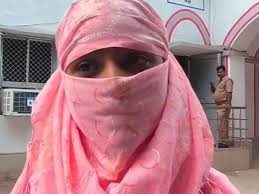
A case of assault on a minor Dalit girl from Jhabra Majra Korihar, under the Gurubakshganj police station area of Rae Bareli district, has come to light. The victim alleges that bullies kicked and punched her and hurled casteist slurs at her. Accusing the police of inaction, she has appealed to the Superintendent of Police and District Magistrate’s offices for justice. The victim stated that she was grazing goats in her field when a group of rivals attacked her. They grabbed her hair and threw her to the ground, after which the mother and son assaulted her and abused her using casteist slurs. According to the victim, she filed a written complaint about the incident at the local Gurubakshganj police station. However, the police have yet to take any action in the matter. She also alleges that she is being threatened by the police themselves after filing the complaint. Failing to receive justice, the victim today appealed to the Superintendent of Police and District Magistrate’s offices for justice. Ashish Prajapati Courtesy: Hindi News
Dalit teenager kidnapped, forcibly converted, then married… Victim recovered from Jabalpur, MP; Talib and Shadab arrested

Abducted on October 5th and taken to Jabalpur, MP; recovered on October 26th. The accused have been charged with several serious sections, including the POCSO Act and the SC/ST Act. Muzaffarnagar/Uttar Pradesh. Police have arrested two young men on serious charges of allegedly kidnapping, forcibly converting, and then marrying a Dalit minor girl. Officials revealed the case on Wednesday. Police made the arrests on Tuesday, although the incident occurred earlier this month. Case filed under these serious sections Budhana Circle Officer (CO) Gajendra Pal Singh stated that a case has been filed against the main accused, Talib (25), and his accomplice, Shadab (23), under several serious sections of the Indian Penal Code (IPC). Additionally, action has been taken against the accused under the provisions of the Uttar Pradesh Prohibition of Unlawful Religious Conversion Act, 2021. The CO stated that, given the gravity of the case, the accused have also been charged under Section 3 of the Scheduled Castes and Scheduled Tribes (Prevention of Atrocities) Act, 1989, and Sections 3 and 4 of the Protection of Children from Sexual Offences (POCSO) Act, 2012. Brother Filed FIR According to the FIR filed by the victim’s brother, Talib, with the help of his friend Shadab, kidnapped his minor sister on October 5th. The FIR alleges that they abducted the girl and took her to Jabalpur, Madhya Pradesh. There, the girl was allegedly pressured to convert to Islam and later forcibly married to the main accused, Talib. The complaint also alleges that the accused sexually assaulted her during her captivity. Victim recovered from Jabalpur Taking action in the case, police safely recovered the teenager from Jabalpur on October 26 and brought her back to Muzaffarnagar. Following the victim’s recovery, police arrested both named accused from the Budhana area on Tuesday. Police officials say a detailed investigation is underway. Rajan Chaudhary Courtesy: Hindi News
MP: Dalit youth thrown onto garbage at midnight, then set on fire… Mother who came to rescue him after witnessing the brutality in Sagar was also attacked…

Shameful incident in Sagar’s Chandpur village. The victim’s mother alleges casteist abuse and threats to burn him alive. Sagar (Madhya Pradesh): A shameful and horrific incident has come to light in Sagar district of Madhya Pradesh, where some miscreants are accused of dragging a Dalit youth onto a roadside garbage heap and burning him alive. When the youth’s mother intervened to extinguish the fire, the accused also mistreated her. The victim was taken to the district hospital in critical condition, where his condition is currently stable. What is the whole matter? According to a report in the Free Press Journal, police reported the incident on Wednesday. The incident occurred in Chandpur village in the Rahli area of Sagar district. According to reports, the Dalit youth was allegedly set on fire in the middle of the market. According to the police, the victim, identified as Hemraj Ahirwar, sustained severe burn injuries in the fire. The victim’s 62-year-old mother, Kesrani Ahirwar, has filed a complaint at the Rahli police station, demanding strict action against the accused. The incident is said to have occurred a few days ago. It is reported that the police only took action after news of the incident went viral on social media. What did the mother say in the complaint? Kesrani stated in her complaint that at around 12 a.m. on October 11th, her son, Hemraj, was lying in an intoxicated state near a shop. Two men, identified as Hemraj, son of Kalu Ahirwar, and Naresh, son of Lachhu Sahu, arrived. It is alleged that they first collected garbage near Hemraj (the victim) and then set him on fire. Hearing her son’s cries, Kesrani ran to his rescue and managed to extinguish the fire. However, during this time, the two accused also mistreated her, hurled casteist slurs at her, and threatened to burn her alive. Frightened by this horrific incident, the mother mustered courage and first rushed her injured son to the hospital. She then contacted the police. Kesrani also alleged that these accused have previously been involved in serious crimes and now pose a threat to the lives of her entire family. Rajan Chaudhary Courtesy: Hindi News
Bihar Elections 2025: Big signals emerging in Bihar…People have complete faith in the Rahul-Tejashwi duo, every promise of the ‘Grand Alliance’ will be fulfilled.

Congress leader Pawan Khera said that Bihar voters have faith in Rahul Gandhi and Tejashwi Yadav to fulfill their promises. The Grand Alliance has released its manifesto, which focuses on the welfare of Bihar. Meanwhile, the Election Commission has issued a notice to Prashant Kishore for registering his name on a duplicate voter list. New Delhi: The election bugle has been sounded in Bihar, and the voting dates have also been announced. As the polling date approaches, the political heat in the state is increasing. All the contesting parties are trying to woo Bihar voters in different ways. Meanwhile, the Grand Alliance has released its election manifesto. Congress leader Pawan Khera has reacted to the Grand Alliance’s manifesto. The people of Bihar have full confidence Congress leader Pawan Khera said on Tuesday that voters are confident that Congress leader Rahul Gandhi and the Grand Alliance’s chief ministerial candidate, Tejashwi Yadav, will fulfill their election promises in the upcoming Bihar Assembly elections. He said that the manifesto focuses on the welfare of Bihar and reflects the alliance’s dedication to the people. These are the big signs in Bihar Dismissing speculation about a rift in the alliance over seat sharing, the Congress leader said that the public is confident that Rahul Gandhi and Tejashwi will fulfill their promises. Those who want to see a split are losing elections. He further said that the India Block has gained an edge by announcing its chief ministerial candidate and manifesto, which clearly indicates which way the wind is blowing. Rahul and Priyanka will campaign The Congress leader said, “We announced our chief ministerial candidate first. Our manifesto is also coming first, so you can understand which way the wind is blowing.” Rahul Gandhi, Congress leader Priyanka Gandhi Vadra, Congress President Mallikarjun Kharge, and all our star campaigners will campaign in their respective constituencies. Notice issued to Prashant Kishor Meanwhile, the Election Commission has issued a notice to Prashant Kishor, founder of the Jan Suraj Party, seeking a response within three days regarding alleged duplicate voter lists in Bihar and West Bengal. Explanation required within three days According to a notice issued by the Returning Officer of the Kargahar Assembly constituency, “According to a news item published on October 28, 2025, your name is listed in the voter lists of Bihar and West Bengal… Therefore, you must submit your version regarding your name being listed in more than one constituency within three days.” Criticism from Opposition Parties The Election Commission of India conducted a Special Intensive Revision (SIR) to update the voter list, which was criticized by opposition parties. This notice has drawn attention amid the intensive scrutiny of the voter list in Bihar, steps being taken by election officials to ensure transparency ahead of the upcoming elections. Edited by: NBT Desk Courtesy: Hindi News
The Bihar election campaign begins after Chhath, with Amit Shah, Yogi Adityanath, and Rahul Gandhi and Tejashwi Yadav launching a “direct attack” on each other.

Bihar Election News: With the Chhath festival over, the Grand Alliance and the NDA have geared up for a strong electoral campaign. Home Minister Amit Shah, Rajnath Singh, and Yogi Adityanath are holding a rally today, Wednesday, October 29th. Rahul Gandhi and Tejashwi Yadav are also in the fray. Patna: The countdown for the first phase of voting in the 2025 Bihar Assembly elections has begun. With the Chhath festival over, political heavyweights have entered the fray today. Not only are Amit Shah, Rajnath Singh, and Yogi Adityanath entering the battleground of Bihar today, but Rahul Gandhi and Tejashwi Yadav are also campaigning for the Grand Alliance. First, learn about the NDA’s campaign today. The NDA has put all its efforts into the Bihar elections. Many prominent leaders from Delhi to Uttar Pradesh are taking to the streets today, October 29th. Union Home Minister Amit Shah, Defense Minister Rajnath Singh, and UP CM Yogi Adityanath, along with Delhi CM Rekha Gupta, will also campaign for the Bihar elections today. Learn about these leaders’ schedules first… Amit Shah will seek votes for Maithili Thakur in Alinagar today. Amit Shah will hold a rally in Alinagar, Darbhanga, at 12:15 pm. After this, he will campaign in Rosera, Samastipur, at 1:30 pm, and then in Bhagwanpur, Begusarai, at 3 pm. Chief Minister Nitish Kumar will hold road shows in four assembly constituencies in Nalanda district today, October 29th. He will also hold a rally in Harnaut. Defense Minister Rajnath Singh will hold an election rally in Hayaghat, Darbhanga. He will also hold rallies in Barh and Chapra. While UP Chief Minister Yogi Adityanath will target Siwan and Buxar, holding rallies in both locations. While Delhi Chief Minister Rekha Gupta is scheduled to hold election rallies in Muzaffarpur and Patna Sahib. MP CM Mohan Yadav has been assigned to today’s election rallies in Banka, Bhagalpur, and Madhepura. Grand Alliance’s Election Campaign The Grand Alliance is also going to give the NDA a tough fight in this election campaign. Today, Rahul Gandhi and Tejashwi Yadav will take the field together to counter the NDA’s attacks. Both leaders will jointly lead the election campaign from the same platform. Priyanka Gandhi is also coming to Bihar. Rahul Gandhi and Tejashwi Yadav will jointly hold election rallies from the same platform in support of the Grand Alliance candidates in Muzaffarpur and Darbhanga. Tejashwi Yadav will hold back-to-back election rallies in six assembly seats of Chhapra today, October 29th. However, Priyanka Gandhi will not begin campaigning today. Priyanka Gandhi will hold public meetings in Bachhwara in Begusarai on November 1, 2025, in Lakhisarai and Rosera (Samastipur) on November 3, and in Govindganj and Chanpatia (East Champaran) on November 6. Congress President Mallikarjun Kharge will hold election rallies in Kuchaykot (Gopalganj) on October 31, Amarpur (Banka) on November 3, and Kutumba (Aurangabad) on November 5. Compiled by: Rishikesh Narayan Singh About the Author Rishikesh Narayan Singh is in charge of Bihar-Jharkhand for Navbharat Times Digital. A 20-year journey in journalism spans from Janmat TV, IBN 7, ETV Bihar-Jharkhand, News18 Bihar-Jharkhand, to Times Internet. After starting from the national capital, Delhi, Bihar is now his workplace. Courtesy: Hindi News
From oral histories to digital archives: How Gauri Gupta is fighting caste discrimination
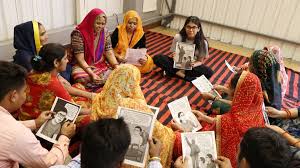
Gupta’s work goes beyond awareness and education. The People’s Collectives regularly brings Dalit and Tribal leaders together with government officials including panchayat representatives Gauri Gupta, a 17-year-old woman, is quietly shaking up the social landscape in India. Caste discrimination and atrocities still shape lives across the country. And, this young activist has taken it upon herself to amplify long-ignored voices. Through her organisation, The People’s Collectives, Gupta is combining oral histories, digital innovation, education and legal reform to create real change for Dalit and Tribal communities. “Our goal is to decentralise caste power and return agency to people whose voices have been silenced for generations,” Gupta explains. Already, her work spans four states: Gujarat, Karnataka, Maharashtra, and Rajasthan. Recording lives, not just numbers At the core of The People’s Collectives is a participatory oral history project. So far, over 350 testimonies from Dalit and Tribal communities have been collected. Some team members are focused on migrant labourers working in construction, brick kilns, and agriculture; sectors where Dalit and Adivasi voices are rarely heard. “The stories we document are archives of resistance. They refuse to be erased,” Gupta says. A virtual museum against untouchability Taking her mission online, Gupta is building a digital Untouchability Museum, the first of its kind in India. The museum will showcase 56 objects connected to caste discrimination such as segregated brooms, pots, and tin plates each paired with firsthand accounts. The museum is a tool for learning. By combining history with digital storytelling, Gupta hopes to turn memory into public education, helping young people understand the lived realities of caste-based oppression. The People’s Collectives has launched Caste Consciousness Clubs in 83 schools across India. These student-led groups use a caste sensitivity curriculum to cultivate empathy and critical thinking from a young age. Beyond schools, the organisation has created a rights-based multilingual toolkit for over 2,600 members of Dalit-Bahujan communities. The toolkit explains legal rights, safety measures, and education entitlements in simple language. Gupta’s work goes beyond awareness and education. The People’s Collectives regularly brings Dalit and Tribal leaders together with government officials including panchayat representatives in rural Rajasthan, to discuss policy and reforms. The organisation has also run legal aid camps in partnership with universities, helping 65 families file FIRs under the Scheduled Castes and Scheduled Tribes (Prevention of Atrocities) Act. A special initiative called Tribal Vikas has registered 1000 members from denotified tribes giving them access to healthcare, education, and housing programs. “These legal recognitions are not just paperwork,” Gupta says. “They are identity, dignity, and access, the first steps toward justice.” Supporting economic independence The People’s Collectives also promotes financial empowerment. About 90 Dalit youth have received micro-grants for vocational training in areas. These include tailoring, beauty, and computer skills. Many have used this support to achieve financial independence and build sustainable community projects. Strategic partnerships and CSR funding have allowed Gupta to expand her programs, securing over $25,000 from different organisations. Her team also mobilised youth collectives across multiple districts to campaign for transparency and equity. Gauri Gupta’s unique approach is all about insistence on community-led action. She combines archival research with digital tools and grassroots organising. This makes Dalit and Tribal people the narrators and decision-makers of their own stories, rather than saviours occupying their spaces. Courtesy : The Statesman Note: This news is originally published on https:/thestatesman.com/bha and is used purely for non-profit/non-commercial purposes, especially human rights
Odisha Continues to Face Severity of Dalit Oppression
The state had the sixth highest cases of incidents of Dalit oppression over the past four years (NCRB data), including acts of bestial violence, social boycotts, and judicial discrimination. The people of Odisha must be undergoing fatigue built on almost years and years of perpetuation of atrocities on Dalits in the state, which remains the sixth highest in incidents of oppression on Dalits in India. This is contrary to the notional assumption that the people of Odisha are God-fearing and their faith rests on the premises of Lord Jagannath, who, in essence, is believed to be a tribal deity, his origin dating back to over thousands of years. The deity is said to be the Patitapavan, which in essence connotes that He is for the Patits (the most oppressed). Leaving aside the legends, numerous incidents of Dalit oppression have been reported in Odisha over the past four years, including acts of bestial violence, social boycotts, and judicial discrimination. According to the National Crime Records Bureau (NCRB) data, Odisha has the sixth highest cases of atrocities on Dalits. In 2020, there were 2,046 incidents, in 2021, the incidents reported stood at 2,327, in 2022, there were 2,902 incidents and in 2023, the reported incidents were 2,696, taking the total to 9,971 incidents in the past four years. Activists cite “poor implementation of protective laws and low conviction rate for atrocities as factors the help perpetuating the problem”, Biswapriya Kanungo, an advocate and social activist fighting for the oppressed, told this writer. What about people from the upper strata who fuel such acts of oppression? Kanungo says “this trend has exacerbated in the past one decade when the political system has shown an attitude of acquiescence to the practice of oppression of people from the lower strata or Dalits.” Reports and case studies from 2020 to 2025 document several incidents of Dalit oppression in Odisha, including brutal public humiliation, social boycotts, and denial of basic rights. “Regardless of legal protection, that are so ineffective, a deep-seated caste-based discrimination persists, particularly in rural areas, where the incidents never come to light or rather get buried in obscurity”, laments Kanungo. Most instances of Dalit oppression in Odisha are marked by physical violence and systemic discrimination. While there are laws in place to prevent such atrocities, Dalits have been facing persistent exploitation and social exclusion, especially in the rural interiors. This is compounded by an ineffective justice system that fails to protect victims. In June 2025, two Dalit men from Pana community were subjected to public humiliation coupled with physical assault by a mob in Kharigumma village in Ganjam district. They were falsely accused of cattle smuggling whereas they were transporting three cows for a wedding dowry. They were forced to drink drain water and crawl on their knees. The incident sparked widespread outrage. An incident that the National Human Rights Commission took suo motu cognisance of. In 2012, in another cruel incident in Lothra area in Bolangir district, an upper-caste mob set fire to the houses of 30 Dalit families for a reason that cannot be condoned in any society. Intolerance Toward Assertiveness After setting the houses on fire, the mob blocked the roads preventing the police and fire brigade from entering the village. This violence was reportedly a backlash against the growing economic and political assertiveness of Dalits in the region. In 2012, the NHRC issued a notice to the Odisha government regarding the social boycott of 13 Dalit families in Ganjam district. The families were denied access to shops, water sources, temples, and irrigation, and were also forced to wash clothes for a pittance. Kanungo recollects that it was in 2008, when the upper-caste majority virtually massacred Dalits and tribals in a riot that claimed over 17 lives and rendered thousands homeless, Many families were forced to take shelter in camps worse than ghettoes, while a sizable population of the tribals remained holed up in the deep woods without anything for sustenance. That incident created a global ripple and panic. The entire gamut of the social turmoil was allegedly created by the hands of Right-wing elements from the state and from Delhi who helped fuel the fire with hate-speeches and propaganda. That brought a turning point politically, when the then Chief Minister Naveen Patnaik broke his party, Biju Janata Dal’s (BJD) nine-year-long political alliance with the Bharatiya Janata Party (BJP) on the grounds of inciting communal unrest. Systemic and Institutional Discrimination In many parts of rural Odisha, Dalits are frequently denied access to public amenities, including temples, hotels, tea stalls, and public wells till date. During a 2016 incident in Nayagarh, upper-caste villagers refused water from a tanker because it had first served a Dalit hamlet. In 2025, courts in Odisha drew criticism for imposing caste-discriminatory bail conditions, such as ordering Dalit men to perform manual scavenging work. This practice, which links bail to traditionally stigmatised occupations, has been condemned by legal experts everywhere in India. Yet, this practice is still followed, as we see people getting into in filthy septic/sewer tanks digging out dirty sediments in neck deep toxic human waste. Even with advancements, untouchability continues in many subtle and overt forms in the state. In some villages, Dalits are not served by village barbers or washermen. During the 2021 Cyclone, Yaas, Dalit communities in rural areas were reportedly ostracised and denied access to rehabilitation facilities, added Kanungo. Inner Conflicts Some Dalit sub-castes in Odisha, like the Doba and Kaibarta, have been found to practice discriminatory behaviour against lower-ranked Dalits, such as the Ganda community. This promotes perpetuation of the cycles of oppression within the marginalised community itself. Isolation in Death An 80-year-old woman faced social isolation in death in Deogarh district, simply because five decades ago, she had married outside her caste. Her body was left abandoned till some local volunteers dared the oppressors and arranged her last rights with full respect. The act of compassion and courage shown by the volunteers drew appreciation from various quarters. To top