
Haryana: A woman arrived late for duty at MDU due to her period and was asked for ‘proof’ from the cleaning staff; made to remove her clothes in the washroom and…

Shameful incident at MDU, Rohtak: Two supervisors suspended, State Women’s Commission takes cognizance Rohtak – Alleged mistreatment of female cleaning staff at Maharshi Dayanand University (MDU) in Rohtak, Haryana, has shaken the entire campus. Four female employees who arrived late for duty have been accused of demanding ‘proof’ of menstruation. The women even allege they were asked to remove their sanitary pads and were photographed. After the incident came to light, other women and university students created a ruckus. The university management suspended the accused supervisors and ordered an investigation against them. According to reports, Haryana Governor Asim Kumar Ghosh visited Maharshi Dayanand University on October 26th. That day, some female cleaning staff were late for work. Supervisors Vinod Kumar and Vitender Kumar stopped them and asked the reason for their delay. According to the report, the women initially tried to avoid them, but when they refused, they explained that they were menstruating, which was why they were late. The supervisor reportedly told them they were making excuses and demanded proof if they were menstruating. The victims told the university administration that the supervisor had a female employee remove their clothes and examine their sanitary pads. According to the women, photographs of their sanitary pads were also taken for verification. After the incident, when the women told other fellow employees about the incident, they became enraged and began a commotion. When the university’s student organizations learned of the incident, they also arrived at the scene and began protesting against the incident. The report states that some female employees and students even tried to assault the supervisors, but university staff saved them. Following the incident’s disclosure, the MDU administration immediately suspended two supervisors, Vinod and Vitender Kumar. An investigation has been initiated based on a written complaint submitted to the Registrar. MDU Director (Public Relations), Prof. Ashish Dahiya, stated that the university administration has suspended the cleaning supervisors, initiated an investigation, and handed over the case to the police. State Women’s Commission Takes Cognizance The Haryana State Women’s Commission immediately took cognizance of the matter and sought a detailed report from the Rohtak Superintendent of Police. Commission Chairperson Renu Bhatia said, “Demanding proof of menstruation is a direct insult to women. This is not only physical but also mental harassment. Strict action should be taken against the culprits to prevent such incidents in the future.” Bhatia stressed that taking women to the washroom in the name of checkups and checking sanitary pads is unacceptable. In addition, Krishna Kumar, Chairperson of the Safai Karamchari Commission from Chandigarh, also visited Rohtak and spoke with the affected women. The Scheduled Caste Commission has also taken the matter seriously, as the victims include women from the Scheduled Caste category. The incident has also gone viral on social media, sparking a debate on women’s rights. Several organizations have accused the MDU administration of negligence. Experts say that workplaces should establish clear policies regarding health-related leave for women to prevent such inhumane incidents. Geetha Sunil Pillai Courtesy: Hindi News
Tamil Nadu ‘Honor Killing’: Chargesheet filed in Dalit engineer Kevin’s murder case, girlfriend’s policeman parents among 4 accused
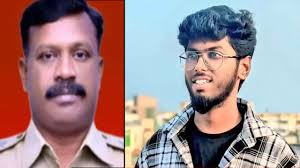
Sub-inspector father and policewoman mother also accused in Kevin’s murder; court declares it a ‘premeditated honor killing’ Chennai: The Crime Branch-CID (CBCID) has submitted its detailed chargesheet to the court in the sensational case of the ‘honor killing’ of Dalit techie Kevin in Tirunelveli, Tamil Nadu. The chargesheet names his girlfriend’s brother as the main accused in the brutal murder of the 23-year-old software engineer. The investigating agency reiterated that the accused, Surjeet, was deeply upset with his doctor sister’s relationship, which led him to kill Kevin. Policeman parents also named as accused CBCID chief T.S. Anbu informed that a total of four people have been charged in the case. These include Surjeet’s father, Saravanan, himself a police sub-inspector, and his mother, Krishnakumari, also a police officer. A relative, Jaipal, has also been named as an accused. The agency submitted its final report to the court on October 22nd, including statements from 69 witnesses and 37 other documents as evidence. Court’s Strict Comment, Father’s Bail Rejected for the Third Time Meanwhile, the Additional Sessions Court in Tirunelveli has rejected the bail plea of the accused father, Saravanan, for the third time. The court stated that this was an “open and deliberate honor killing.” The judge also stated that if Saravanan is released, his wife, Krishnakumari (who is also in the police force), could influence witnesses, potentially hampering the ongoing investigation. The court also noted that Kevin’s iPhone is still locked with facial recognition. Investigators hope that once the phone is accessed, further digital forensic examination may yield further evidence. What was the whole case? Kevin, originally from Arumugamangalam in Thoothukudi district, worked as a software engineer at an IT firm in Chennai. The incident occurred in July, when Kevin went to a hospital in Tirunelveli, where his girlfriend worked as a doctor, to treat his grandfather. It is alleged that Surjeet lured Kevin onto his bike under some pretext and then stabbed him to death with a sharp-edged weapon (a sickle). Demand for stringent laws against caste-based killings This brutal murder sparked widespread outrage across the state. Dalit organizations and human rights activists took to the streets demanding justice and calling for stringent laws against caste-based killings. Given the gravity of the case, the Tamil Nadu government has announced a special law against honor killings. A commission is also being formed to study such crimes and suggest measures to prevent them. Rajan Chaudhary Courtesy: Hindi News
Bihar elections 2025: Tejashwi Yadav CONFIRMS deputy CM from Muslim, Dalit community, says, ‘everyone will get fair chance…’

Ahead of Bihar elections, Mahagathbandhan CM face and RJD leader Tejashwi Yadav has confirmed that if they come to power after winning elections, there will be multiple deputy CM including one from Muslim community. Ahead of Bihar elections, Mahagathbandhan CM face and RJD leader Tejashwi Yadav has confirmed that if they come to power after winning elections, there will be multiple deputy CM including one from Muslim community. In an interview with India Today, Tejashwi Yadav responded, “Yes, definitely,’ when asked will there be a Deputy CM from Muslim community. Muslim community constitutes nearly 17% of the electorate and could play a decisive role in the formation of next government in Bihar. During the announcement of Tejashwi Yadav as CM face for Mahagathbandhan Alliance, Mukesh Sahani was named as the deputy CM face. Mukesh Sahani ‘Son of Mallah’ belongs to the Extremely Backward Class. EBCs comprise 30% of Bihar’s voters.Following this, demand of Muslim deputy CM were raised. What did Tejashwi Yadav Said? RJD Leader Tejashwi Yadav confirmed that there will multiple deputy CM. He said, ‘The day this announcement was made, Ashok Gehlot ji had said that if Mukesh Sahani would be made Deputy Chief Minister, there would also be others. The concerns raised by various sections will be addressed.’ He also said, ‘Yes’, when asked if there will be deputy CM from two of the major communities from Bihar, Muslims and Dalits. ‘We will take everyone along, and everyone will get a fair chance of representation, ‘ he added. Bihar elections 2025 Both Mahagathbandhan and NDA have released their Manifesto for the upcoming polls. NDA in Bihar released their manifesto ‘Sankalp Patra’ in Patna on Friday. Few days earlier, the Mahagathbandhan has released its manifesto, Tejashwi ka Prann. The first phase of the Bihar Assembly polls will take place on November 6, and the second phase will happen on November 11. The counting of votes will take place on November 14. This upcoming electoral contest will be between the NDA, led by the BJP, and Janata Dal (United) (JD(U)), and the INDIA bloc, led by Tejashwi Yadav of the Rashtriya Janata Dal (RJD). Prashant Kishor’s Jan Suraaj is also contesting on all 243 seats in this high-stake battle. Vanshika Tyagi Courtesy : DNA India Note: This news is originally published on https:/dnaindia.com/bha and is used purely for non-profit/non-commercial purposes, especially human rights
Deepavali sparks the caste conversation in Tamil cinema
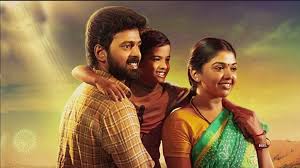
While Bison delves into the brutal, ancestral weight of caste oppression, Dude channels Gen Z energy to confront caste-based violence. Synopsis: Tamil Deepavali releases Bison and Dude delves into caste opressions. While Bison delves into the brutal, ancestral weight of caste oppression through the journey of a young kabaddi player, Dude channels Gen Z energy to confront caste-based violence. This Deepavali, Tamil cinema sparks a conversation on caste with two striking releases: Bison and Dude. While Mari Selvaraj’s Bison delves into the brutal, ancestral weight of caste oppression through the journey of a young kabaddi player, Dude channels Gen Z energy to confront caste-based violence with style, wit, and social conscience. Together, the films show how Tamil cinema challenges systemic inequalities, each in its own cinematic language. “Caste is not just a social hierarchy; it is a system that inflicts trauma and violence on its victims,” wrote Thenmozhi Soundararajan in The Trauma of Caste. Her observation captures how deeply caste shapes lives, far beyond mere social positioning. In Bison, Kittaan’s journey embodies this lived reality. His body, labour, and identity are marked by systemic oppression; he faces physical exploitation, social marginalisation, and emotional trauma imposed by the caste hierarchy. The violence he endures is structural, embedded in a society that categorises and controls him. Kittaan’s experiences echo Soundararajan’s argument: caste is not abstract or symbolic; it is a daily, brutal reality that shapes choices, relationships, and selfhood. As Nina Simone famously said, “An artist’s duty, as far as I’m concerned, is to reflect the times.” Mari Selvaraj stands as such an artist, reflecting his people, his land, and the collective grief of his community—while allowing them to breathe, dance, and live in his films. The poetry of defiance Mari’s cinema is remarkable not only for what it says, but for how it says it. Like Terrence Malick’s The Tree of Life (2011), which wove childhood, grief, and the cosmos into a symphony of light and silence — “There are no words. Just light, movement, and memory”— Mari’s frames flow like verses of a cinematic poem. In world cinema, resistance often finds its voice not in slogans but in poetic imagery, where defiance becomes a visual and emotional language. Mari carries this tradition forward. His dreamlike frames are rooted in reality: Blue-painted dogs as emblems of silenced loyalty, trains wailing over barren fields, runners fleeing oppression rather than chasing victory. Animals — pigs rooting in muddied honour, horses galloping through monsoon fury — become symbols of the oppressed, reflecting Dalit protagonists’ quest for liberation. Sweeping aerial shots of indifferent landscapes remind us of a society that watches cruelty from above, detached and complicit. Even desire in Mari’s films is radical. It is punished yet resilient — blooming in stolen glances, sweat-soaked triumphs, and acts of love that defy lineage. Mari transforms personal scars into collective anthems, each echoing like the beat of a parai, confronting audiences with the beauty and brutality of marginalised lives. Bison arrives as a fiery offering to southern Tamil Nadu’s soil, steeped in kabaddi, rage, and resilience. At its heart is Kittaan, a young kabaddi player crushed between caste politics and personal dreams. Inspired by real-life Arjuna Awardee Manathi Ganesan, Mari’s narrative portrays an athlete torn between faith, fate, and fury. While traditional sports dramas explore locker-room rivalries or personal sacrifices, Mari digs deeper. Like Pa Ranjith’s Sarpatta Parambarai, which examined boxing culture and its politics, Bison exposes the caste wounds and inherited injustices of the southern heartland. When Dhruv Vikram’s Kittaan asks, “Why should I leave this village? Why won’t they let me play? Why do the sins of our fathers stop me from living and loving?” Pasupathi’s quiet reply, “Because that’s our fate, son,” lands like a punch to the chest. Pasupathi, a broken father, carries the weight of generations—fighting, falling, praying, and howling with helpless rage. His performance is a masterclass in restraint and ruin. A land that still burns In one unforgettable scene, a bus journey becomes a bloodbath over something as trivial as a goat urinating on a rival’s leg. Mari stages this with terrifying precision, showing that violence in this land is never sudden — it simmers through generations of silence. Here, caste dictates not just marriage, but where one sits, what one eats, and whether one can play a sport. Kittaan’s rise highlights the near-impossible struggle of breaking invisible walls. His victory isn’t personal—it’s ancestral. When he storms the kabaddi court, every muscle and tear carries the grief of fathers, the defiance of sons, and the dreams of countless boys once told “No.” While Bison foregrounds the oppression faced by Dalits, it is crucial to recognise that much of the dominant caste’s behaviour around power and prestige is tied to caste. Even seemingly personal actions cannot be fully separated from caste dynamics. The animals speak for the land Mari’s cinema breathes through symbolism. Animals in his films are not props; they are the land’s soul: The dog in Pariyerum Perumal, the horse in Karnan, the pig in Maamannan and the bull in Bison. Each creature embodies defiance — the silent scream of the subaltern. Even love carries an earthy fragrance, with flowers and fallen petals creating tender poetry amid violence. Dhruv Vikram, expressing everything through his body, becomes a living metaphor — a Maadan whose silence roars louder than words. At a recent press meet, a journalist’s question, dripping with caste prejudice, attempted to challenge Mari, yet he responded with quiet resolve: “Your life is different from mine. I can’t satisfy everyone. I am a citizen of this country. I have the right to tell the stories that affected me, my father, and my grandfather — and I will tell them until my last breath.” This powerful retort encapsulates the essence of Bison — an ancestral cry, an unflinching archive of pain passed down through centuries of caste oppression. The journalist’s audacity reflects the entrenched hierarchical mindset that continues to provoke and question Mari’s narratives. Yet, Bison stands as
‘Kaalamaadan’ — Bison: Caste, colour, and anti-caste politics in mainstream cinema
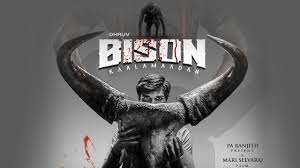
We live in an era where actors, regardless of their social background, eagerly await roles in movies by Dalit filmmakers such as Mari Selvaraj and Pa. Ranjith. Negating these historical and contemporary realities and confining the debate only to the ‘fair’ female leads in their movie is an elite conspiracy to subvert the political discourses constructed by Dalits. Kaalamaadan is a cultural icon associated with the beliefs and traditions of Dalit socio-cultural life. However, the term Kaalamaadan, especially in the cultural sphere of Kerala, often refers to people who act in ways that disturb public conscience, challenge morality, or defy social conditioning. Kaalamaadan has always carried a negative connotation and is used to blame or otherise people who adopt different perspectives or approaches in their thought processes or activities. This should also be understood as a historical continuity of caste practices to antagonise or defame the Dalit cultural symbols or icons. By naming the movie Bison, or otherwise known as Kaalamaadan, Mari Selvaraj is definitely dismantling the sarvarna gaze. Inspired by real-life incidents, the movie is set against the backdrop of socio-political happenings in southern Tamil Nadu during the 1990s. It discusses the survival, resilience, and triumph of Kittan, the Dalit protagonist. Relevance of Bison The social history of Tamil Nadu is, in fact, a history of caste conflicts. Especially the southern districts of Tamil Nadu are infamous for their brutal violence against Dalits. The (dis)honour killing of a Dalit IT professional, Kavin Selva Ganesh, by the family of his girlfriend was one of the latest caste atrocity reported from southern Tamil Nadu. The girl’s family hails from the dominant Maravar community, and both her parents are police inspectors. This reflects the current scenario of caste atrocities in southern Tamil Nadu, making the movie Bison more politically relevant. Though Bison doesn’t deal with the subject of honour killings, the film is presented in the larger context of the historical continuity of caste conflicts in Tamil Nadu. The Pandiaraj-Kandasamy rivalry in the movie actually refers to the Dalit-Nadar conflict that happened in southern Tamil Nadu during the 1990s and early 2000s. The disputes, retaliations, and the feud between the Dalit leader Pasupathi Pandian and the Pannaiyar family have been effectively referenced in the movie. And this narrative has been successfully conveyed through the life and struggles of the Dalit protagonist, Kittan, inspired by the life of the Arjuna Award-winning Kabaddi player Manathi Ganeshan. Dalit aesthetics The film is structurally built on the notion of Dalit aesthetics and socio-cultural nuances. As many critics have observed, a specific pattern or preset template is being followed in Mari’s filmography. And the repetition of these patterns has invited criticism of Mari’s films, including Bison. But what does this pattern really indicate? The heroic presentation of Dalit imagery, signifiers, gods, and belief systems is the fundamental characteristic of Mari’s style of filmmaking, and it is not an artistic limitation. In fact, these are counter-narratives against the epistemic violence in cultural representation created by the mainstream cinema for years. The symbolic presentation of animals pertinent to Dalit social life, and their incorporation into the aesthetics of cinema, are essentially political acts. Even if it is repetitive in his filmography, it is a deliberative aesthetic of resistance and a new technique among the established imaginations of mainstream cinema. Mari’s films, including Bison, subvert the established patterns, methods, and aesthetics of mainstream cinema and construct a counter-public discourse. It disturbs the public conscience, dominant perspectives, and morality constructed in films through different ages. So, the actual problem with critics is not the pattern of Mari but its content and politics. They are also triggered by the anti-caste politics occupying space in the public sphere through popular culture. Pride and prejudice Recently, veteran director Adoor Gopalakrishnan has made casteist and gendered remarks against aspiring Dalit and women filmmakers, saying that they should be given ‘special’ training for filmmaking if they are receiving government funds for making movies. This thought, which shares concerns about the public fund when it is allocated to the marginal communities, is fundamentally a casteist idea. This also stems from the belief that filmmaking is meant for people from elite social backgrounds, as they are ‘naturally’ talented, while those outside this social structure lack the skills and ‘merit’ to create movies. The criticism against Mari, based on the ‘patterns’ in his movies, also originates from a similar savarna gaze. Because Mari has not just made some random movies, he directed films that deconstruct existing belief systems, culture, and politics, and he also made them commercially successful. Had his movies been a failure at the box office, none of the critics would have even cared about the pattern, content, or quality. Therefore, the pattern he follows in his movies is successful in a political sense, as it disturbs the Gramscian idea of common sense. Loud questions and silence The criticisms that have erupted recently are negating the identities of Mari, Vedan, Arivu, and Dhruv, who are integral parts of the movie, and revolve solely around the ‘fair’ skin of non-Dalit female actors. It seems that even the skin tones—or the absence of dark skin tones—of female actors in Mari’s movies disturb the public, as they do not meet casteist expectations. The idea of equating Dalits with dark bodies is actually a casteist notion. Why do people never question the non-Dalit filmmakers for not casting dark-toned and/or Dalit actors? Why is this burden solely placed on Dalit filmmakers? How can Dalit filmmakers who entered the industry after years of struggle be held accountable for the absence of Dalits and dark-toned artists? These unfair criticisms emerge from a larger caste-ridden society. Furthermore, who decides that only Dalit actors should be portrayed as Dalit or characters with dark complexions? But suppose the intention behind this question stems from a democratic concern about the absence of Dalits or Dalit women in cinema, why is this question being raised only against Dalit filmmakers? Why is there no question directed against the elite
Muzaffarnagar News: Dalit youth stabbed to death, blood-soaked body found in sugarcane field
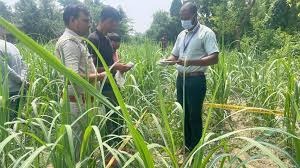
Muzaffarnagar News: A Dalit youth was brutally stabbed to death on Saturday in the Kakrauli police station area of Muzaffarnagar district, Uttar Pradesh. The youth’s body was recovered from a sugarcane field, bearing deep stab wounds. The incident has caused a stir in the area. The deceased has been identified as 29-year-old Sonu. Sonu’s body was found in a sugarcane field in Garhi Firozabad village, under the Kakrauli police station area, on Saturday. Additional Superintendent of Police (Rural) Aditya Bansal told reporters that the body bore multiple stab wounds. Sonu had left home after receiving a phone call Police recovered a blood-stained knife and the deceased’s motorcycle from the scene. According to ASP Bansal, Sonu had left home after receiving a phone call but never returned. The motive behind the murder and the identity of the attackers have not yet been established. Police have registered a case against unknown assailants and sent the body for post-mortem examination. ASP Bansal stated that an investigation has been launched and efforts are underway to identify the culprits. By Raghvendra Mishra Courtesy: Hindi News
Bihar Votes On Caste, Not Change: Dalits Still Left Out Of Power

The political foundation in Bihar is caste which carries the burden of its own class Bihar’s politics continues to be shaped by deep caste hierarchies where class and caste intersect, with Dalits remaining at the bottom of both social and economic structures. Despite their sizable population and history of political assertion, Dalits remain fragmented by sub-caste divisions and largely excluded from real power, even under leaders promising social justice. Ahead of the 2025 Assembly polls, Chirag Paswan’s LJP (RV) faces the challenge of expanding beyond its Paswan-Dalit base and balancing its alliance with the NDA against its claim of representing Dalit interests. The more things change in Bihar, the more they remain the same. Not because people are averse to change, but their level of acquiescence to the so-called ‘system’ is such that they accept, at the end of the day, the status-quo as something which has been ordained to them. This could be seen in the formation and the affectivity of the caste-based associations and groups. The power-relations, embedded in the caste-ties, controls impulses, emotions and motivations so firmly that any socio-cultural transformation is met either with oppression or political violence. The caste wars in Bihar are replete with the stories of tyranny and hope. Bihar is, to put it succinctly, a history of a ‘surrealistic tale of violence’, a politics of ‘an inversion of insurgent citizenship’, a sociology of the ‘construction of docile bodies through hegemony’ and an economics of ‘a behavioural irrationalism in the dismal rules of the game’. The stakes of State-power, caste and class essentially try to sustain, what Jeffrey Witsoe once remarked about Bihar, a ‘feudal democracy’. Typically, Bihar is a case of ‘class-in-caste’ politics, wherein the political foundation is caste which carries the burden of its own class. Tanvir Aeijaz Courtesy : Outlook India Note: This news is originally published on https:/outlookindia.com/bha and is used purely for non-profit/non-commercial purposes, especially human rights
Bihar Elections 2025: 8 Key Constituency and Candidates to Watch in the Two-Phase Poll Battle

From Raghopur to Purnia, Bihar gears up for a fierce fight as top leaders of BJP, RJD, JD(U) and Congress face off in key constituencies ahead of the November 6 and 11 polls. The 2025 Bihar Assembly Election is scheduled to be held in two phases — the first on 6th November 2025 and the second on 11th November 2025. The counting will be done on 14th November 2025. The election will be held for the Bihar Legislative Assembly to elect all 243 members. The tenure of the current assembly will end on 22nd November 2025. Bihar is facing issues related to unemployment, migration, and electoral rolls, and the election at this time has made it stand out, with the whole country’s eyes on it. It would be interesting to see how the state’s huge population of youth shapes the outcome, as a major part of them are first-time voters. Political campaigns are mainly focusing on development, welfare schemes, and governance records. It would be an interesting contest, with one side being the National Democratic Alliance (NDA) led by the Bharatiya Janata Party (BJP) and Janata Dal (United), and the other side being the Indian National Developmental Inclusive Alliance (INDIA) bloc led by the Rashtriya Janata Dal (RJD) and the Indian National Congress (INC). Raghopur Former Deputy Chief Minister Tejaswi Yadav wearing a white kurta and giving interview to the press. Several mikes can be seen infront of him. Former Deputy Chief Minister Tejashwi Yadav from RJD is contesting from Raghopur constituency for the third time.X The most talked-about constituency in the 2025 Assembly election of Bihar’s Vaishali district is Raghopur. Earlier, it was represented by Lalu Yadav and Rabri Devi, highlighting the traditional stronghold of the Yadav family. Former Deputy Chief Minister Tejashwi Yadav from RJD is contesting again, hoping for a third win. BJP’s Satish Kumar Yadav is his main rival in the constituency, whereas Chanchal Singh is contesting from the Jan Suraaj Party. The election will be a test of Tejashwi’s enduring influence on his own family’s political fort. Tarapur Deputy Chief Minister Samrat Choudhary wearing a grey Nehru coat and an orange shawl and giving speech standing before a mike. Bihar’s Deputy Chief Minister Samrat Choudhary is contesting this time from the Tarapur constituency, bringing the region into focus.X The Munger district constituency will go to polls in the first phase of the 2025 Assembly election on 6th November 2025. Earlier, it was represented by Rajeev Kumar Singh of the JD(U), who won in the 2020 election. However, there may be a shift in power as Bihar’s Deputy Chief Minister and senior BJP leader Samrat Choudhary is contesting from Tarapur, bringing the region into focus. It falls under the Jamui Lok Sabha seat, with issues ranging from employment to road connectivity. It seems like the NDA has its eye on this area, and it will be interesting to see how the election develops. Lakhisarai Image of BJP leader Vijay Kumar Sinha facing the camera wearing a green Nehru jacket and wearing a shawl. He even has vermilion on his forehead. Vijay Kumar SInha from BJP has held the seat from the Lakhisarai constituency since 2010, and has geared up for this year election as well. https://dpl.rashtrapatibhavan.gov.in/public/uploads/upload_files/125c0e943c73bb8a0840ab524fdcbd08.jpg (GODL-India), GODL-India, via Wikimedia Commons Lakhisarai is all set to witness a high-profile contest in the 2025 Assembly election. This seat has been a stronghold for the BJP, as the party’s senior leader Vijay Kumar Sinha has held it since 2010. He will be facing Amaresh Kumar from Congress and Suraj Kumar from the Jan Suraaj Party this year. Sinha retained the seat in 2020 with over 74,000 votes, defeating Congress by a margin of 10,000 votes. It will be interesting to see if Sinha’s personal rapport helps him retain his leadership in the area. Mahua RJD’s Mukesh Kumar Raushan wearing a white kurta and covering his head by a white cloth and seeing sideways. Mukesh Kumar Raushan of the RJD is contesting from the Mahua constituency of the Vaishali district, he is currently representing the area. X The Vaishali district constituency has often drawn attention owing to its political legacy and high-profile candidates. The seat is currently held by Mukesh Kumar Raushan of the RJD, who won by a margin of 13,700 votes, defeating JD(U)’s Ashma Parveen. This year, Mahua will see a fierce competition among JD(U), BJP, and Jan Suraaj’s Indrajeet Pradhan. It has always remained a closely watched constituency with its changing local aspirations. Alinagar Singer Maithili Thakur posing for a picture by joining her hand in “Namaskar” and smiling. She is wearing a saree and has a shawl, standing before a gate. The folk singer Maithili Thakur is debuting from Alinagar which comes under Darbhanga Lok Sabha constituency, adding a touch of culture to the election. X The area comes under the Darbhanga Lok Sabha constituency, having a mix of Brahmin, Yadav, and Muslim voters. It gives equal importance to local alliances as well as caste equations. Mishri Lal Yadav won the seat from this constituency in the 2020 election; he was then with VIP and later joined BJP. This time, folk singer-turned-politician Maithili Thakur is contesting in this area. Frequent flooding and poor road conditions pose major challenges here. The parties are holding campaigns focused on development and better infrastructure. Hasanpur RJD’s Tej Pratap Yadav looking backward wearing a yellow cap and a white kurta and has tilak in his forehead. He is in a ralley and several people have joined him as seen in the picture. The Hasanpur constituency in Samastipur district is currently represented by RJD’s Tej Pratap Yadav, but this time, Mala Pushpam will be contesting from the seat on a BJD ticket.X Hasanpur is again in the spotlight ahead of the 2025 Assembly election, located in the Samastipur district. The constituency is represented by Tej Pratap Yadav of the RJD, who defeated Raj Kumar Ray of the JD(U). However, RJD has fielded Mala Pushpam for the upcoming battle, generating interest
Bihar Election 2025: Jan Suraaj Fields Transgender Social Worker Preeti Kinnar from Bhore Assembly Seat in Bihar

Jan Suraaj Party nominates transgender social worker Preeti Kinnar from Bhore Assembly seat to showcase the party’s image of inclusivity. The Bhore Assembly constituency in Gopalganj district is emerging as one of the most closely watched seats in the upcoming Bihar Assembly elections. Reserved for Scheduled Castes, Bhore has long been a stronghold of traditional political faces. But this time, the contest has taken a new turn with the Jan Suraaj Party fielding Preeti Kinnar, a transgender social worker, as its candidate — a move that has drawn both attention and controversy. The Bhore Constituency Bhore, located in southern Gopalganj, has a mixed voter base of Dalits, Extremely Backward Classes (EBCs), and minorities. The constituency has seen tough contests in the past, with narrow victory margins. In the 2020 Assembly elections, JDU’s Sunil Kumar, who also serves as Bihar’s Education Minister, defeated CPI (ML)’s Jitendra Paswan by just 462 votes — one of the slimmest margins in the state. The tight race reflects how volatile and unpredictable Bhore’s political mood can be. This time, the entry of the Jan Suraaj Party, led by political strategist-turned-politician Prashant Kishor, has added a new dimension. Kishor’s party has positioned itself as an alternative to Bihar’s mainstream players — JDU, RJD, and BJP — by focusing on grassroots leaders and social workers instead of established politicians. On October 9, 2025, Prashant Kishor released Jan Suraaj’s first list of 51 candidates. Among doctors, lawyers, retired bureaucrats, and community leaders, one name stood out — Preeti Kinnar. Her nomination from Bhore symbolized Kishor’s promise of giving space to people from underrepresented and marginalized groups. Who is Preeti Kinnar? Preeti is from Khap village of Sonbarsa block in Sitamarhi district. Aged 41, she has been living in Kalyanpur village of Bhore block for the past 22 years. A matriculate by education, she earns her living through singing devotional songs and animal rearing. But what defines her most is her long-standing commitment to social service. Since 2008, Preeti has been actively working for the poor, especially women and girls. She has arranged marriages for over 27 underprivileged couples and provided food and essentials to hundreds of families during the COVID-19 lockdown. During natural calamities and accidents, she has often stepped in with relief materials, using her personal funds and community donations. Preeti’s nomination has not come without controversy. Jan Suraaj leader Vijay Aman has accused her of falsely claiming Dalit status to contest from the reserved constituency. He alleges that Preeti belongs to an upper-caste family and that her Scheduled Caste certificate was obtained fraudulently. Some of Preeti Kinnar’s caste is listed as Paswan on some documents, while official records like land registries list her father’s name as Harischandra Srivastava. This is why questions are being raised about her caste. Preeti has strongly denied these allegations. According to Jan Suraaj officials, a party team had visited her village in Sitamarhi and found no grounds to doubt her caste identity. Despite the controversy, Preeti’s candidacy has been welcomed by many locals. People believe that this could be a good strategy by Jan Suraaj to showcase its inclusive image. There are only 13 transgender voters in Bhore and 67 in the entire district, but the symbolic importance of her nomination goes beyond numbers. The representation of the third-gender community in politics is still very low. For Jan Suraaj, the move signals its commitment to a politics of inclusion. For Preeti, it’s a chance to transform years of grassroots work into legislative action. [Rh] Author: Varsha Pant Courtesy : News Gram Note: This news is originally published on https:/newsgram.com/bha and is used purely for non-profit/non-commercial purposes, especially human rights
Dalit organisation threatens protest seeking Bajpe road repair
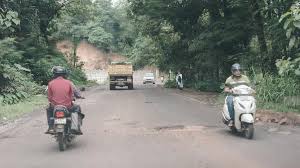
Several two-wheeler riders have sustained injury after falling off from their vehicles while trying to avoid potholes on the stretch The Karnataka Dalit Sangarsha Samiti (B.Krishnappa Stapita) has threatened of protest if authorities fail to repair the pothole filled State Highway stretch from Kinnigoli to Mangaluru, via Bajpe and Kavoor. Talking to reporters in Mangaluru on Thursday, Samiti’s Organisational Convenors Raghu Yekkar and D. Krishnananda said the stretch was filled with potholes for a long time and it has become difficult for people to come to the city using this stretch. This stretch was being used by those from Mulky and Belman to reach the Mangaluru International Airport. Motorists use this road to reach the popular Kateel Durgaparameshwari temple. Several two-wheeler riders have sustained injury after falling off from their vehicles while trying to avoid potholes on the stretch. The two said authorities should taken action within the next 15 days to fill potholes on the stretch. If officials fail to take any action, the DSS will be forced to hold a protest, Mr. Yekkar and Mr. Krishnananda said. The Hindu Bureau Courtesy : The Hindu Note: This news is originally published on https:/thehindu.com/bha and is used purely for non-profit/non-commercial purposes, especially human rights