
Agonizing death of Dalit youth in UP police station: Murder case registered against cops; family alleges he was hanged after torture.
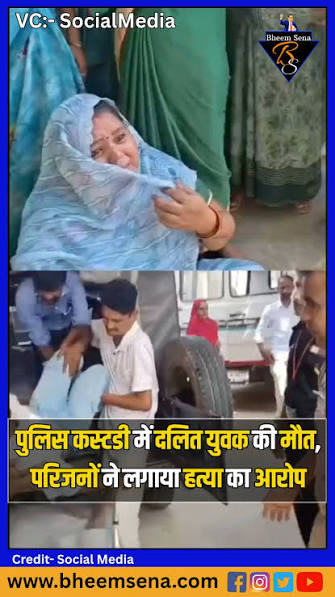
Uproar follows the suspicious death of a Dalit youth at the Patti police station in Pratapgarh; a murder case has been registered against police personnel, and the SHO has been suspended. The family alleges that he was tortured and then hanged. Uttar Pradesh: A shocking case has emerged from Pratapgarh district. On Monday, the body of a Dalit youth was found hanging in a room at the Patti police station. Following the incident, the deceased’s family has leveled serious allegations of murder against the police and the family of a minor girl. Based on the family’s complaint, a case has been registered against the accused police personnel and the girl’s family members under charges of murder and the SC/ST Act. Notably, a case regarding the alleged abduction of the minor girl—filed by her father—was pending against the deceased youth. Pratapgarh Superintendent of Police (SP) Deepak Bukar has taken immediate action in the matter. He has suspended Patti SHO Anand Pal Singh and Investigating Officer Omkar Singh for gross negligence in the discharge of their duties. According to Patti Circle Officer (CO) Pradeep Singh, the girl’s father had alleged that the youth abducted his 17-year-old daughter with the intention of marriage. Both belonged to the same village. The police had previously recovered the girl from Ghaziabad, after which her statement was recorded before a magistrate. In her statement, the girl clearly stated that she had gone with the youth of her own free will and wished to live with him. However, the CO clarified that since she is a minor, the law does not yet permit her to make such a decision. According to the police, the youth had not been arrested; instead, he had come to the police station on his own accord on Monday. He was not kept in the lock-up but was seated in a room where the investigating officer was questioning him regarding the abduction case. The officer had stepped out of the room for some work. Upon returning, he found the young man hanging from an iron rod in the bathroom ventilator. Police stated that the young man had fashioned a noose by tearing a blanket kept in the room. He was immediately rushed to the hospital, where doctors declared him dead. The Circle Officer (CO) noted that this was the second time the young man and the girl had allegedly run away together. On the previous occasion, too, the girl had stated she left of her own volition, but she was handed over to her parents as she was a minor. This time, after the girl was recovered, the young man had voluntarily arrived at the police station. He claimed that they were married and had been living together as husband and wife. Conversely, the deceased’s family has directly alleged that the police severely tortured the young man inside the station at the behest of the girl’s father. They claim that the police staged the scene to make it look like a suicide—hanging the body from the noose—to cover up a murder. The CO has assured that the investigation will reveal the truth behind all the allegations. A case has been registered under Sections 103(1) (murder) and 351(3) (criminal intimidation) of the BNS, as well as provisions of the SC/ST (Prevention of Atrocities) Act. Pratapgarh police have secured CCTV footage from the station and other crucial evidence. Additionally, the District Magistrate has recommended a magisterial inquiry into this suspicious death. The incident has now gained significant attention. Chandrashekhar Azad, MP from Nagina and President of the Azad Samaj Party, has demanded strict action against the accused in a post on the social media platform X. He has emphasized the need for a high-level, impartial investigation into the entire matter. Rajan Chaudhary Courtesy: Hindi News
Dalit family secures land rights after 34 years: Name entered in land records following CM’s directive; family expresses gratitude
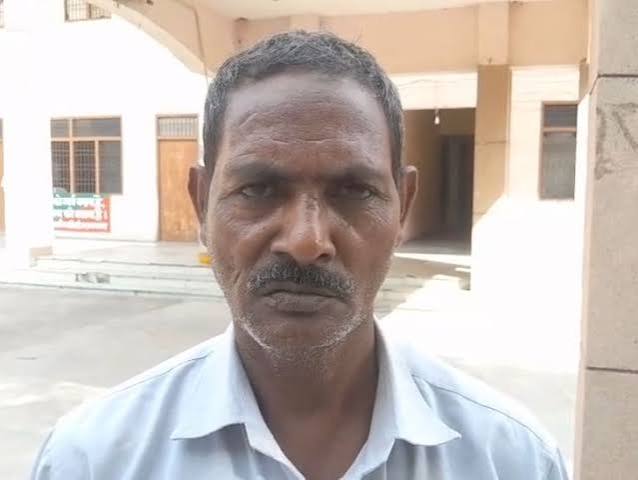
A Dalit family in Gona village, Khekra Tehsil, has finally secured ownership rights to their land after a long legal battle spanning 34 years. The family is overjoyed now that their name has been officially entered into the *Khatauni* (land record). They have expressed their gratitude to the Chief Minister and the state government for taking action in this matter. Richhpal, a resident of Gona village, owned approximately 12 *bighas* of land. He had sold six *bighas* of this land to a fellow villager. It is alleged that the buyer encroached upon the entire 12 *bighas* instead of just the six *bighas* purchased. Consequently, Richhpal began a struggle to reclaim his land and free it from encroachment. For nearly 34 years, Richhpal made repeated rounds to government offices seeking redress. He lodged numerous complaints and even staged sit-ins, yet the issue remained unresolved. Amidst this prolonged struggle, Richhpal’s health deteriorated. Subsequently, his son, Dharmpal, took up the responsibility of freeing the land from encroachment and securing the family’s rights. Dharmpal continued the struggle for about 14 years. He, too, lodged complaints with officials and staged protests. After several attempts, he brought the matter to the Chief Minister’s attention. Following this, directives for action were issued at the Chief Minister’s level, and orders were given to record the family’s name in the land records. However, even after the order was issued, Dharmpal had to make repeated visits to the Tehsil office for nearly five years to get the name entered in the *Khatauni*. He lodged multiple complaints regarding this delay. Finally, after five years, their name was entered into the records, and the family secured ownership rights to the land. The family expressed happiness upon securing their land rights after the 34-year-long battle. Dharmpal thanked the Chief Minister and appreciated the action taken by the state government. Dushyant Tyagi | Khekra, Baghpat Courtesy: Hindi News
No Sanitation Worker Visits Belasda; Infectious Diseases Spread in Dalit Colony; No Cleaning for 2 Years
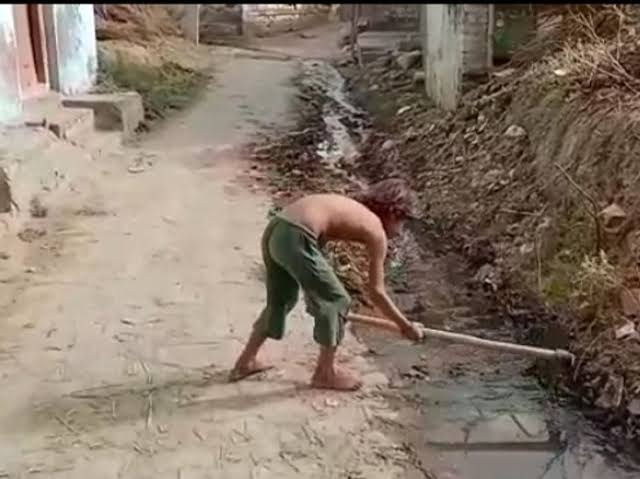
Filth is rampant in Belasda village (Bhadaiya) due to a lack of sanitation. Clogged drains have led to the spread of infectious diseases in the Dalit colony. The sanitation worker assigned to the area has not visited the village for two years. The lack of cleanliness has heightened the risk of infectious diseases, affecting many residents. Heaps of garbage have accumulated along roadsides and within neighborhoods due to the absence of regular cleaning, and the stench from this waste is exacerbating health issues. Belasda village is located just 500 meters from the Bhadaiya headquarters. It is the home village of the first Bhadaiya Block Pramukh, Dada Rajkishore Dubey, and former MLA Shiv Narayan Mishra. Despite this, the village is plagued by numerous problems, and sanitation conditions are dire. Bushes and piles of garbage litter the main road outside the village. Although a designated waste disposal site exists, trash is scattered everywhere. In the Dalit colony, a 100-meter stretch of drain—running from Indrasen Singh’s house to Anil Pandey’s house—has not been cleaned for two years. This drain is completely blocked, preventing wastewater drainage from the homes of Nanhe, Ramtirath, Harivansh, Mukaul, Sundari, and Jagdeep. Consequently, a dozen people have fallen ill with infectious diseases. Shubh Pandey | Bhadaiya (Sultanpur) Courtesy: Hindi News
Prof. Ratan Lal issued a show-cause notice by Hindu College for protesting admission irregularities; Dr. Anil Jaihind remarks—”Manuvadis cannot tolerate a Dalit with a backbone!”
The notice describes Prof. Ratan Lal’s conduct as detrimental to the college’s internal discipline and inappropriate for a teacher. It further states that he issued statements to external agencies, including the media, and persisted in repeating allegations despite the university’s clarification that admissions were based on university-issued lists and any errors stemmed from algorithmic glitches at the university level. He gave statements to the media and raised the issue with senior university and college officials. The Governing Body asserts that this has damaged the college’s institutional image and reputation. It claims a violation of Delhi University’s service rules and the code of professional ethics, which expect teachers to cooperate, behave respectfully, and refrain from making baseless allegations. His conduct has been termed detrimental to the college’s internal discipline and inappropriate for a teacher. The notice directs Dr. Ratan Lal to submit a written reply within seven working days explaining why disciplinary action should not be taken against him for gross misconduct, indiscipline, and insubordination. Failure to respond on time will be construed as an admission of the charges, and action will be taken in accordance with the rules. The notice bears the signature of T.C.A. Rangachari. On Wednesday, Prof. Ratan Lal posted the notice on his social media handle, writing: “Today, someone from the Hindu College staff delivered this to my personal staff at home. Read carefully—the letter is dated September 8, yet it was delivered today. Another example of the privatization of Hindu College. Now, this college doesn’t need a Principal; the Chairman will run it. Under Delhi University statutes, can a Chairman issue a show-cause notice? And that too to the Staff Association President, addressing them by their personal name?” Reacting to this notice, Dr. Anil Jaihind, head of the Congress OBC Cell, wrote, “Those with a ‘Manuvadi’ mindset cannot tolerate a Dalit with a spine. There is no place for such ‘Manuvadis’ in independent India. Action must be taken.” The matter pertains to a no-confidence motion moved by the college staff association against Principal Anju Srivastava, raising the issue of alleged irregularities in admissions under the sports and ECA quotas. According to the facts stated in the notice, this action is based on those very statements. Geetha Sunil Pillai Courtesy: Hindi News
Why are student protests at IIT Bombay continuing after Sahil Wakode’s death? APPSC reveals the full story!
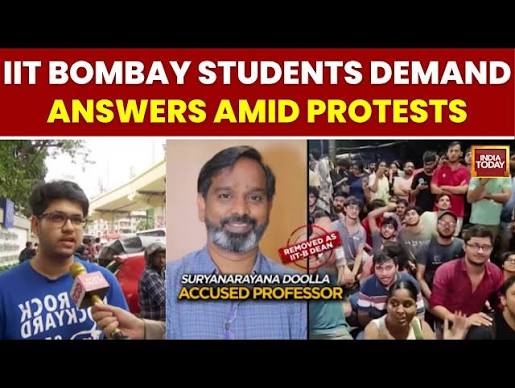
Students allege that Professor Doola deviates from established invigilation procedures and has further tightened the examination code in recent semesters. According to the students, Doola is known for a style of “making an example of some to punish others,” and they demand his removal from all teaching and administrative positions. Mumbai – Protests have been ongoing at the Indian Institute of Technology Bombay (IIT-B) campus for the past six days. This outrage was sparked by the death by suicide of student Sahil Wakode on the night of Friday, September 18. The Ambedkar Periyar Phule Study Circle (APPSC-IIT Bombay), a group representing Bahujan students, has issued a detailed statement explaining the reasons behind the ongoing protests. Sahil Wakode, a 22-year-old second-year B.Tech student, hailed from Yavatmal, Maharashtra. On the afternoon of September 18, he was accused of misusing a mobile phone during an examination. Professor Suryanarayana Doola, the exam invigilator and Dean of Student Affairs, escorted Sahil out of the examination hall. According to the APPSC statement, Sahil was questioned privately in the presence of two other professors and threatened with a one-year academic suspension—despite institute rules mandating that a student be allowed to complete the exam even in cases of alleged misconduct. That same evening, Sahil was found dead in his hostel room. News of the incident triggered massive outrage within the student community, and a large number of students gathered at the main gate that very night. Students linked not only Sahil’s death but also three other deaths that occurred last year during Director Shirish Kedare’s tenure—those of Sohail, Naman, and Rohit—to a lack of administrative accountability. Students’ Key Demands: Resignation and Accountability According to the APPSC, the students’ primary and unwavering demand is for Director Shirish Kedare to resign. Students state that during Kedare’s two-year tenure, campus security was tightened, social and communal spaces were closed, and punitive measures—such as fines, academic suspensions, and hostel evictions—were arbitrarily imposed. The second major demand concerns Professor Doola. Students allege that Doola operates outside established invigilation procedures and is credited with making examination codes stricter in recent semesters. Students claim Doola is known for a style of “punishing a few to set an example for the rest” and argue that he should be removed from all teaching and administrative positions. According to the APPSC, Professor Doola took a student named Sahil out of the examination hall, interrogated him privately in the presence of two other professors, and threatened him with a one-year academic suspension; this occurred despite institute rules mandating that a student be allowed to complete the exam even in cases of alleged misconduct. The Night of September 20: Compromise or Betrayal? On the evening of September 20, while the Director himself was present among the gathered students, the Student Council—described by the APPSC as a “nominated body” that undermines student demands—allegedly colluded with members of a right-wing leaning group called “IIT-B for Bharat” to intimidate students, seize the microphone, and silence voices raising the original grievances. The APPSC alleges that the charter of demands signed by the Director did not align with the students’ actual demands. According to available reports, Kedare stated that night, “I will resign, but due process must be followed, and I will announce my decision after Monday’s meeting,” before signing the 18-point charter of demands. However, the institute later denied reports of Kedare’s resignation. While Professor Doola was suspended from his position as Dean, he was not removed from his teaching role. At the open house held on the evening of September 21, a large number of Faculty Forum members arrived with banners and posters to rally in support of Doola—a move the student organization termed a “mockery of claims about bridging the gap between the administration and students.” According to reports, the Faculty Forum maintained that Doola had acted in accordance with institutional procedure when he caught Wakode engaging in the “unauthorized use” of a mobile phone during an examination. The institute’s 750-member Faculty Forum has also spoken of planning a campus march in support of Doola. The brazen manner in which the Faculty Forum demonstrated solidarity with Doola on the evening of the 21st—welcoming him to the open house amidst a crowd carrying banners and posters—makes a mockery of the measures the IIT had promised to take to improve relations between students and the administration. – Ambedkar Periyar Phule Study Circle (APPSC) Concerns of Dalit Students and the Caste Dimension Dalit students on campus feel increasingly insecure following these events, and there have been reports of a rise in casteist remarks and abuse. It is worth noting that this is not the first time allegations of caste-based discrimination have surfaced following a student’s death at IIT-B; after the death of Dalit student Darshan Solanki in 2023, the APPSC had termed it an “institutional murder.” Regarding the Sahil Wakode case, media reports citing the police investigation indicate that no mention of caste was found in his final conversation with a female friend; however, this does not entirely refute the students’ claims regarding the prevailing atmosphere on campus. The APPSC has directly alleged that the Student Council worked to dismantle the initial spontaneous solidarity under the guise of “proceduralism” and collaborated with the administration to suppress student voices during the open house on September 21. The statement further asserts that students who consistently demand accountability are being subjected to a “witch-hunt,” proving that the administration has no intention of ensuring accountability or implementing reforms. The APPSC demands the immediate resignation of this “casteist, authoritarian, and dictatorial administration.” Students are demanding the resignation of Director Kedare, the removal of Professor Doola from all positions, and an independent inquiry into the deaths that have occurred over the past few years, including that of Sahil. Students are dismissing the emails sent by the institute regarding mental health counselors as “hollow solace,” arguing that the real issue—a punitive administrative culture—remains unchanged. Geetha Sunil Pillai Courtesy: Hindi News
Now, the issue of caste discrimination in Prayagraj has heated up, with the High Court taking a serious view of the allegations made by a National Law University student.
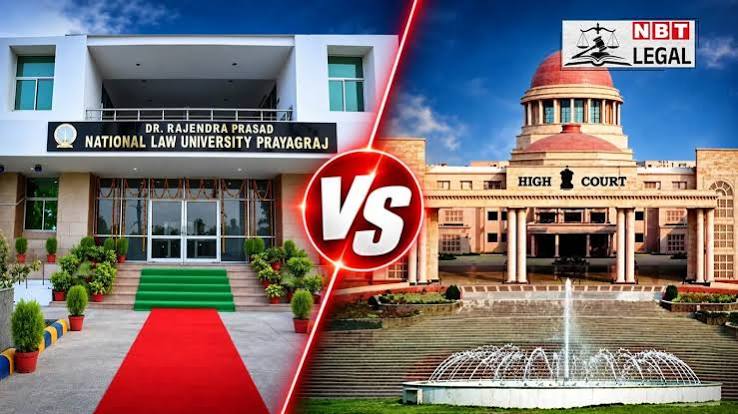
A Dalit student at Rajendra Prasad National Law University in Prayagraj has accused the warden of caste discrimination. The Allahabad High Court, considering it serious, has formed an independent inquiry committee. Dalit student alleges caste discrimination at Prayagraj NLU; High Court orders investigation New Delhi: Caste discrimination is a serious issue in universities, where the foundation for students’ futures is laid. Considering the alleged caste discrimination and harassment of Dalit students at Dr. Rajendra Prasad National Law University in Prayagraj as serious, the Allahabad High Court has ordered a judicial inquiry. The case relates to a petition filed by a BA LLB (Hons.) student and a PhD scholar. The students allege that the Head of the Law Department and the Warden of the Boys’ Hostel made comments regarding their caste and reservations and influenced their academic evaluations. The veracity and authenticity of the matter is yet to be established, and therefore, no allegations have been proven at this time. Dalit students allege discrimination; what’s the whole matter? This case arose following a petition filed by two students at Dr. Rajendra Prasad National Law University in Prayagraj. One petitioner is a PhD scholar at the university, while the other is a fifth-semester LLB (Hons.) student. Both students reside in the university hostel. They allege that the Dean of the Law Department and the hostel warden abused their authority and subjected them to caste-based insults. They also suspect that their answer sheets in their examinations were evaluated more strictly based on caste. Hearing in the High Court, then an inquiry committee formed A single bench of Justice Vinod Diwakar in the Allahabad High Court heard the students’ petition. The petition stated that the students had previously filed a complaint with the Vice Chancellor, but despite repeated reminders, no action was taken against Dr. Sharma. The petition alleges that the warden made comments on several occasions about the students’ caste and the reservation benefits they received. During the hearing, the Court stated that the allegations are serious and require an impartial investigation, after providing the accused academic, who is also the warden, a full opportunity to present his or her side and be heard. The Court appointed Judge Archana Singh of the Small Causes Court in Prayagraj and Chief Judicial Magistrate Arun Kumar Yadav to investigate the allegations. The next hearing in the case is scheduled for September 24. The High Court has ordered the person concerned to be relieved of all administrative responsibilities until the investigation is completed. They are also directed not to be involved in the evaluation of the petitioner student’s answer sheets. The investigation will require the Committee to determine whether Scheduled Caste or Scheduled Tribe students have been subjected to caste-based humiliation or discrimination by Respondent No. 6 or any other person employed or profitably employed by the University, and whether the University has taken action in accordance with applicable regulations to address the complaints. Focus and Scope of the Inquiry Committee The Inquiry Committee, appointed by the court, is to investigate whether alleged caste-based humiliation or discrimination occurred against SC/ST students and whether the university responded to complaints in accordance with applicable regulations. The Inquiry Committee will also hear the warden’s side of the case and attempt to gather evidence. The Committee has been directed to take necessary steps to protect the identities of the students testifying. A deadline has been set for the Committee. It has been directed to submit its investigation report to the Court in a sealed envelope before the next hearing on September 24. What are the legal aspects under the Constitution and the SC/ST Act? Article 15 of the Indian Constitution prohibits the State from discriminating on the basis of caste and allows for special provisions for backward classes, including SC/STs. Article 14 of the Constitution provides constitutional protections related to the principle of equality, and Article 17 provides constitutional protections related to the abolition of untouchability. Depending on the circumstances and specific facts of the allegations in the case, the provisions of the Scheduled Castes and Scheduled Tribes (Prevention of Atrocities) Act, 1989 may also be relevant, but the court order has not definitively confirmed the applicability of any specific criminal section in this case. The Legal Path Forward First, a committee constituted by the Allahabad High Court must investigate the allegations and the actions taken by the university and submit its report, after which the High Court’s stance will be decided. The next hearing in the case is scheduled for September 24, 2026. Only then can we hope that the truth will emerge. Authored by: Manish Raj About the Author Manish Raj is currently serving as Consultant Legal Editor at Navbharat Times Online. He began his journalism career 24 years ago with a leading national news broadcast media channel like Rashtriya Sahara. Courtesy: Hindi News
Savitribai Phule calls for unity to protect the Constitution and reservations: Former MP speaks at Dalit Jan Jagran Sammelan in Balaha
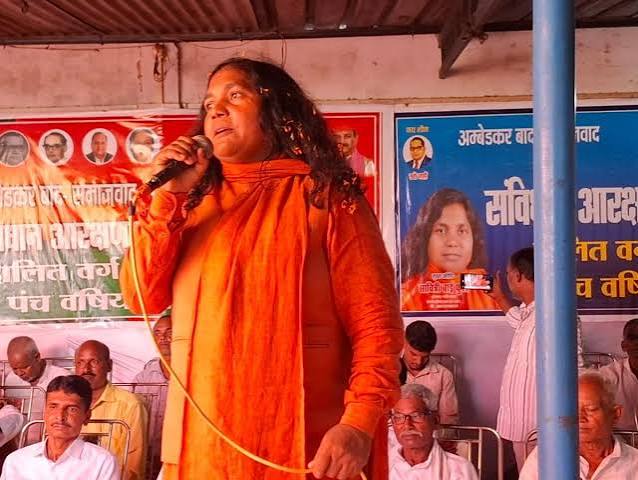
On Sunday, a Dalit Jan Jagran Sammelan, “Save the Constitution, Reservation, and Freedom,” was held at the residence of former MP and former MLA Savitribai Phule at Matiha turn in the Balaha assembly constituency. The conference called for awareness and unity in protecting the Constitution and reservations. Keynote speaker, former MP Savitribai Phule, stated that she had resigned from the BJP and the post of MP to protect the Constitution and the country. She stated that it is now necessary to think seriously about the Constitution and reservations. People must become aware of their constitutional rights and unite to protect them. She further stated that the Constitution has given the deprived and Dalit communities the opportunity to represent them in positions such as Pradhan, BDC, District Panchayat member, and MLA. If constitutional rights and reservations are weakened, the representation of the deprived communities will be affected. She appealed to the people to understand and be vigilant about the power of their vote. Former SP candidate from the Balha Assembly constituency, Achhaybar Nath Kanaujia, said that it is essential for society to unite to protect its rights and privileges. Former chief Jaynkar Singh, citing Hitler’s rule, warned people about their rights through the story of a rooster. Several other speakers, including former Assembly Speaker Vishram Yadav, former Pradhan Premdhari, and SP General Secretary from the Balha Assembly, Dr. Enuddin, also spoke. Harish Chandra raised awareness through Birha, while Ragini Sonkar presented a cultural program. A large number of people from various villages in the constituency attended the conference. Durgesh Kumar | Mihipurwa Nagar Panchayat (Motipur), Bahraich Courtesy: Hindi News
‘The Trans Act has made my life hell’: How India’s trans community is navigating daily life since the change
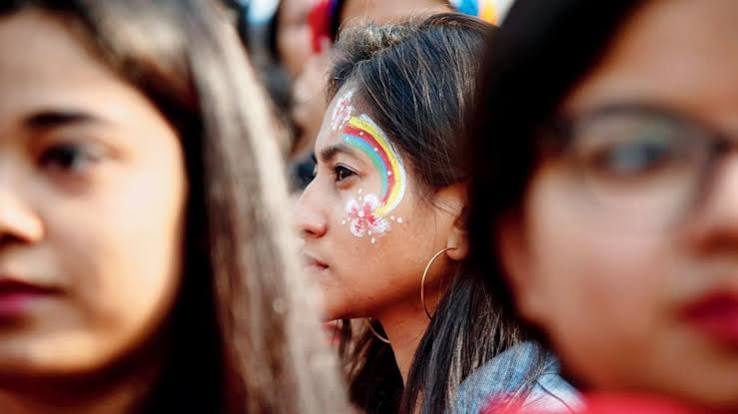
This month-end will mark six months since the Transgender (Protection of Rights) Amendment Bill 2026 became an Act. We trace the trail of devastation it has wrought by making gender-affirming care a humiliation ritual for many Back in July, Anaya Bangar, daughter of cricketer Sanjay Bangar, made a video talking about the toll it had taken on her to legally transition to a woman after the Transgender (Protection of Rights) Amendment Act, 2026, came into force. “I was asked to undress and have my whole body assessed in a room full of doctors that included men and… an invasive gynecological exam was also performed. I remember lying there thinking, ‘Why do I have to prove that body, to be recognised as who I am on paper?’” she asks. Her video came at a time when most of the country — and even a section of the trans community — had no idea how things were going to change with the amendment. “I am sharing this because not all of us know what this process can involve, and I hope we can all agree that legal recognition should respect people’s dignity,” Bangar says in the clip. Despite this paper’s sustained reportage on the Act, the protests against it, and the emotional and psychological toll it has taken on queer folk, even we had to brace ourselves while hearing the stories that have emerged from the trans community. Under the guise of making the process more structured, what has unfolded is multiple stories of trans persons being told to run from pillar to post for their documentation, arguing in one government office after another with babus who are too scared to give approvals, leaving them no choice but to stand in front of a medical panel that has little to no context of the trans experience. ‘I do not exist on paper’ Vibhu’s life is stuck in red tape as he starts the process for legal recognition as a trans man again Vibhu is 25 years old and works in United Kingdom as diversity, equity, and inclusion (DEI) advisor. He underwent gender-affirming surgery on June 15. The process is designed to humiliate and force you to give up, he says. “I started planning to get my surgery done in India in January-February, and then the Act came into effect.” Amid stress over the cost of the surgery, and rising airfares, his doctor in India told him that his surgeries had been suspended. “I panicked. I had been saving up for all this. Then a day later, the doctor texted back saying they are doing it. That was really a horrible day,” he adds. Vibhu’s Transgender (TG) card is now invalid. He wants to be recognised as a man on paper. If cisgender persons think they have it rough at government offices, Vibhu’a account should be eye-opener: “The staff is not trained, so all they say is ‘I don’t know, go to the next guy’, or ‘Yaha nahi, waha daliye [don’t submit the papers here, please go there]’. Most of the employees at the Aadhaar office felt they could announce to other people sitting there that I am trans. Not that I am ashamed of it; I am fine screaming to the world, but a government employee should not be.” “They [government staff] would say ‘Naam aur gender change karna toh hume nahi aata hai [We don’t know how to change your name and gender]’. You cannot change your name and gender at the same time, so you will just have to come back again.. And the way they give you all this information is also in a voice laced with stigma,” he adds. ‘They wouldn’t let me have surgery till my mom spoke up’ Sarvagya, who underwent a hysterectomy on September 7, after weeks of bureaucracy and humiliation Twenty-six-year-old Sarvagya hails from a small town in Rajasthan. He began his hormone therapy in 2022 and was due to transition surgically early this year, but the Trans Act delayed his plans. “I got my gender identity dysphoria certificate and then started my hormone replacement therapy in June 2022. It took me two years to gather Rs 1.5 lakh for the mastectomy [top surgery], which I did in 2024. At the time, it was very easy and seamless. All I had to tell the doctor was ‘This is my issue, and this is what I want to do’. My maternal family was against it, so I did the surgery on my own with the support of two friends,” he recalls. “Next, I was due for a hysterectomy [removal of the uterus]. I had planned to do this last year, but could not save up enough,” he adds. Then, the amendment came into effect in March, and Sarvagya was in a panic. “In August, I was facing some gastric issues, and an ultrasound followed by The PET-CT revealed a massive 30 cm tumour emerging from left ovary and had grown through my abdomen and pelvis, occupying almost the entire space.. I asked the doctor if they could do a hysterectomy while removing the tumour, but then my primary surgeon got a call from the medical staff of the hospital, stating that they cannot perform the surgery without some clearances,” he says. “Then it hit me. I asked my surgeon, ‘Is this regarding the Trans Act?’ A few hours later, they confirmed that it was,” he adds. What followed was a humiliation ritual similar to Bangar’s ordeal. “They made me sit in front of a medical board, which consisted of 10 doctors. Despite the fact that I hold a transgender card from 2023 that I got from the government, despite legally transitioning in 2024, and holding every document. They said they would remove the tumour, but not the uterus,” he recalls. By then, Sarvagya had won the support of his family, and brought his mother to testify before the medical board. “They told my mother that if she agreed to this, her child would be
Allegations of demolition of a Dalit woman’s hut and throwing away of her belongings: Despite numerous complaints, no action was taken, now a petition has been filed at the Tehsil Day.
Strongers have vandalized and encroached upon a Dalit woman’s land. Despite numerous complaints, the administration took no action. Following this, the woman submitted a written complaint at the Tehsil Day, demanding action. Anita, a resident of Dhurpur in Simaria village, under the Thathiya police station area, submitted a written petition to officials at the Tirwa Tehsil Day on Saturday. The woman alleges that plot numbers 1376 and 1378 are registered with the Gram Panchayat. Anita stated that the powerful, in collusion with revenue department officials and employees, demolished her hut and kiosk and threw her belongings onto the road. The woman also alleges that the powerful have registered the land in plot number 1377, but with the help of the revenue department, she is being treated unfairly. The woman submitted several petitions to the police and revenue department for action, but no action has been taken. On Saturday, under the leadership of Blue Revolution Bahujan Ekta Organization’s State Secretary Arvind Jatav and District President Karan Kumar, they submitted a written complaint at the Tehsil Day. Regional accountant Ramdas stated that legal action was taken in the presence of a joint team of the Naib Tehsildar and police. Tirwa Sub-District Magistrate Vaishali stated that the matter will be investigated and action will be taken. Bhairav Dutt | Umarda (Kannauj), Kannauj Courtesy: Hindi News
After 12 years, a Dalit student claimed the post of president at JNU’s Kaveri Hostel, sparking uproar; election cancelled – learn the full story
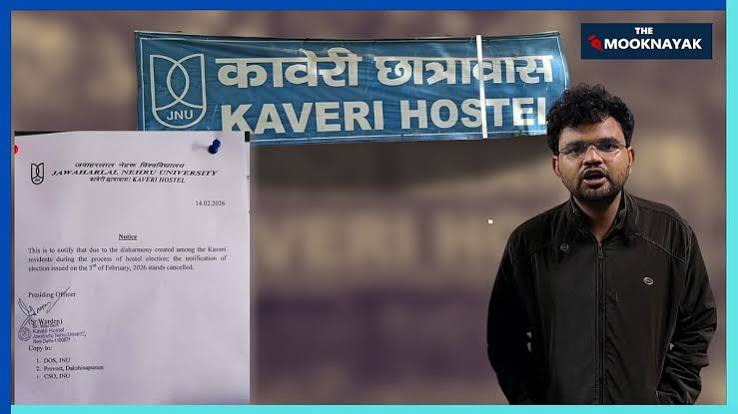
Students say that those with a casteist and Manuwadi mindset could not tolerate the candidacy of a Dalit candidate, so they hacked the democratic system and disrupted it. New Delhi – A major controversy has erupted over the student union elections at Jawaharlal Nehru University’s (JNU) Kaveri Hostel. The hostel election process has been cancelled, following allegations of casteism and violence surrounding a Dalit candidate’s candidacy for the post of president. This is the same Kaveri Hostel where hateful casteist slogans like “Chamar, Dalit, leave India” and “Brahmin, Baniya, Zindabad” were recently painted on the walls, drawing widespread condemnation. Kaveri Hostel houses a total of 308 students, including PG, UG, and PhD students. Every year, the Student Union (Students’ Body) is elected to address issues related to student welfare, such as improved infrastructure, quality food, cleanliness, mess facilities, and other student interests. This year, after 12 years, a Dalit student contested for the position of president. For all these years, there have been no SC community representatives on the hostel committee. There have been students from the tribal community, but they are considered to be staunchly RSS-oriented. Ajay Kumar Rao, a PhD student in Hindi literature, a candidate for president from the Progressive Panel, shared his experience with The Mooknayak. He said that elections are held every year to improve hostel infrastructure, protect students’ interests, and address welfare issues. The hostel election process is completely democratic and transparent. The Election Committee presents the names of nominated candidates for various positions (such as president, member, etc.) to the General Body Meeting (GBM). At this meeting, students’ support is sought against each candidate’s name. Students show their support by raising their hands. The candidates who receive the most hands, or a majority, are elected to the respective position. This process is based on consensus and direct democracy, allowing all resident students to participate. This method is common at the hostel level in campuses like JNU, where decisions are made by raising hands instead of using ballot papers, ensuring a speedy, fair, and universal participation. This method clearly expresses the collective will of the students, and in the event of any dispute, a decision is immediately reached within the GBM. This year, the election process began as follows: the election notification was issued on February 3rd. The body conducting the elections is the Election Committee, which consists of six students with neutral and open ideologies. The election committee was elected at the hostel’s General Body Meeting (GBM), in which Talha Ansari was elected. The election of the remaining five students, Vijay Jaiswal, Anubhav Tripathi, Priyanshu Chaturvedi, Ritul Joshi, and Animesh Kumar, was not democratic because they adhere to the RSS ideology, and an investigation is underway against some of them by the Proctor. Ajay Kumar Rao alleges that the election of the remaining members, except for Talha Ansari, was not conducted democratically and by consensus. The opposition, enraged by the idea of a Dalit student becoming president, created a ruckus. A scuffle and fight broke out between the students. Ajay’s glasses were broken during the altercation, and some others suffered minor injuries. The students complained to the warden, following which the election process was cancelled. Bahujan students say that those with a casteist and Manuwadi mindset could not tolerate the candidacy of a Dalit candidate, so they hacked the democratic system and disrupted it. Citing incidents of caste discrimination occurring on campuses across the country, Ajay said that Kaveri Hostel is no exception. South Asians and Expatriates The two major student organizations active in the hostel are the ABVP and the Progressive Panel. The Progressive Panel is a joint alliance of students from the Congress, Left, and Ambedkarite ideologies, seeking a system based on the principles of social inclusion, equity, and equality. Meanwhile, students with opposing ideologies are stuck in the age-old narrow-minded notions of superiority and inferiority. Non-vegetarian food is available in the hostel mess five days a week, but there have been debates and protests over not preparing non-vegetarian food on festivals. Religious events like Ram Navami and processions on campus are events that violate constitutional values and the principles of equality in an academic campus. This incident exposes the deep roots of casteism on a supposedly progressive campus like JNU, where attempts to suppress the voices of Dalit students continue. Ajay Kumar and his colleagues have appealed for the restoration of democratic processes. Geetha Sunil Pillai Courtesy: Hindi News