
Maya condemns attacks on Dalits, Ambedkar statues, urges strict action
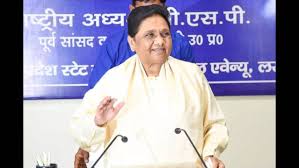
Lucknow: BSP national president Mayawati on Tuesday called the desecration of Ambedkar statues and atrocities against Dalits in several states on Ambedkar Jayanti this year “shameful” and demanded strict action from the centre and respective state govts. In a series of posts on X, she specifically denounced the attack on an Ambedkar procession in Morena, Madhya Pradesh, in which a Dalit was killed and several others were injured. “This is extremely condemnable. The state govt has not taken strict action against those responsible till now, which puts it in the dock for its clear involvement in the matter,” she said. The former UP CM said that incidents of desecration of Ambedkar statues and attacks on the processions taken out on Ambedkar Jayanti by “feudal elements” were reported from several states this year. “It is shameful and proof of the govts’ dual character,” he said. The centre and the state govts should take atrocities and injustice against Dalits and disrespect towards their saints, teachers, and icons “seriously” and act to stop such incidents, said the BSP chief, adding, “Otherwise, these people (Dalits) will never forgive them (the centre and the state govts).” Such casteist incidents make clear that the programmes organised by the centre and the state govts on the birth anniversary of Babasaheb Dr Bhimrao Ambedkar are merely a “deceit” to only get the votes of the Dalits, she added. She also warned Dalits against dual-faced parties. Courtesy TOI Note: This news was originally published on https://timesofindia.com/bha and is used purely for non-profit/non-commercial purposes, especially human rights.
Akhilesh has anti-Dalit mindset, pushed to margins by UP voters: Asim Arun
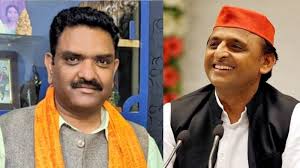
Lucknow: Social welfare minister Asim Arun on Tuesday attacked Samajwadi Party Chief Akhilesh Yadav for an anti-Dalit mindset, describing him as a “symbol of divisive politics”. The former IPS officer claimed that when SP was in power in UP, officers from SC/ST communities were routinely sidelined for postings. “During the SP regime, officers from Scheduled Castes and Scheduled Tribes were denied postings at police stations and tehsils in violation of rules. Under the Yogi Adityanath govt, postings are now made on merit. Those who are incompetent face action, while hardworking officers receive training and resources,” he said. Arun went on to allege that during Yadav’s tenure as CM, the latter went to great lengths to humiliate Dalits, and it was this very mindset that led to his political downfall. Referring to recent statements of Yadav as part of a calculated political strategy, the minister said that most SP leaders were instructed to create social divide. However, people of UP are now alert against such politics and have pushed Yadav and his party to the margins, he said. Quoting CM Yogi, he added: “Batoge to katoge, ek rahoge, to safe rahoge.” He accused SP of showing sudden concern for Dalits only after it lost power in the state, recalling how Yadav renamed districts and institutions named after Dalit icons like Bhim Nagar, Mahamaya Nagar, Jyotiba Phule, Sant Ravidas, and Mahamaya Nagar were changed under his regime. “Is this respect? No, this is an insult to social consciousness,” he said. Highlighting the achievements of the current dispensation with regard to the welfare of SCs and STs, Arun said there was record progress in scholarship distribution. Scholarships worth over Rs 4,000 crore were distributed this year, benefiting 56 lakh students. In contrast, the SP govt covered only 34 lakh students, and even then, scholarship scams were rampant,” he said. Speaking at the inauguration of the Kanpur Metro project, Arun dismissed SP’s claims that it initiated the project. Courtesy : TOI Note: This news was originally published on https://timesofindia.com/bha and is used purely for non-profit/non-commercial purposes, especially human rights.
Awakening in colours: This is Madhubani artist Malvika Raj who conveys the messages of Buddha-Phule-Ambedkar to the world!

Malvika’s paintings are not just pictures, they are a silent but powerful resistance against caste discrimination prevalent in the society. She has not only given a new social perspective to the Madhubani style, but has also turned it into a document of Bahujan history and self-respect. New Delhi. “In childhood, when school children do not share tiffin with you just because you are a Dalit, that pain stays with you for life,” – these are the words of Malvika Raj, who hails from Samastipur in Bihar and is living in Patna and carving her identity through Madhubani painting. Malvika, who is writing a new chapter in the world of art with her skills, is not only an artist, but is also a strong voice against casteism. In a conversation with ‘The Mooknayak’, she told that she showed the way to make colours and brushes a weapon against social injustice. Malvika is not just an artist, she is one of those voices who are keeping alive the struggle, history and self-respect of Bahujan heroes through art. She has made Madhubani art a symbol of social justice. Today she has made more than 200 paintings, which bring the thoughts and life of great men like Gautam Buddha, Mahatma Phule, Savitri Bai Phule, and Constitution maker Baba Saheb Dr. Bhimrao Ambedkar in colours. A journey from struggle to colours Malvika Raj’s father Ramchandra Ram has retired from the rank of DSP in Bihar Police. She says, “My father’s struggle, his honesty and his support have been my biggest strength. It is because of him that I have reached here today.” Malvika is the second child among four siblings. This family of three sisters and one brother did not give up the path of education and self-respect even in the midst of caste discrimination. Talking about the discrimination she faced while studying in a Hindi medium government school in Patna, she said, “When I was a child, children used to insult my community, not share their tiffin with me, and used to say ‘you don’t look like SC/ST’, I didn’t understand much at that time, but as I grew up, all this used to break me from within, but I made it my strength.” Worked in a private company After completing her fashion designing studies from Chandigarh, she worked in a designing company in Delhi, but due to health problems, she had to leave the job and return to Patna. This is where her art journey began. In 2011, she took up Madhubani painting, but her outlook was traditional. It was different from stories. Madhubani art has often depicted Krishna, Mahabharata, Ramayana, Shivpuran etc. Why are there no paintings of Buddha on the land of Gautam Buddha? When Malvika started to study Madhubani paintings in depth, she was shocked to know that in Bihar, which is considered the land of Buddha, no Madhubani painting of Gautam Buddha can be seen. “If the stories of Ramayana can survive in Madhubani paintings, then why not the legacy of great men like Buddha, Phule and Ambedkar?” — this question gave direction to her art. Malvika had decided then that she would make such paintings, which are not only beautiful, but also give a social message. Each of her works brings alive the identity, struggle and thoughts of the Bahujans. Resistance and identity through art Malvika’s paintings are not just pictures, they are a silent but powerful resistance against the caste discrimination prevalent in the society. She has not only given a new social perspective to the Madhubani style, but has also transformed it into a document of Bahujan history and self-respect. Her paintings are now on display across the country and her art is being collected by many universities and people associated with social movements. Her art reflects the compassion of Buddha, the social conscience of Phule, the torch of education of Savitribai and the Constitution of Ambedkar. Discrimination is still alive Malvika says that caste discrimination still exists in states like Bihar. “When people know my caste, their behavior changes. Some of my friends distanced themselves from me just after knowing my caste.” She also told that many people, looking at her dress and mannerisms, say, “You don’t look like SC/ST,” which is a kind of taunt. The question is, how do those people want to see the people of backward, exploited, deprived society? An artist creating a new legacy Malvika’s journey is proof that no matter how many social barriers there are, if a person has determination and self-confidence, he can change history. She has brought Madhubani painting to a new level, where art is not just decoration, but has become a medium of social justice. Her story is not just an inspiration, it is a living picture of the Bahujan society that is trying to make its mark even amidst discrimination, neglect and struggle every day. What is Madhubani painting? Madhubani painting, also known as ‘Mithila painting’, is a traditional folk painting style of the Mithila region of Bihar. This art has been created by women since ancient times on the walls of the house, courtyard, and on special occasions such as marriages, festivals. The mythological belief of its beginning is that the tradition of this painting started when King Janak ordered to decorate the city at the time of his daughter Sita’s wedding. This painting is mainly done with natural colors and fingers, wooden pen, or cloth bundle. In this, trees, plants, gods and goddesses, animals, birds, marriage, myths and folklore are depicted in a symbolic style. When the walls of houses collapsed after an earthquake on the Nepal-Bihar border around 1947, these paintings were discovered and this traditional art was brought to the world. After this, in the 1960s, the women of Madhubani were taught to paint on paper, due to which this folk art reached the global level. Today it is not only a cultural heritage but has also become a medium of socio-cultural movements. Courtesy : Ankit Pachauri, Hindi
Hatred towards language is unfair, good governance is only that which is according to the constitution: Mayawati
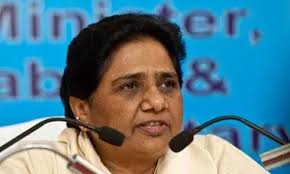
Mayawati said that the government must pay attention to how the children studying in government schools, especially those from the exploited and neglected poor, Dalits, tribals and backward classes, can progress in IT and skilled fields without acquiring knowledge of English. Lucknow. Bahujan Samaj Party (BSP) national president Mayawati has given her reaction on the language controversy going on these days. She said that hatred towards language is unfair. BSP chief Mayawati wrote on the social media platform ‘X’ on Saturday that in the meeting held in Delhi, a deep review was done on the preparation and strengthening of the formation of BSP organization in Maharashtra, Gujarat in the west and Karnataka, Tamil Nadu and Kerala in South India and increasing the mass base of the party, and a resolution was taken to further increase the work of the party as per the guidelines with full body, mind and money. She further wrote that due to census and re-allocation of Lok Sabha seats on its basis, new education policy and imposition of language etc., it is natural for the public and national interest to be affected by the dispute between these states and the center for political interests. Good governance is that which takes the whole country along according to the Constitution. Mayawati said that the government must take care of how the children studying in government schools, especially those of the exploited and neglected poor, Dalits, tribals and backward classes, can move forward in IT and skilled sectors without acquiring knowledge of English. Hatred towards language is unfair. Earlier, she wrote in her post that it is known that like other parties, the SP is also creating an atmosphere of tension and violence by putting forward especially Dalit people of the party, and the phase of highly controversial statements, allegations and counter-allegations and programs etc., which seem to be their politics of extremely narrow selfishness. She further wrote that SP can also go to any extent here for the sake of the selfishness of Dalit votes. Therefore, along with Dalits, other backward classes and Muslim community should also avoid falling prey to the political tactics of this party by not getting influenced by them. Instead of commenting on the history of others, it would be appropriate if the opportunistic Dalits associated with such parties tell them about the goodness and struggle of the saints, gurus and great men of their society, due to which these people have become worthy of something. Courtesy : Hindi News
UP: Two including father arrested in case of trafficking of 14-year-old Dalit girl in Kaushambi

The minor girl was sold for Rs 3 lakh and was held captive and raped by the buyer. Kaushambi, UP: The police on Tuesday arrested two persons in connection with the trafficking of a 14-year-old Dalit girl in Kokhraaj area of Kaushambi. The arrested accused include the girl’s father Ashok and Sandeep Tyagi, a resident of Panipat in Haryana. Ashok is accused of selling his daughter for Rs 3 lakh, while Tyagi is accused of buying and raping her. The Kokhraaj police station received information on Thursday that a minor girl was sold for Rs 3 lakh and was being held captive and raped by the buyer, Superintendent of Police Brijesh Kumar Srivastava said. A case was registered against the girl’s father Ashok, mother and buyer Sandeep Tyagi under sections of the Indian Penal Code, including rape, causing hurt and human trafficking, as well as the POCSO Act and the Scheduled Castes and Scheduled Tribes (Prevention of Atrocities) Act. Based on the information, the police arrested both the accused. However, while being taken to Manjanpur district court, the police jeep went out of control and overturned near Selarha Purva village on Sirathu-Manjanpur road at around 4:30 pm, injuring five people. The injured include the two accused, driver Hemant, constable Suraj Kumar and home guard Mahendra Pratap. Circle Officer Manjanpur Shivank Singh said that all the injured have been admitted to Kaushambi District Hospital, where they are undergoing treatment. The matter is under investigation. Courtesy : Hindi News
UP: Dalit woman raped at gunpoint in front of son in Mainpuri, case registered
Alleged rape of Dalit woman in Mainpuri, taken to a secluded place on the pretext of loan and committed the crime. Mainpuri: A 40-year-old Dalit woman was allegedly raped at gunpoint in front of her four-year-old son in Uttar Pradesh’s Mainpuri district. The accused, who belongs to another caste, took advantage of the woman’s family’s financial crunch to lure her for a loan of Rs 20,000 and sexually abused her when she went with him to collect the loan, police said on Tuesday. According to the victim’s complaint lodged on Monday, the incident took place on April 17. While returning home after getting her son’s haircut, she met the accused near a bridge. The accused offered a loan and convinced her to take a ride on his motorcycle. Trusting him, she sat on the motorcycle with her son. However, the accused took her to a secluded place, where he raped her and threatened to shoot her child if she resisted. Station House Officer (SHO) Anuj Kumar said an FIR was registered against the accused, who hails from the same village, under the rape section of the Indian Justice Code (BNS) and provisions of the SC/ST Act. The victim has undergone a medical examination and police are searching for the accused, who runs a construction material shop in the village and knew the victim and her husband. “The accused will be arrested soon and the investigation is on,” Kumar said. The victim initially kept quiet out of fear. But repeated phone calls from the accused prompted her to muster courage and narrate the incident to her husband, who took her to the police station and lodged a complaint. “This man raped my wife. I want strict action against him so that he does not commit such a crime again,” the victim’s husband said. Courtesy : Hindi News
Dalit History Month: Who is the first Dalit Cardinal Anthony Poola? Why is his role special in the Catholic Church?
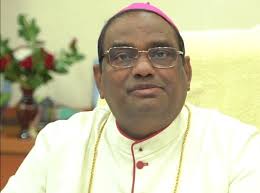
The position of Cardinal is considered the highest in the Catholic Church after the Pope. They are among the most influential people in the Catholic Church and play the role of the Pope’s chief advisors. Their most important job is to elect a new Pope. New Delhi- While the contributions and achievements of the Dalit community are remembered during Dalit History Month, Cardinal Anthony Poola is one name who has created history. In August 2022, Pope Francis appointed two Indian bishops to the College of Cardinals—Archbishop Filipe Neri Ferrao of Goa and Daman and Archbishop Anthony Poola of Hyderabad. Anthony Poola became the first Dalit Christian cardinal, a historic moment for India and the global Catholic Church. This report highlights Poola’s extraordinary life, the significance of his appointment and his iconic role. On 29 May 2022, Pope Francis announced 21 new cardinals, including Archbishop Anthony Poola. With this, he became the first Dalit Christian cardinal. Also, he is the first Telugu person to receive this title. The post of Cardinal is considered the highest after the Pope in the Catholic Church. On 27 August 2022, a ceremony was held at St. Peter’s Basilica in the Vatican, where Poola was formally made a cardinal. Anthony Poola was born on 15 November 1961 in a Dalit family in Chindukur village in Kurnool district of Andhra Pradesh. Growing up amid poverty and social discrimination, Poola started his religious education from Nuzvid Seminary and later studied theology from St. Peter’s Pontifical Seminary in Bengaluru. On 20 February 1992, he was made a priest for the Kadapa Diocese. After this, he always focused on serving the backward and Dalit communities. On 19 April 2008, he was made the Bishop of Kurnool. Later on 19 November 2020, he became the Archbishop of Hyderabad. Why is the role of cardinals so important? Cardinals are also called “Princes of the Church”. They are among the most influential people in the Catholic Church and play the role of the Pope’s main advisors. Their most important job is to elect a new Pope. Currently, the total number of cardinals is 242, out of which 134 are authorized to elect the Pope (under the age of 80). Anthony Poola is also included in these, which means that he will participate in the election of the next Pope. By giving this post to Poola, Pope Francis has given representation to the Dalit and Telugu community at the global level. This appointment is a big step towards equality and inclusiveness in the church. A big hope for Dalit Christians Dalit Christians in India often face discrimination even within the church. Out of India’s 1.9 crore Catholics, a large number are Dalit Christians, but their representation in high positions in the church has been very low. This appointment of Poola is a big step towards changing this situation. During Dalit History Month, Poola’s story has become an inspiration to millions. His journey shows that any obstacle can be overcome with honesty, service and faith. Cardinal Anthony Poola’s life, who rose from a small village to the Vatican, is an example of struggle, faith and dedication. His appointment as the first cardinal from the Dalit community is not only historic, but it also reflects the Church’s commitment to equality and justice. Today he is not only an advisor to the Pope, but also the voice of millions of Dalit Christians around the world. His achievement proves that any position can be achieved with determination and hard work. Courtesy : Geetha Sunil Pillai, Hindi News
Rajasthan: 2 died while cleaning sewer in Alwar; Ajaak said – Do not send cleaners into septic tank
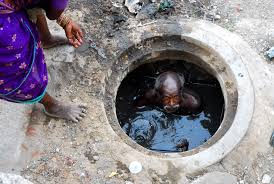
Every year many sanitation workers are dying untimely and painfully, ruining their families. The families of the deceased do not even get compensation or jobs on time. Alwar- A tragic incident in Khedli town of Alwar district of Rajasthan on Saturday, April 19, spread sensation in the entire area. Two people, Lacchi Ram (50 years) and Hemraj alias Akash, died of suffocation due to poisonous gas and getting trapped in the swamp while cleaning the sewer tank in a paper mill near Navkar Vatika. This incident has raised serious questions about the working style of the municipality and the safety of the sanitation workers. According to local newspapers, workers were sent down without any safety equipment to clean the sewerage line and chamber in Khedli town. Lacchi Ram, son of Mangtu, and Hemraj alias Akash, son of Sagar Valmiki, came in contact with poisonous gas during cleaning work and got trapped in the swamp, resulting in their death. After this incident, the local administration and municipality officials are silent, only saying that the matter is being investigated. AJAK i.e. Dr. Ambedkar Anusuchit Jati Adhikari Karmchari Association (AJAK) organization has taken a tough stand on this incident. The organization’s president Shriram Chordia has written a letter to the officials, including the Chief Minister of Rajasthan, demanding immediate action in this matter. The letter states that this incident is not only painful, but it also reflects the administration’s apathy towards sanitation workers. The organization said that similar incidents have happened in Rajasthan before, where employees have died while cleaning sewer lines and tanks. Despite this, the state government has not taken any concrete steps in this direction, which is a matter of concern for the cleaning community. The letter cites Section 7 of the Prohibition of Employment as Manual Scavengers and their Rehabilitation Act, 2013, which clearly states that no person, local authority, or agency shall employ any person for “hazardous cleaning” of sewer lines or septic tanks. Violation of this provision is punishable under Section 9 with imprisonment of up to two years, fine of up to two lakh rupees, or both for the first offence, and imprisonment of up to five years, fine of up to five lakh rupees, or both for subsequent offences. However, despite the implementation of this law, it is common for local bodies in Rajasthan to send workers to clean sewers and septic tanks without safety equipment. This leads to untimely and painful deaths of several sanitation workers every year, ruining their families. The families of the deceased do not even get timely compensation or jobs. The cleaners who go down the sewer are not provided any safety equipment due to which there is always a danger of their death. Ajaak has put forward some demands in the matter of cleaning of sewerage tank in Kherli, which include: During cleaning, the families of the deceased should be provided immediate rehabilitation and financial assistance of Rs. 1 crore should be provided to each family. One member of the dependents of the deceased families should be given a government job. To prevent recurrence of such incidents in future, technical security should be provided at the level of the state government and Municipal Corporation, Council, Municipal Corporation and Municipalities. FIR should be registered against the guilty contractor and the guilty and negligent officers of the concerned supervision who carry out the sewerage cleaning work and strict action should be taken. In future, the Prohibition of Employment of Workers Lifting Dirt Manually and Their Rehabilitation Act 2013 should be effectively implemented and the cleaners should not be sent down into sewer lines/septic tanks/manholes etc. in all the bodies. The Kherli incident is not an isolated case. Safai Karamcharis are constantly risking their lives while cleaning sewers in urban areas of Rajasthan due to lack of safety equipment and mechanised cleaning systems. Such frequent deaths are not only devastating families but also highlighting the failure of the administration. Courtesy : Geetha Sunil Pillai, Hindi News
Amethi: Tension in village after Dalit labourer’s murder, murder case registered against four

Murder committed by attacking with sharp weapon, family members suspect old enmity; police registered case against two named and two unidentified persons. Amethi (Uttar Pradesh) – Tension prevailed in Kalyanpur village of Amethi district of Uttar Pradesh on Tuesday when the body of a 32-year-old Dalit labourer Shivam Kumar was found injured by a sharp weapon. According to police, Shivam Kumar’s body was found near a poultry farm located on the border of Kalyanpur village in Jamo police station area on Monday evening. Police have registered a case against two local youths of the village—Vikas Yadav and Man Singh—along with two unidentified persons on the charge of murder. In the initial investigation of the police, the reason for the murder is being told to be related to some old personal dispute, possibly a love affair. After the incident, heavy police force was deployed in the area on Tuesday to prevent any untoward incident. Inspector in-charge of Jamo police station Vinod Kumar Singh said, “There was already a dispute going on between Shivam Kumar and the accused. The accused are being questioned.” According to the police, on Monday evening they received information that a person was lying injured near a poultry farm outside the village. The police team reached the spot and the injured was taken to the hospital, where doctors declared him dead. Initial investigation revealed that Shivam had left home for the poultry farm on Monday afternoon. When he did not return till late evening, the family started looking for him. After this, the villagers found him lying in the field soaked in blood. Shivam Kumar used to support his family by doing daily wage labour and he got married only last year. The deceased’s father Chhotelal lodged a complaint at the police station and alleged that the attackers attacked with a sharp weapon. Police have also recovered a bottle of liquor from the spot. Investigation into the case is ongoing. Courtesy : Hindi News
Race for Dalit outreach intensifies in Uttar Pradesh
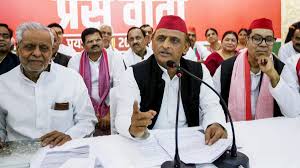
Add YoWhile the SP is pitching its PDA formula as a forum for Dalit upliftment against the ruling BJP, the BSP says the SP is the extreme casteist partyur Heading Text Here The race for outreach towards Dalits intensified among the Opposition players in Uttar Pradesh on Sunday (April 20, 2025) with Samajwadi Party president Akhilesh Yadav alleging that the State was on top of atrocities committed against the Dalit community. The SP chief is pitching his PDA (Pichhda, Dalit, Alpsankhyak) formula as a forum for Dalit upliftment against the ruling Bharatiya Janata Party. “Uttar Pradesh is number one on atrocities on Dalits. A Dalit was burnt to death in Prayagraj. Our PDA platform is a forum to connect people from all communities, especially focused on marginalised groups. If BJP had won 400 seats in the 2024 Lok Sabha elections, then today rifles and swords would have been waving on the streets,” said Mr. Yadav, addressing media in Prayagraj. Samajwadi Party can never be ‘true well-wisher’ of Dalits due to flaws in its intentions, policies: Mayawati Putting up data claiming lesser representation of PDA, meaning Pichhda, Dalits and Alpsankhyak, acronym for Backwards, Dalit and Minority, in key officials’ postings in districts, he said, “total postings in Agra are 48, out of which PDA is 15, in Mainpuri out of 15 key officials, representation of PDA is three. Prayagraj will also have similar data,” he alleged, hinting at caste-based postings. Mr. Yadav accused the BJP of neglecting officials hailing from PDA social groups in key government postings. On the other hand, Bahujan Samaj Party (BSP) president Mayawati cautioned the Dalit community and hit out particularly at the SP alleging that like the Congress and the BJP, it could never become a true well-wisher of Dalits-Bahujans. Calling the SP as extreme casteist party, recalling the infamous 1995 Lucknow guest house incident, the BSP leader called it a murderous attack on herself and described the previous SP government renaming new districts and educational institutions created in honour of Dalit icons as acts that are impossible to forgive by the community. Mayawati cautions Dalits amid SP outreach, terms statements as politics of narrow selfishness “Like Congress, BJP etc., SP too, far from doing any real welfare and upliftment of the Bahujans, especially the Dalits, by giving them their constitutional rights, has no sympathy for the community. The SP’s betrayal of BSP, murderous attack on its leadership on June 2, tearing the Bill on reservation in promotion in Parliament, changing the names of new districts, parks, educational and medical colleges created in honour of their (Dalit) saints, gurus and great men etc. are such blatant casteist acts which are impossible to forgive,” she wrote on X. She added, “While BSP has been successful to a great extent in its mission of eliminating the caste system through its continuous efforts, the SP is trying in every way to spoil it for the fulfillment of its narrow political interests. People must be cautious,”. Reacting sharply to the statement by Ms. Mayawati, the SP said the party was the most potent opposition political force in the State fighting against atrocities committed on Dalits and raising the community’s concerns democratically across all platforms. Fight for the Dalit vote hots up in Uttar Pradesh “If you look at the parliamentary proceedings, our party raised issues of Dalit and marginalised interests continuously and forcefully, which shows our commitment to social justice, and it has sent a positive message among the marginalised sections. We stood on our promise made in the run-up to the 2024 Lok Sabha campaign, about fighting with all our might for the deprived sections and not allowing any constitutional amendments that might jeopardise the interests of the minorities, and Dalits. The BSP’s discomfort stems from the success of the SP outreach and Akhilesh Yadav Ji’s appeal among Dalits and youth”, said Ram Pratap Singh, SP spokesperson. ‘Dalits key to outcome’ Analysts point out that the outreach is aimed at getting traction of the community, which is in high numbers in Uttar Pradesh. “With approximately 21% population, Dalit electorate is the most pivotal vote in Uttar Pradesh, key to any electoral outcome, all parties be it the BJP, the SP, the BSP and the Congress are making efforts to gain traction with this key community. But the bitter truth remains that even after 75 years of Independence, no political party has a solution or a road map to uplift the Dalits, making the community still untouchable,” said Ajit Kumar Jha, veteran political analyst. Courtesy : Mayank Kumar, The Hindu Note: This news is originally published on https://thehindu.com/bha and is used purely for non-profit/non-commercial purposes, especially human rights.