
Supreme Court Grants Relief To TISS Dalit Scholar Suspended Over Protest March, Allows Him To Continue PhD
The Supreme Court on Friday (May 2) directed the Tata Institute of Social Sciences to reinstate Dalit Ph.D. scholar and Left student leader Ramadas K.S, who was earlier suspended for alleged “misconduct” and “anti-national activities.” A bench comprising Justice Dipankar Datta and Justice Manmohan did not invalidate the suspension. However, it directed that the suspension be reduced to the period already undergone until yesterday. The bench expressed the view that Ramadas should be allowed to conclude his PhD. It was in April 2024 that the TISS suspended Ramadas from the institute for two years and debarred his entry across all its campuses. The action came after Ramadas participated in a protest against the Central Government and the BJP, and opposing the implementation of the National Education Policy (NEP) in a demonstration called the ‘Parliament march’ in January 2024 under the banner of TISS- PSF (Progressive Students’ Forum). Ramadas approached the Supreme Court challenging the Bombay High Court’s verdict, which upheld his suspension. The High Court observed that the said protest/march was politically motivated and noted that TISS was correct in finding that Ramadas created an impression that the views expressed in the march represented the views of the institute and that this brought disrepute to the institute. It was in 2015 that Ramadas first enrolled with the TISS for a Master’s degree in the course Media and Cultural Studies. He was awarded a scholarship from the institute. In 2018, he enrolled in the integrated M.Phil. and Ph.D. course in Development Studies. In 2023, he was awarded a National Fellowship in Scheduled Caste by the Union Ministry of Social Justice in view of his performance in the UGC-NET examination. Courtesy: Live Law Note: This news is originally published on https://www.livelaw.in and is for use by the non-military/non-commercial community, especially those in the human rights sector.
Supreme Court orders return of Ph.D. scholar Ramadas to TISS
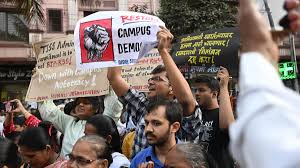
A Bench headed by Justice Dipankar Datta gave relief to Mr. Ramadas, who had challenged his suspension and ban from entering any TISS campus. A protest outside Tata Institute of Social Sciences against the suspension of Ph.D. scholar Ramadas K.S. on March 26, 2025. The Supreme Court on Friday (May 2, 2025) allowed Dalit Ph.D. scholar and Left student leader Ramadas K.S. to be reinstated in the Tata Institute of Social Sciences (TISS) while reducing his two-year suspension for alleged misconduct to the period already undergone. A Bench headed by Justice Dipankar Datta gave relief to Mr. Ramadas, who had challenged his suspension and ban from entering any TISS campus. A TISS empowered committee on April 17 2024 suspended Ramadas from the institute for two years and debarred his entry across all its campuses. Bombay HC dismisses TISS Ph.D student’s plea against his suspension for ‘anti-national activities’ The Bench noted the submissions of advocate Rajeev Kumar Panday, appearing for TISS, and perused the documents which prompted the committee to suspend the scholar for two years. Mr. Panday argued that the Bombay High Court was correct in not interfering with the suspension. However, the court took note of the fact that Mr. Ramadas was doing his Ph.D. from the institution and should be allowed to conclude it. “Today, the Honourable Supreme Court has ordered TISS to reinstate me as a student with immediate effect, hearing my petition against the two-year suspension and debarring entry to any TISS campuses in three different States… On the 366th day of legal proceedings since approaching the High Court, I am officially a student again –from Today – at the very institution that denied me education 380 days ago,” Mr. Ramadas was reported to have posted on social media. “I am happy. It is a relief for me. My first prayer was to go back to TISS and to study. That has been granted. I have not yet decided when I will rejoin. After the judgment comes in, I will study it and will go back thereafter. The court said, ‘Let him study.’ I respect the SC verdict,” Mr. Ramadas told The Hindu. Courtesy: The Hindu Note: This news is originally published on https://www.thehindu.com and is for use by the non-military/non-commercial community, especially those in the human rights sector.
‘Dignity of labour applies only to societies where equality is the norm’

Even if you are a Dalit and you think some other subcaste is lower to you and feel happy about it, you are just practising a 3,000-year-old system, says Bezwada Wilson Only if we can come out of the mindset of finding joy in being superior to another person can we overcome the caste system, says Bezwada Wilson, co-founder and National Convenor of the Safai Karmachari Andolan (SKA.) “Even if you are a Dalit and you think some other subcaste is lower to you and feel happy about it, you are just practising a 3000-year-old system,” he said, speaking at Ashoka Trust for Research in Ecology and the Environment (ATREE) as part of the intersectionality series. He argued that similar is the case with patriarchy too and that men of most communities consider women lower to them. The Magsaysay award winner further noted that considering oneself as inferior to someone else was equally dangerous. “The scavengers feel that they are inferior to everybody else in this country because they have to clean, carry and dispose of human excreta and garbage. But in other countries who are doing similar work, people don’t feel the same way because of dignity of labour.” However, he noted that the concept of dignity of labour shouldn’t be applied in the Indian context to ask someone to clean another person’s toilet. “Only when you are able to understand and attain an equal society can you bring up the dignity of labour. We are unfortunately far away from it,” he said. Fighting caste-based occupation In 1993, the Employment of Manual Scavengers and Construction of Dry Latrines (Prohibition) Act,1993 prohibited the construction of dry toilets and employment of manual scavengers to clean them. Wilson noted that despite the prohibition the practice continued in several parts of the country in the years that followed unhindered. In 1994, Wilson founded the SKA along with activist Paul Diwakar and former chief secretary of Tripura S.R. Sankaran to document continuing scavenging practices and fight against it. “S.R. Sankaran was with Safai Karmachari Andolan for 18 years. We were determined to destroy caste-based occupation. S.R. Sankaran, who was born as a Brahmin, was the chairperson. We shouldn’t be adamant that only a Dalit should lead, and others should be kept away. We cannot again practise the caste system in our organisations and discriminate people by caste names,” he said. Pursuing justice In 2003, SKA, 18 other civil society organisations, and a few individuals and manual scavengers filed Public Interest Litigation in the Supreme Court naming all states and government departments of Education, Judiciary, Defence and Railways as violators of the Manual Scavenging (Prohibition) Act. “You can’t always expect justice to come to you. Try to take a step to go and stand by the side of justice,” he said. Wilson noted that the case helped to create awareness around the issue and made officials answerable to manual scavengers for the first time. However, he pointed out that in states such as Uttar Pradesh, Madhya Pradesh, Bihar and Jammu & Kashmir, dry latrines still existed and women continued cleaning them. “After so many years of independence and despite being a democratic country how can this continue?” he questioned. To address this issue, SKA would launch a campaign in the said states, he said. Courtesy: Note: This news is originally published on https://www.thehindu.com and is for use by the non-military/non-commercial community, especially those in the human rights sector.
Caste Census: This caste has largest population in India, not Brahmins, Dalits, SCs, the name is…; know key facts about caste-based census

As the name suggests, caste census is a caste-based survey of the country’s population aimed to determine the exact number of people of each caste living in India as accurately as humanly possible. Caste Census: Prime Minister Narendra Modi-led Central government has announced to carry out a caste-based census across the country, meeting a long-standing demand of the opposition INDIA bloc led by the Congress, which is hailing the announcement as a major victory. Opposition parties, especially the Congress and its INDIA bloc ally, the Samajwadi Party (SP), have been rallying for a caste census for a very long time, and now Centre has announced that the same will be conducted countrywide. According to reports, caste census is likely begin in the coming months, and is likely to be completed by mid 2026. Interestingly, there is already some data about the population of different castes in India. Let us find out which caste has the largest population in the country: Caste with largest population Based on the 2011 general census, there are as many as 46 lakh different castes in India, and contrary to popular belief, the Dalits or Scheduled Castes (SCs) are not the largest caste in India. According to the 1931 census, the Other Backward Classes (OBCs) are have a 52 percent share in the country’s population, making them the largest caste-based group in India. This was also taken as the baseline when the Mandal Commission recommendations were implemented by the V.P. Singh government in 1990. However, it must be noted that the figures are based on data which is nearly a century old, and the current census could reveal a vastly different set of figures. What is caste census and who benefits? As the name suggests, caste census is a caste-based survey of the country’s population aimed to determine the exact number of people of each caste living in India as accurately as humanly possible. Although caste census has been conducted in India earlier, but the OBCs were not included in the survey at the time, which will not be the case in coming caste-based census. Caste census proponents assert that it will clarify the social, educational, political and economic standing and participation of various castes, and help build an equitable society based on the principle of ‘jitni aabadi utna haq (larger the population, greater the right)’. On the other hand, critics of caste-based survey claim it is a ploy to divide the Indian society, particularly the Hindu majority, into caste-based sub-groups for vote-bank politics. Courtesy: India.com Note: This news is originally published on https://www.india.com and is for use by the non-military/non-commercial community, especially those in the human rights sector.
Dalit boy thrashed by fuel station owner, three others in Dharmapuri district.

DHARMAPURI: The A Pallipatty police in Dharmapuri district on Thursday registered a case against four men, including a fuel station owner, on charges of assaulting a dalit boy. The police began searches for the men who attacked the 17-year-old boy. The boy had worked at the fuel station run by Ramakrishnan, 48. He left the job to assist his uncle. This angered Ramakrishnan. On Tuesday night, Ramakrishnan and others allegedly tied the boy to a tree and beat him up, said a police officer at the A Pallipatty station. The boy was freed when his parents arrived there on Wednesday morning. They took the boy to Dharmapuri Government Medical College and Hospital and filed a complaint at the A Pallipatty police station. The police registered a case against the four men, including Ramakrishnan, under the Prevention of Atrocities against SC/ST Act on Thursday. Courtesy: times of india Note: This news is originally published on https://timesofindia.indiatimes.com/ and is for use by the non-military/non-commercial community, especially those in the human rights sector.
‘Won’t let you live here’: Dalit man thrashed, abused in Gurgaon

Gurgaon: A 30-year-old Dalit man was allegedly assaulted and abused with casteist slurs by a neighbour and his associates who suspected that he had broken a car window last week in Faridabad’s Ballabgarh. Police said on Thursday that they registered a case under sections 351(2) (criminal intimidation), 3(5) (common intention) and 115 (voluntarily causing hurt) of BNS along with provisions of the Scheduled Castes and Scheduled Tribes (Prevention of Atrocities) Act. Shravan Kumar told police he was returning home in Tirkha Colony from a market when his neighbour, Prakash alias Monu, called out to him around 7pm on April 27. Prakash (30) asked Shravan if he was responsible for breaking a car’s window. Shravan denied any role, after which Prakash and another man, Rajesh Pandit, allegedly started hurling casteist slurs and beat him up. The 30-year-old said in his complaint that he went back home without retaliating, but Prakash, his father and 8-10 men, some of them armed with guns, came to his house and threatened him and his mother. Hurling slurs again, Prakash allegedly said, “We won’t let a Dalit live here.” Shravan said he lives in the colony with his mother, and the incident alarmed the two of them. He said he had several injuries and went to a govt hospital for treatment. According to his complaint, Shravan had blunt injuries to his face, shoulder and head. Doctors recommended further evaluations. The 30-year-old said he was hesitant about filing a police complaint because of attempts to resolve the issue by the colony’s residents. But he approached Ballabgarh City police station after the two sides could not reach a compromise. “We have registered a case and further investigation will be carried out accordingly,” a senior police official said. Courtesy: Times of India Note: This news is originally published on https://timesofindia.indiatimes.com and is for use by the non-military/non-commercial community, especially those in the human rights sector.
Dalit scholar’s struggles expose flaws in faculty hiring in Telugu states

Dr Swaroop, a PhD holder from University of Hyderabad, has been taken for a ride by private universities in both the Telugu states. Hyderabad: The working class in the country has celebrated May 1, Labour Day, with discontent, hoping for a better tomorrow. While the political parties and left organisations held high-pitched meetings on how the rights of the workers have been violated by successive governments, the story of a Dalit assistant professor sheds light on the plight of PhD holders being reduced to ‘adda coolies’ (workers picked up from labour addas on roads) in the two Telugu states. Dr Swaroop, 40, a native of Vijayawada, had earned his doctorate in political science from the University of Hyderabad in 2022. After a year-long stint as a guest faculty, he applied for the position of an assistant professor in Mohan Babu University, Tirupati, in its school of liberal arts, which turned out to be physically non-existent after he joined the service. There were quite a few assistant professors (economics, anthropology, sociology and political science) including an associate dean in the school of liberal arts in October 2022 who were recruited along with him. Swaroop and the new recruits were shocked after joining their duties, when they found that there was neither that department, nor any infrastructure created to run that school in the university. “To show the University Grants Commission that arts courses were also being offered to gain university status, faculty was recruited. But in reality these social sciences programs were not being offered. As per the National Education Policy of 2020, individual social sciences programs need to be established, and a multi-disciplinary approach should be cultivated across various disciplines. Hence, social sciences faculty could be utilised to also teach the science students. But this was not done,” claims Swaroop, speaking with Siasat.com. In the absence of a full-fledged setup, these assistant professors were allegedly used by the university administration to escort the students and their parents into the campus, to provide counseling to them and to run office chores. This was nothing related to teaching respective subjects to the students, who were also non-existent in these streams. A few months later, all the recruits resigned and left, except Swaroop, who worked there for a year and a half. “After 6 months, the university administration told us that there was no work load, and they made us sit in the security office at the main gate of the campus,” recalls Swaroop. In the absence of any recruitment of teaching faculty in the universities in Andhra Pradesh and Telangana for the past 11 years or so, Swaroop continued to work at Mohan Babu University, even as others who were recruited along with him started resigning one by one. “Initially I was offered Rs 55,000 per month on a consolidated basis. However, to seek recognition from UGC as a state private university, it was submitted by the administration that all the faculty members were being offered central government seventh pay commission pay-scales. As per the norms, an assistant professor needs to be paid in the pay band ranging between Rs 57,500 to Rs 92,500,” Swaroop notes. He was paid Rs 55,000 for 16 months, and in the last 2 months his salary was cut-short by 50 percent, and was paid only Rs 27,500. Pay-slips were also generated for that amount, making it difficult for him to secure a job in a good pay-scale in any other institutions. In February 2024, he was allegedly made to resign by the university administration. While the university claimed various reasons for its decision, Swaroop alleges discrimination, manipulation of facts and malpractice. Swaroop approached the National Commission of Scheduled Castes, Andhra Pradesh Higher Education Regulatory and Monitoring Commission, and has submitted representations also to the chief minister of AP, minister of education, deputy superintendent of police (Tirupati west), superintendent of police (Tirupati), AP director general of police, the president of India, UGC, the Union minister of education and others, alleging injustice meted out to him. Almost a year has passed, but there has been no relief or justice served to him. Meanwhile, he received a call from GITAM Deemed University, Rudraram campus in Sangareddy district recently, offering him an assistant professor of political science post in the school of education. As he has a bachelors in education, combined with a PhD, his profile was shortlisted, and he cleared the interview of the selection committee of GITAM. Along with the details of other faculty recruited, his details were also uploaded on the university’s website as a recruited faculty member. “An affidavit was taken from me, assuring that I wouldn’t work for any other institution on a regular basis, until another regular faculty is recruited for that post,” Swaroop says. Just couple of days ago, he received a call from the GITAM human resources department, informing him that he was not selected for that position due to low grades in his BEd. Now Swaroop is at the cross-roads of his life, with a disturbed start in his professional career, with no recruitments in public universities of AP or Telangana in sight, and having lost trust in the private universities. Interestingly, in Telangana the private universities are having a free hand in the absence of a regulatory mechanism to put a check on such manipulations. As per sources, the private and deemed universities in Telangana don’t come under the purview of the Telangana Council of Higher Education. The Council has already placed a proposal before chief minister A Revanth Reddy to bring these private universities under its purview, the decision of which is pending before the chief minister, who also holds the education portfolio. At an age where people like him are married and enjoying with their families, Swaroop remains single, despite exceptional educational credentials, though coming from an under-privileged Madiga community which has been facing discrimination since ages. Neither SC categorisation, nor tall-talk of those in power about the empowerment of Dalits can assuage the situation which deserving
Dalit labourer found hanging from tree in UP’s Saharanpur, family alleges murder
Rajesh, a 35-year-old father of three, was found dead in the fields he worked in; police launch probe after family rejects suicide theory The body of a 35-year-old Dalit labourer was found hanging from a tree in a field here, police said Thursday, adding that his family has alleged that he had been murdered. Speaking to PTI, Superintendent of Police (Rural) Sagar Jain said the deceased, identified as Rajesh, a resident of Jarauda Jat village, worked as a daily wage labourer for a local farmer. “According to preliminary information, Rajesh had gone around 2 am to operate a tubewell in the fields where he was working,” Jain said. “Later in the morning, villagers heading to their fields spotted his body hanging from a tree and immediately informed the police,” Jain added. Police teams, along with a forensic unit and the deceased’s family, reached the spot shortly after receiving the call, he said. The body was taken into custody and sent for post-mortem examination to ascertain the exact cause of death, he said. “The family members have alleged that Rajesh was murdered and his body was hanged to make it appear as a suicide,” Jain said. “We have registered the case and further investigation is underway.” Rajesh is survived by his wife, two sons, and a daughter, according to the police. Courtesy: Telegraph India Note: This news is originally published on https://www.telegraphindia.com and is for use by the non-military/non-commercial community, especially those in the human rights sector.
Dalit Journalist Beaten at PVR for Reviewing ‘Phule’ Film — Entire Attack Caught on Camera!
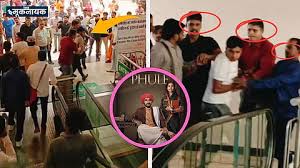
Dalit journalist Sanjay Ambedkar alleges assault by PVR staff while interviewing audience members about Phule film; FIR filed, video sparks outrage online. Prayagraj, UP (formerly Allahabad)— A Dalit journalist, Sanjay Ambedkar, was allegedly assaulted by PVR staff while attempting to take audience reviews of the film Phule in Prayagraj. The incident, captured on video, has gone viral on social media, sparking outrage and demands for strict action against those involved. Ambedkar, who runs a YouTube channel called Bheemraj Dastak, had visited PVR Cinemas to talk to viewers exiting the theatre after watching Phule. Despite the film being screened, he noted there were no posters or promotional materials for it inside the premises. When he tried to speak to moviegoers, PVR employees and bouncers allegedly confronted and attacked him. Recounting the incident to The Mooknayak, Sanjay said, “I came to take reviews of the film Phule. While I was speaking with some viewers, I was suddenly stopped. I continued my work, but soon the situation escalated, and they began assaulting us.” Sanjay explained that he and his colleague, Ravi Kumar, were both present. “They caught hold of Ravi first, and when I intervened and asked them to stop, they started beating me too. We were dragged to the third floor, mistreated, and assaulted. Somehow, I managed to escape and informed the authorities. Ravi was held hostage inside and was released after half an hour.” He also claimed the entire incident was recorded on camera, identifying the attackers as PVR staff and bouncers. “We’ve filed an official complaint, and an FIR has been registered. The investigation is underway,” he said. Expressing his concern, Sanjay added, “Journalists across the country are being targeted. In Fatehpur, journalist Dilip Saini was stabbed to death, Mukesh Chandrakar was killed, and Raghvendra Bajpai was shot dead in Sitapur. Journalists are not safe under the Yogi government. Is taking a movie review now a crime?” In response to the viral video, the official X (formerly Twitter) handle of DCP Prayagraj City confirmed: “Based on the complaint received, an FIR has been registered at Civil Lines Police Station under relevant sections. Legal proceedings are underway.” Police have registered the case based on a complaint filed by Ravi Kumar. The FIR names unknown PVR employees and includes charges under the Bharatiya Nyaya Sanhita (BNS) 2023 Sections 115(2), 352, 351(2), 351(3), 309(4), and under the Scheduled Castes and Scheduled Tribes (Prevention of Atrocities) Act, 1989 (Amendment 2015), Sections 3(2)(v), 3(1)(d), and 3(1)(dh). It’s worth noting that the Phule film has already been surrounded by controversy, with several Brahmin groups calling for a boycott and opposing its screening. The backlash led to certain edits and modifications in the film. Courtesy: The Mooknayak Note: This news is originally published on https://en.themooknayak.com and is for use by the non-military/non-commercial community, especially those in the human rights sector.
Caste slurs and media trials: Kerala rapper Vedan faces vilification after drug case arrest
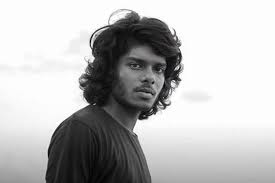
Hirandas Murali, popularly known as rapper Vedan, a 30-year-old Dalit artist from Thrissur, Kerala, has found himself at the center of a storm following his arrests by the Kerala Police and the Forest Department. On April 28, 2025, Vedan and eight others were detained by the Excise Department in Kochi for possessing approximately 6 grams of hybrid cannabis. A day later, on April 29, forest officials arrested him for wearing a tiger tooth pendant, confirmed as genuine through a lab test in Hyderabad. The pendant, which Vedan claims was a gift from a fan, has led to charges under wildlife protection laws, potentially carrying a seven-year sentence. He was remanded to the custody of the Forest Department for two days and shifted to the Malayatoor Divisional Forest Office for questioning. The arrests have sparked widespread controversy, with many media outlets and social media platforms accused of demonising Vedan, focusing not on the legal issues but on his identity as a Dalit artist whose music challenges caste oppression and systemic inequality. Vedan, who rose to prominence with his 2020 track “Voice of the Voiceless,” uses his rap to address subaltern politics, caste discrimination, Islamophobia, and social justice, themes that resonate with marginalised communities but unsettle Kerala’s mainstream cultural elite. Critics argue that the intense scrutiny and character assassination he faces stem from his caste identity and the disruptive nature of his art, which has penetrated a Malayali cultural sphere historically inaccessible to lower castes. Media and public backlash: a casteist vendetta? Following the arrests, several media outlets and social media handles launched what activists describe as a coordinated campaign to vilify Vedan. Social media posts and news reports emphasised his alleged criminality, often sidelining the broader context of his artistic contributions. A post on X by @junjunjitweets highlighted Vedan’s prior legal troubles, including a 2022 cannabis possession case and 2021 MeToo allegations, framing him as a habitual offender and questioning claims of caste-based victimisation. Such narratives, activists argue, obscure the systemic biases at play. Dalit thinker K.K. Baburaj condemned the response as reflective of deep-seated caste prejudice. He posed a provocative question: “If the marginalised don’t use alcohol and marijuana, will the public conscience not hunt them down?” Baburaj pointed to the hypocrisy in Kerala’s social fabric, noting that marginalised groups face relentless scrutiny regardless of their actions. He highlighted the broader pattern of discrimination: “Pentecostals are among the most devout Christians, often abstaining from drugs and even television. Yet, they face persistent ridicule and criticism from both elite Christians and the broader public. Similarly, the Muslim community, which exhibits the lowest rates of drug use, endures daily accusations, including baseless claims like ‘narcotic jihad.’ Many sincere individuals believe that society accepts Muslims living devout, drug-free lives.” Baburaj argued that Vedan’s persecution reflects the elite’s discomfort with marginalised communities achieving progress: “The issue lies in the marginalised perpetuating the anxieties and fears of the elite. Any progress they achieve often provokes a sense of retribution among the elite.” He further criticised those who use cultural purity to justify targeting Vedan, warning, “He alone can choose whether to surrender to addiction and perish. However, those who champion cultural purity in his name conceal the truth that Hitlerism itself embodied cultural purity.” In a Facebook post, Baburah expressed hope for Vedan’s resilience: “Vedan declared, ‘May this chaos and commotion soon subside.’ Even if detained by Kerala’s ethnic police or the criminal forest department, he will undoubtedly rise to sing and speak once more. The vibrant culture ignited by Vedan and Khalid Rahman should continue to thrive in this spirit of resilience.” Supporters rally: highlighting double standards Veteran Dalit leader K. Ambujakshan also came to Vedan’s defense, emphasising the disparity in how legal violations are treated based on caste and class. In a Facebook post, he contrasted Vedan’s situation with that of prominent Malayalam film industry figures who faced minimal repercussions for possessing prohibited items like tiger skins or elephant tusks. Ambujakshan wrote: “Vedan holds no elephant’s tusk in his hand, no intermediaries shield the corporate wealth that burdens the nation, no affluent Western followers arrive with materials through privileged channels to offset a spiritual journey. The crowds drawn to his music are the nation’s ordinary people, especially its youth. If negligence has caused shortcomings, they can be addressed through compassionate action, but it is unjust to silence an artist who inspires hope. Vedan’s lyrics dismantle the walls of inequality, envisioning a world of fairness. I stand with those who cherish Vedan’s rap, igniting minds and hearts. With Vedan.” Geevarghese Mar Koorilos, former Metropolitan of the Jacobite Church Niranam Diocese, added a religious perspective, praising Vedan’s art as a rebellion against systemic oppression. In a post featuring Vedan’s image, he stated: “In a society where caste divides not only humans but also animals and their remains, I stand with the Vedan’s ‘black’ politics and his artistic revolt against ‘white gods.’ Let this revolution persist. However, I unequivocally oppose drug addiction.” Mar Koorilos’s support underscores the intersection of caste and cultural resistance in Vedan’s work, while distancing himself from drug use. Sanskrit scholar and professor T.S. Syam Kumar exposed the hypocrisy of Kerala’s upper-caste elite, who historically celebrated intoxicants in cultural and literary contexts but now condemn marginalised artists like Vedan. He noted: “In Vedic traditions, Indra, the deity of rituals who consumes Soma and Sura, is central to the sacrificial practices of Aryan Brahmanism. In Valmiki’s Ramayana, Sita prays to Ganga for a thousand jugs of liquor upon her return from exile. While some Malayalis recite these verses in the evening to combat intoxication, the elite historically viewed intoxicants as essential for literary and cultural creation.” Kumar argued that the same elites who once glorified intoxication now marginalise Dalit artists, restricting their access to mainstream platforms. Tribal activist Gomathi echoed this sentiment on Facebook, redirecting attention to Vedan’s art: “With Vedan, as the focus shifts from cannabis to tiger teeth, the true essence emerges. The heart of the matter lies in Vedan’s song—its