
Wedding torchbearer to education flagbearer: Dalit boy becomes first Class X passout in UP village
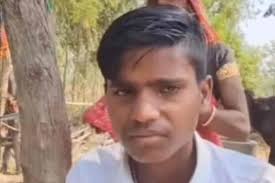
The child who works as a lightbearer at weddings to earn a handful of rupees for his family has now shone a light for others in his village. On April 25, the boy became the first person from this Dalit hamlet of 200 people to clear the Class X board exam. The child who works as a lightbearer at weddings to earn a handful of rupees for his family has now shone a light for others in his village. “I earn ₹250 to ₹300 a night carrying a battery-driven lamp on my head at weddings. I get 20 to 40 days’ work a year,” Ramkeval told reporters on Sunday at his village, 28km from the Barabanki district headquarters. The Uttar Pradesh board exam results were announced on April 25 but Ramkeval’s feat became widely known only on Sunday. Ramkeval’s mother Pushpa is a cook at the Government Primary School in Nizampur and his father Jagdish Prasad is a farm labourer. “The village school teaches only up to Class V; most of the children drop out after that. Some get admitted to the Government High School in Ahmadpur but quit after failing their Class X exams,” Ramkeval said. “I secured admission to the Ahmadpur school with two other boys from my village but Luvlesh dropped out in Class VIII. Mukesh, my other friend, failed this year but has decided to try again next year.” Ramkeval has now enrolled himself in Class XI at the Ahmadpur school, 5km from his village. He wants to become an engineer. His father Jagdish never went to school but mother Pushpa studied till Class V. Ramkeval’s siblings are in Classes IX, V and I. “We have two sons and two daughters. Ramkeval is the eldest. He never asked us for money: he bought his books and stationery with his own earnings. If he doesn’t get work at weddings, he works in the fields. He studies mostly at night,” Pushpa said. Barabanki district magistrate Shashank Tripathi called Ramkeval and his parents to his office on Sunday and announced the local administration would be responsible for the teen’s further education. Villagers said that when Ramkeval’s teachers learnt that the DM had asked to meet him, they bought new clothes and shoes for him. The boy used to attend his classes barefoot. “For now, we have arranged for his education up to Class XII. We have to ensure that he can study as long as he wants,” district inspector of schools O.P. Tripathi said. Ramkeval’s success has inspired others in the village. Nanku, father of Luvlesh, said he wanted his son to resume his studies. “I studied till Class VIII and work in the fields. But I don’t want my son to remain a labourer. Education is the only way forward,” Nanku said. Many women in the village expressed joy and said they were now more determined than ever to educate their children. Courtesy: Telegraph India Note: This news is originally published on https://www.telegraphindia.com and is for use by the non-military/non-commercial community, especially those in the human rights sector.
UP: Dalit child who used to go to school barefoot became the first 10th pass student of the village, now he will become an engineer!
Ramkewal, a Dalit student who used to earn by carrying lights at weddings, became the first 10th pass student of Nizampur, the district administration is taking responsibility for his further studies. Uttar Pradesh: An inspirational news has come from Nizampur, a small Dalit dominated village in Barabanki district. 15-year-old Ramkewal broke the decades-old shackles of the village and became the first student of his village to pass the 10th board examination. The UP Board results were declared on April 25, but the news of Ramkewal’s achievement made headlines on Sunday, when the story of his struggle and courage came to light. Ramkewal studies during the day and at night he carries battery operated lights on his head at weddings, which earns him 250 to 300 rupees per night. In a year, he gets such work for 20 to 40 days, with which he runs his household expenses and buys his own study material. “I bought my own books and stationery. If I don’t get work at weddings, I work as a farm labourer. I mostly study at night,” Ramkewal told reporters in his village, 28 kilometres from the Barabanki district headquarters. His mother Pushpa is a cook at the village’s government primary school, while his father Jagdish Prasad works as a farm labourer. His father never went to school and his mother studied only till class V. The school in Nizampur is only till class V. After that, children have to enrol in the government high school in Ahmedpur, 5 kilometres away. But most of them either drop out or fail in Class X. “I was enrolled in the Ahmedpur school along with two other boys from my village. Lovelesh dropped out in class VIII and Mukesh, who failed this year, will try again next year,” Ramkewal said. Ramkewal is now enrolled in Class XI and dreams of becoming an engineer. His mother Pushpa says, “We have four children – two sons and two daughters. Ramkewal is the eldest. He never asked us for money. He studies hard. If he doesn’t get work, he goes to the fields and studies at night.” On Sunday, District Magistrate Shashank Tripathi called Ramkewal and his parents to his office and announced that the district administration will now take responsibility for his further studies. District School Inspector O.P. Tripathi said, “For now, arrangements have been made for his studies till Class 12, but we will ensure that he can study as much as he wants.” Villagers said that when Ramkewal’s teachers came to know that the DM was going to meet them, they bought new clothes and shoes for their student. Till now he used to go to school barefoot. Ramkewal’s success has infused new energy in the village. Lovelesh’s father Nanku said, “I have studied till Class 8 and work as a labourer in the fields. But now I want my son to start studying again. Education is the only way.” Many women of the village also expressed happiness and said that now they are more determined than before to educate their children. In a village where dreams used to die before they could even be born, now a child has not only picked up the lights but has also lit up the hopes of the entire village. Courtesy : Rajan Chaudhary, Hindi News
Tension in Pudukkottai’s Vadakadu following clash between two communities; Dalit family’s hut set on fire
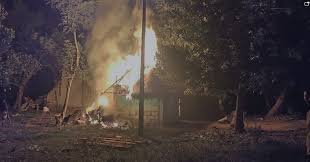
More than 10 people from both sides sustained injuries and are undergoing treatment at Alangudi Government Hospital and Pudukkottai Government Medical College Hospital. PUDUKKOTTAI: Tension prevailed in Vadakadu village near Alangudi after a violent clash broke out following the Muthumariamman temple festival on Monday night, according to sources. Members of the Muthuraja and SC/PR communities, who reportedly had prior enmity, got into a confrontation that escalated when a man from one group was attacked with a sickle by members of the other group. In the ensuing violence, a hut and two two-wheelers were set on fire. A government bus was also vandalized, with its windows smashed. More than 10 people from both sides sustained injuries and are undergoing treatment at Alangudi Government Hospital and Pudukkottai Government Medical College Hospital. Following the incident, Tiruchy Range DIG Varunkumar and Law Minister S. Regupathy visited the affected areas around 1:30 am to assess the situation. Heavy police deployment has been made in Vadakadu, and transport services in the area have been suspended. Buses on the Pudukkottai-Pattukottai route are being diverted via alternate routes. According to a police statement shared on social media platforms, the clash was triggered by a quarrel over who would refuel first at a local petrol bunk around 11:30 pm. Intoxicated youths from both sides reportedly followed each other to the SC/PR residential area, leading to further altercations and physical assaults. A hut and a vehicle were set on fire, and a government bus was attacked during the brawl. Police have arrested the suspects involved in the incident and warned the public against believing rumors circulating on social media. Legal action will be taken against those spreading false information, they said. According to sources, police have arrested 14 suspects, and cases have been filed under the SC/ST Atrocities Prevention Act based on the complaint from the SC community, and under the Attempt to Murder section based on the complaint filed by the Caste Hindus. When TNIE reached out to Pudukkottai District SP Abhishek Gupta, he was unavailable for comment Courtesy: New Indian Express Note: This news is originally published on https://www.newindianexpress.com/ and is for use by the non-military/non-commercial community, especially those in the human rights sector.
In Rural Telangana, How a Dalit Women-Run Radio Station Is Changing Lives
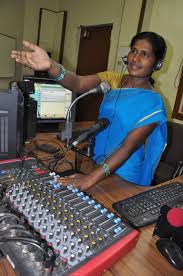
Hyderabad: Not long ago, in a corner of southern India where caste and gender boundaries still hold strong, the idea of Dalit women speaking boldly into microphones would have seemed improbable. Yet today, in over 150 villages across Telangana, their voices crackle through the air — telling stories, asking questions and singing songs that have long been pushed to the margins. “This is not just a radio. It is our voice. We talk about our gods, our food, our problems. Before this, nobody listened,” said Naligindla Narsamma, Sangham Radio’s lead producer and anchor. Launched in 2008, Sangham is India’s first community radio station run entirely by rural Dalit women. Based in Sangareddy, Telangana, it began as an initiative by the Deccan Development Society (DDS), a grassroots organisation working with women farmers. Today, it stands as a rare example of local media built by and for marginalised voices — especially in villages where the internet is patchy, electricity unpredictable and caste hierarchies persistent. In Naligindla’s voice, traditional folklore blends with public health tips, farming know-how and open conversations about everything from menstruation to alcoholism to gender rights. Now in her mid-40s, Naligindla still remembers how strange it all seemed in the beginning. In the early 2000s, the DDS organised a village meeting with All India Radio and UNESCO representatives. Naligindla Narsamma “They told us to speak on the radio. But how could we know if anyone heard us? We did not even own radios,” she said. That early doubt soon turned into determination. With support from UNESCO, the DDS secured a transmitter, tower and a studio. Naligindla, who had only studied till 10th grade, taught herself to record, edit and broadcast. She was not alone. Other Dalit and marginalised women followed. Some walked long distances. Some brought their babies on their backs. They learned by doing, sometimes without even knowing how to read manuals. “We did not know English. We were scared of machines. But now, we do everything — reporting, editing, RJ-ing,” Naligindla said. Across India, over 300 community radio stations are licensed by the Ministry of Information and Broadcasting. Most are linked to NGOs or academic institutions. Very few are run entirely by women — and fewer still by Dalit women from remote areas. Empowerment in every frequency With a broadcast range of about 40 kilometers, Sangham Radio now reaches more than 150 villages. Its team is small — just two full-time staffers and a handful of volunteers — but its message is far-reaching. “Villagers visit once a month to share their concerns. Some record their own segments and bring them to us,” said Naligindla. Sunitha Sunita, a farmer from Bilalpur, heard the radio through her local farmers’ association. “They told us that women have equal rights as men. I never knew that before. Now, we talk openly about rights and problems. Earlier, we did not even have a way to speak,” she said. Lakshmama, another villager, contributes folk songs. Her father supported DDS’s early work, and she remembers singing at village festivals. “Now, young girls from our village are learning too. The radio keeps our traditions alive,” she said. Each day, the station airs deeply local content: market prices, farming updates, seasonal rituals, songs and health programs. Much of this knowledge is not found in textbooks. “We have over 2,000 recordings of songs and stories that are not written down anywhere else,” Naligindla said. On summer nights, when farm work slows down, villagers gather to listen to broadcasts about local deities like Yellamma and Pocha Amma. “It becomes a shared experience — part entertainment, part education,” she added. Lakshmama But the station is also a space for truth-telling and taboo-breaking. “We talk about women’s health, rights, periods… things that are usually whispered, not said aloud,” said Naligindla. “At first, people were scared. Some refused to be recorded. I had to coax them with tea and snacks.” Over time, the station earned the community’s trust. Pushing through bureaucracy Though villagers embraced the radio early on, the government was slower to recognise it. For nearly 10 years, Sangham Radio operated without a full license. Naligindla and her team travelled across India, attending policy meetings and media forums. “We would carry clips of our programs and tell them, ‘This is our village, this is our work,’” she said. Even today, the station scrapes by on a monthly budget of Rs 15,000 – Rs 20,000 (about $180–$240). Much of the equipment is outdated. Repairs are done in-house, often using recycled parts. “We have not received much support from higher authorities. But we continue. This is our life,” Naligindla said. Staying relevant in digital world With more young people turning to smartphones, the team at Sangham Radio is adapting. They are experimenting with interactive voice response (IVR) systems, allowing listeners to dial in and hear pre-recorded shows on demand. “We want youth to hear our voices. Right now, they are glued to their phones and private songs. If we can bring our content to mobile, they might listen,” said Naligindla. They have also started informally teaching local youth how to record and edit audio — laying the groundwork for a future generation of community journalists. “It is our way of ensuring this does not die with us,” she said. But getting young people to invest deeply remains a challenge. “Some come here not to learn but to complete their PhDs or films. We need people who want to stay,” she said, half-laughing. Though the station does not track outcomes in charts and graphs, its impact is visible in the way people now approach them — not as outsiders, but as a trusted part of the village. A group photo of all the singers “People call us with their problems. Sometimes, they need advice. Sometimes, they just need someone to listen. That is a success too,” Naligindla said. Lakshmama agreed. “The radio is like a bird’s nest. It keeps hope alive. Even when we do not have electricity, even when the roads are
Mandal-Kamandal 2.0
The decision taken at a meeting of the Cabinet Committee on Political Affairs (CCPA), headed by Prime Minister Narendra Modi that caste enumeration will be part of the upcoming census exercise represents a tectonic shift in the BJP’s politics. It not only suggests the saffron party is ready to hijack the main poll plank of the Congress and its allies – the RJD and the SP -, but also to make it an integral component of its Hindootva politics. This is a variation of what was once known as the Mandal-Kamandal politics which was a combination of Dalit politics unleashed by the Mandal Commission report and the Hindootva ideology of the BJP. In 1979 the Morarji Desai-government appointed a commission under the chairmanship of Bindheshwari Prasad Mandal, who was then the Member of Parliament from Madhepura constituency in Bihar. The commission was entrusted with the task of identifying socially and educationally backward classes in India. In its findings the commission identified a total of 3,743 different castes and communities as backward on certain parameters. These castes comprised nearly 52 per cent of the country’s population. The commission proposed the idea of giving 27 per cent reservation to these backward castes/classes in public employment along with SCs and STs. However, after VP Singh became Prime Minister in 1989, he decided to implement the Mandal Commission recommendations to consolidate the votes of backward castes in his favour. But, the whole exercise became embroiled in bureaucratic procedures and continuous judicial interventions. It was finally implemented in 1993 during the tenure of the PV Narasimha Rao government. To counter this politics, the BJP launched its Kamandal politics to rally and unite the Hindoo population behind it. Many fence sitters who earlier were not supportive of the BJP did change their minds and stood with the BJP. The irony this time is that the BJP itself is espousing caste census to get electoral mileage along with its core Hindootva politics. The Assembly election in Bihar is due later this year and the caste composition of the state offers the best opportunity to test the efficacy of the new policy. The strategy of the BJP shows its nervousness over the Opposition’s move to consolidate its support base among the backward castes – mainly the OBCs – through its vocal demand for a caste census. Such a conclusion is inescapable considering the fact that the PM during the 2024 Lok Sabha poll launched a scathing attack on the Congress election manifesto that promised a caste census as a reflection of its “Urban Naxal” thinking. With that electoral propaganda, the BJP then asked the people for a massive LS majority so that it could overhaul the Constitution. The OBC and the Dalit groups saw in it a threat to dismantle caste reservations. This fear translated into votes for the Opposition for which the BJP failed to get a simple majority and fell far short of its expected tally of over 400 seats. Though the BJP has recovered much ground since then winning the elections in Maharashtra and Haryana, it seems it is not sure whether its hard-core Hindootva politics will pay the dividends as it expects in the next LS polls, given the undercurrent in favour of caste census. Till recently, the PM was telling the nation that there are only four castes in the country – women, youth, farmers and the poor. This was obviously an attempt to slam the Congress’ demand for caste census and removal of 50 per cent cap on reservations for SC/ST and OBCs. The government decision in a way follows the predictable pattern of functioning which is to spring surprises and catch the Opposition unawares. There is no doubt that the Opposition is indeed flummoxed by the announcement as is clear from Congress leader Rahul Gandhi’s response: “Modiji used to say there are only four castes in the country. I don’t know what caused the change of heart in the BJP.” The country was happy that he was clueless. However, the decision appears to be well thought out and a huge gamble. The BJP can ill afford to let the ground slip further. Pahalgam has been a mortal blow on the already fragile support frame work. Another clumsy Balakot style ‘surgical strike’ will not help quieten the vociferous groups trying to push India into a vortex of war. The people in power well understand that the Indian armed forces may not be willing to get entangled into a long drawn war. The world is watching current wars in Ukraine and Gaza. The minimum time that it has taken these yet unresolved conflicts has stretched to a few years. Those countries are not able to see the end of the fighting. The Indian populace and its economy are in no position to get into a long drawn military operation in which, most likely, China could play a direct role. Announcement of caste census has been a great help and hopefully it will divert attention from war to politics and, better still, caste based petty politics. Courtesy: Orissa Post Note: This news is originally published on https://www.orissapost.com/ and is for use by the non-military/non-commercial community, especially those in the human rights sector.
Denied dignity: How the Indian State enables caste system through manual scavenging
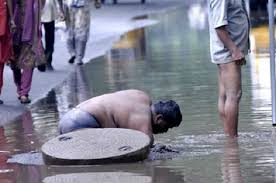
India’s persistent failure to eliminate manual scavenging, despite constitutional guarantees, progressive laws, and technological alternatives, stems not from a legal vacuum but from entrenched behavioural and sociological norms. Across the world, May 1 is set aside to honour the dignity of labour and the long struggle for workers’ rights. In India, this reverence is starkly at odds with the everyday reality faced by its poor and vulnerable working class. Despite being the world’s fifth largest economy, India continues to bury hundreds of its most marginalised citizens, mostly Dalits, in its sewers, septic tanks, and graveyards. The Indian State claims to have abolished manual scavenging, but the reality stinks of apathy, casteism, and systemic failure. The death toll of denial Since 2018, more than 400 workers have died while cleaning sewers and septic tanks in India, according to the Ministry of Social Justice and Empowerment’s admission in Parliament. This figure is widely seen as underreported. Civil society groups like the Safai Karmachari Andolan (SKA) estimate the actual number to be far higher. These deaths aren’t accidents, but caste murders. The victims are overwhelmingly Dalits, forced by social and economic discrimination to enter India’s filthiest spaces, often without safety gear. Take the case of Joy, a 42-year-old sanitation worker in Kerala’s capital, Thiruvananthapuram, who died in July last year while cleaning a clogged canal. His story is not unique. Similar deaths have occurred in Hyderabad, Delhi, Kolkata, Mumbai—cosmopolitan cities where manual scavenging is explicitly illegal, yet continues in plain sight. The contrast between legal prohibition and lived reality is stark. India outlawed manual scavenging over three decades ago, first with the Employment of Manual Scavengers and Construction of Dry Latrines (Prohibition) Act, 1993. The law was expanded in 2013 through the Prohibition of Employment as Manual Scavengers and their Rehabilitation Act, which went further to mandate rehabilitation, alternative employment, and the complete mechanisation of hazardous sanitation work. And yet, the State has largely failed to implement these provisions. The Supreme Court’s 2014 judgement reinforced the ban, ordered compensation of Rs 10 lakh to the families of deceased workers, and even applied this rule retrospectively. Yet compliance remains abysmal. Many states have failed to complete the most basic requirement — identifying the people still forced into this occupation. As a result, their deaths are often unrecorded, uncompensated, and unacknowledged. The court also directed governments to mechanise sanitation, but this remains a broken promise in most places. Machines are either unavailable, dysfunctional, or locked away behind bureaucratic red tape. In many municipalities, mechanisation exists only on official procurement sheets, not on ground. In Delhi, manual cleaning persists under the label of ‘voluntary’ labour performed by contract workers. What emerges is a story of institutional abandonment. At every level – from policy design to municipal governance – the system tolerates this caste-based exploitation. The deaths are not merely technical failures, but moral indictments. Each time a worker enters a sewer without protection, it represents a chain of failures — the failure to mechanise, rehabilitate, record, compensate, and above all, the failure to care. To end manual scavenging, India does not need more laws. It needs political will, administrative integrity, and a rupture with the caste logic that continues to justify this violence. Bone scavenging: A new horror If cleaning human excreta was not already a grotesque affront to human dignity, India now confronts an even more disturbing case in its caste ordeal — bone scavenging. A joint study report by the World Sanitation Workers’ Alliance, the South Asian Sanitation Labour Network (SASLN), and the Safai Karmachari Ekta Manch uncovers this harrowing practice in parts of West Bengal, Odisha, and Rajasthan, where marginalised Dalit communities – many already trapped in manual scavenging – are now collecting human bones from graveyards and cremation sites to earn their bread. This is not macabre curiosity or criminality; it is economic desperation forged by caste dynamics. In districts like Birbhum, Siliguri, and Cooch Behar, at least 178 individuals, mostly Dalits, are engaged in this invisible trade. The bones are sold to unregulated networks supplying calcium-processing units and cosmetic industries. The returns are shockingly low, often just Rs 200 per transaction, underlining the dual economic and social exploitation that defines their existence. This practice is more than illegal; it is profoundly inhumane. It reveals how caste and class conspire to extract value from the oppressed, not only in life but even after death. Historically relegated to ‘impure’ labour such as burial, leatherwork, and waste collection, Dalit communities are once again reduced to their perceived utility. Their suffering is attached even to death, and is monetised. To see bone scavenging as merely an outcome of poverty is to miss the point. This is the machinery of caste capitalism, where certain bodies are made economically viable through morally invisible, caste-coded labour. As anthropologist Veena Das argues, disposability becomes normalised in postcolonial governance. Here, it is institutionalised. The dead are harvested because the living are abandoned. Philosopher Achille Mbembe’s concept of necropolitics – the power to decide whose life matters and whose death is meaningful – finds terrifying resonance here. In India, Dalit death is doubly invisible — their lives are undervalued, and their deaths unacknowledged. The “economy of bones” turns the remains of the oppressed into industrial raw material, commodifying them beyond death and outside the gaze of the State and society. Even more damning is the ritual and moral collapse this exposes. Across cultures, the dead are honoured. The bodies are sacred, and their resting places inviolable. But in India, the poor, especially Dalits and Adivasis, are denied even this final dignity. The graveyard, meant to be a place of peace, becomes another site of caste-determined labour. Dignity is not just denied in sewers and toilets, but also beneath tombstones and smouldering pyres. The State’s silence is deafening. There are no relief packages, no targeted rehabilitation, no serious crackdowns on this underground economy. Welfare legislation like the Prohibition of Employment as Manual Scavengers and Their Rehabilitation Act (2013) ends at the
Denied dignity: How the Indian State enables caste system through manual scavenging
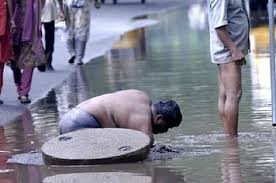
India’s persistent failure to eliminate manual scavenging, despite constitutional guarantees, progressive laws, and technological alternatives, stems not from a legal vacuum but from entrenched behavioural and sociological norms. Across the world, May 1 is set aside to honour the dignity of labour and the long struggle for workers’ rights. In India, this reverence is starkly at odds with the everyday reality faced by its poor and vulnerable working class. Despite being the world’s fifth largest economy, India continues to bury hundreds of its most marginalised citizens, mostly Dalits, in its sewers, septic tanks, and graveyards. The Indian State claims to have abolished manual scavenging, but the reality stinks of apathy, casteism, and systemic failure. The death toll of denial Since 2018, more than 400 workers have died while cleaning sewers and septic tanks in India, according to the Ministry of Social Justice and Empowerment’s admission in Parliament. This figure is widely seen as underreported. Civil society groups like the Safai Karmachari Andolan (SKA) estimate the actual number to be far higher. These deaths aren’t accidents, but caste murders. The victims are overwhelmingly Dalits, forced by social and economic discrimination to enter India’s filthiest spaces, often without safety gear. Take the case of Joy, a 42-year-old sanitation worker in Kerala’s capital, Thiruvananthapuram, who died in July last year while cleaning a clogged canal. His story is not unique. Similar deaths have occurred in Hyderabad, Delhi, Kolkata, Mumbai—cosmopolitan cities where manual scavenging is explicitly illegal, yet continues in plain sight. The contrast between legal prohibition and lived reality is stark. India outlawed manual scavenging over three decades ago, first with the Employment of Manual Scavengers and Construction of Dry Latrines (Prohibition) Act, 1993. The law was expanded in 2013 through the Prohibition of Employment as Manual Scavengers and their Rehabilitation Act, which went further to mandate rehabilitation, alternative employment, and the complete mechanisation of hazardous sanitation work. And yet, the State has largely failed to implement these provisions. The Supreme Court’s 2014 judgement reinforced the ban, ordered compensation of Rs 10 lakh to the families of deceased workers, and even applied this rule retrospectively. Yet compliance remains abysmal. Many states have failed to complete the most basic requirement — identifying the people still forced into this occupation. As a result, their deaths are often unrecorded, uncompensated, and unacknowledged. The court also directed governments to mechanise sanitation, but this remains a broken promise in most places. Machines are either unavailable, dysfunctional, or locked away behind bureaucratic red tape. In many municipalities, mechanisation exists only on official procurement sheets, not on ground. In Delhi, manual cleaning persists under the label of ‘voluntary’ labour performed by contract workers. What emerges is a story of institutional abandonment. At every level – from policy design to municipal governance – the system tolerates this caste-based exploitation. The deaths are not merely technical failures, but moral indictments. Each time a worker enters a sewer without protection, it represents a chain of failures — the failure to mechanise, rehabilitate, record, compensate, and above all, the failure to care. To end manual scavenging, India does not need more laws. It needs political will, administrative integrity, and a rupture with the caste logic that continues to justify this violence. Bone scavenging: A new horror If cleaning human excreta was not already a grotesque affront to human dignity, India now confronts an even more disturbing case in its caste ordeal — bone scavenging. A joint study report by the World Sanitation Workers’ Alliance, the South Asian Sanitation Labour Network (SASLN), and the Safai Karmachari Ekta Manch uncovers this harrowing practice in parts of West Bengal, Odisha, and Rajasthan, where marginalised Dalit communities – many already trapped in manual scavenging – are now collecting human bones from graveyards and cremation sites to earn their bread. This is not macabre curiosity or criminality; it is economic desperation forged by caste dynamics. In districts like Birbhum, Siliguri, and Cooch Behar, at least 178 individuals, mostly Dalits, are engaged in this invisible trade. The bones are sold to unregulated networks supplying calcium-processing units and cosmetic industries. The returns are shockingly low, often just Rs 200 per transaction, underlining the dual economic and social exploitation that defines their existence. This practice is more than illegal; it is profoundly inhumane. It reveals how caste and class conspire to extract value from the oppressed, not only in life but even after death. Historically relegated to ‘impure’ labour such as burial, leatherwork, and waste collection, Dalit communities are once again reduced to their perceived utility. Their suffering is attached even to death, and is monetised. To see bone scavenging as merely an outcome of poverty is to miss the point. This is the machinery of caste capitalism, where certain bodies are made economically viable through morally invisible, caste-coded labour. As anthropologist Veena Das argues, disposability becomes normalised in postcolonial governance. Here, it is institutionalised. The dead are harvested because the living are abandoned. Philosopher Achille Mbembe’s concept of necropolitics – the power to decide whose life matters and whose death is meaningful – finds terrifying resonance here. In India, Dalit death is doubly invisible — their lives are undervalued, and their deaths unacknowledged. The “economy of bones” turns the remains of the oppressed into industrial raw material, commodifying them beyond death and outside the gaze of the State and society. Even more damning is the ritual and moral collapse this exposes. Across cultures, the dead are honoured. The bodies are sacred, and their resting places inviolable. But in India, the poor, especially Dalits and Adivasis, are denied even this final dignity. The graveyard, meant to be a place of peace, becomes another site of caste-determined labour. Dignity is not just denied in sewers and toilets, but also beneath tombstones and smouldering pyres. The State’s silence is deafening. There are no relief packages, no targeted rehabilitation, no serious crackdowns on this underground economy. Welfare legislation like the Prohibition of Employment as Manual Scavengers and Their Rehabilitation Act (2013) ends at the
After 7 years, ex-Congress man gets life in prison for rape of Dalit woman

LUCKNOW: A special court in Ambedkar Nagar on Saturday sentenced former Congress Seva Dal functionary Achchhan Khan, 50, to life imprisonment for raping a Dalit woman, who was his fellow party worker. The court also imposed a fine of Rs 22,000, with additional three-month jail term in case of non-payment. Special Judge (SC/ST Act) Ramvilas Singh found Khan guilty under IPC sections 376 (rape), 506 (criminal intimidation) and provisions of the SC/ST (Prevention of Atrocities) Act. The judgment came nearly seven years after the first incident of sexual assault was reported to have taken place. According to special public prosecutor Sudip Mishra, the survivor, a grassroots Congress worker, alleged Khan first raped her on the evening of Sep 12, 2018, after barging into her home in Kanshiram Colony when she was alone. She testified in court that Khan, known to her through party work, physically restrained her, assaulted her and threatened to kill her if she spoke out and even used caste-ist slur to intimidate her. Despite her attempts to seek justice, including lodging complaints at Akbarpur police station and approaching the then superintendent of police, no action was taken. No FIR was registered and no medical examination was conducted. The woman alleged a second incident of sexual assault on Sep 17, 2020. She said Khan summoned her to a location in the Haria area under Basakhari police limits and raped her again. This time, she alleged, he took obscene pictures during the assault and later threatened to leak them online if she pursued legal action. One such partially nude photograph was allegedly circulated, adding to her trauma. Frustrated over police inaction, the survivor sent a registered complaint to Ambedkar Nagar SP on Oct 31, 2020 but received no response. It was only after she moved the local court that Basakhari police were directed to file an FIR, which was finally registered on Sep 20, 2021. A chargesheet was submitted on Jan 28, 2022. “The survivor’s detailed and consistent testimony under oath formed the backbone of the prosecution’s case,” said Prosecutor Mishra. “Despite initial lapses by law enforcement, we were able to secure a conviction based on the strength of her account and the supporting evidence.” The court also observed that police delay in taking cognisance of the complaint impacted significantly the investigation timeline but did not weaken credibility of the survivor’s account. Courtesy: Times of India Note: This news is originally published on https://timesofindia.indiatimes.com/ and is for use by the non-military/non-commercial community, especially those in the human rights sector.
MP: Brutality with Dalit journalist in Bhind: “He was beaten with chappals when he told his name”, policemen kept beating him in the presence of SP
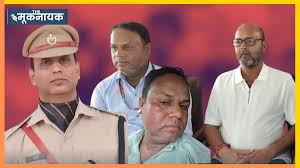
Leader of Opposition Umang Singhar, while talking to The Muknayak, said that after this incident, he has written a letter to the Director General of Police of the state and demanded a fair investigation. Bhopal. An incident that shakes the soul of journalism and democracy has come to light in Bhind district of Madhya Pradesh. About eight journalists of the district were beaten up badly by policemen in the SP office. Among them, two journalists – Shashikant Goyal and Amarkant Chauhan – were beaten up by the policemen only because they used to write against the corruption of the police administration. One of these journalists, Shashikant Goyal, comes from the Dalit community, and he has alleged that he was beaten with chappals after asking his name and caste. All this happened in the presence of Superintendent of Police (SP) Dr. Asit Yadav. “What is the name?” – and then the beating with chappals started Shashikant Goyal told that he was called to SP Asit Yadav’s office on May 1. On reaching there, SI Girish Sharma and Satyabir Singh asked him his name. As soon as he told his name as Shashikant Goyal Jatav, both the policemen started hitting him on the cheeks with slippers. Shashikant said, “I asked Sir, why are you hitting me, what is my fault? To which he replied – you have started writing a lot against the police. He also told that he was forcibly asked to say “ji sir”. When he questioned what is the difference between “sir ji” and “ji sir”, he was beaten again in front of the SP and abused with casteist slurs. “Called for tea, and then beaten” – Amarkant Chauhan’s personal experience Journalist Amarkant Chauhan told The Mooknayak that he too had received a call from the SP office on the evening of 1 May. It was said on the phone that they have to have a “chai pe charcha”. He reached the SP office at around 5 pm, here his phone was snatched first. And then he was kicked from behind and then the policemen started beating him badly. “I had fallen down, but SP sahab was standing and watching everything. No one stopped me. I was abused and told to run away from here, you are acting like a journalist,” Amarkant said. Police reached his house at night, pressurized him to delete the video Amarkant said that police reached his house at around 10 pm. The policemen threatened him that the video he had made after the fight was fake and he should delete it. He was told that no incident had taken place. And the police also made a video by pressurizing him. Amarkant said, “We started feeling that our lives were in danger. So at 12 midnight we caught a truck and reached Gwalior and from there left for Bhopal by train.” Meeting with senior officials in Bhopal, demand for action After reaching Bhopal, the victim journalists, along with Royal Press Club President Pankaj Bhadoria and Joint Secretary Ankit Pachauri, submitted a memorandum to the Director General of Police (DGP) and met Intelligence ADG A. Sai Manohar. The journalists explained the entire incident in detail and demanded that Superintendent of Police Asit Yadav, SI Girish Sharma and Satyabir Singh be removed from their posts immediately and strict legal action be taken against them. The Intelligence ADG assured the journalists that a high-level investigation will be conducted into the matter and the culprits will not be spared. He said, “The freedom and safety of journalists is paramount and the department will work seriously on it.” Protest by journalist organizations, called it an attack on democracy Royal Press Club President Pankaj Bhadoria strongly condemned the incident and said, “This is not just an attack on two journalists, it is a direct attack on the fourth pillar of democracy. If the police itself will suppress the voice of those who ask questions, then where will the society go? “ He demanded that – SP Asit Yadav should be suspended immediately, FIR should be registered against SI Girish Sharma and Satyabir Singh and they should be arrested, Victim journalists should be given security. Congress called it murder of democracy Congress state president Jeetu Patwari has strongly reacted to the brutality with the journalists of Bhind. He said that this incident is not just an attack on journalists, but a direct murder of democracy. He alleged that the police is working under the pressure of the government and unbiased journalism is being crushed. Jeetu Patwari said that Congress will fight against this incident from the road to the House. Leader of Opposition wrote a letter to the DGP Leader of Opposition Umang Singhar, while talking to The Mooknayak, said that after this incident, he has written a letter to the Director General of Police of the state and demanded a fair investigation. Umang Singhar said that he will raise this issue strongly in the assembly. He clearly said, “Attack on journalists will not be tolerated under any circumstances. This is an attack on the foundation of democracy, which we will never accept.” SP called the allegations baseless Reacting to the allegations of assault on journalists, Bhind Superintendent of Police Asit Yadav said in a conversation with The Mooknayak that no such incident has taken place. He said, “Those who are making allegations have already filed a complaint in this matter and withdrawn it. Not only this, they themselves had also made a video saying that no assault took place. Now why are they going to Bhopal and making such allegations, it is beyond comprehension. All the allegations are completely baseless.” Is this incident not a crime under the SC/ST Act? Since the victim journalist Shashikant Goyal belongs to the Dalit community, and he was assaulted and abused after being asked about his caste, the incident is clearly an offence under the Scheduled Castes/Tribes (Prevention of Atrocities) Act, 1989. The journalists are not disheartened Although the victim journalists are scared, Shashikant
UP: Minor Dalit student who went for coaching in Jaunpur was kidnapped, brutalised and video was posted on social media, two accused arrested
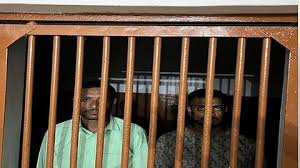
In Jaunpur, a minor Dalit student was kidnapped and then subjected to caste-related abuse, beating and video was made viral Lucknow: A heart-wrenching incident has come to light in Jaunpur district of Uttar Pradesh. A minor Dalit student and his friend who had gone for coaching in the Zafarabad police station area were kidnapped by eight to ten bike-borne youths. The accused took both of them to a secluded place and beat and brutalised them in a closed room. The accused treated the minor Dalit student inhumanly and first beat him, then forced him to spit on the ground and lick it. Not only this, the video of this entire incident was also made from the victim’s mobile phone and posted from his social media account. During the incident, the accused used caste-related abuses and also threatened to kill him if he complained to the police. When the student’s father came to know about his kidnapping, he immediately informed the police. On the basis of the complaint, the police started action by registering a case under serious sections of the Indian Penal Code (BNS) and the SC/ST Atrocities Prevention Act. Taking immediate action, the police recovered both the kidnapped students safely and arrested two accused—Avnish Chauhan and Jaiprakash Chauhan—and sent them to jail. Both the accused are residents of Samopur Khurd village of Zafarabad police station area. An FIR has been registered against a total of six named accused in this case. The police is raiding to arrest the other absconding accused. DSP City Devesh Singh of Jaunpur informed that, “Immediate action was taken on the information of kidnapping of students who had gone to coaching in Zafarabad police station area. Both the children have been recovered safely. The victims have been treated and handed over to their families. In view of the seriousness of the case, necessary legal action is underway. The absconding accused will also be arrested soon.” Courtesy : Hindi News