
Ludhiana News: Sexual harassment and assault case against AAP Dalit wing chief
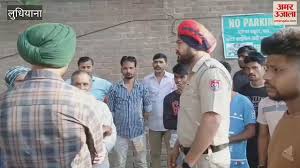
Halwara. A case has been registered against Aam Aadmi Party’s Dalit wing chief Meva Singh, a resident of Halwara, from Raikot assembly constituency, under sections of sexual harassment and assault of his former female employee at Thana Sudhar. Police is raiding in search of the accused. It is alleged that Meva Singh also beat the mother of the victim woman. Mother and daughter are admitted in the civil hospital of Raikot. Police have registered a case on the complaint of the victim woman and the MLR. The victim Amandeep Kaur said in the complaint that she was working in Meva Singh’s photography studio since 2021. He had contracted to pay a salary of Rs 10,000 per month, but used to pay only Rs 5000 per month. During this time, Meva Singh touched her inappropriately. He mentally harassed her to have sex. Fed up with this, on November 6, 2024, she left her job from Meva Singh’s studio and took up a job somewhere else. She pleaded with Meva Singh several times to pay her her six months’ salary, but he would refuse by threatening to kill her. Now Meva Singh called her to his M-10 restaurant near Rajoana Chowk to pay her the salary. She reached there with her wife. Meva Singh, along with his wife and two other female employees, beat her up. He also tried to kill her by strangulating her. On the other hand, the victim has accused the Sudhar police of being biased in registering a case against only Meva Singh. On the other hand, Jaswinder Singh, in-charge of Sudhar police station, said that if the role of anyone else comes to light, he will also be named in the case. Courtesy : Hindi News
Who is Justice B.R. Gavai, the new Chief Justice of India?
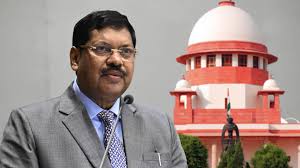
Justice Gavai will become only the second Dalit Chief Justice of India, after Justice KG Balakrishnan Justice Bhushan Ramkrishna Gavai is set to become the 52nd Chief Justice of India, following the retirement of CJI Sanjiv Khanna on May 13, 2025. Elevated to the Supreme Court on May 24, 2019, Justice Gavai will become only the second Dalit Chief Justice of India, after Justice KG Balakrishnan, who held the post from 2007 to 2010. However, his tenure is expected to last six months, from May 14, 2025 to November 23, 2025. His appointment also comes at a critical juncture for the judiciary, as the Supreme Court faces mounting criticism over alleged judicial overreach, most notably in the Tamil Nadu Governor case, where it directed the President to adhere to a timeline for clearing Bills. The judiciary is also grappling with renewed concerns over judicial corruption following the alleged discovery of charred currency notes at the official residence of High Court judge Justice Yashwant Varma. The incident has prompted 21 Supreme Court judges to publicly disclose their assets in an effort to restore public confidence. As Justice Gavai assumes office, all eyes will be on how he steers the court through these turbulent times, while upholding constitutional principles and reinforcing public trust in the institution. Script and Presentation: Aaratrika Bhaumik Editing: Zeeshan Akhtar Video: Aniket Chauhan Courtesy : The Hindu Note: This news is originally published on https://thehindu.com/ and is for use by the non-military/non-commercial community, especially those in the human rights sector.
Dalit Man denied temple entry in Karnataka, officials intervene after video goes viral
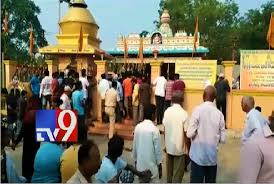
A 25-year-old Dalit man was barred from entering a temple in Karnataka’s Kavanadala village on May 10 by members of the dominant Vokkaliga community, sparking outrage after a video of the incident went viral. A day after a Dalit man was denied entry into a temple in Karnataka’s Kavanadala village on the basis of his caste, causing furore on social media, the district officials on May 11, ushered the victim into the temple after holding peace talks with the aggressors. A case is yet to be filed against the members of Vokkaliga community who restricted the entry of 25-year old Swaminath. On May 10, Swaminath, a resident of Kavanadala village in Madhugiri taluk, belonging to a Scheduled Caste, attempted to enter the Ramanjaneya temple on May 10 to offer prayers. However, he was stopped by members of the dominant Vokkaliga community. The next day, a video of the incident surfaced on X, triggering widespread condemnation online. A man in the video can be heard saying, “From time immemorial, your caste has not come inside the temple.” Swaminath is seen responding, “Why should I stay outside if everyone else is allowed in? Doesn’t the Constitution guarantee equal opportunity?”. The video of the incident went viral prompting the intervention of the district administration. Additional Superintendent of Police C Gopal told TNM that senior district police officials, including Tahsildar Shireen Taj, and Assistant Director of the Social Welfare Department Dinesh, visited the village to resolve the conflict. “After a peace committee meeting was held both Swaminath and the members of Vokkaliga community went inside the temple and performed a pooja,” said Manjunath, Inspector of Badavanahalli police station. The ASP clarified that no FIR has been filed against the offenders. “Swaminath has not made a decision about pressing charges. We have issued a verbal warning to residents and made it clear that barring temple access on caste lines is a punishable offence,” he said. The district police administration has said it will keep a close watch on the situation to ensure that such incidents are not repeated. Courtesy : TNM Note: This news is originally published on https://thenewsminute.com/ and is for use by the non-military/non-commercial community, especially those in the human rights sector.
Rajputs welcome Dalit groom’s wedding procession in rare display of social harmony in Nagaur district
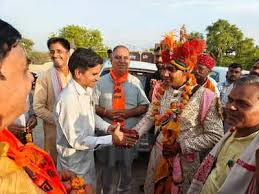
Jodhpur: In a rare and heartwarming display of caste harmony, members of the Rajput community in Khariya Kalan village of Nagaur district welcomed the wedding procession of a Dalit groom Tuesday with full honour—leading the horse, offering traditional turbans, and hosting the entire barat at their ancestral haveli. The wedding of Ajay Singh Sansi from Jodhpur with Nitu Sansi of Khariya Kalan became a shining example of social unity in a region where caste divides often run deep. The groom was escorted through the village by Chailu Singh Rathore, Dariyav Singh Rathore, and Narpat Singh Rathore—members of the Poonaas estate—who personally took the reins of Ajay’s horse and walked him to the wedding venue. “In most cases, Dalit grooms are forced to seek police protection just to ride a horse, and their processions take place under fear and tension. However here, the Rajput community not only welcomed us with open arms, but they also celebrated us. It felt like a cool breeze in a climate often clouded by caste-based prejudice,” said Ajay The Rajput hosts made all the arrangements for the barat’s stay, refreshments, and ceremonies. The bride, Nitu, was received with respect and affection, and women from the community offered her a traditional chunri as a mark of honour. Chailu Singh Rathore, speaking on behalf of his community, said, “Nitu is the daughter of the entire village. Her marriage is our collective duty. There is no caste-based discrimination in our village—this is our tradition, our culture. India is one family.” For Nitu, the moment was deeply emotional. “The love and warmth with which my village welcomed our barat has become the most beautiful memory of my life. This was not just a wedding—it was a message of unity.” At a time when reports of caste-based discrimination during weddings are still common, Khariya Kalan’s gesture stands out as a powerful message that equality, respect, and harmony can prevail. Courtesy : TOI Note: This news is originally published on https://timesofindia.com/ and is for use by the non-military/non-commercial community, especially those in the human rights sector.
Justice BR Gavai Takes Oath As India’s 52nd CJI | First Buddhist and Second Dalit to Hold Office
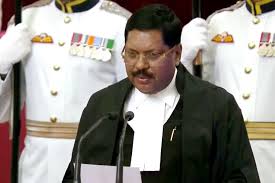
Justice Bhushan Ramkrishna Gavai was sworn in as the 52nd Chief Justice of India by President Droupadi Murmu at Rashtrapati Bhavan. He succeeds Justice Sanjiv Khanna, retiring at 65. Elevated to the Supreme Court in 2019, Gavai’s tenure will last over six months until November 23. The first Buddhist Chief Justice took his oath in Hindi, pledging to uphold the Constitution. Known for bold judgments, Gavai has contributed to landmark rulings, including upholding Article 370 abrogation and electoral bonds scheme invalidation. Born in 1960, his father was a prominent Dalit leader and former Bihar Governor Courtesy : TOI Note: This news is originally published on https://timesofindia.com/ and is for use by the non-military/non-commercial community, especially those in the human rights sector.
Kerala Dalit domestic worker alleges harassment by police over false theft complaint.
Bindu, a 39-year-old woman, was taken to the Peroorkada police station for questioning regarding a gold chain from a house she worked as domestic help. The complaint was later withdrawn. A Dalit woman from Thiruvananthapuram in Kerala has alleged harassment by the police over a theft case, which later proved to be false. The woman has now filed complaints with the Chief Minister of Kerala, State Police Complaint Authority and the Kerala State SC/ST Commission alleging harassment by Peroorkada Sub Inspector and four other police officers. Bindu R, a 39-year-old woman, was taken to the police station on April 23 for questioning about the alleged theft of 2.5 sovereigns of gold from the house where she worked as domestic help, following a complaint. Bindu alleged the police refused to listen to her version and harassed her by accusing her of the crime and registering a First Information Report (FIR). The complaint was later withdrawn and police are taking steps to quash the FIR. The harassment “I spent a night at the police station. They questioned me till three in the morning. They were never ready to listen to my version,” Bindu told TNM. Bindu, who had been working as a domestic help for the past four years took up the new job at a house in Ambalamukku on April 14. Bindu said she worked only for three days April 14, 15 and 19 and then discontinued. “I don’t know why, but I didn’t like going there. So, I stopped,” she said. On April 23 Bindu received a phone call from the Peroorkada police station around 3.30 in the evening. “The police said they received a complaint against me. When I reached there, the house owner and her daughter from the house where I discontinued domestic work were present. They accused me of stealing their gold chain,” Bindu said in her complaint. According to Bindu, the police officers had this preconceived notion that she had committed the crime. “They used very harsh and bad language. They never asked whether I committed the crime or not. They asked where the gold was,” she said. After the first round of questioning, police took Bindu to her house for a search, where they found nothing. Then they again took her to the station and booked her under Section 306 of the Bharatiya Nyaya Sanhitha (BNS). Bindu also alleged that the police threatened to lock up her children, two girls aged 15 and 17, along with her husband if she failed to commit the crime. “My husband and relatives came to the station following the house search, but the officers did not allow them to give me food,” Bindu alleged. She said was able to have food only on the afternoon of April 24. No theft happened Bindu spent nearly a day at the station and was only able to go home after the complainant informed the police that they had retrieved the gold from their home. “The house owner never informed me that they got the gold back. They said they are forgiving me because I have two girl children. Later, my husband came to know about that through a police officer,” she said. Bindu told TNM that the incident made her life tough as the police made her look like a thief before her relatives and neighbours. “Now I have stopped going to work. The police officers never apologised for what they did,” she said. Peroorkada SHO denied the allegations. “There are CCTVs in the station. How is it possible to harass a woman?” he said. Following Bindu’s complaint, the state SC/ST commission directed the Thiruvananthapuram cantonment Assistant Commissioner on May 6 to file the inquiry report within 20 days. Courtesy: The News Minute Note: This news is originally published on https://www.thenewsminute.com and is for use by the non-military/non-commercial community, especially those in the human rights sector.
Police Thrash Dalit Women With Sticks In UP’s Meerut; 5 Cops Suspended.

Cops can be seen slapping and thrashing the women with sticks in narrow lane. The woman can be heard shouting in the 08-second-long video. Meerut: A huge uproar has erupted over the brutal police action against Dalit women in Lavad village of Meerut district of Uttar Pradesh, after a video of the police allegedly thrashing the women was caught on camera and is making rounds on the internet. In the viral video, it can be clearly seen how the policemen are chasing the women and beating them with sticks. Soon after the video surfaced, opposition parties staged a protest demanding strict action. After which, Meerut SSP Vipin Tada took immediate action in the case and suspended 5 policemen and ordered a departmental probe in the matter. Cops can be seen slapping and thrashing the women with sticks in narrow lane. The woman can be heard shouting in the 08-second-long video. Meerut SSP Vipin Tada has suspended Inchauli police station in-charge Nitin Pandey, Lavad outpost in-charge Indresh Vikram Singh, inspector Sumit Gupta, Pawan Saini and constable Wasim. Departmental probe has been initiated against all of them. The echo of this case has now reached the National Women’s Commission and Scheduled Caste Commission. Earlier last week, a dispute broke out between two brothers Anil and Sushil over a house in Lavad village. The people of the locality informed the police about this. The police arrived at the spot and started taking the two brothers to the police station. When the women of the family protested against this, it is alleged that the police not only thrashed them but also dragged them to the police station. Reportedly, the matter has now reached the National Commission for Women and the SC-ST Commission. The commissions have started preparations to summon a report from the district administration. Courtesy: Free Press Journal Note: This news is originally published on https://www.freepressjournal.in and is for use by the non-military/non-commercial community, especially those in the human rights sector.
Nepal’s Dalits: Poor, illiterate, and married too young.
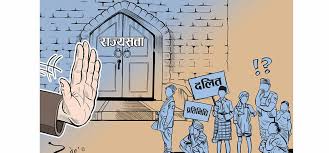
Dalits, who constitute 13.4 percent of Nepal’s total population, continue to face severe socioeconomic disparities compared to non-Dalit communities, a newly released government report has revealed. KATHMANDU, May 12: Dalits, who constitute 13.4 percent of Nepal’s total population, continue to face severe socioeconomic disparities compared to non-Dalit communities, a newly released government report has revealed. The National Statistics Office on Sunday published a detailed report on Dalit-related statistics based on the 2021 national census. The data paints a stark picture of inequality, with a significant portion of Dalit families categorized as extremely poor. According to the report, Nepal’s total population stands at 29,164,578, of which 3,898,990 (13.4 percent) are Dalits. Among them, 8.6 percent are hill Dalits and 4.8 percent are from the Terai region. Non-Dalit communities make up 86.2 percent of the population—56.2 percent are hill non-Dalits, and 25 percent are Tarai non-Dalits. A staggering 36 percent of Dalits fall into the category of extreme poverty, compared to only 18 percent of non-Dalits. Among Dalits, Terai Dalits are the most economically disadvantaged, with 44 percent categorized as extremely poor, in contrast to 32 percent of hill Dalits. Presenting the report, Sharad Kumar Sharma, Deputy Chief of the Statistics Office, noted that non-Dalits in both hill and Terai regions are economically far better off. In the highest wealth category, 22 percent of non-Dalits are represented, while only 6.2 percent of Dalits fall in that range. For Terai Dalits, the figure is a mere 1.9 percent. Among hill Dalits, 8.2 percent belong to the highest economic tier. Sharma said Dalits remain underrepresented in education, healthcare, prosperity, and state mechanisms, which continues to pose challenges to national development. Madhu Sudan Burlakoti, the chief statistician, added that the poor economic condition of Dalits stems from their limited access to basic services such as education, health, nutrition, and development. “Historically, Dalits were subject to untouchability and social discrimination, which pushed them to the margins,” he said, “Though such practices are gradually decreasing due to rising awareness of equality and human dignity, the statistical reality calls for targeted policy reform.” He emphasized that the data should now guide state policy and program planning for the upliftment of Dalit communities. “It is difficult to achieve the vision of a prosperous Nepal while leaving behind 13 percent of its people,” he said. 32 percent illiteracy rate The national literacy rate for individuals aged five and above is 76.2 percent. Among non-Dalits, it stands at 77.6 percent, while the average literacy rate for Dalits is 67.4 percent—8.8 percentage points lower than the national average. Further disparities emerge when broken down regionally. Literacy among Terai Dalits is only 51.9 percent, compared to 75.7 percent among hill Dalits, which closely aligns with the national average. Sharma said these disparities call for educational policies tailored to Terai Dalits, backed by appropriate budget allocations. 13 percent never attended school Among the population aged 5 to 25, 8.1 percent in Nepal have never attended school. However, the rate is 13.1 percent among Dalits, compared to 7.1 percent among non-Dalits. For Terai Dalits, the figure jumps to 27.5 percent. Among Terai Dalit women, a staggering 31.6 percent have never been to school. Overall, 32.6 percent of Dalits remain illiterate. Caste Categories: 5 hill and 17 Terai Dalit groups Dhundi Raj Lamichhane, spokesperson for the Statistics Office, said affirmative action and inclusive quotas have encouraged Dalits to identify themselves more openly by caste. Among hill Dalits, there are five main subgroups: Bishwakarma (Kami), Pariyar (Damai), Mijar (Sarki), Badi, and Gaine. Bishwakarma represents the largest share with 5 percent of the total population, followed by Pariyar (1.9 percent) and Mijar (1.6 percent). The Badi population is 11,470, and Gaine are 6,971 nationwide. Tarai Dalits include 17 caste groups. Major ones include Chamar/Harijan/Ram (1.4 percent), Musahar (0.9 percent), Dusadh/Passwan/Pasi (0.9 percent), Tatma/Tatwa (0.4 percent), Khatwe (0.4 percent), Dhobi (0.4 percent), and Bantar/Sardar (0.2 percent). The Kalwar caste has the lowest Dalit population at just 931 individuals. 23 percent child marriage rate among Dalits The child marriage rate among Dalits stands at 23 percent, significantly higher than the 13 percent rate among non-Dalits. The report indicates that 8 percent of Dalit men and 34 percent of Dalit women were married as children. In contrast, 4.4 percent of non-Dalit men and 20 percent of non-Dalit women were married before the legal age. Province-wise, Karnali Province records the highest child marriage rate at 20.1 percent, while Bagmati has the lowest at 8.4 percent. Dalit population growing The Dalit population has gradually increased over the past two decades. In 2001, Dalits made up 11 percent of the total population—7.1 percent hill Dalits and 3.9 percent Tarai Dalits. By 2011, the number had grown to 12.5 percent (8.1 percent hill Dalits and 4.4 percent Tarai Dalits). The 2021 census now records Dalits at 13.4 percent of the population, with 8.6 percent hill Dalits and 4.8 percent Tarai Dalits. Among the Dalit population, 2.4 percent are living with disabilities, and 7.8 percent are single women. Courtesy: My Republica Note: This news is originally published on https://myrepublica.nagariknetwork.com and is for use by the non-military/non-commercial community, especially those in the human rights sector.
Debunking the Lies: Upper Caste Myths on Reservations Exposed

The Truth About Reservations and Caste Privilege For decades, the upper castes have peddled the same tired myths to justify their privilege and undermine the struggles of marginalized communities. From crying “meritocracy” to whining about “reverse discrimination,” their arguments crumble under the slightest scrutiny. The truth? Reservations aren’t about charity—they’re about justice. They’re an attempt to balance centuries of oppression, exclusion, and systemic denial of opportunity. Yet, the privileged continue to gaslight the oppressed, dismissing their struggles while clinging to unearned advantages. This article dismantles the most common upper-caste myths with hard facts and unapologetic truth. If you’ve ever heard, “Reservation destroys merit!” or “Rich Dalits don’t need quotas!”—it’s time to set the record straight. The game has been rigged for too long. Now, the oppressed are speaking up, and the excuses of the privileged won’t hold up anymore. Let’s begin. Merit has been destroyed by reservations! Oh, really? If merit was really destroyed, then how come your community still fills up 90% of the top positions in the country? You think it’s merit that got your great-grandfather his post in the British army, or your family’s decades-old monopoly on top educational institutions? Let’s be honest, you’re not all competing on a level playing field. Your family had centuries to establish itself as “meritorious” while the rest of us were buried in oppression and deprivation. If merit had any real role, it would show in the numbers, not in your unfounded claims. We are being discriminated against now ! Discriminated against? Seriously? Maybe you should try being born into a caste that’s been so oppressed for centuries that we still can’t even drink water from the same well without getting the stink-eye. For you, “discrimination” is being told you can’t sit in the front row of the school bus. For us, it’s being denied the opportunity to even get on the bus in the first place. How about you check your privilege before complaining about a few percentage points in a government job? Why can’t you rich Dalits be satisfied? You’ve had it good! Oh, we’ve had it good, alright. You’ve heard of the “one in a million” story where a Dalit rises to stardom? Well, that’s not the norm, my friend, that’s the exception, and even then, we’re constantly reminded of our place. When a Dalit makes a little bit of progress, you’re quick to point out how we’re “rich.” But the rest of us are still waiting for that mythical treasure chest of wealth that you think we’ve discovered. Guess what? We still can’t even own land without running into a thousand barriers, and you think we’re rolling in gold? Try again. Reservation is reverse discrimination! Reverse discrimination? Oh, the irony is delicious. For centuries, the same people who held the power and wealth are now whining about reverse discrimination because for once, their positions are threatened by the idea of equality. Imagine if the tables were turned and suddenly, you were denied access to basic rights and opportunities for a few hundred years. Would you still call it reverse discrimination, or would you cry for justice? And, by the way, the reservation isn’t a free pass; it’s an attempt to level a playing field that has been tilted against us since time immemorial. If anything, it’s a long-overdue compensation. You’re just using reservation as an excuse for not working hard. I’m sorry, but last I checked, we are the ones who’ve had to work twice as hard just to get in the door. It’s cute when you claim it’s all about hard work, but remember: hard work is a privilege when the path ahead is clear, and the door is unlocked. We’ve been dealing with locked doors and unlevel ground since forever. The fact that we still manage to enter, to rise, to succeed, is proof of tenacity, not an excuse. There are no real ‘poor’ Dalits anymore! Well, tell that to the millions of us still stuck in villages where the toilets don’t flush, the water doesn’t run, and the jobs are worse than slavery. Oh, but sure, there are no real poor Dalits anymore. The rich Dalit family you know—does that represent the entire community? Let’s look beyond your anecdotal “evidence” and examine reality: 45% of SCs still own no land. Compare that to your cozy little inherited piece of real estate. Don’t get me started on the stifling bureaucracy that ensures that SCs can’t access capital. The struggle is real. The only thing that’s changed is that we no longer need to pretend we’re content with the crumbs thrown at us. Stop crying and start integrating! The system is fine! You know what? If the system was “fine,” we wouldn’t be here, still fighting for our right to be treated as equals. Let’s face it—if the system had worked, we wouldn’t still be facing systemic atrocities and caste-based violence every other day. And as for integrating? How about you first stop making it impossible for us to integrate by clinging to the caste system like a safety blanket? Integration doesn’t happen with empty words; it happens when the roots of caste discrimination are pulled out and replaced with something called equality. Courtesy: The Mooknayak Note: This news is originally published on https://en.themooknayak.com and is for use by the non-military/non-commercial community, especially those in the human rights sector.
How Conversion of Dalits to Buddhism has Helped Dalits in their Emancipation?
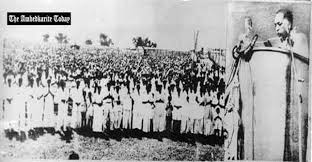
The conversion of Dalits to Buddhism under Dr. B.R. Ambedkar’s guidance, culminating in the mass conversion event on October 14, 1956, in Nagpur, was a pivotal moment in their emancipation. This movement, often called the Ambedkarite or Neo-Buddhist movement, offered Dalits a pathway to break free from the oppressive caste system entrenched in Hinduism, providing social, psychological, and cultural liberation. Here is how it contributed to their emancipation: Rejection of Caste-Based Oppression Hinduism, as Ambedkar saw it, institutionally sanctioned untouchability and caste hierarchy through scriptures like the Manusmriti. By converting to Buddhism—a religion he viewed as egalitarian, rational, and devoid of caste—Dalits could reject the theological basis of their subjugation. This act of conversion was a symbolic and practical renunciation of a system that deemed them “impure,” empowering them to redefine their identity outside the Hindu fold. Restoration of Dignity and Self-Respect Ambedkar emphasized that emancipation was not just about material upliftment but also dignity. Buddhism, with its focus on equality (all beings can attain enlightenment) and ethical living, gave Dalits a new sense of self-worth. The 22 vows he administered during the conversion—such as rejecting Hindu gods and rituals—were a deliberate assertion of agency, encouraging Dalits to shed the internalized inferiority imposed by centuries of discrimination. Cultural and Social Alternative Conversion provided Dalits with a distinct cultural identity rooted in Buddhist values like compassion, wisdom, and community (Sangha). This countered the exclusion they faced in Hindu society, where they were barred from temples and social spaces. By embracing Buddhism, they built their own communities, rituals, and spaces—like viharas—fostering solidarity and pride. Over time, this created a subculture that challenged the dominance of upper-caste norms. Political Consciousness and Mobilization The conversion movement was not just spiritual; it was deeply political. Ambedkar framed it as a revolt against caste tyranny, galvanizing Dalits into a collective force. This heightened their political awareness and strengthened their resolve to demand rights and representation. The Neo-Buddhist identity became a rallying point for Dalit activism, reinforcing Ambedkar’s broader efforts through organizations like the Scheduled Castes Federation. Education and Empowerment Ambedkar saw Buddhism as a rational, scientific faith that encouraged inquiry and education—key tools for Dalit upliftment. By embracing it, many Dalits were inspired to pursue learning, as Ambedkar himself had urged (“Educate, Agitate, Organize”). This shift helped break the cycle of illiteracy and poverty that caste had perpetuated, enabling social mobility. Long-Term Impact on Caste Dynamics The mass conversion—initially involving over 500,000 Dalits and growing to millions in subsequent decades—sent a powerful message to Indian society. It pressured the state and upper castes to confront the injustices of untouchability, accelerating reforms and the implementation of constitutional safeguards. It also inspired future generations of Dalits to resist caste oppression, whether through Buddhism or other means. Practical Outcomes In Maharashtra, where the movement took root most strongly, Neo-Buddhists (often from the Mahar caste, Ambedkar’s own community) saw gradual improvements in education, employment, and political participation, aided by reservations and their newfound assertiveness. While not all socio-economic woes were erased—poverty and discrimination persisted—the conversion gave Dalits a framework to challenge their marginalization more effectively. In summary, Ambedkar’s leadership in converting Dalits to Buddhism was a radical act of emancipation, offering them a spiritual escape from caste, a platform for self-assertion, and a tool for long-term empowerment. It did not end all their struggles, but it planted the seeds for a sustained fight against inequality, reshaping their place in Indian society. Courtesy: Countercurrents Note: This news is originally published on https://countercurrents.org and is for use by the non-military/non-commercial community, especially those in the human rights sector.