
Third Dalit worker dies in manual scavenging tragedy in Tamil Nadu’s dyeing factory
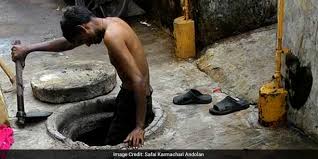
Add Your Heading Text HereThree Dalit men have died after inhaling toxic gas while cleaning a sewage tank at a Tiruppur dyeing factory, exposing the deadly persistence of manual scavenging despite a legal ban. The death toll in a manual scavenging tragedy in Tamil Nadu’s Tiruppur, has risen to three, after another person, identified as Hari Krishnan, succumbed to his injuries on Tuesday. He was one of the four Dalit men who were hospitalised following exposure to toxic gas in a sewage tank. The other two, who died of asphyxiation on Monday, were identified as Saravanan and Venugopal. A fourth man, Chinnaswamy, is currently undergoing treatment at a private hospital. According to police in Tiruppur, five men were engaged to clean a seven-foot-deep sewage tank at a private dyeing factory in Karaipudur without any protective gear. The cleaning operation turned fatal when the workers inhaled toxic methane gas released from the tank. The tragedy unfolded within seconds, with the men losing consciousness almost immediately after entering the confined space. Despite swift medical attention, Saravanan and Venugopal were declared dead upon arrival at the hospital on Monday. With Hari Krishnan’s passing, the incident has now claimed three lives. An initial FIR has been registered against the factory owner Naveen, manager Dhanabal, supervisor Balasubramaniam and vehicle owner Chinnasamy. The accused have been booked under sections 125A (endangering life) and 106(1) (causing death by negligence) of the Bharatiya Nyaya Sanhita, section 3(2)(v) (serious offences) of the Scheduled Castes and Scheduled Tribes (Prevention of Atrocities) Act, and section 9 of the Prohibition of Employment as Manual Scavengers and their Rehabilitation Act, 2013, which prohibits the engagement of anyone for the cleaning of sewers and septic tanks. Courtesy : India Today Note: This news is originally published on https://indiatoday.com/ and is for use by the non-military/non-commercial community, especially those in the human rights sector.
Attack on Dalit newlyweds exposed BJP govt’s claims: Akhilesh
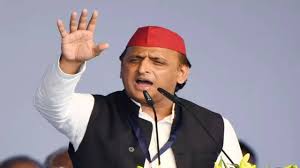
Lucknow: Samajwadi Party president Akhilesh Yadav on Wednesday cited the alleged attack on newlyweds in Mahoba by local upper caste people for wearing slippers as another incident that has exposed the reality behind BJP govt’s claims of ‘Sabka Saath, Sabka Vikas’ in the state. He also questioned the govt’s claims of ‘zero tolerance’ towards crime and criminals and went on to cite incidents of crime, particularly against women, to maintain that the crime graph was rising in UP. “People belonging to the same caste as those in govt, forced a Dalit newlywed and their family who were on their way to the temple, to take off their slippers while walking past them. When the groom resisted, they attacked him and his family members. The incident has exposed the govt which talks of ‘Sabka Saath, Sabka Vikas’,” Akhilesh said in a post on X in Hindi. Quoting an undated newsclip containing details of the incident narrated by the victims themselves, Akhilesh raised questions over delay in police action. The family claimed that they visited the local police station, but their complaint was not taken up. “If the govt fails to initiate any action against the accused, the PDA community will not forgive the govt,” he added. “The PDA community will not remain silent on such injustice. If the Chief Minister tries to hush up the incident to save the accused, the incident will go down in history as an example of the present govt’s weakness. The PDA community will not forget the humiliation that the Dalit bride had to face. This has exposed the BJP govt’s ‘Nari Vandan’ symbolism,” Akhilesh said. In a statement on Wednesday evening, Akhilesh referred to the gang rape of a girl in Moradabad, rape of a nurse in Meerut, murder of an old woman who was fast asleep in her house in Farrukhabad as examples of “lawlessness” in the state. He claimed that UP tops the list of deaths in police custody in the country because of which people are losing faith in police. ‘Give ex gratia to kin of electrocution victims’ Lucknow: Samajwadi Party chief Akhilesh Yadav on Wednesday expressed grief over the death of four people in Ghazipur due to electrocution after they came in contact with a high-tension wire. Akhilesh demanded ex gratia to the kin of those killed and proper medical care for those injured in the incident. He also demanded a thorough probe into the accident and stringent action against those responsible for the loss of human life. He held the power department responsible for such incidents and demanded that errant officials must be sacked. Courtesy : TOI Note: This news is originally published on https://timesofindia.com/ and is for use by the non-military/non-commercial community, especially those in the human rights sector.
Caste Census: Harsh Rules for ‘Untouchables’ in Villages that Prompted Dr. B.R. Ambedkar to Write— “Thank God the Constituent Assembly Did Not Adopt It”
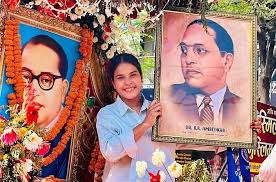
Baba Sahab described villages as “Indian ghettos” where Dalits were trapped in “corporate bondage,” with Touchables monopolizing land and resources. New Delhi- As India prepares for its upcoming caste census in 2025, the nation stands at a pivotal moment where caste identities will once again shape policy and welfare programs. While some argue that highlighting caste in modern India is divisive and that discrimination is a relic of the past, the lived experiences of those historically oppressed reveal a starkly different reality. In his seminal work The Indian Ghetto—The Centre of Untouchability—Outside the Fold, Dr. B.R. Ambedkar exposed the oppressive realities faced by Untouchables (Dalits) in Indian villages, shattering the romanticized notion of rural India as an ideal social structure. Ambedkar’s stark revelations highlight a rigid social code enforced in Hindu villages, designed to subjugate Untouchables socially, economically, and culturally. Baba Sahab writes: The average Hindu is always in ecstasy whenever he speaks of the Indian village. He regards it as an ideal form of social organization to which he believes there is no parallel anywhere in the world. It is claimed to be a special contribution to the theory of social organization for which India may well be proud of. How fanatic are the Hindus in their belief in the Indian village as an ideal piece of social organisation may be seen from the angry speeches made by the Hindu members of the Indian Constituent Assembly in support of the contention that the Indian Constitution should recognize the Indian village as its base of the constitutional pyramid of autonomous administrative units with its own legislature, executive and judiciary. His relief at the Constituent Assembly’s rejection of the village as the constitutional base—“From the point of view of the Untouchables, there could not have been a greater calamity. Thank God the Constituent Assembly did not adopt it.” The term “Untouchable” is historically accurate when referring to the social practices Ambedkar described, but its use today is sensitive due to its derogatory connotations. The Myth of the Ideal Village The glorification of Indian villages as autonomous, self-sufficient “little republics” originated not from ancient Hindu tradition but from Sir Charles Metcalfe, a 19th-century East India Company official. In his Revenue Papers, Metcalfe described villages as resilient communities that endured through invasions and political upheavals, largely self-contained and independent. This portrayal flattered Hindu sentiments, leading to its adoption as a point of national pride. During the Constituent Assembly debates, some Hindu members advocated for villages to form the base of India’s constitutional structure, viewing them as ideal units of governance. However, Ambedkar saw this as a catastrophic proposition for Untouchables. He described villages as “Indian ghettos” where Dalits were trapped in “corporate bondage,” with Touchables monopolizing land and resources. For Ambedkar, elevating villages to constitutional prominence would have entrenched caste oppression, denying Untouchables any chance at equality. The term “Untouchable” is historically accurate when referring to the social practices Ambedkar described, but its use today is sensitive due to its derogatory connotations. The Social Code: A System of Oppression Ambedkar detailed a stringent code in Hindu villages that Untouchables were forced to follow, with violations deemed offenses punishable by severe social and collective consequences. These rules were not codified in any legal penal code but were enforced with absolute authority by the Touchable castes. The key rules included: Segregation of Settlements: Untouchables were compelled to live in separate quarters outside the main village, isolated from Hindu habitations. Breaking this rule was an offense. Auspicious Direction Restriction: Their settlements had to be in the southern direction, considered the most inauspicious, reinforcing their inferior status. Pollution by Distance or Shadow: Untouchables were required to maintain a physical distance to avoid “polluting” Hindus with their shadow or breath, with violations treated as offenses. Wealth Prohibition: Acquiring wealth, such as land or cattle, was forbidden, ensuring economic dependency and subjugation. Housing Restrictions: Building houses with tiled roofs was prohibited, marking Untouchables’ dwellings as inferior. Clothing and Ornaments Ban: Wearing clean clothes, shoes, watches, or gold/silver ornaments was an offense, enforcing visible markers of inferiority. Naming Conventions: Untouchables were barred from giving their children respectable names; names had to reflect contempt to signify their low status. Social Conduct Rules: Sitting on a chair in a Hindu’s presence, riding a horse or palanquin, or organizing processions through the village were offenses. Language and Respect: Speaking a cultured language or failing to salute Hindus was punishable. Silence on Sacred Days: On fasting days, Untouchables were forbidden from speaking, as their breath was believed to pollute Hindu air and food. Mandatory Inferiority Markers: Untouchables had to maintain symbols of inferiority, such as contemptible names, unclean clothes, and non-tiled houses, with any deviation considered an offense. These rules were enforced through collective punishment, where the entire Untouchable community faced repercussions for an individual’s transgression, ensuring systemic control and fear. The term “Untouchable” is historically accurate when referring to the social practices Ambedkar described, but its use today is sensitive due to its derogatory connotations. Duties Imposed on Untouchables Beyond these rules, Untouchables were burdened with specific duties to serve the Touchables without any remuneration. These included: Messenger Role: Untouchables had to carry messages about events like deaths or marriages in Hindu households to their relatives, no matter how far the villages were. Service at Weddings: During Hindu marriages, Untouchables were required to perform menial tasks like breaking firewood or running errands. Escorting Brides: Untouchables had to accompany a Hindu bride from her parental home to her husband’s village, regardless of the distance. Festivals: During festivals like Holi or Dasara, Untouchables were tasked with performing preliminary menial tasks. Humiliation of Women: On certain festivals, Untouchable women were subjected to indecent mockery by the village community. What Sir Charles Metcalfe said about Indian villages Sir Charles Metcalfe—a civil servant of the East India Company. Metcalfe, who was a revenue officer, in one of his Revenue Papers described the Indian village in the following terms : “The village communities are little republics, having nearly
Dragged by Hair, Clothes Torn: Dalit Woman Brutalized in Bhagalpur Police Raid – No Female Officers Present
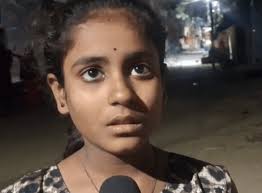
Dalit residents allege caste-based abuse, assault on women and minors, and illegal detention by male police officers during a late-night liquor raid in Nathnagar. Bhagalpur, Bihar— A police raid conducted by Lalmatiya police station in the Nathnagar Pasi Tola area of Bhagalpur district has triggered massive outrage among the local residents. Villagers allege that during the raid, which took place around 8 PM on Sunday night, police officers assaulted women, children, and men without any justification. Rajni Bharti, a resident of the locality who now lives in Delhi, told The Mooknayak, “My mother has a fractured leg, and my sister Jyoti Bharti (52) had gone to look after her. That night, the police raided our neighborhood and began beating up women and children. When my sister stepped outside and protested, the police dragged her away and assaulted her.” “All the officers—from the inspector to the sub-inspector—are from the Bhumihar caste. They hurled vulgar abuses at the women. When my sister asked them to stop, they became furious and said, ‘How dare people from a lower caste question us?’ About an hour later, they returned, grabbed her by the hair, dragged her to the police station, and kept her in custody all night. Her clothes were torn, and she was left almost naked,” Rajni further alleged. Rajni also mentioned that her house is in the same area where the police carried out the raid, although she currently resides in Delhi. “My brother informed me about the incident. The police have now filed an attempt-to-murder case against my sister. Is this how you treat an elderly woman—by humiliating her and dragging her to the police station simply because she questioned them for beating women and children? She is still in police custody. Around 15–20 people were arrested, all of them from the Dalit community,” she added. Gunjan Kumari, a minor who was present during the raid, tearfully recounted to a journalist that she saw a police officer kick her mother multiple times. Her emotional breakdown while narrating the incident reflects the trauma inflicted on the community. Notably, no female police officers were present during the raid. All actions were carried out by male officers, which has fueled further anger, particularly due to the allegations of manhandling and verbal abuse of women. Prema Devi, who was injured during the police action, stated, “They forcibly broke into our home and beat everyone. I was hit with batons two or three times. My brother-in-law was beaten so severely that his leg is broken.” Even bystanders weren’t spared. Ashok Chaudhary, who was standing at his grocery shop, said he suffered injuries to his hand due to police beating, despite having no connection to the incident. Bhagalpur City DSP-2, Rakesh Kumar, addressed the media and stated, “The raid was conducted at the residence of Ravi Chaudhary in Pasi Tola following a tip-off about liquor storage. When the police arrived, the family members allegedly pelted stones at the officers, resulting in minor injuries to three of our personnel.” When journalists asked the DSP whether public anger erupted after a girl was slapped by the police during the raid, he avoided a direct response and said, “I do not have information about that.” Courtesy : Rajan Chaudhary, The Mooknayak Note: This news is originally published on https://themooknayak.com/ and is for use by the non-military/non-commercial community, especially those in the human rights sector.
The country got its first Buddhist CJI: From an Ambedkarite family to the highest chair of the Supreme Court – know the struggle of BR Gavai!
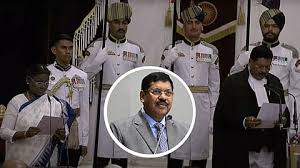
Justice BR Gavai, who comes from the Buddhist and Dalit community, became the 52nd Chief Justice of India, know the full story of his life, struggle and historical decisions. New Delhi: Justice Bhushan Ramakrishna Gavai took oath as the 52nd Chief Justice of India (CJI) at 10 am today. He replaced Justice Sanjiv Khanna, who retired on May 13. Justice Gavai is the second Dalit and the first Buddhist to become the Chief Justice of the Supreme Court of the country. Before him, Justice KG Balakrishnan became the first Dalit Chief Justice in 2007. Justice Gavai’s tenure will be of six months and he will retire in November 2025. Since the establishment of the Supreme Court in 1950, only seven judges have come from the Scheduled Caste or Scheduled Tribe community. Wanted to be an architect, became a judge Justice Gavai was born on 24 November 1960 in Amravati, Maharashtra. After taking a B.Com degree, he studied law from Amravati University. Not many know that Justice Gavai once wanted to become an architect, but chose the path of advocacy due to his father’s wish. His father Ramakrishna Suryabhan Gavai was a famous Ambedkarite leader and founder of the Republican Party of India. Ramakrishna Gavai was a Lok Sabha MP from Amravati and served as the Governor of Bihar, Sikkim and Kerala between 2006 and 2011. He passed away in 2015, four years before his son B.R. Gavai was made a Supreme Court judge. From advocacy to the Supreme Court Justice Gavai registered with the Bar Council on March 16, 1985 and practiced independently in the Bombay High Court from 1987 to 1990. Later, he started practising in the Nagpur Bench. On 12 November 2005, he was appointed as a permanent judge of the Bombay High Court. On 24 May 2019, he became a judge of the Supreme Court. He was part of nearly 700 benches in the Supreme Court and wrote nearly 300 important judgments. Key judgments: From Article 370 to electoral bonds Justice Gavai played a key role in several sensitive and landmark cases: In November 2024, he delivered a judgment that said demolition of properties without due process was against the rule of law. He was part of the Constitution Bench that upheld the removal of Article 370, which gave special status to Jammu and Kashmir. In February 2024, he was part of the bench that struck down the electoral bond scheme, terming it unconstitutional. He established procedural safeguards against arbitrary arrests under stringent laws like the UAPA and the PMLA. He established procedural safeguards against arbitrary arrests under stringent laws like the UAPA and the PMLA. • In a significant judgment, he upheld sub-categorisation in SC reservation and compared opposition to it to “historic discrimination faced by upper castes”. He was also part of the bench hearing the contempt case against senior advocate Prashant Bhushan. Apart from this, he also wrote the majority opinion validating the 2016 demonetisation. Transparency in Rahul Gandhi case While hearing the ongoing criminal defamation case against Congress leader Rahul Gandhi in July 2023, Justice Gavai showed transparency by referring to his family political connections and offered to recuse himself from the case. He said, “Though my father was not a member of the Congress, he was associated with the party for nearly 40 years. My brother is still associated with the Congress.” The government did not accept his offer to recuse and the bench stayed Rahul Gandhi’s sentence, allowing his Lok Sabha membership to be restored. The next six months: Challenges and priorities As Chief Justice, Justice Gavai will face several key challenges. Currently, two high court judges — Justice Shekhar Yadav (Allahabad High Court) and former Justice Yashwant Verma (Delhi High Court) — are facing impeachment proceedings. At the very beginning of Justice Gavai’s tenure, a crucial hearing is scheduled on May 15, challenging the amendments made in the Wakf Act. Justice Gavai’s elevation to the Chief Justice is a turning point in the history of the Indian judiciary, not only in terms of representation but also for strengthening justice, equality and constitutional values. Courtesy : Rajan Chaudhary, Hindu News
Not ‘protocol’, it is a matter of honour— Justice Gavai, who arrived on his first visit to Maharashtra as CJI, expressed displeasure over the absence of top officers, then…
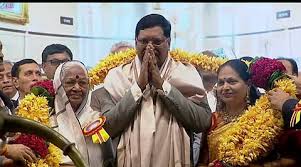
After these comments of the CJI, Maharashtra Chief Secretary Sujata Savnik, DGP Rashmi Shukla and Mumbai Police Commissioner Deven Bharti were seen with him at Dr. BR Ambedkar’s Samadhi Sthal Chaityabhoomi. Mumbai. Chief Justice of India (CJI) Justice BR Gavai on Sunday expressed displeasure over the absence of Maharashtra Chief Secretary, Director General of Police (DGP) and Mumbai Police Commissioner. CJI Gavai has recently become the 52nd Chief Justice of the country and this was his first official visit to Maharashtra. His felicitation ceremony was organized by the Bar Council of Maharashtra and Goa. He said in Marathi, “I am not talking about protocol, but all three pillars of democracy (executive, legislature and judiciary) should respect each other. When the head of a major part of the Constitution (CJI) comes to his own state for the first time and does not get this respect, then it is a matter of their thinking.” However, after these comments of the CJI, Maharashtra Chief Secretary Sujata Savnik, DGP Rashmi Shukla and Mumbai Police Commissioner Deven Bharti were seen with him at Dr. BR Ambedkar’s Samadhi Sthal Chaityabhoomi. Earlier, at the felicitation ceremony organized by the Bar Council of Maharashtra and Goa, CJI Gavai said, “I do not want to get into small things, but this is a matter of respect. People should know.” Speaking about his post-retirement plans, CJI Gavai said: “I am glad that this event is being held in the presence of Justice Abhay Oka. Both I and my brother Justice Oka have already announced that we will not take up any post-retirement assignment. So Justice Oka will be fully available to you (legal fraternity) after May 24 and I will be six months after that.” The CJI also said that he has decided that he will not accept felicitations anywhere else except Mumbai, Nagpur, Aurangabad and Goa as his association with the association has been either working together or as a member in all the four above mentioned places. The event was attended by several dignitaries including Bombay High Court Chief Justice Alok Aradhe, Supreme Court Justices Surya Kant, Justice Abhay S Oka, Justice Dipankar Dutta and Justice Prasanna B Varale. Courtesy : Geetha Sunil Pillai, Hindi News
Dalit student held hostage for 4 days, made to drink urine, brutally beaten – horrifying incident from Tirupati!
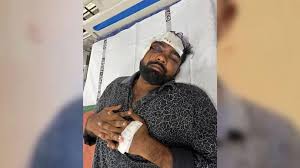
A case of kidnapping and inhuman torture of a Dalit engineering student in Tirupati, caste-related abuses, forced to drink urine and death threats has come to light. Tirupati, Andhra Pradesh – The alleged kidnapping and physical and mental harassment of a Dalit engineering student for several days in Tirupati district has sparked outrage across the state. Tiruchanur police have registered a case under serious sections like kidnapping, causing grievous hurt, caste-related attack, illegal confinement for more than three days and death threats under the Indian Justice Code. Victim student alleges caste harassment The case was registered on May 16, in which the victim has been identified as A. James (22 years). He is a final year B.Tech student of Sri Vidya Niketan College and a resident of Reddypalem village in Nellore district. James and his friend Guru Sai Reddy were abducted from outside the hostel. The accused were led by prime accused Yashwant. The other named accused include Kiran, Jagga, Lalit, Sai Gowda, Vanshi, Roopessh and some unidentified persons. “I was going to meet my cousin when a group of people like KT Road Katti, Nani, Jagga stopped me and locked me in a room. They brutally beat me for three-four days,” James said in a video statement. The victim alleged that he was abused with casteist slurs and forced to drink urine. “They said – ‘How can you, being from SC caste, dare to do this?’ I was beaten badly. I want justice,” he said. Held hostage in hotel room, threatened with death According to the police, the accused locked James and his friend in room number 209 of Elite Park Hotel, Srinivasapuram, threatening to kill them on a bike. The victims were beaten with hands, kicks, belts and iron rods. James suffered serious injuries near his eye, while his friend also sustained injuries at multiple places. The two somehow managed to escape while returning to Tirupati. Police said investigations are on and strict action will be taken against the culprits. Efforts are being made to identify the other accused. YS Jagan Mohan Reddy condemns the incident Former chief minister and YSR Congress Party president YS Jagan Mohan Reddy strongly condemned the incident, calling it an example of increasing atrocities on Dalits and deteriorating law and order in the state. He wrote on social media platform X (formerly Twitter), “There is no security left for Dalits in the state. This incident shows how law and order is failing to provide security to the weaker sections.” He also alleged that the police did not take appropriate action in time due to political interference in the case. “Now it has become a common thing that when a victim goes to the police station, a case is registered against him. This incident in Tirupati is a proof of the inaction of the police and the pressure of the ruling party.” YS Jagan Mohan Reddy, former Chief Minister He demanded that a case be registered immediately against the culprits and the Dalit student should get justice. Courtesy : Rajan Chaudhary, Hindi News
Dalit woman stripped and searched in police station, asked for water and got toilet water! — Serious allegations against Kerala police
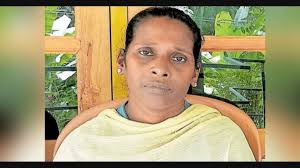
A 39-year-old Dalit woman from Kerala has made serious allegations of inhumane treatment, stripping and searching and mental harassment in police custody. The FIR in the case turned out to be false, but the action is still incomplete. Thiruvananthapuram — A 39-year-old Dalit woman Bindu was not only arrested on false charges of theft in Kerala’s capital Thiruvananthapuram, but also had to face inhumane mental torture in police custody. After this case came to light, there has been a stir in the state politics and the opposition has launched a scathing attack on the Chief Minister’s Office (CMO) and the police department. False allegation of theft and harassment in custody Bindu, who is a domestic worker and hails from Chullimanoor, was accused by her employer of stealing a gold chain on April 23. Based on this complaint, the Perurkada police called her and called her to the police station. On reaching the police station, the victim repeatedly said that she was innocent, but the police did not listen to her. According to Bindu, a woman police officer took her to a room, made her remove her clothes and searched her. Then the police took her to her house and searched there too. During this time she was not allowed to talk to the family, nor was she given food and water. Bindu told the media, “When I asked for water, a policeman said – ‘Go to the toilet and drink from there’.” Detained overnight, threatened to implicate daughters Bindu said that she was kept in the police station all night and the interrogation continued till the next morning. An FIR was registered and the police threatened her that if she did not confess to the theft, her minor daughters would also be implicated in the case. Later when the mistress of the house and her daughter reached the police station again, they said that they had been ‘forgiven’. After some time it was found that the stolen gold chain was found in the house itself, and the complainant herself admitted that the allegation was false. Complaint ignored in CMO When Bindu gave a written complaint to Chief Minister’s political secretary P. Sasi with the help of a lawyer, she claims that Sasi neither read the complaint nor gave any assurance. “He said that this is a common thing and advised me to go to court,” Bindu said. However, the CMO later clarified that the police were directed to take action after receiving the complaint. But according to Bindu, she had also requested the CMO to register a case against the woman who falsely accused her, which was rejected. Opposition and social organizations’ outrage Opposition leader V.D. Satheesan condemned the incident, saying, “This is not just an isolated incident but an example of injustice meted out to Dalits by the ruling system. Strict action should be taken against the guilty police officials.” Former Home Minister Thiruvanchoor Radhakrishnan called it “inhuman” and said that such incidents should have no place in a progressive society. Congress state president Sunny Joseph and AIDWA (All India Democratic Women’s Association) national president P.K. Srimathi also condemned the incident. “No woman should be treated like this. This is an example of police brutality,” Srimathi said. Policeman suspended, BNSS law violated An inquiry conducted by Police Commissioner Thomson Jose revealed that several procedural lapses were committed in Bindu’s arrest. The inquiry found that the police violated the provisions of the Indian Civil Security Code (BNSS) – which prohibits arresting women after sunset and before sunrise, unless with the permission of a magistrate. The police neither informed her family about the arrest nor gave any explanation in court as to why the arrest was necessary in an emergency situation. Based on these serious lapses, sub-inspector SG Prasad of Perurkada police station has been suspended and an inquiry is underway against other responsible officers. Demand for justice Bindu has filed complaints with the chief minister, the state police chief and the Scheduled Caste Commission and is now preparing to move court. She said the police not only discriminated against her on the basis of caste but also physically and mentally tortured her. Bindu said, “I have identified some policemen. I will go to court. I want justice.” Courtesy : Rajan Chaudhary, Hindi News
Asked to drink water from bucket: Kerala cop suspended for harassing Dalit woman
A Dalit domestic worker in Kerala, reportedly, was wrongfully accused of stealing, detained overnight and allegedly harassed by police. The gold was later found at her employer’s house. The sub-inspector has been suspended pending enquiry. A sub-inspector (SI) from a police station in Kerala’s Thiruvananthapuram was suspended after a Dalit woman was falsely accused of theft and allegedly harassed in custody. The action against SI Prasad comes after R Bindhu, a domestic worker, recently filed complaints with the Chief Minister, the State Police Chief and the State SC/ST Commission, regarding the harassment. Bindhu was reportedly summoned to the Peroorkada police station on April 23 after her employer alleged that 2.5 sovereigns of gold (around 20 g valued at about Rs 1.6 lakh) were missing. Despite a body and bag check that yielded nothing, an FIR was registered against her. She says she was detained at the station for nearly 20 hours and pressured to confess. “Police officers behaved very badly with me. One of them threatened me saying they will implicate my daughters and husband in the case. He said the society will treat me as a thief and when I asked for water, he asked me to drink from the bucket kept in the bathroom,” she recounted. She added that police treated her poorly even after the gold was recovered from her employer’s residence. Opposition leader VD Satheesan slammed the Pinarayi Vijayan-led LDF government over the incident. “Even after the complaint was withdrawn, an FIR was filed and the woman was threatened. When Pinarayi Vijayan is the Home Minister, is water from the toilet given to those who come to a police station?” he asked. Satheesan also criticised the Chief Minister’s office for allegedly dismissing Bindhu when she approached them. “She was insulted again. They told her she could go to court. Is this the justice a Dalit woman gets?” he said. Courtesy : India Today Note: This news is originally published on https://indiatoday.com/ and is for use by the non-military/non-commercial community, especially those in the human rights sector.
UP: Dalit youth’s ears cut off for not paying goonda tax, accused looted money for drinking alcohol, case registered

An incident of assault on a Dalit man has come to light in Hamirpur district of Uttar Pradesh. It is alleged that the goons cut off both the ears of a person named Charan Das for not paying goonda tax for drinking alcohol. Pankaj Mishra, Hamirpur: In Hamirpur district of Uttar Pradesh, goons beat up a Dalit and cut off both his ears for not paying goonda tax for drinking alcohol. After committing the crime, the goons fled after looting thousands of rupees from him. As soon as the family came to know about the incident, they reached the spot and immediately admitted him to the government hospital for treatment. The police have also registered an FIR of the incident and started searching for the accused. The Dalit family is in panic due to the incident that took place in Saidpur village of Rath Kotwali area of Hamirpur district. Charan Das, son of Ghasi Ram, a resident of Saidpur village, was going to the temple from his house, when Fukkan and Sandeep of the same village stopped him on the way outside the village and abused him. These bullies demanded goonda tax from Charan Das for drinking alcohol. When he refused, he was beaten badly. Not only this, the Dalit was dragged towards Moksha Dham, where the two thousand rupees in his pocket were snatched. Police registered a case When Charan Das fought with the bullies to get his money back, the bullies cut both his ears with a knife. After committing the crime, both the bullies fled from the spot threatening them. As soon as the family came to know about the incident, they rushed to the spot. The family took the seriously injured Charan Das to the police station with both his cut ears. On the basis of the complaint of the incident, the police registered a case under serious sections. Referred to Jhansi Medical Colleg Blood-soaked Charan Das was admitted to the CHC in Rath. Here Dr. Akhilesh has referred him to Medical College Jhansi. Inspector in-charge of Rath Kotwali, Ram Asare Saroj, said that on receiving the complaint of the incident, a case has been registered against Fukkan and Sandeep of the same village. The accused are being searched for arrest. About the author Dhirendra Singh I am a senior content producer in Navbharat Times Digital. I have the responsibility of working on political and other news related to UP and Uttarakhand. Talking about my past, I have studied journalism from Delhi University. I started my career in 2014 and have more than 8 years of experience. During this time, I also got a chance to do reporting in Delhi, UP and Jammu and Kashmir. Before Times Group, I have worked in some other institutions including Dainik Jagran, Amar Ujala, Rajasthan Patrika (Digital), Navodaya Times, Hindustan Samachar News Agency. Edited by: Dhirendra Singh| Courtesy: Hindi News