
Dalit family attacked in UP for hosting wedding in marriage hall; two seriously injured
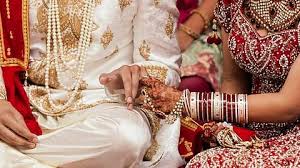
The incident occurred on Friday night, leaving two individuals seriously injured. BALLIA: A Dalit family was allegedly attacked by a group of men wielding sticks and rods for holding a wedding ceremony in a marriage hall in Rasra, Uttar Pradesh, police said on Sunday. The incident occurred on Friday night, leaving two individuals seriously injured. According to the First Information Report (FIR), the assailants reportedly shouted, “Being from a Dalit community, how can you hold a wedding in a hall?” before launching the attack. No arrests have been made so far in connection with the incident. The FIR, lodged by Raghvendra Gautam the brother of one of the victims stated that a group of around 20 individuals armed with sticks and rods stormed the Swayamvar Marriage Hall at approximately 10:30 pm and attacked those attending the wedding. The group was reportedly led by Aman Sahni, Deepak Sahni, Rahul, and Akhilesh, along with 15–20 other unidentified individuals from the Mallah Toli locality. The accused also allegedly hurled caste-based slurs and objected to members of the Dalit community using a marriage hall for the function. Gautam’s relatives, Ajay Kumar and Manan Kant, sustained serious injuries and are undergoing treatment. A case has been registered under relevant sections of the Bharatiya Nyaya Sanhita (BNS), along with provisions of the Scheduled Castes and Scheduled Tribes (Prevention of Atrocities) Act. Rasra Police Station in-charge Vipin Singh confirmed that an investigation is underway. Courtesy : TNIE Note: This news is originally published on https://timesofindia.com/ and is for use by the non-military/non-commercial community, especially those in the human rights sector.
‘Wedding in a hall?’: Group attacks dalit family with sticks and rods for in UP
NEW DELHI: A Dalit family was allegedly attacked by a group of around 20 men with sticks and rods during a wedding ceremony at Swayamvar Marriage Hall in Rasra, Uttar Pradesh on Friday night, leaving two people seriously injured, police said on Sunday. The attackers, led by Aman Sahni, Deepak Sahni, Rahul, and Akhilesh, stormed the wedding venue around 10:30 pm, according to the FIR filed by Raghvendra Gautam, the victim’s brother. “Being from a Dalit community, how can you hold a wedding in a hall?” the attackers allegedly said before launching their assault. The group, which included 15-20 unidentified individuals from the Mallah Toli locality, hurled caste-based slurs and objected to the wedding being held at a marriage hall. Ajay Kumar and Manan Kant, relatives of the complainant Gautam, suffered serious injuries during the attack. Based on the complaint, police have registered a case under relevant sections of the BNS and the Scheduled Castes and Scheduled Tribes (Prevention of Atrocities) Act. Rasra Police Station in-charge Vipin Singh said an investigation is underway. No arrests have been made so far in connection with the incident. Courtesy : TOI Note: This news is originally published on https://timesofindia.com/ and is for use by the non-military/non-commercial community, especially those in the human rights sector.
Evaluation of Telangana’s Dalita Bandhu implementation sought
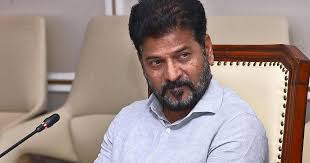
A civil society organization Forum for Good Governance conducted a comprehensive evaluation of the Dalita Bandhu programme in Vasalamarri village. Under Dalit Bandhu scheme each SC family will get Rs 10 lakh, without a bank linkage. Hyderabad: An evaluation of the Dalita Bandhu scheme, introduced by the previous BRS government for the upliftment of Scheduled Caste families, has revealed significant implementation issues. The scheme was first launched in Vasalamarri Village on a saturation mode basis in August 2021. A civil society organization Forum for Good Governance conducted a comprehensive evaluation of the Dalita Bandhu programme in Vasalamarri village. Under Dalit Bandhu scheme each SC family will get Rs 10 lakh, without a bank linkage. Their survey uncovered several findings that despite there being only 52 Dalit families in the village, 75 units were established under the scheme. Multiple units were allocated to some families, and a total of Rs 6.5 crores was deposited into beneficiary accounts. However, the evaluation found that several units were never properly established, and even the fully operational units failed to generate the expected income levels. The absence of adequate training programmes and regular field visits left beneficiaries unable to effectively manage their allocated schemes. Within six months of the scheme’s implementation, many beneficiaries were forced to sell transport vehicles and tractors at throwaway prices, said Forum For Good Governance, president, M Padmanabha Reddy. He wrote a letter to chief minister, A Revanth Reddy seeking evaluation of the scheme and also money spent on it. So far, Rs 3,884 crores has been spent on the Dalita Bandhu scheme, an amount that Forum for Good Governance believed requires thorough evaluation and accountability measures. The organization has called for action against those responsible for what they describe as the squandering of public funds for electoral gains. When introducing the scheme, then Chief Minister K Chandrashekar Rao had hailed Dalita Bandhu as a revolutionary initiative by his government, the first of its kind in the country for Dalit upliftment. Dalita Bandhu was introduced in Telangana to intensify the level of financial assistance to SC households in a phased manner for establishment of income generating assets without bank loan component. The scheme is planned to be implemented in 118 Assembly constituencies. The activities suggested are, Agriculture, Transport sector, Manufacturing and Industry, Retail and shops, services and supplies, out of the above the beneficiary is given an option to choose the activity of his choice. Each beneficiary is given financial assistance Rs 10 lakhs, out of it 9.9 lakhs is released into his bank account and 0.1 lakh credited to the common “Raksha Fund”. An amount of Rs.17,700 crores was earmarked for Dalita Bandhu programme during financial year 2022-23 and proposed to spend Rs. 1.7 lakh crores in next five years to cover all the Dalit families. “From the beginning the scheme ran into problems. In selection of beneficiaries MLAs and their followers involved and selected their party people. In some cases, Rs. 2 to 3 lakhs were collected by party workers to include the beneficiary name in selected list. Coming to selection of activities, instructions were clear that beneficiaries should be given training and conduct field visit before grounding the scheme but that was not done. In view of serious irregularities and wastage of public money we represented for evaluation of the programme but no action was taken on our representation. The scheme was introduced mostly for political benefit at the cost of Tax payer’s money. As large amount of Tax Payer’s money was squandered for electoral gain, action has to be initiated against persons responsible,” said Padmanaha Reddy in the letter written to Revanth Reddy. Courtesy : DH Note: This news is originally published on https:/deccanherald.com/ and is for use by the non-military/non-commercial community, especially those in the human rights sector.
Suraj Milind Yengde’s new book covers Dalit history of 15 countries

New Delhi, (language) Author Suraj Milind Yengde in his new book presents a comparative exploration of caste and race from ancient times to the present, based on 10 years of historical, ethnographic and archival research in 15 countries. Published by Penguin Random House India, ‘Caste: A Global Story’ explores the experience of Dalits across different continents and traces the powerful relationships from the indentured labourers of the nineteenth-century Caribbean region to the migrant workers of the Middle East today. The book highlights the role of colonialism, religion and nationalism in maintaining caste hierarchies across the world and explores lessons that can be learned from anti-caste movements in India and elsewhere. In the preface of the book, Nobel laureate Amartya Sen has said, “‘Caste: A Global Story’ is a remarkable contribution to understanding and confronting the challenges of harsh inequalities prevailing across the world. We should be grateful to Suraj Milind Yengde for this distinguished work.” The book is priced at Rs 899 and will hit the market on June 30. Language: Shubham Naresh This news has been taken by ‘auto-feed’ from ‘Bhasha’ news agency. ThePrint is not responsible for its content. Courtesy: The Print, Hindi News
Behind Apna Dal (S) naming a Dalit UP chief, a bid to cut into BSP’s voter base
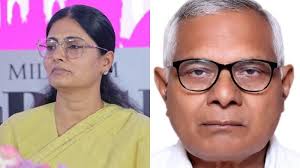
After Raj Kumar Pal, an OBC leader, resigned earlier this month, Anupriya Patel’s party has now picked old loyalist Jatav R.P. Gautam as the state president. Lucknow: Union Minister Anupriya Patel’s Apna Dal (Sonelal) appointed Jatav R.P. Gautam as the president of its Uttar Pradesh unit Thursday, in a move which is being viewed as the party’s attempt to woo the Dalit community. Earlier this month, the former state president, Raj Kumar Pal, had resigned from the position after accusing Anupriya and her husband Ashish Patel—a minister in Uttar Pradesh cabinet—of neglecting him and mistreating party workers. Gautam, an old loyalist and the party’s co-operative wing chief, has now taken up the responsibility. The 60-year-old hails from the Sitapur district, and has also been a Dalit rights activist and social worker for the past two decades. The position of state president was previously held by an OBC leader (Pal), but now the party has picked a Jatav (segment of Dalit community) leader for the role for the first time in a bid to increase its outreach, according to party functionaries. “This is the first time we have appointed a Jatav state chief, in line with our social engineering plan. We are hoping for positive results,” Ashish Patel told ThePrint. A senior functionary said, on the condition of anonymity, that the party wants to step out of the image of an OBC party. “This move comes at a time when the support base of BSP (Bahujan Samaj Party), which is considered the first choice of Jatavs, has been shrinking for the last few years. Jatavs are looking for an alternative. So, our leadership has decided to focus on increasing its base. The population of Jatavs is above 12 percent in the state, which is significant in creating an impact in electoral politics,” the leader told ThePrint. Now, as the party focuses on the preparation for the upcoming local body elections this year and the 2027 assembly elections, Gautam has been given this big responsibility, he added. However, Apna Dal (S) is not the only party eyeing BSP’s core vote bank. The Samajwadi Party’s “Pichda, Dalit, Alpasankhyak (backward-Dalit-minority)” plank got a big boost in April this year, following the induction of former minister and BSP founding member Daddu Prasad, along with a few other local BSP leaders. Before this, SP had inducted several BSP leaders last year, too. Additionally, SP’s district units had also held a week-long “Swambhiman Samman Samaroh” to mark the birth anniversary of B.R. Ambedkar this year. The aim was to reach out to prominent members of the Dalit community at grassroot level and felicitate them. Similarly, Nagina MP Chandrashekhar Azad-led Azad Samaj Party (Kanshi Ram) is also planning to expand their base, having completed the process of appointing local units in all 75 districts of the state. UP-based political analyst Shilp Shikha Singh explained that BSP’s “downfall” has opened up space for other parties in terms of the Dalit voter base. “Every party has realised after Lok Sabha results in UP that there is scope to gain this ‘loyal’ vote bank of the BSP, as the old party is not able to perform well in polls. The grand celebration announcements on Ambedkar Jayanti last month have also given a hint that every party is eyeing Dalit votes. As of now, it seems like a smart move by a BJP ally (Apna Dal).” Prashant Srivastava (Edited by Mannat Chugh) Courtesy : The Print Note: This news is originally published on https:/theprint.com/ and is for use by the non-military/non-commercial community, especially those in the human rights sector.
35 yrs on, 32 get 5 years’ RI for 1990 caste violence in Agra village

Agra: Over three decades after caste violence broke out in Panwari and nearby villages in Agra following controversy over a Dalit wedding procession, a local court on Friday sentenced 32 men to five years of rigorous imprisonment (RI) in the case. Delivering the 97-page verdict, the special SC/ST court of Judge Pushkar Upadhyay also imposed a fine of ₹41,000 on each convict. Half of this amount will be given to the affected Dalit families as compensation. The sentencing came three days after the court convicted 35 men and acquitted 15 others for lack of evidence. Of the original 72 accused, 22 died during the prolonged trial. While 32 convicts were taken into custody on Friday, non-bailable warrants were issued against the remaining three for not appearing in court. The case, titled State vs Vipti Ram and others, relates to the violence that unfolded on June 21–22, 1990. The trigger was a Dalit groom riding a horse during his wedding procession in Panwari, which led to objections from a group of Jat men. An altercation followed, and the next day, both sides exchanged gunfire, resulting in the death of 50-year-old Soni Ram Jat. Several Dalit homes were torched in the aftermath. By the afternoon of June 22, the violence had spread to Akola and other nearby villages, where more attacks on Dalits were reported. The sentencing pertains specifically to the Akola incident. The violence prompted the heavy deployment of Provincial Armed Constabulary and police forces. A month-long curfew was imposed to bring the situation under control. Then-Congress leader and former PM Rajiv Gandhi, along with Sonia Gandhi, had visited Panwari village after the violence. A case was registered at Kagarol police station by then-SHO Omveer Singh Rana. Charges were framed under IPC sections 148 (rioting with deadly weapons), 149 (unlawful assembly), 323 (voluntarily causing hurt), 144 (joining unlawful assembly with a weapon), 325 (causing grievous hurt), and sections 3/2/5 of the SC/ST Act. Additional district govt counsel Hemant Dixit said, “At least 200–250 people were present at the spot in Akola. A total of 72 were named in the case, and 31 prosecution witnesses were examined during the trial.” During Friday’s hearing, the defence side argued for leniency, stating that the convicted men are now aged between 80 and 85, come from agrarian backgrounds, and have no prior criminal record. BJP MLA Chaudhary Babu Lal and seven others were acquitted in 2022 after key witnesses turned hostile and the original case diary went missing. Dixit countered the defence side’s arguments, saying, “All the accused were young at the time of the incident. The violence in Akola was so brutal that it led to a mass exodus of Dalit families. Therefore, we demanded maximum punishment.” Meanwhile, sources said that the convicts plan to move the Allahabad high court against the verdict. ” No proper investigation was done after the incident. Things are peaceful now — the Dalit families who left have returned, built homes, and we live in harmony today,” an associate of one of the convicts said. Courtesy : TOI Note: This news is originally published on https://timesofindia.com/ and is for use by the non-military/non-commercial community, especially those in the human rights sector.
MP Khandwa gangrape-murder case: Limits of brutality crossed with tribal woman, questions raised on women’s safety system in the state
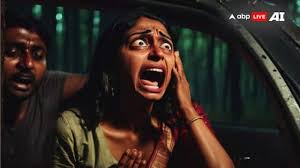
The Congress delegation met the family members of the deceased. The delegation included Shobha Ojha, Vijayalakshmi Sadho and MLA Jhuma Solanki. They demanded a compensation of Rs 25 lakh from the government and a government job for a family member. Bhopal. The incident of gangrape and murder of a tribal woman in Khalwa police station area of Khandwa district of Madhya Pradesh has shaken the entire state. This incident, which shames humanity, not only raises questions on law and order, but also exposes the government’s insensitivity towards the safety of the tribal society. The deceased woman was 45 years old and she was the victim of brutality by two youths of her own village – Sunil and Hari. The brutality was done by catching her on the way while returning from the field On Friday night, after a wedding ceremony in the village, the woman had gone to drop her relatives to the field. The farm was just half a kilometer away, but she did not return home overnight. The next morning, when the family went out to search for her, a woman told them that the victim was in the shed behind her house. On reaching there, she was found unconscious. On regaining consciousness, she told her son and daughter-in-law, “Something wrong has happened to me, now I will not survive… Sunil and Hari did it forcefully.” She died shortly after. Statement given before death, intestines and uterus were out According to the son and daughter-in-law of the deceased, the condition of the woman was very critical. There was excessive bleeding from the private part and the uterus was out. The postmortem report also confirmed that the intestines were out, the uterus was torn and the body was soaked in blood. According to the doctors, a hand or some object was inserted in the private part, which damaged the internal organs and caused death due to excessive bleeding. Police sent the accused to jail The police had taken both the accused into custody on Saturday itself and on Sunday night they were taken to the crime scene to confirm the crime scene. Both the accused were produced in the court on Monday and taken on two-day police remand. Khandwa SP Manoj Kumar Rai said that the clothes of the accused and the deceased and other evidence found from the crime scene have been sent for FSL investigation. It has also been said that this case will be registered in the category of marked crime and taken to the fast track court. According to Congress leaders, the victim could not even get first aid. The government ambulance did not come, and the family had to take the body to the district hospital in a private vehicle. This incident exposes the poor health system of the state. Congress team met the victim’s family The Congress delegation met the family of the deceased. The team included Shobha Ojha, Vijayalakshmi Sadho and MLA Jhuma Solanki. They demanded a compensation of Rs 25 lakh from the government and a government job for one member of the family. Shobha Ojha alleged that “the administration is trying to convert the rape case into murder. Looking at the condition of the crime scene, it is doubtful how the incident could have happened there.” Vikrant Bhuria targeted the government National President of Adivasi Congress and MLA Dr. Vikrant Bhuria said in a press conference in Delhi, “MP is becoming the rape and liquor capital. A 45-year-old tribal woman was gang-raped and her uterus and intestines were removed with an iron rod. This is not just murder, but a blot on the face of civilization.” Bhuria further said that “Prime Minister Modi should ensure before coming to Bhopal Mahila Sammelan on May 31 that how will the sisters be protected in Madhya Pradesh?” Courtesy : Ankit Pachauri, Hindi News
Brutal attack on Dalit monk in Chhatarpur, MP: Beaten to death with trident, case registered under SC/ST Act
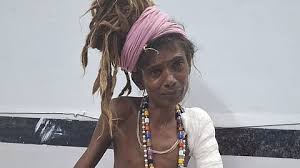
There is an atmosphere of tension in the village since the incident. Dalit organizations have called this attack extremely shameful and have demanded the immediate arrest of the accused. It is not yet clear whether the accused has been taken into custody by the police or not. Bhopal. A case of a deadly attack on a Dalit monk with a trident has come to light in the Sarabai police station area of Chhatarpur district of Madhya Pradesh. The victim monk Indra Bahadur Ahirwar has been admitted to the hospital in critical condition. It is being told that the accused hit the monk with his own trident until he fainted. There is an atmosphere of anger in the village regarding the incident. What is the whole matter? The incident is from Mahoi Khurd village of Sarabai police station area. The victim Naga monk Indra Bahadur Ahirwar lives in an ashram located near the Andi pond of the village and performs bhajan-pujan. In the complaint lodged with the police, he said, “Chhuttan Patel, a resident of the same village, came to me asking for utensils to cook chicken. I refused saying that this place is for worship. The next day when I came out of the ashram, Chhuttan Patel stopped me on the way and attacked me with my own trident.” Beaten to death Sadhu Indra Bahadur says that the accused attacked him till he fainted. In the attack, his arm from the shoulder has been broken and he has suffered serious injuries in the waist, leg and hip. There are deep wounds at many places on the body. The victim also alleged that, “Chhuttan Patel is the man of the village’s strongman Krishna. He is addicted to alcohol and meat. I am a sadhu, so when I opposed him, he attacked me.” Police registered the case On getting information about the incident, Sarabai police reached the spot and started investigation. A case has been registered against the accused Chhuttan Patel under the Indian Penal Code (BNS) and Scheduled Castes and Tribes (Prevention of Atrocities) Act. The police have registered a case under BNS Section 296 – attempt to hurt religious sentiments, Section 115(2) – intentional grievous hurt, Section 315(2) – attempt to murder, Section 3(1)(d), 3(1)(dh), 3(2)(v) of SC/ST Act – brutal attack and insult to a Dalit. An atmosphere of tension in the village There is an atmosphere of tension in the village since the incident. Dalit organizations have called this attack extremely shameful and have demanded the immediate arrest of the accused. It is not yet clear whether the accused has been detained by the police or not. The Bhim Army State President surrounded the government In a conversation with The Muknayak, Bhim Army Madhya Pradesh State President Sunil Bairasia said that this incident is extremely condemnable and a symbol of increasing violence against the Dalit community. The attack on a sadhu, who belongs to the Dalit community, with a trident shows how caste hatred is still alive in the society. This attack is not just on one person, but on our entire society and its faith. Targeting the government, he said that there is no guarantee of safety of Dalits in Madhya Pradesh. Atrocities are happening every day and the administration is a mute spectator. He demanded that the accused be arrested as soon as possible and given severe punishment and the victim sadhu be given compensation and security, otherwise Bhim Army will protest in Chhatarpur. Courtesy : Ankit Pachauri, Hindi News
UP: What is the Panwari incident of Agra in 1990? Due to which Dalit politics rose…and Babulal shone
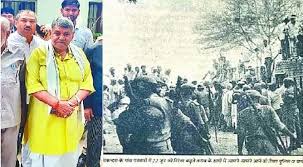
After the caste conflict in Panwari, Agra in 1990, on one hand Dalit politics rose, while on the other hand Choudhary Babulal shone as a new face. Choudhary Babulal’s politics started from here. From 22 to 25 June 1990, Agra was in discussions all over the country due to the incidents of Panwari and Akola. After this, politics changed completely. At the local level, the people removed the bigwigs of Jat politics from their hearts, while at the state level Dalit politics rose due to Dalit unity. When BSP and BAMCEF established their roots in the name of Dalit respect, the resentment of both the parties towards Congress and Janata Dal remained. Even after the activism of former Prime Minister Rajiv Gandhi, Congress could not make a place in the hearts of Dalits. Before the Panwari incident, the then Union Minister Choudhary. Faces like Ajay Singh, Badan Singh, Vijay Singh Rana were at the centre of Jat politics, but after the Panwari incident, Choudhary Babulal emerged like a comet as a strong leader of the Jats. As a result of this, he won as an independent from Fatehpur Sikri. He became a minister, MP and then MLA. The old faces of the Jats were rejected by Jatland and they were never at the centre of politics again. In these 35 years, firebrand Babulal and Jat faces doing politics like him made a place for themselves. BSP, BAMCEF won the hearts of Dalits After the Panwari incident, the Dalit community showed unity and in the name of the fight to maintain respect, BAMCEF and BSP kept making a place in the hearts of Dalits. According to political analyst Rajiv Dixit, Kanshiram and Mayawati, leaders of the newly-formed BSP, kept the Panwari incident alive in the entire state and mentioned it in every meeting for their self-respect. The result of this was that BSP registered its strong presence in every assembly election after this. Congress suffered the most due to Dalits joining BSP. After this incident, Janata Dal implemented the Mandal Commission’s recommendations to reduce the distance from Dalits, but could not win their hearts. Janta Dal and Congress suffered losses The Panwari incident not only changed the politics of Uttar Pradesh, but also the politics of Janata Dal in power at the center and Congress in the opposition. Janata Dal became a victim of Jats’ anger after this incident, and even the visit of Congress leader and former Prime Minister Rajiv Gandhi could not connect them with Dalits. Senior journalist Rajiv Saxena tells that former PM Rajiv Gandhi had reached Panwari village with his wife Sonia Gandhi by Taj Express. Panwari and Agra remained at the center of politics across the country for a month. The spark of the Panwari incident was felt in many districts of Rajasthan including Bharatpur. Courtesy: Dheerendra Singh, Hindi News
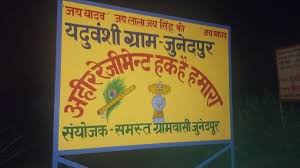
Caste tension in Bulandshahr, Yadav community put up caste board at the entry of the village, Dalits protested
Bulandshahr News: There was a dispute in Bulandshahr over the installation of caste board in the village by Yadav community. Dalit community objected to this, after which the police administration removed the board. Bulandshahr News: A case of installation of caste board by Yadav community in village Junaidpur of Kotwali Secunderabad area in Bulandshahr, UP has come to light, after which the caste dispute increased. People of Dalit community in the village objected to the board, after which the police took action and took action against 12 people including Ahir Regiment and Samajwadi Party leaders for disturbing the peace. This action has been taken in the case of forcibly installing caste board in the village and organizing a panchayat. In fact, a caste board was forcibly installed by the people of Yadav community at the entry of Junedpur in Secunderabad Kotwali area. “Yaduvanshi village” – Junedpur Ahir Regiment is our right, Jai Yadav was written on the board. The Dalit community of the village protested against this caste board, after which the people of the Yadav community also gathered and started supporting the board by holding a panchayat. Due to which the caste dispute was increasing in the village. The police removed the board from the village After the dispute increased, the Dalits complained to the police, expressing the threat to their lives and property. After which the police administration uprooted the board and brought it to the police station. The police asked the Yadavs not to put up such a board and appealed to both the parties to maintain peace, despite this, the board was again put up by the other side and a panchayat was called, in which people of the Yadav community from the surrounding villages including the SP leader gathered. Secunderabad police station in-charge Anil Shahi was informed about this, after which he reached the spot with a heavy police force and took 12 people including the leader of the Ahir Regiment and SP leaders into custody and brought them to the police station. Action has been taken against all these for disturbing the peace. The Dalit community has expressed satisfaction over the action taken by the police. Former village head Virendra said that this was leading to casteist hatred, which could have led to a serious incident. Complaint filed on the basis of complaint He said that only 35 percent of the people in Junaidpur village are Ahirs while 65 percent are from other castes. In such a situation, other castes had raised objections to this board. SP City Shankar Prasad said that the Dalits have alleged that Kapil Yadav, Bablu Yadav, Narendra Singh Yadav and their associates were trying to spread anarchy in the village every day. They were being threatened. On the basis of the complaint received in this, a case has been registered and further legal action is being taken. Courtesy: Anubhav Sharma, Hindi News