
New Dawn for Dalit Politics: Porkodi Armstrong Forges Ahead

Porkodi Armstrong, wife of murdered BSP leader K Armstrong, launched the Tamil Maanila Bahujan Samaj party on her husband’s death anniversary. Amidst heavy police presence and emotional tributes, the event marked a fresh chapter in Tamil Nadu’s political landscape. Porkodi’s new party emerged from discord within BSP ranks. Porkodi Armstrong, the widow of slain Bahujan Samaj Party (BSP) Tamil Nadu chief K Armstrong, inaugurated the Tamil Maanila Bahujan Samaj party on the anniversary of her husband’s death. The event took place in the Pothur area of Thiruvallur district, attracting over 1,000 supporters amid tight police security. The newly formed party launched its official flag—a blue banner featuring an elephant holding a pen—symbolizing its Ambedkarite beliefs and commitment to education, empowerment, and social justice. K Armstrong, a prominent Dalit leader, was murdered on July 5, 2024, in Chennai, sparking statewide protests. After Armstrong’s death, BSP appointed advocate P Anandan as state president, sidelining Porkodi. In April 2025, amid internal tensions, she was removed from party posts, prompting her to establish a new political entity, rallying supporters dissatisfied with BSP’s central leadership decisions. (With inputs from agencies.) Courtesy : Devdiscourse Note: This news is originally published on https:/devdiscourse.com/ and is for use by the non-military/non-commercial community, especially those in the human rights sector.
Jagan Seeks President’s Rule in Andhra, Slams Naidu Over Dalit Attack And Vendetta
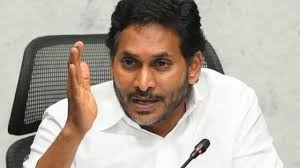
Jagan Mohan Reddy demands President’s Rule in Andhra, citing rising violence, Dalit leader attack, and political vendetta under TDP rule. YSRCP accuses CM Naidu of targeting opposition, Amaravati, (PTI) YSRCP chief Y S Jagan Mohan Reddy has demanded the imposition of President’s Rule in Andhra Pradesh, alleging a total breakdown of law and order under the TDP-led NDA government. The former chief minister alleged that YSRCP leaders and activists were being targeted through false cases, “illegal” arrests, and an “organised campaign of political harassment”. “When there is no protection to politicians and citizens, law and order is deteriorating, and the Constitution is being violated, then why shouldn’t President’s rule be imposed?” Reddy posed on ‘X’. He said on Friday that the recent attack on Dalit village panchayat president Nagamalleswar Rao of Mannava village in Guntur district in broad daylight shows the “lawlessness” in the state and the video of that incident depicts the gravity of the situation. Jagan also alleged that YSRCP workers were being “assaulted” for defying the ruling TDP and questioned whether people are truly safe under the Chandrababu Naidu government. Meanwhile, YSRCP SC Cell president TJR Sudhakar Babu accused Naidu of insulting Dalits. He alleged that the chief minister demeaned Dalit YSRCP supporter C Singayya, who died by allegedly falling under the wheels of Jagan Mohan Reddy’s convoy at Etukuru Cross in Guntur district. Naidu likened Singayya to a dog and resorted to disrespecting the deceased person and politicising the tragedy, Babu alleged. The YSRCP leader also accused Naidu of showcasing “a pattern of hurling casteist insults”, and cited previous remarks by TDP leaders, ostensibly questioning Dalits’ education and political rights. Babu alleged that CM Naidu and IT Minister Nara Lokesh prioritise real estate over welfare and foster violence against Dalits, and demanded a full probe into Singayya’s death. (This report has been published as part of the auto-generated syndicate wire feed. Apart from the headline, no editing has been done in the copy by ABP Live.) Courtesy : ABP News Live Note: This news is originally published on https:/abpnewslive.com/ and is for use by the non-military/non-commercial community, especially those in the human rights sector.
Dalit child murdered in land dispute…body hung from tree, grandfather said ‘police kept being negligent’, know the whole matter
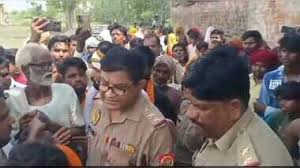
The body of a 9-year-old Dalit boy was found hanging from a tree in Nighasan police station area of Lakhimpur Kheri. The family has accused the neighbours of murder in a land dispute. On the complaint of the victim, the police has registered a case against four people and arrested them and sent them to jail. While a sub-inspector has been suspended for negligence. The body of a 9-year-old Dalit boy was found hanging from an acacia tree on Thursday night in Harsinghpur Majra Jummanpurwa of Jhandi Chowki under Nighasan police station area of Lakhimpur Kheri district of Uttar Pradesh. The deceased was identified as Pappu, son of Jamuna Prasad, resident of Jummanpurwa. The family has accused Chunna, Mumtaz, Chhote and Qayyum of the same village of murder due to land dispute. The police has arrested all the four accused and sent them to jail. Also, Jhandi Chowki in-charge Durgesh Sharma was suspended on charges of negligence. Pappu had gone to cut grass on Thursday evening, but when he did not return home, the family started searching for him. At night his body was found hanging from an acacia tree in a banana field about 250 meters away from the house. According to the deceased’s father Jamuna Prasad, there were injury marks on the body and his vest was torn. The family alleges that Pappu was first beaten and then killed and the body was hung from the tree. Family’s protest and police action On receiving information about the body being found, CO Mehak Sharma and Kotwal Mahesh Chandra reached the spot with the police force. The family expressed suspicion of murder and refused to take down the body from the tree and demanded to call the DM and immediately arrest the accused. The uproar continued till late night. When the situation became tense, the Additional SP reached the spot and assured strict action against the culprits, after which the family allowed the body to be taken down for post-mortem. Police accused of negligence The grandfather of the deceased said that the accused had occupied his inhabited land, against which he complained several times, but no action was taken. He accused the Jhandi Chowki in-charge of negligence and said that if action had been taken on time, his grandson’s life could have been saved. Case registered, four accused arrested SP Sankalp Sharma said that on the basis of the complaint of the family, a case of murder has been registered against four accused Chunna, Mumtaz, Chhote and Qayyum. All four have been arrested and sent to jail. Intensive investigation of the case is going on. On Friday, when the body of the deceased reached home after post-mortem, Bajrang Dal workers reached the spot and demonstrated by raising slogans. Edited by: Devesh Pandey About the author He is serving in Navbharat Times Online. Earlier, he also served in many digital platforms along with electronic channels like Bharat Samachar, India News, News1 India. He has about 8 years of experience in journalism. He has done post graduation in Mass Communication from Lucknow University. Courtesy : Hindi News
Rectify errors in Jagananna land resurvey: Dalit farmers
The Dalit families alleged that some revenue officials, in collusion with local vested interests, had tampered with the land records. VISAKHAPATNAM: Sixteen Dalit families from Garnikam revenue village in Ravikamatham mandal of Anakapalle district have demanded that errors in land records be rectified to enable them eligible for farmer welfare schemes. They staged a protest in their village on Saturday to press for their demand. The Dalits said they were allotted 20 acres of D-Patta land by the government, where they have developed mango orchards, and have been cultivating for several years. They had also availed bank loans based on these lands. “However, during the resurvey under the Jagananna Saswitha Bhoohakku -Bhu Raksha Scheme, the cultivated D-Patta lands were marked as government land in the webland records. This error has resulted in the removal of our names from official land records, affecting our access to welfare schemes and bank credit,” they said. The Dalit families alleged that some revenue officials, in collusion with local vested interests, had tampered with the land records. ‘Banks denying us loans due to errors in records’ Despite submitting applications at two recent revenue grievance meetings held by the present coalition government, they said no corrective action has been taken so far. “Previously, we received benefits under the Rythu Bharosa scheme. Now, we find our names missing from the Annadata Sukhibhava list, and banks are denying us loans due to discrepancies in land records,” they lamented. The Dalit families urged the Anakapalle Joint Collector to visit the lands, and ensure the restoration of their land rights. K Govinda Rao, district assistant secretary of Agricultural Workers Union, and Ch Suri Babu, mandal secretary of the Committee Against Caste Discrimination, also participated in the protest. Courtesy : TNIE Note: This news is originally published on https:/thenewindianexpress.com/ and is for use by the non-military/non-commercial community, especially those in the human rights sector.
UP court verdict on murder of Dalit man, accused gets life imprisonment with labour
Uttar Pradesh Uttar Pradesh: A court here has sentenced a 30-year-old man to life imprisonment with labour for the murder of a Dalit man in 2020, officials said on Saturday. Special Public Prosecutor (SC-ST Act) Krishna Pratap Singh and Assistant District Government Advocate (Criminal) Harshvardhan Pandey said the incident took place on August 14, 2020 in Ballipur village in Mankapur area. Rahul (20) was stabbed to death when he opposed Sumitra Nandan (30) and two others for repeatedly molesting his sister. The victim’s mother Mainavati lodged a case against Nandan, Rakesh Chauhan and Abdul Qadir under relevant sections at the local police station. According to the prosecution, Nandan repeatedly harassed the complainant’s daughter. When Rahul protested against this to the convict’s family, the three threatened to kill him. Later, Nandan along with Chauhan and Qadir attacked him and killed him. Police arrested Nandan the next day of the incident and recovered the weapon used in the murder. After completing the investigation, a chargesheet was filed against the three. Special Judge (SC/ST Act) Surya Prakash Singh on Friday convicted Nandan and sentenced him to life imprisonment with hard labour and also imposed a fine of Rs 16,000 on him. In case of not paying the fine, the convict will have to spend an additional nine months in jail. The court acquitted Chauhan and Qadir due to lack of evidence. Courtesy : Hindi News
Occupation of 8 bighas of land of Dalit farmer: The strongman is building on the land mortgaged for 2 lakhs, the victim threatened to commit suicide.
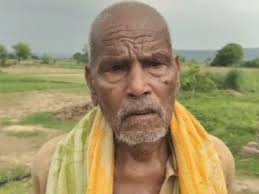
A case of illegal occupation of the land of a Dalit farmer by a strongman has come to light in Ban Imliya village of Chunar tehsil area of Mirzapur. The victim farmer has appealed from the tehsil to the Chief Minister for justice. According to the case, the Dalit old man had mortgaged his 8 bighas of land to Suresh Kumar Singh of the village four years ago for Rs 2 lakh. Now the victim wants to return the money. But the strong man is not vacating the land. The victim alleges that the strong man is forcibly constructing a house on his land. He has also accused the Ahraura police of helping the strongman. The victim also appealed to the SDM and the District Magistrate demanding legal action. The victim has written a letter to the Chief Minister for not getting justice. He has said that if his land is not returned, he will commit suicide with his family. Courtesy: Hindi News
Dalit teenager was killed and hanged as she was a witness in the molestation case of her sister-in-law… Sensational case in Ballia
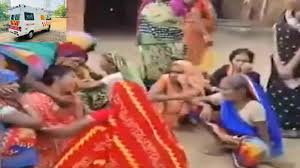
Ballia Teenager Murder Case: A case of death of a Dalit teenager under suspicious circumstances came to light in Ballia. The teenager’s family has alleged gang rape and murder. She was a witness in the molestation case of her sister-in-law. She was killed before giving testimony. Ballia: Cases of crime against women and girls are continuously coming to light in Ballia, Uttar Pradesh. The latest case has come to light from Narhi police station area of Ballia. Sensation spread after the body of a Dalit teenager was found hanging from a noose in a hut here. This incident which happened on Friday took a serious turn on Saturday. In this case, the family alleged murder after gang rape. The family said that the teenager was a witness in an old molestation case. She was killed before giving testimony in the molestation case of her sister-in-law. The family says that she was the main witness in the case of molestation of the girl’s sister-in-law in March 2024 and she was to testify after four-five days. For this reason, the accused raped and killed her with the intention of eliminating her from the way and hung the body with a noose to make it look like a suicide. The body was found when they returned from the field The family of the 13-year-old girl had gone to work in the fields on Friday. When they returned in the evening, they saw that the body of the girl was hanging from a noose in a hut near the house. There was chaos in the village after hearing the screams of the family. As soon as the information was received, the police of Narhi police station and the team of Dial 112 reached the spot and took the body into custody and sent it for post-mortem. Bheem Army’s demonstration As soon as the matter came to light on Saturday, the workers of Bhim Army and other political organizations reached the village and sat on a dharna along with the family. People demonstrated on the road demanding the arrest of the accused. The police pacified the crowd by persuading them. FIR against three named persons On the complaint of the girl’s father, a case has been registered against three youths of the same village under sections of gangrape and murder. Narhi’s SO Nadeem Ahmed Faridi said that the matter is being investigated seriously and the search for the accused is on. As the controversy deepens, pressure has increased on the police and administration. Curated by: Rahul Parashar About the author Senior Digital Content Creator at Navbharat Times Digital. Started in journalism with Prabhat Khabar. Journey from Rashtriya Sahara, Hindustan, Dainik Jagran, Dainik Bhaskar to Times Internet. An attempt to know and learn digital journalism. An attempt to do new experiments every day. Courtesy: Hindi News
YSRC Resolves To Protect Dalit Rights
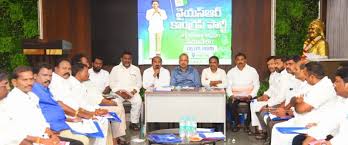
The SC Cell resolved to staunchly oppose the privatisation of the iconic Dr. BR Ambedkar statue. Vijayawada: The YSRC’s SC cell, under the leadership of state president T.J.R. Sudhakar Babu, convened the districts’ SC Cell presidents’ meeting here on Saturday to address critical issues affecting the Dalit community. The meeting, attended by central office incharge and MLC Lella Appi Reddy, SC Cell Working President Kommoori Kanakaraju, and district SC division presidents, outlined a robust action plan to safeguard Dalit rights and counter challenges posed by the coalition government. The SC Cell resolved to staunchly oppose the privatisation of the iconic Dr. BR Ambedkar statue at Swaraj Maidan in Vijayawada, a landmark established with pride by the Y.S. Jagan government. Sudhakar Babu, addressing the media, declared, “We will not allow the privatisation of this symbol of Dalit pride. Protest programmes will be organised in front of Ambedkar statues across all districts to protect this legacy.” The Cell directed district leaders to respond swiftly to atrocities and harassment faced by Dalits under the coalition government, ensuring immediate action to address community grievances. Emphasising proactive advocacy, the SC Cell committed to coordinating efforts at the state level to fight for justice on various Dalit issues. “Our leaders will lead from the front to ensure justice for our people,” Sudhakar Babu asserted, urging district leaders to strengthen the SC division by expediting committee appointments and amplifying the community’s voice through social media. Courtesy : Deccan Chronicle Note: This news is originally published on https:/deccanchronicle.com/ and is for use by the non-military/non-commercial community, especially those in the human rights sector.
Invisible no more: One Dalit woman’s reckoning with India
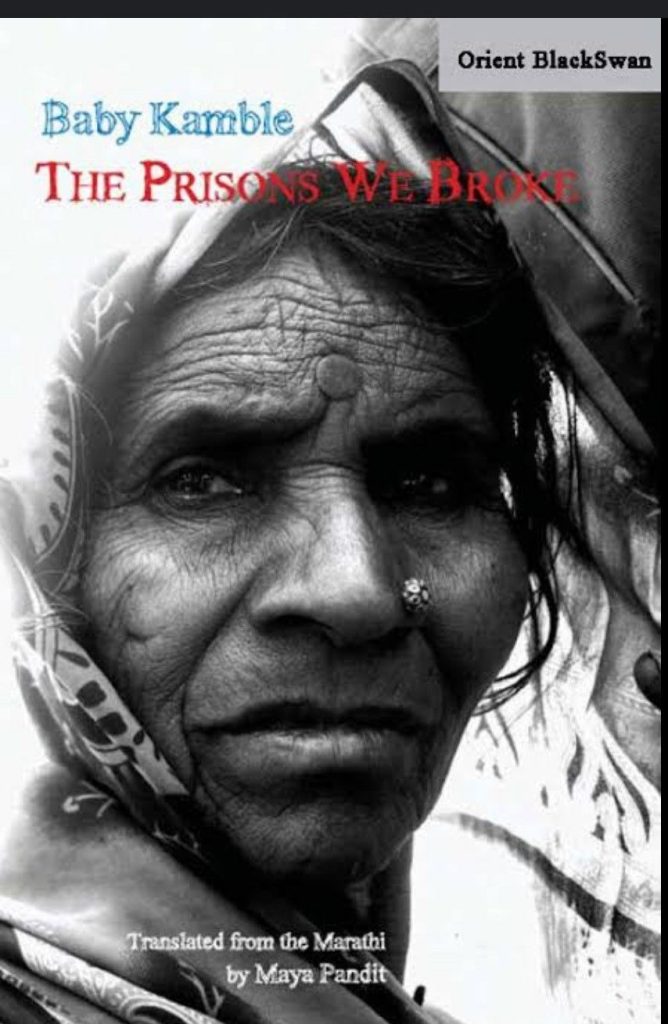
As India’s Prime Minister Narendra Modi concluded his first state visit to Trinidad and Tobago last week (July 3-4), Bookshelf turns its attention to the women whose lives remain far from the glare of diplomatic ceremony—specifically, one Dalit woman whose literary voice has, at last, been restored to India’s bookshelf. In a republic where women are both talismans and casualties of development, Babytai Kamble’s memoir The Prisons We Broke (1986) remains a visceral, necessary reckoning. India is unmistakably global: a nuclear and space power with the world’s fifth-largest economy, a rising voice in G20 diplomacy, and a nation whose digital reach now stretches from the mangrove swamps of the Sundarbans to the arid edges of Rajasthan, from the Himalayan foothills to the beaches of Kanyakumari. Its cities—Bengaluru, Hyderabad, Gurugram—are latticed with flyovers, metro rails, and IT campuses. Its marbled shopping centres are crammed with international brands. Undersea cables thread the coasts of Kerala and Tamil Nadu, feeding the world’s data demand. Expressways cleave through farmland, connecting state capitals to Special Economic Zones. And yet: less than ten per cent of Indians own 77 per cent of the nation’s wealth (Oxfam India, 2023). In 2025, 20 protests occur daily. Seven states—including Jammu and Kashmir, Punjab, Nagaland, Manipur, Assam, Mizoram, and Tripura—signal separatist aspirations. And for the vast majority of India’s women, class, caste, and gender remain overlapping restraints. The tensions that grip India—economic inequality, regional unrest, and daily dissent—are mirrored most acutely in the lives of its women, especially those at the bottom of the caste ladder. To understand Babytai Kamble’s voice, one must understand caste. Though outlawed by India’s 1950 Constitution, caste remains the invisible architecture of Indian society. There are four traditional varnas—Brahmins (priests), Kshatriyas (warriors), Vaishyas (traders), and Shudras (labourers)—but Dalits, formerly called “Untouchables”, fall outside this system altogether. They are often assigned the most stigmatised and dangerous forms of labour and are subject to violent discrimination and social exclusion. India has over 600,000 villages. While its megacities—Mumbai, Delhi, Chennai—are connected to global circuits of capital, fashion, and information, its villages often lack running water, functioning schools, or electricity. The worlds of village and city rarely converge. In the villages, caste still determines one’s job, marriage prospects, and even access to drinking water. Babytai Kamble was born in 1929 in Maharashtra to a Dalit family of the Mahar caste. To understand the force of her life and work, one must understand that Dalits—the so-called “broken people”—have historically been barred from temples, schools, wells, and even the shadow of upper-caste Hindus. They were condemned to “polluting” work: leather tanning, waste removal, corpse disposal. Even today, Dalits face systemic discrimination in education, employment, and justice. Dalit women endure a double marginalisation. They are often victims of caste-based sexual violence, denied political voice, and excluded even from feminist discourse. The 2022 UN Women India report documented that Dalit women suffer higher rates of illiteracy, child marriage, and domestic abuse. Their lives remain largely unrecorded. Kamble broke that silence with her memoir, Jina Amucha (Our Life)/ Translated in English as The Prisons We Broke by Maya Pandit and published by Orient Blackswan (2008), it was among the first autobiographies by a Dalit woman. Kamble wrote not in English or Sanskritised Hindi, but in raw, spoken Marathi. Her story of growing up in Phaltan, a village where menstruating women were sent to cow sheds and Dalits to the margins, is told in searing detail: “We were surrounded by dirt and squalor. The stench of dead animals filled the air. The Brahmins and Marathas walked past us holding their noses, their heads high, like we were invisible.” Kamble describes watching her mother sweep dung from upper-caste homes before being handed stale bread for wages. When her father, a labourer, fell ill, no Brahmin doctor would treat him. The women in her mohalla ( neighbourhood) worked from before dawn until dusk, and were often mocked or assaulted by the men whose homes they scrubbed. Kamble was a follower of B R Ambedkar, the Dalit lawyer and economist who drafted India’s Constitution and converted to Buddhism, rejecting Hindu casteism. Kamble followed him, both spiritually and intellectually. Education, for her, was a form of resistance. She wrote by night, after tending to her children and chores, her fingers aching from the day’s work. “We had no lamp oil. I wrote with the firelight from our chulha (mud stove). I wrote because I had to remember. If I didn’t, who would?” Kamble’s work remained unpublished for decades. She was a school dropout, a woman, a Dalit—three strikes in India’s literary world. But by the 1980s, Marathi Dalit literature had begun to find voice, and Kamble’s work was passed from hand to hand, copied by women who recognised their lives in it. In The Prisons We Broke, Kamble writes: “We were women twice bound. First by men, then by caste. Our wombs birthed labourers for the world that despised us.” This was no lament. It was a ledger of what had been done and by whom. If Kamble’s childhood was spent watching from outside the classroom door, today’s middle- and upper-class Indian girls walk into air-conditioned international schools, toggling between Instagram and exam prep. The gulf is not merely of wealth, but of inherited dignity. Dalit girls still face the possibility of rape on the walk to school. In a 2020 Human Rights Watch report, Dalit students were routinely denied entry to temples, made to clean toilets at school, and barred from dining halls. Meanwhile, India’s privileged women—especially urban professionals—inhabit a different republic. They wear shorts in nightclubs, brunch in rose gardens, and glide through traffic in Pradas and Bentleys along highways and byways built under the ocean. They have destination weddings in Europe, spend weekends in Dubai, summers in Switzerland, and have access to the best education in India and abroad at Ivy League universities. In the villages, privileged women of India will never see that girls their age still walk barefoot to government schools without functioning
Dalit pioneer who stood for equalityJagjivan Ram (April 5, 1908-July 6, 1986)
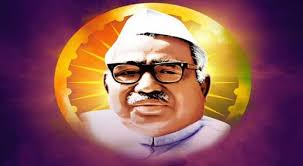
IN the mid-20th century, India’s young democracy found one of its most steadfast champions in Jagjivan Ram-affectionately called Babuji. Born on April 5 at Chandwa village, near Arrah, Bihar, into a Dalit family, he attended high school at Arrah Town School, where he got the opportunity to interact with Madan Mohan Malviya. Young Jagjivan Ram confronted caste discrimination early in life. His defiant act of smashing an ‘untouchables’ water pitcher at his school sparked the end of segregated drinking water there — an early sign of his lifelong fight for equality. In the face of hardship, he achieved academic success and was awarded the Birla scholarship to pursue studies at Banaras Hindu University. At BHU, he mobilised members of the Scheduled Castes to stand up against social discrimination. As a Dalit student, he faced humiliation — he was refused meals in the hostel, local barbers declined to cut his hair, and only occasionally would a Dalit barber come for him. These experiences ultimately led him to leave BHU and complete his graduation at Calcutta University. The discrimination he had encountered at BHU pushed him towards atheism. In 1931, he earned a BSc degree from Calcutta University, where he continued to hold conferences highlighting discrimination and took part in Mahatma Gandhi’s anti-untouchability movement. Article_Author Navya Singh Courtesy : The Tribune Note: This news is originally published on https:/thetribune.com/ and is for use by the non-military/non-commercial community, especially those in the human rights sector.