
Indian Court Orders State To Ensure Hindu Dalits’ Temple Entry
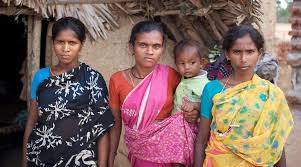
The High Court of southern Tamil Nadu has ordered the state government to ensure that socially poor Dalit people can enter Hindu temples, following a complaint against a temple violating Dalits’ right to worship. The Madras High Court on July 17 also ordered the accused temple administration to permit Dalit Hindus–who are outside the four-tier Hindu caste system and formerly considered untouchable–to offer prayers in the temple. The state government must ensure that “no law-and-order problem is created” in allowing the Dalit people to enter the temple, the court said, adding that denying them entry violates a state law–the Tamil Nadu Temple Entry Authorization Act, 1947. The law makes it clear that “every Hindu, irrespective of the caste or sect to which he belongs, shall be entitled to enter any Hindu temple and offer worship therein… irrespective of the caste or community of the devotees,” said the state’s top court. The court order was issued in response to a complaint filed by Venkatesan, who goes by one name, seeking court direction to allow his community members to enter the Arulmigu Puthukudi Ayyanar Temple in Ariyalur district and participate in ritual worship, including the temple’s car festival. Venkatesan’s Hindu Dalit community, living near the temple, is traditionally barred from entering the temple and taking part in its festival, scheduled this year from July 16 to 31. The court asked the head of the district police to ensure that “all classes of Hindus are permitted to enter the temple and participate in the festival.” Church people in the state welcomed the order as progressive and aimed at eliminating caste discrimination, still prevalent in Indian society. “The judgment is commendable not only for its legal soundness but also for its moral clarity. It calls attention to the spirit of a secular and inclusive India,” said Jesuit Father A. Santhanam, practicing law in the state, including in High Court. “The decision is a judicial reminder that the rule of law must be an active agent in dismantling centuries-old oppressive practices,” the priest told UCA News on July 18. The court has also made it clear, “access to spiritual spaces must be governed by law and justice, not prejudice or tradition”, he added. He said socio-political leaders, who often present themselves as champions of Hindu interests, stay silent or evasive when it comes to caste-based discrimination to avoid offending their own caste members. Mary John, president of the Dalit Christian Liberation Movement, termed the verdict a “very important and necessary order to wipe out the caste discrimination from religious worship places”. He told UCA News on July 17 that such discrimination can be eliminated “only when the state strictly implements the law in letter and spirit. Ganapragasam Mathew, leader of a Dalit Christian Coalition in Tamil Nadu, said that various forms of discrimination against Dalit people persist within Christian churches. They include separate seating arrangements for Dalits in churches, segregating them in cemeteries, and excluding them from church festivals. By UCA News Courtesy : Eurasia Review Note: This news is originally published on https:/eurasiareview.com/ and is for use by the non-military/non-commercial community, especially those in the human rights sector.
‘Dalits refused booking of wedding halls in Tiruppur’s Sivanmalai foothills’
Hall owners fear people from other castes will not book their halls if they allow people from scheduled castes. TIRUPPUR: Wedding hall owners at Sivanmalai in Kangeyam of Tiruppur district are suspected of caste discrimination against Scheduled Castes. Officials from the district administration said an investigation into the matter is underway. It has been alleged Dalit people are finding it difficult to book wedding halls located in the foothills of Sivanmalai to hold auspicious events, including weddings. P Kalimuthu, district secretary of the Aathi Thamizhar Munnetra Kazhagam, said, “People from not only Tiruppur district but also from nearby districts come to the Murugan Temple at Sivanmalai. There is a belief among the public that if auspicious events, including marriages, are held at Sivanmalai, they will get the grace of Lord Murugan. But SC people are refused booking of private halls in the foothills of Sivanmalai.” “Out of the 20 wedding halls two belong to the trusts of two specific castes. All other halls are private halls. The norms for halls state that all castes should be allowed. But these halls do not allow people from Scheduled Castes to hold auspicious events. The situation is similar in Kangeyam city. Hall owners fear people from other castes will not book their halls if they allow people from scheduled castes,,” he added. “Scheduled Caste people are facing great difficulty in booking halls for auspicious days. Sometimes, they hold weddings in their village temples and host receptions and other events by setting up tents in their homes. Only a few socially minded people provide halls to SC people. The state government should conduct an investigation and take appropriate action in this regard,” Kalimuthu further said. A Dalit villager said: “There is a private hall on the Kangeyam-Tiruppur road, one kilometre from the foothills of Sivanmalai. SC people are allowed there because its contractor is also a Dalit.” However, the hall owners denied the allegations. PS Chellamuthu, a wedding hall owner, said, “The rent in the halls ranges from Rs 2 lakh to Rs 3 lakh. Some halls in Kangeyam are charging even Rs 4.5 lakh. They cannot afford to pay these charges and ask for a lower amount. But we can’t reduce the charge. Some people are falsely complaining that we are refusing to book halls for SC people. We do not discriminate on the basis of caste when booking halls. We provide the hall to whoever pays our charges.” KS Mani, another hall owner, said, “My hall is a small one. I am providing it to all community people. I will provide the hall to whoever pays the charge.” Officials from the district administration said, “We also received a complaint regarding this. An investigation into the matter is underway. Appropriate action will be taken after the investigation.” P Srinivasan Courtesy : TNIE Note: This news is originally published on https:/thenewindianexpress.com/ and is for use by the non-military/non-commercial community, especially those in the human rights sector.
Dalit student found dead on Armoor Social Welfare Residential College campus, family alleges negligence

Teen from Dalit family found hanging in Telangana welfare college; staff under scanner after family questions handling NIZAMABAD : Intermediate second-year student Gaddam Santhosh (19), studying at the Social Welfare Residential College near Pipri road under Armoor police station limits, tragically died by suicide on Saturday morning. He was found hanging from a tree on the college premises. After the morning physical exercises, college staff and students noticed Santhosh was missing. A search led to the heartbreaking discovery, and police and family members were immediately informed. Santhosh’s body was shifted to the government hospital for a postmortem and later handed over to the family. A resident of Arepally in Nizamsagar mandal and belonging to the Dalit community, Santhosh came from a financially constrained background. His father is employed in Dubai, while his brothers work in Hyderabad. According to G Punachandar Rao, Incharge Regional Coordinator of Social Welfare Residential Junior Colleges, Santhosh had returned to the Velpur College (which shares a campus with the Armoor College) on July 9 after the summer break. He had attended morning exercises and was last seen heading to the bath around 6:40 am. He was found dead around 7:40 am. Punachandar Rao added that Santhosh was not academically weak but had passed only four subjects in his first year. The transition from Telugu to English medium may have affected his academic comfort, and students suggested that limited friendships might have contributed to his emotional struggles. However, no direct evidence supports these speculations. Santhosh’s brother, Sreenu, lodged a police complaint, expressing doubts about the role of the principal and physical education trainer. Armoor Police Officer Satyanarayana Goud confirmed that a case has been registered and an investigation is underway. Courtesy : TNIE Note: This news is originally published on https:/thenewindianexpress.com/ and is for use by the non-military/non-commercial community, especially those in the human rights sector.
From Catwalk to Caste War: Meet Sanjeev Dom, Bihar Model-Turned-Dalit Rights-Champ
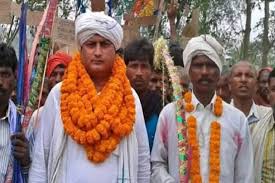
From a decorated stage to dusty village lanes, Sanjeev Dom emerged as a real changemaker. The transformation is made through toil, sweat, and purpose. Khagaria: He set the ramp on fire with his flamboyant and sashaying moves in numerous fashion shows till he found an inner sense of purpose, responding to the call of his soul. Leaving the world of glam and glitz for a social cause may not be everyone’s cup of tea, but for Sanjeev Kumar, who loves to be called ‘Sanjeev Dom,’ the exit came easily. Sanjeev showed a deep sense of purpose and urgency for fighting caste discrimination in Bihar’s most neglected corners. With stars in his eyes, Bihar native Sanjeev Kumar moved to Delhi dazzled in Delhi ramps model from Delhi who traded the glamour of the runway for the gritty, soul-testing mission of fighting caste discrimination in Bihar’s most neglected corners. A wedding that charted a new course What was the trigger? Soon after he returned to his ancestral village Parbatta, in Khagaria district, for his sister’s wedding, he witnessed something that changed his heart forever. “How do you feel when guests from the upper caste are served food in neat and clean rows, while members of the Dom and Musahar communities are left to pick up leftovers from soiled banana leaves?” he asks. He continues, “I couldn’t ignore it. It shook my soul. It’s like dignity was being dumped on the ground and trampled,” Sanjeev recalls. According to Kumar, he made a promise to himself that he would fight for the justice of those who are discriminated. Becoming a funeral worker Though he was born into an upper-caste family, Sanjeev did the unthinkable just to fight the discrimination. He also added “Dom” to his name. It wasn’t a show but a rebellion in the true sense of the term. “In the eyes of the Constitution, all humans are equal. Why is there so discrimination then?” he asks. Carrying forward the conversation, he says, “This question arose in my mind. I felt that now someone should come forward and raise a voice for these deprived communities. I thought I should be that person, so I started adding ‘Dom’ to my name. He continues, “The only purpose of adding Dom to my name is to give society a signal that this caste deserves respect and not shame. I started teaching their children by bathing them, dressing them, and making them sit with dignity. I tried to send them to school. Gradually, awareness came.” Building the trust among the outcast & shared struggle In 2006, Sanjeev formed the Outcast Welfare Organisation. It was not an NGO, but a ‘people-oriented platform’. It began with a humble note and not with foreign funds. Gradully, the organisation spread its wings in 18 districts of Bihar, bringing education, dignity, and opportunity for the grassroots and neglected people. Satyamev Jayate & Aamir Khan The first big recognition came when Aamir Khan’s iconic show ‘Satyamev Jayate’ featured his story in 2012. Aamir’s team scanned through the areas of Parbatta and Khagaria. They closely observed Kumar’s team’s work and took visuals. Khan was deeply moved by Sanjeev’s story, his struggle and dedication. Kumar was invited as a special guest at the Mumbai studio, where he shared his experiences. Awards and recognitions Sanjeev was awarded the Karmaveer Chakra by the United Nations and Icongo for his social work for social change. In 2021, the then Vice President Venkaiah Naidu honoured him. His story of struggle found a place in the book ‘The Vision of Antyodaya’ published by the Ministry of Culture. Even during the Covid outbreak, instead of retreating, Kumar conducted tests, ran vaccination and awareness campaigns in Dalit settlements. For his extraordinary contribution, he was also awarded a gold medal by the United Nations and iCONGO. A special appreciation came from Union Defence Minister Rajnath Singh in 2024. Speaking at the launch ceremony of RSS’s book ‘Seva Samarpan’, he lauded Sanjeev’s work. A new dawn in Dalit colonies Sanjeev empowered those who once languished in despair. They are now brimming with joy and recognition. Girish Malik, once neglected, is now a government supervisor. Santosh, a former sanitation worker, is pursuing his MA. Pratap, who once struggled to survive, now works at Bandhan Bank. Once condemned to leftovers, these young men and women are now writing their futures. From a decorated stage to dusty village lanes, Sanjeev Dom emerged as a real changemaker. The transformation is made through toil, sweat, and purpose. Courtesy : ETV Bharat Note: This news is originally published on https:/etvbharat.com/ and is for use by the non-military/non-commercial community, especially those in the human rights sector.
TN Dalit temple entry row undermines DMK’s social justice claims
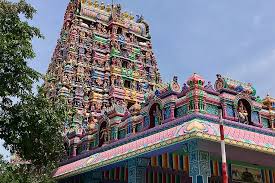
Activists say denial of temple access to Dalits remains a serious issue in many villages While DMK leaders are actively promoting social justice and equality in their election campaigns ahead of the 2026 Tamil Nadu Assembly polls, their alliance partners are upset over the insensitivity shown by authorities in handling cases related to Dalit temple entry. In a recent verdict on a case involving the denial of temple entry to Dalits in Ariyalur, the Madras High Court warned officials of legal consequences if they failed to ensure Dalit participation in the annual car festival of the Puthukudi Ayyanar Temple, from July 16 to 31. Serious issue Justice Anand Venkatesh, ruling on a petition filed by A Venkatesan, who alleged that Dalits were prevented from entering the temple by a dominant caste group in 2019, made it clear that officials are duty-bound to implement the court’s order both in letter and spirit. Activists say that the denial of temple access to Dalits remains a serious issue in many villages. For instance, in January 2023, around 250 Dalits entered the Sri Varadharaja Perumal Temple in Kallakurichi district for the first time with police protection. In the same month, Dalits also entered the Sri Muthalamman Temple in Tiruvannamalai district for the first time in 70 years. In both cases, Dalits had to move the court to secure access. Several such incidents have come to light only after legal intervention. Dalit rights activist A Kathir told The Federal that 35 temple entry-related cases were filed in various Tamil Nadu courts over the past three years. According to him, officials often call for peace committee meetings merely to delay Dalit entry. VCK slams DMK govt D Ravikumar, general secretary of VCK, a Dalit party and DMK ally, slammed the government for failing to sensitise officials to caste discrimination. “Why do officials remain insensitive in addressing caste discrimination in a timely manner? They cannot claim ignorance. It is unfair that Dalits must approach the courts to exercise their constitutional right to enter temples even after 75 years of independence,” Ravikumar told The Federal. He questioned why officials act swiftly to remove political party flags but hesitate to take action against dominant caste groups that practice untouchability. “Practising untouchability is a crime. Officials can register cases under the Scheduled Castes and the Scheduled Tribes (Prevention of Atrocities) Amendment Act, 2015, against individuals or groups that prevent Dalits from accessing public places. The punishment includes up to five years of imprisonment. But I haven’t heard of anyone being imprisoned for blocking temple entry since the Act was enacted,” he added. What DMK said Other alliance leaders of the CPI and CPI(M) too criticised the DMK government’s handling of caste discrimination. CPI State Secretary R Mutharasan told The Federal that officials with casteist mindsets must be identified and reformed. CPI(M) state secretary P Shanmugam said repeated failures by officials to file cases against those who deny Dalits entry into temples and other places of worship. When The Federal contacted DMK spokesperson T K S Elangovan about the issue, he said officials in Ariyalur had been instructed to ensure Dalit participation in the temple festival without further delay. “The DMK government has shown great commitment to implementing social justice policies. We have enacted special laws to empower Dalits and members of all castes to become temple priests. Some incidents still occur due to the regressive mindset of caste groups,” he said. On allegations of negligence by authorities, Elangovan added, “There have been many instances where authorities have intervened in support of Dalits accessing temples and other public spaces. Some cases may require more focused attention. But, overall, the DMK government is sensitive to Dalit concerns and does not ignore instances of caste discrimination.” Pramila Krishnan Courtesy : The Federal Note: This news is originally published on https:/thefederal.com/ and is for use by the non-military/non-commercial community, especially those in the human rights sector.
AAP failed Dalits, showing bias in sacrilege law: BJP leader

Ludhiana: Former MP and BJP leader Sushil Kumar Rinku has accused AAP govt of cheating the Dalits of the state. In a press conference at the BJP office here Friday, Rinku said AAP made several commitments to woo the state’s 31% dalit population before elections. Among them were the appointment of a deputy CM from the Dalit community if AAP were to form its govt in Punjab. But three-and-a-half years have passed since it came to power, and a deputy CM has not been appointed, he alleged. Rinku said AAP’s prominent leaders had also promised the formation of a special SIT to address atrocities and false cases against Dalits, recommending strict punishments. He described the sacrilege law as politically motivated, stating that he has suffered its consequences for three-and-a-half years. The former (Jalandhar MP said, “All this while they did not remember to bring a sacrilege law. Now that the elections are near, the govt has suddenly remembered this law.” Criticising the bill for its “selective and biased approach towards protecting religious texts”, he said while it includes Guru Granth Sahib, Gutka Sahib, Bhagavad Gita, Quran and Bible, it disregards the holy texts of Buddhism, Jainism and Parsis. tnn Rinku argued that this bias reflects religious discrimination and violates the spirit of equality under the law. Additionally, he pointed out that the bill ignores the rich folk traditions and culturally significant religious practices of Punjab, which are integral to the people’s identity. By focusing solely on mainstream religious texts and overlooking diverse spiritual expressions, Rinku claimed the bill demonstrates a narrow vision and flawed intent. BJP district president Rajnesh Dhiman was also present at the presser. Senior BJP leaders Dr D Khosla, District General Secretary Yashpal Janotra, Vice President Dr Nirmal Nayyar, SC Morcha President Ajay Pal Disawar, District Press Secretary Dr Satish Kumar and SC Morcha District General Secretary Vijay Khatak attended the press conference. Courtesy : TOI Note: This news is originally published on https:/timesofindia.com/ and is for use by the non-military/non-commercial community, especially those in the human rights sector.
Shobha questions Cong commitment to promoting Dalit leadership
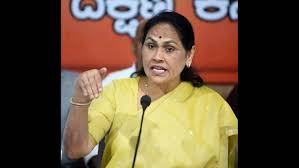
Mysuru: Union minister of state Shobha Karandlaje on Friday questioned Congress’ commitment to promoting Dalit leadership. Speaking to reporters, she attacked Congress functionaries for asking BJP to appoint a Dalit to the post of state party chief. “Congress leaders, including chief minister Siddaramaiah, are trying to divert the attention of people by questioning BJP’s commitment to promoting Dalits. Congress failed to initiate development works and fulfil the guarantee schemes,” she said. “Let Congress leaders concentrate on the development of the state instead of diverting the people’s attention,” she added. Shobha said she doesn’t know for what purpose Congress leaders are holding Sadhana Samavesha in Mysuru. “On the one hand, people of the state are cursing govt for the collapse of law and order, increasing crime, rape against women, and attacks on police stations. On the other hand, they are upset over not implementing the development works,” she said. “The state govt has no money to clear the transportation bills of contractors supplying Anna Bhagya rice to KFCSC warehouses and ration shops. It has no money to repair KSRTC buses and to release salaries for the govt staff,” she charged. “Moreover, several Congress MLAs openly raised their voice against their govt for not providing funds for development works in their constituencies,” she claimed. She accused Congress functionaries of neglecting the development of the state but fighting for the CM’s post. However, she refused to comment on the change of CM in the state, describing it as an internal issue of Congress. Courtesy : TOI Note: This news is originally published on https:/timesofindia.com/ and is for use by the non-military/non-commercial community, especially those in the human rights sector.
AAP govt ignored Dalit community on desecration issue, says BJP
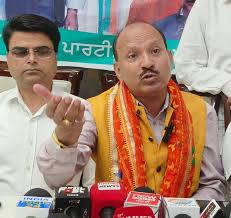
Senior Bharatiya Janata Party (BJP) leader SR Ladhar on Friday slammed the AAP government over the anti-sacrilege Bill, saying it lacked a provision to punish desecration of idols and scriptures revered by the Dalit community. “This omission clearly reflects AAP’s disregard for Dalit religious sentiments,” he told reporters here, adding that the Bill omitted any reference to works and idols of Guru Ravidas, saint Kabir and Bhagwan Valmiki, saint Kabir and saint Nabha Das. He alleged that while the Bill was cleared by the Cabinet and tabled in the Vidhan Sabha, none of the Dalit ministers or AAP MLAs raised any objections to the omission. “Despite having representation from the Valmiki Samaj, Ravidasia Samaj, Kabir Panth and Mahasha Samaj, no leader spoke out. They have forgotten their responsibilities towards their communities,” said Ladhar. Ladhar also alleged that the government was using such legislation to divert public attention from pressing issues in the state, including the failure of the land pooling scheme, the worsening drug crisis, and deteriorating law and order. Meanwhile Punjab Minister Balbir Singh said the Bill was “all-inclusive and democratic in nature”. Article_Author Mohit Khanna Courtesy : The Tribune Note: This news is originally published on https:/thetribune.com/ and is for use by the non-military/non-commercial community, especially those in the human rights sector.
Cops booked for Dalit youth’s murder in Hisar
Family cremates body after 11 days of dharna A day after Congress leader Rahul Gandhi’s tweet targeting the BJP-RSS and a subsequent meeting between the victim’s family and CM Nayab Singh Saini, the Hisar Police have registered an FIR against unknown police officials in connection with the death of a Dalit youth, Ganesh. The case has been filed under various serious of the Scheduled Castes and Scheduled Tribes (Prevention of Atrocities) Act, 1989, and the Bharatiya Nyaya Sanhita (BNS), 2023. The FIR was registered late on July 17, following a nearly 11-day-long dharna by the victim’s family and supporters. Rahul Gandhi had tweeted about Ganesh’s death, accusing the BJP and RSS of considering Bahujan lives ‘cheap’. After a meeting with the CM in Chandigarh last night, the victim’s family had agreed to cremate Ganesh’s body. In a related development, the police chowki in the 12 Quarters locality was ordered to be relocated, but after the demand from local residents, the police announced that the police post would not be shifted.Fearing the closure of the chowki, shopkeepers of the area on Friday had urged the police not to shift from the present site. SP Shashank Kumar Sawan had stated that there were space constraints at the current site and the department was looking for a location with better infrastructure. Article_Author Deepender Deswal Courtesy : The Tribune Note: This news is originally published on https:/thetribune.com/ and is for use by the non-military/non-commercial community, especially those in the human rights sector.
‘I Am Someone To Sleep With, Not Marry’: Dalit Woman Shares Painful Dating Story

Discriminated for her caste and mistreated by men, this lady took to Reddit and revealed her terrible dating experience, writing a viral online post. Even love fails to transcend centuries-old caste-based discrimination in India. A Dalit woman’s horror account of dating Indian men left everyone shocked on the internet, as she wrote about being treated as a sexual object, not an equal and respectful partner. In a Reddit post, this lady revealed how multiple men shattered the hope and confidence with which she entered the dating world, underlining how deeply caste still impacts relationships in the country. The woman said men would initially approach her for her appearance and intelligence, but soon lose interest as they found out about her caste. The revelation brought a complete U-turn in their behaviour, cutting down all contact while giving family pressure as a major excuse behind the break-up. “‘It’s not you,’ they’d say. ‘But our families would never accept it.’ Or worse: ‘You deserve someone who won’t have to fight this hard’,” the Reddit user wrote, disclosing how she faced derogatory remarks, such as “You don’t look like a Dalit”, and being treated as a mere sexual object. “I’ve been told that Dalit women are ‘wild’, ‘great in bed’, ‘more open-minded’. I’ve been fetishised more times than I can count. To them, I’m exciting, a break from the norm. I’m someone to sleep with, not someone to marry. I’ve begun to feel like I’m part of a private ritual that savarna men go through before they settle down with someone from their caste. I’m the hidden phase they never speak of: the shame wrapped in lust.” The woman’s traumatic dating experience also included facing career-based insults, with men assuming that her achievements were down to the caste reservations offered to her. “I’ve worked incredibly hard to be where I am. I’ve studied, built a career and supported myself. But even then, it’s not enough,” she wrote. The lady also declared she has stopped dating altogether. “Not because I stopped believing in love, but because I couldn’t keep subjecting myself to this cycle of fetish, rejection, erasure, and pain. I couldn’t keep being someone’s experiment, someone’s thrill, someone’s secret. We are not disposable. We are not secret histories in someone else’s life,” she added, calling on all women to respect and value themselves. Curated By : Buzz Staff About the Author Buzz Staff, A team of writers at News18.com bring you stories on what’s creating the buzz on the Internet while exploring science, cricket, tech, gender, Bollywood, and culture. Courtesy : News18 Note: This news is originally published on https:/newa18.com/ and is for use by the non-military/non-commercial community, especially those in the human rights sector.