
Dalit teenager gangrape case: Case registered against four accused in Sant Kabir Nagar, action taken on the complaint of the victim’s mother
A case of gangrape and video recording of a Dalit teenager has come to light in Sant Kabir Nagar’s Kotwali Khalilabad area. The police have registered a case against four accused on the complaint of the victim’s mother. The incident took place on 27 July 2025 at around 4 pm. According to the victim’s mother, her minor daughter had gone to the pond outside the village to defecate. There, Ansh Kumar, Aryan, Rohan Kannaujiya and Shivam Singh of the same village surrounded her. It is alleged that Ansh pushed the teenager to the ground. Shivam and Aryan held both her hands. After this, Ansh raped the victim. Rohan made a video during this time. After the incident, all four accused started watching the video together. The victim reached home crying and told the whole incident to her mother. Inspector Kotwali Khalilabad Pankaj Kumar Pandey said that on the complaint of the victim’s mother, a case has been registered against the four accused and the matter is being investigated. Devilal Gupta Courtesy: Hindi News
Federation of backwards and dalit seers confronts Rambhapuri Peetha
Davanagere: The Federation of Backwards sates and Dalit seers requested Veerasomeshwara Swamiji of Rambhapuri Peetha to demonstrate the Peetha’s secular credentials and substantiate claims regarding caste-based monasteries’ societal influence. The federation expressed strong disapproval of Veerasomeshwara Swamiji’s remarks in Bhadravati about “caste-based monasteries have corrupted society.” They indicated potential protests if the statement remains unrestricted. During the press conference held in the city on Monday, Immadi Siddharameshwara Swamiji of Bhovi Gurupeeta explained that caste monasteries emerged due to the systematic exclusion of backwards and Dalit communities. These institutions, whilst bearing caste names, promote social unity rather than division. Purushottamanandapuri Swamiji of Bhageeratha Gurupeeta noted that caste-based monasteries wouldn’t exist if Panchapeetas properly integrated marginalised communities through education and values. He highlighted the current leadership’s reluctance to engage with Swamijis from marginalised communities. Basavamurthy Madara Channayya Swamiji criticised Rambhapuri Shri’s stance as contradicting human religious principles, noting that Panchapeethas should respect all communities. The federation demanded the immediate retraction of Rambhapuri mutt seer’ss statement, warning of unified opposition in Davanagere if clarification continues. Various pontiffs attended, including those from Kanaka, Valmiki, Yadav, Narayanaguru, Helava, Reddy, Kumbara, Hadapada, and Medara Gurupeetas. ‘Will you return the Rs 100 crore grant?’ “Over Rs 100 crore of govt grants were used under the name of Beda Jangama. Branch monasteries of the Panchapeetas received these grants. Prove that these are truly monasteries belonging to the scheduled castes. Otherwise, issue a white paper regarding the govt grants received,” challenged Immadi Siddharameshwara Swamiji. He questioned, “In 2003, the demands made by the Panchapeetas to the central govt regarding reservations did not remain secret. What is your contribution to communities other than your caste?” Courtesy : TOI Note: This news is originally published on https://timesofindia.com/bha and is used purely for non-profit/non-commercial purposes, especially human rights.
Dalit youth hacked to death over inter-caste love
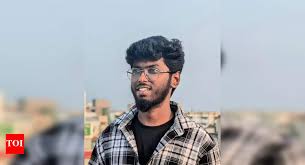
Tirunelveli: A 27-year-old scheduled caste (SC) youth was hacked to death by his girlfriend’s brother in Palayamkottai on Sunday afternoon, in an alleged case of caste killing. The accused surrendered before police on Monday, while the girl’s mother and father, both police inspectors, are absconding. The deceased, C Kavin Selva Ganesh, of Eral in Tuticorin district, belonged to pallar community, and was working in an IT firm in Chennai after completing his BE. Police said Kavin was in a relationship with S Subhashini from KTC Nagar in Palayamkottai, who he was acquainted with from childhood. However, Subhashini’s family, who hailed from the maravar community, did not approve of the relationship, and had threatened him earlier. Kavin ignored it and told his younger brother, Praveen Selgar, also an IT employee, about it. Subhashini worked as a siddha practitioner at a clinic in KTC Nagar. On Tuesday afternoon, Kavin went to see Subhashini at the clinic to consult her for his grandfather’s treatment. At that time, her brother Surjith, 21, asked him to come outside, saying he would accompany him to talk to their parents. Instead, Surjith verbally abused Kavin with casteist slurs for talking to his sister. He then pulled out a sickle and attacked him. Though Kavin tried to get away, he was chased and hacked to death by Surjith before fleeing. Palayamkottai police registered a case under sections 296 (b), 103 (1), 49 BNS r/w 3 (1) (r), 3 (1) (s), 3 (2) (v) of the SC/ST Prevention of Atrocities Act 2015, including for murder. The body of the deceased was sent for post-mortem examination. Sujith was arrested after he surrendered before police on Monday. Terming it a caste killing, Kavin’s parents alleged that the murder was instigated by Subhashini’s parents Krishnakumari and Saravanan. Further investigation was going on. Courtesy : TOI Note: This news is originally published on https://timesofindia.com/bha and is used purely for non-profit/non-commercial purposes, especially human rights.
17-year-old youth shot by police after he attacks scheduled caste youth, sub-inspector

The injured has been admitted to the Tirunelveli Medical College Hospital. A 17-year-old teen was shot at and injured, by police at Paappaakudi in Tirunelveli, early on Tuesday (July 29, 2025), after he and his associate attacked a Dalit youth with a machete and attempted to attack the police personnel who tried to arrest them. According to police, two 17-year-old boys from Paappaakudi in the district, both belonging to most backward community and already facing a few cases, attacked Sakthi, 22, of Rastha near Paappakudi, with a machete around 1.30 a.m. He was injured in the attack. Paappaakudi police, led by Sub-Inspector Murugan, rushed to the spot. As the boys, carrying machetes, chased the police also, they scurried away for safety. Mr. Murugan entered a house nearby. The dwellers of the house locked the main door once the police officer entered. “The armed teens who followed Mr. Murugan landed multiple blows on the door with machetes. However, the Sub-Inspector of Police opened fire at one of the attackers, who was injured in the hip. On seeing his associate fall, the other fled the spot,” police said. The injured has been admitted to the Tirunelveli Medical College Hospital. A few villagers said the problem started after a minor scuffle broke-out between two caste groups who left the spot after the police entered the village. “However, the two teens, carrying arms, tried to attack the police, which led to the firing,” the villagers said. The Paappaakudi police are on the hunt to nab the teen who escaped. The Hindu Bureau Courtesy : The Hindu Note: This news is originally published on https://thehindu.com/bha and is used purely for non-profit/non-commercial purposes, especially human rights.
Tamil Nadu Horror: Dalit techie hacked to death with sickle by girlfriend’s brother in Tirunelveli

A 27-year-old IT engineer was murdered in Chennai over an inter-caste relationship. The accused, Surjith, was arrested, and his parents, both sub-inspectors, face charges under the SC/ST Act. The victim had visited a clinic to meet his former schoolmate, leading to a fatal confrontation. An IT employee belonging to a Scheduled Caste has been hacked to death by a youth, allegedly over an inter-caste relationship, police have said. An IT employee belonging to a Scheduled Caste has been hacked to death by a youth, allegedly over an inter-caste relationship, police have said. A 27-year-old Dalit software engineer was brutally hacked to death in Tamil Nadu’s Tirunelveli district, allegedly over an inter-caste relationship, police said on Monday. The victim, Kavin Selva Ganesh, who was employed at a software firm in Chennai, belonged to the Devendra Kula Vellalar community, a Scheduled Caste group, according top PTI. The suspect, S Surjith, the brother of the woman Ganesh was reportedly in a relationship with, has been arrested and booked under relevant sections of the Bharatiya Nyaya Sanhita (BNS) and the SC/ST (Prevention of Atrocities) Act. Shockingly, police confirmed that both of Surjith’s parents are serving as sub-inspectors, and a case has been registered against them as well. The incident occurred on Sunday evening, when Ganesh had gone to a Siddha clinic in Tirunelveli town to meet S Subhashini, a practitioner at the facility and his former schoolmate, reportedly to seek treatment for his ailing grandfather. An argument allegedly broke out between Ganesh and Surjith outside the clinic. Police say Surjith, enraged over the inter-caste relationship, attacked Ganesh with a sickle. His body was later discovered around 200 metres from the clinic. A post-mortem was conducted at the Tirunelveli Government Hospital. Subhashini’s family belongs to the Maravar community, a dominant caste group in southern Tamil Nadu. According to police, her family had long opposed her relationship with Ganesh due to caste differences. According to News18 report, the accused’s parents — both sub-inspectors attached to a battalion in Manimuthar — have also been named in the FIR following a complaint by Ganesh’s mother, S Tamilselvi, who alleged that they had issued repeated threats to her son. “My son is an innocent person. The woman asked him to come to the hospital. The accused took my son out, threw chilli powder on his face, and attacked him with a machete… The government should immediately expel his mother and father from service. We will not receive my son’s body unless action is taken,” News18 quoted the victim’s father, Chandrashekar. The news report also claimed that a police officer confirmed that Surjit and his parents have been booked under relevant sections of the SC/ST (Prevention of Atrocities) Act and the Bharatiya Nyaya Sanhita (BNS). Courtesy : Mint Note: This news is originally published on https://mint.com/bha and is used purely for non-profit/non-commercial purposes, especially human rights.
The end of the love of Sania of Baghpat and Dalit youth Sagar will make you cry, both paid a heavy price for falling in love

The walls of religion and caste in Baghpat killed a love story. The society did not accept the relationship of Muslim girl Sania and Dalit youth Sagar. In this case of honor killing, Sania was murdered, while Sagar is still missing. Baghpat News: A case of honor killing has come to light from Baghpat in Uttar Pradesh, which will shock you. This love story that came to light from Baghpat will shake your heart. Another love story has died in the name of society’s thinking and false honor. Let us tell you that Sania and Sagar loved each other. Sania was from a Muslim family and Sagar was from the Dalit community. This relationship between the two became the reason for their death. What is the whole story? The incident is from Palda village of Doghat police station area of Baghpat. Sania was from the Muslim community and belonged to an influential family of the village. While Sagar was the son of a Dalit and poor labourer. Sagar worked at a brick kiln in Himachal Pradesh. When Sagar returned to the village on festivals, both of them started meeting each other. Slowly with time, their relationship turned into love. But people bound by the chains of society, religion and caste could not accept this relationship. Caught while trying to escape According to the information, both of them tried to meet each other several times secretly from their families and run away together. The last time they ran away from the village, the family members caught them on the way. After this, Sagar was beaten badly and thrown somewhere in a half-dead condition. While Sania was taken home and first killed and then suffocated by placing a pillow on her face. Attempt to hide murder Let us tell you that after the murder of Sania, her body was quietly buried in the village graveyard. Due to the village being Muslim majority, no one raised any question for two days and the matter was completely suppressed. The secret was revealed by the father’s plea During this time, when there was no news of Sagar, his father started searching. After this, the father lodged a complaint with the police about his son’s disappearance and feared that his life was in danger. Understanding the seriousness of the matter, the police started investigating. Some suspects were detained and the revelations made during the interrogation shocked everyone. The secret of the murder was revealed during interrogation The layers of the entire murder case started getting revealed during the interrogation of some suspects detained by the police. During interrogation, the accused created a sensation by confessing to the murder of Sania. After the confession, the police took immediate action and dug up Sania’s grave and took the body into custody and sent it for post-mortem. On the other hand, Sagar is still missing and no clue about him has been found, which has further deepened the concern about the case. Manudev Upadhyay Courtesy : Hindi News
Cast(e) in stone: An exploration of how inequality exists in a global village, and not just India
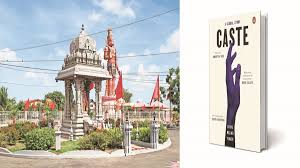
Here the author traces anti-caste movements across the world, their political assertions, setbacks, achievements. What offers an interesting insight is how Dalit organisations beyond the shores are not sponsored or supported by India-based institutions. In July 2023, a video went viral of a dominant caste man, reported to be a Brahmin, urinating on a tribal man in Madhya Pradesh. The latter sat slouching and the culprit, identified as a ‘pandit’, towered over him, urinating on his face and body. More disturbing than the incident was the support the culprit subsequently received from his community. In September 2024, in Karnataka’s Dakshina Kannada district, a 67-year-old Dalit man was brutally assaulted by a high-caste Gowda shopkeeper with a wooden pole when the former sought shelter from heavy rain and wanted to rest near the shop. More recently, in Uttar Pradesh’s Etawah, a group of upper-caste men allegedly tonsured the head of a katha vaachak (religious preacher) and his aide after finding that they hailed from the Yadav community. Shortly after this incident, in Odisha’s Ganjam district, men of the Dalit Pana community were beaten up and forced to crawl with grass blades between their teeth and also to drink drain water by so-called Savarnas (dominant castes). They were alleged to have smuggled cattle which came out to be a falsehood. These are just a tiny sample from a regular flow of such news from across India’s vast geography and cultural landscape. The political dispensation of a state hardly makes a difference. Caste consciousness, in all its shameful manifestations, is ingrained in the Indian psyche, and except the occasional expression of disgust and surprise, such incidents hardly shake the national conscience in any effective way. But is it just an Indian phenomenon? Caste beyond borders After penning Caste Matters and co-authoring The Radical in Ambedkar, Suraj Milind Yengde has come out with his latest to shed light on caste’s obstinate tendency to exist and stir societies in faraway lands and climes. Caste: A Global Story is an outcome of the author’s decade-long research based on historiography, archival resources, ethnography and personal encounters, bringing to the fore contemporary Dalit experiences among the Indian diaspora from the Caribbean to Europe, to Africa, to the Middle-East and to South Asia. A WEB Du Bois Fellow at Harvard University, Yengde is a world-renowned scholar on caste studies. Named among the ‘25 Most Influential Young Indian’ by GQ magazine, he spent his childhood in Nanded, the headquarters town of the district by the same name in Marathwada. The region has been home to one of the most radical forms of Dalit politics for over a century where visions of Kabir and Ravidas found resonance among the underprivileged before—aided by a Dalit-Black bond and BR Ambedkar’s ideas of fighting upper-caste dominance —it created an early template of Dalit political activism. The author writes with a position of seeing and experiencing caste politics at close quarters. Literature as resistance A deep insight is offered into literature becoming a powerful starting point of Dalit assertion of identity and dignity. It has been a way to reclaim an area, which from time immemorial remained out of reach for the oppressed and as an exclusive domain of the dominant, particularly Brahmins. It helped challenge the age-old narrative of impurity and punishment and assert Dalit agency. A comparative study of Black and Dalit literature brings out similarities and points of divergence. While both said how discriminations were institutionalised, Dalit literature looked at caste hierarchies couched in religious and social sanctions whereas Black subjugation stemmed from centuries of slavery and a system of apartheid based on colour. What tied the two strands was a spirit to rise above hardened debilitating subjugation. A substantial fieldwork is done in Trinidad, one of the earliest destinations of indentured labour from India where 40% of the population is of Indian origin. A majority of them belong to low-caste hierarchies. Yengde meets community leaders and tries to understand the caste dynamics on a distant land from their ancestors’. Do castes play a role in Trinidadian society? Interestingly, they do, but only in religious institutions and in trying to find worship and fellowship in the Hindu dharma. They are nearly absent in people’s lives in terms of intense rigidities found in India. Conversations with people like Pandit Amar Sreeprasad, an Ahir by caste; Pandit Parasaram who draws a Brahmin lineage; and Ravi Maharaj, an RSS functionary, are interesting and revealing. The author traces anti-caste movements across the world, their political assertions, setbacks, achievements. What offers an interesting insight is how Dalit organisations beyond the shores are not sponsored or supported by India-based institutions. They do appear as a disparate set of anti-caste believers under the banner of Ambedkar, Ravidas, Valmiki, Dalit Christian or Buddhist congregations, but somewhere their commitment to raise their community issues and seek social justice unite them into a single bloc. Yengde makes the point that the ability of caste to transcend time and space must be analysed through its multiple ‘diasporic nations’ that draws from one site of origin —India. He has also been immensely successful in bringing out parallels that exist in experiences of caste and race oppression, making a case for a global solidarity to fight inequalities. At the same time, an appeal goes out to dominant castes, who are carriers of social and religious creed that cannot tolerate human equality, to self-educate and agitate against the caste system rather than stand by it. Thought-provoking, the book offers quite a few new insights into caste dynamics in the global village that we live in. To borrow from Amartya Sen’s crisp Foreword, nearly verbatim, it is a remarkable work to understand and confront the challenges of cast-in-stone inequalities worldwide. Written by Amitabh Ranjan Courtesy : F E Leisure Note: This news is originally published on https://feleisure.com/bha and is used purely for non-profit/non-commercial purposes, especially human rights.
From Bihar to Kerala, from women to Dalit-OBC… who will replace Dhankhar?
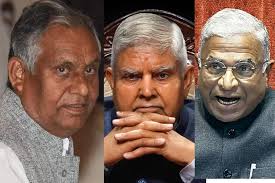
Preparations have started for the election of the post of Vice President in the country. Jagdeep Dhankhar resigned from this post on the first day of the monsoon session i.e. on July 21. Now all eyes are on the candidate for the post of Vice President, who will he be, what will be his background and from which state? After the resignation of Jagdeep Dhankhar, the chair of the Chairman of the Rajya Sabha is lying vacant. The monsoon session of Parliament is going on. In such a situation, now the Rajya Sabha is running without a Chairman. There is no doubt that after Dhankhar’s resignation, the government must have also started searching for the next candidate for this post. So far, separate meetings of many big leaders have also been held in Delhi. However, no name has been revealed yet as to who will sit on this chair, but discussions have started in the political corridors about different states. These states include West Bengal to Bihar and Andhra Pradesh to Tamil Nadu. Dhankhar’s resignation from the post of Vice President is being considered a big setback for the government. The way Dhankhar had embarrassed the government with his statements for the last few weeks is not hidden from anyone. As the Chairman of the Rajya Sabha, his confrontation with the opposition parties was also often in the headlines. Even his comments on the Supreme Court were in the news. While reacting to the Supreme Court’s decision regarding the Governor of Tamil Nadu, he even said that the courts cannot order the President. There were many other issues on which Dhankhar not only openly expressed his views but sometimes he also put the government in an uncomfortable position. What if there is a problem regarding Bihar? The Vice President’s chair has fallen vacant at a time when assembly elections are going to be held in Bihar. At present, there is an NDA government in Bihar and Nitish Kumar is leading it. Apart from this, there is also discussion about the states of South India. Assembly elections are going to be held in many states of the South next year. BJP is considered to be an expert in setting the equation just before the election. It is being speculated that to set its electoral equation in Bihar, BJP can play the Vice President’s card, but a problem is getting stuck in it that Harivansh Narayan Singh is already the Deputy Chairman of the Rajya Sabha, who comes from Bihar and is an MP from JDU quota. Nobody knows what will happen in Bihar elections, questions on Nitish too There is a lot of discussion going on in the political corridors that BJP will not touch Harivansh Narayan. This is because no one knows what will happen in Bihar elections. The biggest crisis in this is about Nitish Kumar. Perhaps BJP knows very well that no one knows when Nitish Kumar will turn back. Therefore, BJP’s full effort will be to select one of its leaders or someone associated with the organization for the post of Vice President, who at least does not try to make the government uncomfortable in future. If a leader of the allied parties sits on this post, then BJP may have to face pressure in future. To a large extent, BJP was looking similar in recent times regarding Dhankhar. Took oath as Vice President in 2022 On August 11, 2022, Jagdeep Dhankhar took oath as the 14th Vice President of India. Before being elected Vice President, Jagdeep Dhankhar was the Governor of West Bengal. He was appointed Governor in July 2019. During his tenure, he was in the news many times for his confrontation with the Mamata Banerjee government. Dhankhar, who hails from Jhunjhunu district of Rajasthan, was a lawyer by profession. He became an MP for the first time in 1989 and later also served as a minister in the Central Government. BJP is not only an expert in giving surprises, but also tries to capitalize on every small and big issue in the elections. In Lutyens Delhi, there is a buzz that this time BJP’s focus may be on the South. Even before the 2024 Lok Sabha elections, BJP’s focus has been more on the states of the South. BJP’s hold in the South is weak. The party wants to further strengthen its presence in the states of the South. This includes states like Tamil Nadu, Kerala, Karnataka and Andhra Pradesh. Finance Minister Nirmala Sitharaman comes from Tamil Nadu and has been handling the Finance Ministry since 2019. Kerala, Andhra Pradesh, Tamil Nadu as well as Sangh background Apart from Bihar, if any state is getting the most votes, it is Kerala and Andhra Pradesh. Venkaiah Naidu has also been the Vice President from Andhra Pradesh. Assembly elections are going to be held in Kerala next year. There is a possibility that BJP may appoint a leader associated with the organization in Kerala to this post. Apart from this, Andhra Pradesh is being discussed because there is a TDP government here and N Chandrababu Naidu is the Chief Minister. TDP is currently a part of NDA and is playing an important role at the center. Similarly, there are assembly elections in Tamil Nadu next year. With the intention of strengthening its hold in Tamil Nadu, BJP can declare someone from here as a candidate for the post of Vice President, but it is also believed that whoever BJP nominates for this post, the Sangh will play an important role in it and background will also be given importance. Woman or Dalit-OBC formula There is a growing discussion in the political corridors that BJP can adopt the Dalit-OBC formula along with the women formula to give a befitting reply to the opposition. Just like in the 2022 presidential election, BJP surprised everyone by making Draupadi Murmu its candidate. Draupadi Murmu comes from the tribal community. In the same way, BJP can adopt the Dalit-OBC formula
Dalit tractor driver assaulted: Lekhpal suspended in Khaga, police registered Dalit harassment case
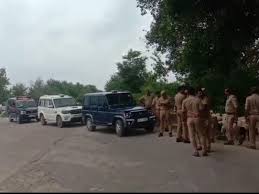
The Lekhpal of Garha village has been suspended for assaulting a Dalit tractor driver in the Dhata police station area of Fatehpur district. The police have registered a case of Dalit harassment against the Lekhpal and one of his companions. According to the incident, Nanka Sonkar, a resident of Narihai village of Dhata police station area, alleged that when he reached the private borewell of Lekhpal Kailash Nath Shukla posted in Garha Khas village of Kishanpur circle with bricks in a tractor, the Lekhpal and one of his unknown companions abused and assaulted him without any reason. The victim had given a written complaint to the police and demanded action. On the basis of this complaint, the police have registered a case against the accused Lekhpal and his companion and started investigation. Dhata police station in-charge Ankur Kaithwas said that the matter is being investigated and further action will be taken on the basis of that. SDM Abhineet Kumar has suspended the Lekhpal with immediate effect. Vikash Trivedi Courtesy: Hindi News
Two Dalit Youths Tied to Pole, Beaten by Mob in UP’s Sambhal; FIR Filed
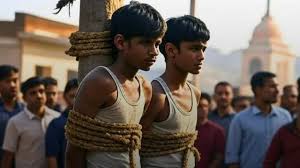
Two Dalit youths were allegedly tied to a pole and beaten by a mob in Sambhal district after being accused of theft, police said on Saturday. The incident happened on July 22 in Barhai Wali Basti, and a video of the assault has now appeared online. A case was registered on Saturday after the mother of one of the victims filed a complaint. Station House Officer (SHO) Rajnish Kumar of Nakhasa police station said, “Sunita, a resident of Nahar Dher village, complained that her son Sundar, aged 20, and his relative Shani, aged 22, had gone to see the Kanwar procession in Sambhal. On their way, some residents caught them, accused them of theft, tied them to a pole, and beat them up.” Both victims were taken to a hospital for treatment. The police have filed an FIR against five named individuals—Nand Kishore, Bharat, Dabbu, Bhura, and Shriram’s son—along with 10 to 12 unidentified people. They have been booked under sections of the Bharatiya Nyaya Sanhita (BNS), including rioting, unlawful assembly, wrongful confinement, voluntarily causing hurt, intentional insult, and criminal intimidation. The case also includes charges under the Scheduled Castes and Scheduled Tribes (Prevention of Atrocities) Act. “Further action is being taken in the matter,” SHO Kumar said. Courtesy : The Observer Post Note: This news is originally published on https://theobserverpost.com/bha and is used purely for non-profit/non-commercial purposes, especially human rights.