
Retired JNU professor reveals – 200 years of privilege is the secret of success of ‘upper castes’
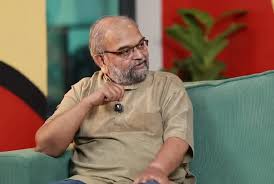
In an interview with Kunal Kamra, Professor Deshpande exposed the ‘merit’ of upper castes, told how caste gave land to his grandfather, job to his father and ‘merit’ to him New Delhi: Retired sociologist Professor Satish Deshpande of Jawaharlal Nehru University (JNU) has made a shocking revelation on the caste system in India. He told how people of upper castes attribute their success to “merit”, while in reality it is the result of caste privileges received for hundreds of years. In comedian-commentator Kunal Kamra’s podcast ‘Nope’, sociologist Professor Satish Deshpande exposed the fundamental contradiction in an explosive discussion on India’s caste system where on the one hand the Constitution declared caste to be abolished, but in practice it is still deeply ingrained in every layer of Indian society. Professor Deshpande explained with the example of his own family how upper caste privileges are transmitted for generations. He said, “My grandfather got 200 acres of land during the Peshwa rule as a Brahmin. If he had been from some other caste, he would not have got this land. After independence, the land reforms reduced it, but my father was made an engineer by selling the same land.” This admission breaks the myth that the success of upper castes is purely a result of individual merit. Deshpande candidly said, “My grandfather was not very smart. So when the new laws came after independence, a lot of land was lost from him. But whatever was left, some of that land was sold and my father and one of my uncles were made engineers and doctors. So I am the son of an engineer, so I think what do I have to do with caste? I am an embodiment of merit, but how did I get merit? How did I go to expensive schools and good colleges? Because my father was an engineer. How did my father become an engineer? Because my grandfather had land. Why did my grandfather have land? Because his caste was so and so. If he belonged to some other caste, he would not have had any land and I would not be sitting here. But by the time my generation came, this language of merit became so strong that people like me really started believing that whatever they are is only and only because of merit, it has nothing to do with caste. The oppressed have to wear their caste like a badge; the privileged have the privilege to forget it. Professor Satish Deshpande Deshpande first rejected the narrative that caste was a colonial creation. He acknowledged that British rule certainly fostered caste divisions for administrative control but he insisted that caste was and is an indigenous hierarchical system. “We can blame the British for many things, but caste is not one of them”. The Constitution of India after independence formally abolished caste discrimination and declared the country a casteless republic, Deshpande said. But the same Constitution also introduced reservations, recognising that centuries of oppression required redress. This dual policy of outlawing caste while simultaneously institutionalising caste-based quotas created a fundamental tension that India has yet to resolve. The illusion of merit and the invisibility of privilege The most striking point Deshpande raised was how upper caste Indians often deny caste by claiming that their success is entirely merit-based. He explained this with a personal example: his grandfather, a Brahmin, Caste-based privileges under the Peshwa regime meant that the peasants owned substantial land. Even the land they lost after land reforms funded his father’s education, which in turn enabled his own advancement. He acknowledged, “I am where I am because of generations of caste privilege. Yet my education and social status allow me to pretend that caste doesn’t affect me.” He argued that this selective blindness is a luxury only of the privileged. For the underprivileged castes, caste is an inescapable reality – a marker of identity that they have to constantly produce in order to demand their rights. “The oppressed have to wear their caste like a badge; the privileged have the privilege of forgetting it.” Deshpande said, “There has been a huge rift in caste. Those who have benefited the most from caste feel that caste today means only lower caste. People like us have nothing to do with caste. And on the other hand, those who belong to these so-called lower castes feel that without raising the slogan of no caste, we will not get anything. So one section has become hyper visible. Their caste has become hyper visible. They will not get anything without caste. And another section’s caste has become invisible, so because of this, dialogue has become impossible. Those who have suffered the most from caste have had to raise the flag of caste every time. Regarding casteism, which is deeply ingrained in society, Prof Deshpande said, “How can we abolish the institution that governs everyday life? This question has always put us in a dilemma – a shame and hesitation that we have expressed in different ways. It is a suppressed truth that has remained in our subconscious. After independence, the first thing we did was to declare the abolition of caste in the Constitution. But the same caste system forced us to accept that a large section of the country has been suppressed for centuries – not only socially but also morally and legally. As compensation for this historical injustice, we created the system of reservation. The contradiction here is clear: on the one hand the Constitution declares the end of caste, that now we are a republic, caste distinctions have ended, while on the other hand it makes special provisions for some castes. Superficially this seems progressive, but it reflects a double mentality – the desire to abolish caste and at the same time the need for historical compensation. He says that the foundation for this was laid by the Poona Pact of 1932, when after Gandhiji’s fast, reservation was accepted within the Hindu electorate instead of a separate
SC Panel Chief Visits Injured Dalit Youth In Tirupati, Assures Govt Support
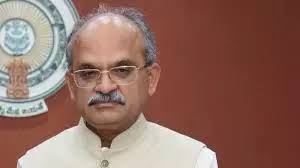
Pavan Kumar, a resident of Pulicherla in Chittoor district, was allegedly abducted and assaulted on August 9 by YSRC Tirupati social media in-charge Anil Reddy and his aides over a dispute involving a rented two-wheeler. TIRUPATI: Andhra Pradesh Scheduled Castes Commission chairman K.S. Jawahar on Tuesday assured full government support to Pavan Kumar, the Dalit youth injured in a recent assault in Tirupati. Pavan Kumar, a resident of Pulicherla in Chittoor district, was allegedly abducted and assaulted on August 9 by YSRC Tirupati social media in-charge Anil Reddy and his aides over a dispute involving a rented two-wheeler. He was reportedly beaten with a police baton, and suffered a fracture below his left knee. He was currently undergoing treatment at S.V.R. Ruia Government General Hospital. After visiting Pavan in the hospital, Jawahar told the media that the victim had identified about 25 attackers, including 16 by name. Cases have been registered against them. He said the government would ensure that Pavan receives all entitlements under the SC/ST (Prevention of Atrocities) Act and that strict legal action would be taken against the culprits. Jawahar described the incident as unfortunate, especially in a sacred place like Tirupati. He said the Commission would stand by Dalits across the state. He also indicated that a special court could be set up for speedy trial if required. Local MLA Arani Srinivasulu, Yadava Corporation Chairman G. Narasimha Yadav, and other leaders were present. Courtesy : Deccan Chronicle Note: This news is originally published on https:/deccanchronicle.com/bha and is used purely for non-profit/non-commercial purposes, especially human rights.
Karnataka: Rajanna’s sacking threatens ‘pro-Dalit’ stance of Congress, credibility of Siddaramaiah
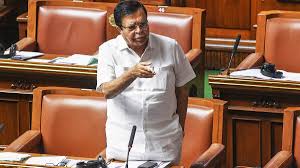
The sacking of Karnataka cooperation minister K.N. Rajanna, a Scheduled Caste leader, has plunged the Siddaramaiah government into a political crisis The sacking of Karnataka cooperation minister K.N. Rajanna, a Scheduled Caste leader from Tumakuru, on the first day of the monsoon session of the state legislature, has the Siddaramaiah government on the back foot as the BJP claimed that the Congress party is showing its “true anti-Dalit” face. The saffron party dubbed the removal of two Dalit ministers—B Nagendra over allegations of corruption in the Valmiki Corporation scam and now Rajanna for refusing to toe the line of the party on the vote theft charges—as “Dalit victimisation”. Chief Minister Siddaramaiah removing Rajanna, one of his close aides, from the cabinet on Monday, reportedly following orders from the party high command, has raised questions over Siddaramaiah’s own position and the stifling of Dalit voices within the party. While Rajanna’s unceremonious removal from the cabinet is being attributed to his recent comments on the voter fraud that directly challenged LOP in Parliament Rahul Gandhi’s claims and narrative on the “vote theft”, Rajanna’s alleging a “conspiracy” against him for his sacking, has put the government and the party in a tight spot. “When was the voter list made? It was made when we (Congress) were in power. What’s the point of discussing it now? It is true that there have been illegalities and we should be ashamed as they took place right before our eyes. We should have examined when the draft electoral rolls were out. There has been voter fraud in Mahadevapura like duplicate voting, bulk voters in a single address. But it was our responsibility as the party and the government to file objections to the draft rolls,” Rajanna had responded on the voter fraud issue, even as the Congress party had launched a national-level “Vote Chori” campaign, squarely accusing the Election Commission of “colluding” with the ruling BJP at the Centre for the vote. After his sacking, Rajanna told the media that there was a “conspiracy” against him and he would reveal everything at an appropriate time. “There has been a misunderstanding, and I will explain it to Rahul Gandhi and K.C. Venugopal. It is the party’s decision and we cannot question it,” said Rajanna, even as his son and MLC Rajendra turned emotional and rushed to meet the chief minister after the sacking was made official by the governor’s office on Monday evening. BJP trains guns on state govt On Tuesday, LOP in Assembly MLA R. Ashok said, “Rajanna has been punished for speaking the truth and busting Rahul Gandhi’s false narrative.” State BJP president B.Y. Vijayendra alleged that the Congress constantly tried to silence the Dalit leaders in the party. “In Congress, truth is treated as a threat, especially when it comes from a leader of a marginalised community whose voice they have long tried to silence. The pattern is clear. In the case of ST Welfare Minister Nagendra, funds earmarked for the development of the community were siphoned off to finance Congress’s election expenses. Instead of holding the CM and DCM D.K. Shivakumar accountable, the blame was placed entirely on Nagendra, and the matter was quietly closed,” said Vijayendra. Referring to the Congress leadership stalling the Dalit ministers’ dinner meeting organised by Home Minister G. Parameshwara recently, Vijayendra accused the Congress high command of “dictating” what the SC/ST ministers could do or not do. “Even when SC/ST MLAs and ministers gather informally for a meal, the high command dictates that such meetings cannot happen without their physical presence, as though leaders from these communities cannot meet independently. This is the true face of Congress—anti-Dalit, anti-ST, anti-democratic and anti-truth,” mocked the BJP leader. The BJP further said Siddaramaiah, who claims to champion the ‘Ahinda’ (minorities, dalit and backward classes) stands exposed. “This has exposed the hollow claims of Siddaramaiah as he has never defended the Ahinda when targeted. Instead, he bows to the diktats of the Delhi High Command to safeguard his own position as the chief minister,” alleged Vijayendra. Interestingly, Congress MLC B.K. Hariprasad, an OBC leader and a vocal critic of Siddaramaiah, said, “When you are in politics, one has to face conspiracies, especially if you are from the SC, ST or OBC communities. This is a lesson for Rajanna. But I am sure he will not remain mum. I have known him since his Youth Congress days.” BJP leader from Valmiki (ST) community B. Sriramulu said Rajanna was dropped from the cabinet for his “straight forward” and “harsh” words. “The CM dropping him from the cabinet, yielding to pressure from some invisible hands, is an insult to the Valmiki community,” he said. In June 2024, Nagendra was forced to resign from the cabinet after the Valmiki Corporation scam—misappropriation (diversion) of Rs 187 crore allegedly to fund the Telangana assembly polls—was exposed. Nagendra was arrested by the Enforcement Directorate in July under money laundering charges and released on bail in October. The BJP has claimed that Nagendra was made the fall guy though the alleged scam was about the diversion of funds for elections. The opposition parties had demanded the chief minister, who is the finance minister, to resign. Following the Stadium stampede incident that claimed 11 lives, the BJP had strongly condemned the suspension of then Bengaluru police commissioner B. Dayananda (also belonging to ST community), and accused the Siddaramaiah government of making the top cops the political “scapegoats”, even as the citizens, retired cops, and Dalit organisations expressed their dismay over the suspension of an efficient and upright officer. Congress: A divided house The removal of both Nagendra and Rajanna from the cabinet, against Siddaramaiah’s will, has exposed the widening rift between the warring factions in the ruling party. The Shivakumar faction seems to have an upper hand. The high command not only stopped the various events organised by Siddaramaiah loyalists meant to bolster the image of the CM, but also stalled the implementation of the old caste survey (Kantharaj Commission report)
‘Nirbhaya-like’ case: UP man gets life for raping 11-year-old Dalit girl; medical report lists 14 external, internal injuries
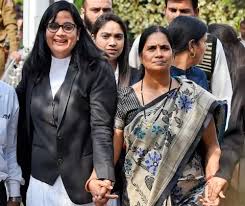
BAREILLY: A special Pocso court in Rampur has sentenced a 26-year-old man to rigorous life imprisonment for brutally raping an 11-year-old hearing and speech impaired Dalit girl and burning her private parts with cigarettes on the night of April 15, 2025. The minor survivor, who remained critical for months with “ruptured internal organs, including uterus”, had to undergo at least three crucial surgeries in Rampur, Moradabad and Meerut. The court also imposed a hefty fine of Rs 6 lakh on the convict. “It was like Delhi’s Nirbhaya case. The girl had about 14 injuries on her body — externally, burns, bruises and deep scratches on her private parts, and her internal injuries were also very severe. She may not be able to recover at all,” said special public prosecutor, Sumit Sharma. On April 15, she went missing from her village in Rampur district and was found without clothes and with gruesome injuries in a farm the next morning. She was unconscious, and in a critical condition, Sharma added. An FIR was registered under BNS section 65 (2) (rape of woman under 12 years of age), among others, along with the Pocso and SC/ST acts following a complaint by the survivor’s mother. Rampur SP, Vidyasagar Mishra, set up three teams which apprehended the accused, Dan Singh Yadav, after a brief encounter on April 16. The accused, a labourer, was identified with the help of CCTV footage and forensic evidence, police said. “Five doctors, who operated upon her, gave their statements. A doctor at LLRM Medical College, Meerut, in her statement, said that during a medical examination, she found deep injuries on the girl’s private parts… During the surgery, a complicated diversion route was created in the stomach via the intestines,” Sharma said. Police submitted enough evidence that included CCTV footage, a packet of condoms, an empty liquor bottle and a beer can with Dan Singh’s fingerprints from the crime scene. Based on the evidence, the court of ADJ Ramgopal Singh pronounced Dan Singh guilty and delivered the verdict on Monday evening. As per the court order, the fine amount will be provided to the survivor for treatment and rehabilitation, Sharma said. Meanwhile, the child’s mother said, “Doctors told me that my daughter may not be able to live a normal life again. Dan Singh should have been hanged to death.” (The victim’s identity has not been revealed to protect her privacy as per Supreme Court directives on cases related to sexual assault) Courtesy : TOI Note: This news is originally published on https:/timesofindia.com/bha and is used purely for non-profit/non-commercial purposes, especially human rights.
Dalit Christians Press For Inclusion In SC list

The protesters pointed out that in 1950, then President of India, Dr. Rajendra Prasad, issued an ordinance stating that individuals who adopt a religion other than Hinduism would not be granted Dalit status. Kurnool: Dalit Christians staged a protest at the district collectorate in Kurnool on Tuesday, demanding Scheduled Caste status for their community. They alleged that Dalit Christians are being denied access to government benefits and welfare schemes. Pastors, sisters, and believers gathered at the Gandhi statue and raised slogans urging the government to grant Scheduled Caste status to Dalit Christians. The protesters pointed out that in 1950, then President of India, Dr. Rajendra Prasad, issued an ordinance stating that individuals who adopt a religion other than Hinduism would not be granted Dalit status. However, six years later, Sikhs were granted Scheduled Caste status, followed by Buddhists. They have been fighting for the same recognition for the past 75 years, but their demand has yet to be met. They urged the government to take up their demand and present it to the Centre for consideration. Pastor David Arulappa, organiser Bhaskar, and others participated in the protest. Courtesy : Deccan Chronicle Note: This news is originally published on https:/deccanchronicle.com/bha and is used purely for non-profit/non-commercial purposes, especially human rights.
Untouchability: A collective failure

Reform must come through education, economic justice, and an overhaul of relevant legal systems. Even 75 years after Independence, a damning truth confronts the country: the chains of caste oppression remain unbroken. The Justice H N Nagamohan Das Commission’s report on internal reservations lays bare an uncomfortable truth – untouchability remains deeply entrenched in our social fabric. This is not merely discrimination; it is a brutal system of oppression that has adapted to modern times while retaining its medieval cruelty. The Commission’s findings shock the conscience: 75 per cent of Scheduled Caste (SC) members still face untouchability, with the Madiga community suffering the worst. The manifestations are barbaric: denial of entry to temples, exclusion from community dining, segregation in schools, separate drinking glasses, and bonded labour. Most shocking are the complaints of sexual violence and forced consumption of human excreta. All 101 SC castes in the state experience some form of discrimination, ranging from severe to moderate oppression, proving that no Dalit community is untouched by this social scourge. The report also flags a disturbing pattern in reporting these atrocities. Only relatively empowered Dalit communities are reported to have filed complaints. While ten communities accounted for more than 100 atrocity cases in the last five years, 45 registered none. This is not because they were spared but due to their dependence on the dominant castes for livelihood, fear of retaliation, and the absence of a supportive environment. The abysmal single-digit conviction rate under the SC/ST (Prevention of Atrocities) Act, caused by police apathy, witness intimidation, and protracted trials, only emboldens perpetrators. Three urgent reforms must guide Karnataka’s response. First, education must be the equaliser. Second, economic empowerment should reach the poorest of Dalits, not just a privileged few within the community. The committee’s identification of the most marginalised subgroups can help targeted welfare policies. Third, the justice system needs an overhaul – exclusive special courts, a witness protection mechanism, and time-bound trials are non-negotiable. The report is not just a document – it is an indictment of our collective failure. Karnataka, which is home to India’s IT revolution, cannot claim progress while such dehumanising practices persist. The state must launch a comprehensive mission that combines education, economic justice, and legal reform. More importantly, civil society and political leadership must demonstrate the courage to confront this shameful reality. Until every Indian can drink from the same well, eat at the same table, and worship in the same temple, our freedom remains incomplete. Only decisive action can redeem the promise of our Constitution. Courtesy : DH Note: This news is originally published on https:/deccanherald.com/bha and is used purely for non-profit/non-commercial purposes, especially human rights.
Decades on, 41 Dalit families in Dharamsala await land ownership rights

As many as 41 Dalit families belonging to the Balmiki community in Dharamsala are still awaiting proprietary rights to the residential plots they have inhabited for several decades. These plots were originally allotted to them in the 1960s by Partap Singh Kairon, the then Chief Minister of the undivided Punjab. However, after the reorganisation of states and the formation of Himachal Pradesh in 1966, the new state government failed to address their longstanding demand for ownership rights. The families have been living on government land bearing ‘’khasra’’ number 3362/1013, measuring 5,113.87 square metres. Over the years, they have constructed permanent (pucca) houses on the land, and some of them are now of the second generation. Despite this, they do not hold any legal title to the land. The issue was recently taken up with Himachal Pradesh Chief Minister Sukhvinder Singh Sukhu by Devinder Jaggi, former Mayor of Dharamsala, who urged the government to grant ownership rights to the Balmiki families, who have now lived on the land for over 60 years. “I have urged the Chief Minister to resolve this decades-old issue and grant ownership rights. It will provide permanent housing security to these families and mark a landmark step towards social justice for the Balmiki community in the hill state,” said Jaggi. In response, the Chief Minister has directed the District Magistrate of Kangra, Hemraj Bairwa to look into the matter and take appropriate action. Speaking to The Tribune, Bairwa confirmed that the issue had recently come to his attention. “This is a long-pending matter. I have taken it up with the government and am hopeful that proprietary rights will soon be granted to the current occupants of these residential plots,” he said. Bairwa has forwarded his recommendations to the Additional Chief Secretary and Finance Commissioner (Revenue) for approval of land regularisation and expansion of the Dalit colonies. Article_Author Kulwinder Sandhu Courtesy : The Tribune Note: This news is originally published on https:/thetribune.com/bha and is used purely for non-profit/non-commercial purposes, especially human rights.
Attack on Dalit family in Mainpuri: In land dispute, miscreants pelted stones, three including a woman injured; demand for police action
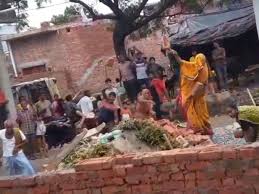
In Mainpuri’s Karhal police station area, a land dispute took the form of caste violence. The incident took place on August 11, when some miscreants in village Ustan tried to close the road by filling the foundation in front of a Dalit family’s house. Radha Devi Balmiki told in her complaint to the SP that when she protested, Raju, Bablu, Bunty, Avnish and Ramsevak Shakya attacked her family with bricks and stones. In this attack, her daughter Kavita suffered serious head injury. Her husband and daughter-in-law Mona were also injured. The accused abused the victim’s family using caste-related language and threatened that they would not let their family live in the village. The victim’s family alleges that the police station did not take any action on their complaint. The video of the incident is going viral on social media. When they appealed to the SP for justice, he assured them of action. The victim’s family said that they did not want any fight but theirs was the only house in the village and the Shakya community was in majority. Ashish Kumar Courtesy : Hindi News
In a historic first, Dalit granted entry into Kallahalli Gullarahatti hamlet in Karnataka: Report
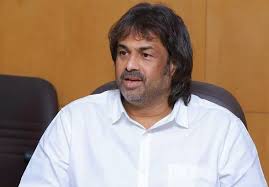
Kudligi: In a notable step towards dismantling entrenched caste discrimination, a Dalit was granted entry into Kallahalli Gullarahatti hamlet in Karnataka’s Kudligi taluk for the first time since Independence, The New Indian Express reported on Tuesday. The breakthrough came after Kudligi MLA N.T. Srinivas and the taluk administration intervened when villagers recently barred a Dalit official from entering the settlement to conduct a survey. Believing that the presence of Dalits would bring misfortune, villagers had historically denied them access. Tahasildar V.K. Netravati, informed of the incident, visited the hamlet along with officials and admonished villagers for adhering to superstitious and unconstitutional practices. The settlement, located on the border and predominantly inhabited by around 130 Yadav households, eventually agreed to allow the Dalit officer entry, marking a break from decades-old exclusionary customs. Srinivas said that following such discriminatory practices, whether knowingly or otherwise, violated constitutional values. “The villagers’ decision to welcome Dalits is a progressive step in terms of development and social justice, as such discriminatory practices are detrimental to society,” TNIE quoted him as saying. Tahasildar Netravati mentioned that officials held a meeting with residents to explain constitutional provisions and the consequences of persisting with caste-based restrictions. “The villagers agreed to respect and welcome Dalit youths and groups into their community,” Tahasildar said. Apart from the ban on Dalits, the villagers reportedly force menstruating women to stay in separate hu Courtesy : Vartha Bharati Note: This news is originally published on https:/varthabharati.com/bha and is used purely for non-profit/non-commercial purposes, especially human rights.
Dalit Basti’s drain broken: Dirty water spread on roads in Khamaria of Saughat, people facing problems in movement
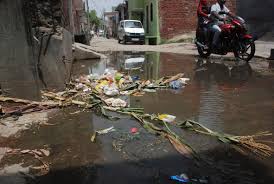
People are troubled due to broken drain in Dalit Basti of Gram Panchayat Khamaria located in Saughat of Basti district. Dirty water is spreading on roads from the drain. This is obstructing movement. Local residents Nagendra Kumar, Suchit Kumar, Mahesh Kumar, Sanyam, Sundar and Dhoop Chand said that water is not able to drain out from the broken drain. This has created a situation of waterlogging in the area. Dirty water is spreading due to this. This can cause health problems. Local people have demanded the Gram Panchayat administration to get the drain repaired. They say that their daily routine is getting affected due to this problem. A quick solution is being demanded from the administration. Arun Kumar, Gandharia Faiz Courtesy: Hindi News