
Dalit student Somnath Suryavanshi custodial death: Bombay High Court orders to form SIT, will the secrets of police torture be revealed?
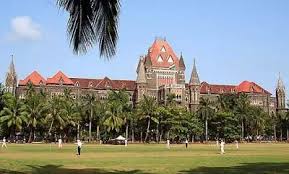
Bombay High Court’s big decision in the case of suspicious custodial death of Dalit law student Somnath Suryavanshi, order to investigate by forming SIT. Aurangabad – The Aurangabad bench of the Bombay High Court has directed the Director General of Police (DGP) of Maharashtra to constitute a Special Investigation Team (SIT) within a week to investigate the suspicious custodial death of Dalit law student Somnath Suryavanshi. This order was passed orally by a division bench of Justice Vibha Kankanwadi and Justice Sanjay A. Deshmukh. The court clarified that the inquiry committee appointed earlier by the state government will be dissolved and all documents related to it will now be handed over to the new SIT. The bench said, “If the petitioner Vijayabai Venkata Suryavanshi has any objection to the members of the SIT, she can register it before the court.” Petitioner’s allegation This interim order was given on the petition of Somnath’s 61-year-old mother Vijayabai Suryavanshi. He alleged that his son was illegally detained and brutally tortured in police custody during a peaceful demonstration in Parbhani in December 2024. Later, the authorities tried to hush up the case by calling his death a heart attack. Somnath, a final year law student from Latur and belonging to the Scheduled Caste community, was arrested while recording on camera a protest against the desecration of the replica of the Constitution near the statue of Dr Bhimrao Ambedkar in Parbhani. FIR and Supreme Court proceedings On July 4, 2025, the High Court directed the Parbhani police to register an FIR within a week. The court had said that prima facie evidence of custodial torture and violation of fundamental rights exists. After this, on July 30, the Supreme Court dismissed the petition of the Maharashtra government, which challenged the High Court’s order to register an FIR. Custodial torture and death The petition said Somnath was illegally arrested despite peacefully recording the protest while carrying a copy of the Constitution. After being produced before a magistrate on December 12, 2024, he was handed over two days of police custody during which he was brutally beaten. His condition deteriorated further when he was produced before a magistrate again on December 14. He was then sent to judicial custody, where he suddenly died at 6:49 am on December 15. While the police attributed the cause of death to chest pain, the postmortem report of a seven-member medical team cited 24 serious injuries and stated the cause of death as “shock resulting from multiple injuries”. Alleged bargaining attempt The petitioner alleged that upon reaching Parbhani, he was taken to the IG by police officer Ashok Ghorband, where he was told that other sons of the family could be given police jobs and was asked not to file a complaint in exchange for Rs 50 lakh. Also, he was advised to perform the last rites in Latur. But he turned down these proposals and demanded that his son’s death be registered as a custodial murder. Court’s strict comment The High Court said that the judicial inquiry conducted under Section 196 of the Indian Civil Security Code (BNSS) found serious human rights violations and the death was directly linked to custodial beating. The court reprimanded the state government and said, “When the constitutional rights of a person are violated while in custody, this court cannot remain a silent spectator.” The bench also questioned the delay of the CID and the credibility of the internal investigation. The court said that the CID tried to get a second opinion from JJ Hospital, Mumbai by bypassing the doctors who conducted the postmortem, which casts doubt on the investigation. Order of SIT inquiry The court directed to register an FIR on the basis of the petitioner’s complaint lodged on December 18, 2024 and get the case investigated by a Deputy Superintendent of Police under the SIT. Also, CID officer D.B. The earlier order restraining Talpe from filing the final report has now been revoked. Welcoming the decision, advocate Hitendra Gandhi, appearing for the petitioner, said, “The order to form an SIT in the case of Somnath Suryavanshi’s death is a big step towards justice. We hope that the SIT will conduct an impartial investigation and bring out the truth and the culprits will be punished.” Rajan Chaudhary Courtesy : Hindi News
Punjab’s inter-caste marriage horror: Dalit family evicted from village, house vandalised and looted
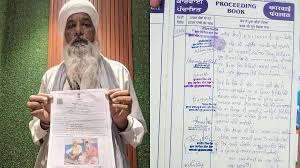
After an inter-caste marriage in Muktsar’s Eena Kheda village, a Dalit family had to leave the village, house vandalised and looted. Police arrested three people. Bathinda: A Dalit family of Eena Kheda village in Muktsar district of Punjab has been living outside the village for the past one month after their son’s inter-caste marriage. The family alleges that the house was vandalised and looted in their absence, which is being done by the girl’s relatives. 22-year-old Surinder Singh, who belongs to the Dalit community, married an 18-year-old Jat Sikh girl from his own village on July 7. The marriage took place at a gurdwara in Sri Ganganagar (Rajasthan) and both of them also received a legal marriage certificate. But this marriage spread tension in the village, as earlier the Panchayat had passed a resolution opposing ‘marriages within the same village’. Surinder’s father Malkit Singh, an Amritdhari Granthi, and his uncle Gurmeet Singh, a painter by profession, said they had to leave the village and take shelter with relatives after their son and daughter-in-law eloped and got married. They allege that a few days later, a group led by the girl’s family broke into their house, broke things and stole things. When they returned home, they were abused with casteist slurs. The family has filed a police complaint and demanded justice. “The village panchayat may oppose our son’s return, but that does not mean we have to suffer humiliation and violence,” Malkit Singh said. Police action Malout DSP Iqbal Singh Sandhu said action was taken after receiving a complaint on Friday. Police arrested three people, including the girl’s father and brother, under Section 126/170 of the BNSS as a precautionary measure. “We are taking steps to prevent the situation from worsening and turning into a full-blown caste conflict,” he said. This incident has come to light after the case when on July 29, the mother of a youth was also attacked in Ghal Kalan village of Moga district because her son had married a girl from the same village. In that case, the Punjab State Women Commission had taken cognizance and an FIR was registered against many accused including the village sarpanch. Opposition to marriages in the same village increased Panchayats of many villages in Punjab have passed resolutions in recent months opposing marriages taking place in the same village. Panchayats justify this by citing social tradition and pressure on the community. However, rights activists and legal experts are calling these resolutions unconstitutional and discriminatory. Rajan Chaudhary Courtesy : Hindi News
Blocked Drains, Denied Dignity: Dalit Family in UP Faces Caste-Based Discrimination

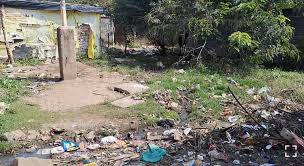
The root of the problem lies in a discriminatory practice: while drainage water from upper-caste households flows freely into the village pond, the drain serving the Dalit community is deliberately blocked, forcing the filth to accumulate near their homes. Firozabad- Despite constitutional safeguards and stringent laws like the SC/ST (Prevention of Atrocities) Act, 1989, caste-based discrimination continues to manifest in insidious ways. For Dr. Pardeep Kumar, a PhD holder in Mathematics from Dayalbagh University, Agra, the battle is not just against systemic neglect but also against the silent atrocities inflicted by caste prejudice in his own village. A resident of Gadora village in Firozabad district, Dr. Kumar, who is specially abled, lives with his family in conditions worse than urban slums, surrounded by stagnant, sewage-filled water that floods their home during rains. The root of the problem lies in a discriminatory practice: while drainage water from upper-caste households flows freely into the village pond, the drain serving the Dalit community is deliberately blocked, forcing the filth to accumulate near their homes. In Gadora village, Firozabad district, drainage water from upper-caste households flows freely into the village pond. However, the drain serving the Dalit community is intentionally blocked, forcing sewage to accumulate near Dr. Kumar’s home. During monsoons, the stagnant water floods his house, mixing with waste and buffalo dung dumped by an upper-caste neighbor. The filth has turned the area into a breeding ground for mosquitoes, leading to severe health consequences. Dr. Kumar’s mother and niece recently suffered from dengue, a direct result of the unhygienic conditions. Despite multiple complaints to local authorities and the Uttar Pradesh government, no action has been taken. “This is not just about dirty water, it’s about dignity,” says Dr. Kumar. “Even with education and awareness, we are denied basic rights because of our caste.” Academicians and activists highlight that while violent caste crimes grab headlines, systemic neglect—such as denying proper drainage—is an equally brutal form of oppression. “These silent atrocities reinforce untouchability,” says Dr. Krishan Kumar, a scholar on Dalit issues. “Authorities must recognize such discrimination and act under the SC/ST Act.” The case also exposes the failure of schemes like Swachh Bharat Mission, which promise sanitation for all but remain inaccessible to marginalized communities. Local officials claim the matter is “under review,” but villagers allege caste bias is delaying justice. Legal experts stress that such cases warrant immediate intervention under anti-atrocity laws. As Dr. Kumar’s family waits for justice, their plight indicates a harsh truth: caste still dictates who gets dignity, and who is denied even the most basic rights. — ✍️ Dr. Krishan Kumar Courtesy : The Mooknayak Note: This news is originally published on https:/themooknayak.com/bha and is used purely for non-profit/non-commercial purposes, especially human rights.
Clean City, Dirty Truth: The Invisible Suffering of Bhopal’s Sanitation Workers Behind the 7-Star Swachh Bharat Glory
Sanitation workers employed under the Bhopal Municipal Corporation, who risk their lives and health in one of the most physically demanding public roles, are being paid on minimum wages and on temporary basis. Bhopal- On 17th July 2025, Bhopal , the capital of Madhya Pradesh was declared the second cleanest city in India in the Swachh Survekshan 2024-25 rankings, in the category of municipalities with populations above 10 lakhs. The city also achieved the status of a 7-Star Garbage Free City and was certified as a Water Plus City under the Swachh Bharat Mission. But while the city celebrates these achievements, the lives of those who made this success possible remain trapped in neglect, poverty, and exploitation. Behind every clean street and every garbage-free locality are thousands of sanitation workers, most of whom belong to historically oppressed castes, working in dangerous, dehumanising conditions. Despite being essential to the city’s public health and image, their rights are being exploited by the very Municipal corporation and are treated as disposable. The wife of the sanitation worker doing kitchen chores. The wife of the sanitation worker doing kitchen chores. Pragya Sharma/The Mooknayak “We are human too, but nobody seems to care about our condition.” This was the quiet pain in the voice of a sanitation worker I met in Sargam Basti, a slum in Bhopal that many safai workers, call home. He did not want to be named, but his words carried the weight of generations of injustice. “The Bhopal Municipal Corporation pays me ₹8,200 per month. I have three small children who go to school. My wife manages the household. We need milk, sometimes medicine, school fees . How are we supposed to manage everything with this amount?” There was no anger in his voice. Just exhaustion. The exhaustion of someone who rises at 4 a.m. every day to clean the city yet cannot afford to fix the leaking roof of his jhuggi. He added, “Sometimes I wonder , even if my children study hard and get educated, will their life be any different from mine? But then I think, maybe their fate can change. That hope is what gets me out of bed every morning.” Sanitation workers, many of whom are hired on contract, are denied basic facilities , no health insurance, no safety gear, no permanent employment status, and no social security. In another home nearby, a woman shared her family’s daily struggles: “My husband works in the municipal corporation as a sanitation worker. He earns approx. ₹10,000 a month, but that’s not enough to run the house. I have to go to two or three houses every day to wash dishes and clean floors. We both work from morning to evening, yet we still can’t make ends meet.” “We’re always in debt. Sometimes it’s school fees, sometimes medicine, sometimes basic groceries. There’s always something.” These are not isolated stories. There are hundreds of families like theirs, living in slum areas (jhuggi-bastis)around Bhopal. Ironically, they clean the city every day but live in places with no proper sanitation, surrounded by garbage, open drains, and the very unhygienic conditions they are hired to remove from public view. Their suffering is undocumented and unacknowledged. The house of a sanitation worker from inside. The house of a sanitation worker from inside.Pragya Sharma/The Mooknayak Workers Who Clean the City but Are Denied a Life of Dignity The Swachh Bharat Mission, despite its visible outcomes in city like Bhopal, has failed to protect the rights and welfare of the very people implementing it on the ground. Sanitation workers, many of whom are hired on contract, are denied basic facilities , no health insurance, no safety gear, no permanent employment status, and no social security. The BMC continues to employ them at minimum wages, sometimes through third-party contractors. These are not just labour issues , they are structural caste injustices. The fact that the majority of these workers come from Dalit communities is not a coincidence. It reflects a deeply rooted caste division of labour, where certain communities are still forced into degrading work with no safety net, no voice, and no visibility. The roof of the workers house they called home. The roof of the workers house they called home. Pragya Sharma/The Mooknayak Wages Below Legal Minimums The injustice becomes even more stark when we compare their earnings to the Collector Rate, the minimum wage set by the District Collector for daily wage laborers in Madhya Pradesh. These rates, revised in April 2025, are meant to act as a benchmark for fair wages. According to the revised rates: Skilled workers: ₹570.93 per day or ₹12,294/month Highly skilled workers: ₹633.43 per day or ₹13,919/month Despite this, sanitation workers employed under the Bhopal Municipal Corporation, who risk their lives and health in one of the most physically demanding public roles, are being paid on minimum wages and on temporary basis. According to the Urban Administration and Development Department and the provisions under the Municipal Corporation and Municipal Council Acts, there is a clear mention of providing special financial allowances to sanitation workers. However, in practice, no such special allowance is given by the municipal corporations. This is despite the fact that sanitation workers carry out the most hazardous and lowest-paid work, putting their health and future at risk to fulfill the responsibility of keeping cities clean. This isn’t just a legal failure. It’s a moral one. Many of these workers are kept on temporary contracts without any form of health insurance, paid leave, or job security. Several suffer from occupational illnesses like skin diseases, respiratory issues, tuberculosis, and injuries from unsafe waste-handling practices. But because they remain undocumented or informal workers, no health surveys or welfare policies reach them. Ironically, while the Swachh Bharat Mission mandates regular audits and rankings of cleanliness infrastructure, there is no nationwide mechanism to track the conditions or health of sanitation workers. Their labour remains essential, but invisible. The fact that the majority of these workers come from Dalit communities is
Over 30 Organisations Condemn Arrest of Dalit Activist Advocate Rajat Kalsan
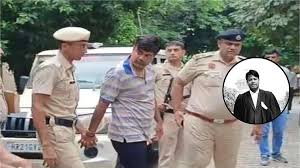
Over 30 organisations and prominent individuals denounce the arrest of Dalit lawyer Rajat Kalsan, allege unlawful detention, torture, and fabricated charges. New Delhi – More than 30 student groups, civil society organisations, and prominent individuals have issued a joint statement condemning the arrest of Dalit activist and lawyer Adv. Rajat Kalsan, who was allegedly abducted by men in plain clothes from the Auto Market in Hisar on July 30 without being shown an arrest warrant or legal documents. According to the statement, the arrest was linked to a case concerning the murder of a woman in Budana village, Hisar. Rajat Kalsan, who had been representing a survivor of caste atrocity and sexual assault, was accused of circulating a video alleging corruption in the investigation. Although he secured interim bail in the matter, he was subsequently booked in another case for allegedly obstructing police officials. The statement alleges that while in custody, Kalsan was denied access to his lawyers and family, subjected to torture, and faced casteist abuse. It also claims that his house had been raided multiple times in the past month, his movements kept under surveillance for a year, and his social media account blocked by the Haryana police. Kalsan has been booked under several provisions of the Bharatiya Nyaya Sanhita (BNS), including Sections 121(1), 132, 196, 62, 49, 115, 126, 353(1), 353(2), 356(2), 352, 351(3), and 3.5. The signatories note that some of these offences are non-bailable and carry punishments ranging from two to ten years of imprisonment, fines, or both. They allege that these charges have been “strategically framed” to ensure his prolonged incarceration. Long-standing Activism The statement highlights Kalsan’s role in pursuing cases of caste atrocities in Haryana, including the Mirchpur violence, Hisar gang rape, Daulatpur assault, and Bhatla social boycott incidents. He also took part in mobilisations against the 2018 dilution of the SC/ST (Prevention of Atrocities) Act, which, the groups argue, made Dalits and marginalised communities more vulnerable to caste violence. According to the signatories, his consistent work for Dalit rights has made him a target of state repression. Broader Context of Repression Drawing parallels with the Bhima Koregaon arrests and detentions during anti-CAA protests, the statement alleges that Kalsan’s arrest reflects a broader pattern of silencing voices that challenge caste domination, communalism, and authoritarianism. “This is not an isolated instance, but part of a growing trend of state repression against those who challenge communal hatred, caste oppression, and fascist rule,” the statement reads. Demand for Immediate Release The joint statement calls for the withdrawal of all charges against Adv. Rajat Kalsan and urges solidarity with others incarcerated for “resisting injustice.” Signatories Among the 35 organisations endorsing the statement are the All India Students Association (AISA), JNU Students’ Union, Students Federation of India (SFI), Birsa Ambedkar Phule Students’ Association (BAPSA), and Fraternity Movement. Notable individual signatories include Prof. Achin Vanaik, Adv. Sudha Bharadwaj, Dr. Anand Teltumbde, and Women’s rights activist Kalyani Menon Sen. Courtesy : Tne Mooknayak Note: This news is originally published on https:/themooknayak.com/bha and is used purely for non-profit/non-commercial purposes, especially human rights.
Bombay High Court orders SIT probe into custodial death of Dalit law student
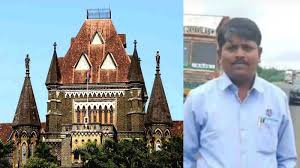
The Aurangabad Bench of the Bombay High Court dissolves earlier inquiry panel; says constitutional rights “prima facie violated” in Somnath Suryawanshi case. In the custodial death case of Somnath Suryawanshi, the Aurangabad Bench of the Bombay High Court has directed the Maharashtra Director General of Police (DGP) to set up a Special Investigation Team (SIT) within one week. The court orally passed the order on August 14, 2025. A Division Bench comprising Justice Vibha Kankanwadi and Justice Sanjay A. Deshmukh observed that the Inquiry Committee earlier appointed by the Maharashtra Government will be dissolved, and all documents related to the 35-year-old Dalit law student Suryawanshi’s custodial death will now be handed over to the new SIT. Magisterial probe holds cops responsible for custodial death of Parbhani protester “If the petitioner, Vijayabai Venkata Suryawanshi, has any objections to the members of the SIT, she may register them before the court,” the Bench observed. Advocate Hitendra Gandhi representing Ms. Suryawanshi, told The Hindu, “The High Court’s direction to constitute a SIT in the custodial death case of Somnath Suryawanshi is a significant step forward, we hope the SIT will conduct a fair and thorough investigation to deliver justice that has long been denied. This order restores faith that the truth cannot be buried, and accountability will have to follow.” On July 4, 2025, the court directed the Parbhani police to register a First Information Report (FIR) within a week, noting prima facie evidence of custodial torture and violation of fundamental rights. The Bench passed the interim order in response to a petition filed by Mr. Suryawanshi’s 61-year-old mother, Vijayabai Vyankat Suryawanshi. The petitioner alleged that her son was subjected to brutal torture during his illegal detention following a protest in Parbhani on December 11, 2024, and that authorities subsequently attempted to cover up his death as a cardiac incident. Mr. Suryawanshi, a final-year law student and a member of a Scheduled Caste family from Latur, was reportedly arrested while filming a protest against the desecration of a replica of the Constitution near a statue of Dr. B.R. Ambedkar. The petition alleged that despite the peaceful nature of the demonstration, he and several others were picked up during an indiscriminate police crackdown, subjected to custodial assault, and denied timely medical attention. On July 30, 2025, the Supreme Court dismissed a petition filed by the Maharashtra government challenging a Bombay High Court order directing the police to register a FIR. Mr. Suryawanshi, a final-year law student and a member of a Scheduled Caste family from Latur, was reportedly arrested while filming a protest against the desecration of a replica of the Constitution near a statue of Dr. B.R. Ambedkar. The petition alleged that despite the peaceful nature of the demonstration, he and several others were picked up during an indiscriminate police crackdown, subjected to custodial assault, and denied timely medical attention. The petition stated, “In the videos, it could be seen that Somnath was carrying the book of the Constitution of India and recording the incident in the protest. His arrest was illegal and then he was subjected to inhuman atrocities. He as well as other persons were produced before the Magistrate on 12.12.2024. The others were also subjected to brutality and their injuries were visible, swollen, however, they were afraid to speak to the Magistrate due to the threats those were given.” It further said that the Court had granted police custody of two days. “Further brutal assault was given to Somnath. His situation worsened when he was again produced before the Magistrate on 14.12.2024. Thereafter, his custody was transferred to Magisterial custody. Around 6.49 a.m. suddenly Somnath died on 15.12.2024, while in judicial custody,” the petition read. It was further submitted that police claimed Mr. Suryawanshi had complained of chest pain prior to his death. The petitioner also alleged that on reaching Parbhani, she was taken by Police Officer Ashok Ghorband to the Inspector General of Police, where she was informed that Somnath’s brothers could be offered police jobs and was advised to perform the last rites in Latur instead of Parbhani. She further claimed she was offered ₹50 lakh to refrain from filing a complaint. She declined, demanding that her son’s death be acknowledged as custodial murder and not classified as death by natural causes. The court noted that the post-mortem, conducted by a seven-member medical team, had recorded 24 visible injuries and concluded that the cause of death was “shock following multiple injuries”. A judicial inquiry under Section 196 of the Bhartiya Nagrik Suraksha Sanhita (BNSS) also reportedly found gross human rights violations and directly linked the death to custodial assault. “This Court cannot remain a mute spectator when constitutional rights of a person in custody are prima facie violated,” the Bench observed, criticising the State for failing to register a cognisable offence despite substantial evidence from the post-mortem, inquest report, and the magistrate’s findings. The Bench further questioned the delay by the CID in acting on the findings and expressed concern over the credibility of the internal inquiry, which bypassed the autopsy doctors and instead sought a second opinion from J.J. Hospital, Mumbai. The court directed that an FIR be registered based on the petitioner’s complaint dated December 18, 2024, and that the investigation be handed over to a Deputy Superintendent of Police. The prior order restraining CID officer D.B. Talpe from submitting a final report has been vacated following this direction. Purnima Sah Courtesy : The Hindu Note: This news is originally published on https:/thehindu.com/bha and is used purely for non-profit/non-commercial purposes, especially human rights.
Revision of report on internal reservation for Scheduled Castes sought; protest staged
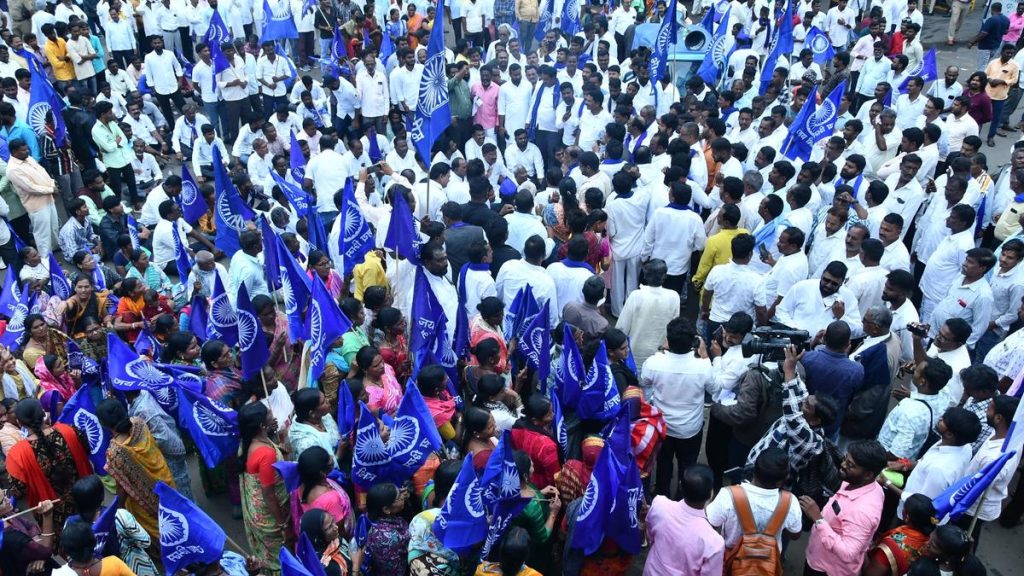
Members of the Dalit Right community take out a procession and stage a demonstration outside the Deputy Commissioner’s office in Kalaburagi Thousands of the Dalit Right community members took out a procession and staged a demonstration outside the Deputy Commissioner’s office in Kalaburagi on Thursday, opposing the H.N. Nagamohan Das Commission report on internal reservation among Scheduled Castes. Organised under the banner of Scheduled Castes Right Community Internal Reservation Protection Committee, community leaders, members of caste-based organisations and supporters gathered at Jagat Circle where they paid floral tributes to B.R. Ambedkar before marching to the Deputy Commissioner’s office. The rally, accompanied by drum beats, echoed with slogans such as Jai Bhim and Down with the biased Nagamohan Das report. Banners emblazoned with Jai Bhim fluttered during the procession. Upon reaching the district administrative complex, the protesters blocked vehicular movement for nearly two hours disrupting traffic movement. As vehicles were diverted to different roads, several narrow streets and circles saw traffic jams and heavy congestion. The agitators, meanwhile, in a symbolic gesture of dissent, burnt copies of the Nagamohan Das Commission report. They said that the Nagamohan Das Commission report is unscientific and the recommendations of the report appear to be highly biased. They also noted that the report wrongly clubbed several sub-castes belonging to the Scheduled Castes Right group under the Scheduled Castes Left thereby affecting the distribution of internal reservation benefits. “There are several flaws in the Nagamohan Das Commission report. Many castes which are part of the Scheduled Castes Right have been brought under Scheduled Castes Left. The Scheduled Castes Right communities population size has also been shown smaller than their actual size,” State vice-president of the BJP’s Scheduled Castes Morcha Ambaraya Ashtagi said during the protest. Clarifying that the protest is not against the Madiga community, which got a relatively greater share in the Scheduled Castes reservation in the commission’s report, another Dalit Right leader Arjun Bhadre said that the Scheduled Castes Right communities did not have an objection to the 6% reservation allocated to Scheduled Castes Left communities which include the Madigas. “This is not a fight against the Madiga community. We have no objection to the 6% reservation they enjoy. This is a struggle to secure a fair share of internal reservation for the Scheduled Castes Right communities based on our actual population,” he said. Mr. Bhadre also noted that most enumerators were instructed to use a specific app for the survey but were not provided equipment/tablets. “Later, the app was uninstalled from their devices resulting in the deletion of thousands of survey entries and a re-survey was conducted for those families. The abrupt shift in survey method from ration card-based to Aadhaar-based resulted in the leaving out of at least eight lakh children who did not have Aadhaar. The enumerators were not provided identity card, leading to unverified surveys and most of the Scheduled Castes population was not covered,” Mr. Bhadre said. Leaders who spoke at the agitation site said that the population size of the Scheduled Castes Right communities was around 40 lakh and criticized the Nagamohan Das Commission for recording it as 30 lakh. “Around 10 lakh-15 lakh Dalit Christians were wrongly included under the Scheduled Castes Left category. These numbers must be corrected and our (Scheduled Castes Right) rightful share in internal reservation ensured. The government should approve the report only after such corrections are made,” Mr. Bhadre insisted. A memorandum, addressed to the Chief Minister, was later submitted to the district administration before the protest concluded. Prominent Scheduled Castes Right leaders including Mariyappa Halli, Vishal Dargi, A.B. Hosamani, Basanna Singe, Dinesh Doddamani, Mallappa Hosamani, Arjun Gobbur, Ramesh Pattedar, Mahantappa Sangavi and Srinivas Khelagi participated in the agitation. Courtesy : The Hindu Note: This news is originally published on https:/thehindu.com/bha and is used purely for non-profit/non-commercial purposes, especially human rights.
Protest held in Mysuru against Nagamohan Das Commission report on internal reservation
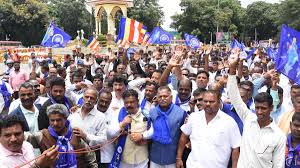
The protest was called by the Karnataka State Federation of Dalit Right Groups, which alleged that their population was undercounted and hence, the quantum of reservation has been reduced. The federation urged the government to reject the report and conduct the survey afresh for providing internal reservations. It alleged that more than 40 lakh people belonging to various sub-castes under Dalit right groups were either kept out of the purview of the survey or were not enumerated at all. Instead of the Dalit right groups, members of other castes have been included in Chitradurga, the federation said. Besides, more than 40% of the people under Bengaluru city limits have not been accounted for, it added. Instead of carrying out the survey for a projected population of 1.47 crore, the survey has been restricted to 1.16 crore people, out of whom, 1.05 crore people were surveyed, according to the leaders of the federation. The report was also faulted for not adhering to the norms stipulated for recommending the reservations based on sub-castes. Community leaders allege that faulty enumeration has led to serious errors in data collection, and hence the recommendations are based on false figures. Urging the State government to reject the report, the federation warned that all elected representatives from the SC community in Congress will have to face the consequences. In case the report was accepted by the government, all MLAs and Ministers belonging to SC right groups should tender their resignation, the federation added. Courtesy : The Hindu Note: This news is originally published on https:/thehindu.com/bha and is used purely for non-profit/non-commercial purposes, especially human rights.
Communal Tensions Erupt After 40-Year-Old Dalit Woman Brutally Murdered In Madhya Pradesh’s Burhanpur
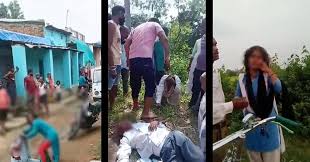
The city observes Burhanpur Bandh and markets remained closed; accused in police custody Burhanpur (Madhya Pradesh): Madhya Pradesh’s Burhanpur district observed a ‘Bandh’ on Thursday morning as communal tensions flared up after the brutal murder of a 40-year-old woman by a man belonging to a minority community on Wednesday evening. SP Ashutosh Bagri said that the accused has been arrested and FSL team is collecting evidence from the spot for further investigation. After the post-mortem, enraged members of Vishwa Hindu Parishad (VHP), Bajrang Dal, Hindu Mahasabha, Bhim Army, and BSP took out a funeral procession in the town on Thursday morning. Police made tight security arrangements to maintain law and order in the town. Traversing the main streets of the town, they submitted a memorandum to SDM Ajmer Singh Gaur, demanding capital punishment for the accused. During the rally, participants raised slogans and urged people to close their businesses. They expressed concerns over rising violence and urged authorities to take strict action against the perpetrators. They had also gheraoed Shikarpura police station, demanding capital punishment against the accused on Wednesday evening. MLA Archana Chitnis met the victim’s family and assured them of strict action against the accused and financial assistance. She said she had talked to CM Mohan Yadav. As per reports, the incident occurred at victim Sharda Sirture’s home, when accused Sheikh Salim, of Maharashtra, barged into the house and attacked her with a hammer. Sharda’s brother-in-law Mithun Sirture tried to intervene and got into a scuffle with Salim. However, Salim pushed him away and struck Sharda on the head three to four times. She sustained a skull fracture and bled profusely. She was rushed to the hospital but succumbed to her injuries at the district hospital. Sharda’s husband, Manoj Sirture, said that she had left home for work on Wednesday and he was not at home during the incident, as their son was in hospital. SP Bagri said that prima facie, the incident occurred due to personal relations between the victim and accused, which had gone sour for some reason. To maintain peace, additional police forces have been deployed in the area as community members seek justice for Sharda. Courtesy : TFPJ Note: This news is originally published on https:/thefreepressjournal.com/bha and is used purely for non-profit/non-commercial purposes, especially human rights.
40yo man gets life in jail for raping Dalit girl in 2022

Meerut: A special Pocso court in Bulandshahr sentenced a 40-year-old man to life imprisonment for raping and threatening a 15-year-old Dalit girl three years back. The court also imposed a fine of Rs 50,000 on him. Special public prosecutor Mahesh Raghav said, “On July 7, 2022, while the girl was alone at her house, a man from her neighbourhood barged in and raped her. He then threatened to kill her if she reported the incident. After her parents, who work as sanitation workers, returned from their shifts, the survivor narrated her ordeal.” Based on her parents’ complaint, an FIR was registered under IPC sections 376C (rape) and 442 (house trespass), section 5/6 of the Pocso Act, and 3(2) (V) SC/ST Act. Subsequently, the accused was arrested and a chargesheet was filed in the court. “During the trial, six witnesses testified. The girl’s testimony and medical report played a crucial role in the conviction. The man’s pleas for mercy were rejected,” he added. While pronouncing the sentence on Wednesday, the court of Additional District Judge Manoj Kumar Singh observed, “Such a heinous and most serious crime of aggravated sexual assault has left a negative impact on the body and mind of the victim.” Courtesy : TOI Note: This news is originally published on https:/timesofindia.com/bha and is used purely for non-profit/non-commercial purposes, especially human rights.