
Dalit man dies in police custody: Allahabad High Court seeks response from Yogi government, demands ₹25 lakh compensation
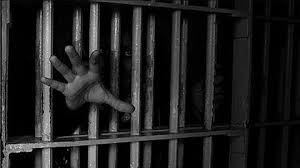
Nawabganj Police Station Death Case: Petitioners demand ₹25 lakh compensation for the family and a High Court-monitored investigation Prayagraj: Hearing a public interest litigation (PIL) seeking an investigation into the death of a Dalit man in police custody at Nawabganj police station in Prayagraj, the Allahabad High Court has directed the state government to file its response (counter affidavit) within two weeks. The petitioners have also demanded ₹25 lakh compensation for the deceased’s family members. The family alleges that the man died due to torture in custody on the police station premises, while the police claim he died of a heart attack. Hearing a public interest litigation (PIL) filed by the Advocates Forum and two others, a division bench of Justice Siddhartha and Justice Santosh Rai, in its order on Wednesday, directed the PIL to be listed before the appropriate court on October 10 for further hearing. According to the petitioner’s lawyer, Charlie Prakash, on May 27, the police picked up Hira Lal, a laborer, from his home in connection with a theft case in which no one was named. It is alleged that no family member was allowed to meet Hira Lal, and later the police informed him that Hira Lal had died. Family members were asked to go to the mortuary at Swaroop Rani Nehru Hospital. The PIL alleges that Hira Lal’s body was not handed over to the family members, and the police cremated him at the Daraganj Ghat in Prayagraj. “This is a case of brutal custodial death and murder by the police within the police station premises, in violation of Article 21 (right to life and personal liberty),” argued Charlie Prakash, the petitioner’s lawyer. They demanded the formation of a high-level, independent, and impartial committee headed by a retired High Court judge to investigate the illegal detention, custodial torture, and custodial death of Hira Lal, a resident of Narrepar village, Buduna, under the Nawabganj police station. The PIL also stated, “The investigation should be conducted under the supervision of the High Court and should submit its report within a stipulated time.” Rajan Chaudhary Courtesy: Hindi News
88 locations in 23 districts of Madhya Pradesh declared sensitive for SC-ST crimes
Experts believe that policing alone will not solve the problem. Caste tensions and old rivalries remain a major challenge in these areas. Bhopal. The increasing incidents of crimes against Scheduled Castes (SC) and Scheduled Tribes (ST) in Madhya Pradesh have worried the government. The Home Department, after reviewing the situation in the state, found that cases of such crimes are increasing rapidly in more than half of the districts. Consequently, 88 locations in 63 police station areas across 23 districts have been declared sensitive areas. Police will now develop a special strategy to control crime in these areas. According to the Home Department report, incidents of atrocities against Dalits and tribals have steadily increased in the past few years. Caste disputes, old rivalries, and land disputes, especially in rural areas and small towns, give rise to such incidents. The government has taken this seriously and identified sensitive areas across the state. By issuing a notification, the Superintendents of Police of all the districts have been instructed to maintain special vigilance in these areas and resolve even small disputes immediately. Which areas are sensitive? The police stations and areas declared sensitive include Kotwali in Mandla district, Kosmi and Bharveli in Balaghat, Kotwali and Ganjbasoda in Vidisha, Shujalpur City and Shujalpur Mandi in Shajapur, Vaydinagar in Mandsaur, rural areas, Itarsi and Kotwali in Narmadapuram, Kotwali in Dhar, Padma Nagar, Mandhata and Pandhana in Khandwa, Simrol in Indore, Kotwali, Station Road, Civil Lines and Bamnor in Morena, rural areas in Bhind, Industrial Area and Piplawa in Dewas, Gorabazar in Jabalpur, Kotwali, Cantt, Vijaypur, Aron and Madhusudangarh in Guna, Sirsod, Dinara, Amola, Indaur, Bhaunti, Pipariya and Shivpur in Shivpuri, Sarani and Amla in Betul, Obaidullaganj in Raisen, Bahodapur, Janakganj, Jhansi Road, University and Thathipur in Gwalior, Cantt, Baheria, Banda and Rahatgarh in Sagar. These include Damoh Kotwali, Chhatarpur Civil Lines, Lavkushnagar and Jujharpur, Tikamgarh Kotwali, Ashoknagar Kotwali, Dehar, and Bahadurpur. These steps will be taken According to the Home Department’s notification, steps such as establishing police outposts, community awareness campaigns, and resolving old disputes will now be taken in areas declared sensitive. Police forces have been instructed to take immediate action upon receiving complaints of any incident and assure victims of safety. Furthermore, efforts will be made to build mutual trust by increasing communication with organizations associated with Dalit and tribal communities. Action under the SC/ST Act The state government has also clarified that sensitive areas have been identified under the Scheduled Castes and Scheduled Tribes (Prevention of Atrocities) Act. This Act provides for the protection of victims’ rights, prompt investigation, and strict punishment for the perpetrators. The Home Department states that this step will not only reduce crime but will also reassure Dalit and tribal communities that the administration is committed to their safety. The Challenge of Social Harmony Experts believe that policing alone will not solve the problem. Caste tensions and old rivalries remain a major challenge in these areas. Therefore, community-based initiatives and the promotion of social harmony are also essential. The government has indicated that in the future, peace committees will also be activated in these sensitive areas to prevent minor disputes from escalating into major crimes. What is the SC-ST Atrocities Prevention Act, 1989 Under the Scheduled Castes and Scheduled Tribes (Prevention of Atrocities) Act, 1989, physical assault on Dalits and Adivasis, caste-based insults, land grabbing, forced labor, or social boycott are considered crimes. These cases are investigated by DSP-rank officers, and special courts have been established for speedy trials. This law provides for imprisonment ranging from 6 months to 5 years and a fine for convictions, while serious crimes such as murder, rape, or mass violence can result in up to life imprisonment. Most offenses under the Act are non-bailable, and victims are provided compensation, legal aid, and protection. Ankit Pachauri Courtesy: Hindi News
Rajasthan: Controversy over temple entry in Churu: Dalit youths allegedly assaulted, tension escalates after video goes viral
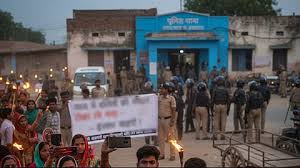
In an incident in Sadasar village of Sardarshahar, youths who went to visit the temple after the Bhagwat Katha were allegedly subjected to caste discrimination and assault. Police filed an FIR after the video went viral. Churu, Rajasthan: A serious controversy has erupted over entry into a temple in Sadasar village of the Sardarshahar tehsil of the district. It is alleged that some youths from the Dalit community were not only prevented from entering the temple but were also assaulted and subjected to casteist remarks. A video of the incident went viral on social media, creating tension in the area, and the police have registered a case and launched an investigation. What is the whole matter? The incident occurred during a procession marking the conclusion of a Bhagwat Katha event held in the village. After the procession, 19-year-old Kanaram Meghwal, along with his friends Sandeep, Mukesh, Vishnu, and Kaluram, went to visit the Thakurji temple in the village. According to the FIR filed by the victim, Kanaram, some people already present in the temple premises stopped them, citing their caste. Allegations of Assault and Caste-Based Insults According to the complaint, when the youths protested this discrimination, the accused, Surajdas Swami, Shankarlal, Himmat Kumar, and Anil, began abusing them. The dispute escalated to the point where the accused allegedly slapped and punched them. Kanaram also alleged that Shankarlal attacked his hand with a stick, injuring him and causing him to fall. The FIR also states that the accused shouted threats in front of the crowd, saying, “We will not allow any Dalit to enter the temple.” Police Initiated Action As soon as the video of the incident went viral, the administration swung into action. Based on the victim’s complaint, a case has been registered at the Bhanipura police station under relevant sections. Meanwhile, members of the Dalit community, enraged by the incident, protested outside the police station, demanding the immediate arrest of the accused. Police have been deployed to maintain peace in the village. Police officials have assured a fair investigation and strict action against the culprits. Rajan Chaudhary Courtesy: Hindi News
A Dalit family in Chhatarpur, Madhya Pradesh, is burdened with debt! Father and 2-year-old son dead, wife and son hospitalized; mass suicide suspected!
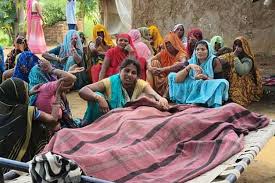
A Dalit family in Chhatarpur, Madhya Pradesh, is burdened with debt! Father and 2-year-old son dead, wife and son hospitalized; mass suicide suspected! The family ate dinner together on Friday night. According to family members, Prakash began experiencing severe stomach pain and vomiting shortly after eating. Bhopal. A tragic incident occurred on Friday night in the Orchha Road police station area of Chhatarpur district, Madhya Pradesh. Four members of the same Dalit family suddenly fell ill after eating. Farmer Prakash Ahirwar (35) and his two-year-old son, Nihal, died. His wife, Nandini (29), and elder son, Tanishq, are currently undergoing treatment at the district hospital. While the cause of the incident remains unclear, it appears to be a case of mass suicide. How did the incident occur? The family ate dinner together on Friday night. According to family members, Prakash began experiencing severe stomach pain and vomiting shortly after eating. Initially, they thought it was normal and thought he would get better by morning. However, as the night progressed, his condition worsened. They were rushed to the hospital, where doctors declared Prakash and his younger son, Nihal, dead. Dr. Ashish Shukla stated that the family had eaten potato curry, after which they began vomiting and feeling uneasy. Nandini’s condition is now stable, but the condition of his elder son, Tanishq, remains critical. A Story of Financial Pressure and Debt Prakash Ahirwar was a farmer and had borrowed a tractor for farming. Due to repeated crop failures, he was unable to pay the installments. Two days ago, employees of a finance company came to his house and pressured him to pay an installment of 30,000-40,000 rupees. They threatened to seize the tractor if he did not pay. The family alleged that the company employees forced them to sign and thumbprint an application. The application also stated that Prakash had taken a loan of 4 lakh rupees and would repay the entire amount by September 25th. If he did not do so, the company could seize his tractor, house, and land. The entire case appears to be a coerced mass suicide. Family members say the finance company was constantly threatening them to pay the installments and forcibly took their thumb impressions. Under these circumstances, farmer Prakash Ahirwar suffered a mental breakdown. The simultaneous deterioration of health among all family members suggests that they may have taken this extreme step due to debt and socio-economic pressure. However, this can only be confirmed after the postmortem report and police investigation. Family members say Prakash was under immense mental stress. The inability to pay the installments and the constant threats had broken him. He returned home after getting his TV repaired and had dinner with his family. But within a few hours, everything was destroyed. CSP Arun Kumar Soni said the case is being investigated. The cause of death will be clear only after the postmortem report is received, and further action will be taken based on that. This incident is not just a tragedy of one family, but reveals the reality of thousands of farmers and Dalit families who are burdened with debt and installments. Ankit Pachauri Courtesy: Hindi News
One village, two roads: A separate road worth ₹50 lakh was built to keep Dalits away from the main road. Dalit families said, “We want equal rights, not a separate road.”
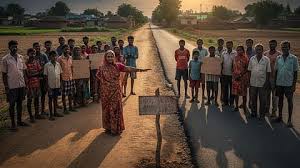
While the administration is calling it a “public welfare” measure, Adi Dravidian families allege it is a deliberate conspiracy to permanently keep them off the main public road. Tiruvannamalai: The construction of a new road in Tamil Nadu’s Tiruvannamalai district has sparked controversy. While the administration is calling it a development measure, Scheduled Caste (SC) residents see it as a new wall perpetuating discrimination and untouchability. The case is in Mothakkal village in the Tharampattu taluk, where Collector K. Tharpagaraj announced the construction of a new cement road at a cost of ₹50 lakh on September 18th. This road is being built on private land where a dirt road currently exists. This dirt road is used by Scheduled Caste villagers to carry the body of a deceased member of their community to the cremation ground. The Collector also praised the Vanniyar landowners who donated the land for “public welfare.” However, Scheduled Caste residents say they never demanded a new and separate road. They were simply demanding the right to use the village’s main public road, Murugan Koil Street, which is used by everyone else. Adi Dravidar families stated that they had petitioned the Collector for a shared public road, not a separate path. Expressing their anguish, one resident said, “This move further reinforces the notion that people from our community do not have the right to equal status in the village.” Caste discrimination runs deep in Mothakkal village. For decades, approximately 200 Adi Dravidian families here have been forced to use an alternative dirt road to transport bodies to the crematorium. Aravind*, a resident of the village, explains, “Our people are afraid to use the main road. Two weeks ago, when a person died and we tried to use that road, the police and revenue officials discouraged us, saying, ‘Why create unnecessary problems when an alternative route already exists?’” Residents say that an atmosphere of fear has long been created by upper-caste villagers, leaving many Dalit families wondering if they will ever be able to safely transport the bodies of their loved ones on the main public road. After several instances of tension during attempts to use the public road, G. Muniappan, a resident of the village, filed a writ of mandamus in the Madras High Court in December 2024, seeking police protection for Scheduled Caste residents. In April 2025, the court directed that people could contact the police and they would provide all necessary assistance. However, four months later, residents allege that they are still not allowed to use the common road. Arvind* says, “When we ask for police protection, the police themselves are afraid of creating problems. What can we do then?” Mayan*, another resident, said, “This new road may be useful for farmers from the Vanniyar community to bring their tractors, but it is of no use to us.” Vetri Sangamithra, a VCK (Viduthalai Chiruthaigal Katchi) leader from Tiruvannamalai, has described the new road as a “road of untouchability.” She alleged that it is a deliberate conspiracy to keep Scheduled Caste families away from the public road. He said, “Even though it’s officially called a public road, only people from the SC community will use it. People from the Adi Dravida caste will not use it.” Collector Tharpagaraj has responded to these allegations. He refuted all claims, saying, “Anyone can use both roads—the existing public road and the upcoming new road. The unpaved road becomes very bad during the rainy season. It becomes difficult for people to walk, let alone vehicles, let alone carry bodies. The new road is being built with this in mind. Work has begun and will be completed within a few days.” (*Names have been changed to conceal identities) Rajan Chaudhary Courtesy: Hindi News
Is Telangana turning into a land of caste killings?
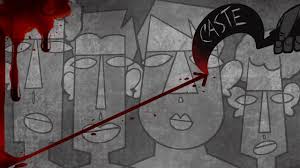
Telangana may not have the khap panchayats of North India, which settle caste clashes within villages, but we have seen how even a major atrocity like Nerella was hushed up and minimised. Synopsis: The act of a person from one caste falling in love with or marrying someone from another caste has nothing to do with the honour of a family, a caste, or a community. It is simply the voluntary, loving decision of two adults. And neither chose the caste they were born into. In reality, these so-called “honour killings” are murders driven by caste prejudice, arrogance, chauvinism and discrimination. It would be false to say Telangana was free of caste inequality, but such tensions rarely escalated to massacres. The recent murders are a sign of gradual change in this direction. In recent times, Telangana has been witnessing a disturbing rise in caste-related murders. Most of these are the result of inter-caste marriages, where young men and women—deemed to belong to a “lower caste” by others—are brutally killed by those who consider themselves “upper caste,” often the victims’ own parents or family members. In some cases, contract killers are hired for the murders. This chain of killings, and the atmosphere of terror it creates, has driven inter-caste lovers to commit suicide, fearing that marriage would bring death upon them. Sometimes family members themselves push or threaten the youth toward suicide. Fourteen incidents in the past eight years show how grave the situation has become: The murders of Madhukar of Manthani (2017), Amboji Naresh of Bhongir (2017), Tummala Swati of Lingarajupalli (2017), Perumalla Pranay of Miryalguda (2018), Vijayalakshmi (2018), Sushruta–Devarsh of Ghatkesar (2019), Chinta Hemanth Kumar of Sangareddy (2020), Narayana of Sangareddy (2022), Billipuram Nagaraju of Saroor Nagar (2022), Erukala Ramakrishna Goud of Kukunurupalli (2022), Neeraj Panwar of Begum Bazar (2022), Kongara Nagamani of Ibrahimpatnam (2024), Vadlakonda Krishna (Mala Banti) of Pillalamarri (2025), and Salluri Mallesh of Jagtial (2025). Each of them carries a tragic story. Some gained more public attention than others. Many more incidents that were never recorded or reported remain unknown. But each of these young men and women, most still in their late teens or early twenties, simply listened to their hearts. They dared to defy social restrictions. They longed for a human bond beyond caste barriers. That made them lovable. Innocent as they were, they did not know that social injustice could be so cruel as to snatch away their lives. They had many more years ahead but were cut short by murder. The myth of ‘honour’ The media often describes these killings under the upside-down label of “honour killings.” The phrase emerged to create an impression that victims had tarnished their families’ “honour,” and therefore their punishment was, in a way, justified. But the act of a person from one caste falling in love with or marrying someone from another caste has nothing to do with the honour of a family, a caste, or a community. It is simply the voluntary, loving decision of two adults. And neither chose the caste they were born into. Because caste inequality exists, because the “upper castes” in the hierarchy look down upon the “lower castes,” because caste rules forbid inter-dining and inter-marriage between castes and even sub-castes, families from “upper castes” see their “honour” destroyed if their child loves or marries someone from a “lower caste.” But natural male-female relationships are not determined by caste, and they do not diminish anyone’s honour. They only form a human bond. Yet, owing to the false ideologies entrenched in society, to caste prejudices, and to the belief that superiority and inferiority are determined by birth, the phrase “honour killing” has become common. In reality, these so-called “honour killings” are murders driven by caste prejudice, arrogance, chauvinism and discrimination. In fact, these fourteen recorded and reported killings are only a tiny fraction compared to the far greater number of threats, coercion, restrictions, pressures, and sufferings that do not end in murder or suicide. The overwhelming majority of victims belong to Dalit communities or to the poorer sections of backward castes. The killers are usually from dominant castes, though sometimes also from backward castes that have recently gained money power. While economic status plays a part, the primary factors are caste inequality, caste elitism, and caste arrogance. This is the outcome of religious scriptures, priests, and caste elders preaching against “caste mixing.” Caste pride and politics of intolerance Historically, Telangana society did not see this scale of caste-based discrimination and violence. Massacres such as Padirikuppam, Karamchedu, Chundur, Vempenta, and Lakshmipet took place in coastal Andhra, not on this scale in Telangana. It would be false to say Telangana was free of caste inequality, but such tensions rarely escalated to massacres. The recent murders are a sign of gradual change in this direction. Since statehood, there have been at least half a dozen incidents of collective attacks, and every year or two, one or two “honour killings” make it into the news. Countless unreported incidents remain. Telangana may not have the khap panchayats of North India, which settle caste clashes within villages, but we have seen how even a major atrocity like Nerella was hushed up and minimised. Dominant castes and feudal powers in villages have not moved beyond their mindset of resentment at Dalits or the lower castes gaining education, small jobs, and self-respect enough to walk with their heads held high. After Telangana state was formed, these dominant forces have only grown stronger. One natural outcome of Dalit and backward caste youth asserting dignity and pride has been their friendships with young women of dominant castes. These friendships, in some cases, turn into love and aspirations for marriage or cohabitation. This is intolerable to the dominant castes, whose psyche still resists accepting the education, jobs, self-respect, and improved economic standing of the oppressed communities. As a result, these friendships and loves invariably face opposition. Common dining appears to have lost meaning with public feasts, and hotels and restaurants mushrooming everywhere.
ETV Bharat Impact | TN Govt Disburses Compensation To Virudhunagar Fireworks Factory Accident Victims
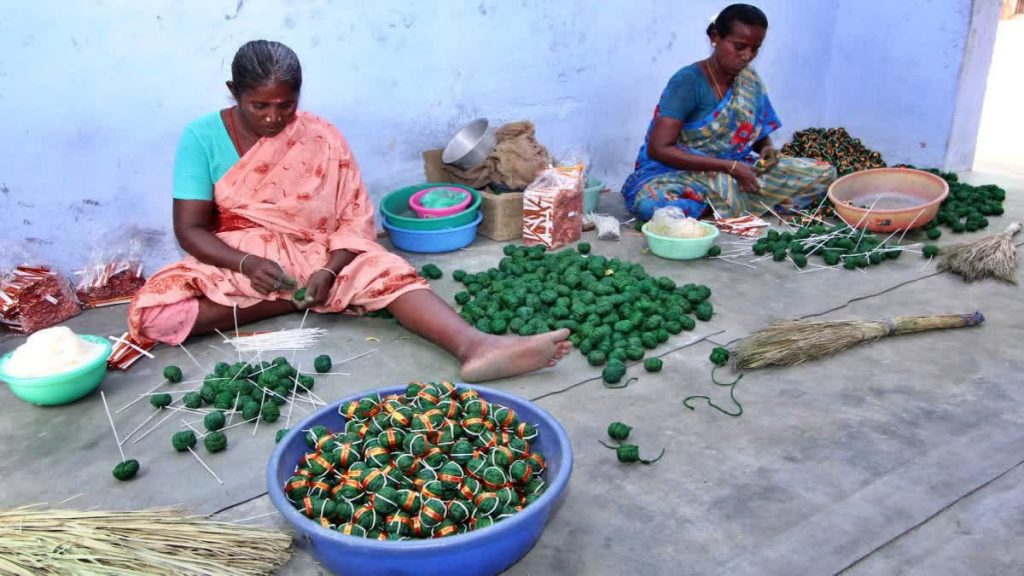
The Dalit Liberation Movement, which has been fighting for the victims, said the government didn’t pay the 12% interest as per a 2021 NGT order. Chennai: The Tamil Nadu government on Friday released compensation payments to victims of a firework factory accident in Virudhunagar district after an ETV Bharat special report highlighted their plight. Titled ‘Sad And Unsafe World Of Firecracker Workers Who Light Up Celebrations’, the exclusive feature portrayed the struggles of the families of the victims of the 2021 Achankulam Mariammal Fireworks Factory accident in Virudhunagar. It had a significant impact, as solatiums to the tune of Rs 5.67 crore were directly credited to their bank accounts as per the 2021 National Green Tribunal (NGT) ruling. Karuppaiah, state president of the Dalit Liberation Movement, which has been fighting for the victims, expressed gratitude to ETV Bharat for its role in amplifying their voices. “In 2021, the NGT had ordered the Tamil Nadu government to pay compensation to the victims of the Achankulam Sri Mariamman Fireworks Factory accident near Sattur in Virudhunagar. However, the government delayed payments for years, despite even being condemned by the High Court,” he said. “The Dalit Liberation Movement has been fighting relentlessly for the past four years. Finally, a compensation of ₹5.67 crore was released to the affected workers on Friday. But a major concern remains. The NGT had ordered that if the compensation was not paid within a month, it should be given with 12% annual interest. The government has released the principal amount but not the interest. We will meet the Virudhunagar district collector on Monday and submit a petition demanding the interest payments as per the order of the tribunal,” he added. Social activist and RTI campaigner Bhimarao said, “ETV Bharat’s special report on fireworks factory accidents created huge pressure on the government. Though compensation has now been disbursed, the interest amount is still pending. We will continue our struggle until that is also paid.” The special report had featured testimonies of victims. The recently disbursed compensation has brought some relief, and many of them have thanked ETV Bharat for bringing their suffering to light, which reached the right corner. Courtesy : ETV Bharat Note: This news is originally published on https:/etvbharat.com/bha and is used purely for non-profit/non-commercial purposes, especially human rights
Dalit elderly man hit by car in Kushinagar: Driver first promised treatment, now threatening
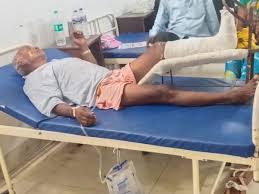
A Dalit elderly man was seriously injured in a car collision in the Nebua Naurangiya police station area of Kushinagar. On September 12th, at 5 p.m., Ram Avadh was driving at Shriram Square when the driver of a Maruti Suzuki Brezza car (UP57BC9434), Ram Pratap Singh, carelessly backed into him. Ram Avadh’s leg was broken in the accident. Locals rushed him to the hospital. People present at the scene recorded a video of the driver, in which he promised to cover the entire cost of his treatment. However, he has now reneged on his promise. The victim’s wife, Kalavati, has filed a complaint at the police station. She alleges that when the family members asked the driver for medical expenses, he used casteist slurs, abused them, and threatened to kill them. SHO Deepak Singh stated that the complaint has been received and the matter is being investigated. A case will be filed and action will be taken soon. Anoop Kumar Yadav Courtesy: Hindi News
Dalit women assaulted in Mainpuri: They were beaten by goons while watering their fields; disappointed at the police station, they went to the Chief Minister’s court.
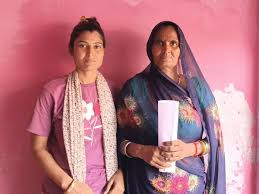
A case of assault on Dalit women has come to light in the Kishani police station area of Mainpuri. Pooja Jatav of Kudra village went to water her fields at 11 a.m. on August 12th. Ramakant and his father, Ashok Shakya, of Samadpur village, stopped her from doing so. When she protested, the accused hurled casteist slurs at her and assaulted her. Pooja’s mother, Nirmala Devi, was also not spared. The accused threatened to kill her. They said they would shoot her if she crossed the road behind their house. The victim said the accused had an illegal pistol. The incident was reported to 112, but no action was taken. On August 13th, when Nirmala Devi went to water her fields again, the accused attacked her with a shovel. She narrowly escaped. Police Station Accused of Not Hearing When she filed a complaint at Kishani Police Station, the police officers stated that it was not a crime. They stated that FIRs are only filed for molestation, rape, and murder. The victim stated that if they are not heard here, they will go to the Captain. Regarding this, the female police officer took the victim to SHO Lalit Mati and said, “These people are saying that if they are not heard at the police station, they will go to the Captain.” Upon hearing this, the SHO declared that only the Captain will hear their case; nothing will happen at the police station. He took the complaint with him and let the victim out of the station. This can be confirmed by CCTV camera footage installed at the police station. The victim filed an online IGRs complaint against the police and the accused. She was summoned to the CO’s office in Bhogaon to record her statement. The statement was recorded, but no action was taken. When no action was taken, she went to the Chief Minister’s Janta Darbar, where officials investigated and assured action. Ashish Kumar Courtesy: Hindi News
Samiti urge Dalits to register their religion as Buddhist in the upcoming Socio-Educational survey
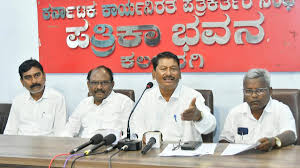
Devendra Hegde, member of Akhil Karnataka Buddha Dakhalaathi Andolan Samiti, addressing presspersons in Kalaburagi city on Saturday. Devendra Hegde, member of Akhil Karnataka Buddha Dakhalaathi Andolan Samiti, addressing presspersons in Kalaburagi city on Saturday. | Photo Credit: ARUN KULKARNI Akhil Karnataka Buddha Dakhalaathi Andolana Samiti of district unit-a consortium of Dalit Organisations, has urged the followers of B.R. Ambedkar to mark “Buddhism” as their religion while mentioning their respective castes in the caste column in the Socio-Economic survey by Karnataka State Backward Classes Commission to begin on September 22. Samiti members Devendra Hegde, Mariyappa Halli, and Arjun Bhadre addressing presspersons in Kalaburagi city on Saturday claimed that one does not face difficulties in enjoying reservation benefits by mentioning Buddhism as their religion. According to the Constitution (Scheduled Castes) Order (Amendment) Act, 1990, the members of Scheduled Castes who converted to Buddhism would continue to be recognised as Scheduled Castes and remain eligible for reservation benefits. Mr. Hedge said that Buddhism was not only a religion but a powerful force that could eliminate inequality inherent in the caste system. Members of the Karnataka State Scheduled Castes Right Communities Forum during a meeting held on September 18 at Bengaluru have resolved that people belonging to the ‘Right Communities’ to mention Buddhism as their religion followed by their respective castes in the caste column during the survey, Mr. Bhadre added. The Hindu Bureau Courtesy : The Hindu Note: This news is originally published on https:/thehindu.com/bha and is used purely for non-profit/non-commercial purposes, especially human rights