
The suffering of the SC/ST/OBC community in India is unique in the world: Why did senior IRS officer Netra Pal call it more serious than America’s ‘Black Victimhood’?

“Approximately 50 million SC, ST, and OBC students will be affected by the UGC Regulations 2026; demanding rights cannot be called victimhood.” New Delhi – In a recent Science Journey podcast, senior IRS officer Netra Pal sharply criticized the controversial statement made by Jawaharlal Nehru University Vice Chancellor Shantishree Dhulipudi Pandit. He stated that Madam is saying that Dalits have become addicted to victimhood, playing the victim by claiming they haven’t had water for centuries. Netra Pal called this clear bias and prejudice and pointed out that the person making this statement is the head of an institution with a very high number of SC, ST, and OBC students. He emphasized that approximately 90 million SC, ST, and OBC students are studying in universities across India, which is a very large number, yet displaying such a mindset exposes prejudice. Presenting comparative data, Netrapal explained that Harvard University, which is among the top 10 universities in the world, states in its 2023 Diversity Report that faculty of color, i.e., non-White faculty, represent 22 percent, of which 232 include Black, Hispanic, and other faculty. Meanwhile, SC, ST, and OBC faculty representation at IITs is only 1.92 percent, while at IIMs it is less than 0.8 percent. This is data from five or six years ago, and while there may have been some slight improvement, the difference is not significant. He said that while the Black community has been oppressed in the United States for centuries, their representation is still good due to affirmative action. In India, the problems of Dalit, OBC, and tribal communities are unique in the world and even more serious than Black victimhood. This community, which constitutes over 85 percent of the population, lacks even 2 percent representation in institutions like IITs and IIMs. He emphasized that this comparison is incorrect, as there is no affirmative action even in the private sector in India. Right now, the UGC will form an equity committee, but who will head it? The Vice-Chancellor. What will happen if SC/ST/OBC victims approach the Vice-Chancellor? They will say they are victims, so how will they rule in their favor and deliver justice? In the podcast, Netrapal also deeply analyzed the controversy surrounding the UGC 2026 Regulation. He explained that those opposing the regulation are claiming that it will divide Hindu society and that OBCs were included for political reasons. However, the truth is that the 2012 UGC Regulation was only for SCs and STs, and OBCs were added later on the recommendation of a parliamentary committee. A 31-member parliamentary committee, majority upper-caste, reviewed the data, acknowledged the atrocities against OBCs, and recommended their inclusion. Following the Rohith Vemula and Payal Tadvi suicide cases, the Supreme Court also mandated proper implementation of the 2012 regulations. Netrapal clarified that while OBC reservations were implemented in 2006, they were implemented in universities only in 2013, and in medical education only in 2021. He also cited historical evidence that during the British era, Shudras were not admitted to institutions like Hindu College; only some Kayasthas were exempted because their social status was comparable to that of the upper castes. From the 1901 caste census to current data, 50-70 percent of OBCs are extremely backward, denied access to higher education and government jobs. Netrapal said that SCs and STs received reservations after 1947, but OBCs had to fight until 1990 and wait until 2012 for university admissions, ruining generations. Education data revealed that the general category’s representation at the primary level is only 11.85 percent, which rises to 50 percent in higher education. While SC, ST, and OBC students are higher in primary education, their enrollment declines due to increased dropout rates. SCs’ primary enrollment falls from 21 percent in primary education to 14.82 percent in secondary education and 4.72 percent in engineering. The situation is similar among OBCs. Dropout and suicide rates at IITs are higher among SCs, STs, and OBCs, while at institutions like Anna University, this is not the case, proving institutional discrimination. OBC professors in central universities are only 1.1 percent, compared to 33 percent in state universities. Muslims are represented as high as 45 percent because they have separate institutions. “SCs, STs, and OBCs are automatically a minority in universities because there are no members of this class in all the top faculty positions. At IITs, there are 1-2%, a maximum of 10%, and even in the administration, there are very few non-faculty cadres. Here, SCs, STs, and OBCs are a significant minority. There are many more outside. That’s why they are backward, right? We’re not getting higher education so easily. So what’s the situation here? We’re the ones facing discrimination.” The most shocking statistic is the vacancies for faculty positions. In central universities, 95.5 percent of OBC professor positions are vacant, 91.95 percent of associate professor positions are vacant, while 78 percent of SC positions are vacant. There are no SC/ST principal positions at Delhi University. Netrapal stated that this is institutional discrimination, where low interview marks, NFS, and vacancies are deliberately created. The conviction rate for SC/ST atrocity cases in Uttar Pradesh is 70-80 percent, far higher than murder and rape, yet the case is often called a fake one. At the end of the podcast, Netrapal concluded that approximately 50 million SC, ST, and OBC students will be affected by this regulation. Education is their only weapon, so discrimination cannot be tolerated. Demanding rights cannot be labeled victimhood. He also suggested opening a Buddhist minority university. The podcast stated that data never lies and the Bahujan community should spread this information to ensure equality and justice. Geetha Sunil Pillai Courtesy: Hindi News
SCSP-TSP fund diversion BJP plans major offensive, Congress govt uncomfortable
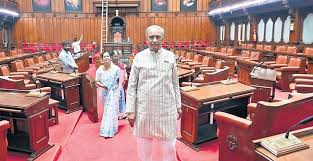
While the government has defended the move, arguing that many beneficiaries of the guarantees belong to SC and ST communities, the issue has triggered dissent among Dalit legislators within Congress. BENGALURU: Even as tensions continue to simmer within Congress over the alleged diversion of funds under the Scheduled Caste Sub-Plan (SCSP) and Tribal Sub-Plan (TSP), BJP is preparing a strategy to corner the state government ahead of the budget. It is said that funds earmarked exclusively for Scheduled Castes (SC) and Scheduled Tribes (ST) welfare are being redirected to finance the five guarantees. While the Siddaramaiah government has defended the move, arguing that many beneficiaries of the guarantees belong to SC and ST communities, the issue has triggered dissent among Dalit legislators within Congress. Sensing an opportunity, BJP has stepped up its political campaign. A pre-budget round table has been convened in Bengaluru at noon on Tuesday at the Legislators’ House Auditorium. The event, organised by the Reservation Protection Forum for Scheduled Castes and Scheduled Tribes, Karnataka, is aimed at mobilising public opinion against what the opposition terms as “diversion” of constitutionally mandated funds. Senior BJP leaders, including Council Opposition Leader Chalavadi Narayanaswamy, former Union minister A Narayanaswamy and others, are expected to attend, and they could use the platform to highlight what the party calls a betrayal of Dalit and tribal interests by the Congress government. Within Congress, the issue has reportedly been raised during Legislature Party meetings with some Dalit MLAs expressing concern over reallocation of funds. The discontent could complicate budget preparations if not addressed decisively, party insiders say. BJP is likely to intensify its outreach to SC/STs in the coming weeks, framing the issue as one of social justice and financial accountability. Political observers said this could be a flashpoint during the budget session, as the opposition is poised to mount pressure inside and outside the Houses. It is said that the Congress government has diverted Rs 27,000 crore over two year as against an allocation of around Rs 81,000 crore. BJP claims that this violates the law under 7(c), which allows diversion of funds for education, health and child labour, whereas the guarantees have no relevance to these categories One Dalit legislator said, ‘Congress which justified diversion under 7(c) has not read this provisions properly.’’ Bansy Kalappa Courtesy : TNIE Note: This news is originally published on https:/thenewindianexpress.com/bha and is used purely for non-profit/non-commercial purposes, especially human rights
“You Are Low Caste… LLB Is Not for You”: Dalit Student Files FIR Against Churu Professor
An LL.B student of Government Law College, Churu, files FIR under SC/ST Act alleging caste abuse, threats and discrimination by two professors.AI generated image A third-semester Dalit LL.B student of Government Law College in Churu, Rajasthan, has filed a police complaint alleging caste-based abuse, threats and discrimination by two professors. The police have registered an FIR under relevant sections of the SC ST Prevention of Atrocities Act and started an investigation. According to the complaint filed at Kotwali Police Station in Churu on February 27, Meena Meghwal, 30, has accused Professor Apoorva Sharma and Professor Anil of using derogatory caste remarks, threatening to fail her and deliberately giving her low marks. Police have registered FIR number 44 2025 under sections 3 (1) (r) and 3 (1) (s) of the SC ST Prevention of Atrocities Act. The case has been forwarded to RPS Sunil Kumar Jhajharia of Circle Churu for further investigation. Student Alleges Public Caste Abuse in College Event In her written complaint, Meena Meghwal, daughter of Toruram Meghwal and a resident of Kharia village in Jhunjhunu district, stated that the alleged incident first took place during a college event in December 2025. She said that Professor Apoorva Sharma became angry when she asked a question during the event. According to the complaint, the professor allegedly used casteist slurs in front of other students. She claimed that the professor said, “You are chamari, you are from a lower caste. You cannot do LL.B. It is not your job,” and also threatened to fail her. The student stated that several classmates, including Akash Deep, Akash Mishra, Himanshu and Prem Prakash, were present at the time. Allegation of Deliberate Failure in Practical Exam Meena Meghwal further alleged that after the December incident, the professor continued to humiliate her. She claimed that in her practical examination, she was given only 6 marks out of 20, while in other subjects, she received 12 to 13 marks from different professors. On February 21, when she asked the reason for the low marks, she alleged that Professor Apoorva Sharma told her, “It is my wish. I did it. You people are low caste.” The student said she submitted a written complaint to the college administration, but no action was taken. Local Reaction and Social Media Discussion After the matter became public, it sparked discussion at the local level. Naveen Kumar Nandan, a journalist associated with BAMCEF, shared a copy of the FIR on social media platform X and wrote, “It is very dangerous if the allegations are true.” Some local sources claimed that there were earlier complaints about the behaviour of the accused professor. It has also been alleged by some students that during examinations, Scheduled Caste students felt targeted and faced discriminatory treatment. However, these claims have not been independently verified. Students reportedly expressed fear about speaking openly, saying they are worried about attendance shortages or low marks in practical exams. No Official Response Yet So far, there has been no official statement from Government Law College Churu or from the accused professors. The police investigation is ongoing. The incident has once again brought attention to the issue of caste discrimination in higher education institutions in Rajasthan. Authorities have said that further action will depend on the findings of the investigation. Courtesy : TOP Note: This news is originally published on https:/theobserverpost.com/bha and is used purely for non-profit/non-commercial purposes, especially human rights
Kanshi Ram emerges as rallying point of Dalit mobilisation in U.P.
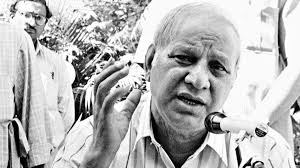
With Assembly poll approaching, major political parties in Uttar Pradesh intensify outreach to Scheduled Castes around the BSP founder’s birth anniversary, signalling a renewed battle for the State’s crucial 21% Dalit vote Mobilisation focused on the Scheduled Castes (SC) has gathered momentum on Uttar Pradesh’s political chessboard ahead of the Assembly elections due early next year. The immediate trigger is the March 15 birth anniversary of Kanshi Ram, founder of the Bahujan Samaj Party (BSP) and Dalit Shoshit Samaj Sangharsh Samiti (DS-4). With SCs constituting roughly 21% of the State’s electorate, political parties are intensifying efforts to engage the community and position themselves as staunch advocates of the marginalised community. Mayank Kumar Courtesy : The Hindu Note: This news is originally published on https:/thehindu.com/bha and is used purely for non-profit/non-commercial purposes, especially human rights
Dalit leaders allege fake signatures of MCC officials used in loan scam
Mangaluru: Dalit leaders filed a complaint with the Mangaluru City police, alleging that fake signatures of the Mangaluru City Corporation (MCC) commissioner and health officer, along with fake salary slips, seals, and documents, were used to fraudulently obtain loans from a cooperative bank in the name of civic workers. Dalit leader Anil Kumar raised the issue during a monthly meeting for Scheduled Castes and Scheduled Tribes, chaired by DCP (law and order) Mithun HN on Saturday. Anil Kumar said that when some genuine pourakarmikas applied for bank loans, it was discovered that loans were already taken out in the names of many other civic workers. Following this, Dalit leader Vishu Kumar gathered records under the RTI Act, which revealed fraudulent activity. Through fake documents, loans were facilitated in the names of some municipal staff and non-staff individuals, with commissions ranging from about Rs 20,000 to Rs 50,000 taken as part of the fraud, he said. The cooperative bank manager requested salary verification for the loan applications submitted by the civic workers. However, the documents provided to the bank were fake, and the MCC commissioner clarified that such individuals were not employed as civic workers, he alleged. Vishu Kumar said that in a previous complaint to the police, it was reported that about 30 people took loans from various cooperative bank branches using the signatures of the MCC commissioner and health officer, claiming to be civic workers. “New records have now surfaced, showing that loans were taken in the names of 66 more individuals using similar fake documents. There is suspicion that loans were obtained using fake documents in the names of even more people,” he said. A Dalit leader alleged that the principal of a private ITI in Konaje took a loan from a bank using a lecturer’s salary certificate, causing harassment. DCP Mithun instructed a proper investigation. Ambedkar Circle issue: DSS warns protest DSS activist Anil Kumar said that despite the foundation stone being laid, the demand for a circle with Ambedkar’ statue at the Ambedkar Circle in the city was not fulfilled. Another activist, SP Anand, said that despite funds being allocated, the work did not commence, citing traffic issues. “If a circle can be constructed at Pumpwell, why not at Ambedkar Circle? If the demand is not met by April 14, the birth anniversary of BR Ambedkar, a protest will be inevitable,” said Anand. Courtesy : TOI Note: This news is originally published on https:/timesofindia.com/bha and is used purely for non-profit/non-commercial purposes, especially human rights
Karnataka Village Gets Government-Funded Salon After Barbers Refuse Services To Dalits
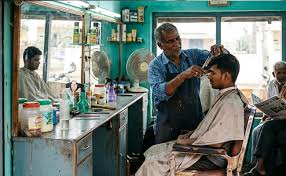
A salon in Singatalur village in Gadag district has been opened after Hadapada families (barbers) in the village denied haircuts to Dalits over the years Bengaluru: The Karnataka government has opened a salon in Singatalur village in Gadag district after the local barber shop refused service to customers from Dalit communities. The salon, believed to be the state’s first government-funded facility, was set up near the bus stop on government property in the presence of officials from the social welfare department and the gram panchayat. While the social welfare department has provided the shop made of tin sheets and the equipment required for a salon, the barber was brought from Mundaragi town. The government was forced to open a salon after Hadapada families (barbers) in the village denied haircuts to Dalits over the years, citing a religious tradition. “Hadapada families are devotees of the village deity Veerabhadreshwara. Every year, the deity visits their houses during a particular time. The barbers claimed that they cannot serve Dalits during that period,” according to the officials. The lone barber shop in the village recently shut down after Dalit youths started insisting on their right to service at the salon. They argued that it was illegal on the part of the barbers to deny service to people from a particular community, while taking the matter to the district administration. As the matter escalated, the district administration reached out to the villagers and held several rounds of meetings to persuade barbers to open the shop and offer services to all communities. When they did not relent, notices were issued warning of legal action. Even notices fail to deter them. Left with no option, officials decided to open a barber shop, spending Rs 1.2 lakh from the social welfare department and appointing a barber from outside. Following a request by the administration, Devu Hadapad, state president of Hadapada Annappa Samaja, agreed to send his brother, who is also a barber, to run the shop. After which, the shop was set up. “It is unfortunate that an unhealthy mindset of looking down upon backward communities still exists in society. But we have extended full cooperation to the government to eliminate such practices. This shop is now open for all communities,” says Devu Hadapada. Vishwanath Hosamani, Executive Officer, Mundaragi Taluk Panchayat, said the issue related barber services had existed in the village for the past two years. “Now with the coordinated efforts of all departments concerned, we are able to find an amicable solution to this,” he added. People of the villagers also expressed happiness over the development. “This (development) has instilled a hope in us that the practice of untouchability will be stopped once and for all,” says Mariyajja, a villager. Courtesy : ETV Bharat Note: This news is originally published on https:/etvbharat.com/bha and is used purely for non-profit/non-commercial purposes, especially human rights
Dalit leaders allege fake signatures of MCC officials used in loan scam

Mangaluru: Dalit leaders filed a complaint with the Mangaluru City police, alleging that fake signatures of the Mangaluru City Corporation (MCC) commissioner and health officer, along with fake salary slips, seals, and documents, were used to fraudulently obtain loans from a cooperative bank in the name of civic workers. Dalit leader Anil Kumar raised the issue during a monthly meeting for Scheduled Castes and Scheduled Tribes, chaired by DCP (law and order) Mithun HN on Saturday. Anil Kumar said that when some genuine pourakarmikas applied for bank loans, it was discovered that loans were already taken out in the names of many other civic workers. Following this, Dalit leader Vishu Kumar gathered records under the RTI Act, which revealed fraudulent activity. Through fake documents, loans were facilitated in the names of some municipal staff and non-staff individuals, with commissions ranging from about Rs 20,000 to Rs 50,000 taken as part of the fraud, he said. The cooperative bank manager requested salary verification for the loan applications submitted by the civic workers. However, the documents provided to the bank were fake, and the MCC commissioner clarified that such individuals were not employed as civic workers, he alleged. Vishu Kumar said that in a previous complaint to the police, it was reported that about 30 people took loans from various cooperative bank branches using the signatures of the MCC commissioner and health officer, claiming to be civic workers. “New records have now surfaced, showing that loans were taken in the names of 66 more individuals using similar fake documents. There is suspicion that loans were obtained using fake documents in the names of even more people,” he said. A Dalit leader alleged that the principal of a private ITI in Konaje took a loan from a bank using a lecturer’s salary certificate, causing harassment. DCP Mithun instructed a proper investigation. Ambedkar Circle issue: DSS warns protest DSS activist Anil Kumar said that despite the foundation stone being laid, the demand for a circle with Ambedkar’ statue at the Ambedkar Circle in the city was not fulfilled. Another activist, SP Anand, said that despite funds being allocated, the work did not commence, citing traffic issues. “If a circle can be constructed at Pumpwell, why not at Ambedkar Circle? If the demand is not met by April 14, the birth anniversary of BR Ambedkar, a protest will be inevitable,” said Anand. Courtesy : TOI Note: This news is originally published on https:/timesofindia.com/bha and is used purely for non-profit/non-commercial purposes, especially human rights
Telangana Education Policy suggests law against caste, gender discrimination of students
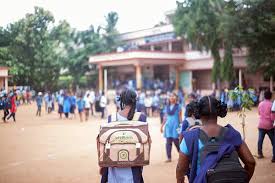
The Telangana Education Commission has recommended major reforms from pre-primary to higher education, including scrapping college entrance tests, merging intermediate with school education, and increasing the minimum pass percentages. The Telangana Education Commission has recommended some major reforms to the state government, including a three-language policy from Class 1, a push for cancelling NEET, scrapping EAPCET, merging intermediate education (class 11 and 12) with school education, gender education in secondary schools, and a legislation to prevent discrimination against students from marginalised communities and minority groups. In its proposed Telangana Education Policy, submitted to Chief Minister Revanth Reddy on February 26, the Commission also recommends allocating at least 18% of the state budget to the education sector, of which 5% should be allocated to higher education. It also proposes increasing the pass percentage for intermediate (Classes 11 and 12) students from 35% to 40% to improve academic standards. The policy suggests increasing the minimum pass percentage to 50% across all undergraduate programmes “on the lines of international practice.” School reforms The Commission has proposed that Telangana Public Schools (TPS) offer high-quality, integrated education from pre-primary through Class 12 at a single institution. The TPS model is proposed as a flagship structural reform to provide high-quality, credible education in government schools. Members of the Commission, including chairperson Akunuri Murali, briefed CM Revanth about the policy at their meeting. At the meeting, CM Revanth also announced that Telangana Public Schools of this model would be opened as a pilot project in 100 constituencies across the state, outside Hyderabad, from the coming academic year. These schools will be equipped with sports grounds, transport facilities, and other high-quality infrastructure. He also announced that from the coming academic year, students in all government schools will be provided breakfast along with milk, from Classes 1 to 12. The Commission recommended English as the medium of instruction across all levels of education from nursery to postgraduate studies. It proposed a three-language policy, with English and Telugu taught from nursery to Class 10, and either Hindi or Urdu as an option from Class 1. The policy said that Sanskrit is usually encouraged by private schools as students can score more marks. “There is no use of Sanskrit in the society as it is spoken by less than 20000 people in the whole country. Hence Sanskrit should be discouraged in general,” it said. The Commission has suggested stricter regulation of private schools, particularly with regard to fees, noting that some schools were charging as much as Rs 16 lakh in annual fees. During the meeting on February 26, the Telangana Private Schools Fee Regulatory Monitoring Commission submitted its report to CM Revanth, who instructed district collectors and district education officers to conduct a visit at the district level and submit a report on fees. At the state level, a committee with a retired judge or retired chief secretary would take final decisions on fee structure, the Chief Minister’s Office announced. The CM also suggested that the draft should be kept in the public domain to seek the opinions of students’ parents, intellectuals and social workers on the fee structure. The policy also suggests merging the different government-run residential schools for SCs, STs, BCs and minorities under a single administration. “The existing fragmented landscape…has evidently led to the hardening of caste lines and unnecessary politicisation of educational resources. By integrating these separate entities into a singular Telangana State Residential Education Society, the state will foster a truly inclusive and equitable learning ecosystem,” the policy says. Intermediate education The policy proposes bringing pre-primary schools into primary schools. It also suggests merging the SSC Board, which governs education up to Class 10, and the Board of Intermediate Education, which oversees the equivalent of Classes 11 and 12 taught in junior colleges. These are currently considered separate from the school education system. “A common board for Classes 10 and 12 will also eliminate the duplicity in terms of parallel administrative, academic, examination and data systems. Most education systems globally also have Classes 11 and 12 as part of the schooling system,” the policy says. It also recommends scrapping the EAPCET, the state-level common entrance test for admission into undergraduate colleges in the streams of engineering, agriculture and pharmacy. Instead, the Commission recommends admissions to colleges on the basis of Intermediate Public Examinations (IPE), the present equivalent of Class 12 board exams in the state. For this, IPE exams will have to be strengthened and designed to test foundational aspects and in-depth understanding of concepts covered in the curriculum, the policy says. It also recommends discontinuing public exams for intermediate first year or the equivalent of Class 11, as they cause “significant stress” to students. The policy says that instead of exam preparation, during the first year, teachers must be allowed to focus on learning gaps. Along with scrapping EAPCET, the policy says that even admissions for medical courses should be based on the Class 12 marks. “The Telangana government should strongly advocate with the Government of India for the cancellation of NEET,” it says. It also recommends a new law to regulate private coaching centres for competitive exams such as IIT-JEE, NEET, CLAT etc., allowing oversight on fees, infrastructure, timings, faculty, curriculum, student mental health, and misleading advertisements. “The government must regulate the fees charged for intermediate education, including fees charged for entrance exam coaching to ensure there is no profiteering,” the policy says. Teacher education The policy also proposes a separate cadre of teachers for teaching students of Classes 9 to 12. Junior lecturers already working in the government system for intermediate education may be considered. It also proposes restructuring B Ed programmes into stage-specific degrees (primary and secondary). The policy says automatic promotions for teachers and headmasters must be discontinued. Instead, it suggests promotion policies aligned with outcomes and performance, and clearing departmental exams. At the meeting on February 26, CM Revanth also announced short-term training for teachers and lecturers on Artificial Intelligence (AI). Further, the CM asked officials to take
Karnataka opens government-run barber shop after Dalits denied haircuts
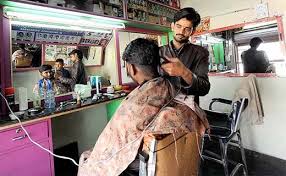
A government-run barber shop was opened in Gadag’s Singatalur village after local barbers repeatedly refused haircuts to Dalits, citing a religious tradition. In Karnataka’s Gadag district, officials on Thursday, February 26, inaugurated a barber shop for Dalit residents of Singatalur village after local barbers repeatedly denied them haircuts. The facility, opened by the Social Welfare Department, is believed to be the state’s first government-run barber shop. Local residents said tensions began a few weeks ago when a village barber refused to cut a Dalit youth’s hair. Officials said the barbers justified the discrimination on religious grounds. “Every year, the deity visits the homes of the Hadapada community, and the barbers claimed they could not serve Dalits during this period,” a Taluk official told Indian Express. As the situation escalated, local administration officials held peace meetings with barbers and community members. Despite repeated warnings and meetings with the tehsildar, the barbers continued to refuse service to Dalit residents, prompting the administration to issue a notice to the shop and order its closure. Following this, many barbers closed their shops. After barbers continued to refuse service, the administration worked with the Social Welfare Department, Taluk Administration, Taluk Panchayat, Police Department, Dalit Pro-Sangha Tane Kooka and Shivsharan Hadapada Appana Samaj to establish the new shop that Dalits and other residents can freely access. A barber from the Hadapada Appana Samaj agreed to operate it, with authorities arranging the equipment. Courtesy : TNM Note: This news is originally published on https:/thenewsminute.com/bha and is used purely for non-profit/non-commercial purposes, especially human rights
Man gets 20-years rigorous imprisonment for raping Dalit girl in UP’s Sonbhadra in 2018
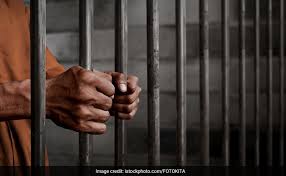
Sonbhadra (UP), A court here on Friday sentenced a man to 20 years’ rigorous imprisonment after he was convicted of raping a Dalit girl seven years ago, the prosecution said. Government Advocate Dinesh Prasad Agrahari said on October 25, 2018, a woman submitted a written complaint at Robertsganj police station stating that her 16-year-old daughter was lured by her former acquaintance, Raj Mishra, into a forest near Churk and raped. The plaintiff told the police that after the rape, the accused assaulted her daughter and abused her with casteist slurs. Based on the complaint, police registered a case under provisions of the Protection of Children from Sexual Offences (POCSO) Act and the accused — Raj Mishra, a resident of Rajdhan under Chopan police station area — was arrested. Following investigation and collection of sufficient evidence against the accused, a chargesheet was filed in court. Agrahari said Additional District Judge (POCSO Act) Amit Veer Singh held Raj Mishra guilty on Friday and sentenced him to 20 years of rigorous imprisonment, also imposing a fine of Rs 56,000. Failure to pay the fine will result in an additional two months’ imprisonment. The court ordered that Rs 40,000 from the fine amount be given to the survivor. PTI COR NAV ARB ARB This report is auto-generated from PTI news service. ThePrint holds no responsibility for its content. Courtesy : The Print Note: This news is originally published on https:/theprint.com/bha and is used purely for non-profit/non-commercial purposes, especially human rights