
Telangana: Dalit prof faces alleged social boycott after being branded ‘urban Naxal’

A Dalit professor at Telangana’s Satavahana University has alleged social boycott, caste-based harassment, and round-the-clock surveillance after being branded an “urban Naxal” by a colleague, prompting her to approach the SC Commission and police. A Dalit professor teaching at Telangana’s Satavahana University is allegedly facing social boycott at the institution over accusations of being an “urban Naxal”. Professor Sujatha Surepally, who heads the Department of Sociology, has alleged that vice chancellor U Umesh Kumar has been warning students against interacting with her because of her alleged “Maoist ideology”. She alleged that the VC has denied her promotion as the University Registrar, though she was entitled to it as per seniority. Further, a round-the-clock surveillance has been initiated on her to monitor her and activities, she alleged. The professor, who is a renowned Dalit-rights activist, approached the Telangana State Commission for Scheduled Castes on April 2, seeking action against the VC. Besides Sujatha, a Dalit student and member of students’ organisation Telangana Vidyarthi Vedika, Karike Mahesh, is also being subjected to harassment, she said. ‘Malicious campaign by colleague’ Sujatha was allegedly targeted by a colleague, assistant professor Penchala Srinivas, who faced disciplinary action in 2019 following allegations of sexual harassment. Srinivas, who teaches in the Department of Botany, was accused of misbehaving with girl students and calling them on phone at night. A committee constituted by the University on March 23, 2019, found him guilty and issued a memo. “He assumed that I was behind the campaign against him and started the witch hunt,” Sujatha told TNM. As part of this, the Dalit professor was labelled as an “urban Naxal” by Srinivas, she said. “In 2019, rumours started circulating about me that I took students to the central committee of Maoists. Srinivas was behind this Facebook campaign under pseudonyms, spreading false propaganda. In reality I took the students to Khammam for a study tour as part of the curriculum,” she said. An investigation was launched against Sujatha in the same year under Karimnagar district commissioner Kamal Hasan Reddy, who dismissed the allegations. Srinivas was expelled from the University in 2021 for allegedly working against the interest of the institution. “Since then, he started stalking me, closely monitoring my online and offline activities. All my Facebook posts were being circulated in right-wing groups, leading to targeted harassment,” Sujatha alleged. Her post on Operation Sindoor led to police complaints. The label of being an “urban Naxal” has cost Sujatha dearly. She recently faced humiliation during the Republic Day event at the University. While Sujatha, as Principal of the Arts College, was supposed to hoist the national flag, the event had to be called off over protests of her being an ‘anti-national’. The fresh harassment against her in the institution began after Srinivas was hired again by the University, allegedly defying the norms. He joined the University on April 1. Currently students are protesting the management’s decision. Sujatha alleged that vice chancellor Umesh Kumar, in collusion with Srinivas, is targeting her by trying to undermine her seniority and spreading false propaganda against her. “I was removed from the post of Dean of Arts College and denied positions and opportunities that are rightfully mine,” Sujatha said. ‘Unlawful surveillance’ According to Sujatha, the VC has initiated surveillance on her, monitoring her daily activities. She said, “There has been targeted and excessive surveillance, including the installation of cameras near my room and monitoring of my movements. Students are being warned against interacting with me, which is a clear violation of my right to privacy and academic freedom.” “There has been systematic defamation and caste-based targeting, including attempts to portray me and a Dalit student as an ‘urban Naxal’ and discouraging students from associating with us.” Expressing solidarity with Sujatha, the Save Education Committee demanded immediate intervention. “Despite possessing all necessary qualifications and experience, removing a Dalit woman professor, who also holds additional responsibilities as Principal, is an act of vindictiveness,” said professors K Chakradhar Rao, G Haragopal, and K Lakshminarayana, who serve as president and secretaries of the Committee. Police complaint On April 9, Sujatha filed a complaint with the police against Srinivas and the VC. “I am being subjected to systematic targeting and character assassination by Penchala Srinivas, a former contract lecturer in Botany, who was earlier expelled from the University. He has a documented history of misconduct, including allegations of inappropriate behaviour with female students, late-night harassment calls, and subsequent disciplinary inquiry by the university,” she stated. Alleging that Srinivas was behind terming her a Maoist, she said that the campaign was “thoroughly investigated by both the police authorities (under Sri Kamal Hasan Reddy) and the University, and was found to be completely untrue.” Sujatha said that Srinivas is again attempting to malign her reputation by branding her with false ideological affiliations. “He is allegedly mobilising students, particularly from certain student organisations, to file motivated and false complaints against me with the intention of damaging my professional standing. It is deeply distressing to state that such actions appear to be supported and encouraged by the current Vice Chancellor, Professor Umesh Kumar, who has failed to uphold institutional neutrality and instead enabled a hostile environment against me,” the complaint read. Written by:Balakrishna Ganeshan, Edited by:Maria Teresa Raju Courtesy : TNM Note: This news is originally published on https:/thenewsminute.com/bha and is used purely for non-profit/non-commercial purposes, especially human rights
Attempted Abduction of Dalit Woman in Gorakhpur: Woman Heading to Market Rescued by Bystanders; Case Registered

A case involving the attempted abduction of a young Dalit woman has come to light in Gorakhpur. The woman was on her way to the market to shop for her wedding when a young man attempted to forcibly pull her into his vehicle. Thanks to the timely intervention of passersby, the woman managed to escape unharmed. The incident occurred within the jurisdiction of the Barhalganj police station. In her complaint to the police, the woman stated that her family had scheduled her *Tilak* (engagement ceremony) for April 21 and her wedding for April 28. She was heading to the market for wedding shopping when a young man named Dayanand, a resident of Semra Bujurg village, intercepted her on the way. The accused, Dayanand, physically assaulted the woman and attempted to forcibly drag her into his vehicle. When the woman screamed for help, several passersby began chasing the vehicle. During this ordeal, the accused threatened the woman, warning that if she did not accompany him, he would shoot her entire family. Due to the persistent pursuit and questioning by the passersby, the accused abandoned the woman and fled the scene. The woman remarked that had the bystanders not come to her aid, anything could have happened to her. She also revealed that the accused had previously physically assaulted members of her family. Based on the woman’s complaint, the police have registered a case against the accused, Dayanand, under Sections 140(1), 126(2), 115(2), and 351(3) of the Bharatiya Nyaya Sanhita, as well as Sections 3(2)(v), 3(2)(va), 3(1)(c), and 3(1)(d) of the Scheduled Castes and Scheduled Tribes (Prevention of Atrocities) Act, 1989. Gopal Tripathi | Gola Courtesy: Hindi News
Bulldozers Roll Over Dalit Homes in Basti! No Action Taken Despite Pleas for Justice

In Rampur village, within the jurisdiction of the Munderwa police station, the administration has demolished a Dalit’s house using a JCB machine in the presence of the police. The affected family members have been forced to take shelter with neighbors or live under the open sky. There is widespread outrage among the people as, despite sending letters to the Divisional Commissioner, District Magistrate, and Superintendent of Police pleading for justice, no action has been taken thus far. The semi-permanent and temporary houses belonging to Dalit residents of the Munderwa police station area—specifically Ram Awadh (son of Gobari), Rajendra (son of Ram Velas), Prem Sagar, and Ram Deen (sons of Ram Pher)—were demolished using a JCB in the presence of police forces. This act was carried out in blatant contempt of a court order, allegedly at the instigation of Abdul Wahid, a former village headman and known land mafia figure. This incident has sparked deep resentment among the citizenry. Dharmendra Kumar, the District IT Cell Convener of the Hindu Yuva Vahini—along with other office bearers and activists—had submitted a letter to the Divisional Commissioner demanding an impartial inquiry into the matter and punitive action against the culprits. Vahini officials have been continuously pleading for justice, yet their appeals have gone unheard so far. The letter addressed to senior officials states that on April 13, Revenue Official (Lekhpal) Virendra Kumar Pandey, the Naib Tehsildar, a Sub-Inspector, and other police personnel acted in contempt of the decisions of both the District Magistrate and the High Court by orchestrating the demolition of the Dalits’ homes. Furthermore, these individuals allegedly facilitated the erection of an illegal thatched structure on land parcel (Gata) number 611 for Appu, Subhash, and Bablu—sons of Munnilal—who are residents of the same village. The letter demands that a case be registered against the guilty parties and that new homes be constructed for the affected Dalits. Dharmendra Kumar, the Hindu Yuva Vahini District IT Cell Convener, has warned that if action is not taken against the culprits and if new houses are not built for the Dalits, the matter will be escalated directly to the Chief Minister. Residents of Rampur, located within the jurisdiction of the Munderwa Police Station, have reported that the former village head—a land mafia figure named Abdul Wahid—instills fear among the poor in the village and even prevents them from celebrating the birth anniversary of Baba Saheb Dr. Bhimrao Ambedkar. Residents of Rampur village—including Ram Awadh, Rajendra, Indal, Haribharan, Prem Sagar, Ramdeen, Sunil, Pramesh, Urmila, Shanti, Sheela, Kamalavati, Manju, Gudiya, Shumantri, Nilu, Chandravati, Sarita, Vedkala, Seema, and Vimla Devi—have appealed to the administration. They demand that action be taken against the culprits, that homes demolished using a JCB be reconstructed for those affected, and that strict punitive measures be initiated against the perpetrators. Courtesy: Hindi News
Ontario survey reveals invisible caste bias in South Asian communities across Canada

A first-of-its-kind survey on caste-discrimination in Canada by the South Asian Dalit Adivasi Network (SADAN) and researchers from four Canadian universities reveals subtle and overt discrimination experienced by caste-marginalised South Asians. A decade after US-based Equality Labs released its first survey on caste discrimination in the United States, an Ambedkarite group in Canada has released the findings of a similar survey in that country, which shows that people of South Asian heritage—the majority of them Indians—practise discrimination against people of lowered castes and Dalits. The South Asian Dalit Adivasi Network (SADAN) and researchers from four Canadian universities conducted the community-oriented survey and released the Caste Experiences in Ontario Survey report to coincide with Dalit History Month, which is observed in April, and Ambedkar Jayanti, which falls on April 14. The survey received responses from 128 people, the majority of whom—85%—traced their roots to India, while the remaining had ancestry in Pakistan, Bangladesh, Nepal, and Sri Lanka. 61% of the respondents were caste marginalised and 38% self-identified as Dalit or caste-oppressed. The respondents also professed different faiths—Hinduism, Buddhism, Ravidassia, Dalit and Adivasi practices. The majority of respondents spoke Hindi (70%), while 37% spoke Punjabi and 27% Tamil. Over 40% of respondents said they were discriminated against at the workplace and educational institutions. Discrimination also spilled over into social relationships such as friendships and marital alliances, as well as at places of worship and cultural gatherings. The report was authored by Kavya Harshita Jidugu, Harshita Yalamarty, Vijay Puli, Jatin, Chinnaiah Jangam, and Sailaja Krishnamurti. Kavya is a PhD candidate at Queen’s University. Harshita is an assistant professor and Canada Research Chair in gender and migration (Tier 2) at Toronto Metropolitan University. Vijay Puli is a founder and executive director of SADAN. Jatin is a PhD scholar and co-founder of the Forum for Anti-Caste Activism at the University of Toronto. Chinnaiah is an associate professor at Carleton University of Toronto and co-founder of SADAN. Sailaja is an associate professor and HoD of gender studies at Queen’s University. Kavya, who was a lead researcher in the project team, said in a press release: “The courage it took for community members to come forward and speak about caste-based discrimination is both powerful and essential to addressing casteism in Canada and we are grateful for the community’s leadership.” The report noted that South Asians formed the largest visible minority in Canada and while researchers had studied South Asians in terms of a diversity, equity and inclusion (DEI) framework, social relations within South Asians had not received much attention. The survey asked 38 questions divided into four sections: demographic information, personal experiences of caste discrimination, discrimination in the community, and personal reflections. Participants were also allowed to record their views on certain questions. Many respondents talked about caste discrimination being less overt compared to India. However, as one respondent put it, “subtle biases persist, making it harder at times to feel fully included or accepted. This has somewhat affected my sense of belonging, particularly within diaspora circles where caste consciousness continues to influence social relationships.” One respondent spoke of Brahmins wearing a sacred thread in public places such as swimming pools as an example of practices that “don’t directly attack anyone but quietly establish superiority in society”. “On the surface, this appears to be a religious practice, but it actually serves as a way of signalling to others that they are superior to other Hindus… it’s an assertion of religious and caste superiority”. Around 50% of the participants—of which 92% were from caste marginalised backgrounds—have experienced caste-based discrimination in their workplaces, educational institutions, while purchasing or renting homes, and in other social settings. More than half of these respondents said they had been subjected to discrimination more than once. Around 69% of respondents said that caste discrimination has impacted their mental health. How casteism affects life in Canada Casteism at the workplace included interviewers asking job aspirants for their caste because they couldn’t identify the candidate’s caste from their last name and paying lower wages to Dalits than others for the same work. More than 50% interviewees said that caste discrimination has prevented them from progressing in their career. Several people spoke of being asked about their caste by roommates or neighbours, encountering rental listings that specified acceptable caste backgrounds and housing being denied at the last minute when the tenant’s caste was identified. One respondent stated that “(my) upper caste roommate called me impure because I was eating meat (sic).” Many respondents described being bullied for their skin colour or meat diet in school. Students reportedly also face bias from their faculty during their vivas, assignments, or exams. A respondent noted the lack of diversity within university systems that work in the South Asian context, where there is “virtually no Dalit, Bahujan, Adivasi representation either at faculty-level or even in terms of the curriculum…” Many respondents spoke of how they were excluded or segregated in social settings, particularly religious gatherings. One respondent said, “The so-called upper caste people don’t prefer to mingle with Dalits … they won’t be invited in family puja, ceremonies, even if invited, they will have separate area to eat (sic).” One person spoke of how their family tried to ensure that their wedding was performed and “in contact” with only people from their caste (dominant). “Although this consideration was ultimately removed by me and my partner, we saw the initial hesitation (sic).” The report notes that some forward caste parents tell their wards not to speak to their marginalised caste peers. Dalit Muslim respondents drew connections between casteism and Islamophobia in both Canada and India. “I have witnessed behaviours that are exclusionary, oppressive, racist and sexist towards Christians, Dalits, Muslims and other groups,” said a respondent. Another spoke of being called slurs and names, and “even untouchability at times. Not willing to share food with us. Or not wanting to marry us.” One queer and Dalit woman talked about being unable to trust an Indian in Canada for fear of being
Why Did a Dalit Youth Set Himself on Fire in Muzaffarnagar? Allegations of Assault Surface; Know the Full Story

In Muzaffarnagar, Uttar Pradesh, a Dalit youth, distressed by caste-based harassment, attempted suicide by setting himself on fire. After he refused to perform manual labor, the farm owner subjected him to casteist slurs and physically assaulted him, leaving the youth critically injured. He has since been referred to Delhi for treatment. The police have arrested the accused and registered a case under the SC/ST Act. A spine-chilling video has emerged from the Muzaffarnagar district of Uttar Pradesh, showing a Dalit youth openly dousing himself with petrol and setting himself ablaze. In a matter of moments, the youth was engulfed in flames; bystanders struggled to extinguish the fire and rushed the critically injured Dalit youth to a hospital for treatment. Given the severity of his condition, doctors subsequently referred him to Delhi. According to reports, the victim—a Dalit youth—worked as a laborer on the farm of a farmer belonging to the Rajput community. It is alleged that on Friday morning, the farm owner asked the victim to load a cart with flowers. When the victim refused, the accused—in the presence of others—hurled casteist slurs at him and physically assaulted him. Driven by deep humiliation and distress over this incident, the victim poured petrol over himself in an attempt to commit suicide. Himanshu, a 22-year-old resident of Gangdhadi village within the Khatauli Kotwali police station area, sprinkled petrol on himself and set himself on fire. The incident was captured by a CCTV camera installed at a nearby house and subsequently went viral on social media. Himanshu sustained severe injuries in the incident and was admitted to a hospital for treatment; however, due to his critical condition, doctors referred him to Delhi. What Did the Victim’s Family Say? The victim’s family alleges that Himanshu worked as a laborer on the farm of a fellow villager named Tinku (alias Gaurav Rajput). Yesterday, the farm owner, Tinku, asked Himanshu to load a cart with flowers in the field. However, when Himanshu refused to do so, Tinku—in the presence of others—verbally abused him using caste-based slurs and physically assaulted him. It is further alleged that, driven by deep distress and humiliation, Himanshu attempted to end his life late that night by setting himself on fire. Bittu, the brother of the victim—a young Dalit man named Himanshu—alleges that the farm owner, Tinku (alias Gaurav Rajput), would frequently subject Himanshu to verbal abuse and physical violence. Meanwhile, acting on a written complaint filed by the victim’s family, the police have registered a case against the accused under the Scheduled Castes and Scheduled Tribes (Prevention of Atrocities) Act and have taken the accused into custody. **Accused Person Arrested** CO (Circle Officer) of Khatauli, Ramashish Yadav, stated that the police received information around 10:45 PM regarding a young man named Himanshu (son of Bedu) who had set himself on fire. Acting immediately upon this report, the police rushed to the scene. With the assistance of his family members, Himanshu was admitted to a hospital, where his condition is currently stable, and he is receiving the best possible medical treatment. Upon visiting the scene to conduct an inquiry into the incident, it came to light that Himanshu had been involved in an altercation with another young man from his own village named Gaurav (alias Tinku). Tinku (alias Gaurav) had physically assaulted him, and it was this act of violence that caused Himanshu such distress that he set himself on fire. In connection with this matter, the accused has been taken into custody, and an investigation is currently underway. Courtesy: Hindi News
Ayodhya News: Attack on Dalit Family in Kaithani; FIR Filed Against Seven Individuals

Sohawal: An incident involving physical assault and verbal abuse against a Dalit family has come to light in Kaithani—a hamlet within the Mustafabad Baragaon Gram Panchayat, under the jurisdiction of the Raunahi police station. Acting on a written complaint filed by the victim, Premchand, the police have registered a case against seven named accused individuals under various sections of the law, including the SC/ST Act. In his written complaint, the victim, Premchand, stated that influential local figures carried out the attack over a trivial dispute. It is alleged that the incident was triggered when a goat, while grazing, wandered into the accused’s house. A group comprising Mustakim, Zubair, Shahzadi, Saiyak, Amir, Bholu, Alma, and others barged into Premchand’s home; while hurling caste-based slurs, they began physically assaulting the family members. Upon hearing the commotion, Premchand’s mother and sister rushed to their aid but were also beaten. During the attack—which involved the use of iron rods and sharp-edged weapons—the sister sustained a head injury resulting in a deep gash. Premchand suffered injuries to his nose and head. The accused have also threatened the entire family with dire consequences. Arvind Sonkar, the Circle Officer (CO) of the Sadar zone, has initiated an investigation into the matter. CO Sonkar has given assurances that a fair and impartial inquiry will be conducted, and that protection will be provided to the victimized family. Samvad News Agency, Ayodhya Courtesy: Hindi News
Dalit man sets himself ablaze after ‘assault’; accused arrested

Agra: A 22-year-old Dalit man sustained severe burn injuries after he set himself on fire following an altercation with a local farmer who allegedly assaulted him and used caste-based slurs against him in public, leaving him severely distressed, police said on Saturday. The incident took place in Gangdhari village under Khatauli police station in Muzaffarnagar around 9pm on Friday and a CCTV footage of Himanshu Kumar, purportedly showing him pouring petrol and setting himself on fire, has since surfaced online. Khatauli DSP, Ramashish Yadav, said locals rushed to his aid and managed to douse the flames before taking him to a nearby hospital. “Doctors referred him to a higher medical centre, where he is undergoing treatment. His condition is stable,” he said. Himanshu’s brother, Bittu, lodged a police complaint stating that his brother worked as a labourer in the field of a local farmer, Gaurav alias Tinku. He said on Friday, Gaurav had asked Himanshu to load flowers in a cart. “When he refused, he slapped him… My brother felt insulted, following which he took the extreme step,” he told police. A case was registered under relevant sections of BNS, including 115(2) (voluntarily causing hurt), 108 (abetment to suicide), along with section 3(2)(V) of the SC/ST Act. The accused has been arrested and further investigation is underway, the DSP said. Courtesy : TOI Note: This news is originally published on https:/timesofindia.com/bha and is used purely for non-profit/non-commercial purposes, especially human rights
Unrest in Varanasi village over Ambedkar Jayanti flag hoisting row

The flags and posters were torn and burnt by some individuals, triggering tensions between the Dalit community and members of the opposing group, bringing them face-to-face. LUCKNOW: An Additional Commissioner of Police (ACP) was injured after protests over alleged burning and removal of Dr BR Ambedkar’s posters and flags turned violent in a Varanasi village on Friday, with agitated villagers pelting stones at police during a road blockade. A major uproar broke out following allegations of burning and removal of posters and flags of Dr BR Ambedkar in Varanasi. Members of the Bhim Army, who staged a sit-in protest by blocking the road, turned aggressive when police attempted to remove them, leading to stone pelting that injured a police personnel in the rank of Additional Commissioner of Police (ACP). As per police sources, following the stone pelting by villagers, ACP Sarnath Vidush Saxena suffered a head injury, while two station officers from Cholapur police station also sustained injuries. The protests erupted in Nehia village under the Cholapur police station area, where Dalit residents under the aegis of the Bhim Army had put up flags and posters to mark Ambedkar Jayanti on April 14. During this time, some members attempted to hoist Dr Ambedkar’s flag. It is alleged that some villagers affiliated with the Hindu Yuva Vahini opposed it. The dispute escalated, leading to an argument between both parties. The flags and posters were torn and burnt by some individuals, triggering tensions between the Dalit community and members of the opposing group, bringing them face to face. Local sources claimed that the Dalit community alleged that the police took one sided action in the matter and registered an FIR based only on the complaint of the opposing group. Following the FIR, angered members of the Dalit community blocked the Babatpur Chaubepur road on Friday afternoon. On receiving information about the blockade, police reached the spot and tried to persuade the protesters, but they refused to disperse. After this, police resorted to a lathi charge to clear the road. Enraged by the action, protesters began pelting stones at police personnel. However, the police later brought the situation under control using force. In view of the prevailing tension in the village, more than 300 police personnel, including four IPS officers and two ACPs, have been deployed in the area. On receiving information about the commotion in Cholapur, the SDM Pindra and the Tehsildar, along with police force, also reached the spot. Meanwhile, forces from five police stations and the PAC were called to the spot. Currently, DCP Varuna Zone Pramod Kumar, along with the station house officers of Pandeypur and Sarnath police stations, were at the spot. According to DCP Varuna Zone Pramod Kumar, “Police had received information about road blockade and sit-in protest in the village, action was being taken against anti-social elements. Additional CP along with several officers were at the spot, the injured were being treated. The situation was under control.” Namita Bajpai Courtesy : TNIE Note: This news is originally published on https:/thenewindianexpress.com/bha and is used purely for non-profit/non-commercial purposes, especially human rights
Progress masks PREJUDICE

Manifolds are the manifestations of caste: There are untouchables and unapproachable, those whose sight itself is a damnation, and those who do not mix in marriage or even in eating food…” These lines from Duravastha (The Tragic Plight), the 1922 poem by Kumaran Asan, exposed the rigid caste discrimination of his era. A century later, Kerala, celebrated for its progressive outlook, continues to grapple with caste, albeit in subtler, metamorphosed forms. Extreme untouchability has largely receded, but it has been replaced by less visible yet persistent manifestations: Verbal abuse, social exclusion, and physical violence rooted in caste, skin colour, and class prejudice. Several incidents underscore the continuing challenges faced by marginalised communities, scheduled castes, scheduled tribes, and dalit Christians. The lynching of Madhu, a tribal man in Palakkad; the suicide of tribal police officer Kumar N K, allegedly driven by harassment from colleagues; and the killing of dalit Christian Kevin P Joseph by his wife’s family have each exposed deep-rooted caste bias. More recently, the reported suicide of dalit medical student Nithin Raj K L, allegedly linked to faculty harassment, reflects the barriers marginalised communities continue to face in the 21st century. Despite its strong social indicators, Kerala reports over 1,000 cases annually under the SC/ST (Prevention of Atrocities) Act. Writer and dalit activist Sunny M Kapikad argues that the roots of discrimination lie within households. The ‘othering’ begins early, children absorb prejudiced ideas about caste, colour, and race through parental influence, ideas reinforced within the educational system, allowing discrimination to endure across generations. “A high level of education does not automatically eliminate caste-based attitudes,” says Kapikad, pointing to deep-rooted hypocrisy in Kerala society. People may publicly denounce caste discrimination, but in private spaces, caste conditioning persists in subtle yet pervasive ways. He recounts a disturbing incident involving his grandchild. “One day, she came back from nursery claiming that ‘all black-skinned people are thieves.’ When I asked who had said this, she named a classmate. I approached the nursery and requested a meeting with the girl’s parents. When I confronted them, they appeared embarrassed and tried to deflect responsibility.” As long as caste functions as a powerful social institution, he argues, people engage with one another not as individuals but through the lens of caste identity. Geo Mathew, son of noted writer Dr Mathew Ulakamthara, has alleged repeated caste-based violence against his minor son at a school in Attapady, raising concerns about institutional inaction and the safety of tribal students. Geo, who is married to a tribal woman, says they consciously chose to raise their child with that identity. He alleges his son faced sustained abuse and physical violence from classmates, and was also pressured to adopt the religious practices of a particular group. “He was brutally assaulted by students. The repeated attacks traumatised him badly. He is now afraid of attending school. I filed complaints with the police, Childline, and the district collector, all in vain. I now plan to approach the high court,” he says. Poet Mrudula Devi S calls for collective organization among marginalized communities. Drawing a parallel with the Ezhava community, which unified under Sree Narayana Guru, she notes that similar cohesion remains elusive among other oppressed communities due to differing cultural practices and social backgrounds. “Despite sharing the same historical pain, these divisions hinder a unified socio-political force. A transformative leader like Dr B R Ambedkar is needed. Sadly, after Ambedkar, we have not seen a figure of that magnitude,” she says. Academic Rekha Raj offers a critical reading of Kerala’s social fabric. While Keralites project progressiveness in public, caste continues to operate covertly, particularly in the preservation of customs. Caste discourse re-emerged in the 1970s when dalit communities began engaging with Ambedkar’s writings and questioning land reforms, spatial segregation, and limited access to political power. “Dismantling caste discrimination is not solely the responsibility of dalit communities. Upper-caste and socially organized communities need to critically examine their entrenched privilege. Failure to do so reflects a lack of intellectual and moral progress,” she says. Social anthropologist Dr Anil Gopi of MG University points to a telling paradox: Communities historically marginalized by upper-caste groups now sometimes seek ritual services from them, believing this elevates their social status. In reality, he argues, this represents an unknowing submission to the very system that oppressed them, making it harder to identify discrimination that persists. “At one point, it may appear that untouchability has withdrawn from the public arena as people from various castes interact in secular and religious contexts. But this does not translate into genuine equality. Even today, tribal communities are often treated as secondary or tertiary citizens,” Dr Gopi notes. He adds that caste-type discrimination is not confined to Hinduism, it manifests across religions. Increasingly, class and skin colour are becoming equally powerful tools of social marginalisation. Meaningful change, Dr Gopi says, requires both rigorous implementation of constitutional safeguards and a grounded social movement. Without both, he warns, “the vulture of caste evils will continue to hover in our skies for years to come.” Courtesy : TOI Note: This news is originally published on https:/timesofindia.com/bha and is used purely for non-profit/non-commercial purposes, especially human rights
CCTV Inside Kerala Principal Office Shows Moments Before Dalit Student’s Death
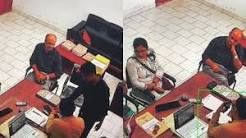
Teachers had earlier stated that Nithin Raj was called to the principal’s office after they began receiving repeated calls from the recovery agent, which they described as persistent harassment. The visuals also show Nithin Raj explaining his situation to teachers inside the principal’s room.Kannur: Days after Nithin Raj, a Dalit student, fell from the fifth floor of his college building and died, NDTV has accessed CCTV footage from inside the principal’s room at Anjarakandy Dental College in Kerala’s Kannur that captured the events that unfolded about 25 minutes before his death. According to police sources, the footage shows teachers speaking to representatives of an instant loan app that had allegedly been making repeated recovery calls linked to a loan taken under Nithin Raj’s name. The agent on the call is heard refusing to remove contact numbers of people connected to the student, including that of a professor, from the reference list until the payment is completed. The visuals also show Nithin Raj explaining his situation to teachers inside the principal’s room. In another CCTV clip, Nithin Raj is seen walking away in tears – a development that investigators are treating as significant in reconstructing the sequence of events leading up to his death. Teachers had earlier stated that Nithin Raj was called to the principal’s office after they began receiving repeated calls from the recovery agent, which they described as persistent harassment. Meanwhile, two teachers named as accused in the case, Dr Ram and Dr Sangeetha Nambiar, have approached the Thalassery Sessions Court seeking anticipatory bail, arguing that they had no role in the suicide and that threats from the loan app may have led to the student’s death. Nithin Raj, a Dalit from a daily wage labourer’s family in Thiruvananthapuram, had secured a BDS seat at Anjarakandy Dental College in Kannur. On the afternoon of April 10, he fell from the fifth floor of his college building and died. What followed was a storm: audio clips of a young man describing caste-based humiliation by his professors, a loan app whose recovery agents had been threatening his teachers, a meeting in the principal’s office, and a family that says they knew none of this was about money. The parents held the caste-based ill treatment by teachers responsible for their son’s death. But the latest police investigation has also revealed continuous harassment from a loan recovery app as a parallel thread that authorities are now probing. Chakkarakkal police initially registered a case of unnatural death. By April 12, they added charges of abetment of suicide under Section 108 of the Bharatiya Nyaya Sanhita and invoked the SC/ST Prevention of Atrocities Act. The FIR was based on a complaint filed by Nithin’s father, Rajan. Kannur City Police Commissioner P Nidhinraj confirmed the formation of a Special Investigation Team headed by Assistant Commissioner of Police Hari Prasad, with cyber cell experts included in the team. Reported by: Aswin Nandakumar Courtesy : NDTV Note: This news is originally published on https:/ndtv.com/bha and is used purely for non-profit/non-commercial purposes, especially human rights