
President Appoints Justice BR Gavai As Next Chief Justice Of India;Second Dalit To Be CJI
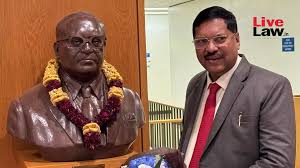
Justice Gavai paying homage to the statue of Dr BR Ambedkar at Columbia Law School The President of India has appointed Justice BR Gavai as the next Chief Justice of India with effect from May 14, 2025. The incumbent Chief Justice of India, Justice Sanjiv Khanna, will retire on May 13. “In exercise of the powers conferred by the Constitution of India is pleased to appoint Shri Justice Bhushan Ramkrishna Gavai, Judge of the Supreme Court of India as the Chief Justice of India with effect from 14th May, 2025,” Union Law Minister Arjun Ram Meghwal posted on X. Upon succession as the 52nd CJI, Justice Gavai would also be the second CJI belonging to the Scheduled Caste community after Justice KG Balakrishnan retired as the CJI in 2010. Justice Gavai will retire on November 23, 2025. Courtesy: Live Law Note: This news is originally published on https://www.livelaw.in and is for use by the non-military/non-commercial community, especially those in the human rights sector.
How CBI charged Dalit IAS officer repeatedly in coal block scam when he wasn’t even in allocation dept

5 yrs after approving CBI request to prosecute KC Samria in 4 cases, DoPT backtracked on 5 others after learning KC Samria wasn’t in the coal allocation section when companies applied. New Delhi: A 1993-batch officer convicted in three coal block allocation cases for not checking whether the companies applying for mining leases had completed their forms, was not with the department checking those applications at the time, official records accessed by ThePrint show. The Central Bureau of Investigation (CBI) took up the coal allocation scam probe following an August 2014 Supreme Court ruling declaring all coal block allotments between 1993 and 2010 illegal and arbitrary, apart from those through competitive bidding. As part of its investigation, the CBI accused three senior bureaucrats of conspiring with the applicant companies to cause monetary losses to the exchequer by not allotting the coal blocks through bidding. One of them, K.C. Samria, was a deputy secretary-rank officer with the coal ministry in 2006-2007. The CA-I department processed the applications involving the “illegal” coal block allotments before he joined, later forwarding the applications to the power and coal ministries and the governments of states where the coal blocks lay for reviews and inputs. Afterwards, the applications reached the screening committee’s desk. Records show Samria got the additional charge of the CA-I section on 16 March, 2007. The CA-I section, CBI found, received incomplete applications between 6 November, 2006, and 12 January, 2007, and checked them before Samria’s joining. Still, the Department of Personnel and Training (DoPT) approved the CBI request to prosecute Samria in four cases. The agency made its request to the DoPT in compliance with the Prevention of Corruption Act, 1988, under which a department must sanction the prosecution of a government officer or minister. Five years later, however, the same DoPT declined the CBI request to prosecute Samria in five other cases on learning that the officer was not posted with the coal ministry’s CA-I when the companies applied for the coal blocks. Meanwhile, the trial court ordered Samria’s trial in one more case, apart from the four cases given sanctions previously. Five orders since then have declined CBI permission to prosecute Samria, saying the officer was not looking after the checks in the CA-I section. The DoPT reached this conclusion on the advice of the coal ministry, to whom Samria then reported. Trial court orders After considering on-record materials, the coal ministry refused to approve Samria’s trial. So, the trial court could not initiate legal proceedings against him in the five cases despite the CBI chargesheets naming him. While denying the CBI request, the DoPT ignored the advice of the Central Vigilance Commission (CVC). On perusal of the CBI report and other records, the CVC had agreed with the recommendation to prosecute Samria in all five cases. But, due to the weightage it gave to the findings of the coal ministry, the DoPT did not pay heed to the CVC. “And whereas, the competent authority (coal ministry), after duly and carefully examining the investigation report of CBI, the comments of the Ministry of Coal, the advice of CVC, and facts and circumstances of the case and no criminal misconduct has been established against Samria,” noted the DoPT orders in all the five cases. When the coal ministry realised Samria was not the CA-I section officer-in-charge during the irregularities and rejected the CBI request, the trial court had already convicted him in two cases. Those were related to coal blocks allocated to M/s Kamal Sponge Steel and Power Limited (KSSPL) and M/s Vikash Metal and Power Limited (VMPL). The court pronounced the judgment in the KSSPL case on 19 May, 2017, and the VMPL decision on 30 November, 2018. In both cases, it convicted Samria for not checking the eligibility of the applicant companies. After his counsel relayed to the trial court that Samria was not looking after the department that checked the applications, it said that Samria should have still checked them after taking over his position. The other case the trial court heard against Samria, without a formal sanction to prosecute the official, is the illegal allocation of coal blocks to M/s JLD. Adjudication on this case is pending. Similarly, a trial against Samria is pending in the M/s Visa Power Limited case. His acquittal has come in only one case involving M/s Navabharat Power Private Limited. In his appeal before Delhi High Court—filed soon after the two judgments convicted him—Samria defended himself, saying he was not with the CA-I department when the companies applied for consideration for the coal block allotments. Following his appeal, the DoPT also learnt that Samria was not in the CA-I branch during the commission of the alleged crime. Speaking to ThePrint, Samria’s lawyer, Rahul Tyagi, said, “Prosecution of Samria for alleged omissions of a period when he was not Director CA-1 is another example of the non-application of mind during the investigation and the predetermined decision to prosecute IAS officers of the MoC (Ministry of Coal).” For Samria’s convictions, he blamed the media hype, saying a calm and forensic examination of facts and applicable laws could not take place initially. “Now that hype has died, and evidence has come out, Mr Samria no longer faces prosecution on the same facts for which he initially was convicted, as the government (Centre) refused to grant sanction for prosecution against him,” he explained. “It is so sad that an honest Dalit officer, the youngest of his batch, has suffered like this. Everyone expected him to reach the highest levels of administration at a very young age, but his entire career is now in shambles due to these meaningless and misconceived prosecutions. There can be no compensation or restitution for the injustice caused to him,” Tyagi added. CBI requests denied In April 2020, DoPT rejected the CBI’s 11 December, 2018, request to clear Samria’s prosecution in the case involving M/s Vandana Vidhyut Limited, noting that Samria took charge of the CA-I section on 16 March 2007.
‘INDI’s hand with Pakistan’: Posters target Rahul Gandhi ahead of visit to former constituency Amethi
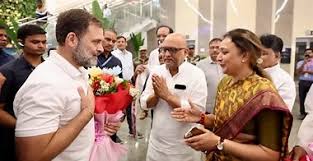
NEW DELHI: Ahead of Rahul Gandhi’s Amethi visit on Wednesday, posters were put up in the Congress MP’s former Lok Sabha constituency targeting him and leaders of the party-led INDIA bloc for taking a “pro-Pakistan” stand amid escalating tensions with the neighbouring country over last week’s terrorist attack in Jammu and Kashmir’s Pahalgam. Gandhi is on a two-day visit to Rae Bareli, which he currently represents in the Lok Sabha, and Amethi. He visited Rae Bareli on Tuesday. “INDI’s hand is with Pakistan,” one of the posters read. Hand is the Congress’ symbol. The poster had comments from National Conference supremo Farooq Abdullah and Congress leader Vijay Wadettiwar. It called Gandhi a “sympathiser” of terrorism (“Aatank ka saathi”). Similar banners were put up across the Uttar Pradesh town targeting the opposition INDIA group leaders for making statements “favouring” Pakistan. The Congress and other opposition parties have declared their complete support to the government as it plans India’s response for the Pahalgam attack, carried out by Pakistan-backed terrorists. However, stray remarks from its leaders forced the grand old party to distance itself from their comments. “Some Congress leaders have been speaking to the media. They speak for themselves and do not reflect the Congress’ views. There should be absolutely no doubt whatsoever at this most sensitive of times that the CWC resolution, the views expressed by (Congress president) Mallikarjun Kharge and Rahul Gandhi and the views of authorised AICC office-bearers ALONE represent the position of the Congress (sic),” Congress general secretary in-charge of communications Jairam Ramesh said in a post on X. Last night, after much outrage, the party deleted a social media post in which it accused Prime Minister Narendra Modi of going “missing” during the crisis. The image, which showed a headless PM, was captioned “Gayab” (missing). Courtesy : TOI Note: This news is originally published on https://timesofindia.com and is for use by the non-military/non-commercial community, especially those in the human rights sector.
‘Call special Parliament session to demonstrate national unity’: Congress on Pahalgam terror attack

NEW DELHI: Congress president Mallikarjun Kharge and Rahul Gandhi Tuesday urged PM Narendra Modi to convene a special session of Parliament to discuss the Pahalgam terror attack, with the idea of demonstrating a collective national resolve and unity. The two leaders of opposition wrote separately to Modi on Monday night. Congress had sought an all-party meeting on the day of the gruesome killings of tourists in Kashmir, which the govt had agreed to immediately. Kharge wrote to the PM, “At this moment, when unity and solidarity is essential, opposition believes it is important to convene a special session of both Houses of Parliament at the earliest. This will be a powerful demonstration of our collective resolve and will to deal with the brutal terror attack in Pahalgam on innocent citizens on April 22. It’s is our fond hope that the session will be accordingly convened.” In a similar brief letter, Rahul said the Pahalgam terror attack has “outraged” every Indian and that New Delhi must at this critical time show that it stands together against terrorism. He said the special session would be a platform for people’s representatives “to show their unity and determination”. AICC spokesman Jairam Ramesh said the letters were written after a discussion between the Congress brass and several opposition leaders. The idea is to show unity, let there be a discussion with responsibility,” he added. The demand, already made by RJD and CPI earlier, may add a fresh twist to the post-Pahalgam to and fro between the govt and the opposition. While the opposition has extended support to the govt on the response it proposes against the attack “masterminded by Pakistan”, Congress has also accused the ruling BJP and RSS of using the attack to target Muslims in the country through social media handles. Some opposition parties have also blamed the security lapse and the intelligence failure for the attack. While Congress has presented the theme of “unity” with the govt as far as response to the attack is concerned, its leaders in states – like AICC Karnataka incharge and Rajya Sabha MP Randeep Surjewala in Bengaluru on Tuesday – have been attacking the ruling BJP and the PM for the security lapse. Congress has been critical of the PM for missing the all-party meeting and instead attending an election rally in Bihar, as done by Congress president Kharge at a rally in Jaipur on Monday. Ramesh said when the Parliament meets for the special session, PM Modi should attend both the Houses. Courtesy : TOI Note: This news is originally published on https://timesofindia.com and is for use by the non-military/non-commercial community, especially those in the human rights sector.
Rahul visits MCF in Rae Bareli

Lucknow: Local MP and leader of opposition, Rahul Gandhi, visited the Modern Coach Factory in Rae Bareli on Tuesday alongside Amethi MP Kishori Lal Sharma. MCF General Manager Prashant Kumar Mishra and other senior officials welcomed them and provided detailed information about the factory’s operations and products. During his visit, Gandhi examined various railway coaches and wheels produced at the facility. The inspection included different types of coaches such as Sleeper, AC 3-Tier Economy, AC Pantry Car, Non-AC Chair Car, Tejas, Rajdhani, Bharat Gaurav and Vande Bharat (prototype shell items) trains. He expressed contentment with the manufacturing process and coach quality. The officials demonstrated the features of General (Deen Dayalu) and Sleeper coaches, which are commonly used by the public. They showcased various passenger comfort enhancements, including improved seats and berths, sliding window doors, mobile charging points, cushioned luggage racks that double as additional seating, FRP panels, and modular toilets. Lucknow: Local MP and leader of opposition, Rahul Gandhi, visited the Modern Coach Factory in Rae Bareli on Tuesday alongside Amethi MP Kishori Lal Sharma. MCF General Manager Prashant Kumar Mishra and other senior officials welcomed them and provided detailed information about the factory’s operations and products. During his visit, Gandhi examined various railway coaches and wheels produced at the facility. The inspection included different types of coaches such as Sleeper, AC 3-Tier Economy, AC Pantry Car, Non-AC Chair Car, Tejas, Rajdhani, Bharat Gaurav and Vande Bharat (prototype shell items) trains. He expressed contentment with the manufacturing process and coach quality. The officials demonstrated the features of General (Deen Dayalu) and Sleeper coaches, which are commonly used by the public. They showcased various passenger comfort enhancements, including improved seats and berths, sliding window doors, mobile charging points, cushioned luggage racks that double as additional seating, FRP panels, and modular toilets. Courtesy : TOI Note: This news is originally published on https://timesofindia.com and is for use by the non-military/non-commercial community, especially those in the human rights sector.
Dalit settlements no longer colonies: Stalin
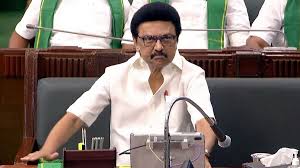
Chennai: Chief minister M K Stalin on Tuesday announced that the word ‘colony’ will be removed from all govt records and public usage. He described it as a symbol of discrimination against the indigenous people of the land and a term now associated with untouchability. Colonies refer to segregated residential areas in villages inhabited by dalits. The announcement came during Stalin’s speech during the debate on demand for grants for the home department in the assembly. He said the govt decided to act because the word was now being used in a derogatory sense. Stalin further stated that Sept 6 will be observed as ‘Police Day’ in Tamil Nadu. Responding to opposition criticism of the law-and-order situation in the state, Stalin issued a sharp rebuttal. “This is not Manipur, this is not Kashmir. There are no deaths like the UP Kumbh Mela. This is Tamil Nadu. Don’t forget that,” he said. Stalin said Tamil Nadu’s overall growth was rooted in its peaceful atmosphere, crediting the police force for maintaining law and order. He said while ministers and officials contribute to progress, the state’s development is built on the foundation of peace. “A peaceful state supports industrial growth, education, empowerment of women and youth, sports, and increased production,” Stalin said, commending the police for helping the state avoid major riots, violence, and unrest. He urged the police force not only to reduce crime but also to work towards preventing it. “Preventing crime is not the responsibility of the police alone. It requires the cooperation of the public,” he said. Calling on citizens to respect the law and practise self-discipline, Stalin said the public must avoid negligence and take active steps to prevent crime. He reminded police officers to treat people with respect and avoid letting personal biases affect their conduct. “Police and public must function as partners to maintain peace,” he said. Stalin went on to list several achievements of his govt, including the elimination of dropouts in middle schools and a 9.69% growth rate projected for 2024–25. Comparing govt’s challenges to a person trapped from all sides, the chief minister said, “Like a man with a snake above, foxes below, a moat if he jumps, and a wall if he runs, the state govt has achieved progress by overcoming Union govt on one side, governor on another and financial crunch on another side. “This is not the achievement of one person named Stalin. This is the result of the efforts of my cabinet and officials,” he said. “This is not a party’s govt. It is a govt based on a philosophy.” He ended his speech by saying, “Whatever achievement was witnessed so far is only Part-I of the Dravidian model govt. Version 2.0 is loading for 2026. We will create more records then,” he said. Courtesy: Times of India Note: This news is originally published on https://timesofindia.indiatimes.com and is for use by the non-military/non-commercial community, especially those in the human rights sector.
16-Year-Dalit Minor Girl Gang Raped In UP: Cops

He said that the father of the girl gave an application on April 27 alleging that Shailendra Saroj alias Zahid of the same village, his friend Sheru alias Nazar Ahmed and an unknown person gang-raped his daughter and threatened to kill her. Kaushambi, UP: A case of alleged gang-rape of a Dalit minor girl has come to light in the Kaushambi district of Uttar Pradesh, and the police have registered a case against three youths on the complaint of the victim’s father, police said on Tuesday. Additional Superintendent of Police Rajesh Singh said that on April 24, information was received that the 16-year-old girl had gone to a relative’s house after she was upset over something, and a missing report was registered. He said that the father of the girl gave an application on April 27 alleging that Shailendra Saroj alias Zahid of the same village, his friend Sheru alias Nazar Ahmed and an unknown person gang-raped his daughter and threatened to kill her. Mr Singh said that a case has been registered under relevant sections of the BNS, POCSO Act and Scheduled Castes and the Scheduled Tribes (Prevention of Atrocities) Act. Two teams have been formed to arrest the accused in the case and they will be arrested soon, the additional SP said. Courtesy: NDTV Note: This news is originally published on https://www.ndtv.com and is for use by the non-military/non-commercial community, especially those in the human rights sector.
MP: Dalit Man Denied Funeral Rights, Family Protests on Road as Upper Castes Block Cremation
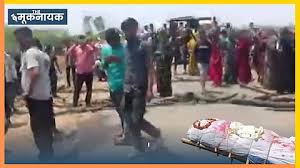
Under section Section 3(1)(zc) of the SC/ST (Prevention of Atrocities) Act, 1989, preventing an SC/ST member from performing last rites is punishable with 6 months to 5 years in jail and a fine. Bhopal: A shocking incident of caste-based discrimination has exposed the administration’s apathy and the fragile social fabric in Madhya Pradesh’s Sheopur district. On Monday, tensions flared in Leelada village under the Vijaypur assembly constituency when members of the Rawat community prevented the cremation of Jagdish Jatav, a Dalit youth, forcing his grieving family to stage a protest by placing his body on the road. The situation escalated to stone-pelting, with authorities struggling to restore order despite intervention. Jagdish Jatav, a resident of Leelada village who worked a private job in Bengaluru, died in a road accident. Five days later, his body was brought back to the village on Monday morning. When his family attempted to perform the last rites in the afternoon, members of the dominant Rawat community objected, sparking a violent confrontation. Furious over the obstruction, Jatav’s family and supporters blocked the road with his body, leading to clashes. The Jatav community claims their traditional cremation ground was acquired for a railway project, leaving them with no alternative site. Though the local patwari (revenue official) allocated government land for the funeral, the Rawat community resisted, arguing the land was near their farms. “This is government land, not privately owned. Yet, the Rawats won’t let us bury our dead,” said Suresh Jatav, a villager. In contrast, Rawat women asserted, “We won’t allow cremation near our fields. They must find another spot.” Furious over the obstruction, Jatav’s family and supporters blocked the road with his body, leading to clashes. Stones were hurled, prompting the SDM, Abhishek Mishra, and other officials to rush to the spot. Collector Arpit Verma admitted, “The situation is not fully under control. We are trying to maintain peace.” Furious over the obstruction, Jatav’s family and supporters blocked the road with his body, leading to clashes. The incident violates the SC/ST (Prevention of Atrocities) Act, 1989: Section 3(1)(zc): Preventing an SC/ST member from performing last rites is punishable with 6 months to 5 years in jail and a fine. Political Outrage Congress MLA Mukesh Malhotra demanded strict action, warning of protests if an FIR isn’t filed. State Congress chief Jitu Patwari accused the BJP-backed Rawat supporters of “hooliganism,” calling it a failure of governance. Ex-CM Kamal Nath slammed the BJP, tweeting, “Dalits face discrimination even in death under this regime.” The incident raises grave questions about constitutional rights for Dalits in MP. Denial of funeral rights blatantly violates Article 17 (abolition of untouchability) and principles of social justice. Former SC Commission member Pradeep Ahirwar (now with Congress) accused the Mohan Yadav-led BJP government of enabling caste atrocities. “Top officials infected with Manuvadi ideology are denying Dalits equality. Police inaction proves complicity,” he told The Mooknayak. Courtesy: The Mooknayak Note: This news is originally published on https://en.themooknayak.com and is for use by the non-military/non-commercial community, especially those in the human rights sector.
Tamil Nadu Dalit and transgender activist Grace Banu summoned in months-old robbery case filed by UP police

The case stems from a complaint by Devika Devendra S Manglamukhi, a member of the Uttar Pradesh Transgender Welfare Board, who alleged that she was robbed and threatened by a group of masked individuals in Lucknow in December 2024. Synopsis: Dalit and Transgender activist Grace Banu has been summoned by Lucknow police in a robbery case. Named with three others, Banu denies involvement, linking the FIR to her advocacy for horizontal reservation for trans persons. She further claimed the case is false and politically driven. Other activists also claimed the case is caste-driven and aims to silence voices pushing for equitable representation within caste categories. Tamil Nadu-based Dalit and transgender activist Grace Banu has been summoned by the Lucknow police in connection with a robbery case filed in January this year. The case stems from a complaint by Devika Devendra S Manglamukhi, a member of the Uttar Pradesh Transgender Welfare Board, who alleged that she was robbed and threatened by a group of masked individuals in Lucknow in December 2024. Grace Banu is one of four transwomen named in the first information report (FIR), alongside fellow activists Yashika, Jane Kausik, and Rithvika. The FIR accuses them of serious charges, including assault and robbery. While the FIR was registered in January, the summons to appear before the Talkatora Police Station in Lucknow was issued to Banu only recently. ‘Fabricated case to intimidate me’: Grace Banu However, Banu has strongly denied any connection to the alleged incident. Speaking to South First, she said, “I have never even been to Uttar Pradesh in my life. This case is clearly fabricated and intended to intimidate those of us advocating for horizontal reservation for trans persons.” Describing her first interaction with the police, Banu said, “I was contacted by someone claiming to be from the Lucknow police. They told me a case had been filed and that I needed to appear immediately. When I asked for the FIR, they directed me to download it from the government portal and sent a summons to me only via WhatsApp.” She further added, “When I questioned the process, they responded with veiled threats, saying if I didn’t appear, they would ‘drag me from my house’. I then consulted my lawyer and sent a formal response through the same WhatsApp number. I’ve received no reply since.” Activists claim case is politically motivated Banu believes the FIR is not only baseless but politically and socially motivated. “Devika Manglamukhi is targeting activists who are vocal about horizontal reservation. I’ve never interacted with her, yet I’ve been named in this case. This is a clear attempt to stall the growing movement for equitable representation for trans persons,” she said. She added that the other activists named in the FIR have also been outspoken on horizontal reservation — a key issue within the trans rights movement that seeks representation for trans persons across caste categories rather than under a single umbrella like OBC. Prior tensions between complainant and activists surface The case also appears to be the latest escalation in a long-standing dispute between complainant Devika Manglamukhi and activist Yashika. In January, Yashika filed a complaint with the National Commission for Scheduled Castes (NCSC), alleging that Devika was targeting trans women advocating for horizontal reservation. The Commission had subsequently issued a notice to Devika. Banu said the case cannot be separated from caste dynamics. “Yashika is an OBC trans woman. Devika comes from an upper-caste background. These caste differences have played out in how Devika has tried to dominate and silence other trans voices. This FIR is just another extension of that oppression,” Banu said. What is horizontal reservation? Explaining the principle behind horizontal reservation, Banu said the movement began in South India in 2011. “The NALSA verdict suggested trans persons be placed under the OBC category, but we argue that this is reductive. Not all trans people come from the same caste or class backgrounds. We face intersecting layers of discrimination such as caste, gender, and economic marginalization,” she said. Horizontal reservation, she explained, ensures that trans persons receive proportional representation within each existing caste category’s SC, ST, OBC, and General, rather than being grouped into a single slot. “Karnataka has already implemented this model. We are fighting for the same in Tamil Nadu. We’ve led protests, filed court cases, and run awareness campaigns. This case is clearly aimed at derailing that momentum. But let me be clear — it will not succeed,” Banu reiterated. Courtesy: The South First Note: This news is originally published on https://thesouthfirst.com and is for use by the non-military/non-commercial community, especially those in the human rights sector.
Chennai-based Trans Activist Summoned by Lucknow Police in Robbery Case, Ordered to Appear Personally—Grace Banu Calls it “False FIR! Never Visited Lucknow in My Life”

Human rights and transgender rights activists across India have rallied behind Banu, highlighting her 15-year legacy as a respected activist championing Dalit and transgender rights, a systematic pattern of false accusations to discredit her advocacy work. The summons issued on April 23, 2025 by Sub-Inspector Dinesh Singh of Talkatora Police Station clearly directs Grace Banu to personally appear at the police station within seven days of receiving the notice to record her statement. The summons issued on April 23, 2025 by Sub-Inspector Dinesh Singh of Talkatora Police Station clearly directs Grace Banu to personally appear at the police station within seven days of receiving the notice to record her statement. Lucknow/Chennai- Grace Banu, a prominent transgender and anti-caste activist from Tamil Nadu, has been summoned by Lucknow Police under Section 35(3) of the Bharatiya Nagarik Suraksha Sanhita (BNSS). The notice directs her to appear in person at Talkatora Police Station in connection with Case No. 12/2025, which alleges assault, robbery, and criminal intimidation. The summons issued on April 23, 2025 by Sub-Inspector Dinesh Singh of Talkatora Police Station clearly directs Grace Banu to personally appear at the police station within seven days of receiving the notice to record her statement. The letter states that if she fails to appear, an arrest warrant may be issued against her. Following the police summons, transgender groups and human rights activists have expressed strong disapproval. They claim this FIR is fabricated and filed with malicious intent. The complainant Devika had earlier used casteist slurs against Dalit trans activist Yashika, following which Yashika had filed a complaint with the National Commission for Scheduled Castes. Holding a grudge over this matter, Devika – who is a member of the Uttar Pradesh Trans Welfare Board – has allegedly filed this false complaint in collusion with UP Police. Background of the Case This case originates from an FIR registered on January 8, 2025, at Talkatora Police Station. The complainant, Devika Devendra S. Mangalamukhi, alleged that Aashish Kumar (alias Yashika), Grace Banu, Jane Kaushik, Ritwik Das, and others had violently assaulted her on December 22, 2024. They snatched her purse containing cash and valuable and threatened her with rape and acid attacks. She alleged that they ran a defamation campaign against her on social media. The accusations have sparked controversy, with activists questioning the timing and intent behind the FIR. Grace Banu’s Defense In response to the summons, Grace Banu submitted a detailed letter categorically stating that she has never visited Lucknow in her life. She emphatically denied ever traveling to Uttar Pradesh’s capital and presented concrete evidence proving her presence in Chennai, Tamil Nadu, on December 22, 2024 – the day of the alleged incident. Banu clarified she has never communicated with complainant Devika Devendra, whether telephonically or otherwise. Citing financial constraints and physical challenges in traveling from Tamil Nadu to Uttar Pradesh, Banu formally requested her interrogation be conducted via video conferencing – a plea underscoring the practical difficulties faced by marginalized activists in such legal battles. Human rights and transgender rights activists across India have rallied behind Banu, highlighting her 15-year legacy as a respected activist championing Dalit and transgender rights, a systematic pattern of false accusations to discredit her advocacy work. This case reflects the institutional harassment routinely faced by transgender and Dalit activists. Chennai based prominent Dalit rights activist Shalin Maria Lawrence launched a scathing attack on social media. She wrote, “At the behest of ruling party elements opposed to horizontal reservation for trans persons, UP Police has fabricated this robbery case against Dalit trans activist Grace Banu. The audacity to frame someone who’s never even visited UP! @Uppolice – do you consider Dalits easy targets for false cases?” Lawrence urgently tagged Nagina MP and Bhim Army chief Chandrashekhar Azad, appealing: “Please intervene against this casteist conspiracy.” ‘ Yes, We Exist’, the transgender rights collective revealed crucial context through their statement: “UP police has summoned Dalit and Trans rights activist @thirunangai to Lucknow based on a false robbery case filed by UP Police after it got a notice from National Commission of SC to take against casteist remarks made by UP Trans Welfare Board member Devika S Mangalmukhi.” They exposed Devika’s ideological stance: “Devika Mangalmukhi is opposed to the demand of horizontal reservations for trans persons, a demand that Grace & the LGBTQ+ community has been raising. Devika used casteist slurs against Yashika, a dalit trans activists, who then filed a case with the National Commission of SC.” Courtesy: The Mooknayak Note: This news is originally published on https://en.themooknayak.com and is for use by the non-military/non-commercial community, especially those in the human rights sector.